Kombi driver jailed 3 years for sexually abusing child kidnap teen

BULAWAYO

A
kombi
driver
who
sexually
abused
his
ex-girlfriend’s
14-year-old
sister
has
been
sentenced
to
three
years
in
prison
after
his
crime
was
exposed
through
a
bizarre
chain
of
events
triggered
by
the
teenager
kidnapping
a
two-year-old
baby.

Godwell
Mumba,
36,
pleaded
guilty
to
having
sexual
intercourse
with
a
minor
before
Bulawayo
provincial
magistrate
Themba
Chimiso
on
Monday.

Mumba
told
the
court
he
had
previously
been
in
a
relationship
with
the
victim’s
older
sister
and
had
since
“fallen
in
love”
with
the
younger
girl.

He
claimed
he
believed
she
was
old
enough
to
consent
because
she
had
told
him
she
was
already
a
mother.

Magistrate
Chimiso
was
unmoved.
He
said
Mumba’s
prior
relationship
with
the
family
placed
him
in
a
position
of
trust,
one
he
had
exploited
rather
than
honoured.

“Since
you
were
in
love
with
her
sister,
you
were
in
a
position
of
trust
and
you
were
supposed
to
protect
the
child,
but
instead
you
sexually
violated
her,”
Chimiso
said.

The
magistrate
described
Mumba
as
a
sexual
predator
who
had
groomed
the
girl
over
an
extended
period
from
January
this
year
until
last
week,
warning
that
the
ordeal
would
leave
lasting
scars
on
the
victim.

“It
is
the
duty
of
the
court
to
protect
the
girl
child
from
sexual
predators
like
you,”
he
said.

Prosecutor
Samuel
Mpofu
noted
that
Mumba
was
double
the
teenager’s
age
and
had
full
knowledge
that
she
was
below
the
age
of
consent.
He
successfully
argued
for
a
custodial
sentence.

Pleading
for
leniency,
Mumba
said
he
was
married
with
a
nine-year-old
child
and
was
his
family’s
sole
breadwinner.
The
court
was
not
persuaded.

Mumba’s
abuse
may
never
have
come
to
light
had
it
not
been
for
an
unusual
sequence
of
events.
On
February
17,
the
teenager

a
Form
One
pupil
living
with
her
mother
in
Rangemore

allegedly
abducted
a
two-year-old
child
from
Meikles
Market
in
the
city
centre.

She
took
the
baby
to
Mumba’s
home
in
Trenance,
presenting
the
child
as
her
own.
The
two
stayed
there
for
two
days.

On
February
19,
the
teenager
attempted
to
leave
the
baby
with
a
stranger
at
a
block
of
flats
in
the
city,
telling
the
man
that
the
child’s
father
would
come
to
collect
her.
The
man
grew
suspicious,
recognised
the
baby
as
the
child
reported
missing
and
alerted
authorities.

In
a
police
interview,
the
teen
revealed
that
Mumba
was
her
“boyfriend.”
He
was
arrested
in
Plumtree.

The
teenager
has
since
been
charged
with
kidnapping.
She
was
released
on
bail
into
the
custody
of
her
mother.


Zanu PF Harare spokesperson wanted in South Africa after skipping bail

JOHANNESBURG

Zanu
PF’s
deputy
secretary
for
information
and
publicity
in
Harare
province,
Joachim
Chivayo,
is
wanted
in
South
Africa
after
allegedly
breaching
bail
conditions
in
a
R15
million
gold
case.

South
African
authorities
confirmed
that
warrants
of
arrest
were
issued
on
March
11,
2025,
by
the
Brakpan
Magistrate’s
Court
after
Chivayo
and
his
co-accused,
Brian
Gungwa,
failed
to
return
to
court
and
did
not
comply
with
their
bail
conditions.

Chivayo,
35,
the
younger
brother
to
controversial
businessman
Wicknell
Chivayo,
was
arrested
on
November
26,
2024,
at
Helderwyk
Estate
in
Brakpan.
The
Hawks’
Serious
Organised
Crime
Unit
apprehended
him
and
Gungwa,
a
22-year-old
with
South
African
citizenship,
for
allegedly
possessing
six
unwrought
gold
bars
valued
at
approximately
R15
million.

The
pair
appeared
before
the
Brakpan
Magistrate’s
Court
on
November
28,
2024,
where
each
was
granted
bail
of
R20,000.

Their
release
came
with
strict
conditions:
they
were
required
to
remain
within
Gauteng
province,
and
to
report
weekly
to
the
Brakpan
Police
Station
every
Sunday
beginning
December
1,
2024.
The
matter
was
postponed
to
February
25,
2025,
to
allow
for
further
investigation.

However,
authorities
say
both
men
failed
to
adhere
to
the
bail
conditions
and
did
not
return
to
court
on
the
scheduled
date.
Warrants
were
subsequently
issued
for
their
arrest,
and
they
are
now
officially
listed
as
wanted
suspects.

Chivayo,
sometimes
referred
to
as
Joacham,
was
appointed
Zanu
PF’s
deputy
secretary
for
information
and
publicity
in
Harare
province
in
September
2025.
He
is
also
the
founder
of
ZimSports4ED,
a
Zanu
PF
affiliate
organisation.

He
has
in
recent
months
been
seen
at
Zanu
PF
gatherings
in
Harare,
often
driving
high-end
vehicles.
Allegations
have
circulated
linking
his
lifestyle
to
proceeds
of
gold
smuggling
and
other
illicit
activities.

South
Africa
and
Zimbabwe
regularly
cooperate
on
cross-border
crime
through
Interpol
and
other
extradition
protocols,
raising
the
prospect
of
Chivayo
being
extradited
if
a
request
is
made
by
South
African
authorities.

Zimbabwe rejects $350m US health deal, citing sovereignty concerns

HARARE

Zimbabwe
has
walked
away
from
a
proposed
$350
million
health
funding
agreement
with
the
United
States,
after
President
Emmerson
Mnangagwa
personally
directed
his
government
to
discontinue
negotiations
over
what
Harare
describes
as
a
one-sided
deal
that
undermines
the
country’s
sovereignty.

Albert
Chimbindi,
the
secretary
for
foreign
affairs
and
international
trade,
communicated
the
directive
to
the
secretaries
of
finance
and
health
in
a
letter
dated
December
23,
2025,
according
to
a
previously
unreported
document
seen
by
ZimLive.

“The
President
has
directed
that
Zimbabwe
must
discontinue
any
negotiation
with
the
USA
on
the
clearly
lopsided
MoU
that
blatantly
compromises
and
undermines
the
sovereignty
and
independence
of
Zimbabwe
as
a
country,”
the
letter
reads.

The
memorandum
of
understanding
(MoU)
was
being
promoted
by
Washington
as
the
future
framework
for
US
health
support
to
Zimbabwe
under
its
America
First
Global
Health
Strategy
(AFGHS).
But
Harare
found
its
conditions
unacceptable
on
multiple
fronts.

The
US
sought
direct
access
to
Zimbabwe’s
health
data
over
an
agreed
period,
a
provision
Zimbabwean
officials
viewed
as
intelligence
overreach.
The
US
separately
pushed
for
access
to
the
country’s
critical
mineral
resources
as
part
of
the
broader
arrangement.

Zimbabwe
also
objected
on
principle.
Harare
argued
that
signing
a
bilateral
health
agreement
with
Washington
would
be
inconsistent
with
its
commitment
to
multilateralism,
particularly
given
that
the
United
States
had
withdrawn
from
the
World
Health
Organisation
under
the
Donald
Trump
administration.

Entering
into
a
parallel
bilateral
health
architecture,
the
government
reasoned,
would
effectively
legitimise
Washington’s
exit
from
the
global
health
order.

Despite
Zimbabwe’s
resistance,
Washington’s
health
diplomacy
offensive
is
gaining
traction
elsewhere
on
the
continent.
At
least
14
African
countries
have
already
signed
similar
agreements
under
the
AFGHS
framework.

The
rejection
of
the
MoU
comes
as
Zimbabwe
also
faces
the
loss
of
US
humanitarian
funding.
A
year
after
Trump
began
dismantling
USAID,
which
had
funded
programmes
in
Zimbabwe
including
the
provision
of
HIV
medicines,
his
administration
is
now
initiating
a
new
round
of
significant
cuts
to
foreign
assistance.

An
internal
State
Department
email,
reported
by
The
Atlantic,
said
the
US
will
soon
end
all
humanitarian
funding
currently
provided
to
seven
African
nations,
including
Zimbabwe,
as
part
of
a
“responsible
exit,”
with
funding
in
nine
others
to
be
redirected.
Aid
programmes
in
all
of
these
countries,
previously
up
for
renewal
through
the
end
of
September,
will
instead
be
allowed
to
expire,
each
of
them
classified
as
lifesaving
by
the
Trump
administration’s
own
standards.

A
February
12
email
to
officials
in
the
State
Department’s
Bureau
of
African
Affairs
said
the
projects
in
Burkina
Faso,
Cameroon,
Malawi,
Mali,
Niger,
Somalia
and
Zimbabwe
are
being
cancelled
because
“there
is
no
strong
nexus
between
the
humanitarian
response
and
US
national
interests.”

The
US
Embassy
in
Harare
had
not
responded
to
a
request
for
comment
at
the
time
of
publication.

Why High-Trust Contracts Closed Faster In 2025, Without Being Simpler – Above the Law

If
you
listened
to
deal
teams
in
2025,
you’d
hear
a
familiar
refrain:
contracts
are
slowing
everything
down.
Too
much
governance.
Too
many
controls.
Too
much
legal
caution
layered
onto
deals
that
just
need
to
close.

That
story
feels
right.
It’s
also
wrong.

What
actually
slowed
deals
in
2025
wasn’t
legal
rigor.
It
was
uncertainty.
And
the
deals
that
closed
fastest
weren’t
the
simplest
contracts.
They
were
the
ones
that
made
trust
visible
early.


What
Really
Caused
Deal
Friction
In
2025

AI,
data
use,
and
regulatory
ambiguity
changed
the
baseline
assumptions
of
commercial
contracting.
Risk
felt
harder
to
evaluate,
harder
to
price,
and
harder
to
explain
to
business
stakeholders.

When
parties
couldn’t
tell
what
the
other
side
was
actually
doing
with
data,
models,
or
automated
decision-making,
negotiations
dragged.
Questions
multiplied.
Escalations
became
inevitable.
Everyone
defaulted
to
delay,
not
because
the
contract
was
long,
but
because
the
risk
signals
arrived
too
late.

In
other
words,
deals
didn’t
slow
because
contracts
asked
for
too
much.
They
slowed
because
no
one
knew
who
to
trust
until
the
eleventh
hour.


The
Counterintuitive
Pattern
Lawyers
Started
Noticing

Across
many
2025
negotiations,
a
clear
pattern
emerged:
contracts
with
clearer
governance
language
tended
to
close
faster
and
escalate
less,
even
when
they
were
longer
or
more
detailed.

That
sounds
backwards
if
you
equate
speed
with
simplicity.
But
speed
isn’t
about
page
count.
It’s
about
legibility.

When
contracts
clearly
spelled
out
how
AI
systems
could
be
used,
what
guardrails
applied,
when
reviews
were
triggered,
and
how
issues
would
be
handled,
parties
stopped
arguing
in
the
abstract.
They
could
see
the
shape
of
the
risk.

Clarity
reduced
imagination-driven
fear.
And
fear
is
what
slows
deals.


Why
Blanket
Prohibitions
Backfired

One
instinct
that
showed
up
early
in
2025
was
the
use
of
blanket
prohibitions.
No
AI
use.
No
automated
decision-making.
No
training
on
customer
data.
No
exceptions.

Those
clauses
felt
safe
at
first.
They
were
easy
to
draft
and
easy
to
explain.
They
also
tended
to
unravel
under
scrutiny.

Blanket
prohibitions
invite
edge
cases.
They
raise
questions
they
don’t
answer.
And
once
business
teams
realize
the
prohibition
conflicts
with
how
the
product
actually
works,
renegotiation
becomes
unavoidable.

The
result
isn’t
speed.
It’s
churn.

Broad
bans
delayed
deals
not
because
they
were
strict,
but
because
they
were
brittle.
They
couldn’t
accommodate
reality
without
reopening
the
entire
conversation.


Conditional
Obligations
Quietly
Accelerated
Deals

What
worked
better
in
2025
wasn’t
less
governance.
It
was
more
conditional
governance.

Contracts
that
moved
quickly
tended
to
replace
blanket
restrictions
with
conditional
permissions.
Instead
of
saying
“never,”
they
said
“unless.”
Instead
of
prohibiting
entire
categories
of
behavior,
they
defined
thresholds,
triggers,
and
escalation
paths.

If
AI
was
used
in
certain
ways,
additional
obligations
applied.
If
models
changed
materially,
notice
was
required.
If
automated
decisions
crossed
defined
boundaries,
review
mechanisms
kicked
in.

These
provisions
weren’t
lighter.
They
were
more
precise.

And
precision
reduced
friction.
When
parties
understood

when

obligations
applied,
they
stopped
arguing
about

whether

they
should
exist
at
all.


Trust
Architecture
Beats
Trust
Theater

A
lot
of
contracts
still
rely
on
what
might
be
called
trust
theater:
broad
assurances,
aspirational
principles,
and
generalized
promises
of
responsibility.

Those
statements
don’t
build
trust.
They
postpone
it.

The
deals
that
closed
faster
in
2025
relied
on
trust
architecture
instead.
They
embedded
concrete
signals
into
the
contract:
governance
processes,
audit
hooks,
documentation
expectations,
and
clear
accountability
pathways.

Rather
than
asking
counterparties
to
believe,
these
contracts
showed
them
where
to
look.

That
difference
mattered.
When
trust
was
observable
early,
negotiations
focused
on
alignment
instead
of
suspicion.


What
This
Means
For
Lawyers
In
Practice

The
lesson
from
2025
isn’t
that
contracts
should
be
simpler.
It’s
that
they
should
be
clearer
sooner.

Governance
language
placed
at
the
end
of
an
agreement
tends
to
arrive
too
late
to
reduce
friction.
By
then,
risk
perceptions
are
already
set.
Putting
clarity
upfront
allows
business,
legal,
and
technical
teams
to
align
before
negotiations
calcify.

Lawyers
who
frame
governance
as
a
delay
mechanism
miss
its
real
function.
Done
well,
governance
is
a
deal
accelerator
because
it
collapses
uncertainty
early.

Patterns
like
these
appeared
consistently
across
commercial
agreements
negotiated
in
2025
and
are
explored
in
more
detail
in
a
recent

“Contract
Trust
Report

examining
how
trust
signals
affect
deal
velocity. 


The
Real
Takeaway

In
2025,
the
fastest
deals
weren’t
the
lightest
on
governance.
They
were
the
clearest
about
it.

Contracts
didn’t
slow
business
down.
Unclear
trust
signals
did.


Olga
V.
Mack
is
the
CEO
of
TermScout,
where
she
builds
legal
systems
that
make
contracts
faster
to
understand,
easier
to
operate,
and
more
trustworthy
in
real
business
conditions.
Her
work
focuses
on
how
legal
rules
allocate
power,
manage
risk,
and
shape
decisions
under
uncertainty.


A
serial
CEO
and
former
General
Counsel,
Olga
previously
led
a
legal
technology
company
through
acquisition
by
LexisNexis.
She
teaches
at
Berkeley
Law
and
is
a
Fellow
at
CodeX,
the
Stanford
Center
for
Legal
Informatics.


She
has
authored
several
books
on
legal
innovation
and
technology,
delivered
six
TEDx
talks,
and
her
insights
regularly
appear
in
Forbes,
Bloomberg
Law,
VentureBeat,
TechCrunch,
and
Above
the
Law.
Her
work
treats
law
as
essential
infrastructure,
designed
for
how
organizations
actually
operate.

ABA’s Defunct Diversity In Law School Standard Moves Toward Getting Repealed – Above the Law

The
ABA
has
been
trying
to
slow
Standard
206’s
bleeding
since
the
Court
handed
down

SFFA
v.
Harvard
.
In
short,
the
standard
held
that
law
schools
had
to
take
concrete
actions
showing
a
commitment
to
diversity
by
providing
full
opportunities
to
study
the
law
and
enter
the
profession
to
underrepresented
groups.
If
they
didn’t,
the
school’s
accreditation
could
be
in
jeopardy.
The
ABA
suspended
the
standard

right
at
the
end
of
Black
History
Month

last
year
and
spent
the
interim
time

promising
that
they
weren’t
retreating
from
diversity

despite
all
the
evidence
to
the
contrary.
Though
their
good
gesture
move
of

extending
the
moratorium

didn’t
really
do
anything,
the
barely
breathing
Standard
still
got
played
for
culture
war
fodder.
The
FTC
made
the
ridiculous
argument
that

demanding
diversity
was
making
law
school
expensive
,
meanwhile
Texas,
Florida,
and
Tennessee
used
206
as
an
excuse
to
break
off
from
ABA
accreditation
entirely.
A
year
later,
we
close
Black
History
Month
with
the
ABA
proposing
a
repeal
of
Section
206.

Law.com

has
coverage:

Following
an
emotional
discussion
about
the
future
of
the
American
Bar
Association’s
accreditation
standard
that
governs
diversity
and
inclusion
requirements
in
law
school
admissions,
the
ABA’s
Council
of
the
Section
of
Legal
Education
and
Admissions
to
the
Bar
has
decided
to
advance
a
proposal
to
repeal
the
standard.

The
council
voted
Friday
to
send
a
proposed
repeal
of
the
standard
out
for
notice
and
comment
and
extend
the
current
suspension
of
Standard
206
until
Aug.
31,
2027.

Emotions
be
damned:
if
you’re
going
to
get
rid
of
it,
just
get
rid
of
it.
If
you
want
to
keep
it
on
the
books
to
spite
the
administration,
fine,
but
do
it

and
stand
firm
for
something
.
Stand
on
your
principles,
suffer
the
consequences,
and

hope
that
fate
smiles
on
you
as
it
did
Costco
.
But
this
slow
dance
of
“it
breaks
my
heart
to
do
this”
and
“schools
need
clear
rules
to
operate”
muddies
values
and
benefits
no
one.
And
let’s
be
honest.
Pushing
the
decision
off
until
next
year
is
not
that
much
better.


ABA
Weighing
Repeal
of
Law
School
Diversity
Standard

[Law.com]


Earlier
:

ABA
Committee
Decides
To
Diversify
Diversity.
It
Should
Come
With
A
Clear
Reason
For
Why
That’s
Important.


ABA
President
Says
They
Aren’t
‘Retreating’
From
Diversity
Promises.
Does
He
Know
What
The
ABA
Has
Been
Up
To?


ABA
Diversity
And
Inclusion
Standard
Looks
Like
It’s
On
Its
Last
Legs


Chris
Williams
became
a
social
media
manager
and
assistant
editor
for
Above
the
Law
in
June
2021.
Prior
to
joining
the
staff,
he
moonlighted
as
a
minor
Memelord™
in
the
Facebook
group Law
School
Memes
for
Edgy
T14s
.
 He
endured
Missouri
long
enough
to
graduate
from
Washington
University
in
St.
Louis
School
of
Law.
He
is
a
former
boatbuilder
who
is
learning
to
swim, is
interested
in
critical
race
theory,
philosophy,
and
humor,
and
has
a
love
for
cycling
that
occasionally
annoys
his
peers.
You
can
reach
him
by
email
at [email protected]
and
by
tweet
at @WritesForRent.

Did Baker McKenzie Just Give Biglaw Permission To Blame AI For Mass Layoffs? – Above the Law


Ed.
note
:
Welcome
to
our
daily
feature, Quote
of
the
Day
.


If
they
use
AI
to
justify
it,
they
won’t
look
as
cruel
when
they
make
that
many
staff
cuts.


— Scott
Love,
president
of
legal
industry
recruiter
The
Attorney
Search
Group,
in
comments
given
to
the

New
York
Law
Journal
,
concerning
the
recent
spate
of
layoffs
at
Baker
McKenzie,
where
the
firm

parted
ways
with
hundreds
of
business
professionals

while
noting
that
artificial
intelligence
factored
into
the
move.
Industry
insiders
predict
that
more
layoffs
may
be
on
the
way,
with
Baker’s
cuts
offering
permission
for
other
firms
to
move
forward
with
their
own.


Staci
Zaretsky
 is
the
managing
editor
of
Above
the
Law,
where
she’s
worked
since
2011.
She’d
love
to
hear
from
you,
so
please
feel
free
to email her
with
any
tips,
questions,
comments,
or
critiques.
You
can
follow
her
on BlueskyX/Twitter,
and Threads, or
connect
with
her
on LinkedIn.

You Do Not, Under Any Circumstances, Gotta Hand It To Chief Justice Roberts – Above the Law

(Photo
by
Erin
Schaff-Pool/Getty
Images)

No
cheers
for
Chief
Justice
Roberts!

After
Friday’s

tariff
ruling
,
the
usual
suspects
chimed
in
to
glaze
the
three
conservatives
who
ruled
that
Trump
can’t
impose
a
constantly
shifting
tariff
regime
based
on
whichever
country
he’s
trying
to
stick
up
on
a
given
day.

Adam
Liptak,
chief
legal
affairs
correspondent
at
the
New
York
Times

called
it

“a
declaration
of
independence,”
congratulating
the
“controlled,
cerebral
chief
justice”
for
staring
down
“the
biting,
brazen
president.”

Times
opinion
columnist
David
French

suggested

that

Learning
Resources
v.
Trump

“may
prove
to
be
the
most
important
Supreme
Court
decision
this
century.”

“On
this
day
the
presidency
is
stuffed
back
into
its
box.
On
this
day
the
separation
of
powers
prevails.
And
on
this
day
the
Constitution
holds,”
he
gushed.

Over
at
the
Wall
Street
Journal,
the
Editorial
Board

celebrated

the
“monumental
vindication
of
the
Constitution’s
separation
of
powers,”
winking
that
“You
might
call
it
the
real
tariff
Liberation
Day.”

Only
George
Will
at
the
Washington
Post

tempered
his
criticism
.
While
lauding
the
ruling
as
a
“defibrillator
to
Congress,”
he
chided
conservatives
for
“something
the
court
has
been
dilatory
about
elaborating
and
timid
about
enforcing:
a
nondelegation
doctrine.”
Please,
Mister
Manly
Chief
Justice,
enforce
your
made-up
“major
questions
doctrine”

harder
!

No
doubt
the
Chief
Justice
appreciates
the
lovefest,
but
his
adoring
fans
should
take
a
breath.
Trump’s
claim
that
he
can
shout
“Emergency!”
and
steal
Congress’s
tariff
power
was
stupid
a
year
ago
when
the
first
challenges
were
filed.
It
was
stupid
in
May,
when
a
three-judge
panel
of
the
Court
of
International
Trade

declared

them
unlawful,
for
the
exact
same
reasons
just
reached
by
the
Supreme
Court.
It
was
stupid
in
August
when
the
Federal
Circuit
agreed,
but
sent
it
back
to
the
trial
court
to
figure
out
what
the
hell
to
do
after
SCOTUS
blew
up
nationwide
injunctions
in

Trump
v.
CASA
.
And
it
was
stupid
in
September
when
the
Supreme
Court
granted
cert,
effectively
staying
the
CIT’s
injunction
and
allowing
Trump
to
collect
the
illegal
levies.

At
any
point,
the
justices
could
have
put
a
stop
to
this
nonsense.
But,
faced
with
the
choice
to
tell
the
president
“no”
in
the
first
instance
or
let
him
steal
hundreds
of
billions
of
dollars,
Chief
Justice
Roberts
said,

“Eh,
let’s
go
with
door
number
two.
Seems
like
the
safer
option.”

American
taxpayers
footed
the
bill
for
this
fecklessness,
as
importers
passed
the
cost
on
to
consumers.
And
because
the
justices
dithered,
presumably
to
let
Justice
Kavanaugh
polish
his
63-page
turd
of
a
dissent,
the
meter
kept
running
for
four
months.

After
the
opinion
came
down
Friday,
Trump
gave
a

rambling
press
conference
,
in
which
he
called
the
majority
justices
“lap
dogs
for
the
RINOs
and
the
radical
left
Democrats”
and
praised
Kavanaugh,
“whose
stock
has
gone
so
up,
you
have
to
see,
I’m
so
proud
of
him.”
There
was
also
a
lengthy
airing
of
his
fantasy
of
being
kissed
by
a
steel
worker.

Trump:
“‘President,
I’d
love
to
kiss
you’

this
is
a
very
powerful
man.
I
don’t
want
to
be
kissed
my
that
man.
But
a
very
powerful,
strong
man

he
said,
‘Sir,
I
want
to
kiss
you
so
badly.’
And
I
said,
‘No
thank
you.'”


Aaron
Rupar
(@atrupar.com)


2026-02-20T18:58:14.900Z

The
president
did
say
one
rational
thing,
though,
in
response
to
a
question
about
whether
the
Treasury
will
issue
refunds
to
companies
that
paid
the
tariffs.

“They
take
months
and
months
to
write
an
opinion
and
they
don’t
even
discuss
that
point,”
he

groused
.
“Wouldn’t
you
think
they
would
have
put
one
sentence
in
there
saying
that
keep
the
money
or
don’t
keep
the
money,
right?
I
guess
it
has
to
get
litigated
for
the
next
two
years.”

Why,

yes,
you
would


if
you
weren’t
completely
preoccupied
with
slobbering
all
over
the
justices
for
finally
handing
in
their
homework.
This
omission
guarantees
that
companies
who
paid
these
illegal
levies
won’t
get
their
money
back
without
an
expensive
fight.

BASH:
Let’s
start
with
the
big
question

will
you
refund
the
roughly
$134
billion
taken
by
these
tariffs?BESSENT:
That’s
not
the
big
question.
That’s
bad
framingBASH:
Refunds
are
clearly
gonna
be
up
to
youBESSENT:
No
no
no.
It’s
not
up
to
me
or
the
administration.
It’s
up
to
the
lower
court


Aaron
Rupar
(@atrupar.com)


2026-02-22T14:09:03.500Z

And
if
they
do,
it
will
be
a
windfall
for
their
shareholders,
not
the
consumers
who
paid
for
those
tariffs
in
increased
costs.
It’s
functionally
a
transfer
of
wealth
from
consumers
to
American
businesses,
with
an
assist
from
a
demented
despot.

This
is
not
the
day
that
Chief
Justice
Roberts
became
a
real
jurist.
This
is
three
conservative
justices
who
invited
the
president
to
pick
consumers’
pockets
for
a
full
year
before
eventually
telling
him
to
knock
it
off

once
they’d
ensured
that
the
chaotic
fallout
would
persist
for
the
rest
of
his
term.
We
will
not
be
applauding
like
trained
seals
because
the
person
who
left
the
bath
running
and
flooded
our
collective
house
eventually
wandered
back
and
turned
off
the
taps.

The
most
important
Supreme
Court
decision
this
century
was

Trump
v.
US
.
Roberts,
Barrett,
and
Gorsuch
all
flubbed
that
one,
agreeing
that
the
president
can
do
crimes
with
impunity.
The
fact
that
one
time
they
actually
did
their
damn
jobs
is
no
cause
for
celebration.
It’s
the
bare,
bloody
minimum.


Subscribe
to
read
more
at
Law
and
Chaos….


Liz
Dye
 produces
the
Law
and
Chaos Substack and podcast.
 You
can
subscribe
by
clicking
the
logo:


In Shocking Twist, Judge Aileen Cannon Sides With Donald Trump. Again. – Above the Law

Aileen
Cannon

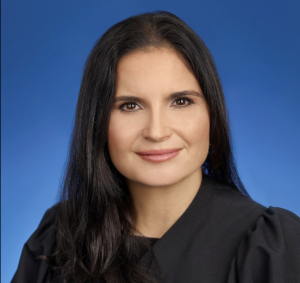
If
you
were
worried
that
Judge
Aileen
Cannon
might
someday
surprise
everyone
by
rediscovering
the
concept
of
judicial
independence,
congratulations,
today
is
not
that
day.

In
a
move
that
will
shock
exactly
no
one
who
has
watched
Cannon’s
extremely
online
career
arc,
the
Trump-appointed
judge
permanently
blocked
the
release
of
the
special
counsel
report
authored
by
Jack
Smith
in
the
classified
documents
case.
The
reason?
According
to
Cannon,
disclosure
is
barred
“due
to
the
unlawful
appointment
of
Special
Counsel
Smith
and
Attorney
General
Bondi’s
deliberative-process
determination.”

Cannon,
you’ll
recall,
showed her
whole
ass
 as
a partisan
hack
 willing
to
do the
bidding
 of
Donald
Trump,
but
her lack
of
experience
 and chaotic
courtroom
management
 are
just
as noteworthy.
But
she
really
upped
her
status
as
“favorite
judge
of
the
most
aggressively
red-hatted
MAGA
crowd”
when
she
dismissed
the
criminal
case
against
Trump.
Her
theory

that
Smith’s
appointment
as
special
counsel
was
unconstitutional

was…
creative.
So
creative,
in
fact,
that
it
flew

directly
into
conflict

with
decades
of
precedent.
But
after
Trump
won
the
2024
election,

the
DOJ
dropped
the
appeal
.

Fast-forward
to

today’s
ruling
.
Cannon
writes
that
releasing
Volume
II
of
Smith’s
report
(the
portion
addressing
the
classified
documents)
will
stay
behind
Cannon’s
ever-expanding
shield
of
judicial
paternalism
as
it
would
cause
“manifest
injustice”
to
the
former
defendants
because
Smith,
“acting
without
lawful
authority,”
obtained
an
indictment
that
was
ultimately
dismissed.

Originally,
Cannon
justified
blocking
release
because
appeals
were
pending
for
Trump’s
co-defendants
Walt
Nauta
and
Carlos
De
Oliveira.
Then
Trump
took
over
the
DOJ,
those
cases
evaporated,
and

Cannon’s
excuse

went
with
them.
American
Oversight
and
the
Knight
First
Amendment
Institute
sought
to
intervene
and
asked
for
the
report
to
be
released.

Cannon
responded
by
doing
absolutely
nothing

for
a
really
long
time.
Like,
the
Eleventh
Circuit
had
to
get
all
“undue
delay”
to
get
her
to
work.
Cannon
did
what
any
aspiring
MAGA
judicial
influencer
would
do
and
invited
the
parties
to
seek
“appropriate
relief.”

You
can
probably
guess
what
happened
next.

Trump,
through
a
personal
lawyer,
filed
a
motion
asking
Cannon
to
permanently
block
release
of
the
report.
The
DOJ

that
is,

Trump’s
personal
law
firm


helpfully
chimed
in
to
say
it
agreed
the
report
shouldn’t
be
released
outside
the
department.
Nauta
and
De
Oliveira
went
even
further,
asking
Cannon
to
order
that
all
copies
of
the
report
be
destroyed…
which,
even
Cannon
declined
to
go
that
far.
Growth!

Cannon’s
ruling
locks
the
report
away,
insulating
Trump
from
the
political
and
historical
consequences
of
a
prosecution
that
never
quite
made
it
to
trial.
All
because
rather
than
act
as
a
“check”
or
“balance”
to
executive
authority,
Aileen
Cannon
uses
her
federal
judgeship
to
give
an
assist
to
her
benefactor.


Kathryn
Rubino
is
a
Senior
Editor
at
Above
the
Law,
host
of

The
Jabot
podcast
,
and
co-host
of

Thinking
Like
A
Lawyer
.
AtL
tipsters
are
the
best,
so
please
connect
with
her.
Feel
free
to
email

her

with
any
tips,
questions,
or
comments
and
follow
her
on
Twitter

@Kathryn1
 or
Mastodon

@[email protected].

Law Student Attempts Terrorist Attack On Hoover Dam System – Above the Law

Albany
Law
student
Dawson
Maloney
is
dead,
following
an
apparent
terror
attack
on
a
substation
in
the
Hoover
Dam
power
generation
system.

Maloney,
a
2L,
rented
a
car
in
New
York,
embarking
on
Valentine’s
Day
for
a
cross-country
trip
to
Boulder
City,
Nevada.

Armed
with

“two
shotguns,
an
assault
rifle-style
pistol,
and
flame
throwers,”
Maloney
rammed
the
rented
Nissan
Sentra
through
the
gate
of
a
power
substation
owned
by
the
Los
Angeles
Department
of
Water
and
Power.
The
substation
was
not
damaged
in
the
attack.

Because
it
was
a
Nissan
Sentra.

Maloney
had
sent
recent
messages
to
his
family
about
plans
to
do
something
that
would
make
the
news
and
at
one
point
referring
to
himself
as
a
terrorist.
Albany
Law
School
released
a
statement
saying
they
were
“heartbroken
to
hear
of
the
tragic
passing
of
one
of
our
law
students,
Dawson
Maloney,
in
an
off-campus
incident.”

Hoover
Dam
and
its
affiliated
infrastructure
have
drawn
attacks
in
the
past.
Nazis
tried
to

destroy
the
dam’s
intake
towers

in
1939.
In
2020,
a
guy
used
a
rifle
and
an
armored
truck
to
block
the
bridge
over
the
dam
to

show
his
support
for
QAnon
.

Maloney’s
motive
is
less
clear
as
he
seems
to
have
read
an
eclectic
selection
of
ideologies.
A
hotel
room
search
uncovered
explosive
materials

suggesting
Maloney
harbored
plans
for
more
attacks

and
a
“smorgasbord
of
radical
literature.”

According
to
Las
Vegas
Metropolitan
Police
Department
Sheriff
Kevin
McMahill
,
the
works
spanned
right-wing
extremism,
left-wing
extremism,
environmental
extremism,
white
supremacy,
and
anti-government
ideologies.
Though,
in
fairness,
to
the
police,
those
could
just
be
his
law
school
textbooks.

It
is
a
reminder
to
keep
vigilant
about
radicalization
these
days.
There’s
a
glut
of
misinformation
and
propaganda
out
there

some
of
it
being
pushed
by
the
people
who
own
social
media
platforms

and
it’s
easy
for
folks
to
lose
a
sense
of
grounding,
even
if
they
have
the
advantages
that
come
with
being
in
law
school.


HeadshotJoe
Patrice
 is
a
senior
editor
at
Above
the
Law
and
co-host
of

Thinking
Like
A
Lawyer
.
Feel
free
to email
any
tips,
questions,
or
comments.
Follow
him
on Twitter or

Bluesky

if
you’re
interested
in
law,
politics,
and
a
healthy
dose
of
college
sports
news.
Joe
also
serves
as
a

Managing
Director
at
RPN
Executive
Search
.

Before We Predict The End Of Lawyers, Let’s Take A Deep Breath – Above the Law

Here’s
a
new
twist
on
the
notion
that
AI
will
soon
make
businesses
all
super
productive
and
maybe
all
of
us
irrelevant.
In
fact,
AI
may
actually
slow
productivity
growth
which
eventually
could
chill
the
AI
hype.


Wait.
What?

According
to
a
well-researched

Fortune
Magazine
article
,
AI
is
slowing
the
growth
of
productivity.
And
it
could
mean
more,
not
less,
work
for
us
poor
human
lawyers.

It’s
all
based
on
the
observations
in
the
late
80s
of
the
economist

Robert
Solow
.
Back
then,
the
prevailing
view
was
that
new
technologies
like
transistors,
microprocessors,
and
memory
chips
would
disrupt
workplaces
and
result
in
increased
productivity
growth.
But
in
fact,
according
to
Solow,
the
opposite
happened.
Productivity
growth
actually
slowed
over
the
years.
It’s
the
Solow
paradox.

Why?
Solow
believed
it
was
because
the
new
technologies
produced
more
and
more
information
and
reports
that
had
to
be
read,
pored
over,
and
analyzed.
In
other
words,
the
tools
created
more
work,
not
necessarily
greater
productivity.

And
it
may
be
happening
again.
The
Fortune
article
cites
a
lot
of
statistics
showing
that
even
though
AI
is
being
implemented
by
many
businesses,
they
aren’t
showing
productivity
gains.

Other
studies

cited
by
Fortune
suggest
that
many
executives
are
seeing
little
impact
of
AI
on
their
operations.
In
fact,
despite
the
substantial
investments
in
AI
tools,
many
are
struggling
to
show
the
return
on
investment.
Other

research

cited
in
the
article
suggests
that
confidence
in
the
technology
seems
to
be
waning.


What
in
the
Sam
Hill
Is
Going
On?

Lots
of
interesting
facts
here
that
could
impact
legal.
First,
there
could
be
some
simple
reasons
for
the
lack
of
productivity
increase:
AI
gains
just
haven’t
caught
up
to
us
yet.
When
it
does,
for
legal,
this
would
mean
as
firms
implement
more
and
more
AI
into
workflows,
the
legal
outputs
should
increase.
Costs
should
also
be
reduced
at
least
presumably.

But
legal
has
some
peculiar
characteristics
that
may
mean
Solow’s
paradox
may
hold
at
least
for
a
while.
Certainly,
AI
will
produce
more
information:
when
the
whole
world
is
easily
searchable
and
regurgitated
in
summary
fashion,
everyone
has
access
to
more
answers.
And
giving
a
group
of
lawyers
more
answers
will
just
give
them
more
to
argue
about,
not
less.

It
also
means
more
information
to
digest
and
factor
into
strategy.
It
means
more
verification
required
in
a
profession
where
accuracy
is
critical.

And
lawyers
by
their
nature
and
training
look
for
problems.
Give
them
more
information
and
they
are
going
to
look
for
more
problems.
Which
means
more
searching
for
solutions.

There’s
also
that
pesky
business
model:
the
billable
hour.
Most
seem
to
think
the
model
is
a
dinosaur
in
the
age
of
AI
since
it
will
take
so
much
less
time
to
do
things.
But
if
the
number
of
“things”
to
do
increase,
it
could
mean
it
takes
more
time
to
do
them
all.
And
therein
lies
the
strength
of
the
billable
hour
model.
As
long
as
there
is
plenty
of
work
to
do,
it
will
be
hard
to
kill
it.
Not
to
mention
the
fact
that
for
some
matters,
like
those
with
perceived
high
exposure,
clients
want
the
billable
hour
model
since
it
ensures
thoroughness.

Moreover,
we
are
already
seeing
increases
in
some
litigation
that
are
fueled
by
AI
efficiencies
as

I
have
discussed
.
For
example,
AI
enables
lawyers
to
take
contingency
fee
cases
they
couldn’t
before
because
many
of
the
cost-generating
tasks
overwhelmed
the
case
value.
Now
those
cases
become
economically
viable.
So,
we
have
more
work
for
humans
to
do.

Add
to
all
this
lawyers’
innate
resistance
to
change,
particularly
change
they
feel
is
imposed
on
them,
and
the
Solow
paradox
may
hold
sway
in
legal
for
the
foreseeable
future.


Let’s
Not
Write
Off
Human
Lawyers,
At
Least
Not
Yet

There’s
an
old
saying
that
the
amount
of
work
to
be
done
somehow
manages
to
fill
all
the
available
time
to
do
it.
That
may
be
true
here,
especially
in
legal.
The
Fortune
article
and
quoted
statistics
suggests
that
productivity
gains
are
not
materializing
and
there
will
be
more
work
to
be
done.
That
in
turn
raises
at
least
the
possibility
that
lots
of
investment
money
is
being
spent
for
little
quantifiable
return.
If
that’s
true,
then
sometime
soon,
the
spigot
may
run
dry.

This

together
with
the
fact
that
much
of
GenAI
for
legal
has
been
overhyped
and
oversold,
and
that
ROI
is
not
easy
to
quantify

raises
the
possibility
that
the
GenAI
hype
volcano

Melissa
Rogozinski

and
I
have
discussed
in
our
Pompeii
series
(see
below)
may
be
about
to
erupt,
leaving
many
investors,
vendors,
and
users
holding
the
bag.

In
the
meantime,
as
the
article
suggests,
despite
all
the
hype,
in
many
ways
it’s
still
more
or
less
business
as
usual.
So,
let’s
all
take
a
deep
breath
before
we
predict
the
end
of
human
work.
And
oh
yeah,
get
back
to
work.


The
Pompeii
Series:


Like
Lawyers
In
Pompeii:
Is
Legal
Ignoring
The
Coming
AI
Infrastructure
Crisis?
(Part
I)


Like
Lawyers
In Pompeii: Is Legal
Ignoring
The
Coming AI
Cost
Crisis?
(Part
II)


Like
Lawyers
In
Pompeii:
Is
Legal
Ignoring
The
Coming
AI
Trust
Crisis?
(Part
III)


Like
Lawyers
In
Pompeii:
Is
Legal
Ignoring
The
Coming
AI
Financial
Crisis?
(Part
IV)


Like
Lawyers
In
Pompeii:
Is
Legal
Ignoring
The
Coming
AI
Definition
Crisis?
(Part
V)


Stephen
Embry
is
a
lawyer,
speaker,
blogger,
and
writer.
He
publishes TechLaw
Crossroads
,
a
blog
devoted
to
the
examination
of
the
tension
between
technology,
the
law,
and
the
practice
of
law
.