Bonus
“szn”
is
officially
in
full
swing.
Just
days
after
Cravath
kicked
things
off,
setting
an
annual
bonus
mark
and
retroactively
joining
Milbank’s
summer
special
bonuses,
we’ve
got
another
firm
confirming
what
we
all
expected:
Baker
Botts
is
matching
the
Cravath
scale.
The
Houston-based
firm
—
which
clocked
a
record
2024
with
revenue
up
11.8
percent
and
profits
per
equity
partner
up
17.6
percent
—
signals
a
solid
2025
by
rewarding
associates
with
the
market-rate
bonuses.
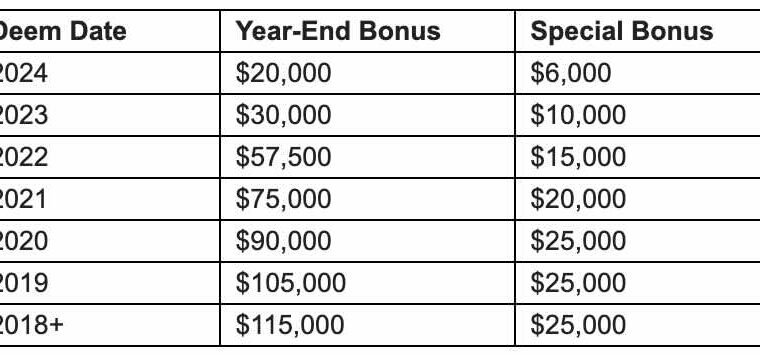
Here’s
the
year-end
bonus
breakdown:
To
qualify
for
these
bonuses,
associates
and
special
counsel
need
to
be
in
good
standing
and
employed
on
the
payment
date,
meeting
their
hours
targets
for
the
bonus
calculation
period
running
December
1,
2024
through
November
30,
2025.
The
special
bonuses
are
for
“U.S.
associates
and
counsel
who
have
met
or
exceeded
productivity
targets
for
client
chargeable
work.”
The
“client
chargeable”
language
you
might
remember
setting
off
some
controversy
last
year
as
tipsters
reported
feeling
the
rug
pulled
out
when
the
firm
adopted
the
new
standard
cutting
out
some
previously
creditable
hours.
This
year,
presumably
every
one
knew
the
score
coming
in.
The
memo
takes
pains
to
remind
everyone
that
“money
is
far
from
the
sole
measure
of
our
commitment
to
our
people”
—
which
is
exactly
what
you
say
right
before
announcing
how
much
money
you’re
giving
people.
At
least
I
didn’t
have
to
dust
off
any
“bonuses
from
the
oven”
joke
this
year.
Progress.
Congrats
to
everyone
at
Baker
Botts!
Remember
everyone,
we
depend
on
your
tips
to
stay
on
top
of
this
stuff.
So
when
your
firm
matches,
please
text
us
(646-820-8477)
or
email
us (subject
line:
“[Firm
Name]
Matches”).
Please
include
the
memo
if
available.
You
can
take
a
photo
of
the
memo
and
send
it
via
text
or
email
if
you
don’t
want
to
forward
the
original
PDF
or
Word
file.
And
if
you’d
like
to
sign
up
for
ATL’s
Bonus
Alerts
(which
is
the
alert
list
we’ll
also
use
for
salary
announcements),
please
scroll
down
and
enter
your
email
address
in
the
box
below
this
post.
If
you
previously
signed
up
for
the
bonus
alerts,
you
don’t
need
to
do
anything.
You’ll
receive
an
email
notification
within
minutes
of
each
bonus
announcement
that
we
publish.
As
Biglaw
bonuses
continue
to
be
announced
with
much
fanfare
from
associates,
some
firms
are
hoping
to
slip
their
less-than
desirable
announcements
in
under
the
radar.
When
associates
are
constantly
refreshing
their
emails
in
the
hope
of
seeing
bonus
news,
no
one
wants
to
instead
see
a
memo
about
an
increase
to
their
in-office
facetime,
but
here
we
are.
Earlier
this
week,
Reed
Smith
—
a
firm
that
brought
in
$1,504,888,000
gross
revenue
in
2024,
putting
it
at
No.
37
on
the
most
recent
Am
Law
100
—
notified
associates
that
beginning
on
January
5,
2026,
they’d
be
expected
to
work
from
the
office
four
days
each
week.
To
say
that
associates
are
displeased
with
the
inopportune
timing
of
the
announcement
would
be
quite
the
understatement.
While
associates
at
other
firms
are
being
rewarded
with
six-figure
bonuses,
associates
at
Reed
Smith
are
being
rewarded
with
…
additional
office
days.
No
wonder
they’re
upset.
As
soon
as
you
find
out
about
office
attendance
plans
at
your
firm,
please email
us (subject
line:
“[Firm
Name]
Office
Reopening”)
or
text
us
at (646)
820-8477.
We
always
keep
our
sources
on
stories
anonymous.
There’s
no
need
to
send
a
memo
(if
one
exists)
using
your
firm
email
account;
your
personal
email
account
is
fine.
If
a
memo
has
been
circulated,
please
be
sure
to
include
it
as
proof;
we
like
to
post
complete
memos
as
a
service
to
our
readers.
You
can
take
a
photo
of
the
memo
and
attach
as
a
picture
if
you
are
worried
about
metadata
in
a
PDF
or
Word
file.
Thanks.
Staci
Zaretsky is
the
managing
editor
of
Above
the
Law,
where
she’s
worked
since
2011.
She’d
love
to
hear
from
you,
so
please
feel
free
to
email
her
with
any
tips,
questions,
comments,
or
critiques.
You
can
follow
her
on Bluesky, X/Twitter,
and Threads, or
connect
with
her
on Lin
‘Tis
the
season
for
Biglaw
bonus
announcements,
and
Proskauer
Rose
has
entered
the
chat.
The
firm
announced
its
2025
year-end
bonuses
today,
matching
the
scale
that’s
rapidly
taking
on
consensus
status.
But
before
we
get
to
the
numbers,
let’s
take
a
trip
down
memory
lane.
Because
Proskauer’s
2024
bonus
season
was…
memorable.
And
not
in
a
“great
holiday
party”
kind
of
way.
Last
year,
Proskauer
associates
discovered
that
the
firm
sprung
an
hours
requirement
for
bonuses
that,
according
to
tipsters,
didn’t
formally
exist
until
after
people
missed
it.
Associates
who
fell
short
by
as
few
as
three
hours
found
nothing
but
coal
in
their
stockings.
The
firm
then
—
in
what
we
can
only
describe
as
damage
control
under
duress
—
called
a
virtual
town
hall
nine
minutes
after
our
story
posted
to
announce
that,
going
forward,
there
would
be
an
official
2,000-hour
requirement.
As
one
associate
put
it
at
the
time:
“They
say
it
can
change
from
year
to
year
but
they
will
tell
us
ahead
of
time
(yeah
right,
we’re
not
going
to
believe
that
shit
anymore).”
With
that
context,
let’s
examine
this
year’s
memo…
and
note
that
there’s
no
announced
hourly
changes:
Nothing
surprising
there.
Bonuses
will
be
paid
on
or
before
December
24,
2025
to
associates
who
are
employed
and
in
good
standing
on
that
date
and
who
have
met
the
Firm’s
applicable
performance
criteria
for
associates
of
their
seniority.
The
memo
also
includes
the
usual
caveats
about
pro-rated
bonuses
for
associates
on
reduced
schedules,
approved
leaves,
or
who
joined
after
January
1,
2025.
London
associates
get
pounds
to
sterling
conversions,
because
apparently
Brexit
didn’t
change
everything.
Congratulations
to
the
Proskauer
associates
who
will
be
receiving
their
checks
before
Christmas.
May
your
hours
be
above
threshold
and
your
good
standing
remain
unquestioned.
Pay
attention,
everyone,
because
we’ve
got
some
very
exciting
bonus
news
from
the
very
first
firm
to
announce
summer
bonuses
—
and
no,
it’s
not
Milbank.
If
you
recall,
back
in
July,
the
first
firm
to
announce
a
summer
bonus
was
Texas-based
complex
commercial
litigation
boutique Vartabedian
Hester
&
Haynes.
Now,
the
firm
is
back
with
a
Cravath/Milbank
bonus
blend
for
its
hardworking
associates.
“This
decision
reflects
our
commitment
to
reward
the
high
standard
of
work
you
deliver
and
to
recognize
your
contributions,”
the
partners
wrote
in
a
memo
to
associates.
Associates
who
have
met
their
1800-hour
annual
billable
goal
will
be
rewarded
with
these
generous
bonuses:
Bonuses
will
hit
bank
accounts
on
or
before
December
31,
for
a
very
happy
new
year
indeed.
Congratulations
to
everyone
at
VHH!
Remember
everyone,
we
depend
on
your
tips
to
stay
on
top
of
compensation
updates,
so
when
your
firm
announces
or
matches,
please
text
us
(646-820-8477)
or email
us (subject
line:
“[Firm
Name]
Bonus/Matches”).
Please
include
the
memo
if
available.
You
can
take
a
photo
of
the
memo
and
send
it
via
text
or
email
if
you
don’t
want
to
forward
the
original
PDF
or
Word
file.
And
if
you’d
like
to
sign
up
for
ATL’s
Bonus
Alerts
(which
is
the
alert
list
we
also
use
for
salary
announcements),
please
scroll
down
and
enter
your
email
address
in
the
box
below
this
post.
If
you
previously
signed
up
for
the
bonus
alerts,
you
don’t
need
to
do
anything.
You’ll
receive
an
email
notification
within
minutes
of
each
bonus
announcement
that
we
publish.
Thanks
for
your
help!
Staci
Zaretsky is
the
managing
editor
of
Above
the
Law,
where
she’s
worked
since
2011.
She’d
love
to
hear
from
you,
so
please
feel
free
to
email
her
with
any
tips,
questions,
comments,
or
critiques.
You
can
follow
her
on Bluesky, X/Twitter,
and Threads, or
connect
with
her
on Lin
It’s
been
a
challenging
year
for
firm
leaders
at
Paul,
Weiss.
The
firm
was
targeting
by
Donald
Trump
with
an
(unconstitutional)
Executive
Order,
and
rather
than
fight
in
court,
they
folded
to
Trump.
In
fact,
they
were
the
first
firm
to
do
so,
leading
the
capitulation
train…
and
got
plenty
of
pushback
for
it.
Bunches
of
folks
left
the
firm
in
protest,
so
it
makes
sense
the
firm
wants
to
reward
those
who
stuck
it
out.
All
of
which
is
preamble
to
say,
yes,
Paul,
Weiss
*is*
matching
the
prevailing
market
rate
on
year-end
and
special
bonuses.
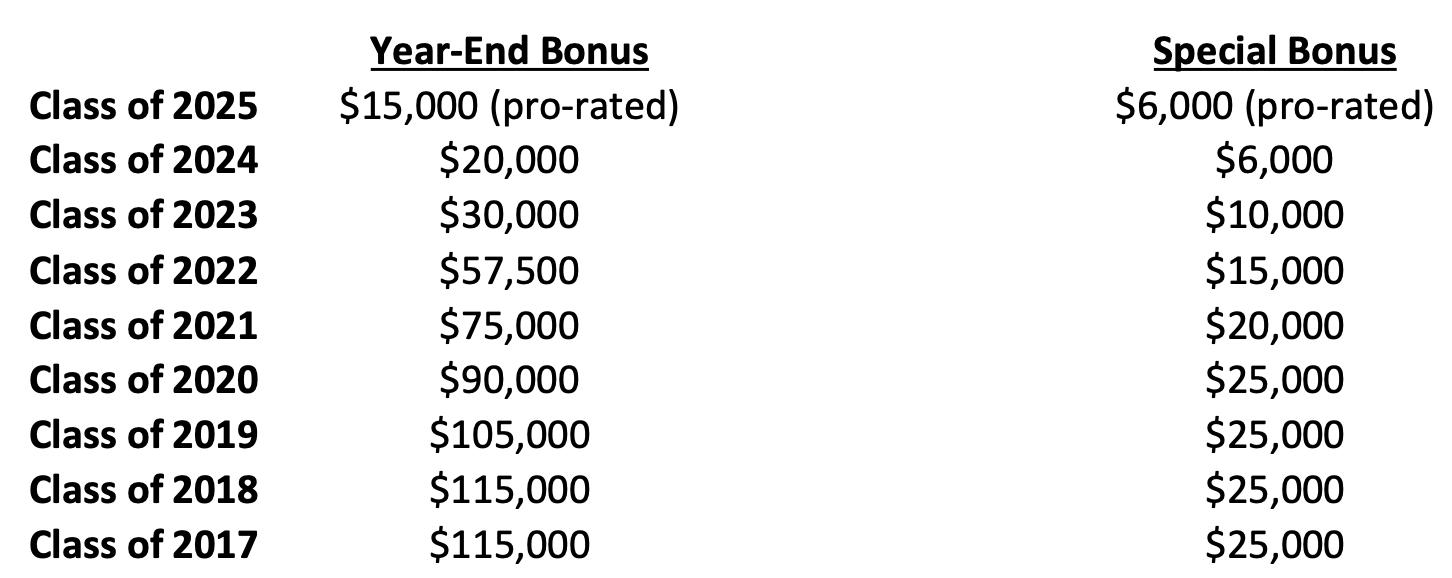
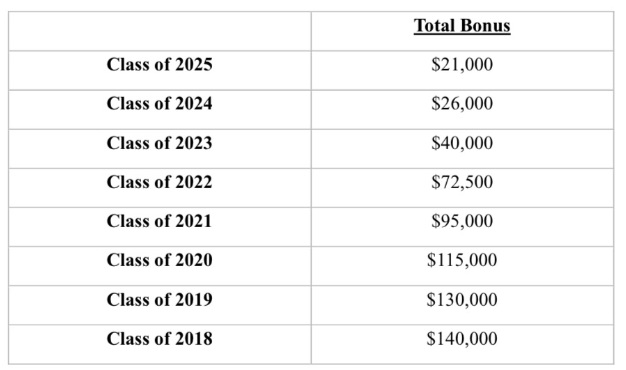
The
bonus
scale
(year-end
+
special)
is
as
follows:
Class
of
2025:
$15,000
+
$6,000
Class
of
2024:
$20,000
+
$6,000
Class
of
2023:
$30,000
+
$10,000
Class
of
2022:
$57,000
+
$15,000
Class
of
2021:
$75,000
+
$20,000
Class
of
2020:
$90,000
+
$25,000
Class
of
2019:
$105,000
+
$25,000
Class
of
2018
and
above:
$115,000
+
$25,000
These
bonuses
will
be
paid
on
December
22nd.
And
for
those
working
extra
hard
for
PW
in
2025,
there’s
a
lil’
sumpin’
extra
from
the
firm.
According
to
reports,
the
firm
told
associates
the
year-end
cash
is
“in
addition
to
the
discretionary
bonuses
that
some
of
you
will
receive
in
early
2026
for
your
outsized
contributions
to
the
firm
over
the
past
year.”
So,
is
your
firm
matching
*both*
the
year-end
and
special
bonuses?
Let
Above
the
Law
know!
We
depend
on
your
tips
to
stay
on
top
of
important
bonus
updates,
so
when
your
firm
matches
(or
if
they
fail
to
do
so),
please
text
us
(646-820-8477)
or email
us (subject
line:
“[Firm
Name]
Matches”).
Please
include
the
memo,
if
available.
You
can
take
a
photo
of
the
memo
and
send
it
via
text
or
email
if
you
don’t
want
to
forward
the
original
PDF
or
Word
file.
And
if
you’d
like
to
sign
up
for
ATL’s
Bonus
Alerts
(which
is
the
alert
list
we
also
use
for
salary
announcements),
please
scroll
down
and
enter
your
email
address
in
the
box
below
this
post.
If
you
previously
signed
up
for
the
bonus
alerts,
you
don’t
need
to
do
anything.
You’ll
receive
an
email
notification
within
minutes
of
each
bonus
announcement
that
we
publish.
Thanks
for
all
of
your
help!
Kathryn
Rubino
is
a
Senior
Editor
at
Above
the
Law,
host
of
The
Jabot
podcast,
and
co-host
of
Thinking
Like
A
Lawyer.
AtL
tipsters
are
the
best,
so
please
connect
with
her.
Feel
free
to
email
her
with
any
tips,
questions,
or
comments
and
follow
her
on
Twitter
@Kathryn1 or
Mastodon
@[email protected].
*
Lawyer
who
turned
in
brief
with
AI
hallucinations
genuinely
didn’t
realize
using
Microsoft
Copilot
for
writing
and
grammar
would
also
lead
it
to
make
up
new
cases.
Clippy
is
out
of
control.
[ABA
Journal]
*
Here’s
an
article
about
Judge
Jerry
Smith’s
dissent
that
sanewashes
an
unhinged
opinion.
Compare
and
contrast
with
this
account
that
links
to
the
actual
opinion
and
quotes
from
it
heavily.
[National
Law
Journal]
*
It’s
time
to
start
blaming
John
Roberts
for
all
of
this.
[Mother
Jones]
*
DC
troop
deployment
found
illegal,
several
months
after
the
fact.
[Courthouse
News
Service]
Boutique
Firm
Goes
Above
And
Beyond
The
Bonus
Scale:
Wilkinson
Stekloff
is
giving
out
so
much
money!
Biglaw
Firms
Are
Sharing
The
Bonus
News:
Ropes
&
Gray,
Hogan
Lovells.
If
You’re
Gonna
Disagree,
Go
All
Out:
Judge
Jerry
Smith
pens
a
104
page
dissent
that
is
strangely
preoccupied
with
George
Soros.
Former
Managing
Partner
Investigated
For
Sexual
Harassment:
Read
for
a
quick
breakdown
of
what
not
to
do
at
the
workplace.
The
late
Justice
John
Paul
Stevens
was
known
to
enjoy
what
kind
of
sandwich?
Hint:
Indeed,
Justice
Sonia
Sotomayor
confirmed,
“Justice
John
Paul
Stevens
would
have
[this
kind
of
sandwich]
virtually
every
day
that
I
sat
with
him
for
a
year.”
Function
Health
—
the
platform
that
gives
subscribers
access
to
more
than
160
different
lab
tests
—
closed
a
$298
million
Series
B
funding
round
on
Wednesday,
bringing
the
startup’s
valuation
to
$2.5
billion.
The
Austin-based
company,
which
launched
in
2023,
has
now
raised
more
than
$350
million.
After
reaching
unicorn
status,
Function
will
continue
to
focus
on
helping
people
live
longer,
healthier
lives,
according
to
CEO
Jonathan
Swerdlin.
“The
current
system
focuses
on
acute
care,
and
it’s
miraculous
for
that.
If
you
break
your
arm
or
need
surgery,
it’s
exactly
where
you
want
to
be.
However,
it’s
missing
the
key
data
points
and
integrated,
whole-body
solutions
people
need
to
stay
healthy,”
he
stated.
He
noted
that
nearly
half
of
deaths
in
the
U.S.
result
from
preventable
diseases,
yet
most
healthcare
data
lives
in
silos
and
is
generated
only
when
something
goes
wrong.
People
don’t
want
to
be
left
in
the
dark
about
their
own
wellbeing
—
they
desire
ownership
of
their
health,
Swerdlin
pointed
out.
“And
this
isn’t
just
for
biohackers
or
elite
individuals.
This
is
an
eight-billion-person
problem,”
he
declared.
Function
helps
address
this
problem
by
removing
some
of
the
barriers
around
lab
testing.
An
annual
subscription
to
Function’s
platform
costs
$365.
This
includes
access
to
lab
tests
—
which
cover
hormones,
heart
health,
immunity,
metabolism,
liver
and
kidney
function,
thyroid
and
nutrients.
Many
members
also
get
MRI
scans
through
Function,
which
start
at
$499,
as
well
as
heart
and
lungs
CT
scans,
which
start
at
$349.
Since
Function’s
launch,
members
have
now
completed
more
than
50
million
lab
tests.
Each
member
receives
an
overview
of
their
results
from
a
clinician,
a
personalized
plan
with
nutrition
and
lifestyle
recommendations,
and
outreach
from
a
clinician
if
anything
looks
concerning,
Swerdin
explained.
All
results
live
in
the
Function
app,
where
members
can
download
reports
to
share
with
their
own
clinicians.
The
platform
is
the
only
one
on
the
market
to
combine
such
a
wide
range
of
lab
testing
and
imaging
under
one
membership.
All
data
gets
integrated
into
a
single
interface,
which
gives
members
a
personalized
view
of
their
health
and
helps
them
make
more
informed
decisions,
Swerdlin
noted.
He
said
Function’s
new
influx
of
capital
will
fuel
the
advancement
of
its
AI
models,
which
are
designed
to
integrate
research
with
each
individual’s
data
for
more
proactive,
personalized
guidance.
“Over
the
next
decade,
real-world,
longitudinal
data
will
completely
reshape
expectations.
Consumers
won’t
settle
for
reactive
care
—
they’ll
expect
systems
that
continuously
learn
from
their
biology
and
alert
them
before
problems
arise,”
Swerdlin
stated.
Whether
this
model
can
deliver
on
its
promise
of
earlier
detection
and
prevention
remains
a
key
question
as
Function
enters
its
next
phase.
Last
week,
several
reports
indicated
that
McDermott
Will
&
Schulte
is
considering
restructuring
its
firm
to
accept
a
potential
private
equity
investment.
A
move
like
this
by
a
top
global
law
firm
would
be
unprecedented
and
test
ethics
rules
governing
ownership
of
law
firms
by
nonlawyers.
A
move
to
separate
legal
advice
from
other
legal
services
that
don’t
require
advice
is
a
big
shift
that
would
ripple
through
established
firms
and
also
test
regulatory
boundaries.
A
Trillion-Dollar
Market
Evolving
The
LegalTech
Fund
(TLTF)
sees
a
$1
trillion
opportunity
to
reinvent
legal
services
through
the
convergence
of
technology,
regulatory
changes,
and
innovation. TLTF
calls
this
movement
Law
Firm
2.0,
and
the
fund
believes
a
reinvention
will
pave
the
way
for
entirely
new,
tech-enabled
models
of
legal
service
delivery.
In
addition
to
the
chatter
around
McDermott,
others
are
taking
steps
toward
the
rethinking
of
legal
services.
Momentum
is
no
longer
theoretical.
Arizona’s
Alternative
Business
Structure
(ABS)
regime
now
supports
over
150
entities
that
legally
permit
nonlawyer
ownership. Additionally,
AI
law
firms
like
Crosby
are
making
headlines
as
they
announce
a
meaningful
$20
million
Series
A
investment. Eudia
is
making
headlines
after
acquiring
a
second
Alternative
Legal
Service
Provider
(ALSP)
last
month.
Law
Firm
2.0
is
gaining
momentum.
TLTF
Summit
—
Law
Firm
2.0
Panels
Last
week,
TLTF
offered
a
track
on
Law
Firm
2.0
at
their
annual
summit. I
had
the
opportunity
to
facilitate
one
of
the
panels,
interviewing
several
startups
about
their
vision
for
the
Law
Firm
2.0
movement.
Here
are
four
key
learnings
from
that
panel.
Deconstruct
and
Reconstruct
the
Law
Firm
Model
Covenant
is
a
new
technology-enabled
law
firm
that
integrates
AI
with
legal
expertise
for
private
market
transactions.
Jen
Berrent,
co-founder
of
Covenant,
views
Law
Firm
2.0
as
“The
deconstruction
of
the
services
a
law
firm
provides
and
the
reconstruction
of
those
to
create
a
law
firm
that
uses
new
approaches
and
leans
on
technology.” Covenant
is
pursuing
better
outcomes
for
its
clients,
including
lower
fees,
faster
transaction
processing,
and
deeper
insights
using
the
principles
of
Law
Firm
2.0.
Agentic
AI
Kiran
Bellubbi
at
Glade.AI
shared
about
the
power
of
agents
to
provide
greater
leverage
for
attorneys
to
perform
tasks. He
stated,
“AI
agents
can
think
and
act
for
hours
on
end,
collecting
information
and
performing
tasks
with
transparency
and
efficiency
under
the
supervision
of
attorneys.”
Data
Driven
Large
law
firms
often
struggle
to
find
information
and
to
leverage
their
scale
and
know-how
about
their
client
and
expertise.
Among
other
things,
DeepJudge
helps
firms
better
find
and
relate
documents
and
information
together
to
make
use
of
institutional
knowledge.
DeepJudge’s
founder
and
CTO,
Yannic
Kilcher,
stated,
“Law
firms
in
the
future
will
have
a
command
of
their
data
and
will
be
data-driven.”
New
Business
Models
Innovation
is
not
limited
to
software.
The
panel
also
discussed
how
redefining
service
delivery
can
align
fees
with
client
value.
For
example,
Glade
offers
a
SaaS
practice
management
solution
but
does
not
follow
a
standard
per-seat
subscription
model.
Glade
charges
by
progress
and
milestones
that
are
more
closely
tied
to
client
value.
The
Expanding
Map
Of
Legal
Service
Delivery
With
a
$1
trillion
market
opportunity,
there
will
be
competing
options
to
rethink
how
legal
services
are
delivered.
Large
firms
will
continue
to
evolve
and
leverage
their
strengths,
including
relationships
and
broad
experience,
as
they
improve
their
ability
to
use
data
and
new
technologies.
Incumbent
firms
may
restructure
along
the
lines
being
discussed
by
McDermott.
Upstart
technology-enabled
law
firms
will
leverage
AI
and
a
“blank
sheet
of
paper”
to
create
disruption,
particularly
in
specialized
practice
areas.
Managed
services
and
ALSPs
will
seek
greater
market
share
by
leveraging
the
ever-expanding
universe
of
technology
to
provide
attorney-reviewed
services
that
do
not
require
legal
advice.
Outside
investors
will
also
leverage
ABS
structures
in
Arizona,
Utah,
and
Puerto
Rico
to
accelerate
disruption
and
blur
the
lines.
An
Uber
Moment
When
Uber
launched
its
service,
it
did
not
wait
for
permission
from
taxi
regulators.
Customers
started
to
order
rides,
and
before
anyone
knew
it,
Uber
had
taken
over.
Regulators
followed.
Consumers
(and
some
attorneys)
are
using
OpenAI’s
ChatGPT
as
a
legal
expert. This
phenomenon
is
playing
out
similarly
to
Uber’s
approach
to
taxi
medallions.
Additionally,
most
Generative
AI
features
in
legal
tech
rely
on
OpenAI
or
another
large
language
model
provider.
The
practical
boundary
between
legal
information
and
legal
advice
is
growing
harder
to
define,
and
the
demand
for
clarity
is
intensifying. There
will
be
pressure
to
rethink
the
unauthorized
practice
of
law
(UPL)
depending
on
whether
lawyers,
nonlawyers,
or
technology
applications
are
involved.
The
ABA
Model
Rules
governing
UPL
(ABA
5.5)
and
nonlawyer
ownership
in
law
firms
(ABA
5.4)
did
not
contemplate
the
AI
revolution.
The
pressure
to
revisit
those
rules
at
the
national
level,
while
most
of
the
regulatory
authority
is
administered
at
the
state
level,
adds
complexity.
With
consumers
embracing
AI,
capital
flowing,
and
large
firms
like
McDermott
exploring
structural
change,
the
test
cases
for
Law
Firm
2.0
are
arriving
faster
than
many
expected.
The
legal
ecosystem
is
about
to
be
reshaped.
Regulators
will
need
to
move
quickly
or
risk
reacting
after
the
fact,
as
a
convergence
of
forces
will
redefine
legal
services
and
how
those
services
are
delivered.
Ken
Crutchfield
has
over
forty
years
of
experience
in
legal,
tax,
and
other
industries.
Throughout
his
career,
he
has
focused
on
growth,
innovation,
and
business
transformation. His
consulting
practice
advises
investors,
legal
tech
startups
and
others.
As
a
strategic
thinker
who
understands
markets
and
creating
products
to
meet
customer
needs,
he
has
worked
in
start-ups
and
large
enterprises.
He
has
served
in
General
Management
capacities
in
six
businesses.
Ken
has
a
pulse
on
the
trends
affecting
the
market.
Whether
it
was
the
Internet
in
the
1980s
or
Generative
AI,
he
understands
technology
and
how
it
can
impact
business.
Crutchfield
started
his
career
as
an
intern
with
LexisNexis
and
has
worked
at
Thomson
Reuters,
Bloomberg,
Dun
&
Bradstreet,
and
Wolters
Kluwer.
Ken
has
an
MBA
and
holds
a
B.S.
in
Electrical
Engineering
from
The
Ohio
State
University.

 Joe
Joe




 Kathryn