Legal Ethics Roundup: SCOTUS Opens Term With Legal Ethics Argument, New Judicial Anti-Bias Rule & More – Above the Law


Ed.
note
:
Please
welcome
Renee
Knake
Jefferson
back
to
the
pages
of
Above
the
Law.
Subscribe
to
her
Substack,
Legal
Ethics
Roundup, here.


Welcome
to
what
captivates,
haunts,
inspires,
and
surprises
me
every
week
in
the
world
of
legal
ethics.


Happy
First
Monday!
 On
the
first
Monday
of
each
month,
you
get
a
longer
version
of
the
Roundup
with
the headlines plus reading
recommendations
job
postings
events,
and
many
other
features.
The
first
Monday
in
October
is
extra
special
because
it
is
also
the
opening
day
for
the U.S.
Supreme
Court’s
2025
Term
.

In
2010,
I
wrote
a
law
review
article
called “The
Supreme
Court’s
Increased
Attention
to
the
Law
of
Lawyering:
Mere
Coincidence
or
Something
More?”
 I
described
what
has
turned
out
to
be
the
high-water
mark
for
cases
involving
legal
ethics
issues
taken
up
by
the
Supreme
Court
in
a
particular
term.
There
were
seventeen
— seventeen! —
such
cases
during
the
2009
Term.
You
can read
the
full
article
here
 if
you
want
to
know
more
about
the
cases
from
the
2009
Term.


But
what
about
the
Supreme
Court’s
docket
for
the
upcoming
term?
 So
far
we
have
only
one.
But
to
be
fair
the
Court
has
only granted
cert
 to
a
few
dozen
cases
to
date.
I’ll
be
keeping
an
eye
out.
For
now,
here’s
an
overview
of Villarreal
v.
Texas
,
which
will
be
argued today.
Along
with
several
other
legal
ethics
scholars,
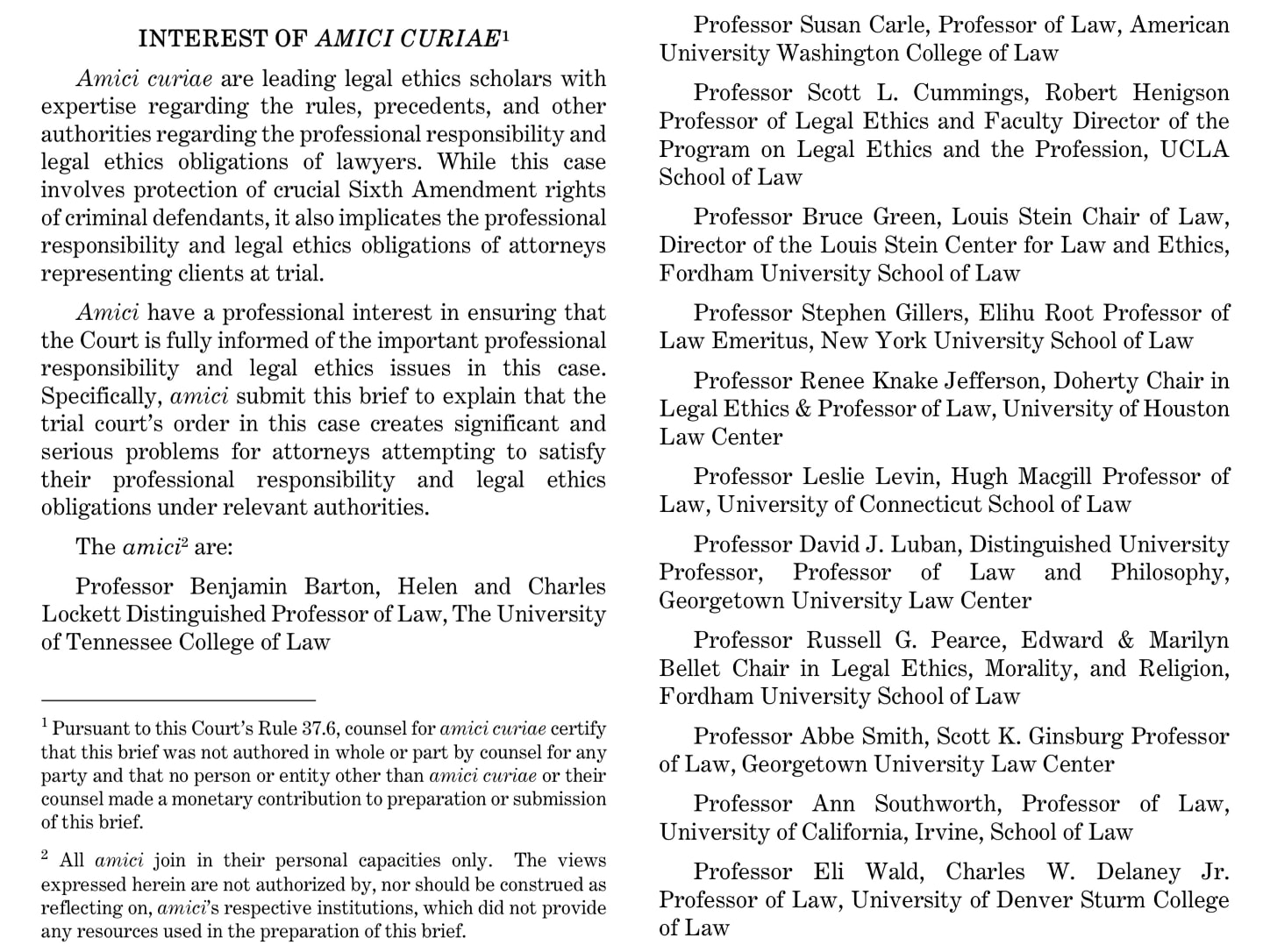
I
joined
an
amicus
brief
filed
in
this
case.
At
issue
is
whether
a
trial
court
violates
a
defendant’s
Sixth
Amendment
right
to
counsel
by
prohibiting
the
defendant
and
his
lawyer
from
discussing
testimony
during
an
overnight
recess.
We
argue
that
a
ban
on
discussions
like
this
jeopardizes
the
lawyer’s
compliance
with
core
professional
responsibilities
and
undermines
attorney-client
privilege
and
the
duty
of
confidentiality.
Read
more
and
download
the
amicus
brief here.


In
totally-unrelated-to-legal-ethics
news,
I’ve
been
listening
nonstop
to
the
newly-released
album
from Taylor
Swift
,
The
Life
of
a
Showgirl
(reviewed here by
The
New
York
Times

gift
link).
At
the
moment,
my
favorite
tracks
are
CANCELLED!
and
Opalite.
Whatever
you
think
of
her
music,
she
always
leaves
her
fans
with
something
to
look
forward
to.
I
hope
that’s
what
I’m
doing
here
for
legal
ethics
fans
each
week!


Source:
Taylor
Swift/Republic
Records,
Public
domain,
via
Wikimedia
Commons

Now,
let’s
get
started
with
the
headlines.
Don’t
forget
to
keep
scrolling
down
to
the
very
end
for
all
the
“First
Monday”
extra
features.
Enjoy!

Highlights
from
the
Past
Week –
Top
Ten
Headlines


#1 “Texas
Plans
to
End
ABA’s
Role
in
State’s
Law
School
Oversight.” 
From Reuters: “The
Supreme
Court
of
Texas
said
in
an
order
on
Friday
that
it
‘is
of
the
tentative
opinion
that
the
ABA
should
no
longer
have
the
final
say’
on
whether
a
law
school’s
alumni
can
sit
for
the
Texas
Bar
or
be
licensed….University
of
Houston
law
dean Leonard
Baynes
 told
Reuters
on
Monday
that
he
was
pleased
the
court
showed
commitment
to
law
degree
portability
and
avoiding
onerous
requirements
on
law
schools.
But
Baynes
said
the
‘order
creates
uncertainty
for
legal
education
in
the
backdrop
of
an
already
chaotic
world
of
higher
education.’”
Read
more here.


#2
“The
Justice
Department
Seeks
Information
on
the
Georgia
D.A.
Who
Prosecuted
Trump.” 
From
the New
York
Times: 
“The
Department
of
Justice
has
issued
a
subpoena
for
records
related
to
the
travel
history
of Fani
T.
Willis
,
the
Georgia
district
attorney
who
charged President
Trump
 in
a
sweeping
election
interference
case,
according
to
a
federal
grand
jury
subpoena
reviewed
by
The
New
York
Times.
The
scope
of
the
investigation
is
not
yet
clear.
Also
unclear
is
whether
Ms.
Willis
is
the
target
of
the
inquiry
and
whether
she
will
ultimately
face
charges.
Grand
jury
proceedings
are
secretive
by
law.
But
the
document
reviewed
by
The
Times
is
an
indication
that
the
Justice
Department
under
President
Trump
may
be
investigating
another
one
of
his
old
foes.”
Read
more here.


#3
“Michigan
Justices
Issue
Scaled-Back
Judicial
Anti-Bias
Rule.” 
From Bloomberg
Law: 
“The
Michigan
Supreme
Court
on
Wednesday tweaked a
conduct
rule
barring
judges
from
exhibiting
bias
or
harassing
those
in
their
courtrooms,
but
didn’t
go
as
far
as
a
proposal
from
earlier
this
year.
The
rule
previously
said
a
judge
‘should’
treat
everyone
fairly
and
respectfully,
‘without
regard
to
a
person’s
race,
gender,
or
other
protected
personal
characteristic.’
The
new
one,
which
goes
into
effect
Jan.
1,
says
a
judge
must
perform
their
duties
‘without
bias
or
prejudice.’
It
changes
‘should’
to
‘shall,’
and
says
they
‘shall
not
intentionally
or
recklessly,
in
the
performance
of
judicial
duties,
manifest
bias
or
prejudice’.”
Read
more here.


#4
“What
Ethics
Rules
Say
On
Atty
Discipline
For
Online
Speech.” 
From
the Law360: “Though
law
firms
are
free
to
discipline
employees
for
their
online
commentary
about Charlie
Kirk
 or
other
social
media
activity,
saying
crude
or
insensitive
things
on
the
internet
generally
doesn’t
subject
attorneys
to
professional
discipline
under
the
Model
Rules
of
Professional
Conduct,
says Stacie
H.
Rosenzweig
 at
Halling
&
Cayo.”
Read
more here.


#5
“Ethics
Opinion
1286:
Requesting
Former
Clients
to
Write
Google
Reviews.” 
From
the New
York
State
Bar
Association: 
“A
lawyer
may
ask
a
former
client
to
write
a
Google
review
of
the
lawyer’s
services,
and
may
offer
the
former
client
a
nominal
gift
for
doing
so,
provided
the
lawyer
does
not
draft
the
Google
review
for
the
client
or
condition
the
gift
on
the
content
of
the
review.
The
lawyer
may
not
use
the
former
client’s
confidential
information
to
the
disadvantage
of
the
former
client.”
Read
more here.


#
6
“Supreme
Court
Ethics
Issues
Trace
to
John
Roberts’
‘Original
Sin,’
New
Book
Alleges.” 
From
the Rolling
Stone: 
“When
he
was
pitching
himself
to George
W.
Bush
 for
a
seat
on
the
highest
court
in
the
land, John
Roberts
 famously
declared
that
judges
should
be
like
‘umpires,’
making
calls
but
never
stepping
up
to
the
plate
for
either
team.
Bush
liked
the
line
so
much
he
didn’t
just
give
Roberts
a
seat
on
the Supreme
Court
,
he
installed
him
as
chief
justice

the
youngest
person
to
hold
that
job
in
almost
200
years.
A
new
book, Without
Precedent
 —
an
excerpt
of
which
has
been
shared
exclusively
with Rolling
Stone
 —
suggests
another
powerful
reason
why
Bush
may
have
felt
such
extraordinary
confidence
appointing
Roberts
to
the
most
powerful
position
in
the
U.S.
judiciary.
At
the
time
that
Roberts
was
auditioning
for
the
job,
he
was
also
presiding
over
a
critical
case
to
which
the
Bush
administration
was
a
party

and
rather
than
acting
as
an
ump
in
that
case,
author Lisa
Graves
 suggests,
Roberts
was
practically
pinch-hitting
for
Bush
and
his
cronies.”
Read
more here.


#7
“Using
Military
Lawyers
as
Immigration
Judges
is
Ill-Advised
and
Potentially
Illegal.” 
From
the Brennan
Center
for
Justice:
 “The
Trump
administration’s reported
authorization
 of
600
military
lawyers
to
act
as
temporary
immigration
judges
would
deprive
immigrants
of
a
fair
hearing
and
further
erode
the
line
between
the
military
and
civilian
government.
This
is
true
regardless
of
the
professionalism
of
the
military
lawyers.
Immigration
judges
are
specially
trained
administrative
judges
in
the
Department
of
Justice
who
oversee deportation hearings.

In
addition, ethical
rules
 are
fundamental
to
the
rule
of
law,
but
the
legal
and
ethical
obligations
of
military
lawyers
and
immigration
judges
are
in
tension.”
Read
more here.


#8
“Update
to
‘Conflict
U.’:
Some
Judges
Are
Recusing
Due
to
a
University
Conflict.” 
From Fix
the
Court: 
“In
July,
Fix
the
Court
released
a
report
called Conflict
U.
 that
identified
24
federal
judges
who
did
not
recuse
in
six
dozen
cases
involving
the
universities
where
they
also
serve
as
law
school
instructors.
This
practice
raises
clear
conflict-of-interest
concerns,
despite
being
sanctioned
by
judiciary
policy.
The
report
urges
reforms
to
strengthen
recusal
practices
and
restore
public
trust
in
judicial
ethics.
This
past
month,
Fix
the
Court
conducted
follow-up
research
on
this
issue,
and
what
we
found
was
somewhat
surprising:
several
judges
with
adjunct
positions
at
law
schools
are,
in
fact,
choosing
to
recuse
when
the
law
schools’
parent
universities
find
themselves
in
their
courtrooms.”
Read
more here.


#9
“Law,
Layers
and
the
Battle
Against
Antisemitism.” 
From Eli
Wald
 (Denver)
in JOTWELL reviewing Antisemitism
and
the
Law
 by Robert
Katz: 
“According
to
the
American
Bar
Association
Model
Rules
of
Professional
Conduct,
a
lawyer
is
‘a
representative
of
clients,
an
officer
of
the
legal
system
and
a
public
citizen
having
special
responsibility
for
the
quality
of
justice.
As
Deborah
Rhode
has
astutely
pointed
out,
however, lawyers’
duties
as
public
citizens
have
long
been
more
of
a
rhetorical
ploy
than
an
actual
commitment,
in
need
of
elaboration
and
exposition
.
In
the
twenty-first
century,
lawyers
have
been
forced
to
come
to
terms
with
their
asserted
role
as
public
citizens
in
the
face
of
the
#MeToo
and
the
Black
Lives
Matter
movements,
reform
calls
for
the
deregulation
of
the
legal
profession
designed
to
increase
access
to
legal
services
for
those
who
cannot
afford
to
pay
for
them,
and
attacks
on
the
rule
of
law.
Professor
Robert
Katz’
new
casebook, Antisemitism
and
the
Law
,
constitutes
an
important
contribution
sure
to
help
those
aiming
to
understand
the
obligations
of
lawyers
to
pursue
justice
and
combat
discrimination.”
Read
more here.


#10
 “Dealing
with
Social
Media
&
Public
Comment:
Legal
Ethics
Lessons
for
Corporate
Counsel.” 
From JD
Supra: 
“Social
media
can
turn
small
moments
into
corporate
crises
overnight.
For
in-house
counsel,
the
ethical
challenges
are
particularly
complex:
protecting
confidential
information,
addressing
employee
conduct,
and
managing
public
backlash
when
private
behavior
goes
viral.

The
Oklahoma
and
Texas
Rules
of
Professional
Conduct
frame
the
lawyer’s
obligations
when
social
media
collides
with
the
workplace.”
Read
more here.

Recommended
Reading


“Legal
Insurance
and
Its
Limits” 
by Nora
Freeman
Engstrom 
(Stanford).
From
the
abstract:

Courts
are
buckling
under
the
weight
of
a
staggering
access-to-justice
crisis.
In
three-quarters
of
cases,
at
least
one
side
lacks
a
lawyer,
default
judgments
are
on
the
rise,
and
most
Americans
with
valid
claims
never
take
legal
action.
The
situation
is
dire,
and
it
understandably
has
policymakers
casting
about
for
a
fix.
On
the
menu
are
a
range
of
uncontroversial
reform
ideas,
such
as
expanding
legal
aid,
supporting
system
simplification,
and
promoting
pro
bono.
But
it
is
increasingly
clear
that
those
measures—even
if
accomplished—would
not
make
a
dent
in
the
problem.
Attention
is
thus
turning
to
other
reform
ideas,
such
as
relaxing
unauthorized
practice
of
law
(UPL)
rules
and
scrapping
Model
Rule
5.4(d),
the
provision
that
prevents
nonlawyers
from
even
partially
owning
entities
that
deliver
legal
services.
Both
reforms
are
promising.
But
both
would
dilute
the
longstanding
lawyers’
monopoly.
Perhaps
not
surprisingly,
the
bar
is
fighting
these
reforms
tooth-and-nail.

Into
this
roiling
landscape,
some
now
have
a
new
idea:
legal
insurance.
They
suggest
that
legal
insurance
is
the
way
to
expand
access
to
justice
for
middle
and
working-class
Americans.
Reformers
are
also
quick
to
point
out
that—unlike
a
relaxation
of
UPL
restrictions
or
the
abolition
of
Rule
5.4(d)—legal
insurance
stands
to
benefit
lawyers.

We
have
seen
this
play
before.
In
the
1970s,
the
bar
seized
on
legal
insurance
as
a
solution
to
what
was
then
seen
as
an
urgent
access-to-justice
crisis
afflicting
the
middle-class.

This
Article
recovers
the
lost
history
of
the
country’s
first
experiment
with
legal
insurance.
In
so
doing,
it
seeks
to
forestall
another
false
start.
In
addition,
by
drawing
on
a
range
of
disciplines—including
insurance
law
(particularly
insights
concerning
moral
hazard
and
adverse
selection),
behavioral
economics,
legal
ethics,
and
the
legal
profession—this
Article
explains
why
the
legal
insurance
idea
floundered,
and
seems
destined
to
flounder,
going
forward.


Download
from
SSRN
here.


“Interoperable
Legal
AI
for
Access
to
Justice”
 by Drew
Simshaw 
(UNLV).
From
the
abstract:

The
access-to-justice
gap
is
growing,
affecting
individuals
with
both
civil
and
criminal
needs
in
the
United
States.
Though
these
challenges
are
multifaceted,
procedural
barriers
in
the
U.S.
legal
system
can
often
inhibit
access-to-justice
efforts.
The
resulting
inequities
undermine
fairness
for
those
interacting
with
courts
and
jeopardize
the
legitimacy
of
the
broader
legal
system.
Legal
technology
driven
by
artificial
intelligence
(AI)
has
been
heralded
for
its
potential
to
combat
these
challenges
on
three
access-to-justice
fronts
that
are
often
conceptualized
in
isolation:
a
consumer
(i.e.,
self-help)
front,
a
legal-service-provider
front,
and
a
court
front.
Progress
on
each
of
these
fronts
is
apparent,
though
not
at
the
pace
or
scale
necessary
to
make
meaningful
inroads
into
closing
the
justice
gap
nationwide.
The
time
has
come
to
appreciate
that,
although
progress
on
all
three
fronts
is
necessary
for
closing
the
justice
gap
and
maximizing
fairness,
it
is
insufficient
if
there
is
not
also
some
level
of
shared
commitment
and
coordination
across

and
not
just
within

all
fronts.
This
Essay
argues
that
technological
and
procedural
legal
interoperability

that
is,
widespread
consistency
in
technology
design
and
related
processes

should
be
at
the
forefront
of
these
efforts,
particularly
as
they
relate
to
artificial
intelligence.
Further,
although
the
consumer
and
legal-services
fronts
remain
critically
important,
courts
should
be
recognized
as
the
necessary
drivers
in
achieving
this
interoperable
legal
AI.


Download
from
SSRN
here.

Legal
Ethics
Trivia

From
the
Texas
Center
for
Legal
Ethics,
here’s
the
question
of
the
month:
“How
much
do
you
know
about
the
ethics
rules
governing
law
firm
names?” Test
yourself
at
this
website
 where
you
can
read
a
short
hypothetical,
select
an
answer,
and
see
your
results.
So
far,
only
31%
have
gotten
it
right.
Will
you?


Get
Hired

Did
you
miss
the
350+
job
postings
from
previous
weeks?
Find
them
all here.


Assistant
General
Counsel,
State
Bar
of
Georgia

Atlanta. 
From
the
posting:
“The
primary
purpose
of
this
position
is
to
review,
investigate,
and
prosecute
violations
of
the
Georgia
Rules
of
Professional
Conduct.
Act
as
lead
counsel
in
all
aspects
of
prosecuting
disciplinary
cases
including
drafting
pleadings,
conducting
discovery,
conducting
hearings
before
the
Special
Master,
presenting
oral
argument
before
the
Special
Master
and
State
Disciplinary
Review
Board,
and
negotiating
settlements
of
disciplinary
matters.”
Learn
more
and
apply here.


Associate
Counsel,
American
Bar
Association
Center
for
Professional
Responsibility

Chicago/Hybrid. 
From
the
posting:
“Serve
as
national
legal
expert
in
the
field
of
legal
and
judicial
ethics
and
professional
responsibility
law.
Provide
expertise
to
ABA
governance,
ABA
entities,
state,
local,
national
and
international
legal
community.
Develop
substantive
legal
resources
to
ensure
and
enhance
the
Association’s
continued
status
as
the
preeminent
legal
authority
in
professional
responsibility
law.”
Salary
range
$89,280

$109,740
annually.
Learn
more
and
apply here.


Attorney
x
2,
Texas
Ethics
Commission

Austin/Hybrid. 
From
the
posting:
”The
Texas
Ethics
Commission
is
hiring
two
attorneys
to
perform
entry
level
to
moderately
complex
attorney
work
administering
and
enforcing
state
ethics
laws.
Work
for
the
Enforcement
Division
would
involve
investigating
and
processing
sworn
complaints,
conducting
discovery
and
hearings,
and
drafting
and
negotiating
settlements.
These
positions
will
work
under
moderate
supervision
with
significant
latitude
for
the
use
of
initiative
and
independent
judgment.”
Salary
range
$75,000

$102,000
annually.
Learn
more
and
apply here.


Conflicts
Staff
Attorney,
Cooley
LLP

Multiple
Locations. 
From
the
posting:
“Working
closely
with
Associate
Directors
of
Conflicts,
the
Conflicts
Staff
Attorney
is
responsible
for
assuring
compliance
with
applicable
Rules
of
Professional
Conduct
and
assisting
and
managing
other
loss
prevention
functions.
The
Conflicts
Staff
Attorney
is
a
staff
attorney
who
understands
the
rules
that
govern
legal
practice
and
can
perform
practical
processes
to
ensure
compliance
with
those
rules.”
Salary
range
$125,000

$190,000
annually.
Learn
more
and
apply here.


Legal
Operations
Manager,
United
Airlines

Chicago. 
From
the
posting:
”Our
department
is
seeking
a
legal
operations
manager
with
proven
experience
in
data
analytics
and
managing
the
day-to-day
administrative
operations
of
a
corporate
legal
department
while
supporting
and
driving
strategic
initiatives.
This
position
reports
to
the
Chief
Legal
Operations
Officer
and
plays
a
pivotal
role
in
optimizing
the
department
to
run
more
efficiently
and
effectively.”
Salary
range
$99,750.00
to
$129,924.00
annually.
Learn
more
and
apply here.


Senior
Attorney

Ethics
&
Advertising,
The
Florida
Bar

Tallahassee. 
From
the
posting:
”Provides
oral
ethics
opinions
to
Florida
Bar
members
on
the
Ethics
Hotline,
advises
reporters
and
others
generally
regarding
application
of
the
Rules
of
Professional
Conduct.
Reviews
attorney
advertisements
for
compliance
with
the
Rules
Regulating
The
Florida
Bar;
answers
advertising
questions
on
the
Hotline
and
issues
written
opinions;
staffs
the
Standing
Committee
on
Advertising,
drafts
formal
and
informal
advisory
advertising
opinions,
performs
legal
research
on
advertising
issues,
drafts
amendments
to
the
lawyer
advertising
rules,
prepares
agenda
items
for
meetings,
attends
meetings
and
conference
calls,
and
reviews
minutes.”
Minimum
starting
salary
$85,247.22
annually.
Learn
more
and
apply here.


Upcoming
Ethics
Events
&
Other
Announcements

Did
you
miss
an
announcement
from
previous
weeks?
Find
them
all here.


Keep
in
Touch


News
tips?
Announcements?
Events?
 A
job
to
post?
 Reading
recommendations?
 Email [email protected] –
but
be
sure
to
subscribe
first,
otherwise
the
email
won’t
be
delivered.


Renee
Knake
Jefferson
holds
the
endowed
Doherty
Chair
in
Legal
Ethics
and
is
a
Professor
of
Law
at
the
University
of
Houston.
Check
out
more
of
her
writing
at
the Legal
Ethics
Roundup
.
Find
her
on
X
(formerly
Twitter)
at @reneeknake or
Bluesky
at legalethics.bsky.social

How Healthcare Leaders Are Reacting to the Government Shutdown – MedCity News

After
Congress
failed
to
pass
a
funding
bill,
the
government
shut
down
early
Wednesday
morning,
which
has
significant
implications
for
healthcare,
including
the
future
of
telehealth
flexibilities
and
Affordable
Care
Act
(ACA)
coverage.

The
shutdown
has
sparked
strong
backlash
from
the
healthcare
community.
Patient
advocacy
group
Families
USA,
for
example,
criticized
Congressional
leaders
for
not
extending
the
ACA’s
enhanced
premium
tax
credits.

These
enhanced
subsidies
(which
are
set
to
expire
at
the
end
of
the
year)
were
introduced
in
2021
and
lowered
monthly
premiums
for
those
who
buy
coverage
on
the
marketplaces.
The
subsidies
are
a
key
sticking
point
between
Democrats
and
Republicans,
with
Democrats
calling
for
an
extension,
while
Republicans
say
negotiations
should
happen
after
the
funding
is
approved.

“We
shouldn’t
need
a
shutdown
to
prevent
a
massive
spike
in
health
insurance
premiums.
After
an
election
on
affordability,
Republican
leaders
are
betraying
their
own
voters
with
their
willingness
to
shut
down
the
government
to
avoid
extending
tax
credits
that
help
more
than
20
million
working-class
Americans
afford
health
care,”
said
Anthony
Wright,
executive
director
of
Families
USA.
“When
Republicans
in
Congress
passed
huge,
permanent
tax
credits
for
billionaires
and
big
corporations
this
summer,
they
blocked
multiple
attempts
and
amendments
to
similarly
extend
the
tax
credits
that
help
working
families
pay
their
health
insurance
premiums.”

According
to

KFF
,
if
the
enhanced
subsidies
expire,
out-of-pocket
premium
payments
would
increase
by
114%,
from
$888
on
average
in
2025
to
$1,904
in
2026.

Another
key
issue
with
the
shutdown
is
the
expiration
of
the
Medicare
telehealth
flexibilities,
which
expired
on
Tuesday
and
will
remain
expired
unless
Congress
includes
them
in
the
next
funding
bill.
The
flexibilities
introduced
during
the
Covid-19
pandemic
broadened
Medicare
eligibility
for
virtual
care,
which
had
previously
been
limited
to
patients
in
rural
areas
and
required
them
to
be
at
an
approved
originating
site,
such
as
a
hospital
or
physician’s
office.
Now
that
the
flexibilities
have
expired,
Medicare
telehealth
coverage
will
return
to
its
pre-pandemic
requirements.

The
American
Telemedicine
Association
is
calling
for
Trump
and
Congress
to
restore
these
flexibilities
and
retroactively
reimburse
providers
still
offering
telehealth
services
during
the
shutdown.

“Most
providers
and
hospital
systems
are
taking
calculated
risks
to
continue
care
during
this
time,
but
long-term
continuity
depends
on
action
by
our
telehealth
champions
in
Washington
to
restore
these
flexibilities
and
ensure
retroactive
reimbursement,”
said
Kyle
Zebley,
executive
director
of
ATA
Action
and
senior
vice
president
of
public
policy
at
the
ATA,
in
a
statement.
“Medicare
patients
woke
up
this
morning
without
telehealth
coverage
for
the
first
time
since
the
pandemic,
five
years
ago.
Our
healthcare
services
are
regressing,
falling
woefully
short
for
millions
of
patients
in
need.”

An
executive
for
a
brain
health
company
also
expressed
concern
over
the
uncertainty
of
Medicare
telehealth
flexibilities.

“Most
likely
telehealth
benefits
will
be
extended,
but
we
are
getting
a
lot
of
questions
both
from
our
employees
and
patients
on
where
they
stand,”
said
Dr.
Julius
Bruch,
co-founder
and
CEO
of
Isaac
Health.
“In
an
area
like
dementia
care,
where
there
are
already
so
few
neurologists,
and
not
nearly
enough
to
care
for
the
aging
population,
telehealth
works
wonders
to
increase
access,
and
the
potential
of
this
going
away
could
be
detrimental
for
not
only
patients
with
dementia,
but
for
their
caregivers,
and
other
loved
ones.”

Another
industry
follower
is
worried
about
how
the
shutdown
will
affect
those
who
depend
on
government-funded
programs,
such
as
the
Supplemental
Nutrition
Assistance
Program
(SNAP).

“If
this
shutdown
lasts
more
than
a
month,
which
is
a
possibility
given
the
last
shutdown
was
34
days,
those
experiencing
food
insecurity
across
the
country
may
see
a
lapse
in
SNAP
benefits,
as
government
funding
for
the
program
will
only
last
about
a
month.
We
risk
creating
more
non-medical
barriers
to
health,
like
lack
of
access
to
food
or
transportation
to
doctor
appointments,
which
can
account
for
up
to
80%
of
a
person’s
health,”
said
Cindy
Jordan,
CEO
and
co-founder
of
Pyx
Health,
an
engagement
company.


Photo:
zimmytws,
Getty
Images

Morning Docket: 10.06.25 – Above the Law

*
Administration
officials
thought
they
could
get
around
court
order
blocking
federal
deployment
of
the
Oregon
National
Guard
by
using
California
units.
Trump-appointed
judge
blocks
that
too.
[AP]

*
Judge
who
received
death
threats
after
temporarily
blocking
the
Trump
administration’s
effort
to
seize
state
voting
records
sees
home
burned
down.
[Time]

*
The
toll
AI
hallucinations
have
taken
on
the
lawyers
who
trusted
their
machines.
[Mercury
News
]

*
Capital
Markets
lawyers
prepare
for
shutdown
fallout.
[Law.com]

*
WashU
Law
helping
high
schoolers
with
AI
“Buddy
Bot.”
[NY
Post
]

*
New
lawsuit
challenges
the
new
H-1B
fee.
[Law360.com]

*
Woman
who
confessed
to
wanting
to
assassinate
Brett
Kavanaugh
sentenced
to
8
years
and
lifetime
supervision
based
on
sincere
remorse
and
lack
of
recidivism
risk.
[Reuters]

BILL WATCH: PARLIAMENTARY COMMITTEES SERIES 23/2025


There
are
two
open
parliamentary
committee
meetings
scheduled
for
the
coming
week,
as
indicated
below. 
Also,
the
Portfolio
Committee
on
Health
and
Child
Care
will
be
conducting
verification
visits
to
selected
rural
health
centres,
while
the
Portfolio
Committee
on
Budget,
Finance
and
Investment
Promotion
will
be
holding
consultations
on
the
forthcoming
national
budget
at
centres
round
the
country. 
The
Committees’
itineraries
are
shown
below.

“Open”,
in
the
context
of
committee
meetings,
means
that
members
of
the
public
are
entitled
to
attend,
but
as
observers
only. 
Members
of
the
public
who
wish
to
attend
meetings
in
the
New
Parliament
Building
must
produce
their
IDs
to
gain
entry
to
the
Building.

Monday
6th
October
at
2
p.m.

Portfolio
Committee
on
Youth
Empowerment,
Development
and
Vocational
Training

Oral
evidence
from
the
Public
Service
Commission
on
progress
towards
filling
vacant
posts
in
the
Ministry
of
Youth
Empowerment,
Development
and
Vocational
Training


Venue

Committee
Room
7,
second
floor,
New
Parliament
Building.

Monday
6th
October
at
2
p.m.

Thematic
Committee
on
HIV/AIDS

Oral
evidence
from
the
Ministry
of
Health
and
Child
Care
and
the
National
AIDS
Council
on
young
people’s
access
to
HIV
and
sexual
reproductive
health
services


Venue

Committee
Room
4,
first
floor,
New
Parliament
Building.

Verification
Visits
to
Selected
Rural
Health
Centres
by
the
Portfolio
Committee
on
Health
and
Child
Care


Date

Place

Venue

Time
6.10.2025 Bubi Nyathi
Clinic
10
a.m.
7.10.2025 Insiza Avoca
Clinic
10
a.m.
8.10.2025 Masvingo
North
Gundura
Clinic
10
a.m.
9.10.2025 Buhera Mutiusinazita 11
a.m.
10.10.2025 Goromonzi Melfort
Clinic
10
a.m.
11.10.2025 Mhondoro
Ngezi
St
Michael’s
Mission
Hospital
11
a.m.

Consultations
on
the
2026
National
Budget
by
the
Portfolio
Committee
on
Budget,
Finance
and
Investment
Promotion


Team
A


Date

Place

Venue

Time
6.10.2025 Bindura Tatenda
Hall
10
a.m.
to
12
p.m.
6.10.2025 Shamva Shamva
Sports
Club
2
p.m.
to
4
p.m.
7.10.2025 Mbire Mushumbi
Shops
10
a.m.
to
12
p.m.
8.10.2025 Mazoe Nzvimbo
Business
Centre
10
a.m.
to
12
p.m.
9.10.2025 Mahusekwa Mahusekwa
Council
boardroom
10
a.m.
to
12
p.m.
9.10.2025 Seke Golf
course
at
Mahusekwa
turn-off
2
p.m.
to
4
p.m.
10.10.2025 Mudzi Kaitano
Primary
School
10
a.m.
to
12
p.m.


Team
B


Date

Place

Venue

Time
6.10.2025 Epworth Epworth
Local
Board
Hall
10
a.m.
to
12
p.m.
6.10.2025 Seke Unity
L
Community
Hall
2
p.m.
to
4
p.m.
7.10.2025 Murombedzi Gonzoguzha
Hall
10
a.m.
to
12
p.m.
8.10.2025 Sanyathi Patchway
Community
Hall
10
a.m.
to
12
p.m.
9.10.2025 Chiwundura Muchakata
Business
Centre
10
a.m.
to
12
p.m.
10.10.2025 Mberengwa Masase
High
School
Hall
10
a.m.
to
12
p.m.


Team
C


Date

Place

Venue

Time
6.10.2025 Fairbridge Fairbridge
Primary
School
10
a.m.
to
12
p.m.
6.10.2025 Bulawayo Selborne
Hotel
2
p.m.
to
4
p.m.
7.10.2025 Tsholotsho Tsholotsho
Boardroom
11
a.m.
to
1
p.m.
8.10.2025 Ntabazinduna Ntabazinduna
Hall
10
a.m.
to
12
p.m.
9.10.2025 Bulilima Ndiweni
Centre
10
a.m.
to
12
p.m.
10.10.2025 West
Nicholson
West
Nicholson
Factory
10
a.m.
to
12
p.m.
10.10.2025 Esigodini Ncema
Valley
Club
2
p.m.
to
4
p.m.


Team
D


Date

Place

Venue

Time
6.10.2025 Buhera Murambinda
BSPZ
Hall
10
a.m.
to
12
p.m.
7.10.2025 Nyanga Nyamhuka
Hall
10
a.m.
to
12
p.m.
7.10.2025 Mutasa Hauna
Valley
Lodge
2
p.m.
to
4
p.m.
8.10.2025 Mutare Chiyadza/Marange
High
School
10
a.m.
to
12
p.m.
9.10.2025 Zaka Zaka
RDC
Hall
10
a.m.
to
12
p.m.
10.10.2025 Chiredzi Tshovani
Hall
10
a.m.
to
12
p.m.
10.10.2025 Ngundu Madzivire
Primary
School
2
p.m.
to
4
p.m.


Veritas
makes
every
effort
to
ensure
reliable
information,
but
cannot
take
legal
responsibility
for
information
supplied.

Post
published
in:

Featured

This Week in Parliament


Both
Houses
of
Parliament
will
resume
sitting
on
Tuesday
7th
October. 
In
this
Bill
Watch
we
shall
outline
the
business
they
are
expected
to
deal
with
when
they
resume. 
Please
however
bear
the
following
points
in
mind:

  • When
    the
    National
    Assembly
    and
    the
    Senate
    adjourn,
    they
    set
    down
    all
    outstanding
    business
    on
    their
    Order
    Papers
    (i.e.
    their
    agendas)
    for
    the
    next
    appropriate
    sitting
    day. 
    There
    is
    usually
    too
    much
    to
    be
    covered
    in
    one
    day
    so
    whatever
    is
    not
    dealt
    with
    is
    postponed
    to
    the
    next
    appropriate
    day.
  • Both
    Houses
    of
    Parliament
    can
    change
    the
    order
    in
    which
    they
    consider
    business.

THE
NATIONAL
ASSEMBLY

Tuesday
7th
October

Bills
to
be
dealt
with

The
Assembly
is
expected
to
deal
with
the
following
Bills:


  • Medical
    Services
    Amendment
    Bill
     [link]

The
Committee
Stage
of
this
Bill
is
due
to
begin.


  • Zimbabwe
    School
    Examinations
    Council
    Amendment
    Bill 
    [link]

The
Second
Reading
of
this
Bill
is
due
to
begin.


  • Pipelines
    Amendment
    Bill 
    [link]

The
Second
Reading
of
this
Bill
is
due
to
continue.


  • Insurance
    and
    Pensions
    Commission
    Amendment
    Bill 
    [link]

This
Bill
is
due
to
begin
its
Second
Reading.


  • State
    Service
    (Pensions)
    Bill
     [link]

The
House
is
due
to
consider
the
Parliamentary
Legal
Committee’s
adverse
report
on
this
Bill [link]

Reports
of
constitutional
commissions
to
be
considered

The
Assembly
will
be
asked
to
consider:

  • 2024
    report
    of
    the
    Judicial
    Service
    Commission
  • 2024
    report
    of
    the
    Zimbabwe
    Electoral
    Commission
  • 2024
    report
    of
    the
    Zimbabwe
    Human
    Rights
    Commission
  • 2024
    report
    of
    the
    National
    Prosecuting
    Authority.
  • 2024
    report
    of
    the Attorney-General’s
    Office

International
agreement
to
be
approved

The
Assembly
will
be
asked
to
approve:

  • The
    SADC
    Protocol
    on
    the
    Inter-State
    Transfer
    of
    Sentenced
    Prisoners [link]
  • Treaty
    on
    Mutual
    Assistance
    in
    Criminal
    Matters
    with
    China
  • The
    UN
    Convention
    on
    the
    Law
    of
    the
    Sea
    on
    the
    Conservation
    and
    Sustainable
    Use
    of
    Marine
    Biological
    Diversity
    of
    Areas
    Beyond
    National
    Jurisdiction [link].
  • Convention
    establishing
    the
    International
    Organisation
    for
    Mediation [link].

Reports
of
parliamentary
committees

The
Assembly
will
be
asked
to
consider
committee
reports
on
the
following
issues:

  • Operations
    and
    sustainability
    of
    community
    radio
    stations
  • The
    state
    of
    prisons
    in
    Zimbabwe
  • The
    state
    of
    digital
    information
    centres
    in
    Zimbabwe
  • The
    2024
    third
    quarter
    Budget
    Performance
    Report
    for
    the
    Ministry
    of
    Defence
  • Responsible
    mining
    by
    artisanal
    and
    small-scale
    miners
  • Constraints
    and
    challenges
    affecting
    Zimsec
  • The
    2025
    first
    quarter
    Budget
    Performance
    Report
    of
    the
    Ministry
    of
    Environment,
    Climate
    and
    Wildlife
  • The
    2024
    fourth
    quarter
    Budget
    Performance
    Report
    of
    the
    Ministry
    of
    Industry
    and
    Commerce
  • The
    accounts
    of
    the
    Ministry
    of
    Transport
    and
    Infrastructural
    Development
    for
    2022
  • The
    2024
    budget
    performance
    report
    of
    the
    Ministry
    of
    Environment,
    Climate
    and
    Wild
    Life
  • The
    2024
    third
    and
    fourth
    quarter
    Budget
    Performance
    Reports
    for
    the
    Ministry
    of
    Tourism
    and
    Hospitality
    Industry [link]
  • The
    2024
    Budget
    Performance
    Reports
    of
    the
    Ministry
    of
    Transport
    and
    Infrastructural
    Development [link]
  • The
    2024
    Budget
    Performance
    Reports
    of
    the
    Ministry
    of
    Foreign
    Affairs
    and
    International
    Trade
  • The
    2024
    third
    and
    fourth
    quarter
    budget
    performance
    report
    of
    the
    Ministry
    of
    Women
    Affairs,
    Community,
    Small
    and
    Medium
    Enterprises
  • Large-scale
    irrigation
    schemes
  • Innovation
    hubs
    and
    industrial
    parks
    in
    universities
    and
    polytechnics
  • The
    2024
    quarterly
    budget
    performance
    reports
    of
    the
    Ministry
    of
    Mines
    and
    Mining
    Development
  • The
    2024
    third
    and
    fourth
    quarter
    Budget
    Performance
    Report
    of
    the
    Ministry
    of
    ICT,
    Postal
    and
    Courier
    Services
  • The
    2023
    audited
    accounts
    of
    the
    Zimbabwe
    National
    Road
    Administration
  • The
    status
    of
    women

Reports
on
petitions
received

  • A
    petition
    on
    security
    of
    tenure
    and
    access
    to
    title
    deeds
    for
    the
    urban
    poor
  • A
    petition
    for
    a
    Lippert
    Concession
    Decolonisation
    Restorative
    Justice
    and
    Reparations
    Bill

Motions
on
the
National
Assembly
order
paper

Motions
set
to
be
debated
by
the
Assembly
will
include
the
following
topics:

  • Measures
    to
    protect
    girls
    against
    rape
  • Introducing
    a
    two-term
    school
    year
    for
    Zimbabwe’s
    schools
  • Increasing
    spending
    and
    reducing
    regulations
    to
    encourage
    technological
    innovation
  • Regularising
    informal
    settlements
    in
    urban
    areas
  • Birth
    certificates
    and
    IDs
    for
    Zimbabweans
    living
    in
    South
    Africa
  • Enforcing
    weight
    restrictions
    on
    passenger
    and
    goods
    vehicles
  • Youth
    quotas
    in
    provincial
    councils,
    local
    authorities
    and
    public
    boards
  • Quotas
    for
    local
    players
    in
    Premier
    Soccer
    League
    club
    teams
  • Policies
    to
    protect
    the
    inheritance
    rights
    of
    widows
  • Measures
    to
    support
    the
    health
    and
    welfare
    of
    students
    at
    institutions
    of
    higher
    education
  • Drilling
    of
    boreholes
    and
    sharing
    of
    drilling
    costs
  • Compensation
    for
    victims
    of
    road
    accidents
  • Decentralisation
    and
    rotation
    of
    national
    independence
    celebrations
  • Introduction
    of
    quotas
    for
    employment
    of
    youths
    in
    the
    public
    service
  • Declaration
    of
    the
    public
    health
    situation
    to
    be
    a
    national
    emergency
  • Tax
    relief
    for
    businesses
    that
    invest
    in
    or
    sponsor
    arts,
    sport
    and
    culture
  • Measures
    to
    combat
    deforestation
  • Promotion
    of
    traditional
    culture
    and
    practices
  • Extending
    the
    prohibition
    against
    smoking
    tobacco
    in
    public
    places
  • Controlling
    dangerous
    dogs
    and
    increasing
    protection
    against
    rabies
  • Increased
    resources
    to
    treat
    mental
    disorders,
    particularly
    drug-related
    conditions
  • Abolition
    of
    bank
    charges
    for
    balance
    enquiries
  • Preventing
    child
    marriages
    and
    protecting
    girls
    from
    exploitation
  • Dealing
    with
    tuberculosis
    and
    silicosis
    among
    miners
  • Fires
    in
    communal
    areas
  • Ensuring
    that
    local
    authorities
    fill
    vacant
    posts
    with
    substantive
    appointments
    rather
    than
    acting
    appointments
  • Management
    and
    protection
    of
    wetlands
  • Remodelling
    of
    community
    information
    centres
  • Reply
    to
    the
    President’s
    speech.

Wednesday
8th
October


Note:
 
On
Wednesdays,
questions
and
other
private
members’
business
have
precedence
over
government
business.

Questions
set
down
for
answer

Among questions set
down
for
Ministers
to
answer
in
the
National
Assembly
on
Wednesday
are questions on the
following
issues:

  • Government
    policy
    on
    menstrual
    leave
  • Measures
    to
    support
    businesses
    affected
    by
    current
    economic
    environment
  • Compensation
    for
    victims
    of
    political
    violence
    since
    1980
  • Implementing
    recommendations
    of
    the
    SADC
    election
    observer
    mission
    from
    2018
    and
    2023
  • Compliance
    with
    court
    orders
    by
    companies,
    institutions
    and
    communities
  • The
    appointment
    and
    removal
    of
    village
    heads
  • Concessions
    for
    senior
    citizens
    on
    local
    authority
    service
    charges
  • Sewerage
    and
    drainage
    problems
    and
    mismanagement
    in
    Chitungwiza
  • Government
    policy
    on
    breeding
    and
    keeping
    dangerous
    dog
    breeds
  • Statistics
    on
    prosecutions
    of
    drug
    dealers
  • Payment
    of
    allowances
    owing
    to
    persons
    employed
    on
    registration
    exercises
    in
    2023
  • Details
    of
    the
    Government’s
    contract
    with
    a
    private
    company
    to
    produce
    passports
  • Statistics
    on
    convictions
    for
    procuring
    in
    2023
    and
    2024
  • Repatriation
    of
    remains
    of
    liberation
    war
    fighters
    killed
    in
    Zambia
  • How
    the
    government
    balances
    its
    commitment
    to
    democracy
    and
    human
    rights
    with
    trade
    relations
    with
    autocratic
    regimes
  • Repatriation
    of
    Zimbabweans
    in
    foreign
    immigration
    holding
    centres
  • Abolition
    of
    visa
    requirements
    for
    Zimbabweans
    visiting
    African
    countries
  • Time
    allocated
    for
    party
    political
    broadcasts
    before
    elections
  • Exemption
    of
    deaf
    people
    from
    paying
    for
    car
    radio
    licences
  • The
    amount
    and
    application
    of
    revenue
    collected
    from
    vehicle
    radio
    licences
    and
    its
    impact
    on
    access
    to
    information
  • Housing
    and
    capacitation
    of
    school
    teachers
  • Payment
    of
    school
    fees
    and
    the
    consequences
    of
    non-payment
  • Fees
    payable
    by
    university
    students
    and
    the
    inclusion
    of
    medical
    aid
    in
    those
    fees
  • Construction
    and
    maintenance
    of
    roads,
    dams
    and
    other
    infrastructure.
  • Fees
    for
    renewal
    of
    vehicle
    licences
  • The
    cost
    and
    time-scale
    of
    projects
    such
    as
    the
    Trabablas
    Interchange
    project
  • Revenue
    from
    the
    issue
    of
    vehicle
    number
    plates
    in
    2025
  • Why
    no
    Public
    Health
    Advisory
    Board
    has
    been
    appointed
    since
    2014
  • The
    recruitment
    of
    nurses
    and
    the
    authentication
    of
    their
    qualifications
  • The
    number
    of
    teachers
    employed
    since
    2015
    and
    the
    number
    of
    teacher
    vacancies
    in
    primary
    and
    secondary
    schools
  • Measures
    to
    improve
    the
    welfare
    of
    pensioners

Thursday
9th
October

The
Assembly
will
continue
with
business
stood
over
from
Tuesday.

THE
SENATE

Tuesday
7th
October

International
agreements
to
be
approved

The
Senate
will
be
asked
to
approve:

  • Establishment
    agreement
    of
    the
    International
    Mangrove
    Centre
  • The
    SADC
    Protocol
    on
    the
    Inter-State
    Transfer
    of
    Sentenced
    Prisoners [link]

Reports
of
Constitutional
Commissions
to
be
considered

The
Senate will be
asked
to
consider
the
reports
of
the
following
constitutional
Commissions:

  • The
    Zimbabwe
    Human
    Rights
    Commission’s
    report
    for
    2024
  • Reports
    of
    the
    Zimbabwe
    Electoral
    Commission
    on
    by-elections
    held
    in
    October
    and
    November
    2024
    and
    January
    2025
    to
    fill
    vacancies
    in
    local
    authorities

Thematic
Committee
reports
to
be
considered

The
Senate will be
asked
to
adopt
a
report
on:

  • Status
    of
    border
    posts
    in
    relation
    to
    border
    security
    and
    governance
  • Access
    to
    reproductive
    health
    services
    by
    sex
    workers

Motions
to
be
dealt
with
by
the
Senate

The
Senate
is
expected
to
debate
motions
on
the
following
topics:

  • Measures
    to
    protect
    children
    against
    sexual
    abuse
  • Establishment
    of
    DISCO
    Steel
    Mill
  • Protection
    of
    wetlands,
    particularly
    in
    Harare
  • Measures
    to
    reduce
    traffic
    accidents.

Wednesday
8th
October

The
Senate
will
continue
business
stood
over
from
Tuesday

Thursday
9th
October

Questions
set
down
for
answer

Among
questions
for
Ministers
to
answer
in
the
Senate
on
Thursday
are
questions
on
the
following
issues:

  • Exemption
    of
    senior
    citizens
    from
    paying
    rates
    and
    levies
    to
    urban
    and
    rural
    local
    authorities
  • Exemption
    of
    war
    veterans
    from
    paying
    parking
    fees
  • Revenue
    raised
    from
    agricultural
    export
    licences
  • Land
    audit
    to
    identify
    under-utilised
    land
    for
    reallocation
  • The
    number
    of
    villages
    targeted
    for
    borehole
    drilling
    in
    2025
  • The
    recognition
    of
    historical
    monuments,
    in
    particular
    King
    Mzilikazi’s
    grave
  • Response
    of
    police
    to
    emergencies
    in
    rural
    areas
  • The
    US
    government’s
    suspension
    of
    visas
    for
    Zimbabweans
  • Whether
    a
    social
    welfare
    fund
    has
    been
    established
    under
    section
    10
    of
    the
    Older
    Persons
    Act
  • Disposal
    of
    vehicles
    impounded
    at
    border
    posts
  • Recognition
    of
    International
    Women’s
    Day
    as
    a
    public
    holiday

Bills
Being
Considered
by
the
Parliamentary
Legal
Committee

The
PLC
is
considering
the
following
Bills:

  • Climate
    Change
    Management
    Bill [link]
  • Mines
    and
    Minerals
    Bill [link]
  • Occupational
    Safety
    and
    Health
    Bill [link]
  • Public
    Service
    Amendment
    Bill [link]
  • Tourism
    Bill

Veritas
makes
every
effort
to
ensure
reliable
information,
but
cannot
take
legal
responsibility
for
information
supplied.

Post
published
in:

Featured

State Ditches Bar Exam As Only Way To Become Lawyer – See Generally – Above the Law

State
Previews
Future
Without
The
Bar
Exam:
Utah
unveils
a
new,
alternate
pathway
to
licensure
focused
on
practical
experience.
Storied
Wall
Street
Firm
Enters
Its
“Co-Management”
Era:
After
capitulating
to
Trump
and
suffering
bigtime
talent
losses,
Cadwalader
adds
a
co-manager.
Justice
Thomas
Shows
Cowardice
Of
His
Convictions:
Thomas
described
stepping
away
from
teaching
after
erasing
reproductive
freedom
rather
than
deal
with
critical
law
students.
Biglaw
Is
A
Lot
Like
A
Family…
In
That
You
Have
To
Go
Spend
Time
With
Them
No
Matter
How
Much
You
Want
To
Stay
Home:
Another
firm
announces
some
mandatory
office
time.
Go
Out
There
And
Decide
One
For
The
Gipper:
Federal
judge
appointed
by
Ronald
Reagan
delivers
scathing
rebuke
of
Trump
administration
tactics.
Texas
Decides
It’s
Done
With
The
ABA,
Which
Is
Fair
Since
It’s
Been
Done
With
Education
For
Awhile:
Maybe
it
would
help
if
the
ABA
agreed
to
hang
the
Ten
Commandments
in
all
law
schools?
What
We
Didn’t
Want
To
Do
In
The
Shadows:
The
conservative
justices
hoped
to
keep
rubberstamping
the
administration’s
dismantling
of
the
federal
government,
but
the
White
House
couldn’t
leave
the
Federal
Reserve
alone.
Life
Of
A
Show
Prosecutor:
Nevada’s
interim
U.S.
Attorney
joins
the
ranks
of
Trump
appointees
found
illegally
trying
to
serve
by
adverse
possession.
James
Comey
Hires
Experienced
Counsel
To
86
47’s
Criminal
Case
Against
Him:
The
former
FBI
director
picked
a
small
firm
with
a
rich
pedigree
for
his
witch
hunt
prosecution.

Hyena interrupts boma dinner in Zimbabwe: the viral moment everyone’s talking about


5.10.2025


11:57

A
traveller
shares
a
surprising
moment
when
a
hyena
gatecrashed
their
dinner
in
Zimbabwe’s
Mana
Pools
National
Park,
sparking
reactions
from
netizens
and
offering
safety
tips
for
such
encounters.

What
happens
when
a
hyena
gatecrashes
your
boma
dinner
under
the
stars
in
the African
bush
?

A
South
African
traveller,
@godly2.0,
recently
shared
a
moment
on
social
media
when
an
inquisitive
hyena
interrupted
their
dinner.

The
incident
took
place
at
Mana
Pools
in
Zimbabwe,
a
remote
safari
destination
renowned
for
its
abundant
wildlife
and
stunning
natural
landscapes,
located
along
the
Zambezi
River,
which
forms
part
of
the
country’s
border
with Zambia.

In
a
video
shared
on TikTok,
a
group
of
tourists
can
be
seen
dining
outdoors
with
tables
arranged
in
the
open
air.

As
they
enjoy
their
meal,
a
hyena
with
sparkling
eyes
walks
past
one
of
the
tables
and
locks
eyes
with
a
guest
seated
just
a
few
centimetres
away.

Post
published
in:

Featured

CCC Councillors in turmoil over Mbuso Siso’s Shadow Over Town Clerk’s Contract

The
controversy
stems
from
a
confidential
letter
dated
30
September
2025,
written
by
Dube
to
Mayor
David
Coltart
and
Councillors,
requesting
that
Council
rescind
its
earlier
resolution
extending
his
contract
and
instead
allow
him
to
remain
in
office
under
new
government
regulations
lifting
the
retirement
age
to
70
years.

But
while
the
letter
itself
appears
bureaucratic,
its
aftermath
has
spiralled
into
a
political
firestorm

with
Siso
emerging
as
a
polarising
and
shadowy
figure,
allegedly
positioning
himself
as
a
power
broker
between
council
chambers
and
political
networks
within
the
Citizens
Coalition
for
Change
(CCC).

Siso’s
Grip
on
the
Hall

According
to
multiple
sources
within
the
Bulawayo
City
Council,
Siso
has
been
actively
lobbying
councillors
in
recent
weeks,
pushing
for
support
of
Dube’s
continued
stay.
His
actions,
described
by
insiders
as
“unofficial
but
calculated,”
have
unsettled
both
party
and
civic
figures,
raising
alarm
over
the
blurring
line
between
administrative
policy
and
political
manipulation.

A
senior
CCC
councillor,
speaking
on
condition
of
anonymity,
said
Siso’s
involvement
has
“polluted
what
should
have
been
a
straightforward
policy
matter.”

“He
is
not
an
elected
official,
yet
he
behaves
like
a
political
gatekeeper,”
the
councillor
said.
“It’s
as
if
decisions
at
City
Hall
now
require
his
blessing.”

The
Dube
Letter
and
Political
Fallout

In
his
letter,
Town
Clerk
Christopher
Dube
cites
the
Ministry
of
Local
Government
Circular
(REF:
LAP/4),
which
lifted
term
limits
and
extended
the
retirement
age
from
65
to
70
years
for
heads
of
local
authorities.
Dube
argues
that
his
employment
should
continue
in
line
with
this
new
national
directive,
effectively
allowing
him
to
remain
in
his
post.

But
governance
watchdogs
say
the
process
is
being
compromised
by
political
interference
rather
than
legal
merit.

Ibhetshu
likaZulu
Secretary
General
Mbuso
Fuzwayo
did
not
mince
his
words
when
asked
to
comment
on
the
matter:

“When
political
actors
start
inserting
themselves
into
administrative
decisions,
the
integrity
of
the
entire
institution
collapses,”
said
Fuzwayo.

“Bulawayo
cannot
be
run
through
whisper
networks
and
self-appointed
power
brokers.
If
the
Town
Clerk’s
case
is
legitimate,
let
the
process
be
transparent

not
driven
by
shadow
politics.”

Factional
Fire
Within
CCC

Siso’s
assertive
presence
has
reportedly
widened
rifts
within
the
CCC’s
Bulawayo
structures.
Party
insiders
say
some
councillors
are
growing
uneasy
over
what
they
call
“backroom
deals”
that
undermine
Mayor
Coltart’s
reform
agenda.

Others,
however,
defend
Siso,
describing
him
as
a
“political
connector”
who
ensures
alignment
between
City
Hall
and
the
party’s
broader
strategy.

The
friction
highlights
a
deeper
challenge
facing
CCC-run
councils

the
struggle
to
balance
party
influence
with
institutional
independence,
a
tension
that
continues
to
test
governance
in
major
urban
centres.

City
Hall
Under
Watch

Mayor
David
Coltart
has
maintained
a
studied
silence
on
the
lobbying
claims,
though
sources
say
he
is
aware
of
the
tensions
within
his
council.
Analysts
warn
that
how
he
handles
the
Dube
letter

and
the
external
influences
around
it

could
define
his
leadership
style
going
forward.

A
local
political
analyst
observed
that
Siso’s
growing
presence
“symbolises
the
danger
of
informal
power
in
formal
structures.”

“In
Zimbabwean
politics,
influence
often
hides
in
the
shadows,”
the
analyst
said.
“The
real
story
isn’t
the
letter

it’s
the
network
behind
it.”

The
Bigger
Picture

As
the
council
prepares
to
deliberate
on
Dube’s
employment
fate,
one
thing
is
clear:
Bulawayo’s
governance
ecosystem
is
under
strain.
Between
bureaucratic
continuity
and
political
pressure,
the
city
finds
itself
at
a
crossroads.

Whether
or
not
Dube’s
term
is
extended,
the
incident
has
exposed
the
fragile
dance
between
power,
politics,
and
public
service

with
Mbuso
Siso
now
standing
at
the
centre
of
a
storm
that
has
once
again
made
Bulawayo
City
Hall
the
theatre
of
Zimbabwe’s
urban
power
play.

Chief refuses to retract Mnangagwa life presidency call

A
traditional
leader
from
Manicaland
is
facing
legal
action
after
refusing
to
retract
controversial
remarks
in
which
he
called
for
President
Emmerson
Mnangagwa
to
be
granted
a
life-presidency.

Acting
Chief
Tendai
Saurombe
made
the
comments
last
month
while
standing
in
for
his
ailing
father,
Chief
Oliver
Saurombe.
The
statement
sparked
outrage,
with
critics
accusing
him
of
undermining
Zimbabwe’s
constitutional
term
limits
and
democratic
principles.

The
legal
challenge
was
initiated
by
citizen
Pritchard
Tafadzwa
Paradzayi,
who,
through
the
Zimbabwe
Lawyers
for
Human
Rights
(ZLHR),
issued
a
10-day
ultimatum
demanding
a
public
apology
and
retraction.
After
Saurombe
failed
to
respond
to
the
formal
letter,
Paradzayi
instructed
ZLHR
to
take
the
matter
to
court.

“We
are
under
instructions
from
our
client
to
proceed
with
legal
action
since
the
chief
did
not
respond
to
our
letter,”
ZLHR
lawyer
Obey
Shava
confirmed,
adding
that
the
lawsuit
would
be
filed
at
the
High
Court
in
the
coming
days.


The
rights
group
argued
that
Saurombe’s
endorsement
of
life-presidency
violates
citizens’
voting
rights
and
directly
contravenes
constitutional
provisions
on
presidential
term
limits.
Mnangagwa
himself
has
repeatedly
stated
that
his
term
ends
in
2028,
but
some
loyalists,
including
Local
Government
Minister
Daniel
Garwe,
have
pushed
for
an
extension
to
2030.
Saurombe
went
further,
insisting
on
life-presidency,
a
stance
that
has
drawn
condemnation
from
civil
society,
opposition
parties,
and
legal
experts.

Beyond
the
legal
fallout,
Saurombe
is
also
reportedly
facing
growing
internal
discontent.
Elders
within
the
chieftainship
are
said
to
have
written
to
the
Chimanimani
district
development
coordinator,
accusing
him
of
authoritarian
behaviour
and
destabilising
the
community.
Allegations
include
insulting
accused
persons
at
his
traditional
court
and
arbitrarily
demoting
village
heads
without
due
process.

Zimbabwe’s
constitution
bars
chiefs
from
active
partisan
politics,
yet
traditional
leaders
have
long
been
accused
of
siding
with
Zanu-PF
in
exchange
for
state-issued
benefits,
including
vehicles.
Section
7
of
the
Traditional
Leaders
Act
allows
for
the
suspension
of
chiefs
found
guilty
of
misconduct,
including
political
partisanship.

The
case
now
threatens
to
test
both
Saurombe’s
authority
and
the
government’s
willingness
to
enforce
constitutional
checks
on
traditional
leaders.

Zimbabwe Seeks Private Investment to Modernize Power Grid

Zimbabwe
has
called
on
private
sector
investment
to
upgrade
and
expand
its
aging
transmission
and
distribution
networks.
Zimbabwe’s
Ministry
of
Power
and
Energy
Development
has
identified
the
expansion
and
modernization
of
its
national
grid
as
a
priority.
Key
infrastructure
upgrades
will
include
transformer
replacements,
installation
of
underground
cables
and
overhead
conductor
enhancements.

The
call
for
investment
was
made
during
the Powering
Africa’s
Industrial
Revolution 
panel
session
at
African
Energy
Week
(AEW):
Invest
in
African
Energies
2025
conference
by
July
Moyo,
Minister
of
Power
and
Energy
Development,
Zimbabwe.

“We
have
opened
up
investment
in
our
transmission
and
distribution
networks
for
the
private
sector,”
Minister
Moyo
stated.

Investors
are
also
being
sought
for
regional
interconnections,
with
cross-border
projects
being
prioritized
to
enhance
power
trade
within
the
Southern
African
Power
Pool.
Off-grid
and
decentralized
solutions
are
being
promoted
to
increase
rural
electrification.
According
to
the
Minister,
private
participation
is
being
incentivized
through
public-private
partnerships,
independent
power
production,
net
metering,
tax
holidays
and
guarantees
against
expropriation.

Meanwhile,
Jonas
Amukunde,
Technical
Advisor
to
Namibia’s
Deputy
Prime
Minister, also
called
on
independent
power
producers
(IPPs)
to
assist
heavy
industries
in
Namibia
to
upscale
power
generation
and
reduce
reliance
on
the
national
grid.

“We
aim
for
industries
to
set
up
their
own
onsite,
limited
generation
capacities,”
Amukunde
stated.

For
his
part,
Stan
Pillay,
Regional
Carbon
and
Innovation
Lead

Africa
at
global
mining
company
Anglo
American,
stressed
the
importance
of
striking
a
balance
between
renewable
energy
and
conventional
energy
sources.
Pillay
highlighted
southern
Africa’s
potential
to
become
a
leader
in
renewable
energy
generation
while
leveraging
the
full
capacity
of
its
natural
resources
like
oil
and
natural
gas.

“You
need
to
think
about
a
balance
in
energy
that
secures
energy
supply,”
Pillay
stated,
adding,
“The
energy
landscape
has
fundamentally
changed
and
required
a
new
way
of
thinking.”

Source:


Zimbabwe
Seeks
Private
Investment
to
Modernize
Power
Grid

African
Energy
Week
Cape
Town

|
AEC
Week