CCC Councillors in turmoil over Mbuso Siso’s Shadow Over Town Clerk’s Contract

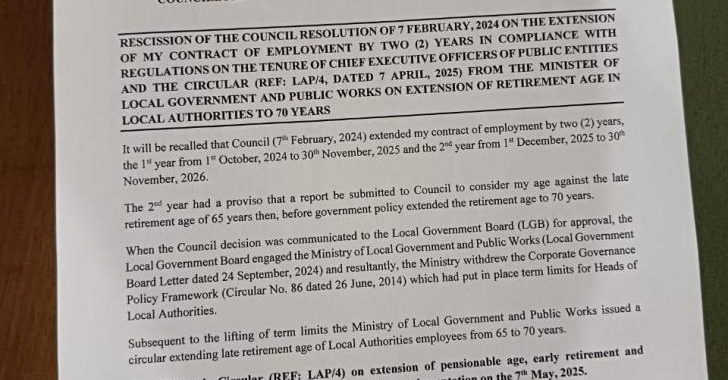
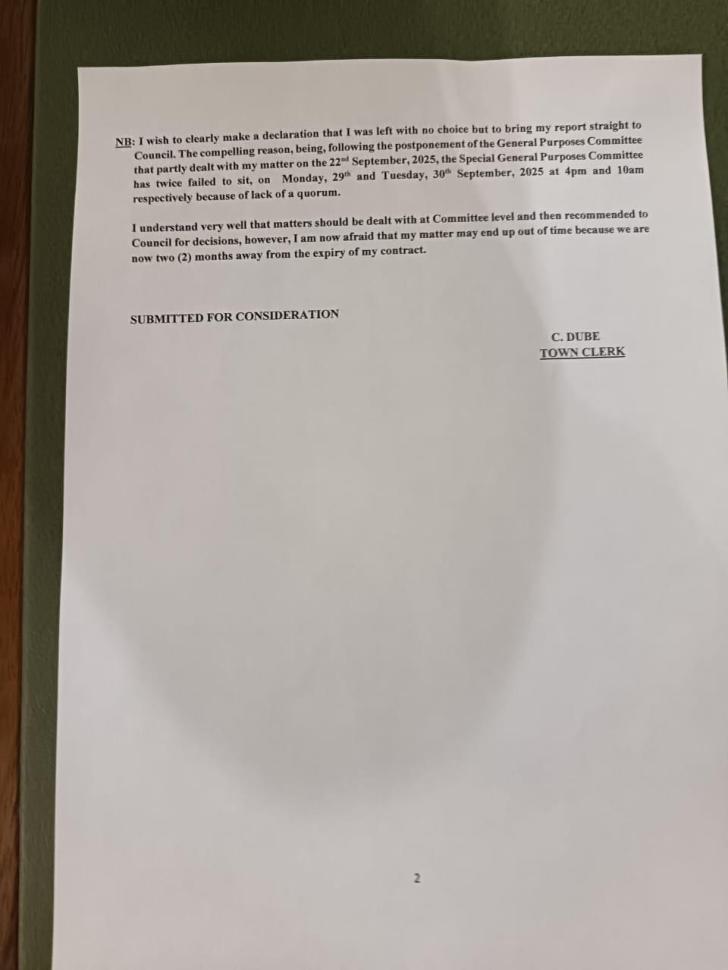
The
controversy
stems
from
a
confidential
letter
dated
30
September
2025,
written
by
Dube
to
Mayor
David
Coltart
and
Councillors,
requesting
that
Council
rescind
its
earlier
resolution
extending
his
contract
and
instead
allow
him
to
remain
in
office
under
new
government
regulations
lifting
the
retirement
age
to
70
years.

But
while
the
letter
itself
appears
bureaucratic,
its
aftermath
has
spiralled
into
a
political
firestorm

with
Siso
emerging
as
a
polarising
and
shadowy
figure,
allegedly
positioning
himself
as
a
power
broker
between
council
chambers
and
political
networks
within
the
Citizens
Coalition
for
Change
(CCC).

Siso’s
Grip
on
the
Hall

According
to
multiple
sources
within
the
Bulawayo
City
Council,
Siso
has
been
actively
lobbying
councillors
in
recent
weeks,
pushing
for
support
of
Dube’s
continued
stay.
His
actions,
described
by
insiders
as
“unofficial
but
calculated,”
have
unsettled
both
party
and
civic
figures,
raising
alarm
over
the
blurring
line
between
administrative
policy
and
political
manipulation.

A
senior
CCC
councillor,
speaking
on
condition
of
anonymity,
said
Siso’s
involvement
has
“polluted
what
should
have
been
a
straightforward
policy
matter.”

“He
is
not
an
elected
official,
yet
he
behaves
like
a
political
gatekeeper,”
the
councillor
said.
“It’s
as
if
decisions
at
City
Hall
now
require
his
blessing.”

The
Dube
Letter
and
Political
Fallout

In
his
letter,
Town
Clerk
Christopher
Dube
cites
the
Ministry
of
Local
Government
Circular
(REF:
LAP/4),
which
lifted
term
limits
and
extended
the
retirement
age
from
65
to
70
years
for
heads
of
local
authorities.
Dube
argues
that
his
employment
should
continue
in
line
with
this
new
national
directive,
effectively
allowing
him
to
remain
in
his
post.
But
governance
watchdogs
say
the
process
is
being
compromised
by
political
interference
rather
than
legal
merit.

Ibhetshu
likaZulu
Secretary
General
Mbuso
Fuzwayo
did
not
mince
his
words
when
asked
to
comment
on
the
matter:

“When
political
actors
start
inserting
themselves
into
administrative
decisions,
the
integrity
of
the
entire
institution
collapses,”
said
Fuzwayo.

“Bulawayo
cannot
be
run
through
whisper
networks
and
self-appointed
power
brokers.
If
the
Town
Clerk’s
case
is
legitimate,
let
the
process
be
transparent

not
driven
by
shadow
politics.”

Factional
Fire
Within
CCC

Siso’s
assertive
presence
has
reportedly
widened
rifts
within
the
CCC’s
Bulawayo
structures.
Party
insiders
say
some
councillors
are
growing
uneasy
over
what
they
call
“backroom
deals”
that
undermine
Mayor
Coltart’s
reform
agenda.

Others,
however,
defend
Siso,
describing
him
as
a
“political
connector”
who
ensures
alignment
between
City
Hall
and
the
party’s
broader
strategy.

The
friction
highlights
a
deeper
challenge
facing
CCC-run
councils

the
struggle
to
balance
party
influence
with
institutional
independence,
a
tension
that
continues
to
test
governance
in
major
urban
centres.

City
Hall
Under
Watch

Mayor
David
Coltart
has
maintained
a
studied
silence
on
the
lobbying
claims,
though
sources
say
he
is
aware
of
the
tensions
within
his
council.
Analysts
warn
that
how
he
handles
the
Dube
letter

and
the
external
influences
around
it

could
define
his
leadership
style
going
forward.

A
local
political
analyst
observed
that
Siso’s
growing
presence
“symbolises
the
danger
of
informal
power
in
formal
structures.”

“In
Zimbabwean
politics,
influence
often
hides
in
the
shadows,”
the
analyst
said.
“The
real
story
isn’t
the
letter

it’s
the
network
behind
it.”

The
Bigger
Picture

As
the
council
prepares
to
deliberate
on
Dube’s
employment
fate,
one
thing
is
clear:
Bulawayo’s
governance
ecosystem
is
under
strain.
Between
bureaucratic
continuity
and
political
pressure,
the
city
finds
itself
at
a
crossroads.

Whether
or
not
Dube’s
term
is
extended,
the
incident
has
exposed
the
fragile
dance
between
power,
politics,
and
public
service

with
Mbuso
Siso
now
standing
at
the
centre
of
a
storm
that
has
once
again
made
Bulawayo
City
Hall
the
theatre
of
Zimbabwe’s
urban
power
play.

Chief refuses to retract Mnangagwa life presidency call

A
traditional
leader
from
Manicaland
is
facing
legal
action
after
refusing
to
retract
controversial
remarks
in
which
he
called
for
President
Emmerson
Mnangagwa
to
be
granted
a
life-presidency.

Acting
Chief
Tendai
Saurombe
made
the
comments
last
month
while
standing
in
for
his
ailing
father,
Chief
Oliver
Saurombe.
The
statement
sparked
outrage,
with
critics
accusing
him
of
undermining
Zimbabwe’s
constitutional
term
limits
and
democratic
principles.

The
legal
challenge
was
initiated
by
citizen
Pritchard
Tafadzwa
Paradzayi,
who,
through
the
Zimbabwe
Lawyers
for
Human
Rights
(ZLHR),
issued
a
10-day
ultimatum
demanding
a
public
apology
and
retraction.
After
Saurombe
failed
to
respond
to
the
formal
letter,
Paradzayi
instructed
ZLHR
to
take
the
matter
to
court.

“We
are
under
instructions
from
our
client
to
proceed
with
legal
action
since
the
chief
did
not
respond
to
our
letter,”
ZLHR
lawyer
Obey
Shava
confirmed,
adding
that
the
lawsuit
would
be
filed
at
the
High
Court
in
the
coming
days.


The
rights
group
argued
that
Saurombe’s
endorsement
of
life-presidency
violates
citizens’
voting
rights
and
directly
contravenes
constitutional
provisions
on
presidential
term
limits.
Mnangagwa
himself
has
repeatedly
stated
that
his
term
ends
in
2028,
but
some
loyalists,
including
Local
Government
Minister
Daniel
Garwe,
have
pushed
for
an
extension
to
2030.
Saurombe
went
further,
insisting
on
life-presidency,
a
stance
that
has
drawn
condemnation
from
civil
society,
opposition
parties,
and
legal
experts.

Beyond
the
legal
fallout,
Saurombe
is
also
reportedly
facing
growing
internal
discontent.
Elders
within
the
chieftainship
are
said
to
have
written
to
the
Chimanimani
district
development
coordinator,
accusing
him
of
authoritarian
behaviour
and
destabilising
the
community.
Allegations
include
insulting
accused
persons
at
his
traditional
court
and
arbitrarily
demoting
village
heads
without
due
process.

Zimbabwe’s
constitution
bars
chiefs
from
active
partisan
politics,
yet
traditional
leaders
have
long
been
accused
of
siding
with
Zanu-PF
in
exchange
for
state-issued
benefits,
including
vehicles.
Section
7
of
the
Traditional
Leaders
Act
allows
for
the
suspension
of
chiefs
found
guilty
of
misconduct,
including
political
partisanship.

The
case
now
threatens
to
test
both
Saurombe’s
authority
and
the
government’s
willingness
to
enforce
constitutional
checks
on
traditional
leaders.

Zimbabwe Seeks Private Investment to Modernize Power Grid

Zimbabwe
has
called
on
private
sector
investment
to
upgrade
and
expand
its
aging
transmission
and
distribution
networks.
Zimbabwe’s
Ministry
of
Power
and
Energy
Development
has
identified
the
expansion
and
modernization
of
its
national
grid
as
a
priority.
Key
infrastructure
upgrades
will
include
transformer
replacements,
installation
of
underground
cables
and
overhead
conductor
enhancements.

The
call
for
investment
was
made
during
the Powering
Africa’s
Industrial
Revolution 
panel
session
at
African
Energy
Week
(AEW):
Invest
in
African
Energies
2025
conference
by
July
Moyo,
Minister
of
Power
and
Energy
Development,
Zimbabwe.

“We
have
opened
up
investment
in
our
transmission
and
distribution
networks
for
the
private
sector,”
Minister
Moyo
stated.

Investors
are
also
being
sought
for
regional
interconnections,
with
cross-border
projects
being
prioritized
to
enhance
power
trade
within
the
Southern
African
Power
Pool.
Off-grid
and
decentralized
solutions
are
being
promoted
to
increase
rural
electrification.
According
to
the
Minister,
private
participation
is
being
incentivized
through
public-private
partnerships,
independent
power
production,
net
metering,
tax
holidays
and
guarantees
against
expropriation.

Meanwhile,
Jonas
Amukunde,
Technical
Advisor
to
Namibia’s
Deputy
Prime
Minister, also
called
on
independent
power
producers
(IPPs)
to
assist
heavy
industries
in
Namibia
to
upscale
power
generation
and
reduce
reliance
on
the
national
grid.

“We
aim
for
industries
to
set
up
their
own
onsite,
limited
generation
capacities,”
Amukunde
stated.

For
his
part,
Stan
Pillay,
Regional
Carbon
and
Innovation
Lead

Africa
at
global
mining
company
Anglo
American,
stressed
the
importance
of
striking
a
balance
between
renewable
energy
and
conventional
energy
sources.
Pillay
highlighted
southern
Africa’s
potential
to
become
a
leader
in
renewable
energy
generation
while
leveraging
the
full
capacity
of
its
natural
resources
like
oil
and
natural
gas.

“You
need
to
think
about
a
balance
in
energy
that
secures
energy
supply,”
Pillay
stated,
adding,
“The
energy
landscape
has
fundamentally
changed
and
required
a
new
way
of
thinking.”

Source:


Zimbabwe
Seeks
Private
Investment
to
Modernize
Power
Grid

African
Energy
Week
Cape
Town

|
AEC
Week

Energy Mutodi apologises to treasury chief Guvamatanga after bribery claims

HARARE

Goromonzi
West
MP
Energy
Mutodi
has
withdrawn
explosive
corruption
allegations
he
made
on
X
against
Treasury
Secretary
George
Guvamatanga,
saying
he
could
not
substantiate
the
claims.

On
Wednesday,
Mutodi

who
chairs
parliament’s
budget,
finance
and
economic
development
committee

alleged
that
Guvamatanga
was
demanding
kickbacks
of
between
five
and
10
percent
from
contractors,
ministries
and
government
departments
in
return
for
releasing
budgeted
funds.

He
claimed
road
contractor
Bitumen
had
been
forced
to
pay
US$200,000
for
every
US$2
million
in
weekly
payments
authorised
by
Guvamatanga,
while
parliament
itself
had
been
starved
of
resources
after
refusing
to
pay
bribes.

Mutodi
further
alleged
that
the
former
Barclays
Bank
CEO
had
accumulated
more
than
US$1
billion
in
wealth,
boasting
over
5,000
dairy
cattle,
multiple
mansions
and
luxury
equipment
despite
being
a
civil
servant.

But
Guvamatanga
angrily
denied
the
claims,
accusing
the
Zanu
PF
MP
of
an
extortion
attempt.
Guvamatanga
threatened
to
sue
for
defamation,
while
also
reporting
Mutodi
to
the
police
for
extortion
and
blackmail.

Late
on
Friday,
Mutodi
appeared
to
backtrack.
In
a
statement,
he
said
he
had
“reflected”
on
the
matter
and
spoken
directly
to
Guvamatanga,
concluding
that
it
was
“not
in
our
interest
to
escalate
the
issues.”

“While
the
issues
had
been
raised
as
a
matter
of
principle
and
for
the
need
to
contribute
meaningfully
to
this
government
especially
by
upholding
the
oversight
function
of
parliament
provided
for
under
Section
119
(3)
of
the
constitution,
it
is
apparent
to
mention
that
proof
beyond
reasonable
doubt
under
the
circumstances
would
be
impossible,
making
such
a
publication
defamatory,”
Mutodi
said.

“I
therefore
wish
to
issue
an
apology,
unreservedly,
to
Mr
George
Guvamatanga
for
the
reputational
damage
the
tweets
may
have
caused,
and
I
have
made
instructions
that
the
tweets
be
erased
with
immediate
effect.”

Mutodi’s
sudden
climbdown
is
likely
to
fuel
speculation
of
behind-the-scenes
pressure,
while
Guvamatanga

one
of
the
most
powerful
civil
servants
under
President
Emmerson
Mnangagwa

appears
determined
to
protect
his
reputation.

Govt. Reinstates Ban On Urban And Peri-Urban Farming

Peri-urban
farming,
which
involves
small-scale
crop
and
livestock
production
in
and
around
towns
and
cities,
often
on
undeveloped
land,
road
verges,
wetlands,
or
other
open
spaces,
has
become
increasingly
common
in
recent
years.

Many
urban
residents,
especially
in
areas
around
Harare,
Bulawayo,
Gweru,
and
Mutare,
have
turned
to
it
to
boost
their
food
supplies
or
incomes.

However,
the
government
insists
that
farming
should
only
take
place
on
land
formally
designated
for
agricultural
use.

Responding
to
questions
in
Parliament
on
Wednesday,
Lands,
Agriculture,
Fisheries,
Water
and
Rural
Development
Minister
Anxious
Masuka
said
urban
and
peri-urban
settlements
are
meant
for
residential
purposes
and
are
therefore
unsuitable
for
farming.

He
warned
that
unregulated
cultivation
in
such
areas
can
harm
the
environment,
block
drainage
systems,
and
put
additional
pressure
on
city
infrastructure.
Said
Masuka:

“It
is
important
to
note
that
agriculture
is
designated
for
agricultural
zones.

“Urban
areas
are
primarily
residential
and
do
not
accommodate
farming
activities.

“In
Zimbabwe,
we
have
established
that
urban
agriculture
is
not
permitted,
as
farming
should
take
place
on
land
specifically
allocated
for
agricultural
purposes,
not
within
urban
settlements.”

$27.5 Million Invested In Cancer Machines For Major Hospitals, Says Mombeshora

He
made
the
remarks
in
the
National
Assembly
on
Wednesday
while
responding
to
questions
about
how
funds
from
the
sugar
tax,
introduced
last
year,
have
been
used.
Mombeshora
said:

“As
the
Ministry
of
Health
and
Child
Care,
we
have
awarded
tenders
to
two
companies
for
Parirenyatwa
and
Mpilo
hospitals.
In
total,
we
spent
US$27.5
million.

“We
submitted
to
the
Ministry
of
Finance,
Economic
Development
and
Investment
Promotion
the
necessary
documents
for
them
to
pay
the
30
percent
deposit
as
per
the
agreement
and
in
accordance
with
the
suppliers’
instructions.
The
suppliers
indicated
that
these
are
costly
machines.”

Mombeshora
said
contracts
with
the
suppliers
have
already
been
signed,
and
it
has
been
more
than
two
months
since
the
agreements
were
finalised.

He
added
that
it
is
now
up
to
the
Ministry
of
Finance,
Economic
Development
and
Investment
Promotion
to
release
the
funds
so
that
the
machines
can
be
installed.

Mombeshora
said
the
suppliers
have
indicated
that
the
machines
will
be
manufactured
and
installed
within
36
weeks,
and
the
government
expects
them
to
be
operational
by
December.

The
minister
also
said
the
government
is
now
in
the
second
phase
of
procuring
equipment
for
provincial
hospitals,
including
CT
scanners,
ultrasound
machines
and
MRI
scanners.
The
relevant
tenders
are
expected
to
be
completed
within
two
months.

Meanwhile,
Mombeshora
told
Parliament
that
the
Ministry
has
acquired
eight
mobile
medical
vans,
which
will
be
deployed
across
the
provinces
to
provide
free
health
check-ups
and
early
cancer
screening
services,
including
tests
for
prostate
and
cervical
cancer.
He
said:

“I
am
confident
that
clearance
will
be
completed
next
week.
We
have
already
sent
a
team
to
retrieve
them
from
Mozambique.
These
vans
will
test
both
men
and
women,
starting
with
prostate
cancer.

“Cervical
cancer
predominantly
affects
women,
so
we
have
vehicles
that
will
be
testing
both
genders.
It
will
no
longer
be
just
women.

“We
are
improving
bit
by
bit.
We
aim
to
reach
a
point
where
everyone
can
be
tested
for
free.”

Biglaw Money Is Talking – See Also – Above the Law

Blue
Cheese:
Biglaw
lawyers
and
staff
are
sending
their
money
to
overwhelmingly
Democrat
causes.
Nevermind
The
Child
Porn
Allegations:
Federal
judge
rules
Nirvana’s
second
album
cover
isn’t
sexually
suggestive.
Why
Be
Good
When
You
Could
Be
Worse?:
AI
could
be
making
productivity
worse!
He
Kept
His
Enemy
Too
Close:
Kid
gets
snitched
on
by
ChatGPT.

Superstar Litigator To Represent Kim Kardashian In Major Defamation Battle – Above the Law

(Photo
by
Chip
Somodevilla/Getty
Images)


Ed.
Note:

Welcome
to
our
daily
feature

Trivia
Question
of
the
Day!


Kim
Kardashian
and
her
mother,
Kris
Jenner,
recently
filed
suit
against
Ray
J
for
defamation.
Which
renowned
rainmaker
is
representing
the
pair
in
court?


Hint:
The
hot-shot
attorney
is
known
for
his
high-profile
clientele,
and
is
said
to
command
one
of
the
heftiest
rates
in
the
legal
profession,
at
$3,000
an
hour.


See
the
answer
on
the
next
page.


Staci Zaretsky


Staci
Zaretsky
 is
the
managing
editor
of
Above
the
Law,
where
she’s
worked
since
2011.
She’d
love
to
hear
from
you,
so
please
feel
free
to

email

her
with
any
tips,
questions,
comments,
or
critiques.
You
can
follow
her
on BlueskyX/Twitter,
and Threads, or
connect
with
her
on LinkedIn.

Lights, Camera, CLE: Prepare For Your Best Presentation Yet – Above the Law

Getty
Images

Welcome
to
the
spotlight!

As
we
kick
off
Part
3
of
our
series,
“Lights,
Camera,
CLE,”
we’re
shifting
focus
from
the
strategic
advantages
of
CLEs
to
the
art
of
delivering
a
show-stopping
presentation.

Your
CLE
is
more
than
just
an
educational
session—it’s
your
moment
to
shine,
connect
with
your
audience,
and
leave
a
lasting
impression.

This
article
will
guide
you
through
the
essential
steps
to
prepare
for
your
CLE
like
a
pro,
from
practicing
with
PowerPoint
tools
to
ensuring
your
bio
and
photo
reflect
the
expert
you
are.


Setting
the
Stage:
Practicing
for
the
Big
Day


Rehearsing
with
PowerPoint
Tools

Just
as
an
actor
wouldn’t
hit
the
stage
without
rehearsing,
you
shouldn’t
walk
into
your
CLE
without
thoroughly
practicing
your
presentation.
PowerPoint
is
more
than
just
slides

it’s
your
co-star.
Get
comfortable
with
its
features,
including
transitions,
animations,
and
speaker
notes.
Run
through
your
presentation
multiple
times,
focusing
on:


Timing:

Ensure
your
presentation
flows
smoothly
and
fits
within
the
allotted
time.


Transitions:

Practice
moving
seamlessly
from
one
slide
to
the
next,
so
your
narrative
remains
cohesive.


Speaker
Notes:

Use
them
as
cues
but
avoid
reading
directly
from
them—your
delivery
should
feel
natural
and
engaging.


Engaging
with
the
CLE
Gods

Before
your
CLE
debut,
there’s
one
crucial
step

providing
all
your
content
to
the
“CLE
gods.”
This
means
ensuring
that
the
CLE
board
or
organization
hosting
your
session
has
everything
they
need,
from
your
slides
to
any
handouts
or
supplementary
materials.

This
is
your
behind-the-scenes
crew,
ensuring
the
show
goes
on
without
a
hitch.
Make
sure
to:


Submit
Materials
Early:

Give
the
CLE
board
ample
time
to
review
and
approve
your
content.


Double-Check
Compliance:

Ensure
your
materials
meet
all
CLE
requirements,
including
content
relevance,
timed
agenda
and
accreditation
standards.


Prepare
for
Questions:

Anticipate
any
questions
or
requests
for
clarification
from
the
CLE
board
and
be
ready
to
respond
promptly.


Setting
the
Stage:
Practicing
for
the
Big
Day


Reviewing
Your
Bio

Your
bio
is
more
than
just
a
summary

it’s
your
pitch
to
the
audience.
It
needs
to
be
concise,
compelling,
and
reflective
of
who
you
are
as
a
professional.

Before
your
CLE,
take
the
time
to
review
and
update
your
bio
to
ensure
it
highlights
your
expertise
and
aligns
with
the
topic
you’ll
be
presenting.
Consider
these
tips:


Focus
on
Expertise:

Emphasize
your
experience
and
knowledge
in
the
area
related
to
your
CLE.


Inject
Personality:

While
maintaining
professionalism,
let
your
personality
shine
through
to
make
you
more
relatable.


Update
Regularly:

Make
sure
your
bio
reflects
your
latest
achievements
and
roles.


Choosing
an
Approachable
Photo

Your
photo
is
often
the
first
impression
attendees
will
have
of
you—make
sure
it’s
a
good
one.
Select
a
headshot
that
is
professional
yet
approachable,
conveying
confidence
and
warmth.
Here’s
what
to
consider:


Professional
Quality:

Use
a
high-resolution
image
with
good
lighting
and
clarity.


Dress
the
Part:

Choose
attire
that’s
appropriate
for
your
field
and
the
audience
you’ll
be
addressing.


Express
Approachability:

A
genuine
smile
and
relaxed
posture
can
go
a
long
way
in
making
you
seem
accessible
to
your
audience.


Final
Dress
Rehearsal:
Last-Minute
Checks


Final
Pre-Presentation
Checks

As
the
curtain
call
approaches,
it’s
time
for
a
final
dress
rehearsal.
This
is
your
opportunity
to
catch
any
last-minute
issues
and
ensure
everything
is
in
place
for
a
flawless
performance.
Key
areas
to
focus
on
include:


Technical
Checks:

Ensure
all
equipment—microphones,
projectors,
and
laptops—are
working
correctly.
Test
your
PowerPoint
on
the
actual
equipment
you’ll
be
using
to
avoid
any
compatibility
issues.


Material
Review:

Go
over
your
slides,
handouts,
and
notes
one
last
time
to
ensure
everything
is
in
order.


Mental
Preparation:

Take
a
few
moments
to
center
yourself.
Visualization
techniques
can
help
you
picture
a
successful
presentation,
calming
any
pre-show
jitters.


Ready
for
Action

As
you
take
the
stage
for
your
CLE,
remember
that
preparation
is
key
to
delivering
a
presentation
that’s
not
just
informative,
but
unforgettable.
By
rehearsing
with
your
PowerPoint
tools,
ensuring
your
materials
are
top-notch,
and
presenting
yourself
as
the
knowledgeable
and
approachable
expert
you
are,
you’re
setting
yourself
up
for
success.

Now,
it’s
time
to
let
your
expertise
shine
and
make
the
most
of
your
moment
in
the
spotlight.

In
the
next
article,
we’ll
focus
on
how
to
engage
your
audience
during
your
presentation.
From
interactive
elements
to
storytelling,
we’ll
explore
techniques
that
will
keep
your
attendees
captivated
from
start
to
finish.


Rehearsing
with
PowerPoint
Tools

✔️

Practice
Timing:

Ensure
your
presentation
fits
within
the
allocated
time.

✔️


Smooth
Transitions:

Rehearse
moving
seamlessly
between
slides.

✔️


Use
Speaker
Notes:

Have
cues
but
aim
for
a
natural
delivery.


Engaging
with
the
CLE
Gods


✔️


Submit
Materials
Early:

Provide
all
necessary
content
well
before
the
deadline.

✔️


Check
Compliance:

Ensure
your
materials
meet
all
CLE
requirements.

✔️


Prepare
for
Questions:

Anticipate
and
be
ready
to
address
any
inquiries
from
the
CLE
board.


Bio
and
Photo
Prep


✔️


Update
Your
Bio:

Ensure
it
reflects
your
expertise
and
personality.

✔️


Choose
an
Approachable
Photo:

Select
a
professional,
inviting
headshot.


Final
Pre-Presentation
Checks


✔️


Technical
Run-Through:

Test
all
equipment
on-site.

✔️


Material
Review:

Double-check
all
slides
and
handouts.

✔️


Mental
Prep:

Use
visualization
techniques
to
calm
any
nerves.

With
these
steps
in
place,
you’re
not
just
preparing
for
a
CLE—you’re
preparing
for
a
performance
that
will
leave
a
lasting
impact
on
your
audience
and
elevate
your
professional
standing.


Sejal
Bhasker
Patel is
a
Rainmaking
Consultant
and
Author
of Rainmaker:
Unleashed

a
sharp,
strategic
playbook
for
attorneys
who
don’t
fit
the
traditional
mold.
She’s
the
founder
of
Sage
Ivy,
a
consulting
firm
that
works
directly
with
law
firms
and
attorneys
to
turn
relationships
into
revenue

without
selling
their
soul.
Her
work
is
blunt,
tailored,
and
built
on
one
core
belief:
Authenticity
isn’t
a
liability

it’s
your
strongest
competitive
edge.
www.sageivyconsulting.com

How Proactivity And Communication Shape Growth In Law And Business  – Above the Law

Getty
Images

In
this
episode,
of
the
“Be
That
Lawyer”
podcast,
host
Steve
Fretzin
and
entrepreneur
Steve
Haddadin
dive
into
the
mindset
that
drives
sustainable
legal
and
business
growth.

From
embracing
calculated
risk
to
mastering
communication
and
leveraging
LinkedIn
as
a
strategic
tool,
Haddadin
shares
his
journey
and
the
practices
that
have
helped
him
stand
out
in
both
the
legal
and
business
worlds. 


LinkedIn:
The
Modern
Business
Development
Playbook 

Fretzin
opens
the
conversation
by
comparing
today’s
powerful
tools
to
the
old-school
grind
of
cold-calling
from
the
phone
book.

LinkedIn,
he
says,
has
become
the
top
playbook
for
business
development
especially
for
lawyers.

Haddadin
agrees:
Building
a
digital
presence
isn’t
optional;
it’s
essential.

A
well-optimized
LinkedIn
profile
can
be
the
gateway
to
new
clients,
strategic
introductions,
and
long-term
visibility.
The
platform
allows
attorneys
to
bypass
gatekeepers
and
turn
second-degree
connections
into
real
opportunities. 


Risk
Isn’t
the
Enemy—Stagnation
Is 

Haddadin
brings
a
unique
lens
to
the
profession,
having
started
as
an
entrepreneur
before
becoming
a
lawyer.

While
law
is
traditionally
a
risk-averse
industry,
he
argues
that
success
often
lies
in
learning
how
to
manage
not
eliminate
risk.

He
sees
risk
like
a
red
zone
that,
when
properly
mitigated,
turns
into
a
manageable
gray
area
where
innovation
and
growth
happen.

That
mindset
shift,
he
believes,
separates
static
legal
careers
from
those
that
truly
evolve
and
thrive. 


Client
Communication:
Set
the
Tone
and
Win
Trust 

Another
key
to
Haddadin’s
approach
is
mastering
communication.

Too
often,
attorneys
leave
clients
confused,
overwhelmed,
or
misled
by
vague
promises.

Haddadin
emphasizes
the
need
to
set
realistic
expectations,
explain
the
legal
process
clearly,
and
keep
clients
feeling
informed
and
supported.
That
balance
between
legal
knowledge,
honest
communication,
and
emotional
awareness
can
make
the
difference
between
a
forgettable
transaction
and
a
long-term
client
relationship. 

“Entrepreneurship
is
about
creating
your
own
opportunities,”
Haddadin
says.
“It’s
about
finding
out
what
you
can
do
in
the
marketplace
that’s
different
from
others.”

Haddadin’s
story
is
a
blueprint
for
lawyers
who
want
more
than
the
status
quo.
By
embracing
entrepreneurial
thinking,
managing
risk
with
intention,
and
mastering
the
art
of
human
connection,
lawyers
can
create
not
just
a
practice
but
a
platform
for
long-term
impact.


Connect
with
Steve
Haddadin:
 

Website:
https://www.stevehaddadin.com/ 

LinkedIn:
https://www.linkedin.com/in/stevehaddadin 

Listen
to
the
latest
episode
of

And
if
you’re
serious
about
growing
your
practice,
don’t
miss
my
new
book,
now
on
Amazon. Check
it
out
here.


Steve
Fretzin
is
a
bestselling
author,
host
of
the
“Be
That
Lawyer”
podcast,
and
business
development
coach
exclusively
for
attorneys.
Steve
has
committed
his
career
to
helping
lawyers
learn
key
growth
skills
not
currently
taught
in
law
school.
His
clients
soon
become
top
rainmakers
and
credit
Steve’s
program
and
coaching
for
their
success.
He
can
be
reached
directly
by
email
at 
[email protected].
Or
you
can
easily
find
him
on
his
website
at 
www.fretzin.com or
LinkedIn
at 
https://www.linkedin.com/in/stevefretzin.