Inside the ‘Bondage’ of Zimbabwe’s Contract Tobacco Farming

HARARE,
ZIMBABWE

Zimbabwe’s
tobacco
sector
was
once
on
the
brink
of
collapse.
Now,
it’s
booming
again.
Last
year
alone,
it
earned
the
country
close
to
US$1
billion
in
revenue.

But
though
the
crop
is
one
of
the
country’s
top
exports
and
production
has
soared,
small-scale
contract
farmers
say
they
see
little
profit
due
to
restrictive
financing
agreements.

The
tobacco
boom,
farmers
say,
is
keeping
them
in
debt.

Gift
Ngoma
is
among
them.
When
he
lost
his
clerk
job
eight
years
ago,
tobacco
farming
was
the
only
way
he
could
feed
his
family.
But
fertilizer,
seeds
and
labor
proved
expensive.
Even
money
from
the
few
cows
he
sold
wasn’t
enough.

Like
many
rural
Zimbabweans,
he’d
gotten
land

about
3.5
hectares
(9
acres)

through
traditional
tenure.
But
those
who
secured
land
that
way
often
lack
a
title
deed.
For
Ngoma,
formal
credit
was
out
of
the
question.

Ngoma
knew
of
local
farmers
who
had
entered
agreements
with
private
companies.
The
deals
looked
good
at
first:
Each
planting
season,
a
company
provided
farmers
with
seeds
and
fertilizer
on
credit.
They’d
offer
technical
support
throughout
the
season.
In
return,
farmers
sold
enough
of
their
crop
to
the
company
and
used
part
of
the
revenue
to
cover
what
they
owed.

Ngoma
signed
on
with
Premium
Leaf
Zimbabwe,
a
subsidiary
of
Premium
Tobacco

a
global
company
headquartered
in
Dubai.

The
company
provided
him
with
seeds
and
some
money
for
labor.
Once
harvest
came,
he
sold
enough
tobacco
to
the
company
to
pay
off
his
debt.
But
over
time,
he
says,
this
agreement
came
to
feel
like
a
trap.
The
seeds
and
other
inputs
are
overpriced,
he
says,
and
there’s
little
money
left
over
to
find
true
success
as
a
farmer.


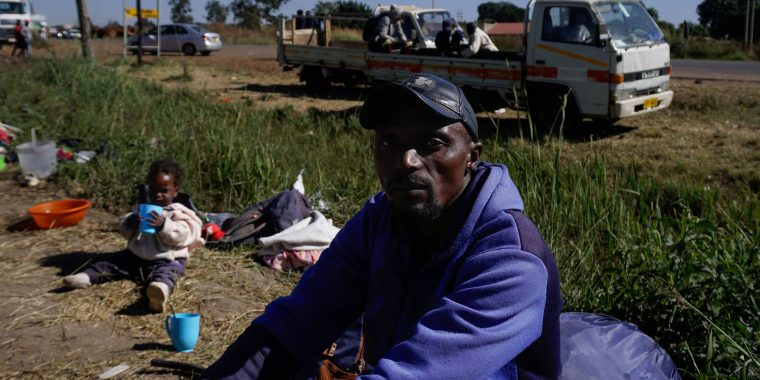
Linda
Mujuru,
GPJ
Zimbabwe

Gift
Ngoma,
a
tobacco
farmer,
waits
to
sell
his
crop
in
Harare.
He
turned
to
farming
after
losing
his
formal
job,
but
he
says
contract
agreements
have
trapped
him
in
debt.
He
now
advocates
for
land
rights
and
alternative
financing.

Thin
rewards

More
than
100,000
small-scale
tobacco
farmers
in
Zimbabwe
have
entered
into
contracts
with
tobacco
companies,
according
to
data
from
the
Tobacco
Industry
and
Marketing
Board,
a
statutory
body
that
oversees
tobacco
production
in
the
country.

The
contracts

heavily
financed
by
companies
such
as
British
American
Tobacco
and
Tian
Ze
(China
Tobacco)

now
support
over
95%
of
Zimbabwe’s
tobacco
production.

That
production
has
rebounded
from
just
44
million
kilograms
in
2006
to
232
million
kilograms
in
2024.
The
industry
brings
in
hundreds
of
millions
of
United
States
dollars
each
year
and
contributes
nearly
10%
of
Zimbabwe’s
gross
domestic
product.
It
accounts
for
30%
of
all
exports
and
over
50%
of
agricultural
exports.
In
2024,
Zimbabwe
was
the
world’s
third-largest
exporter
of
raw
tobacco,
accounting
for
10%
of
global
exports,
behind
Brazil
and
India.

But
smallholding
farmers
don’t
feel
that
success.
In
December
2024,
the
government
announced
plans
to
issue
title
deeds
to
beneficiaries
of
the
land
reform
program,
which
would
give
farmers
a
chance
to
use
their
land
as
collateral
and
rely
less
on
contract
farming.
But
for
now,
many
still
rely
on
tobacco
contracts.

“We
are
in
a
cycle
of
oppression,”
Ngoma
says.
“There
is
poverty
in
contract
farming.
It’s
as
if
we
are
laborers
on
our
farms.”

When
Global
Press
Journal
reached
out
to
Premium
Leaf
Zimbabwe
for
comment,
they
said
it
was
the
company’s
policy
to
“protect
the
privacy
of
our
farmers
and
operational
integrity.”
Tian
Ze
and
British
American
Tobacco
did
not
respond
to
several
requests
for
comment.

Gamuchirai
Masiyiwa,
GPJ
Zimbabwe

Tobacco
farmers
Chamu
Rukwere
and
Rudo
Nedziwe
grade
their
harvest
at
home
in
Rusape,
Zimbabwe.
While
contract
farming
connects
them
to
global
markets,
they
say
it
strips
away
the
autonomy
land
reform
was
meant
to
provide.

The
land
link

Zimbabwe’s
shift
to
contract
farming
has
roots
in
a
wider
story
of
land
reform.

At
independence
in
1980,
white
Zimbabweans

who
made
up
less
than
2%
of
the
population

controlled
nearly
half
of
all
agricultural
land.
The
majority
black
population
was
confined
to
degraded,
overcrowded
communal
areas.

In
2000,
then-President
Robert
Mugabe
launched
the
controversial
Fast
Track
Land
Reform
Programme.
The
government
redistributed
millions
of
hectares
of
land
from
about
6,000
large,
white-owned
farms
to
more
than
168,000
black-owned
farms,
according
to
a
Human
Rights
Watch
report.

The
reforms
were
rushed,
controversial
and
violent,
but
they
brought
a
new
agrarian
structure.
Tobacco,
at
the
time
one
of
the
most
valuable
crops
and
dominated
by
white-owned
farms,
shifted
to
small-scale
operations
by
the
new
landowners.

But
the
new
generation
of
farmers
didn’t
have
access
to
traditional
bank
credit
since
they
didn’t
hold
deeds
to
their
land.
Tobacco
production
dropped
dramatically,
from
over
197,000
tons
in
1998
to
about
44,000
tons
in
2006.

Farmers
needed
support,
and
into
the
vacuum
stepped
contract
schemes,
mostly
by
Chinese
agribusinesses
such
as
Tian
Ze.
They
supplied
seeds,
fertilizers
and
technical
support
in
exchange
for
crop
guarantees,
price
control
and
access
to
global
markets.
Ultimately,
those
contracts
played
a
key
role
in
the
post-reform
tobacco
boom.

‘We
continue
to
be
dependent’

Contract
schemes
now
dominate
Zimbabwe’s
tobacco
farming,
says
Emmanuel
Matsvaire,
acting
chief
executive
officer
of
the
Tobacco
Industry
and
Marketing
Board.
In
the
2024-25
season
alone,
the
board
recorded
a
total
of
106,555
small-scale
growers,
he
says,
and
about
89%
of
these
are
contract
farming.
In
the
2025
season,
the
board
licensed
43
companies
to
contract
tobacco
farmers.

The
country’s
economy
has
long
struggled
and
“local
financing
is
generally
limited,”
Matsvaire
says.
These
companies
fill
the
gap.

But
farmers
say
the
fine
print
works
against
them.

Seeds
and
fertilizer
are
overpriced,
Ngoma
says.
For
half
a
hectare,
he
receives
seven
bags
of
fertilizer
for
US$65
each.
At
the
shops,
the
same
bag
costs
about
US$40.
Many
farmers
don’t
have
ready
cash
to
buy
directly
from
shops,
so
they
rely
on
private
companies
to
provide
fertilizer
and
other
inputs,
even
if
it
means
paying
more
when
harvest
comes.

Gamuchirai
Masiyiwa,
GPJ
Zimbabwe

Piles
of
tobacco
await
processing
in
Rusape,
Zimbabwe.
Though
tobacco
is
one
of
the
country’s
top
exports
and
production
has
soared,
small-scale
contract
farmers
say
that
thanks
to
restrictive
agreements,
they
see
little
profit.

“Because
of
poverty,
we
continue
to
be
dependent,”
Ngoma
says.

Once
contract
farmers
pay
back
the
debts,
very
little
is
left.
In
some
cases,
the
total
earnings
don’t
even
cover
the
debt,
Ngoma
says,
which
forces
them
to
grow
tobacco
for
the
same
company
the
next
season.

The
companies
control
the
whole
process,
including
land
use,
Ngoma
says,
adding
that
at
times
they
bring
in
agricultural
experts
who
dictate
seed
types,
planting
times
and
farming
methods,
completely
disregarding
local
farming
knowledge.

Peter
Neshumba,
36,
began
contract
farming
for
Premium
Leaf
Zimbabwe
in
2024.
He
says
these
companies
go
as
far
as
controlling
whether
farmers
can
plant
anything
else.
They
want
full
devotion
for
their
crops,
he
says.
“Until
harvest,
the
land
essentially
belongs
to
them.”

If
a
farmer
doesn’t
stick
to
the
rules,
the
company
might
refuse
to
buy
their
crop
or
leave
them
without
a
contract
the
next
season,
he
says.

A
contract
analyzed
in
a
2023
study
in
Oikos,
a
journal
published
by
Zimbabwe
Ezekiel
Guti
University,
shows
just
how
tobacco
contracts
lock
small-scale
farmers
into
risky
debt.
The
2019-20
Tian
Ze
contract
required
farmers
to
repay
loans
before
seeing
any
profit,
even
requiring
some
to
put
their
property
on
the
line
as
collateral.

Undoing
land
reforms

These
arrangements
undermine
Zimbabwe’s
land
reforms,
says
George
Seremwe,
the
president
of
the
Zimbabwe
Tobacco
Growers
Association.
The
reforms
were
meant
to
redress
colonial
imbalances,
but
contract
farming
introduces
new
vulnerabilities
for
small-scale
farmers
as
they
cede
control
of
their
land
to
contracting
companies.

But
Nelson
Marongwe,
an
independent
land
expert
who
has
researched
tobacco
farming
and
land
rights,
doesn’t
think
so.
The
contracts
are
valid,
he
says,
and
address
a
production
gap.

But
it
needs
to
be
for
a
limited
period,
he
says,
as
there
is
a
risk
of
farmers
losing
autonomy
and
companies
abusing
their
bargaining
power.
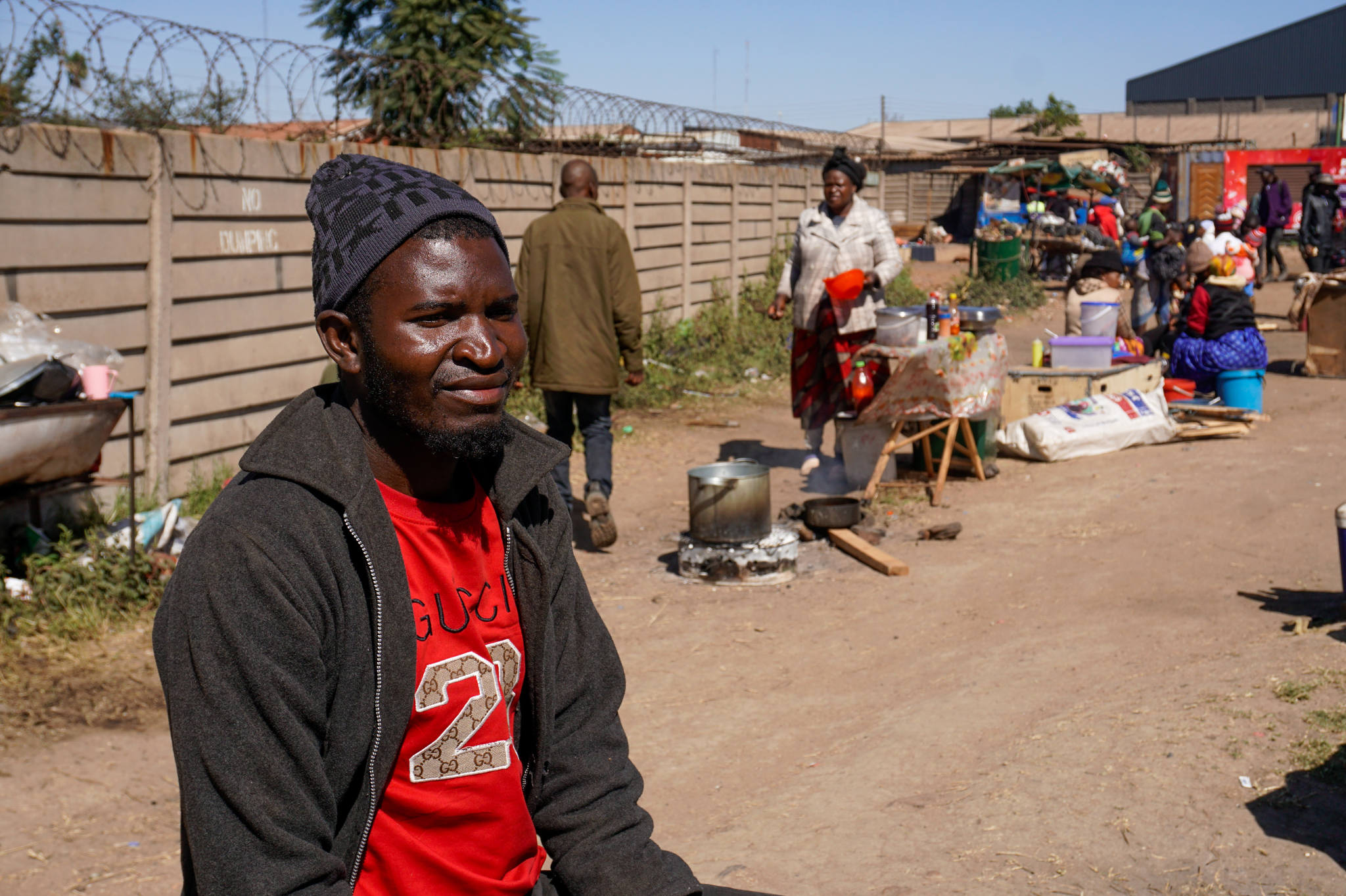
Linda
Mujuru,
GPJ
Zimbabwe

Tobacco
farmer
Peter
Neshumba
waits
for
payment
after
selling
his
crop
to
Premium
Leaf
Zimbabwe
in
Harare.
He
says
contract
farming
controls
nearly
every
aspect
of
production,
leaving
farmers
with
little
say
over
their
land
until
harvest.

‘I
feel
used’

The
tobacco
board
is
trying
to
make
these
arrangements
fairer
to
farmers,
Matsvaire
says.
The
government
is
implementing
a
framework
to
ensure
farmers
receive
a
fair
share
of
profits,
receive
inputs
in
time
and
aren’t
burdened
with
overpriced
or
substandard
inputs.
The
framework
will
also
set
a
minimum
input
package
for
farmers.

Matsvaire
adds
that
this
farming
season,
the
Reserve
Bank
of
Zimbabwe
has
mandated
that
tobacco
farmers
retain
70%
of
their
earnings,
in
US
dollars
to
protect
them
from
exchange-rate
losses.

But
Ngoma
says
other
issues,
like
land
control
and
alternative
financing
methods,
still
need
to
be
addressed.

One
solution,
Marongwe,
the
land
expert,
says,
is
to
secure
rural
land
rights
for
all
farmers,
which
would
expand
access
to
other
financing
options.

Seremwe
says
farmers
need
fairer
terms,
but
the
solution
is
not
to
abandon
contract
farming,
since
the
country
needs
the
foreign
investment.

Despite
the
challenges,
Neshumba
plans
to
keep
contract
farming.
He
doesn’t
have
financing
alternatives.
When
he
started,
he
hoped
for
better
returns.
“Now
that
I’m
in
it,”
he
says,
“I
feel
used.”

For
farmers
like
Ngoma,
the
goal
is
self-financing.

“Contract
farming,”
he
says,
“is
a
bondage.”


Linda
Mujuru
 is
a
Reporter-in-Residence
based
in
Harare,
Zimbabwe.
A
renowned
international
reporter
and
public
speaker,
she
has
spent
nearly
a
decade
covering
human
rights,
the
mining
sector,
the
economy,
and
public
health.
She
holds
an
MBA
from
Midlands
State
University
and
both
master’s
and
bachelor’s
degrees
in
Journalism
and
Media
Studies
from
the
National
University
of
Science
and
Technology
in
Zimbabwe.
Linda
is
one
of
Global
Press’s
most
widely
read
and
syndicated
journalists.
In
2023,
she
won
the
Community
Champion
Award
from
the
Institute
for
Nonprofit
News
for
her
story
“Push
for
Gold
Leaves
a
Toxic
Legacy.”


And That’s Why We Lost The Election! – Above the Law


Ed.
note
:
Please
welcome
Vivia
Chen
back
to
the
pages
of
Above
the
Law.
Subscribe
to
her
Substack,
“The
Ex-Careerist,” here.

WHEN
I
GET
TOGETHER
FOR
DRINKS
with
my
depressed
liberal
friends,
we
play
a
little
game.
It
goes
like
this:
If
someone
unwittingly
displays
an
elite
tendency

like
wincing
at
the
idea
of
eating
at
Olive
Garden
or
questioning
how
anyone
can
sit
through Cats –
we
shout,
“And
that’s
why
we
lost
the
election!”

In
that
spirit,
I
present
to
you
words
and
phrases
that
Democrats
should
retire
forthwith
if
they
ever
hope
to
win
back
the
hearts
and
minds
of
Americans.
Compiled
by
liberal
think
tank
Third
Way,
it’s
memo addressed
to
All
Who
Wish
to
Stop
Donald
Trump
and
MAGA
,”
listing
45
terms
that
“no
ordinary
person
would
ever
dream
of
saying.”

Here’s
a
sampling
of
some
of
the
forbidden
terms
and
their
subtext
from
the
memo:


Therapy-Speak
.
“I’m
more
empathetic
than
you,
and
you
are
callous
to
hurting
other’s
feelings”:

  • Privilege
  • Violence
    (as
    in
    “environmental
    violence”)
  • Triggering

  • Progressive
    stack
  • Body
    shaming


Seminar
Room
Language
.
“I
am
smarter
and
more
concerned
about
important
issues
than
you”:


Organizer
Jargon
.
“We
are
beholden
to
groups,
not
individuals”:

  • Small
    “d”
    democracy
  • The
    unhoused
  • Food
    insecurity
  • Housing
    insecurity


Gender/Orientation
Correctness
.
“Your
views
on
traditional
genders
and
gender
roles
are
at
best
quaint”:

  • Cisgender
  • Pregnant
    people
  • Chest
    feeding
  • Heteronormative


The
Shifting
Language
of
Racial
Constructs
:
“You
will
be
called
out
as
racist
if
you
do
not
use
the
latest
and
correct
terminology”:

  • Latinx
  • Intersectionality
  • Allyship
  • Minoritized
    communities


Explaining
Away
Crime:
 “The
criminal
is
the
victim.
The
victim
is
an
afterthought”:

  • Justice-involved
  • Carceration

I
THOUGHT
I
KNEW
MY
WAY
AROUND
THE
WOKE
BLOCK,
but
some
of
these
terms
threw
me
for
a
loop:
“progressive
stack,”
“Overton
window,”
“heuristic,”
and
“carceration.”
And
what’s
“postmodernism”
doing
on
the
list?
I
thought
that
was
an
architectural
term.
Amazing,
isn’t
it,
that
I’ve
been
writing
about
gender
and
race
for
over
two
decades
without
grasping
these
concepts?

Happily,
my
main
pet
peeves
are
on
the
list.
Winning
the
competition
for
sheer
ridiculousness
are
“pregnant
people”
and
“chest
feeding.”
Yes,
yes,
I
know
you
can
carry
a
baby
and
identify
as
non-binary,
but
come
on.
Not
to
be
technical,
but
you
kind
of
need
those
lady
parts
to
gestate
and
lactate.

And
what’s
with
“the
unhoused”
or
“food
insecurity”
stuff?
Do
those
terms
really
impart
greater
dignity
to
those
who
are
homeless
and
hungry?
If
anything,
those
antiseptic
euphemisms
detract
from
the
urgency
of
the
problem.

Actually,
I’m
surprised
that
Third
Way
only
came
up
with
45
words
and
phrases.

Personally,
I’d
throw
in
preferred
pronouns

and
land
acknowledgements
.”
I
know
identifying
your
pronouns
on
email
signatures
shows
allyship
(another
term
earmarked
for
retirement)
with
the
LGBTQ+
community,
but
it
always
struck
me
as
coerced
virtue
signaling.
And
the
ritualized
Native
American
land
acknowledgments

now
de
rigueur
at
graduation
ceremonies
in
many
colleges

seems
wholly
performative.
I
know
it’s
intended
to
recognize
historic
injustices,
but
who’s
being
comforted?
Better
to
fund
scholarships
for
Native
students,
though
that’s
likely
a
no-go
in
the
current
anti-DEI
climate.


What
brilliant
mind
came
up
with
this
baloney?
 The
well-meaning
and
the
over-thinking,
of
course.
Though
the
“intent
of
this
language
is
to
include,
broaden,
empathize,
accept,
and
embrace,”
speakers
come
off
as
“enforcers
of
wokeness,”
Third
Way
notes.
“To
please
the
few,
we
have
alienated
the
many

especially
on
culture
issues,
where
our
language
sounds
superior,
haughty
and
arrogant.”

To
that
string
of
adjectives,
I’d
also
add
idiotic.

While
most
liberals
I
know
speak
like
regular
folks,
I’ve
had
my
share
of
run-ins
with
the
language
police.
And
you
never
know
when
they’ll
strike.
“These
activists
and
advocates
may
take
on
noble
causes,”
says
Third
Way,
“but
in
doing
so
they
often
demand
compliance
with
their
preferred
messages.”


I’ve
been
chastised
 by
editors
and
colleagues
for
not
being
sufficiently
“sensitive”
to
one
group
or
another
in
my
writing.
I
can’t
tell
you
how
much
time
has
been
spent
fighting
over
one
silly
adjective.

And
I
get
it
on
the
homefront
too:
My
two
superbly-educated
daughters
are
constantly
on
my
case
for
what
I
say
and
how
I
say
it.
It’s
gotten
to
the
point
where
I
actually
slow
myself
down
in
order
to
choose
the
right
words
before
uttering
an
opinion
at
the
dinner
table

and
they
still
treat
me
as
a
cultural
Neanderthal.

This
whole
exercise
is
exhausting.
And
a
royal
waste
of
time.
There’s
so
much
focus
on
terminology
that
we
barely
have
the
bandwidth
to
get
to
the
crux
of
the
real
problems
we
face.

Maybe
JD
Vance
had
a
point
when
he
recently
advised
Democrats
on
Laura
Ingraham’s
show
on
Fox
News:
“Stop
sounding
like
crazy
people!”


Not
that
the
Republicans
don’t
do
crazy
talk. 
Indeed,
Donald
Trump
has
not
only
mangled
the
English
language
but
vulgarized
it
to
the
max.
Worse,
he’s
made
it
acceptable.
While
the
Democrats
contort
themselves
to
avoid
any
possible
offense
to
anyone
under
the
sun,
Trump
goes
out
of
his
way
to
do
the
opposite.
His
language
is
studded
with
racism
(Haiti
and
African
nations
are
shithole
countries
“);
sexism
(Kamala
Harris
is
dumb
as
a
Rock,”
“crazy,”
“nuts
“);
crassness
(“grab
’em
by
the
pussy
”);
and
inhumanity
(immigrants

they’re
not
humans,
they’re
animals
‘).
And
that’s
just
a
very
tiny
sampling.

But
guess
who’s
winning
the
language
wars?
Though
there’s
nothing
elevating
about
Trump’s
language,
give
him
credit
for
being
direct
and
pungent;
you
can
literally
envision
what
he
is
saying.
And
clarity

especially
when
people
feel
unseen

lands
as
authenticity.

That’s
Trump’s
secret
sauce:
speech
that
feels
like
it
comes
straight
from
the
gut,
not
a
seminar.
Democrats
can
dissect
the
“lived
experiences
of
minoritized
communities”
but
many
will
be
left
wondering
what
was
the
point.

So
the
question
isn’t
just
whether
liberals
can
retire
their
tortured
vocabulary.
It’s
whether
they
can
learn
to
speak
in
a
language
that
ordinary
people
actually
hear.
Because
right
now,
it’s
the
crude
and
cruel
version
that’s
striking
a
chord
with
Americans.
And
that
should
trouble
us
all.


Subscribe
to
read
more
at
The
Ex-Careerist….


Vivia
Chen writes “The
Ex-Careerist”
 column
on
Substack
where
she
unleashes
her
unvarnished
views
about
the
intersection
of
work,
life,
and
politics.
A
former
lawyer,
she
was
an
opinion
columnist
at
Bloomberg
Law
and
The
American
Lawyer.
Subscribe
to
her
Substack
by
clicking
here:


Milbank Moves On Summer Bonuses While Biglaw Firms Stall On Matching – Above the Law

Today
is
September
3.
Labor
Day
has
come
and
gone.
It’s
been
nearly
a
full
month
since
Milbank
announced
that
it
would
be

handing
out
special
bonuses

to
associates
($6,000
to
$25,000,
based
on
class
year).
Other
midsize
and
boutique
firms
have
already
stepped
in
to
award
summer
bonuses
to
their
associates

firms
like Vartabedian
Hester
&
Haynes
 ($5,000); Otterbourg ($15,000);

Bell
Nunnally

(up
to
$15,000);
and Hueston
Hennigan
 ($10,000
to
$30,000,
based
on
hours).
Business
is
booming,
but
Biglaw
has
more
or
less
ignored
the
firm’s
announcement.

Why?
What’s
going
on?

If
Biglaw
firms
are
planning
to
match
these
bonuses
by
year’s
end,
why
not
just
notify
your
attorneys
now?
You
don’t
need
to
wait
for
Cravath’s
blessing.
We
all
know
that
Cravath
is
going
to
match,
just
as
well
as
we
all
know
that
no
firm
wants
to
be
left
behind
in
the
ultra-competitive
associate
compensation
race.
We’ve
said
it
once,
and
we’re
more
than
happy
to
say
it
again:
stop
delaying
the
inevitable.
All
you
need
to
do
is
let
your
hardworking
associates
and
counsel
know
that
your
firm
will
match
these
bonuses

and
whatever
other
bonuses
that
may
later
come
along

sooner
rather
than
later.

The
first
day
of
Fall
is
September
22.
Biglaw
firms
have
just
a
few
more
weeks
to
announce
their
summer
bonuses.
If
your
firm
announces,
please
let
us
know
ASAP,
so
we
can
spread
the
news
and
hopefully
make
the
market
do
something.

Remember
everyone,
we
depend
on
your
tips
to
stay
on
top
of
this
stuff.
So
when
your
firm
matches,
please
text
us
(646-820-8477)
or email
us
 (subject
line:
“[Firm
Name]
Summer
Bonuses”).
Please
include
the
memo
if
available.
You
can
take
a
photo
of
the
memo
and
send
it
via
text
or
email
if
you
don’t
want
to
forward
the
original
PDF
or
Word
file.

And
if
you’d
like
to
sign
up
for
ATL’s
Bonus
Alerts
(which
is
the
alert
list
we’ll
also
use
for
salary
announcements),
please
scroll
down
and
enter
your
email
address
in
the
box
below
this
post.
If
you
previously
signed
up
for
the
bonus
alerts,
you
don’t
need
to
do
anything.
You’ll
receive
an
email
notification
within
minutes
of
each
bonus
announcement
that
we
publish.


Staci Zaretsky


Staci
Zaretsky
 is
the
managing
editor
of
Above
the
Law,
where
she’s
worked
since
2011.
She’d
love
to
hear
from
you,
so
please
feel
free
to

email

her
with
any
tips,
questions,
comments,
or
critiques.
You
can
follow
her
on BlueskyX/Twitter,
and Threads, or
connect
with
her
on LinkedIn.

Cardi B Beats $24M Assault Lawsuit – Above the Law

(Photo
by
MEGA/GC
Images)

Grammy
Award-winning
artist
Cardi
B
has
a
new
trophy-worthy
achievement
under
her
belt

she
beat
the
case!
Some
background
for
starters:
Cardi
B
was
sued
by
a
former
security
guard
for
$24M
who
alleged
Cardi
scratched
her
face
with
her
fingernail
and
spat
on
her.
While
many
celebrities
would
rather
keep
things
hush
and
settle
out
of
court,
Cardi
B
had
the
time
to
fight
the
case.
The
accusations
were
taken
to
trial
and
produced
some
very
memorable
moments
ranging
from

hair
care
inquiry

to
a
very
colorful
descriptions
of
the
security
guard
during
her
time
at
the
stand:

Expect
to
hear
“security
heavy”
pop
up
in
conversations
from
here
on
out.

As
far
as
the
legal
side
of
things
goes,
the
biggest
takeaway
is
that
Cardi
B
was
emboldened
by
her
win,
warning
anyone
who
might
try
their
hand
at
her
cash
in
court
that
she
won’t
be
backing
down.

Associated
Press

has
coverage:

“The
next
person
who
tries
to
do
a
frivolous
lawsuit
against
me,
I’m
going
to
counter-sue,
and
I’m
gonna
make
you
pay,
because
this
is
not
OK,”
she
said
outside
the
courthouse,
where
she
posed
for
pictures
with
fans.
“I
am
not
that
celeb
that
you
sue,
and
you
think
is
going
to
settle.
I’m
not
gonna
settle.
Especially
when
I’m
super
completely
innocent.”

Good
to
know,
though
she
may
have
set
the
groundwork
for
a
future
suit
during
this
one:

During
a
lunchbreak
before
the
verdict
Tuesday
in
a
moment
captured
by
cameras
from
several
media
outlets,
she
threw
a
marker
she
was
using
for
autographs
at
a
man
who
shouted
questions
to
her
about
whether
she
was
currently
pregnant,
and
who
the
father
is.
She
called
the
questions
disrespectful.

For
what
it’s
worth,
asking
for
$24M
over
a
flying
Sharpie
is
probably
a
harder
sell
than
the
scratch-and-spit
case
that
just
went
down.


Cardi
B
Wins
Case
Filed
By
Security
Guard
Who
Claimed
Rapper
Assaulted
Her

[Associated
Press]


Earlier
:

Dumbass
Attorney
Baffled
By
Haircare
During
High
Profile
Case


Chris
Williams
became
a
social
media
manager
and
assistant
editor
for
Above
the
Law
in
June
2021.
Prior
to
joining
the
staff,
he
moonlighted
as
a
minor
Memelord™
in
the
Facebook
group Law
School
Memes
for
Edgy
T14s
.
 He
endured
Missouri
long
enough
to
graduate
from
Washington
University
in
St.
Louis
School
of
Law.
He
is
a
former
boatbuilder
who
is
learning
to
swim, is
interested
in
critical
race
theory,
philosophy,
and
humor,
and
has
a
love
for
cycling
that
occasionally
annoys
his
peers.
You
can
reach
him
by
email
at [email protected]
and
by
tweet
at @WritesForRent.

Travis Kelce’s And Taylor Swift’s Wedding Could Result In A Higher Tax Bill Due To The Marriage Penalty – Above the Law

(Photo
by
Brooke
Sutton/Getty
Images)

Last
week,
everyone
(except
perhaps
the
residents
of

North
Sentinel
Island
)
learned
that
Travis
Kelce
had
taken
a
knee
to
propose
to
Taylor
Swift.
When
Swift
announced
their
engagement,
fans
celebrated

it
felt
like
the
classic
fairy-tale
moment
when
the
high
school
quarterback
marries
the
homecoming
queen.
For
many,
it
was
a
reminder
of
a
simpler,
more
wholesome
time
thought
to
have
been
lost
in
today’s
tribalistic
era.
Like
many
others,
I
wish
them
well,
hope
they
have
lots
of
children,
and
that
they
set
an
example
for
modern
marriages.

The
U.S.
Treasury
also
wishes
them
well
because
their
marriage
could
mean
a
yellow
flag
from
the
IRS,
thanks
to
the
marriage
penalty.

The
“marriage
penalty”
occurs
when
a
married
couple
pays
more
in
income
taxes
than
they
would
have
if
each
spouse
had
filed
as
single.

This
penalty
typically
affects
high-income
couples.
For

2025
,
the
top
federal
tax
rate
remains
37%
for
individual
filers
with
incomes
over
$626,350.
But
for
married
couples
filing
jointly,
the
37%
threshold
isn’t
doubled
to
$1,252,700.
Instead,
it
kicks
in
at
$751,600.

The
same
applies
to
capital
gains.
The
top
long-term
capital
gains
tax
rate
of
20%
applies
once
a
single
taxpayer’s
income
exceeds
$518,901.
But
for
married
couples
filing
jointly,
the
20%
rate
applies
once
their
combined
income
exceeds
$583,751

not
$1,037,802,
which
would
be
the
doubled
threshold.

Another
way
the
marriage
penalty
can
appear
is
through
lost
deductions.
For
example,
the
student
loan
interest
deduction
begins
to
phase
out
once
income
exceeds
$85,000.
A
single
filer
earning
$65,000
qualifies.
But
if
that
person
marries
and
the
couple’s
joint
income
exceeds
$200,000,
the
deduction
disappears.

The
state
and
local
tax
(SALT)
deduction
works
similarly.
While
the
One
Big
Beautiful
Bill
Act
raised
the
deduction
cap
to
$40,000
from
$10,000,
it
did
not
double
the
cap
for
married
couples
filing
jointly.
If
each
spouse
filed
separately
as
single,
each
could
claim
the
full
$40,000.

That
said,
the
marriage
penalty
is
usually
not
that
high.
For
example,
suppose
a
couple
earns
$1.4
million,
with
each
spouse
earning
$700,000.
Filing
separately
as
singles,
each
would
owe
$216,020
in
federal
income
taxes

for
a
total
of
$432,040.
Filing
jointly,
however,
their
tax
bill
would
be
$442,062.
That’s
a
$10,022
difference

or
a
2.3%
increase.

Because
tax
law
is
complex,
especially
for
high
earners,
the
actual
penalty
could
be
higher
or
lower
than
in
this
simplified
example.
With
September
already
here,
couples
might
consider
consulting
a
tax
professional
to
estimate
whether
they’ll
face
a
marriage
penalty
by
year’s
end.

For
couples
considering
marriage,
one
option
to
avoid
the
penalty
is
to
register
as
domestic
partners
(RDPs)
in
states
that
allow
it.
The
IRS
requires
RDPs
to
file
as
single
or
head
of
household,
though
they
must
file
as
married
(either
jointly
or
separately)
at
the
state
level.
This
often
means
filing
two
federal
returns
as
single
while
also
filing
one
or
two
state
returns

hardly
a
simple
solution.

Others
may
choose
to
cohabitate
without
marrying

not
solely
for
tax
reasons.
The
most
famous
example
is
Kurt
Russell
and
Goldie
Hawn,
who
have
lived
together
since
1983
without
marrying.
While
the
IRS
generally
respects
filing
status,
it
has
occasionally
challenged
long-term
arrangements.

A
notable
case
was


Boyter
v.
Commissioner
.
A
Maryland
couple
obtained
quick
foreign
divorces
in
Haiti
and
the
Dominican
Republic
at
the
end
of
tax
years
1975
and
1976,
solely
to
file
as
unmarried
individuals
and
reduce
their
tax
liability.
They
remarried
soon
after.
The
IRS
argued
the
divorces
were
invalid
under
Maryland
law
and,
alternatively,
that
they
were
shams
not
to
be
recognized
for
federal
tax
purposes.

Will
the
marriage
penalty
ever
be
eliminated?
Probably
not.
Most
people
marry
for
love,
not
tax
benefits,
and
only
a
relatively
small
group
of
taxpayers
is
affected.

The
marriage
penalty
doesn’t
just
apply
to
wealthy
power
couples.
With
careful
planning,
many
couples
can
either
avoid
it
or
at
least
soften
the
blow

and
the
money
saved
might
even
cover
an
anniversary
gift.


Steven
Chung
is
a
tax
attorney
in
Los
Angeles,
California.
He
helps
people
with
basic
tax
planning
and
resolve
tax
disputes.
He
is
also
sympathetic
to
people
with
large
student
loans.
He
can
be
reached
via
email
at


[email protected]
.
Or
you
can
connect
with
him
on
Twitter
(
@stevenchung)
and
connect
with
him
on 
LinkedIn.

Former Biglaw Partner Pleads No Contest To Domestic Abuse Charges Against Dead Wife – Above the Law

Former
Duane
Morris
partner
Adam
P.
Beckerink
pleaded
no
contest
to
charges
he
abused
his
late
wife,
Caitlin
Tracey,
and
interfered
with
a
call
she
made
to
911.
Additionally,
Beckerink
entered
a
guilty
plea
to
a
contempt
of
court
charge
for
violating
a
no
contact
order.
The
charges
stem
from
a
2024
incident
two
months
before
Tracey
was
found
dead
in
the
stairwell
of
Beckerink’s
apartment
building
in
Chicago’s
South
Loop,
with
her
severed
foot
nearby.

After
Tracey’s
death,
the
allegations
of
abuse
she
made
against
her
husband
became
public.

Duane
Morris
removed
Beckerink
from
the
partnership,

saying,
“This
is
a
shocking
and
tragic
case,
and
we
send
our
deepest
condolences
to
the
family
and
friends
of
Caitlin
Tracey.
Our
firm
was
not
aware
of
the
domestic
violence
and
other
allegations
against
Adam
Beckerink
asserted
in
various
legal
proceedings
until
recent
media
accounts
of
her
death.
Once
we
confirmed
key
facts,
the
partners
board
swiftly
removed
Adam
as
a
partner
of
Duane
Morris
LLP.
He
is
no
longer
associated
with
our
firm.”

As

reported
by

the
ABA
Journal,
Beckerink’s
pleas
avoid
a
trial:

Beckerink
avoided
a
trial
scheduled
to
begin
Sept.
9
as
a
result
of
the
plea.
A
judge
had
ruled
in
June
that
during
the
scheduled
trial,
prosecutors
could
play
Tracey’s
911
call
for
help
in
August
2024
and
show
police
body
camera
footage
showing
Beckerink’s
arrest
for
domestic
abuse
at
the
Michigan
home,
ABC
7
Chicago previously
reported
.

Beckerink
will
be
sentenced
October
20th.

Beckerink
has
not
been
charged
in
the
death
of
Tracey.
The
medical
examiner
has
not
issued
a
finding
on
Tracey’s
cause
of
death.

If
you’re
a
victim
of
familial
or
domestic
violence,
reach
out
if
you
need
help.
If
you
feel
that
you
are
in
immediate
danger,
please
call
the National
Domestic
Violence
Hotline
 at
1-800-799-SAFE
(7233).
Assistance
is
available
in
English
and
Spanish.


Kathryn
Rubino
is
a
Senior
Editor
at
Above
the
Law,
host
of

The
Jabot
podcast
,
and
co-host
of

Thinking
Like
A
Lawyer
.
AtL
tipsters
are
the
best,
so
please
connect
with
her.
Feel
free
to
email

her

with
any
tips,
questions,
or
comments
and
follow
her
on
Twitter

@Kathryn1
 or
Mastodon

@[email protected].

4 Notable Health Tech Funding Announcements in August – MedCity News


Editor’s
Note:
This
roundup
is
meant
to
highlight
some
of
the
most
notable
funding
rounds
of
the
month
and
is
not
intended
to
be
comprehensive.

Health
tech
companies
made
several
major
funding
announcements
in
August.
Here
is
a
list
of
some
of
the
biggest
funding
rounds.


EliseAI
Raises
$250M
in
Series
E
funding

New
York
City-based

EliseAI

is
focused
on
automating
systems
in
healthcare
and
housing.
For
healthcare,
it
offers
a
platform
that
automates
conversations
with
patients
over
voice,
email,
text
and
chat.
It
also
helps
schedule
appointments
with
doctors,
and
sends
alerts
about
billing
and
payment.

Its

Series
E
round

was
led
by
Andreessen
Horowitz
(a16z)
and
included
participation
from
Bessemer
Venture
Partners,
Sapphire
Ventures
and
Navitas
Capital.
With
the
financing,
EliseAI
will
“expand
its
team
to
accelerate
product
innovation
and
impact,
improving
patient
experiences,
streamlining
operations,
and
advancing
AI-driven
solutions
for
customers,”
according
to
the
announcement.
It’s
hiring
across
all
departments,
including
engineering,
customer
experience
and
marketing.


Eight
Sleep
secures
$100
million
in
funding


Eight
Sleep
,
based
in
New
York,
is
a
sleep-fitness
company.
Its
flagship
product
is
called
the
Pod
and
includes
a
mattress
cover
that
provides
cooling
and
heating,
as
well
as
sleep
and
health
tracking.
In
addition,
it
offers
a
blanket
that
connects
to
the
cover
and
also
provides
cooling
and
heating.
It
also
has
a
base
that
fits
to
the
bed
frame
and
can
elevate
to
reduce
back
pressure
and
snoring.

The

$100
million
round

included
participation
from
HSG,
Valor
Equity
Partners,
Atreides,
Founders
Fund,
Y
Combinator,
Charles
Leclerc
(Ferrari
F1
Driver)
and
Zak
Brown
(CEO
of
McLaren
F1).
The
funding
will
be
used
to
help
develop
a
Sleep
Agent,
which
will
be
able
to
“simulate,
test,
and
personalize”
users’
recovery,
according
to
Matteo
Franceschetti,
co-founder
and
CEO
of
Eight
Sleep.
The
company
will
also
develop
solutions
for
menopause
and
sleep
apnea.


Chai
Discovery
rakes
in
$70
million
in
Series
A
funding


Chai
Discovery
,
based
in
San
Francisco,
builds
AI
to
predict
and
reprogram
interactions
between
biochemical
molecules.
Its
team
comes
from
AI
companies
like
OpenAI,
Stripe
and
Google
X. 

The

funding

was
led
by
Menlo
Ventures
and
included
participation
from
Yosemite,
DST
Global
Partners,
SV
Angel,
Avenir,
DCVC,
Thrive
Capital,
OpenAI,
Dimension,
Neo,
Lachy
Groom
and
Fred
Ehrsam.
It
will
be
used
to
“further
develop
the
Chai
platform,
applying
it
toward
previously
inaccessible
targets,
and
onboarding
select
partners,”
the
announcement
stated.


Twin
Health
secures
$53
million
in
funding


Twin
Health
,
based
in
Mountain
View,
California,
creates
a
model
(twin)
of
each
person’s
metabolism
leveraging
data
from
smart
devices,
lab
results
and
meal
logs.
It
can
then
provide
guidance
on
nutrition,
activity
and
sleep
based
on
this
information.

Its

$53
million
in
funding

was
led
by
Maj
Invest
of
Denmark.
It
will
help
the
company
expand
its
partnerships
with
health
plans
and
Fortune
500
companies
in
retail,
healthcare,
financial
services,
technology
and
manufacturing,
according
to
the
announcement. 


Picture:
Feodora
Chiosea,
Getty
Images

Morning Docket: 09.03.25 – Above the Law

*
Google
avoids
having
to
spin
off
Chrome.
[Law360]

*
Lawyers
using
time
saved
by
AI
for…
more
work.
[Legal
Cheek
]

*
Charging
documents
for

former
Biglaw
associate
arrested
in
D.C.

say
someone
said
hostile
things
to
National
Guard
troops
and
a
day
later
they
decided
it
was
him.
We
might
have
another
no
bill
on
our
hands.
[National
Law
Journal
]

*
Atlanta
lawyers
are
jumping
ship
and
boosting
competitors
entering
the
market.
[Atlanta
Journal-Constitution
]

*
Biglaw
isn’t
joining
up
with
Burford.
[Bloomberg
Law
News
]

*
Military
lawyers
repurposed
as
immigration
judges.
[Reuters]

*
DOJ
lawyer
going
after
Harvard
for
antisemitism
wrote
paper
from
Hitler’s
point
of
view.
[Boston
Globe
]

1878 Is The New 2025 – See Also – Above the Law

The
Trump
Administration
Is
140
Years
Too
Late:
Can’t
use
the
U.S.
Military
to
execute
domestic
law,
buddy.
The
Law
School
Price
Bubble
Is
Deflating:
Would
much
rather
the
damn
thing
burst.
Publicly
Wrong?
Yes.
Defamation?:
Not
so
much.
Dershowitz
had
to
learn
the
hard
way.
You
Aren’t
The
Only
One
Waiting
On
Bar
Results:
Kim
Kardashian
is
Keeping
Up
With
The
Score.
Rudy
Giuliani
Released
From
Hospital:
The
former
mayor
is
recovering
from
a
car
crash.