Morning Docket: 08.21.25 – Above the Law

*
This
Eric
Adams
ally
corruption
story
has
everything:
snacks,
questionable
lawyering,
and
a
wad
of
cash.
[The
CITY
]

*
A
Trump
U.S.
Attorney
in
Virginia
abruptly
resigns.
Hmmmm…
wonder
what’s
going
on
there.
[Bloomberg
Law
]

*
Ninth
Circuit
clears
way
for
Trump
to
end
Temporary
Protected
Status
for
immigrants
from
Nicaragua,
Honduras
and
Nepal.
[Reuters]

*
Is
revenge
a
good
justification
for
a
federal
case?
We’ll
see!
[Law
and
Crime
]

*
Federal
government,
nit
the
courts,
is
the
right
mechanism
to
unseal
the
Epstein
files.
I’m
sure
the
Trump
administration
will
act
on
the
any
day
now!
[Law360]

*
All
the
damage
Trump
can
do
to
elections

it’s
a
depressing
read!
[Slate]

Investing in rural people in Zimbabwe


21.8.2025


2:58

IFAD
began
operations
in
Zimbabwe
in
1983
and
has
provided
a
total
of
US$396.3
million

IFAD
financing
of
US$162.85
million
and
partner
cofinancing

for
eight
programmes
and
projects
that
have
benefited
more
than
1.2
million
households. 


The IFAD
country
strategic
opportunities
programme
(COSOP)
2020–2025
for Zimbabwe
 is
designed
to
contribute
to
enhancing
the
incomes
and
the
food
and nutrition
security
of
poor
rural
households
through
more
efficient,
resilient
and inclusive
agrifood
systems.
Two
complementary
strategic
objectives
support
the overall
approach:

  • Increased
    productivity
    and
    climate
    resilience
    of
    smallholder
    agriculture.
  • Improved
    market
    access
    for
    smallholder
    farmers
    of
    nutritious
    food.

This
factsheet
outlines
IFAD’s
work
in
Zimbabwe,
including
approach,
strategy
and
ongoing
operations.
The IFAD
country
strategic
opportunities
programme
(COSOP)
2020–2025
for Zimbabwe
 is
designed
to
contribute
to
enhancing
the
incomes
and
the
food
and nutrition
security
of
poor
rural
households
through
more
efficient,
resilient
and inclusive
agrifood
systems.
Two
complementary
strategic
objectives
support
the overall
approach:

  • Increased
    productivity
    and
    climate
    resilience
    of
    smallholder
    agriculture.
  • Improved
    market
    access
    for
    smallholder
    farmers
    of
    nutritious
    food.

Post
published
in:

Featured

‘It Was Hell on Earth’: Zimbabwean Journalist Blessed Mhlanga on His Imprisonment


(Photo
courtesy
Blessed
Mhlanga.)

In
February,
Blessed
Mhlanga,
the
host
of
the
Zimbabwean
digital
news
and
talk
show Free
Talk
,
was
arrested
and
charged
with inciting violence.
Mhlanga,
who
is
forty-five,
had recently interviewed a
war
veteran
and
former
intelligence
officer
who
has
emerged
as
a
leading
critic
of
Zimbabwean
president
Emmerson
Mnangagwa,
although
the
exact
precipitating
event
for
his
arrest
was
not
made
clear.

Six
years
after
the death of
Robert
Mugabe,
who
brutally
ruled
the
country
for
nearly
forty
years,
Zimbabwe
is
still
not
an
easy
place
to
practice
journalism.
While
the
country’s
latest
constitution
technically
guarantees
the
freedom
of
expression
and
media
rights,
the
country
typically
scores
low
in
global freedom and corruption indexes.
In
recent
years, according to
Reporters
Without
Borders,
Mnangagwa’s
government
has
stepped
up
efforts
to
suppress
critical
voices,
including
signing
a
new
cybersecurity
law
that,
among
other
things,
makes
the
online
distribution
of
information
deemed
false punishable by
up
to
five
years’
imprisonment.
In
July,
Faith
Zaba,
the
editor
of
the Zimbabwe
Independent
,
was arrested for
“undermining
or
insulting
the
authority
of
the
president,”
after
publishing
a
satirical
opinion column that
called
Zimbabwe
a
“mafia
state.”
Mnangagwa,
who
was
a
close
ally
of
Mugabe,
has
been seeking
to
amend
the
constitution
 to
allow
him
to
run
for
a
third
term,
in
2028.

All
this
has
pushed
Mhlanga
to
create
a
space
for
critical
voices.
In
2022,
he
and
another
journalist,
Chengeto
Chidi, were
arrested
 and
had
their
recording
devices
damaged
while
attempting
to
document
the
detention
of
an
opposition
politician.
Earlier
this
year,
Mhlanga
faced
a
police
investigation
after
he
interviewed
the
political
activist Jealousy
Mawarire
,
who
alleged
that
Mnangagwa
was
engaged
in secret
efforts
to
sell
 a
state-owned
bank
to
private
investors.
His
latest
prosecution
earned
him
ten
weeks
in
prison
before
he
was
granted
provisional
release,
pending
trial.
This
conversation,
conducted
over
WhatsApp,
has
been
edited
for
concision
and
clarity.


NA:
Why
do
you
think
the
authorities
arrested
you—and
why
were
you
later
released?

BM:
I
would
not
know
the
real
motives
behind
my
arrest
and
detention.
Whether
it
was
meant
to
silence
me
or
instill
fear
in
me,
what’s
certain
is
that
it
achieved
the
opposite.
I
was
denied
bail
three
times—twice
by
the
Magistrates
Court
and
once
at
the
High
Court.
I
don’t
know
on
what
grounds
they
denied
me
bail
because
our
constitution
makes
bail
a
right
which
should
only
be
denied
where
there
are
compelling
reasons
to
do
so.
In
my
case,
there
were
none,
and
therefore
the
courts
were
supposed
to
grant
me
bail
at
my
first
appearance.
I
can
only
therefore
say
after
seventy-two
days
of
jailing
an
innocent
journalist,
they
could
not
keep
him
in
prison
any
longer
because
of
international
and
local
pressure.
I
was
ordered
to
pay
five
hundred
dollars’
bail,
report
every
Friday
to
the
police,
stay
at
my
given
address,
and
surrender
my
passport.


What
was
prison
like?

It
was
hell
on
earth.
I
suffered
emotionally
as
I
was
jailed
for
no
crime
in
the
section
where
the
most
dangerous
criminals
are
found.
Physically,
I
slept
in
overcrowded
cells
infested
with
bedbugs
and
managed
by
cruel
prison
guards
who
think
dehumanizing
accused
persons
is
their
job.
I
survived
because
of
solidarity
and
support
from
fellow
inmates
and
the
outside
world.

It
was
also
expensive.
The
government
has
no
capacity
to
provide
food
for
inmates.
The
food
they
feed
inmates
with
is
not
fit
for
human
consumption.
So
having
my
family
bring
me
food
every
day
was
a
very
expensive
exercise.
They
would
visit
twice
a
day
and
would
cook
food
for
about
five
people.
Also,
bribes
have
to
be
paid
to
get
access
to
other
important
services,
like
body
lotion
and
toilet
paper.


What
is
your
talk
show
about?  

My
show
is
a
sociopolitical
talk
show
which
focuses
on
current
affairs
in
Zimbabwe.
It
is
not
just
a
platform
to
ensure
that
the
powerful
are
held
accountable,
but
it
also
offers
a
voice
to
all
Zimbabweans
as
a
nation-building
tool.
We
allow
new
ideas
to
be
shared,
filtered,
and
subjected
to
scrutiny.
We
also
give
a
voice
to
victims
of
state-sponsored
violence
to
share
their
stories
and
horrors.
I
believe
it’s
one
of
the
most
powerful
platforms
in
the
country,
with
more
than
fifteen
million
views
over
the
three
years
that
I
have
been
hosting
it.


You’re
not
afraid
to
interview
provocative
guests.
Do
you
think
you
are
being
targeted
for
what
you
cover?  

It
is
mere
speculation
that
these
interviews
are
what
led
to
my
arrest;
it
might
be
mere
smoke,
but
honestly
anything
is
possible
with
the
Harare
regime.
Since
I
am
still
on
bail
and
the
matter
is
before
the
courts,
I
wish
to
refrain
from
saying
things
that
might
disrespect
the
process.
However,
what
is
clear
is,
I
was
arrested
for
allegedly
transmitting
messages
that
could
cause
violence.
[The
war
veteran’s]
messages
were
actually
from
a
press
conference
and
were
broadcast
on
HSTV,
which
has
over
twenty
employees.
Out
of
all
the
twenty,
they
chose
to
arrest
me,
for
reasons
I
don’t
know.
So
maybe
those
who
suspect
that
it’s
because
my
talk
show
is
ruffling
feathers
might
be
right.


What
do
you
make
of
the
current
state
of
press
freedom
in
Zimbabwe?
What
is
it
like
to
be
a
journalist
there
today?

There
is
no
freedom
of
expression
in
Zimbabwe,
regardless
of
the
fact
that
the
constitution
protects
it.
Only
those
who
control
guns
and
police
can
exercise
this
freedom.
Once
others
do
the
same,
the
state
descends
on
them
heavily
and
ruthlessly,
with
impunity.
Those
who
praise
the
regime
enjoy
their
freedoms.
Press
freedom
to
me
means
the
right
to
share
ideas,
opinions,
and
critiquing
that
of
others
without
having
to
worry
about
who
will
follow
you
home.

I
can
compare
[the
practice
of
journalism
in
Zimbabwe]
with
what
it’s
like
in
South
Africa,
where
our
peers
are
respected,
well
paid,
and
better
resourced.
In
Zimbabwe,
it
takes
a
lot
of
passion
and
determination
to
practice
this
trade.
The
government
treats
you
like
an
enemy;
you
are
poorly
paid
and
under-resourced.
However,
if
you
don’t
do
the
job,
the
nation
might
never
recover.
I
do
what
I
do
because
it
matters
for
the
nation,
and
not
because
I
am
safe
or
I
get
any
benefit.


It
doesn’t
sound
like
it’s
any
better
than
it
was
under
Mugabe. 

The
two
are
just
two
sides
of
the
same
coin.
Mugabe
at
least
had
some
class;
the
current
crop
is
crass
and
careless.
It’s
more
dangerous
today
than
it
was
under
Mugabe.


Has
your
prosecution
changed
you
as
a
person
or
journalist?

I
have
not
changed.
I
remain
a
journalist
who,
at
the
core,
loves
shining
the
light
in
dark
places
in
an
effort
to
ensure
accountability
and
transparency
by
public
officials.
Instead
of
changing
me,
the
experience
tested
my
resolve
and
commitment
to
the
profession.
Now
I
am
more
motivated
and
committed
to
our
readers
and
viewers
than
ever.
It’s
difficult
to
shake
off
the
emotional
scar,
which
is
deep
and
disturbing.
My
doctors
have
been
taking
me
through
counseling,
and
it’s
a
difficult
journey.
But
I
shall
overcome.


Source:


‘It
Was
Hell
on
Earth’:
Zimbabwean
Journalist
Blessed
Mhlanga
on
His
Imprisonment


Columbia
Journalism
Review

Post
published
in:

Featured

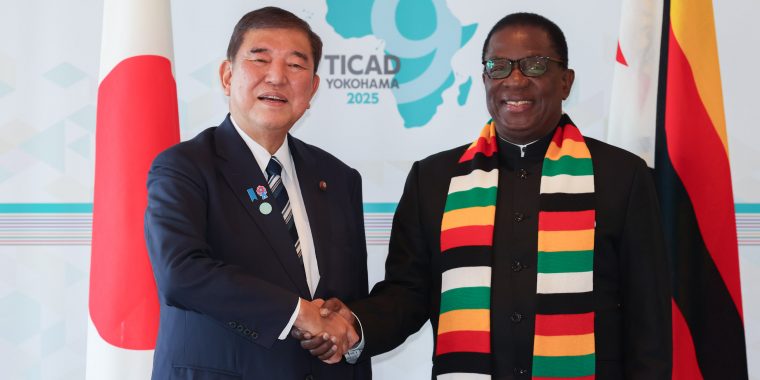
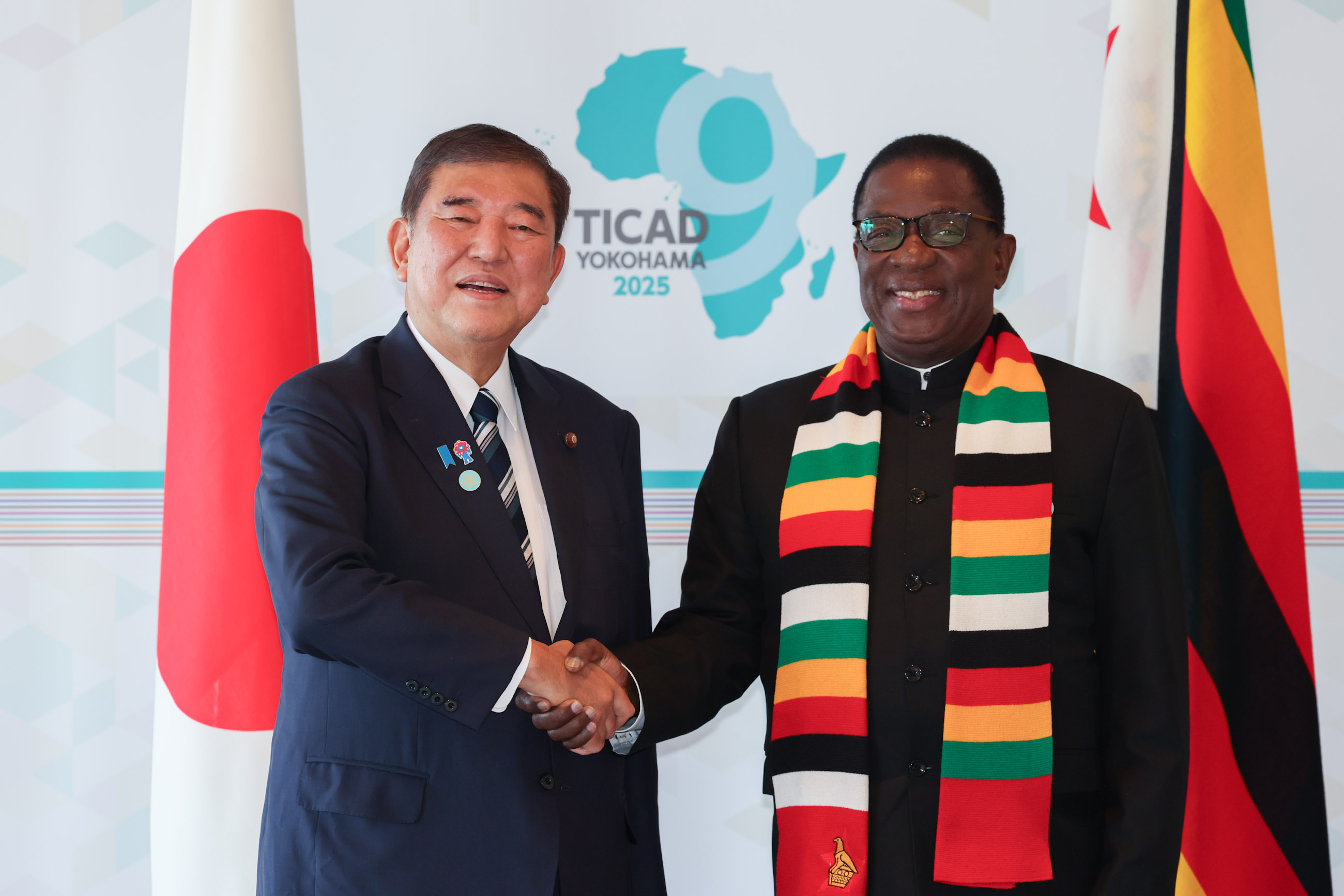
Japan-Zimbabwe Summit Meeting (Summary)


21.8.2025


2:54

Diplomatic
Relations

Prime
Minister’s
Office
of
Japan

[Provisional
translation]

On
August
20,
commencing
at
0:22
p.m.,
for
approximately
20
minutes,
Mr.
ISHIBA
Shigeru,
Prime
Minister
of
Japan,
held
a
summit
meeting
with
H.E.
Dr.
Emmerson
Dambudzo
MNANGAGWA,
President
of
the
Republic
of
Zimbabwe,
who
is
visiting
Japan
to
participate
in
the
in
the
Ninth
Tokyo
International
Conference
on
African
Development
(TICAD
9).
The
overview
of
the
meeting
is
as
follows:

1. 
 
At
the
outset,
Prime
Minister
ISHIBA
expressed
his
appreciation
for
President
Mnangagwa’s
consecutive
visit
to
Japan
following
the
National
Day
of
the
Expo
2025
Osaka,
Kansai
in
July
and
expressed
his
hope
to
strengthen
bilateral
economic
relations
through
opportunities
for
dialogue
with
Japanese
companies.
In
response,
President
Mnangagwa
expressed
his
appreciation
for
the
hospitality
shown
at
the
Expo
National
Day
and
his
intention
to
further
strengthen
bilateral
economic
relations.

2. 
 
Following
that,
Prime
Minister
ISHIBA
stated
that
the
government
of
Japan
decided
to
provide
food
aid
and
support
livelihood
improvement
through
agricultural
infrastructure
development
in
demined
areas
as
well
as
landmine
clearance
in
order
to
realize
the
country’s
high
agricultural
potential.
Prime
Minister
ISHIBA
also
asked
for
continued
cooperation
for
the
stable
trade
of
petalite(*)
produced
in
Zimbabwe.
In
response,
President
Mnangagwa
expressed
his
gratitude
for
Japan’s
support
and
expressed
his
intention
to
continue
working
closely
together
to
promote
further
investment
by
Japanese
companies.

3. 
 
The
two
leaders
also
concurred
to
further
strengthen
cooperation
in
responding
to
various
international
challenges,
such
as
the
United
Nations
Security
Council
reform.

*Petalite
is
the
main
raw
material
for
earthenware
pots
produced
in
Japan.

Post
published
in:

Featured

Zimbabwe pledges to deepen cultural exchanges with China: official

Speaking
at
the
second
edition
of
the
Harare
Forum
for
Africa
(HFA)
held
in
Harare,
the
capital
of
Zimbabwe,
Nyanhi
said
a
series
of
cultural
exchange
programs
have
taken
Zimbabwean
creative
experts
and
young
artists
to
China
for
education
and
information
sharing,
further
exposing
local
talent
to
the
international
scene.

“A
lot
of
exchange
has
happened
in
the
areas
of
live
performance,
including
music,
dance,
and
instrumentation.
We
are
intrigued
to
see
the
increased
collaboration
that
has
gone
into
other
spheres
of
the
arts,
which
are
areas
of
fashion
design,
areas
of
filmmaking,
and
television
production,”
said
Nyanhi.

He
noted
that
in
recent
years,
there
has
been
significant
support
from
China
and
the
local
Chinese
community
to
Zimbabwe’s
arts
and
culture
activities,
which
include
the
National
Arts
Merit
Awards
held
annually
to
recognize
outstanding
achievements
by
artists
across
various
disciplines.

The
inaugural
China
Film
Festival
in
Zimbabwe,
held
earlier
this
month,
marked
a
significant
milestone
in
the
diplomatic
relations
between
China
and
Zimbabwe,
which
are
celebrating
45
years
of
diplomatic
relations
and
cooperation,
he
added.

Nyanhi
said
last
year,
the
NACZ
launched
the
Zimbabwe
Film
Strategy
2025-2030,
which
seeks
to
improve
the
quality
of
productions
and
transform
the
country’s
film
industry
into
a
globally
competitive
sector.

“Collaborations
with
friendly
countries,
or
countries
that
are
deeply
tied
in
friendship
with
Zimbabwe,
like
China,
are
critical
in
making
this
plan
a
reality,”
Nyanhi
added.

The
HFA,
mainly
organized
by
the
School
of
Journalism
and
Communication
at
China’s
Tsinghua
University
and
the
China
Zimbabwe
Exchange
Center,
serves
as
a
platform
for
academics,
business
leaders,
and
government
representatives
to
share
their
insights
into
Africa’s
development
issues.

Post
published
in:

Featured

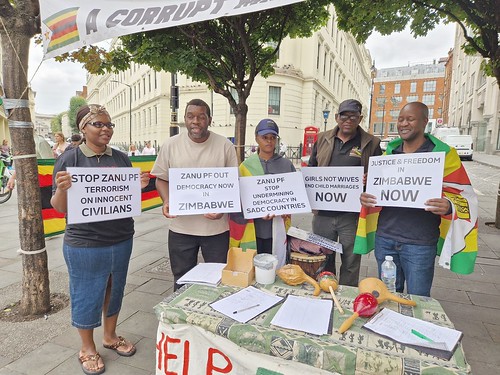
Zimbabwe Vigil Diary 16th August 2025


https://www.flickr.com/photos/zimbabwevigil/54726553134/sizes/m/


Thanks
to
those
who
came
today:
Blessing
Harry,
Jonathan
Kariwo,
Chantelle
Manyande,
Philip
Maponga,
Mellisa
Marewangepo,
Ziwanai
Mbanje
and
Ephraim
Tapa.
Photos: https://www.flickr.com/photos/zimbabwevigil/albums/72177720328437374/.

During
the
vigil
meet,
activists
took
time
to
reflect
on
President
Emmerson
Mnangagwa’s
statement
to
the
Liberation
Movements
Summit
recently
held
in
South
Africa.
In
a
video,
Mr
Mnangagwa
is
heard
calling
to
other
liberation
movements:
‘we
must
not
allow
ourselves
to
lose
power’.

This
statement
said
it
all
to
vigil
activists.
It
meant
that
ZANU
PF
would
continue
to cling
to
power,
even
against
the
people’s
will. It
meant
that
to
oppose
ZANU
PF
would
be
akin
to
looking
for
trouble,
including
death.

It
meant
that
ruling
liberation
movements,
many
of
which
constitute
SADC,
would
not
be
helpful
to
Zimbabwe,
particularly
when
elections
were
clearly
stolen
and
the
electorate
subdued
through
violence
and
intimidation.

Mnangagwa’s
statement
served
to
encourage
ruling
liberation
movements
within
SADC
to
continue
to
retain
power
by
hook
or
by
crook,
even
if
it
meant
eliminating
perceived
opponents. Such
statements
were
so
backward
that
they
could
only
drag
the
region,
and
with
it
Africa,
to
the
dark
ages.

Activists
felt
vindicated
and
emboldened:
vowing
to
continue
with
the
fight
for
democracy
and
human
rights
regardless.

For
Vigil
pictures
check: http://www.flickr.com/photos/zimbabwevigil/.
Please
note:
Vigil
photos
can
only
be
downloaded
from
our
Flickr
website.


Events
and
Notices:  


  • Next
    Vigil
    meeting
    outside
    the
    Zimbabwe
    Embassy. 
    Saturday
    6th September
    from
    2

    5
    pm.
    We
    meet
    on
    the
    first
    and
    third
    Saturdays
    of
    every
    month.
    On
    other
    Saturdays
    the
    virtual
    Vigil
    will
    run.

  • The
    Restoration
    of
    Human
    Rights
    in
    Zimbabwe
    (ROHR)
     is
    the
    Vigil’s
    partner
    organisation
    based
    in
    Zimbabwe.
    ROHR
    grew
    out
    of
    the
    need
    for
    the
    Vigil
    to
    have
    an
    organisation
    on
    the
    ground
    in
    Zimbabwe
    which
    reflected
    the
    Vigil’s
    mission
    statement
    in
    a
    practical
    way.
    ROHR
    in
    the
    UK
    actively
    fundraises
    through
    membership
    subscriptions,
    events,
    sales
    etc
    to
    support
    the
    activities
    of
    ROHR
    in
    Zimbabwe.

  • The
    Vigil’s
    book
    ‘Zimbabwe
    Emergency’
     is
    based
    on
    our
    weekly
    diaries.
    It
    records
    how
    events
    in
    Zimbabwe
    have
    unfolded
    as
    seen
    by
    the
    diaspora
    in
    the
    UK.
    It
    chronicles
    the
    economic
    disintegration,
    violence,
    growing
    oppression
    and
    political
    manoeuvring

    and
    the
    tragic
    human
    cost
    involved. It
    is
    available
    at
    the
    Vigil.
    All
    proceeds
    go
    to
    the
    Vigil
    and
    our
    sister
    organisation
    the
    Restoration
    of
    Human
    Rights
    in
    Zimbabwe’s
    work
    in
    Zimbabwe.
    The
    book
    is
    also
    available
    from
    Amazon.


  • Facebook
    pages:  

  • Vigil : 
    https ://www.facebook.com/zimbabwevigil 
  • ROHR: https://www.facebook.com/Restoration-of-Human-Rights-ROHR-Zimbabwe-International-370825706588551/
  • ZAF: https://www.facebook.com/pages/Zimbabwe-Action-Forum-ZAF/490257051027515

The
Vigil,
outside
the
Zimbabwe
Embassy,
429
Strand,
London
meets
regularly
on
Saturdays
from
14.00
to
17.00
to
protest
against
gross
violations
of
human
rights
in
Zimbabwe.
The
Vigil
which started
in
October
2002
will
continue
until
internationally-monitored,
free
and
fair
elections
are
held
in
Zimbabwe.

Post
published
in:

Featured

Ed Martin Isn’t Too Proud To Beg – See Also – Above the Law

Martin
Is
Begging
Tish
James
To
Resign:
He
also
pleaded
with
her
to
not
release
the
letter
to
the
public.
So
much
for
that.
Slain
Judge
Alledged
To
Be
Part
Of
“Nasty
and
Sickening”
Sex
Ring:
Forthcoming
details
may
make
sense
of
the
in-chambers
shooting.
Eric
André
Gets
Second
Swipe
At
Clayton
County:
The
11th
Circuit
reversed
the
original
dismissal
after
“careful
review.”
Prioritizing
Public
Service?:
These
law
schools
should
be
on
your
radar!
On
This
Week
Of
Thinking
Like
A
Lawyer:
Sandwich
throw-downs
and
the
end
of
Obergefell?

Of Course A Lawyer Invented That! – Above the Law


New
York
Law
School
graduate
Chester
Carlson
chose
to
focus
on
patent
work
after
spending
time
working
as
a
research
engineer
with
Bell
Labs.
His
experience
in
law
school
helped
drive
him
to
finish
an
invention
he’d
been
toying
with
for
years.
The
resulting
process
would
become
the
heart
of
what
company?


Hint:
The
company
Carlson
joined
was
named
Haloid,
but
changed
its
name
based
on
combining
Greek
roots.
Carlson
reportedly
hated
the
new
name
suggestion.


See the
answer
on
the
next
page.

Agentic AI Is The ‘Fetch’ Of Legal Tech And We Need To Stop Trying To Make It Happen – Above the Law

(Photo
by
ChatGPT)

Supposedly,
the
word
of
the
year
in
technology
is
“agentic.”
By
the
end
of
the
year

it’ll
probably
be
“bubble,”

but
for
now
the
world
is
meant
to
tremble
before
the
awesome
promise
of
agentic.
It
takes
AI
to
a
whole
new
level!
It
heralds
the
new
human-free
workforce!
It

keeps
Woody
Harrelson
out
of
the
rain
!
As
the
shiny
object
economy
grows
complacent
with
magic
interactive
chatbots,
the

agentic
AI

era
to
transform
those
humdrum
chatbots
into
something…
else.

The
hype
machine
gods
must
feed
and
are
only
satisfied
with
the
blood
of
freshly
squeezed
buzzwords.
What
does
“agentic”
even
mean?
“The
term
‘agent’
is
one
of
the
most
egregious
acts
of
fraud
I’ve
seen
in
my
entire
career
writing
about
this
crap,
and
that
includes
the
metaverse,”

writes
tech
journalist
Ed
Zitron

and,
somehow,
he
might
be
too
forgiving.
The
agentic
talk
means
everything
and
nothing
all
at
once.
That’s
the
power
of
an
empty
signifier!
Heap
whatever
vague
hopes
and
dreams
you
can
into
this
rhetorical
nugget
and
let
it
carry
you
to
a
sale
and
another
round
of
funding.

In
theory,
agentic
AI
represents
the
leap
from
autocomplete-on-steroids
to
autonomous
action

taking
an
understanding
of
the
user’s
goals
and
setting
out
on
its
own
to
get
the
job
done.

Imagine
a
cybersecurity
bot

surveying
the
evolving
threat
landscape
and
inventing
its
own
countermeasures
as
new
viruses
emerge
all
while
you’re
still
fumbling
with
two-factor
authentication.
Other
tech
companies
promote
agents
that
monitor
your
calendar
and
autonomously
decide
to
book
your
dinner,
or
buy
flowers,
or
plot
the
grisly
demise
of
your
enemies.

But
since
lawyers
entrusting
this
sort
of
autonomy
to
AI
would
be,
to
use
the
technical
term,
“malpractice,”
agentic
AI
doesn’t
really
sing
to
this
market.
If
you
think
hallucinated
case
citations
are
bad,
wait
until
the
agent
takes
it
upon
itself
to
settle
your
client’s
divorce
for
pennies
on
the
dollar
based
on

Kirshner
.
Even
if
you’re
not
in
Kentucky.

So
why
would
anyone
hoping
to
sell
to
lawyers

which
presumably
describes
the
folks
on
the

ILTACON

exhibit
floor

indulge
in
the
term
“agentic”
at
all?

For
the
most
part,
it’s
because
their
agentic
AI
isn’t
really
agentic
AI.
At
least
not
the
way
anyone
trying
to
fuel
a
half
trillion
dollar
valuation
would
use
the
term.

We
first
encountered
this
a
couple
months
ago
when
we
saw

Thomson
Reuters
preview
its
“agentic”
offerings
.
Despite
adopting
the
word-of-the-moment,
the
Thomson
Reuters
product
felt
more
like
a
glorified
automation
product

which
is
good!
Feed
it
case
files,
it
does
some
research,
it
brainstorms
some
claims
or
defenses,
does
a
little
more
research,
and
spits
out
a
draft.
That’s
useful
and
can
jumpstart
a
lawyer’s
work,
but
it’s
not
so
much
an
autonomous
agent.
If
one
were
so
inclined,
they
could
enter
“based
on
these
case
files,
come
up
with
claims,
perform
relevant
legal
research,
and
present
me
with
a
first
draft
motion”
into
a
bot
and
(provided
it
had
some
way
of
accessing
valid
legal
research
other
than
its
own
fever
dreams)
get
the
same
result
right
now.

That’s
not
so
much
agentic
as
it’s
a
batch
file.

At
ILTACON,

Lexis

showed
off
a
similar
feature
and
added
a
bit
more
to
the
agentic
soup
by
explaining
that
they
use
different
models
for
different
tasks,
making
the
request
more
complicated
than
simply
asking
ChatGPT
a
multipart
prompt.
Fair,
but
that’s
still
not
an
“agent”
as
much
as
professionally
designed
prompting.

When
I
raised
my
irritation
with
the
whole
agentic
conversation
with
Tiana
Van
Dyk,
Senior
Director
of
Client
Services
at

Epiq
,
she
characterized
(at
least
within
the
legal
context)
agentic
as
automation
with
prompts.
“Is
it
that
simple?”
she
mused.
“There’s
more
in
there,
because
if
you
have
all
the
wrong
models
tied
to
all
the
wrong
steps,
you’re
gonna
get
a
bad
outcome.”
From
her
perspective,
the
challenge
in
legal
tech
right
now
is
demystifying
these
technologies
for
lawyers.
“What
we’re
missing
in
the
industry,
is
our
ability
to
translate
the
academia
and
the
complex
nature
of
some
of
these
systems
into
something
that
is
accessible.”

Though
with
agents
the
battle
isn’t
with
the
academics
as
much
as
the
advertising
execs.
They’re
the
ones
pitching
autonomous
decision
makers
to
the
world
and
the
legal
tech
vendors
have
to
come
back
and
tell
the
lawyers,
“ha
ha,
yeah,
no,
our
product
really
doesn’t
do
all
that.”

It’s
frustrating,
because
it
sounds
like
I’m
downplaying
the
significant
talent
and
expertise
that
goes
into
making
these
processes
work
right.
Automation
is
hard!
Making
sure
the
process
gets
it
correct
every
time
takes
a
lot
of
strategic
thinking
and
meticulous
effort.
But
I
keep
reminding
myself
that
it’s
not
my
fault
that
this
sounds
dismissive,
it’s
the
wholly
unnecessary
decision
to
set
the
bar
at
HAL
9000.

That’s
not
to
say
there
aren’t
niches
within
the
legal
workflow
that
could
use
genuine
agentic
AI.
Cybersecurity
is
still
a
legal
industry
concern.
The
billing
process
might
be
ripe
for
something
at
least
closer
to
agentic.

Oddr

doesn’t
lean
on
the
word
agentic
in
their
materials

hurray!

but
its
end-to-end
revenue
platform
that
automates
the
firm
through
billing,
collections,
payments
and
forecasting
is
much
closer
to
the
level
of
streamlined
automation
through
several
different
systems
than
what
many
companies
would
plaster
the
word
agent
all
over.
Still,
it’s
not
“evolving”
its
approach
to
the
billing
process
unless
it
independently
figures
out
how
to
call
Rocco
and
Vinnie
to
pay
a
visit
to
that
one
delinquent
client.

Legal
tech
vendors
have
a
Scylla
and
Charybdis
problem.
On
one
side,
they’re
tech
companies
who
feel
compelled
to
go
with
the
tech
trend
flow
or
look
like
they’re
not
“cutting
edge”
enough.
On
the
other
side,
they
cater
to
a
legal
profession
that
needs
to
be
coaxed
into
tech
adoption
like
frightened
bunnies,
soothed
by
reassurances
that
“this
won’t
really
change
how
you’ve
done
this
job
for
the
last
hundred
years.”

The
good
news,
is
that
lawyers
can
relax.
Healthy
skepticism
is
always
welcome,
but
don’t
let
the
“agentic”
branding

and
all
the
tech
industry
baggage
that
comes
with
it

scare
you
off
of
legal
tech
products.
The
providers
who
specialize
in
this
space
didn’t
suddenly
forget
who
they’re
dealing
with.
They
know
that
firms
aren’t
in
the
market
for
a
product
that’s
going
to
start
trying
to
“help”
by
making
legal
decisions
on
its
own.
Like
Old
Man
Jenkins,
the
carnival
caretaker
who
would’ve
gotten
away
with
it
if
it
weren’t
for
you
pesky
kids,
if
you
look
underneath
the
hood
of
that
“agentic”
offering
and
you’ll
find
familiar
prompts
driving
a
familiar,
vetted
automation.

Useful,
maybe
even
transformative
at
the
margins,
but
not
something
making
decisions.

The
real
danger
is
that
buzzwords
like
“agentic”

and
the
delirious
bucket
of
magic
beans
promises
that
comes
with
it

will
scare
lawyers
into
missing
out
on
useful
tools.
But
it’s
the
nature
of
this
industry
that
we
have
to
constantly
push
back
against
promises
that
thrill
venture
capital
while
terrifying
lawyers.
By
next
year
there
will
be
some
new
empty
signifier.

Symphonic
AI…
turning
multiple
agents
into
ebbing
and
flowing
actors
within
a
unified,
goal-oriented
symphony
of
voices.

Or
some
equally
bullshit
phrase.

That
is,
unless
“bubble”
really
does
take
over
first.


Earlier
:

Dispatches
From
The
AI
Bubble:
ILTACON
2025


‘Agentic’
AI
Is
The
Hot
Buzzword…
But
Do
Lawyers
Actually
Want
An
Agent?


HeadshotJoe
Patrice
 is
a
senior
editor
at
Above
the
Law
and
co-host
of

Thinking
Like
A
Lawyer
.
Feel
free
to email
any
tips,
questions,
or
comments.
Follow
him
on Twitter or

Bluesky

if
you’re
interested
in
law,
politics,
and
a
healthy
dose
of
college
sports
news.
Joe
also
serves
as
a

Managing
Director
at
RPN
Executive
Search
.

Corporate Clients Aren’t Just Going To Forget About The Biglaw Firms That Made Deals With Trump – Above the Law


Ed.
note
:
Welcome
to
our
daily
feature,

Quote
of
the
Day
.


I’m
definitely
talking
to
general
counsel
who
are
using
the
settlement
issue
as
a
criteria—if
not
a
dispositive
variable—in
their
law
firm
choices.
We
haven’t
pulled
work
from
any
firms
yet,
but
when
new
matters
come
up,
we’re
making
sure
that
firms
challenged
by
the
government
have
a
real
opportunity
to
win
our
business.


 Eric
Whitaker,
chief
legal
officer
at
DNA
sequencing
company
10X
Genomics,
in
comments
given
to
the

American
Lawyer
,
concerning
working
with
law
firms
that
made
deals
with
the
Trump
administration.
“There’s
a
range
of
day-to-day
legal
work
where
I
have
complete
discretion–and
that’s
where
you’ll
see
movement
first,”
he
said,
pointing
out
that
“there’s
a
real
concern
about
institutional
stability.”
He
went
on
to
say
that
“[i]f
a
firm
you’ve
invested
in
suddenly
can’t
represent
you
because
of
outside
pressure,
that’s
a
major
problem
for
companies.”
Whitaker
is
the
co-founder
of
GCs
United,
a
group
for
in-house
legal
officers
to
“unite
in
support
of
the
rule
of
law
and
fellow
lawyers.”


Staci Zaretsky


Staci
Zaretsky
 is
the
managing
editor
of
Above
the
Law,
where
she’s
worked
since
2011.
She’d
love
to
hear
from
you,
so
please
feel
free
to

email

her
with
any
tips,
questions,
comments,
or
critiques.
You
can
follow
her
on BlueskyX/Twitter,
and Threads, or
connect
with
her
on LinkedIn.