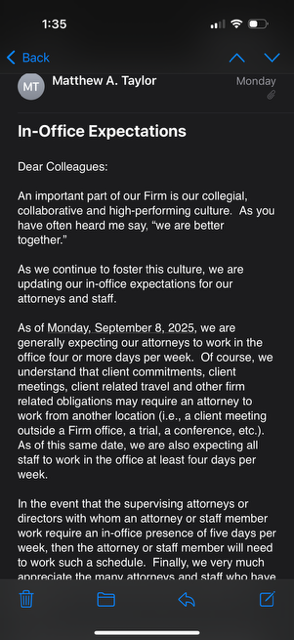
It’s
wild
what
a
difference
five
years
makes.
In,
say,
2019
(notably
pre-Covid),
if
you
said
the
new
Biglaw
trend
was
four
days
in
the
office
I’d
think
work/life
balance
was
finally
having
its
moment
and
firms
were
actually
making
progress
to
prevent
burnout.
But
it
is
2025,
and
requiring
four
days
of
office
face
time
is
a
stricter
requirement
than
most
firm
lawyers
have
grown
accustomed
to
over
the
last
five
years.
Four
days
in
the
office
is
definitely
the
new
trend.
The
latest
firm
to
announce
four
days
is
Duane
Morris,
a
firm
with
$694,188,000
in
gross
revenue
last
year
making
it
82nd
onthe
Am
Law
200
ranking.
Earlier
this
week,
the
firm
announced
that,
after
Labor
Day,
they’ll
have
to
be
back
in
the
office
Monday
through
Thursday.
As
soon
as
you
find
out
about
office
attendance
plans
at
your
firm,
please email
us (Opens
in
a
new
window) (subject
line:
“[Firm
Name]
Office
Reopening”)
or
text
us
at
(646)
820-8477.
We
always
keep
our
sources
on
stories
anonymous.
There’s
no
need
to
send
a
memo
(if
one
exists)
using
your
firm
email
account;
your
personal
email
account
is
fine.
If
a
memo
has
been
circulated,
please
be
sure
to
include
it
as
proof;
we
like
to
post
complete
memos
as
a
service
to
our
readers.
You
can
take
a
photo
of
the
memo
and
attach
as
a
picture
if
you
are
worried
about
metadata
in
a
PDF
or
Word
file.
Thanks.
*
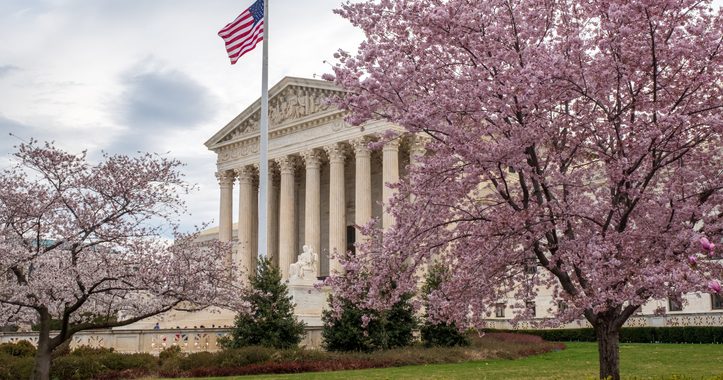
Supreme
Court
keeps
ban
on
Florida’s
immigration
law.
Which
seems
like
a
win
until
you
realize
they’re
just
trying
to
stop
a
normal
state
from
passing
protections
by
holding
the
line
on
preemption.
[Law360]
*
Lawmakers
declare
EEOC
attacks
on
Biglaw
a
“shakedown.”
[Reuters]
*
DOJ
asks
Texas
to
eliminate
congressional
seats
held
by
Black
and
Latino
Democrats.
[Politico]
*
It’s
that
fun
time
of
the
cycle
where
we
learn
how
much
partners
make
from
the
financial
disclosure
forms
they’ve
disclosed
to
become
Trump
officials.
[National
Law
Journal]
*
We’re
watching
in
real
time
as
the
right-wing
balance
of
power
shifts
from
FedSoc
to
Vermeule.
[Verfassungsblog]
*
Biglaw
wary
of
getting
involved
in
the
New
York
mayoral
race
after
realizing
every
political
instinct
they
have
is
wrong.
[Bloomberg
Law
News]
*
Kasowitz
departures
raise
questions
about
the
future.
[American
Lawyer]
Biglaw
Firm
Adopts
Four-Day,
In-Person
Mandate:
At
least
you
get
to
stay
home
on
Fridays!
Not
Saying
You
Did
Anything
Wrong,
But
It
Does
Look
Weird:
A
foreign
fund
wants
Weil
to
produce
documents.
Don’t
Call
The
Back-Down
A
Retreat!:
The
ABA
President
has
an
interesting
characterization
of
their
DEI
efforts.
Justice
Jackson
Pens
A
Shadow
Docket
Dissent:
Unlike
the
most
of
her
colleagues,
she
thought
about
the
law
before
she
decided
the
government
was
“likely
to
succeed.”
On
This
Week’s
Episode
Of
Thinking
Like
A
Lawyer:
A
judge
made
a
ruling
based
on
a
fake
case!
Funny
thing
about
promises
of
transparency:
people
will
notice
gaps
in
the
record.
Freshfields
talked
a
big
game
on
their
commitment
to
DEI,
but
it
looks
like
there’s
a
proverbial
minute
missing
from
the
footage.
The
firm
set
some
huge
diversity
goals
for
this
side
of
the
pond,
things
like
having
at
least
20
percent
of
new
partners
be
racially
or
ethnically
diverse
and
at
least
30
percent
of
their
senior
business
service
staff
be
the
same.
Since
then,
Trump
happened;
it
seems
like
Freshfields
has
had
a
change
of
heart.
Roll
On
Friday
has
coverage:
RollOnFriday
has
uncovered
discrepancies
in
Freshfields’
diversity
and
inclusion
data
which
cast
doubt
on
its
claims
about
its
DEI
achievements. … The
firm
binned
its
US
diversity
targets[.]
When
asked
about
the
move
by
a
press
which
had
dutifully
reported
the
firm’s
five
year
plan
at
its
launch,
allowing
Freshfields
to
reap
the
attendant
publicity
benefits,
it
would
not
answer
directly.
Instead,
a
source
close
to
the
firm
said
it
had
“retired”
its
US
specific
targets
“as
they
had
been
met
or
exceeded”.
That
seems
to
be
the
lawyerly
way
of
saying
“we
don’t
care
about
that
anymore”.
RollonFriday
did
the
perfectly
reasonable
journalistic
followup
of
asking
if
Freshfields
can
accurately
say
the
goals
have
been
met
or
exceeded
when
data
from
2024
showed
that
the
firm
was
behind.
The
firm
responded
that
their
information
wasn’t
up
to
date,
but
that’s
a
bit
glib
considering
any
hope
of
more
up-to-date
DEI
information
was
scrubbed
from
their
website
months
ago.
While
Freshfields’
5
year
diversity
plan
would
put
their
diversity
deadline
in
2026,
it
is
unlikely
that
the
firm
is
going
to
double
down
on
or
advance
their
diversity
under
this
administration.
It
isn’t
like
they’re
Davis
Wright
Tremaine
or
anything.
Chris
Williams
became
a
social
media
manager
and
assistant
editor
for
Above
the
Law
in
June
2021.
Prior
to
joining
the
staff,
he
moonlighted
as
a
minor
Memelord™
in
the
Facebook
group Law
School
Memes
for
Edgy
T14s
.
He
endured
Missouri
long
enough
to
graduate
from
Washington
University
in
St.
Louis
School
of
Law.
He
is
a
former
boatbuilder
who
is
learning
to
swim, is
interested
in
critical
race
theory,
philosophy,
and
humor,
and
has
a
love
for
cycling
that
occasionally
annoys
his
peers.
You
can
reach
him
by
email
at [email protected]
and
by
tweet
at @WritesForRent.
The
Gray
Reed
family
is
shocked
and
saddened
by
the
tragic
loss
of
Chloe
Childress.
She
bravely
and
courageously
carried
out
that
mission
to
the
end,
and
now
her
legacy
shines
brightly
through
the
countless
lives
she
impacted.
Our
deepest
sympathies
and
most
fervent
prayers
are
with
her
family
during
these
tender
days.
—
Kyle
Sanders,
managing
partner
of
Gray
Reed,
in
a
statement
noted
by
Law360,
concerning
the
loss
of
Chloe
Childress,
the
19-year-old
daughter
of
the
firm’s
Chief
Growth
and
Operations
Officer
Matthew
Childress.
Chloe
was
a
counselor
for
the
Bubble
Inn
cabin
at
Camp
Mystic,
where
all
campers
and
counselors
were
swept
away
by
unprecedented
flash
flooding.
Staci
Zaretsky is
a
senior
editor
at
Above
the
Law,
where
she’s
worked
since
2011.
She’d
love
to
hear
from
you,
so
please
feel
free
to
email
her
with
any
tips,
questions,
comments,
or
critiques.
You
can
follow
her
on Bluesky, X/Twitter,
and Threads, or
connect
with
her
on LinkedIn.
Has
the
era
of
the
midsize
firm
come
to
an
end?
Probably
not,
but
with
increasing
nationalization
and
the
financial
pressures
that
go
along
with
it,
midsize
firms
are
consolidating
and
a
valuable
segment
(and
price
point!)
may
be
lost.
Lawyers
have
faced
a
steady
stream
of
sanctions
for
citing
fake
cases
generated
by
AI,
but
now
a
judge
officially
blessed
an
order
based
on
AI-hallucinated
cases
as
a
critical
firewall
in
the
war
against
machine
slop
is
breached.
While
AI
holds
out
promise
for
access
to
justice,
the
risk
of
a
lawless
free-for-all
looms.
Speaking
of
lawless
free-for-alls,
the
Chief
Justice
explains
that
he
doesn’t
care
about
substantive
criticism
of
the
Court
because
he
has
votes
and
the
critics
don’t.
At
the
end
of
Chinatown,
as
our
protagonist
watches
the
bad
guys
win,
he’s
pulled
away
and
admonished,
“Forget
it,
Jake.
It’s
Chinatown.”
The
phrase
lives
on
as
a
warning
when
corruption
runs
so
deep
that
there’s
no
fighting
it.
In
the
film,
the
bad
guy
is
a
rich
real
estate
baron
who
manipulates
a
government
agency
and
bilks
senior
citizens
for
his
personal
profit.
Despite
the
pervasive
criminality,
he’s
actually
backed
up
by
law
enforcement
who
aid
and
abet
his
dirty
work.
In
case
that
sounds
like
anyone
you
know.
Also
the
bad
guy
is
a
pedophile
sexually
attracted
to
his
daughter.
Do
with
that
information
what
you
will.
In
Trump
v.
American
Federation
of
Government
Employees,
the
Supreme
Court
again
invoked
the
unaccountability
shield
of
its
shadow
docket
to
strike
down
a
preliminary
injunction
issued
in
the
Northern
District
of
California
that
had
blocked
Executive
Order
No.
14210,
Trump’s
5-page
edict
that
turned
the
federal
government
over
to
someone
named
“Big
Balls”
with
a
mission
to
slash
the
federal
workforce.
While
the
executive
branch
can
obviously
hire
and
fire
agency
staff,
the
plan
to
wholesale
gut
departments
approved
and
funded
by
Congress
without
congressional
action
runs
afoul
of
well-established
precedent,
not
to
mention
the
“Major
Questions
Doctrine”
that
conservative
legal
scholars
invented
to
prevent
Democratic
presidents
from
taking
basic
executive
action
through
an
agency
(like,
say,
DOGE)
without
the
express
written
consent
of
the
House,
the
Senate,
and
probably
Major
League
Baseball.
Given
that
legal
landscape,
the
Supreme
Court
obviously
supported
the
injunction…
PSYCHE!
The
District
Court’s
injunction
was
based
on
its
view
that
Executive
Order
No.
14210,
90
Fed.
Reg.
9669
(2025),
and
a
joint
memorandum
from
the
Office
of
Management
and
Budget
and
Office
of
Personnel
Management
implementing
that
Executive
Order
are
unlawful.
Because
the
Government
is
likely
to
succeed
on
its
argument
that
the
Executive
Order
and
Memorandum
are
lawful
—
and
because
the
other
factors
bearing
on
whether
to
grant
a
stay
are
satisfied
—
we
grant
the
application.
Likely
to
succeed…
why?
The
Court
declines
to
say.
But
the
government
is
likely
to
succeed,
we
are
assured,
in
the
two
paragraph
order
authorizing
the
dismantling
of
the
federal
government
while
the
merits
can
be
hashed
out
later.
Might
this
strategy
result
in
irreparable
harm?
The
unsigned
majority
opinion
does
not
even
mention
that
part
of
the
injunctive
relief
equation.
Justice
Ketanji
Brown
Jackson
penned
the
lone
dissent,
though
Justice
Sotomayor
wrote
a
concurrence
that
might
as
well
have
said,
“Forget
it
Ketanji,
It’s
Chinatown.”
This
seems
like
Sotomayor
running
back
her
strategy
from
the
D.V.D.
v.
DHS
case.
In
that
case,
also
a
shadow
docket
opinion,
Sotomayor
wrote
a
lengthy
dissent
that
took
it
upon
itself
to
characterize
the
majority
opinion.
Hey,
if
the
Republican
justices
want
to
shirk
responsibility
with
unsigned,
unexplained
orders,
why
not
take
the
initiative?
Signaling
to
the
lower
courts
that
the
government
had
flunked
procedure
and
only
appealed
the
preliminary
injunction
—
arguably
too
broad
because
it
applied
to
“any
alien”
—
and
not
the
remedial
order
—
specific
to
certain
individuals
already
sent
to
Africa.
Therefore,
the
sparsely
reasoned
shadow
docket
opinion
did
not
properly
stop
the
remedial
order.
It
had
the
benefit
of
being
both
clever
and
accurate.
The
Supreme
Court
went
ahead
and
issued
a
follow
up
clarifying
that
they
were
going
to
stay
the
remedial
order
too.
They
based
it
on
dicta
from
an
inapposite
1947
decision.
Really.
Here,
Sotomayor
does
much
the
same
but
in
a
concurrence,
leaning
into
the
idea
that
the
executive
order
required
DOGE
to
come
up
with
a
plan
first
and
so,
she
reasons,
the
district
court
can’t
stop
DOGE
from
coming
up
with
a
plan
to
fire
everyone
and
the
courts
can
decide
if
that
plan
is
an
illegal
wreck
later.
Kagan,
by
the
way,
joined
the
D.V.D.
clarification
and
seemingly
this
opinion
too.
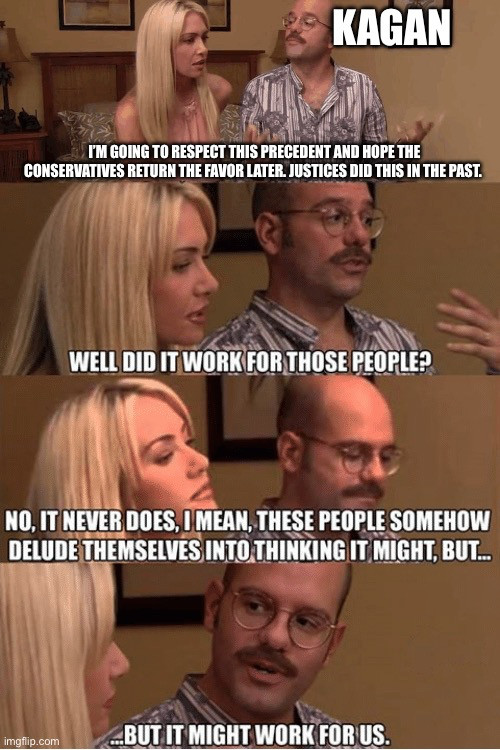
It
appears
that
she’s
employing
a
strategy
she’s
used
before
where
she
sides
with
the
majority
on
formal,
respect
for
precedent
grounds
in
hopes
that
they’ll
return
the
favor.
But
Justice
Jackson
wasn’t
willing
to
let
it
slide.
The
executive
order
at
issue
might
technically
only
ask
Musk’s
minions
for
a
plan,
but
the
ask
is
in
itself
an
assault
on
the
separation
of
powers
and
the
Court
offered
nothing
to
explain
how
the
preliminary
injunction
failed
to
clear
all
the
established
considerations.
Unfortunately,
as
Jackson
explains,
the
common
sense
and
well-settled
legal
principles
ran
afoul
of
a
powerful
obstacle:
“this
Court’s
demonstrated
enthusiasm
for
greenlighting
this
President’s
legally
dubious
actions
in
an
emergency
posture.”
Jackson
expounds
upon
that
history,
discussing
both
the
multiple
times
that
Congress
authorized
presidents
to
embark
on
reorganization
efforts,
and
the
times
when
presidents
ASKED
to
perform
minor
government
reorganization
and
Congress
told
them
no.
Including,
for
the
record,
Donald
Trump
who
in
his
first
term
understood
—
who
are
we
kidding…
who
had
people
working
for
him
then
who
understood
—
that
the
White
House
couldn’t
embark
on
an
effort
to
reorganize
the
government
after
Congress
refused.
It
will
shock
you
not
at
all
to
learn
that
Jackson
also
managed
to
remember
the
irreparable
harm
prong
of
the
test.
The
folks
who
might
“know”
the
answer
to
these
questions
are
the
district
judges
themselves.
The
fact
that
Justice
Jackson
once
served
as
a
district
judge
shines
through
in
the
disdain
she
has
for
two-step-removed
appellate
jurists
substituting
their
reasoning
for
a
trial
judge
without
the
benefit
of
the
record
or
the
courtesy
of
a
real
opinion.
“[H]ubristic
and
senseless,”
to
use
her
words.
But,
hey,
maybe
Amy
Coney
Barrett
can
channel
her
experience
of
grading
papers
to
scold
Jackson
again
for
daring
to
know
how
trial
courts
actually
work.
It’s
easy
to
say
Justice
Jackson
has
the
better
of
the
case
here
since
she’s
the
only
one
bothering
to
defend
her
position,
but
it’s
hard
to
see
how
the
majority
would
get
ahead
on
any
of
these
arguments.
The
last
time
they
tried
Jackson
on
injunctions
they
refused
to
“dwell”
on
her
arguments.
At
least
ignoring
them
altogether
avoids
further
embarrassment.
But
maybe,
just
maybe,
we
should
demand
the
Supreme
Court
put
in
the
limited
effort
required
to
try
to
respond?
Ah.
There
I
go
again.
I
can
hear
it
softly
over
my
shoulder,
“Forget
it,
Joe.
It’s
One
First
Street.”
Trump’s
rendition
cases
are
starting
to
bleed
into
each
other.
On
Monday,
plaintiffs
in
the
habeas
case
for
men
banished
to
the
notorious
CECOT
prison
in
El
Salvador
docketed
an
admission
by
the
Salvadoran
government
that
the
United
States
retains
constructive
custody
of
prisoners
dumped
there
by
the
Trump
administration.
In
response
to
a
complaint
by
the
men’s
families,
El
Salvador
told
the
United
Nations
that
“the
jurisdiction
and
legal
responsibility
for
these
persons
lie
exclusively
with
the
competent
foreign
authorities,
by
virtue
of
international
agreements
signed
and
in
accordance
with
the
principles
of
sovereignty
and
international
cooperation
in
criminal
matters.”
This
would
appear
to
prove
that
the
DOJ
lied
to
multiple
courts
when
it
said
that
the
Trump
administration
has
no
responsibility
once
it
pushes
detainees
out
of
the
plane
onto
foreign
soil,
and
that
facilitating
their
return
would
require
delicate
negotiations
handled
personally
by
Secretary
of
State
Marco
Rubio.
“Those
aliens
are
in
the
custody
of
a
foreign
nation
pursuant
to
its
laws,”
the
DOJ
argued
in
May.
The
United
States
does
not
have
custody
so
there
is
no
jurisdiction.
It
does
however
accord
with
the
government’s
ability
to
get
Kilmar
Abrego
Garcia
back
from
El
Salvador
without
moving
to
formally
extradite
him,
after
months
in
which
the
DOJ
insisted
this
was
simply
impossible.
Judge
James
Boasberg
is
still
mulling
the
matter
in
DC.
But
in
the
meantime,
Judge
Stephanie
Gallagher
of
the
US
District
Court
for
the
District
of
Maryland
has
ordered
the
government
to
explain
itself.
Again.
But
this
time
without
the
lying.
Judge
Gallagher
is
overseeing
a
2024
settlement
entered
in
a
six-year-old
case
called
J.O.P.
v.
Dep’t
of
Homeland
Security.
In
exchange
for
the
plaintiffs
dismissing
their
litigation,
the
government
promised
not
to
remove
undocumented
children
who
showed
up
at
the
border
as
unaccompanied
minors
without
providing
specific
due
process.
The
Trump
administration
broke
that
promise
almost
immediately,
renditioning
a
detainee
pseudonymously
referred
to
as
“Cristian”
to
CECOT
in
El
Salvador.
On
April
23,
Judge
Gallagher
ordered
the
government
to
facilitate
Cristian’s
return
to
the
United
States.
Thus,
like
Judge
Xinis
in
the
Abrego
Garcia
matter,
this
Court
will
order
Defendants
to
facilitate
Cristian’s
return
to
the
United
States
so
that
he
can
receive
the
process
he
was
entitled
to
under
the
parties’
binding
Settlement
Agreement.
This
Court
further
orders
that
facilitating
Cristian’s
return
includes,
but
is
not
limited
to,
Defendants
making
a
good
faith
request
to
the
government
of
El
Salvador
to
release
Cristian
to
U.S.
custody
for
transport
back
to
the
United
States
to
await
the
adjudication
of
his
asylum
application
on
the
merits
by
USCIS.
The
government
immediately
appealed,
and,
after
a
brief
administrative
pause,
the
Fourth
Circuit
declined
to
issue
a
stay.
Judge
Gallagher’s
order
went
into
effect
on
May
19,
and
the
very
next
day
she
ordered
the
government
to
file
a
status
report
that
included
a
sworn
declaration,
under
oath,
by
person(s)
with
personal
knowledge
as
to:
1)
Cristian’s
location
and
custodial
status;
2)
what
steps
the
government
has
taken
to
facilitate
his
return;
and
3)
what
steps
they
planned
to
take
in
the
future.
Instead
the
government
produced
a
series
of
declarations
from
someone
named
Mellissa
Harper,
the
Acting
Deputy
Executive
Associate
Director
of
the
Enforcement
and
Removal
Operations
Division
at
ICE
(and
not
Secretary
of
State
Marco
Rubio).
Harper
blithely
insisted
that
some
unnamed
“senior
leadership”
authorized
her
to
“make
the
following
statement”:
Secretary
Rubio
has
a
personal
relationship
with
President
Bukele
and
senior
officials
in
the
El
Savadorean
[sic]
government
that
dates
back
over
a
decade….
[H]e
is
personally
handling
the
discussions
with
the
government
of
El
Salvador
regarding
persons
subject
to
the
Court’s
order
detained
in
El
Salvador.
Judge
Gallagher
has
become
increasingly
testy
over
these
non-responsive
responses,
and
Monday’s
UN
report
appeared
to
push
her
over
the
edge
into
open
fury.
Yesterday
she
sua
sponte
took
judicial
notice
of
the
report
and
gave
the
defendants
one
week
to
come
clean
after
months
in
which
it
“repeatedly
skirted
this
Court’s
directive
to
provide
information.”
Defendants
have
repeatedly
made
oblique
references
to
their
request
of
“assistance”
from
the
U.S.
Department
of
State
(DOS),
which
has
“enter[ed]
into
negotiations
to
facilitate
Cristian’s
return”
and
“assumed
responsibility
on
behalf
of
the
U.S.
Government
for…diplomatic
discussions
with
El
Salvador.”
Assuming
the
Government
of
El
Salvador
provided
truthful
information
to
the
UN,
no
“diplomatic
discussions”
should
be
required
here
because
El
Salvador
has
no
sovereign
interest
in
Cristian’s
continued
confinement
in
that
country.
This
Court
directs
Defendants
to
explain
their
position
that
“diplomatic
discussions”
involving
the
DOS
are
required
to
facilitate
Cristian’s
return
to
the
United
States
in
compliance
with
this
Court’s
Order.
Oh,
Mellissa
Harper
…
you’ve
got
some
‘splainin’
to
do.
NSO
Group
builds
spyware
that
authoritarian
regimes
love.
After
Washington
Post
journalist
Jamal
Khashoggi
was
assassinated
in
the
Saudi
consulate,
NSO’s
CEO
publicly
declared,
“We
had
nothing
to
do
with
this
horrible
murder.”
However,
leaked
data
and
forensic
analysis
revealed
that
NSO’s
products
seem
to
have
quite
a
bit
to
do
with
this
horrible
murder.
No
one
at
NSO
set
out
to
murder
a
journalist,
but
when
you
provide
authoritarian
regimes
technology
to
spy
on
their
dissidents…
natural
and
logical
consequences.
Blood
money
can
be
as
green
as
any
other
money,
but
investments
have
a
tendency
to
take
a
hit
when
the
company
gets
featured
in
Amnesty
International
reports.
If
there’s
a
risk
your
investment
might
end
up
knee
deep
in
an
assassination,
that’s
information
that
such
a
fund
might
arguably
find…
material?
Those
same
funds
may
have
concerns
about
foreign
bribes
or
international
gambling
sites
with
covert
ownership.
One
fund
invested
in
such
iffy
companies
under
the
management
of
Novalpina
Capital
Partners
and
it
gave
rise
to
a
whole
mess
of
foreign
legal
actions.
But
cutting
across
all
the
suits,
the
fund
claims
Novalpina
misled
it
about
the
nature
of
these
transactions
and
ultimately
caused
big
losses
while
Novalpina
claims
it’s
owed
a
bunch
of
money.
But
of
particular
interest
to
the
American
Biglaw
audience
is
a
28
U.S.C.
§
1782
petition
seeking
domestic
discovery
for
use
in
a
foreign
proceeding
filed
in
the
S.D.N.Y.:
Weil,
and
particularly
Gerhard
Schmidt,
co-managing
partner
of
Weil’s
German
offices,
was
the
Fund’s
key
legal
advisor
when
under
Novalpina
GP’s
control,
including
for
all
major
acquisitions
undertaken
by
the
Fund
(including
NSO,
LXO
and
Maxbet)….
Accordingly,
Weil
was
responsible
for
conducting
due
diligence,
negotiating,
financing
assistance,
drafting
transaction
documentation,
and
supporting
NCL
in
the
management
of
Fund
investments….
Schmidt
managed
the
Fund’s
investments
by
acting
as
a
director
in
various
Novalpina
and
Fund
entities,
and
was
one
of
the
directors
responsible
for
the
Fund’s
governance
of
NSO.
The
fund
wants
the
firm
to
produce
a
wide
array
of
firm
documents.
Or,
as
the
case
may
more
realistically
be,
a
privilege
log
listing
a
bunch
of
documents
Weil
won’t
hand
over.
That
said,
the
petition
claims
its
requests
primarily
target
“correspondence
Weil
had
with
third
parties,
or
documents
provided
to
Weil
by
third
parties.”
Weil
isn’t
a
party
to
the
lawsuit
so
they
aren’t
being
accused
of
wrongdoing,
but
there’s
a
point
where
technically
accurate
analysis
can
open
the
door
to
client
whitewashing.
NSO
was
described
as
having
“best
in
class”
governance
and
compliance.
In
the
class
of
spyware
manufacturers…
maybe
that’s
not
a
high
bar?
The
petition
claims
they
already
have
documents
showing
Weil
involved
removing
references
to
a
controversial
Russian
business
figure’s
ownership
stake
in
a
gambling
site…
where’s
the
materiality
line
on
that?
We
reached
out
to
Weil
about
this
matter
but
they
did
not
respond.
Which
is
understandable…
it’s
ongoing
litigation.
This
isn’t
even
the
only
1782
petition
in
the
matter,
with
Novalpina
targeting
the
fund’s
American-based
current
investment
advisor
as
well
as
the
Oregon
Public
Employees
Retirement
System,
the
fund’s
largest
investor.
You
know
who
probably
doesn’t
like
finding
out
their
money
is
aiding
in
assassinations?
Public
pension
funds!
But
this
all
highlights
the
delicate
game
of
telephone
driving
private
equity.
Pension
funds
rely
on
the
say-so
of
the
funds,
who
rely
on
the
investment
managers,
who
rely
on
the
due
diligence
of
law
firms.
It’s
a
legal
version
of
human
centipede,
with
each
link
more
potentially
obscured
than
the
last,
and
you’re
just
trusting
whatever
comes
out
the
other
end.
Adding
to
the
lunacy
surrounding
this
case,
the
1782
petition
was
submitted
by
Stone
Hilton,
the
law
firm
you
probably
most
remember
connect
with
the
words,
“violently
anally
raped
by
a
cylindrical
asteroid
in
front
of
my
wife
and
children,”
because
that’s
what
the
co-founder
of
Stone
Hilton
allegedly
said
he
hoped
to
do
to
the First
Assistant
Attorney
General
of
Texas.