Willkie Partners Are Walking Away! – See Also – Above the Law

To
Cooley,
That
Is!:
They
are
leaving
in
favor
of
a
firm
with
a
backbone.
Skadden
De-Fangs
Their
Distinguished
Fellows
Program
To
Keep
Trump
Happy:
How
will
they
reconcile
helping
the
poor
and
“conservative
ideals”?
Back
And
Worse
For
You!:
The
injunction
restriction
in
the
“Big
Beautiful
Bill”
is
going
to
chill
a
lot
of
litigation
if
it
gets
through.
Florida
Supreme
Court
Orders
State
Bar
To
Cut
Ties
With
ABA:
Who
knew
supporting
the
rule
of
law
would
be
so
controversial?
Second
Circuit
For
The
Win!:
Trump
takes
another
loss
in
the
E.
Jean
Carroll
department.

Skadden Fellowship Sells Out, Gets Rid Of Commitments They’ve Championed Since 1988 – Above the Law

The
Skadden
Fellowships
have
been
a
pretty
big
deal
for
the
last
37
years.
Fellows
have
done
a
lot
of
good
over
the
years,
improving
legal
services
for
the
poor
and
encouraging
economic
independence
being
chief
among
them.
They’ve
worked
for
programs
like

the
NAACP
Legal
Defense
and
Educational
Fund
,

Immigration
and
Disability
Rights
projects
,
and
the

LGBTQ
&
HIV
Project
at
the
ACLU
in
New
York,
NY
.
Nice
while
it
lasted,
huh?

The
writing
has
been
on
the
wall
since
the
firm

bent
the
knee

to
an
administration
that
thinks
vaccines
and
due
process
are
woke
nonsense.

Kathleen
Rubenstein
recently
resigned

from
her
position
of
Executive
Director
of
the
Skadden
Foundation,
sharing
that
she’d
rather
not
endorse
actions
that
[she]
believe[s]
will
undermine
its
mission.
Susan
Plum
quickly
took
over
as
Skadden’s
interim
executive
director
and
she
appears
to
share
none
of
those
qualms.

Reuters

has
coverage:

The
Skadden
Foundation,
a
public
interest
law
fellowship
program
entirely
funded
by
law
firm
Skadden
Arps,
has
altered
its
application
criteria
to
remove
language
related
to
racial
justice
and
other
topics
that
became
flashpoints
for
U.S.
law
firms
under
the
Trump
administration.

The
Skadden
Foundation’s
website
now
includes
new
language,
saying
applicants
should
work
at
a
“strong,
nonpartisan
host
organization.”

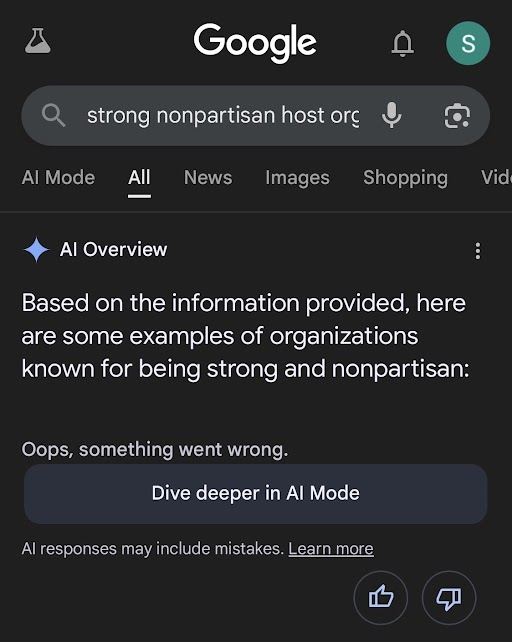
Yeah,
quick
question,
what
in
the
actual
fuck
is
a
“strong,
nonpartisan
host
organization”?
The
glib
answer
is
to
say
“whatever
host
organization
Trump
likes,”
but
let’s
take
a
moment
to
break
the
words
down.
With
this
administration
cutting
through
norms
and
the
incessant
politicization
of
everything,
what

could

qualify
as
both
strong
and
nonpartisan?
An
internship
at
the
NAACP
would
get
immediately
sidelined
as
“too
woke”
and
interning
at
the
ACLU’s
LGBTQ
&
HIV
Project
wouldn’t
be
far
behind,
but
could
you
even
do
something
“neutral”
like
advocating
for
voting
rights,
democracy
or
the
rule
of
law
without
getting
accused
of
supporting
an
anti-Trump
liberal
agenda?
In
the
spirit
of
full
transparency,
I
did
a
quick
search
on
Google
to
see
if
there
was
some
obvious
example
of
a
“strong
nonpartisan
host
organization”
that
I
was
just
failing
to
think
of.
Here’s
what
happened:

Do
you
mean
to
tell
me
that
the
“I
make
up
answers
machine”
known
for
just
making
things
up
couldn’t
even
bother
to
make
something
up?

So
what’s
left
of
the
Skadden
Fellowship
program
after
you
remove
all
of
the
commitments
to
racial
justice
and
equity,
and
stop
caring
about
the
“deep
connections
with
or
insights
into
the
marginalized
client
communities
[that
Fellows]
seek
to
serve?
As
Susan
Plum
would
tell
it,
everything.
In
a
statement
posted
to
the
Skadden
Fellowship
website
she
states
that
“[T]he
Foundation’s
mission
has
remained
constant:
empowering
the
most
talented
and
driven
public
interest
lawyers
to
serve
those
living
in
poverty
across
America”.
The
language
is
nice,
but
how
do
you
meaningfully
serve
those
living
in
poverty
when
the
guy
calling
the
shots
is
the
same
dude
who
thought
providing
relief
from
a
category
4
hurricane
meant
throwing
paper
towels
at
a
crowd?

Whatever
that
service
will
look
like,
Skadden
did
a
good
job
of
making
sure
“conservative
ideas”
will
play
a
role:

Skadden
had
agreed
that
its
fellows
would
“represent
a
wide
range
of
political
views,
including
conservative
ideals,”
Trump
said
in
a
March
28
post
on
his
Truth
Social
platform.

Just
so
we
aren’t
kidding
ourselves,
let’s
take
a
quick
look
at
how
“serving
those
who
live
in
poverty”
and
“conservative
ideals”
plays
out
in
the
real
world:

Non-rhetorical,
pragmatic
question:
how
do
you
“serve
those
who
live
in
poverty”
without
challenging
the
real
world
policy
consequences
of
what
Republican
leaders
and
Fox
TV
personalities
advocate
for?
The
prior
iterations
of
the
Skadden
Fellowship
program
didn’t
have
all
of
the
answers,
but
they
had
the
institutional
support
and
funding
to
do
some
of
the
good
work
required
to
help
people
in
need.
Now
that
the
firm
is
more
committed
to
keeping
Donald
Trump
happy
than
equity,
I’m
not
really
sure
what
is
ahead
of
them.
As
much
as
I’d
like
to
say
good
on
Kathleen
for
resigning,
the
Fellowship
program
needs
someone
like
her
right
now.
Until
that
happens,
it’s
just
a
countdown
until
we
see
a
slew
of
Skadden
Fellows
working
at
the
Heritage
Foundation.


Skadden
Law
Firm
Fellowship
Revamps
Application
To
Omit
‘Racial
Justice,’
‘Equity’

[Reuters]


Earlier
:

Director
Of
Prestigious
Skadden
Fellows
Program
Resigns
Over
Firm’s
Pro
Bono
Payola
Deal
With
Trump


Chris
Williams
became
a
social
media
manager
and
assistant
editor
for
Above
the
Law
in
June
2021.
Prior
to
joining
the
staff,
he
moonlighted
as
a
minor
Memelord™
in
the
Facebook
group Law
School
Memes
for
Edgy
T14s
.
 He
endured
Missouri
long
enough
to
graduate
from
Washington
University
in
St.
Louis
School
of
Law.
He
is
a
former
boatbuilder
who
is
learning
to
swim, is
interested
in
critical
race
theory,
philosophy,
and
humor,
and
has
a
love
for
cycling
that
occasionally
annoys
his
peers.
You
can
reach
him
by
email
at [email protected]
and
by
tweet
at @WritesForRent.

BioNTech to Buy CureVac in $1.25B Stock Deal That Would Also End mRNA Patent Dispute – MedCity News

BioNTech,
a
biotech
company
best
known
for
its
successful
development
of
a
messenger
RNA
Covid-19
vaccine,
is
acquiring
fellow
mRNA
company
CureVac
in
a

$1.25
billion
stock
deal

that
brings
together
firms
applying
their
respective
technologies
to
the
development
of
new
treatments
for
cancer.

The
acquisition
agreement
announced
Thursday
will
place
the
mRNA
pipeline
and
manufacturing
infrastructure
of
CureVac
under
the
umbrella
of
the
much
larger
BioNTech,
whose
pipeline
growth
has
been
fueled
by
revenue
from
the
commercialized
Covid-19
vaccine.
The
joint
BioNTech
and
CureVac
announcement
Thursday
framed
the
acquisition
as
a
way
to
combine
complementary
technologies
and
capabilities.
But
BioNTech
and
CureVac
were
not
always
on
such
cordial
terms.
In
fact,
they’ve
been
fighting
in
court
for
the
past
three
years.

Mainz,
Germany-based
BioNTech
and
Tübingen,
Germany-based
CureVac
both
rose
to
prominence
during
the
Covid-19
pandemic
due
to
their
respective
mRNA
technology
platforms.
While

CureVac’s
vaccine
candidate
for
the
novel
coronavirus
fell
short

of
expectations
in
clinical
testing,
BioNTech’s
mRNA
vaccine,
partnered
with
Pfizer,
went
on
to
become
the
first
FDA-authorized
and
then
the

first
FDA-approved
Covid-19
vaccine,
Comirnaty
.

CureVac
was
founded
eight
years
before
BioNTech
and
it
contended
its
inventions
were
key
to
the
design
and
development
of
Comirnaty.
In
2022,

CureVac
sued
BioNTech
in
Europe,
claiming
Comirnaty
infringed
key
mRNA
patents
.
Recent
rulings
have
gone
CureVac’s
way.
In

March

and
in

May
,
the
European
Patent
Office
issued
rulings
upholding
the
validity
of
two
CureVac
patents.
Additional
patent
hearings
were
expected
over
the
summer.

To
Leerink
Partners
analyst
Daina
Graybosch,
BioNTech’s
acquisition
of
CureVac
is
essentially
a
hedge
against
legal
and
financial
uncertainty.
The
patent
litigation
put
BioNTech
at
risk
of
paying
backdated
royalties
on
about
$32
billion
of
global
Comirnaty
sales
to
date,
Graybosch
said
in
a
research
note.
Paying
about
$1.25
billion
to
acquire
CureVac
is
essentially
an
out-of-court
settlement,
she
said,
adding
that
BioNTech
has
the
additional
potential
upside
of
being
able
to
leverage
CureVac’s
emerging
mRNA-based
oncology
platform
and
expertise
to
complement
its
own
work
in
cancer
drug
R&D.

CureVac’s
Covid-19
vaccine
was
developed
with
GSK
under
an
alliance
that
covered
infectious
disease
broadly.
Last
year,

GSK
took
over
development
of
an
avian
influenza
vaccine
candidate

that
emerged
from
the
partnership.
CureVac
also
completed
a
restructuring
that
left
the
company
focused
on
R&D
of
mRNA
cancer
vaccines
that
are
currently
in
preclinical
and
early
clinical
development.

Well
before
Covid-19’s
emergence,
cancer
was
the
focus
of
BioNTech.
The
company
still
has
several
mRNA
cancer
immunotherapies
in
its
pipeline.
But
during
the
recent
annual
meeting
of
the
American
Society
of
Clinical
Oncology,
Chief
Commercial
Officer
Annemarie
Hanekamp
told
MedCity
News
that
a
bispecific
antibody,
codenamed
BNT327,
is
the
centerpiece
of
the
company’s
oncology
strategy.
This
antibody
is
engineered
to
bind
to
two
cancer
targets,
the
proteins
PD-L1
and
VEGF-A.

BNT327
is
currently
in
pivotal
testing
in
lung
and
breast
cancers,
but
BioNTech
views
the
bispecific
antibody
as
a
drug
combination
backbone,
potentially
paired
with
other
assets
from
the
BioNTech
pipeline,
such
as
mRNA
immunotherapies
and
antibody
drug
conjugates.
That
strategy
has
a
big
boost
from

Bristol
Myers
Squibb,
which
last
week
agreed
to
pay
$1.5
billion
up
front
to
begin
a
collaboration
with
BioNTech
on
BNT327
.

BioNTech,
whose
American
depositary
shares
(ADS)
trade
on
the
Nasdaq,
opened
Thursday
at
$105.64
per
share.
According
to
terms
of
the
all-stock
acquisition,
each
CureVac
share
will
be
exchanged
for
about
$5.45
in
BioNTech
ADS.
That
price
represents
a
premium
of
32.6%
to
CureVac’s
closing
stock
price
on
Wednesday
and
a
nearly
55%
premium
to
the
biotech’s
average
stock
price
in
the
three
months
leading
up
to
the
deal.
The
transaction
comes
with
a
collar
agreement
that
sets
a
ceiling
and
a
floor
for
the
exchange
depending
on
changes
to
BioNTech’s
stock
price.
When
the
deal
closes,
CureVac
shareholders’
ownership
stake
in
BioNTech
will
be
between
4%
and
6%.

In
addition
to
the
customary
regulatory
approvals,
the
acquisition
requires
a
minimum
of
80%
of
CureVac
shares
to
accept
the
transaction
terms.
A
shareholder
meeting
is
planned,
but
has
not
yet
been
scheduled.
BioNTech
said
it
may
unilaterally
reduce
the
minimum
threshold
to
75%
under
certain
circumstances
that
weren’t
specified.

The
acquisition
announcement
states
that
shareholders
representing
36.76%
of
CureVac’s
shares
have
agreed
to
tender
their
shares
and
to
vote
in
favor
of
the
transaction
at
the
upcoming
meeting.
Also,
BioNTech
said
the
German
government
has
“confirmed
to
generally
have
a
positive
view
on
the
transaction.”

BioNTech
and
CureVac
expect
the
acquisition
will
close
later
this
year.
Afterward,
CureVac
will
operate
as
a
wholly
owned
subsidiary
with
its
manufacturing
site
in
Tübingen
integrated
into
BioNTech.

“This
transaction
is
another
building
block
in
BioNTech’s
oncology
strategy
and
an
investment
in
the
future
of
cancer
medicine,”
BioNTech
CEO
and
co-founder
Ugur
Sahin
said
in
a
prepared
statement.
“We
intend
to
bring
together
complementary
capabilities
and
leverage
technologies
with
the
goal
of
advancing
the
development
of
innovative
and
transformative
cancer
treatments
and
establishing
new
standards
of
care
for
various
types
of
cancer
in
the
coming
years.”


Photo:
Arne
Dedert/picture
alliance,
via
Getty
Images

Detrimental Private Voluntary Organisations Amendment Bill enacted


Paris-Geneva,
13
June
2025
 On
11
April
2025,
the
Private
Voluntary
Organisations
Amendment
Act
(No.
1)
of
2025
was
officially
published
in
the
Zimbabwe’s
Government
Gazette,
following
its
signature
by
the
country’s
President
Emmerson
Mnangagwa.
This
controversial
law
has
now
come
into
force
and
will
be
having
harmful
effects
on
Zimbabwean
civil
society
and
civic
space,
in
violation
of
both
Zimbabwe’s
own
Constitution
and
the
country’s
international
human
rights
obligations.

Under
this
act,
all
types
of
non
governmental
organisations
and
groups
will
now
have
to
comply
with
burdensome
registration
requirements,
which
will
negatively
impact
community-based
groups
in
particular.
The
registration
process
will
be
closely
monitored
by
the
Office
of
the
Registrar
of
PVOs,
which
is
under
the
control
of
the
executive
branch,
and
which
will
be
provided
with
wide
and
discretionary
powers
to
interfere
in
civil
society
organisations’
governance
and
activities.
The
PVO
Amendment
Act
also
criminalises
human
rights
work,
as
punitive
provisions
impose
criminal
liability
for
civil
society
leaders
who
violate
the
law
and
prohibits
human
rights
groups
from
receiving
funds
from
vaguely
defined
“illegitimate
sources”.

The
Observatory
recalls
that
the
project
of
amending
the
Private
Voluntary
Organisation
(PVO)
Act,
which
regulates
civil
society
organisations
in
the
country,
was
first
discussed
on
5
November
2021,
when
the
Government
of
Zimbabwe gazetted the
PVO
Amendment
Bill
(PVO
Bill
1),
exposing
its
intention
to
provide
itself
with
legal
tools
to
control
and
ultimately
silence
civil
society.
The
bill
was
aimed
at
providing
the
government
with
wide
powers
to
interfere
in
civil
society
organisations’
governance
and
activities.
Following
widespread
outcry,
including
from four
UN
Special
Rapporteurs
,
and
public
consultations marred
by
violence
,
President
Emmerson
Mnangagwa refused to
sign
the
bill
into
law
and
sent
it
back
to
the
Parliament
for
reconsideration
in
September
2023.

In
March
2024,
a
revised
version
of
the
PVO
Bill
(PVO
Bill
2)
was
gazetted,
allegedly
taking
into
account
the
issues
raised
by
the
different
stakeholders.
These
changes
were deemed
insufficient
 by
civil
society
organisations
to
bring
the
law
into
line
with
Zimbabwe’s
international
and
constitutional
obligations.
Once
again,
the
public
hearings
meant
to
solicit
public
views
on
the
Bill
were
marred
with
violence,
descending
into
chaos
and
leading
Parliamentarians
to
desert
the
venues
fearing
for
their
safety.
Nevertheless,
in
October
2024,
the
Parliament
passed
the
Bill
and
President
Emmerson
Mnangagwa
ultimately
signed
it
into
law
in
April
2025.

The
Observatory
deplores
the
enactment
of
the
PVO
Amendment
Bill,
which
gravely
restricts
civic
space
and
criminalises
legitimate
human
rights
activities
carried
out
by
civil
society
organisations.

The
Observatory
calls
on
the
authorities
in
Zimbabwe
to
immediately
repeal
the
PVO
Amendment
Act
in
order
to
guarantee
the
right
to
freedom
of
association
in
the
country,
as
protected
by
the
Zimbabwean
Constitution,
particularly
Article
58,
as
well
as
by
international
human
rights
instruments
to
which
Zimbabwe
is
a
party,
especially
Article
10
of
the
African
Charter
on
Human
and
People’s
Rights
and
Article
22
of
the
International
Covenant
on
Civil
and
Political
Rights.
The
Observatory
further
urges
the
government
of
Zimbabwe
to
engage
in
a
constructive
dialogue
with
civil
society
actors
and
promote
an
enabling
environment
for
them.


Source:


Zimbabwe:
Detrimental
Private
Voluntary
Organisations
Amendment
Bill
enacted

Detrimental Private Voluntary Organisations Amendment Bill enacted


Paris-Geneva,
13
June
2025
 On
11
April
2025,
the
Private
Voluntary
Organisations
Amendment
Act
(No.
1)
of
2025
was
officially
published
in
the
Zimbabwe’s
Government
Gazette,
following
its
signature
by
the
country’s
President
Emmerson
Mnangagwa.
This
controversial
law
has
now
come
into
force
and
will
be
having
harmful
effects
on
Zimbabwean
civil
society
and
civic
space,
in
violation
of
both
Zimbabwe’s
own
Constitution
and
the
country’s
international
human
rights
obligations.

Under
this
act,
all
types
of
non
governmental
organisations
and
groups
will
now
have
to
comply
with
burdensome
registration
requirements,
which
will
negatively
impact
community-based
groups
in
particular.
The
registration
process
will
be
closely
monitored
by
the
Office
of
the
Registrar
of
PVOs,
which
is
under
the
control
of
the
executive
branch,
and
which
will
be
provided
with
wide
and
discretionary
powers
to
interfere
in
civil
society
organisations’
governance
and
activities.
The
PVO
Amendment
Act
also
criminalises
human
rights
work,
as
punitive
provisions
impose
criminal
liability
for
civil
society
leaders
who
violate
the
law
and
prohibits
human
rights
groups
from
receiving
funds
from
vaguely
defined
“illegitimate
sources”.

The
Observatory
recalls
that
the
project
of
amending
the
Private
Voluntary
Organisation
(PVO)
Act,
which
regulates
civil
society
organisations
in
the
country,
was
first
discussed
on
5
November
2021,
when
the
Government
of
Zimbabwe gazetted the
PVO
Amendment
Bill
(PVO
Bill
1),
exposing
its
intention
to
provide
itself
with
legal
tools
to
control
and
ultimately
silence
civil
society.
The
bill
was
aimed
at
providing
the
government
with
wide
powers
to
interfere
in
civil
society
organisations’
governance
and
activities.
Following
widespread
outcry,
including
from four
UN
Special
Rapporteurs
,
and
public
consultations marred
by
violence
,
President
Emmerson
Mnangagwa refused to
sign
the
bill
into
law
and
sent
it
back
to
the
Parliament
for
reconsideration
in
September
2023.

In
March
2024,
a
revised
version
of
the
PVO
Bill
(PVO
Bill
2)
was
gazetted,
allegedly
taking
into
account
the
issues
raised
by
the
different
stakeholders.
These
changes
were deemed
insufficient
 by
civil
society
organisations
to
bring
the
law
into
line
with
Zimbabwe’s
international
and
constitutional
obligations.
Once
again,
the
public
hearings
meant
to
solicit
public
views
on
the
Bill
were
marred
with
violence,
descending
into
chaos
and
leading
Parliamentarians
to
desert
the
venues
fearing
for
their
safety.
Nevertheless,
in
October
2024,
the
Parliament
passed
the
Bill
and
President
Emmerson
Mnangagwa
ultimately
signed
it
into
law
in
April
2025.

The
Observatory
deplores
the
enactment
of
the
PVO
Amendment
Bill,
which
gravely
restricts
civic
space
and
criminalises
legitimate
human
rights
activities
carried
out
by
civil
society
organisations.

The
Observatory
calls
on
the
authorities
in
Zimbabwe
to
immediately
repeal
the
PVO
Amendment
Act
in
order
to
guarantee
the
right
to
freedom
of
association
in
the
country,
as
protected
by
the
Zimbabwean
Constitution,
particularly
Article
58,
as
well
as
by
international
human
rights
instruments
to
which
Zimbabwe
is
a
party,
especially
Article
10
of
the
African
Charter
on
Human
and
People’s
Rights
and
Article
22
of
the
International
Covenant
on
Civil
and
Political
Rights.
The
Observatory
further
urges
the
government
of
Zimbabwe
to
engage
in
a
constructive
dialogue
with
civil
society
actors
and
promote
an
enabling
environment
for
them.


Source:


Zimbabwe:
Detrimental
Private
Voluntary
Organisations
Amendment
Bill
enacted

Detrimental Private Voluntary Organisations Amendment Bill enacted


Paris-Geneva,
13
June
2025
 On
11
April
2025,
the
Private
Voluntary
Organisations
Amendment
Act
(No.
1)
of
2025
was
officially
published
in
the
Zimbabwe’s
Government
Gazette,
following
its
signature
by
the
country’s
President
Emmerson
Mnangagwa.
This
controversial
law
has
now
come
into
force
and
will
be
having
harmful
effects
on
Zimbabwean
civil
society
and
civic
space,
in
violation
of
both
Zimbabwe’s
own
Constitution
and
the
country’s
international
human
rights
obligations.

Under
this
act,
all
types
of
non
governmental
organisations
and
groups
will
now
have
to
comply
with
burdensome
registration
requirements,
which
will
negatively
impact
community-based
groups
in
particular.
The
registration
process
will
be
closely
monitored
by
the
Office
of
the
Registrar
of
PVOs,
which
is
under
the
control
of
the
executive
branch,
and
which
will
be
provided
with
wide
and
discretionary
powers
to
interfere
in
civil
society
organisations’
governance
and
activities.
The
PVO
Amendment
Act
also
criminalises
human
rights
work,
as
punitive
provisions
impose
criminal
liability
for
civil
society
leaders
who
violate
the
law
and
prohibits
human
rights
groups
from
receiving
funds
from
vaguely
defined
“illegitimate
sources”.

The
Observatory
recalls
that
the
project
of
amending
the
Private
Voluntary
Organisation
(PVO)
Act,
which
regulates
civil
society
organisations
in
the
country,
was
first
discussed
on
5
November
2021,
when
the
Government
of
Zimbabwe gazetted the
PVO
Amendment
Bill
(PVO
Bill
1),
exposing
its
intention
to
provide
itself
with
legal
tools
to
control
and
ultimately
silence
civil
society.
The
bill
was
aimed
at
providing
the
government
with
wide
powers
to
interfere
in
civil
society
organisations’
governance
and
activities.
Following
widespread
outcry,
including
from four
UN
Special
Rapporteurs
,
and
public
consultations marred
by
violence
,
President
Emmerson
Mnangagwa refused to
sign
the
bill
into
law
and
sent
it
back
to
the
Parliament
for
reconsideration
in
September
2023.

In
March
2024,
a
revised
version
of
the
PVO
Bill
(PVO
Bill
2)
was
gazetted,
allegedly
taking
into
account
the
issues
raised
by
the
different
stakeholders.
These
changes
were deemed
insufficient
 by
civil
society
organisations
to
bring
the
law
into
line
with
Zimbabwe’s
international
and
constitutional
obligations.
Once
again,
the
public
hearings
meant
to
solicit
public
views
on
the
Bill
were
marred
with
violence,
descending
into
chaos
and
leading
Parliamentarians
to
desert
the
venues
fearing
for
their
safety.
Nevertheless,
in
October
2024,
the
Parliament
passed
the
Bill
and
President
Emmerson
Mnangagwa
ultimately
signed
it
into
law
in
April
2025.

The
Observatory
deplores
the
enactment
of
the
PVO
Amendment
Bill,
which
gravely
restricts
civic
space
and
criminalises
legitimate
human
rights
activities
carried
out
by
civil
society
organisations.

The
Observatory
calls
on
the
authorities
in
Zimbabwe
to
immediately
repeal
the
PVO
Amendment
Act
in
order
to
guarantee
the
right
to
freedom
of
association
in
the
country,
as
protected
by
the
Zimbabwean
Constitution,
particularly
Article
58,
as
well
as
by
international
human
rights
instruments
to
which
Zimbabwe
is
a
party,
especially
Article
10
of
the
African
Charter
on
Human
and
People’s
Rights
and
Article
22
of
the
International
Covenant
on
Civil
and
Political
Rights.
The
Observatory
further
urges
the
government
of
Zimbabwe
to
engage
in
a
constructive
dialogue
with
civil
society
actors
and
promote
an
enabling
environment
for
them.


Source:


Zimbabwe:
Detrimental
Private
Voluntary
Organisations
Amendment
Bill
enacted

Detrimental Private Voluntary Organisations Amendment Bill enacted


Paris-Geneva,
13
June
2025
 On
11
April
2025,
the
Private
Voluntary
Organisations
Amendment
Act
(No.
1)
of
2025
was
officially
published
in
the
Zimbabwe’s
Government
Gazette,
following
its
signature
by
the
country’s
President
Emmerson
Mnangagwa.
This
controversial
law
has
now
come
into
force
and
will
be
having
harmful
effects
on
Zimbabwean
civil
society
and
civic
space,
in
violation
of
both
Zimbabwe’s
own
Constitution
and
the
country’s
international
human
rights
obligations.

Under
this
act,
all
types
of
non
governmental
organisations
and
groups
will
now
have
to
comply
with
burdensome
registration
requirements,
which
will
negatively
impact
community-based
groups
in
particular.
The
registration
process
will
be
closely
monitored
by
the
Office
of
the
Registrar
of
PVOs,
which
is
under
the
control
of
the
executive
branch,
and
which
will
be
provided
with
wide
and
discretionary
powers
to
interfere
in
civil
society
organisations’
governance
and
activities.
The
PVO
Amendment
Act
also
criminalises
human
rights
work,
as
punitive
provisions
impose
criminal
liability
for
civil
society
leaders
who
violate
the
law
and
prohibits
human
rights
groups
from
receiving
funds
from
vaguely
defined
“illegitimate
sources”.

The
Observatory
recalls
that
the
project
of
amending
the
Private
Voluntary
Organisation
(PVO)
Act,
which
regulates
civil
society
organisations
in
the
country,
was
first
discussed
on
5
November
2021,
when
the
Government
of
Zimbabwe gazetted the
PVO
Amendment
Bill
(PVO
Bill
1),
exposing
its
intention
to
provide
itself
with
legal
tools
to
control
and
ultimately
silence
civil
society.
The
bill
was
aimed
at
providing
the
government
with
wide
powers
to
interfere
in
civil
society
organisations’
governance
and
activities.
Following
widespread
outcry,
including
from four
UN
Special
Rapporteurs
,
and
public
consultations marred
by
violence
,
President
Emmerson
Mnangagwa refused to
sign
the
bill
into
law
and
sent
it
back
to
the
Parliament
for
reconsideration
in
September
2023.

In
March
2024,
a
revised
version
of
the
PVO
Bill
(PVO
Bill
2)
was
gazetted,
allegedly
taking
into
account
the
issues
raised
by
the
different
stakeholders.
These
changes
were deemed
insufficient
 by
civil
society
organisations
to
bring
the
law
into
line
with
Zimbabwe’s
international
and
constitutional
obligations.
Once
again,
the
public
hearings
meant
to
solicit
public
views
on
the
Bill
were
marred
with
violence,
descending
into
chaos
and
leading
Parliamentarians
to
desert
the
venues
fearing
for
their
safety.
Nevertheless,
in
October
2024,
the
Parliament
passed
the
Bill
and
President
Emmerson
Mnangagwa
ultimately
signed
it
into
law
in
April
2025.

The
Observatory
deplores
the
enactment
of
the
PVO
Amendment
Bill,
which
gravely
restricts
civic
space
and
criminalises
legitimate
human
rights
activities
carried
out
by
civil
society
organisations.

The
Observatory
calls
on
the
authorities
in
Zimbabwe
to
immediately
repeal
the
PVO
Amendment
Act
in
order
to
guarantee
the
right
to
freedom
of
association
in
the
country,
as
protected
by
the
Zimbabwean
Constitution,
particularly
Article
58,
as
well
as
by
international
human
rights
instruments
to
which
Zimbabwe
is
a
party,
especially
Article
10
of
the
African
Charter
on
Human
and
People’s
Rights
and
Article
22
of
the
International
Covenant
on
Civil
and
Political
Rights.
The
Observatory
further
urges
the
government
of
Zimbabwe
to
engage
in
a
constructive
dialogue
with
civil
society
actors
and
promote
an
enabling
environment
for
them.


Source:


Zimbabwe:
Detrimental
Private
Voluntary
Organisations
Amendment
Bill
enacted

Detrimental Private Voluntary Organisations Amendment Bill enacted


Paris-Geneva,
13
June
2025
 On
11
April
2025,
the
Private
Voluntary
Organisations
Amendment
Act
(No.
1)
of
2025
was
officially
published
in
the
Zimbabwe’s
Government
Gazette,
following
its
signature
by
the
country’s
President
Emmerson
Mnangagwa.
This
controversial
law
has
now
come
into
force
and
will
be
having
harmful
effects
on
Zimbabwean
civil
society
and
civic
space,
in
violation
of
both
Zimbabwe’s
own
Constitution
and
the
country’s
international
human
rights
obligations.

Under
this
act,
all
types
of
non
governmental
organisations
and
groups
will
now
have
to
comply
with
burdensome
registration
requirements,
which
will
negatively
impact
community-based
groups
in
particular.
The
registration
process
will
be
closely
monitored
by
the
Office
of
the
Registrar
of
PVOs,
which
is
under
the
control
of
the
executive
branch,
and
which
will
be
provided
with
wide
and
discretionary
powers
to
interfere
in
civil
society
organisations’
governance
and
activities.
The
PVO
Amendment
Act
also
criminalises
human
rights
work,
as
punitive
provisions
impose
criminal
liability
for
civil
society
leaders
who
violate
the
law
and
prohibits
human
rights
groups
from
receiving
funds
from
vaguely
defined
“illegitimate
sources”.

The
Observatory
recalls
that
the
project
of
amending
the
Private
Voluntary
Organisation
(PVO)
Act,
which
regulates
civil
society
organisations
in
the
country,
was
first
discussed
on
5
November
2021,
when
the
Government
of
Zimbabwe gazetted the
PVO
Amendment
Bill
(PVO
Bill
1),
exposing
its
intention
to
provide
itself
with
legal
tools
to
control
and
ultimately
silence
civil
society.
The
bill
was
aimed
at
providing
the
government
with
wide
powers
to
interfere
in
civil
society
organisations’
governance
and
activities.
Following
widespread
outcry,
including
from four
UN
Special
Rapporteurs
,
and
public
consultations marred
by
violence
,
President
Emmerson
Mnangagwa refused to
sign
the
bill
into
law
and
sent
it
back
to
the
Parliament
for
reconsideration
in
September
2023.

In
March
2024,
a
revised
version
of
the
PVO
Bill
(PVO
Bill
2)
was
gazetted,
allegedly
taking
into
account
the
issues
raised
by
the
different
stakeholders.
These
changes
were deemed
insufficient
 by
civil
society
organisations
to
bring
the
law
into
line
with
Zimbabwe’s
international
and
constitutional
obligations.
Once
again,
the
public
hearings
meant
to
solicit
public
views
on
the
Bill
were
marred
with
violence,
descending
into
chaos
and
leading
Parliamentarians
to
desert
the
venues
fearing
for
their
safety.
Nevertheless,
in
October
2024,
the
Parliament
passed
the
Bill
and
President
Emmerson
Mnangagwa
ultimately
signed
it
into
law
in
April
2025.

The
Observatory
deplores
the
enactment
of
the
PVO
Amendment
Bill,
which
gravely
restricts
civic
space
and
criminalises
legitimate
human
rights
activities
carried
out
by
civil
society
organisations.

The
Observatory
calls
on
the
authorities
in
Zimbabwe
to
immediately
repeal
the
PVO
Amendment
Act
in
order
to
guarantee
the
right
to
freedom
of
association
in
the
country,
as
protected
by
the
Zimbabwean
Constitution,
particularly
Article
58,
as
well
as
by
international
human
rights
instruments
to
which
Zimbabwe
is
a
party,
especially
Article
10
of
the
African
Charter
on
Human
and
People’s
Rights
and
Article
22
of
the
International
Covenant
on
Civil
and
Political
Rights.
The
Observatory
further
urges
the
government
of
Zimbabwe
to
engage
in
a
constructive
dialogue
with
civil
society
actors
and
promote
an
enabling
environment
for
them.


Source:


Zimbabwe:
Detrimental
Private
Voluntary
Organisations
Amendment
Bill
enacted

Detrimental Private Voluntary Organisations Amendment Bill enacted


Paris-Geneva,
13
June
2025
 On
11
April
2025,
the
Private
Voluntary
Organisations
Amendment
Act
(No.
1)
of
2025
was
officially
published
in
the
Zimbabwe’s
Government
Gazette,
following
its
signature
by
the
country’s
President
Emmerson
Mnangagwa.
This
controversial
law
has
now
come
into
force
and
will
be
having
harmful
effects
on
Zimbabwean
civil
society
and
civic
space,
in
violation
of
both
Zimbabwe’s
own
Constitution
and
the
country’s
international
human
rights
obligations.

Under
this
act,
all
types
of
non
governmental
organisations
and
groups
will
now
have
to
comply
with
burdensome
registration
requirements,
which
will
negatively
impact
community-based
groups
in
particular.
The
registration
process
will
be
closely
monitored
by
the
Office
of
the
Registrar
of
PVOs,
which
is
under
the
control
of
the
executive
branch,
and
which
will
be
provided
with
wide
and
discretionary
powers
to
interfere
in
civil
society
organisations’
governance
and
activities.
The
PVO
Amendment
Act
also
criminalises
human
rights
work,
as
punitive
provisions
impose
criminal
liability
for
civil
society
leaders
who
violate
the
law
and
prohibits
human
rights
groups
from
receiving
funds
from
vaguely
defined
“illegitimate
sources”.

The
Observatory
recalls
that
the
project
of
amending
the
Private
Voluntary
Organisation
(PVO)
Act,
which
regulates
civil
society
organisations
in
the
country,
was
first
discussed
on
5
November
2021,
when
the
Government
of
Zimbabwe gazetted the
PVO
Amendment
Bill
(PVO
Bill
1),
exposing
its
intention
to
provide
itself
with
legal
tools
to
control
and
ultimately
silence
civil
society.
The
bill
was
aimed
at
providing
the
government
with
wide
powers
to
interfere
in
civil
society
organisations’
governance
and
activities.
Following
widespread
outcry,
including
from four
UN
Special
Rapporteurs
,
and
public
consultations marred
by
violence
,
President
Emmerson
Mnangagwa refused to
sign
the
bill
into
law
and
sent
it
back
to
the
Parliament
for
reconsideration
in
September
2023.

In
March
2024,
a
revised
version
of
the
PVO
Bill
(PVO
Bill
2)
was
gazetted,
allegedly
taking
into
account
the
issues
raised
by
the
different
stakeholders.
These
changes
were deemed
insufficient
 by
civil
society
organisations
to
bring
the
law
into
line
with
Zimbabwe’s
international
and
constitutional
obligations.
Once
again,
the
public
hearings
meant
to
solicit
public
views
on
the
Bill
were
marred
with
violence,
descending
into
chaos
and
leading
Parliamentarians
to
desert
the
venues
fearing
for
their
safety.
Nevertheless,
in
October
2024,
the
Parliament
passed
the
Bill
and
President
Emmerson
Mnangagwa
ultimately
signed
it
into
law
in
April
2025.

The
Observatory
deplores
the
enactment
of
the
PVO
Amendment
Bill,
which
gravely
restricts
civic
space
and
criminalises
legitimate
human
rights
activities
carried
out
by
civil
society
organisations.

The
Observatory
calls
on
the
authorities
in
Zimbabwe
to
immediately
repeal
the
PVO
Amendment
Act
in
order
to
guarantee
the
right
to
freedom
of
association
in
the
country,
as
protected
by
the
Zimbabwean
Constitution,
particularly
Article
58,
as
well
as
by
international
human
rights
instruments
to
which
Zimbabwe
is
a
party,
especially
Article
10
of
the
African
Charter
on
Human
and
People’s
Rights
and
Article
22
of
the
International
Covenant
on
Civil
and
Political
Rights.
The
Observatory
further
urges
the
government
of
Zimbabwe
to
engage
in
a
constructive
dialogue
with
civil
society
actors
and
promote
an
enabling
environment
for
them.


Source:


Zimbabwe:
Detrimental
Private
Voluntary
Organisations
Amendment
Bill
enacted