Disgruntled former ZAPU members launch new party

The
new
party
is
led
by
Matthew
Sibanda,
one
of
five
former
senior
ZAPU
officials
from
Matabeleland
South
who
were
expelled
in
2022
for
opposing
the
candidacy
of
Sibangilizwe
Nkomo,
son
of
the
late
ZAPU
founding
leader
Joshua
Nkomo,
in
the
party’s
presidential
race.

The
group,
commonly
referred
to
as
the
“Mat
South
Five”
comprising
Sibanda,
Gideon
Dlamini,
Echem
Nkala,
Ernest
Ndlovu
and
Mildred
Mkandla
accused
Nkomo
of
leveraging
his
father’s
legacy
to
secure
votes
at
the
2021
congress
despite
lacking
the
necessary
credentials.

The
five
had
served
ZAPU
in
various
provincial
and
national
capacities
since
2011.

However,
they
were
expelled
in
November
2022
after
raising
concerns
about
irregularities
in
Nkomo’s
election,
alleging
that
Nkomo
garnered
121
votes,
even
though
only
105
delegates
were
registered
to
vote.

After
their
concerns
were
dismissed
internally,
the
group
sought
legal
recourse
in
June
2023
but
the
Bulawayo
High
Court
upheld
Nkomo’s
nomination
and
confirmed
his
presidency
of
ZAPU.

Despite
the
legal
setback,
Sibanda,
now
interim
president
of
O
ZAPU,
insisted
that
their
goal
was
not
to
create
a
new
political
party
but
to
restore
the
original
ZAPU,
which
he
claimed
had
strayed
from
its
founding
principles
under
Nkomo’s
leadership.

“In
fact,
we
are
not
forming
a
new
party.
We
are
reviving
the
original
ZAPU
because
the
party’s
constitution
was
violated
when
Sibangilizwe
took
over
the
presidency,”
Sibanda
said
during
the
launch
held
last
Saturday
in
Bulawayo.

Sibanda
argued
that
ZAPU
had
lost
direction
and
relevance
under
Nkomo’s
tenure.

“During
the
previous
elections,
the
party
failed
to
field
candidates
for
both
council
and
parliamentary
seats
in
Bulawayo.
Even
the
president
himself
did
not
contest,”
he
noted.

Sibanda
pledged
that
O
ZAPU
would
institute
reforms
and
prioritise
national
development
if
elected
into
power.

“We
will
focus
on
infrastructure
development
and
revamping
the
country’s
ailing
healthcare
system,”
he
stated.

Sibanda
also
insisted
Nkomo’s
leadership
as
ZAPU
president
was
illegitimate,
claiming
he
was
not
a
registered
party
member
at
the
time
of
his
election
and
had
never
held
any
official
position
within
the
party
structures.

“I
was
ZAPU’s
chairperson
for
Matabeleland
South,
and
I
can
confirm
that
Sibangilizwe
was
not
in
any
structures
in
the
province.
The
ZAPU
constitution
is
very
clear,
one
must
rise
through
the
ranks,
from
branch
level
to
national,
to
be
eligible
for
leadership,”
he
said.

He
went
further
to
accuse
Nkomo
of
forging
his
party
credentials
to
qualify
for
the
2021
presidential
contest.

“Sibangilizwe
was
simply
imposed
because
he
is
the
son
of
the
party’s
late
commander,”
Sibanda
claimed.

The
launch
of
O
ZAPU
was
attended
by
Mthwakazi
Republic
Party
(MRP)
vice
president
Sibongile
Banda
and
the
party’s
Secretary
for
Legal
Affairs,
Nkosilathi
Khanye.

Some
ZAPU
delegates
from
all
ten
provinces
also
attended
the
event
while
Stylish
Magida
was
introduced
as
the
interim
Secretary
General
of
the
new
formation.

Govt pledges Gukurahundi payouts

Addressing
journalists
at
a
press
conference
in
Bulawayo,
Chief
Charumbira
said
traditional
leaders
would
preside
over
confidential,
victim-centered
hearings
across
Matabeleland
North
and
South,
with
compensation
to
be
determined
based
on
the
unique
circumstances
of
each
case.

“The
hearings
are
starting
on
June
26,
2025.
So
on
the
26th
of
June,
we
expect
each
chief
out
there,
hearing
from
the
victims,”
said
Chief
Charumbira.

He
added
the
government
is
ready
to
provide
reparations.

“And
cases
which
come
out
well
and
legitimately
so,
that
require
compensation,
the
government
is
ready
to
compensate,”
the
chief
said,
stressing
that,
“each
compensatory
value
would
depend
on
the
merits
of
the
case.”

When
asked
about
the
scope
and
mechanism
for
compensation,
Chief
Charumbira
said
President
Mnanagagwa
would
deal
with
it.

“Trust
the
President.
The
President
himself
has
said
people
would
be
compensated.
But
quantum
can’t
be
predetermined.
For
example,
one
would
say
three
herd
of
cattle,
one
would
say
I
lost
15.
We
can’t
give
the
same
amount.
It
depends
on
each
case.”

Preparations,
he
added,
had
intensified
since
Friday,
when
the
Steering
Committee
of
the
National
Council
of
Chiefs
met
to
finalise
logistical
arrangements
for
the
programme.

“From
Friday,
the
chairing
committee
discussed
these
issues
mainly
with
respect
to
logistical
arrangements.
On
Saturday,
all
the
chiefs
from
the
two
provinces,
Matabeleland
North
and
Matabeleland
South
met
and
were
given
the
opportunity
to
report
on
the
outcomes
of
the
awareness
programme,
how
things
went
in
their
areas.”

Although
the
President
of
the
National
Council
of
Chiefs,
Chief
Lucas
Mtshane
Khumalo,
was
present
at
the
briefing,
he
did
not
speak,
with
Chief
Charumbira
noting
that,
“he
lost
his
voice
from
flu.”

Chief
Charumbira
reiterated
the
programme
was
endorsed
at
the
highest
level
of
government.

“This
programme
is
led
by
the
National
Council
of
Chiefs,
chaired
by
Chief
Mtshane
Khumalo.
The
National
Council
of
Chiefs
reports
to
President
Emmerson
Mnangagwa.
He
is
our
principal,
who
also
ensures
that
we
have
resources
to
enable
the
programme
to
move
forward,”
he
said

“I
want
to
repeat
that
this
programme
was
endorsed
by
the
President
himself,
who
decided
to
open
up
on
issues
of
Gukurahundi
to
allow
individuals,
call
them
victims,
as
individuals,
families,
or
groups,
to
be
able
to
submit
their
grievances
to
their
local
chief.”

The
chiefs
began
awareness
campaigns
in
their
respective
areas
on
May
27,
2025.

“Awareness
meaning
chiefs
addressed
people
in
their
communities
to
make
them
aware
that
the
President
has
opened
up
on
this
issue
and
is
allowing
people
to
make
submissions
through
the
chief,”
said
Chief
Charumbira.

To
support
the
chiefs,
each
will
be
assisted
by
a
14-member
local
panel
that
includes
elders,
religious
leaders,
women,
youth
and
counsellors.

“The
chief
is
the
presiding
officer
and
has
nominated
already
two,
three
elders
from
that
community

wise
men,
elders,
who
know
culture
in
that
community.
We
have
also
brought
in
religious
leaders,
pastors,
reverends
from
that
particular
community,
not
from
outside.”

“We
then
said
we
need
to
have
people,
women,
so
that
sometimes
they
have
special
interests.
So
women
are
represented.
The
youth…
because
we
are
building
peace
for
the
future.
Experts
or
people
who
are
good
at
counselling.”

Two
rapporteurs
per
area
will
be
responsible
for
recording
proceedings
using
iPads,
laptops,
cameras,
and
other
tools,
with
all
information
stored
under
the
custody
of
the
chief.

Chief
Charumbira
stressed
that
all
members
of
the
panel
would
be
drawn
from
the
chief’s
jurisdiction
to
preserve
cultural
integrity.

“Everything
is
according
to
the
values,
traditions
of
the
people
in
that
particular
chieftainship.”

On
diaspora
participation,
Chief
Charumbira
said
while
hearings
would
not
be
held
outside
Zimbabwe,
arrangements
could
be
made
for
individuals
to
present
their
cases
in
person
later
in
the
year.

“Just
like
any
judicial,
this
is
a
quasi-judicial
proceeding.
No
one
can
then
address
a
court
from
Botswana
addressing
the
court
in
Bulawayo.
It’s
imperative
that
if
you
really
have
a
good
case,
come,
talk
to
the
chief.
They
will
give
you
a
date
in
September,
for
example…
But
our
chiefs
cannot
go
and
sit
in
Botswana
or
South
Africa,”
he
said.

The
outreach
is
expected
to
run
for
no
more
than
six
months.

“It’s
difficult
to
say
when
(it
will
end).
But
roughly,
it
can
take
three
months
to
four
months.
Five,
six
months.
Ideally,
we
don’t
want
it
to
go
beyond
six
months.
We
believe
maybe
one
or
two,
three
chiefs
may
go
that
far.
And
as
you
know,
the
volume
of
work,
meaning
the
number
of
victims
will
differ
from
chief
to
chief.”

Asked
whether
the
final
report
of
the
outreach
will
be
made
public,
Chief
Charumbira
said:
“I
Can’t
say.
We
will
submit
a
report
to
the
President.
He
will
receive
and
then
proceed
as
he
deems
fit.”

He
claimed
this
programme
was
an
opportunity
for
victims.

“Let
us
not
look
at
possible
stumbling
blocks
only.
Let
us
celebrate,
like
the
media,
this
opportunity
granted
by
the
President,
which,
as
you
know,
prior
to
2017,
you
were
not
allowed
to
talk
about
Gukurahundi.
The
President
said
let’s
talk
about
it.
If
aggrieved,
naturally,
then
you
go
to
a
quasi-judicial
setting.
That’s
an
opportunity
in
your
life
that
should
be
celebrated,”
Chief
Charumbira
said.

Chief
Charumbira
concluded
by
encouraging
people
to
identify
and
approach
their
traditional
leaders
to
participate
in
the
hearings.

“Even
if
only
one
family
member
is
left,
neighbours
can
testify.
Communities
know.
Even
people
not
related
know
what
happened.”

How Zimbabwe’s Health System Profits From the Dead

HARARE,
ZIMBABWE

Blessing
Mucharambei’s
uncle
was
just
having
lunch
when
he
stood
up,
then
collapsed.
“[He]
started
bleeding
from
the
nose,”
she
says,
“and
died
on
the
spot.”

As
far
as
his
family
knew,
he
had
no
health
problems.
As
they
struggled
to
make
sense
of
the
news,
Chitungwiza
Hospital

where
his
body
had
been
taken
to
a
mortuary

told
them
that
a
forensic
postmortem
would
be
required.

Zimbabwean
law
mandates
postmortems
for
sudden
or
unexplained
deaths,
and
public
hospitals
offer
them
for
free.
But
there
are
only
five
qualified
pathologists
in
Zimbabwe
serving
a
population
of
close
to
17
million
people.
The
wait
could
stretch
for
days.
And
each
day
the
funeral
was
delayed
would
add
to
the
cost
of
hosting
mourners,
as
some
traditions
require.

A
police
officer
stationed
at
the
hospital
offered
them
a
workaround.
Instead
of
a
forensic
postmortem,
they
could
do
a
general
one

an
option
when
no
foul
play
is
suspected,
and
quicker
since
it
doesn’t
require
a
specialist.
But
even
that,
he
warned,
could
take
days.
He
offered
to
fast-track
the
process
for
a
US$30
fee.
Desperate
to
bury
their
loved
one,
they
paid.

“We
couldn’t
afford
the
time,”
Mucharambei
says.
“We
did
it
because
we
had
no
choice.”

A
country
in
freefall

Postmortem
bribes
are
just
one
element
of
a
health
system

and
state

in
freefall. Hospitals
across
the
country
are
plagued
 by
chronic
underfunding,
obsolete
infrastructure
and
the
mass
emigration
of
medical
professionals
seeking
better
pay
abroad.
The
government
estimates
that
the
country
needs
more
than
US$1.6
billion
for
its
health
sector
to
recover.

Underpaid
and
overstretched
health
workers
have
come
to
rely
on
informal
payments
as
a
means
of
survival,
says
Dr.
Norman
Matara,
secretary
general
of
the
Zimbabwe
Hospital
Doctors
Association.
“People
are
trying
to
survive.
But
over
time,
corruption
becomes
part
of
the
culture.”

He
says
it’s
a
common
problem
across
hospital
services,
from
the
moment
a
patient
is
admitted. New
mothers,
for
example,
face
extortion
 for
birth
cards
meant
to
be
free.
A
2021
study
from
Transparency
International
Zimbabwe
surveyed
over
1,000
people
in
Zimbabwe
and
found
that
74%
had
been
asked
to
pay
a
bribe
while
trying
to
access
health
care
services.

In
March,
a
nurses’
protest
at
Sally
Mugabe
Central
Hospital

the
largest
referral
hospital
in
the
country

exposed
how
dire
the
situation
is.
It
was
the
latest
in
a
long
history
of
strikes
by
health
workers,
who
have
repeatedly
protested
poor
pay
and
deteriorating
working
conditions.
But
their
actions
are
often
met
with
intimidation.
In
June
2022,
the
government
responded
to
a
strike
by
passing
a
law
banning
health
care
workers
from
striking
longer
than
72
hours,
with
penalties
of
up
to
six
months
in
jail
for
participants
and
organizers.

Linda
Mujuru,
GPJ
Zimbabwe

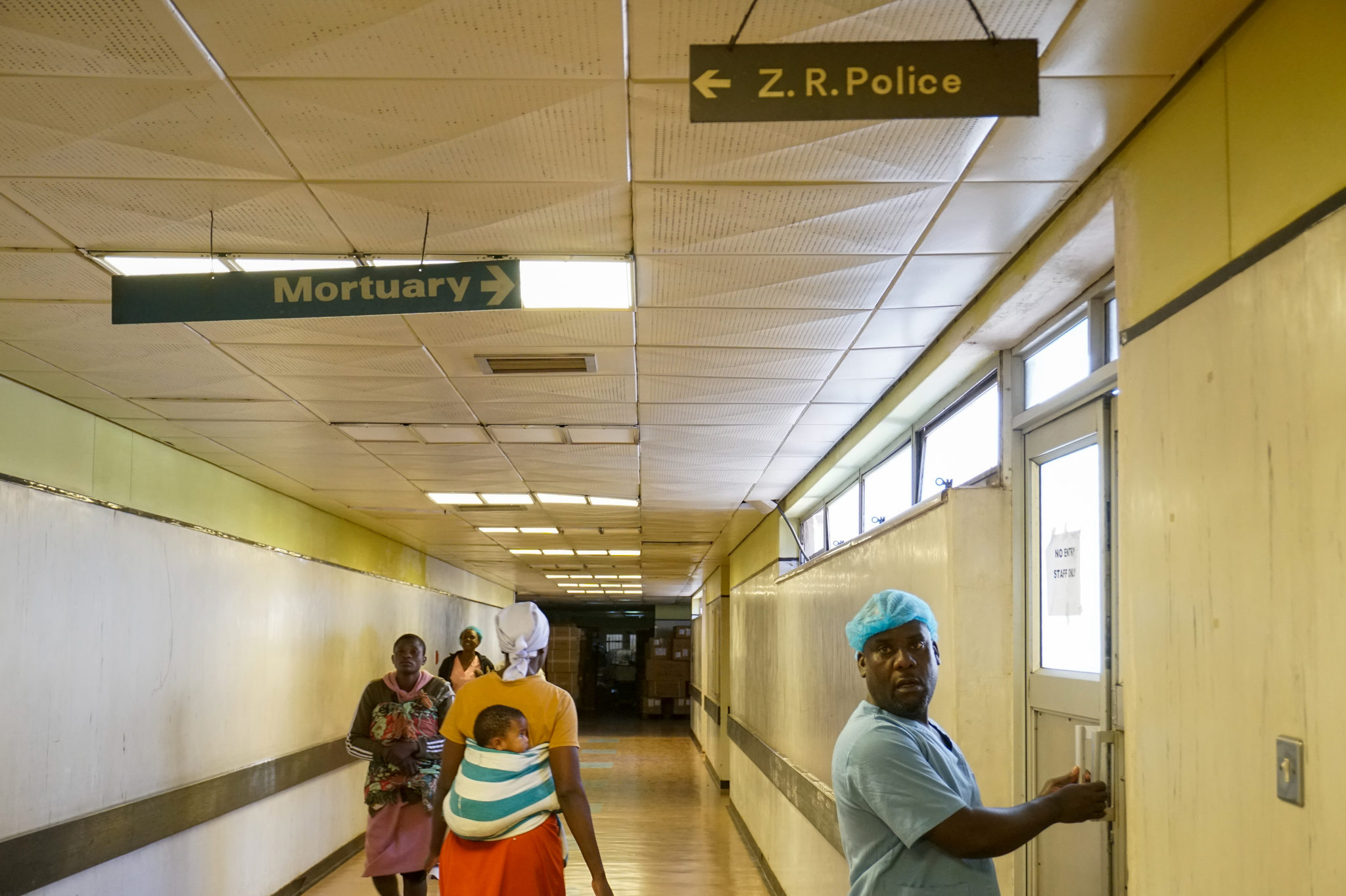
A
hospital
corridor
leads
to
the
mortuary
at
Parirenyatwa
Hospital.
Zimbabwe’s
public
health
system
faces
a
severe
shortage
of
pathologists,
leading
to
postmortem
delays
and
widespread
bribery.
Families
say
they’re
often
pressured
to
pay
unofficial
fees
to
expedite
the
process
or
obtain
basic
information
about
their
loved
ones.

A
manufactured
problem

Pathology
services
are
particularly
strained,
Matara
says.
The
few
available
specialists
are
clustered
in
major
hospitals,
which
creates
opportunities
for
exploitation.

Few
medical
students
choose
the
career,
and
those
who
do
face
an
uphill
battle.
Training
programs
are
underfunded,
mentorship
is
scarce
and
working
conditions
at
public
hospitals
are
dismal.

But
this
is
partly
a
manufactured
problem,
says
Memory,
a
nurse
at
Sally
Mugabe
Central
Hospital,
who
asked
to
use
her
middle
name
for
fear
of
losing
her
job.
Memory
has
worked
at
the
hospital’s
mortuary
close
to
20
years.

“There
isn’t
really
a
backlog
but
a
fake
one
is
created
by
police
officers,
the
doctors
and
mortuary
staff
to
pressure
families
into
paying,”
she
says.

These
services
are
supposed
to
be
easily
available,
she
adds.
A
Cuban
doctor
performs
the
forensic
postmortems
on
Mondays,
Wednesdays
and
Fridays,
while
the
general
ones
are
done
daily.
But
families
are
often
told
there
are
delays.
At
times,
they
are
asked
to
pay
US$50
to
skip
it
entirely,
even
when
it’s
required
by
law,
or
US$100
to
expedite
the
process,
Memory
says.

“It’s
a
moneymaking
scheme
at
the
expense
of
grieving
people,”
she
says.

Global
Press
Journal
reached
out
to
Sally
Mugabe
Central
Hospital
for
a
response
to
these
allegations.
They
declined
to
comment.

Tendai
Terrence
Mautsi,
the
public
relations
officer
at
Parirenyatwa
Hospital,
the
largest
public
hospital
in
Zimbabwe,
says
there
are
occasional
delays
with
forensic
postmortem
cases,
mostly
due
to
demand.
The
hospital,
he
says,
has
responded
by
increasing
forensic
postmortem
days
from
two
to
three.
They’ve
also
cut
the
average
waiting
time
from
up
to
two
weeks
to
just
three
days.
To
address
the
national
shortage,
Mautsi
says,
the
hospital
has
partnered
with
Cuban
doctors
to
fill
the
skills
gap.

He
acknowledges
that
corruption
has
plagued
the
process.
But,
he
says,
it’s
part
of
a
much
bigger
unravelling,
and
everyone
has
become
complicit.

“At
times
you
can’t
find
evidence,”
he
says.
“When
you
want
to
investigate
it,
the
patient
is
complicit.
The
service
provider
is
also
complicit.”

In
the
end,
corruption
harms
people
in
need,
says
Tafadzwa
Chikumbu,
the
executive
director
of
Transparency
International
Zimbabwe.
“For
those
who
can’t
afford
to
pay
[a
bribe],
it
means
being
left
unattended,”
he
says,
which
erodes
the
integrity
of
public
institutions.

The
solution,
he
says,
is
to
make
ethical
conduct

including
fair
hiring
and
honest
service
delivery

the
standard.

Linda
Mujuru,
GPJ
Zimbabwe

Emily
Muchabaiwa,
in
hat,
Antonette
Chisango
and
Keldon
Muchabaiwa
sit
at
their
home
in
Harare.
The
sudden
death
of
Emily
Muchabaiwa’s
brother

Chisango’s
husband

was
marred
by
irregularities,
including
the
absence
of
a
written
report
and
the
lack
of
a
clear
explanation
from
medical
staff.

A
cover-up?

Postmortem
corruption
means
some
families
never
find
out
what
happened
to
their
loved
one.
When
Emily
Muchabaiwa’s
brother
was
found
dead
in
Harare’s
industrial
area,
his
family
was
desperate
for
answers.
The
circumstances
of
his
death
weren’t
clear,
and
the
family
hoped
a
postmortem
at
Parirenyatwa
Hospital
would
offer
closure.

Per
standard
procedure,
a
medical
doctor
or
the
pathologist
should
explain
the
results
to
the
family,
Matara
says.
There
should
also
be
a
written
report.
But
it
was
a
police
officer
who
delivered
the
results,
verbally,
to
Muchabaiwa’s
family.
There
was
no
official
report.

“[He]
told
us
my
brother
had
died
from
tuberculosis
and
a
cold
in
the
lungs,
but
he
struggled
to
explain
the
medical
terms.
Prior
to
all
this,
my
brother
had
no
signs
of
sickness,”
she
says.

The
family
was
suspicious.
Muchabaiwa
says
they
believe
the
death
involved
foul
play
and
the
process
was
compromised.
It
would
cost
the
family
money
to
delay
the
funeral,
so
they
buried
her
brother,
who
left
behind
a
young
son.

“We
had
no
choice,”
she
says,
voice
trembling.
“The
postmortem
failed
us.
Corruption
failed
us.”

Byo Cllrs call for urgent action on neglected recreational centres

By
Ndumiso
Tshuma

Speaking
during
a
recent
full
council
meeting
at
Bulawayo
City
Hall,
Ward
5
Councillor
Dumisani
Nkomo
drew
attention
to
the
dire
condition
of
the
city’s
once-thriving
sports
and
arts
facilities.

“I
would
like
to
recommend
that
the
committee
seriously
consider
places
such
as
Bellevue
Recreational
Club,
which
is
now
a
bush,
you
can
mistake
it
for
a
snake
park.
You
can
actually
be
bitten
by
puff
adders
there
because
it’s
now
a
bush,
and
there
has
been
no
lease
there
for
over
13
years,”
said
Nkomo.

He
urged
the
council
to
fast-track
efforts
to
reclaim
and
lease
these
spaces
to
individuals
or
organisations
with
the
capacity
to
develop
them.

“I
appeal
to
the
committee
to
expedite
the
process
of
identifying
all
recreational
sites
without
valid
leases.
These
places
should
be
made
available
to
entities
capable
of
restoring
and
developing
them,”
he
added.

Nkomo
also
cited
the
Salukazi
Art
Centre
in
Njube
as
a
missed
opportunity,
blaming
rigid
council
policies
for
stalling
its
development.

“Salukazi
Art
Centre
managed
to
secure
donor
funding
for
a
perimeter
fence,
but
due
to
outdated
by-laws
and
policies,
they
were
prevented
from
proceeding.
Yet
they
had
the
resources
ready,”
he
said.

He
called
for
an
urgent
review
of
the
city’s
policies
to
make
them
more
adaptable
to
current
economic
and
social
realities.

“Our
policies
need
to
be
revisited
to
ensure
they
are
responsive
to
today’s
environment.
The
context
has
changed,
50
years
ago,
people
had
disposable
income.
Today,
many
leases
are
neglected
or
collapsing,”
Nkomo
said.

He
emphasised
the
importance
of
public-private
partnerships
as
a
solution.

“We
need
policies
that
encourage
partnerships
with
those
who
have
the
financial
means
to
invest
in
these
facilities,”
he
said.

Revitalising
recreational
centres,
Nkomo
stressed,
would
significantly
benefit
the
city’s
youth,
who
lack
access
to
proper
spaces
for
sports,
arts,
and
other
developmental
activities.

“This
would
help
our
young
people
immensely.
Currently,
they
have
no
decent
recreational
areas.
For
example,
Bellevue’s
tennis
courts
have
turned
into
‘lizard
courts’.
The
infrastructure
exists,
but
our
youth
can’t
enjoy
these
spaces.
I
urge
the
committee
to
revise
the
policies
and
incentivise
corporate
partners
willing
to
engage
in
social
responsibility
projects,”
he
said.

Nkomo
also
criticised
leaseholders
who
have
neglected
their
obligations.

“We
must
end
the
practice
of
awarding
99-year
leases
to
individuals
only
interested
in
running
bars,
without
offering
anything
for
the
arts,
sports,
or
youth
development
key
pillars
of
our
economy,”
he
warned.

Ward
22
Councillor
Bruce
Moyo
echoed
these
concerns,
highlighting
the
wider
social
impact
of
neglected
recreational
spaces
on
the
city’s
youth.

“On
behalf
of
my
generation,
one
that
is
grappling
with
drug
abuse,
substance
addiction,
and
crime
in
Bulawayo,
I
stress
that
our
young
people
are
idle
because
there
are
no
jobs,
no
opportunities,
and
no
spaces
for
meaningful
engagement,”
said
Moyo.

He
urged
the
council
to
allocate
land
for
recreational
purposes
in
every
ward.

“This
committee
must
work
closely
with
the
town
planning
department
to
ensure
that
each
ward
has
land
earmarked
for
recreational
centres.
Such
spaces
would
offer
young
people
the
chance
to
develop
their
talents
and
skills,”
Moyo
said.

He
warned
that
without
immediate
action,
Bulawayo
would
continue
to
suffer
the
consequences
of
youth
unemployment
and
social
decay.

“As
local
government
leaders,
if
we
fail
to
adopt
effective
measures
to
get
our
youth
off
the
streets
and
away
from
drugs
and
crime,
we
will
continue
to
suffer
the
fallout
from
problems
we
have
the
power
to
address,”
he
said.

Paul Weiss Insists Everything Is Fine, Despite All Evidence That Things Are Not, In Fact, Fine – Above the Law

You
know
that
meme
of
the
dog
sitting
amid
flames,
saying
everything
is
fine?
(For
our
visual
learners,
it’s
below.)
Well,
Brad
Karp,
chair
of
Biglaw
firm
Paul,
Weiss,
is
doing
the
damndest
impersonation
of
it.

Paul,
Weiss shocked
the
world
of
Biglaw
 in
March
when
they became
the
first
 —
though not
the
last


firm
to
bend
a
knee
to
Donald
Trump
to
get
out
from
under
an onerous
Executive
Order
 designed
to extract
a
financial
penalty 
for
being
affiliated
with
cases
and
causes
that
displeased
the
president.
Since
then,
the
firm
has
been
experiencing
the
consequences
of
their
actions

the
deal
with Trump
keeps
getting
worse
,
there’ve
been congressional
investigations

and client
concerns
.
And,
of
course,
there’ve
been
bunches
lawyers bailing on the
firm
 to distance
themselves

from
the
craven
capitulation.
Most
recently,
Paul,
Weiss
is
dealing
with
the
anticipated
20-odd
litigators
leaving
to
work
at
litigation
boutique
Dunn
Isaacson
Rhee.
That
firm
was

created
in
the
wake
of
Paul,
Weiss’s
Trump
deal

by
partners
Karen
Dunn,
Bill
Isaacson,
Jessica
Phillips,
and
Jeannie
Rhee.

And
Karp
spent
time
last
week
doing
damage
control
on
those
departures.
According
to

reporting
by

American
Lawyer,
Karp
spoke
at
a
partner
meeting
to
combat
“misinformation”
about
the
recent
spate
of
departures.
He
allegedly
called
those
heading
to
Dunn
Isaacson
a
“siloed
unit”
that
came
to
Paul,
Weiss
from
Boies
Schiller.

Karp
also
told
partners
on
Monday
that
he
expects
some
other
partners
who
worked
together
at
Paul
Weiss
and
Boies
Schiller,
including
income
partners,
to
join
the
departing
group.
Sources
said
that
Karp
told
the
partnership
that
the
firm
has
“encouraged
them
to
move
on”
and
that
the
firm
wished
them
“every
success.”

But
other
sources
dispute
that
characterization,
saying
the
departing
attorneys
(19
so
far
have
been
confirmed
to
be
leaving
for
Dunn
Isaacson,
with
more
expected
to
join
according
to
the
boutique)
were
not
siloed
and
of
the
19
joining
the
new
firm,
only
five
worked
together
at
Boies.

Karp
downplayed
the
losses
to
the
firm’s
litigation
department
(Damian
Williams,
former
U.S.
attorney
for
the
Southern
District
of
New
York,
also

recently
announced

he
was
leaving
Paul,
Weiss
for
Jenner
&
Block

a
firm

very
much
not
capitulating
to
Trump
)
saying
the
firm
has
“has
never
been
healthier,”
and
noting
the
litigation
department
is
still
55%
larger
than
it
was
two
years
ago.

During
the
meeting,
Karp
also
sought
to
address
the
health
and
growth
of
the
firm,
noting
that
six
of
the
10
largest
matters
in
the
firm
over
the
past
month
are
litigation
matters.
According
to
sources,
Karp
said
“none
of
the
recently
departed
partners”
had
anything
to
do
with
the
generation
of
these
matters,
and
they
were
instead
generated
by
current
litigation
partners.

One
certainly
assumes,
that
given
the
size
and
profitability
of
Paul,
Weiss,
the
firm
will,
long
term,
be
able
to
weather
this
storm.
But
it’s
not
a
great
sign
that
the
partnership
needs
this
kind
of
reassurance
from
Karp.


Kathryn
Rubino
is
a
Senior
Editor
at
Above
the
Law,
host
of

The
Jabot
podcast
,
and
co-host
of

Thinking
Like
A
Lawyer
.
AtL
tipsters
are
the
best,
so
please
connect
with
her.
Feel
free
to
email

her

with
any
tips,
questions,
or
comments
and
follow
her
on
Twitter

@Kathryn1
 or
Mastodon

@[email protected].

Attorney Allegedly Texts Judge, ‘I Wish You Die Tonight In A Car Fire,’ But Doesn’t Say HE’S Going To Do It, Making This The Most Lawyerly Threat Ever – Above the Law

Over
the
past
couple
weeks,
authorities
say
Acting
Supreme
Court
Justice
Susan
Capeci
received
multiple
threatening
messages
from
the
account
of
attorney
Nicholas
Leo.

From
May
27
until
just
last
week,
the
judge
got
texts
like

“I
hope
you
die”
and
the
more
specific
“I
wish
you
die
tonight
in
a
car
fire”
from
the
lawyer
currently
involved
in
a
custody
dispute
in
Capeci’s
courtroom
where
he’s
racked
up
a
couple
of
contempt
rulings.

As
threats
made
by
lawyers
go,
it’s
no
anally
raped
by
an
asteroid
,”
but
that
doesn’t
make
it
any
better.
He’s
being
held
without
bail
right
now
and
whatever
happens,
there’s
now
a
protective
order
barring
him
from
contacting
Capeci.

Of
course
it
would
be
a
lawyer
whose
threats
pointedly
avoid
saying
that
HE
planned
to
do
anything.

Oh,
I
didn’t
say
I
was
going
to
set
your
car
on
fire…
just
that
it
would
be
welcomed
warmly
by
me
if
somehow
you
did
purchase
a
Tesla
.
The
messages
read
like
someone
intent
on
committing
aggravated
harassment
but
who
thinks
he
can
get
around
it
if
he
makes
sure
to
use
the
passive
voice
enough.

Very
lawyerly…
and
very
unlikely
to
work.

The
weaponized
wishful
thinking
didn’t
impress
District
Attorney
Susan
Cacace,
who
dusted
off

Chief
Justice
Roberts’s
annual
report

in
remarks
quoted
in
the
NY
Post:

“At
a
time
of
increasing
threats
to
members
of
the
judiciary,
the
defendant’s
alleged
conduct
is
especially
alarming,”
she
said.
“As
U.S.
Supreme
Court
Chief
Justice
John
Roberts
observed
in
his
2024
report
on
the
federal
judiciary,
‘violence,
intimidation,
and
defiance
directed
at
judges
because
of
their
work
undermine
our
Republic,
and
are
wholly
unacceptable.’

That
Roberts
report
sounds
almost
impressive
when
you
can
cherry-pick
the
direct
passages
and
don’t
have
to
deal
with
his
rambling
equivocating
about
how
media
criticism
of
partisan
opinions
is
sorta
like
burning
a
cross
on
a
judge’s
lawn
in
the
60s.

But
while
Roberts
tried
to
use
the
uptick
in
threats
against
judges
to
grind
his
personal
axe
about
the
media
being
mean
just
because

Sam
Alito
flies
insurrection
flags
,
the
danger
to
judges
is
real
and
needs
to
be
addressed.

Judge
Salas’s
son
was
killed

by
a
disgruntled
litigant
trying
to
get
to
her
and
the
Trump
administration
is
whipping
up
his
followers
by
claiming
some
of

the
most
even-keeled
jurists
in
America
are
Marxist
threats
to
the
nation
.

“We
must
never
allow
this
type
of
conduct
to
become
normalized,”
Cacace
added.
“The
sanctity
of
our
legal
process
demands
nothing
less.”

The
sanctity
of
the
our
legal
process
demands
quite
a
bit
more,
but
this
is
definitely
the
bare
minimum.


HeadshotJoe
Patrice
 is
a
senior
editor
at
Above
the
Law
and
co-host
of

Thinking
Like
A
Lawyer
.
Feel
free
to email
any
tips,
questions,
or
comments.
Follow
him
on Twitter or

Bluesky

if
you’re
interested
in
law,
politics,
and
a
healthy
dose
of
college
sports
news.
Joe
also
serves
as
a

Managing
Director
at
RPN
Executive
Search
.

Paying For Law School In 2025: A Straight-Talk Playbook – Above the Law


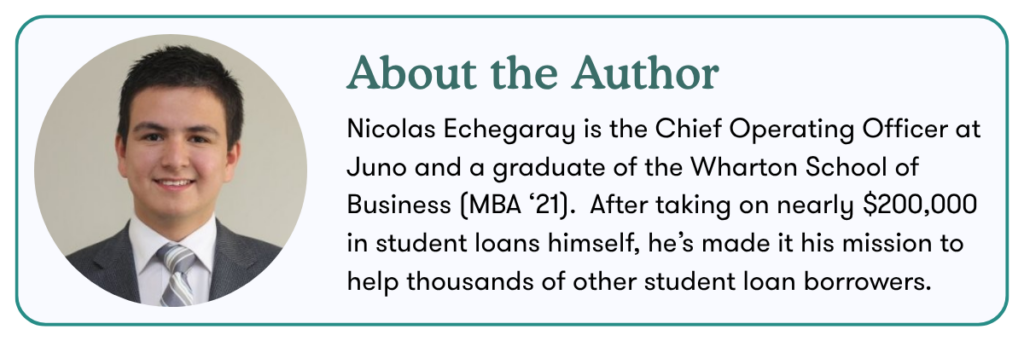
I’m
Nicolas,
COO
at


Juno

and
a
proud
(if
battle-scarred)
grad-school
alum
who
once
signed
on
the
dotted
line
for
nearly

$200,000
in
student
debt
.
Living
through
that
experience—and
later
helping
thousands
of
classmates
do
the
same—showed
me
just
how
lopsided
the
loan
market
can
be
for
individual
borrowers. 

That’s
why


Juno

was
born:
we
band
students
together,
use
their
collective
buying
power,
and
negotiate
bulk
discounts
on
private-loan
rates
and
perks
that
no
borrower
could
secure
alone.
After
several
years
of
securing
the
best
private
loan
deals
for
students
at
top
MBA
programs,
we
now
bring
the
same
no-cost
leverage
to
law
students.
Below
is
the
playbook
I
wish
someone
had
handed
me
before
orientation
day—a
step-by-step
recipe
for
keeping
your
J.D.
affordable.


Step
1.
Chase
the
Money
You
Never
Repay


School
grants
&
scholarships

Most
law-school
“free
money”
arrives
with
your
admit
letter:


  • Merit
    awards


    driven
    by
    LSAT
    /
    GPA,
    leadership
    résumé,
    diversity
    fellowships
    (e.g.,
    ABA
    Legal
    Opportunity,
    AccessLex
    MAX),
    or
    practice-area
    tracks
    such
    as
    IP
    or
    public
    interest.

  • Need-based
    grants


    at
    a
    growing
    list
    of
    schools
    (Harvard,
    Stanford,
    Yale,
    Berkeley,
    Georgetown,
    NYU).


External
funds

Check
the

AccessLex
Scholarship
Databank
,
state-bar
foundations,
and
affinity-bar
associations
(HNBA,
NAPABA,
NBLSA,
etc.)—many
awards
have
deadlines
as
late
as
July—worth
a
final
sweep.


Loan-Repayment
Assistance
Programs
(LRAPs)

~60
ABA-accredited
schools
may
subsidize
or
forgive
part
of
your
debt
if
you
enter
public-service
or
government
roles.
Run
the
math:
LRAP
+
PSLF
can
slash
your
effective
borrowing
cost.


Step
2.
Decide
How
Much
Cash
to
Use


  1. Budget
    honestly.

    Rely
    on
    your
    law
    school’s
    published
    Cost
    of
    Attendance
    (COA),
    but
    note
    that
    summer
    housing,
    clinics,
    moot-court
    travel,
    and
    the
    3L
    bar-study
    gap
    often
    push
    actual
    spending
    above
    that
    amount.

  2. Keep
    an
    emergency
    fund
    —include
    bar-exam
    and
    bar-review
    costs
    (typically
    ~$3–$4k).

  3. Compare
    returns
    vs.
    borrowing
    cost.

    Consider
    your
    opportunity
    cost
    (e.g.,
    potential
    investment
    gains,
    emergency
    savings)
    against
    the
    interest
    rate
    on
    your
    loans.
    If
    you
    can’t
    reliably
    out-earn
    that
    rate,
    using
    some
    savings
    may
    make
    sense.
    That
    said,
    many
    graduates
    from
    T14
    schools
    begin
    their
    careers
    in
    Big
    Law,
    where
    higher
    starting
    salaries
    can
    accelerate
    loan
    repayment
    or
    qualify
    for
    refinancing
    later
    on.
    If
    that
    path
    is
    likely
    for
    you,
    it
    may
    justify
    holding
    onto
    more
    cash
    upfront
    and
    using
    it
    for
    longer-term
    investments.


Step
3.
Know
Your
Loan
Options

After
finishing
exploring
all
the
scholarship
options,
and
assessing
how
much
of
your
savings
you
are
willing/able
to
use,
Student
loans
are
used
to
fill
the
gap.
U.S.
citizens
and
Permanent
Residents
have
access
to
Federal
Loans.
There
are
two
types
for
Law
students:
Direct
Unsubsidized
(more
affordable
but
limited
to
$20.5k
a
year)
and
Grad
PLUS
(more
expensive,
but
can
go
up
to
the
cost
of
attendance)

Those
have
fixed
terms,
independent
of
your
specific
credit
profile.
The
terms
are
as
follows
for
the
academic
year
2025

2026


Key
points

  • Federal
    loans
    carry
    IDR
    plans
    and
    PSLF
    eligibility—
    most
    valuable
    if
    you’ll
    stay
    in
    public
    service.
  • Grad
    PLUS
    fees
    add
    4.228
    %
    to
    your
    balance
    on
    day
    one

If
you
are
not
planning
to
take
advantage
of
the
Federal
protections,
it’s
worth
comparing
whether
you
can
get
a
more
affordable
loan
on
the
private
side.


Step
4.
Check
Your
Rates
on
Juno
(without
impacting
your
credit)

We
created
Juno
to
make
it
a
no-brainer
option
if
you
decide
to
take
a
private
loan.
We
negotiate
to
ensure
our
deals
are
better
than
going
directly
to
the
lender,
and
some
of
our
deals
don’t
need
a
cosigner
or
income
for
you
to
qualify.


Some
key
points:


  • Soft-credit
    check
    in
    ~2
    minutes

    (Does
    not
    affect
    your
    credit)

  • Fixed
    and
    variable
    APRs
    that
    beat
    Federal
    options
    for
    many
    credit
    tiers.


  • Negotiated
    Rates
    and/or
    Cash
    Bonuses
    are
    available


  • Rate
    Match
    Program:
    If
    you
    find
    a
    better
    rate
    from
    a
    long
    list
    of
    competitors,
    we
    will
    match
    it
    and
    give
    you
    1%
    of
    your
    loan
    amount
    as
    cash
    back

Compare
your
personalized
Juno
quote
against
your
Federal
offers.


Step
5.
Bottom-Line
Playbook


  1. Maximize
    scholarships
    &
    LRAP
    first.

    Every
    free
    dollar
    is
    one
    you
    never
    repay.

  2. Model


    total


    cost.

    Include
    origination
    fees,
    bar-prep
    expenses,
    and
    how
    quickly
    you’ll
    refinance
    or
    pursue
    PSLF.

  3. Shop
    with
    soft
    checks.

    Gather
    real
    quotes,
    then
    decide—without
    any
    impact
    on
    your
    credit.

  4. Decide
    what
    combination
    of
    Federal
    and
    Private
    loans
    you
    are
    going
    to
    use:

    You
    can
    use
    any
    combination
    of
    Federal
    and
    Private
    loans
    up
    to
    your
    COA.

  5. Move
    early.

    If
    you
    see
    a
    rate
    you
    like,
    consider
    applying
    early
    to
    lock
    it
    in.
    Remember,
    rates
    may
    move
    at
    a
    moment’s
    notice.

Law
school
is
a
major
investment,
but
thoughtful
planning
can
keep
your
debt
in
check
so
you
can
focus
on
contracts,
criminal,
or
con-law
instead
of
compounding
interest.
Juno
helps
law
students
access
discounted
deals
through
collective
bargaining,
so
you
can
borrow
smarter
and
stress
less.
Best
of
luck
in
your
legal
journey!


The
information
provided
in
this
article
is
current
as
of
June
4,
2025,
and
is
intended
for
general
informational
purposes
only.
It
does
not
constitute
legal,
financial,
or
tax
advice.
Readers
should
consult
their
own
advisors
before
making
any
decisions.
Terms
and
conditions
may
apply
to
the
loan
products
discussed.
Federal
student
loans
offer
certain
borrower
protections
and
benefits—such
as
income-driven
repayment
plans
and
potential
forgiveness
options—that
may
be
important
to
consider.
To
learn
more,
visit


studentaid.gov
.

Americans Know The Truth About The Supreme Court – Above the Law

The
myth
that
the
Supreme
Court
is
a
politically
neutral
body
that
just
calls
“balls
and
strikes”
in
its
jurisprudence
has
been
well
and
truly
shattered.
According
to

a
new
Reuters/Ipsos
poll
,
only
20%
of
respondents
think
the
Supreme
Court
is
politically
neutral.

The
majority

58%

disagreed
with
that
sentiment,
and
the
remainder
said
they
did
not
know
or
did
not
respond.
It
gets
even
more
stark
when
you
break
the
results
out
by
political
affiliation:
of
Democrats,
10%
said
SCOTUS
is
politically
neutral
with
74%
disagreeing,
but
even
the
Republicans
surveyed
see
the
politically
motivated
writing
on
the
wall
with
29%
saying
SCOTUS
is
political
and
54%
disagreeing.

Despite
the
politicization
of
the
Court

or
maybe
*because*
of
it

44%
said
they
have
a
favorable
view
of
SCOTUS.
Which
is
absolutely
in
line
with
the

Court’s
sinking
approval
rates

that
have
plagued
the
institution
ever
since
the

Dobbs
v.
Jackson
Women’s
Health
 decision

got
leaked
,
stripping
reproductive
rights
from
Americans.
There’s
also
a
partisan
bend
to
these
numbers,
with
67%
of
Republicans
and
26%
of
Democrats
having
a
favorable
view
of
the
Court.

With
the
Court’s
increased
use
of
the

shadow
docket,

terrible

attitude
toward
ethics
,
and

general
obsequiousness

towards
the
Trump
administration
I
wouldn’t
expect
a
major
turn
around
on
these
terrible
polling
numbers
any
time
soon.

How’s This For Wasteful Government Spending? – Above the Law

I
don’t
take
hypocrites
lightly.

When
I
worked
at
a
law
firm,
I
was
always
annoyed,
for
example,
when
the
firm
had
no
money
for
business
development
for
the
plebian
partners
but
somehow
always
found
money
for
exotic
locales,
five-star
hotels,
and
$100-a-bottle
wines
when
the
Management
Committee
was
meeting.

The
same
thing
happens
at
corporations,
of
course. You
hear
that
every
department
must
urgently
cut
5%
of
its
workforce! But
the
300-strong
group
of
corporate
muckety-mucks
can
fly
off
to
Europe
(or
wherever)
for
three
days
to
enjoy
fine
meals
and
a
chance
to
hobnob
at
cocktail
receptions.

Pass
the
frigging
shrimp.

I’m
now
watching
the
federal
government
do
the
same
damned
thing.

The
federal
government
is
apparently
broke. It
was
absolutely
critical
that
Elon
Musk
and
crew
essentially
eliminate
foreign
aid,
condemning
tens
of
thousands
of
people
to
illness
or
death. Domestically,
we
must
cut
Medicaid,
eliminating
health
insurance
for
millions
of
Americans. And
Congress
is
playing
games
to
convince
people
that
holding
taxes
low
will
somehow
reduce
the
budget
deficit.

At
the
same
time,
the
U.S.
Army
estimates
that
we’re
spending
a
minimum
of $25
million
to
$45
million
 for
a
military
parade
to
honor
either
the
Army
or
our
president’s
79th
birthday,
depending
on
whom
you
believe. I
say
“a
minimum”
because
the
multimillion-dollar
estimate
covers
only
the 6,700
soldiers,
28
Abrams
tanks,
28
Bradley
Fighting
Vehicles,
28
Stryker
vehicles,
four
Paladin
self-propelled
howitzers,
eight
marching
bands,
24
horses,
and
two
mules
participating
in
the
parade. Once other
costs
 are
factored
in,
the
expenses
are
likely
to
be
much
higher.

Our
last
military
parade
was
to
celebrate
our
victory
in
Iraq
in
1991. I
personally

and
every
other
American,
save
one

could
do
without
a
parade
in
a
time
when
government
is
so
strapped
for
cash. Let’s
see
if
some
outfit

let’s
call
it
“DOGE”

can
find
$25
million
to
$45
million
(plus)
to
save
in
a
heartbeat,
without
sacrificing
lives
overseas
or
medical
insurance
at
home.

Same
deal
with
sending
the
Marines
to
Los
Angeles. Whether
or
not
you
believe
the
governor
and
mayor,
who
are
elected
officials
and
thus
perhaps
not
trustworthy,
the
local
police
chief
says
that
there’s
no
need
to
call
in
the
Marines
to
control
the
demonstrations
in
Los
Angeles. If
there
were
a
need
for
police
help,
you’d
think
you’d
get
an
honest
opinion
there. So
there’s
no
need
for
military
help,
and
sending
in
the
Marines
for
an
estimated
60
days
will
cost $134
million
.  

Where’s
Musk
when
you
need
him? The
average
fully
loaded
cost
of
hiring
one
federal
government
employee
is
just
under $157,000 per
year. (This
includes
salary
of
just
over
$100,000
plus
insurance
and
other
benefits.)
Divide
$134
million
by
$157,000,
and
you
could
hire
853
federal
government
employees
for
a
year
for
the
cost
of
an
unnecessary
military
deployment.

Multiply
that
times
other
unnecessary
military
deployments
that
you’ll
see
in
the
coming
months
and
soon
you’re
talking
real
savings.

How
about
Donald
Trump’s
almost
weekly
golfing
excursions
to
Mar-a-Lago? They
run
the
government

that’s
you
and
me

about $800,000 per
trip. How
about
staying
at
the
White
House
for
a
couple
of
weekends? That’d
save
you
the
entire
$800,000

five
federal
employees

per
trip. Or
golf
at
Camp
David,
which
apparently
has
a
single
adjustable
hole
with four
different
tees
 that
permit
different
driving
distances,
along
with
a
driving
range? The
Secret
Service
wouldn’t
spend
any
800
grand
each
weekend
to
protect
Camp
David,
which
is
already
a
secure
location. Or
golf
at
your
own
resort
in
Bedford,
New
Jersey. That
ain’t
free,
but
at
least
it’s
a
shorter
flight.

But
no.

For
you
and
me,
it’s
austerity. We
can’t
spend
a
dime.

But
for
political
showboating
and
presidential
golf,
there’s
plenty
of
money
for
everything.

Pass
the
frigging
shrimp.


Mark Herrmann spent
17
years
as
a
partner
at
a
leading
international
law
firm
and
later
oversaw
litigation,
compliance
and
employment
matters
at
a
large
international
company.
He
is
the
author
of 
The
Curmudgeon’s
Guide
to
Practicing
Law
 and Drug
and
Device
Product
Liability
Litigation
Strategy
 (affiliate
links).
You
can
reach
him
by
email
at 
[email protected].

Palantir, Meta, OpenAI execs to commission into Army reserve, form ‘Detachment 201’ – Breaking Defense

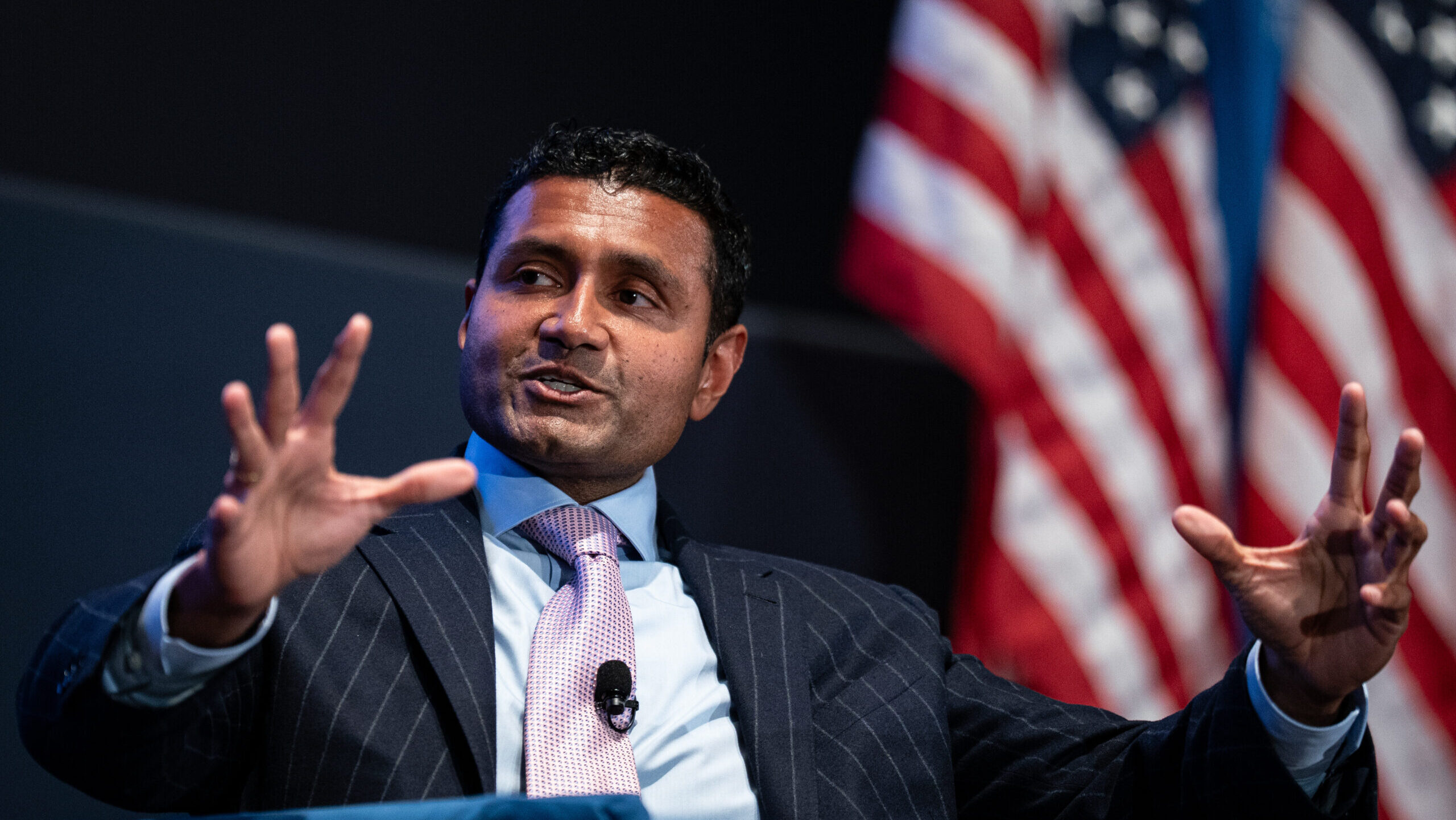
Shyam
Sankar,
chief
technology
officer
of
Palantir
Technologies
Inc.,
speaks
during
the
Hill
&
Valley
forum
at
the
US
Capitol
in
Washington,
DC,
US,
on
Wednesday,
April
30,
2025.
(Al
Drago/Bloomberg
via
Getty
Images)


WASHINGTON

The
US
Army
today
will
direct
commission
four
tech
executives
at
the
rank
of
Lt.
Col.,
charging
them
with
leading
a
new
Army
innovation
corps
inside
the
Reserve
component,
according
to
a
service
spokesman.


“Detachment
201
is
being
created
to
bring
in
tech
innovation
executives
leaders
to
help
the
Army

on
broader
conceptual
things


like
talent
management,
how
do
we
bring
in
tech
focused
people
into
the
ranks
of
the
military,
and
then,
how
do
we
train
them,”
Col.
Dave
Butler,
the
top
spokesman
for
the
Army
Chief
of
Staff,
told
Breaking
Defense
today.


This
initial
cohort
of
executives
includes
the
c
hief
technology
officer
from
Palantir,
Shyam
Sankar,
whose

“Defense
Reformation”
website

has
become
a
talking
point
among
defense
tech
community;
Andrew
Bosworth,
the
chief
technology
officer
from
Meta;
Kevin
Weil,
OpenAI’s


chief
product
officer


and
Bob
McGrew
who,
until
November,
was
chief
research
officer
at
at
OpenAI.


The
Wall
Street
Journal


first
reported


on
the
plan.


The
four
will
be
sworn
in
tonight
ahead
of
the
service’s
250th
birthday
celebration
on
Saturday,
Butler
said. 


The
move
comes
as
the


Trump
administration
embraces
venture
capital
and
tech
industries,
including
VC-backed
startups
like
Anduril,
Palantir
and
others
who
have
begun
to
take
root
as
major
players
in
the
defense
industrial
base.
The
 Trump
administration’s
nominee
to
take
the
reins
as
the
Army’s
No.
2
two
civilian,
Michael
Obadal,
is
an
Anduril
employee. 


Army
Chief
of
Staff
Gen.
Randy
George
and
Army
Secretary
Dan
Driscoll
have
also
been
focused
on
giving
tech
startups
and
non-traditional
defense
companies
a
more
prominent
role
inside
the
service.
Driscoll
has

even


called
it
a
“success”
if
a
large
prime
contractor
closes
its
doors
in
the
coming
years
if
they
can’t
start
operating
more
efficiently.


“I
will
measure
it
as
success
if
in
the
next
two
years,
one
of
the
primes
is
no
longer
in
business,
and
the
rest
of
them
have
all
gotten
stronger,”
he
said
in
May
on
the


TBPN
podcast


As
the
new
era
of
defense
tech
sweeps
through
the
halls
of
the
Pentagon
and
the 
Army
stands
up


Detachment
201,


Butler
said
the
service
will
try
to
ensure
that
there
isn’t
a
conflict
of
interest
between
the
executives
coming
in
as


lieutenant
colonels


and
the
companies
they
still
work
for.
(For
instance,
Meta
and
Anduril

are
teamed

together
to
compete
for
the
Army’s
next-gen
heads
up
display.)


“There’s
plenty
of
precedent
for
this,”
Butler
said.
“We’ve
done
this
over
and
over
when
our
nation
needed
top
talent.
The
difference
is
we
used
to
do
it
in
wartime
now
we’re
doing
it
ahead
of
wartime
so
that
we
can
prepare
and
deter.”


“There’s
an
urgency
to
change
and
transform
the
Army
and
these
guys
[are]
going
to
help,”
he
added. 


As
for
what
the
founders
of
Detachment
201
will
be
doing,
Butler
said
it
is
not
expected
to
revolve
around
programs
of
record
or
big-ticket
acquisitions.
Instead,
they
will
be
looking
at
much
“broader”
topics
and
there
will
be
firewalls
in
place
to
protect
both
the
Army
and
their
respective
companies. 

“Det.
201
is
an
effort
to
recruit
senior
tech
executives
to
serve
part-time
in
the
Army
Reserve
as
senior
advisors,”
an
Army
statement
announcing
the
news
said.
“In
this
role
they
will
work
on
targeted
projects
to
help
guide
rapid
and
scalable
tech
solutions
to
complex
problems.
By
bringing
private-sector
know-how
into
uniform,
Det.
201
is
supercharging
efforts
like
the
Army
Transformation
Initiative,
which
aims
to
make
the
force
leaner,
smarter,
and
more
lethal.”