ECA capacitates Zambia, Zimbabwe and Malawi in e-commerce tools and marketing strategies

She
was
speaking
at
the
workshop
on
E-Commerce
Marketing
and
Business
Development
Strategies
for
the
African
Continental
Free
Trade
Area
(AfCFTA)
and
Global
Markets
convened
by
the
United
Nations
Economic
Commission
for
Africa
(ECA),
through
its
African
Institute
for
Economic
Development
and
Planning
(IDEP)
and
its
Sub-Regional
Office
for
Southern
Africa
(SROSA)
and
funded
by
the
Government
of
Italy.

The
overall
objective
of
the
workshop
was
to
strengthen
the
skills
of
participants
from
Malawi,
Zambia
and
Zimbabwe
to
leverage
e-trade
opportunities
in
the
context
of
AfCFTA.
Mr.
Enrico
de
Agostini,
Ambassador
of
Italy
in
Zambia
reiterated
the
importance
of
capacity
building
of
entrepreneurs
in
the
region
to
ensure
sustainable
development.

Ms.
Beatrice
Mutali,
United
Nations
Resident
Coordinator,
speaking
on
behalf
of
the
UN
family
in
Zambia
underscored
the
importance
of
partnerships
between
governments,
international
partners,
private
sector
and
the
UN
to
address
the
gaps
in
digital
trade
such
as
infrastructure,
connectivity
to
payment
systems
and
regulatory
frameworks.

The
Director
of
ECA
Subregional
office
for
Southern
Africa,
Ms.
Eunice
Kamwendo,
in
her
opening
remarks,
emphasised
the
efforts
of
ECA
in
implementing
innovative
and
practical
initiatives
in
order
to
better
support
member
states.
An
example
of
which
is
this
e-commerce
training
that
was
intended
to
provide
strategic
and
practical
tools
necessary
to
unlock
opportunities
in
the
e-commerce
space
under
the
AfCFTA
and
in
global
markets.

She
further
noted
that,
the
AfCFTA,
with
its
promise
of
a
US$3.4
trillion
single
market,
presents
ECA
and
its
partners
with
a
unique
platform
to
reimagine
value
chains,
promote
innovation,
and
stimulate
sustainable
growth
driven
by
the
private
sector. 
“At
ECA,
we
believe
that
digitalization
when
guided
by
inclusive
policies
and
backed
by
the
right
skills
can
bridge
development
gaps,
unlock
new
markets,
and
catalyze
youth
employment”.

To
complement
the
training
ECA-SROSA
experts
presented
on
the
AfCFTA
and
initiatives
related
to
the
implementation
of
the
AfCFTA
Agreement.
Ms.
Zodwa
Mabuza,
Chief
Sub-Regional
Initiatives
outlined
the
protocol
on
digital
trade
indicating
that
it
helps
harmonize
rules
to
boost
Africa’s
digital
economy,
cutting
cross-border
e-commerce
costs,
building
trust,
and
supporting
Small
and
Medium
Enterprises.
Ms.
Bineswaree
Bolaky,
Economic
Affairs
Officer
presented
on
the
AfCFTA,
its
rationale
and
instruments,
and
on
ECA’s
work
on
AfCFTA,
e-commerce
and
digital
trade
including
outlining
ECA’s
support
to
member
States
on
developing
their
National
AfCFTA
Strategies
and
Green
Supplements
to
these
strategies.
Mr.
Henry
Lubinda,
Programme
Officer
gave
an
overview
of
SRO-SA’s
major
areas
of
support
to
member
States
such
as
inclusive
industrialization,
green
transitions,
enhanced
food
systems
and
AfCFTA-led
trade
in
Southern
Africa.

The
training
consisting
of
6
sessions,
was
facilitated
by
Mr.
Fabio
Santoni
ASeS-CeFor,
the
implementing
partner
of
the
project
funded
by
Italy.
Participants
were
trained
through
scenarios
and
business
simulation
techniques.

At
the
closing
of
the
workshop,
certificates
were
remitted
to
participants
by
Mr.
Aime
Mbatkam,
coordinator
of
the
project
at
ECA’s
training
arm,
the
African
Institute
for
Economic
Development
and
Planning.

This
collaborative
initiative
between
ECA
and
the
Government
of
Italy
aimed
at
supporting
Member
states
through
a
capacity
building
programme
for
the
effective
implementation
of
the
AfCFTA
Agreement.
Under
Phase
2,
Cameroon,
Democratic
Republic
of
Congo,
Gabon,
Malawi,
Mauritania,
Zambia,
and
Zimbabwe
benefitted
from
(i)
an
assessment
of
e-trade
readiness 
and
(ii)
a
capacity
needs
assessment
of
stakeholders
for
AfCFTA
implementation.
These
studies
informed
the
design
of
the
online
training
courses
that
were
subseuqently
delivered.


Source:


ECA
capacitates
Zambia,
Zimbabwe
and
Malawi
in
e-commerce
tools
and
marketing
strategies
|

United
Nations
Economic
Commission
for
Africa

Midsize Firm Refuses To Back Down On Its Diversity Scholarship Program, Despite Trump’s DEI Threats – Above the Law


Ed.
note
:
Welcome
to
our
daily
feature,

Quote
of
the
Day
.


We
are
concerned
about
the
efforts
that
the
Trump
administration
has
taken
to
disparage
and
dismantle
DEI
efforts
that
are
lawful
and
that
are
designed
to
open
doors
of
opportunity
and
give
more
people
the
chance
to
succeed
based
on
their
merits.
Now
more
than
ever,
we
hold
steadfast
to
our
values
and
our
conviction
that
expanding
opportunities
and
access
within
the
legal
profession
will
always
be
the
right
thing
to
do.


We
have
not
changed
our
criteria
or
selection
process
in
response
to
either
the SFFA
v.
Harvard
 opinion
or
to
the
Trump
administration’s
actions,
and
we
see
no
reason
to.
Our
Diversity
Scholarship
program
is
lawful,
anti-discriminatory,
and
aligned
with
our
core
values
and
professional
ethics.
We
are
proud
of
how
the
program
has
positively
impacted
the
legal
profession
over
the
years.


Laurie
Carr
Mims
,
managing
partner
of

Keker
Van
Nest
&
Peters,
in
comments
given
to

The
Recorder
,
concerning
the
firm’s
diversity
scholarship,
which
awards
a
total
of
$100,000
in
funds
to
first-year
law
students
each
year.
This
year’s
Keker
diversity
scholars
were
selected
as
they
“each
demonstrated
a
deep
commitment
to
service
and
advocacy,
a
passion
for
litigation
that
started
well
before
law
school,
and
because
they
embodied
resilience,
grit
and
determination.”


Staci Zaretsky


Staci
Zaretsky
 is
a
senior
editor
at
Above
the
Law,
where
she’s
worked
since
2011.
She’d
love
to
hear
from
you,
so
please
feel
free
to

email

her
with
any
tips,
questions,
comments,
or
critiques.
You
can
follow
her
on BlueskyX/Twitter,
and Threads, or
connect
with
her
on LinkedIn.

Stat(s) Of The Week: Biglaw’s Office Space – Above the Law

Back
at
the
start
of
office
reentry,
we
asked
our
audience
to
compare
their
desire
for
higher
pay
with
their
desire
for
remote
flexibility. 


We
learned

that
it
would
take
a
30%
pay
increase
to
persuade
over
half
of
our
readers
to
voluntarily
abandon
remote
work. 

Four
years
later

after
much
cajoling,
incentivizing,
and
issuing
of
demands

law
firms
appear
to
be
settling
into
a
new
normal,
according
to
a
survey
by
Maptician.

Law
firms
in
major
cities
are
seeing
office
attendance
around
55%-60%,
with
Tuesdays
peaking
and
Fridays
hitting
lows.
This
marks
a
drop
from
the
90%
or
higher
pre-pandemic
attendance
rate,
the
survey
says,
citing
a
2020
CBRE
report. 

With
fewer
attorneys
in
the
office,
some
firms
are
looking
to
reduce
space
per
attorney,
and
some
are
investing
in
amenities
amid
a
“flight
to
quality,”
the
report
says.  

“Regardless
of
the
approach,
most
firms
are
moving
toward
intentional
workplace
planning,
supported
by
data,
policy,
and
technology.”


Law
Firm
Workplace
Trends
2025

[Maptician]


Jeremy
Barker
is
the
director
of
content
marketing
for
Breaking
Media.
Feel
free
to email
him
 with
questions
or
comments.

Morning Docket: 06.13.25 – Above the Law

*
A
president
might
be
able
to
send
troops
to
kill
a
political
rival,
but
we
draw
the
line
at
sending
them
into
cities
for
no
reason.
[Law360]

*
LOL,
just
kidding,
we
can
give
fascism
a
TRO!
[Bloomberg
Law
News
]

*
E.
Jean
Carroll
has
a
shotgun
and
a
new
book.
[New
York
]

*
Plaintiffs’
bar
thinks
Kennedy
report
too
crazy
to
use.
[Law.com]

*
How
in-house
lawyers
want
to
see
AI
[Roll
on
Friday
]

*
Trump
asks
another
half
million
to
leave
the
country.
[Bloomberg
Law
News
]

*
Harvey
Weinstein
secures
mistrial
on
part
of
that
case.
[Reuters]

*
Administration
sues
NY
over
banning
ICE.
[New
York
Times
]

Florida Supreme Court Demands State Bar Stop Working With ABA Because… LOL, Screw This ‘Rule Of Law’ Stuff – Above the Law

Yesterday,
the
Florida
Bar
opened
a
letter
from
their
friends
over
at
the
state
supreme
court
and
were
likely
surprised
to
learn
that

absent
any
formal
order,
hearing,
or
opportunity
to
comment

they
were
being
ordered
to
sever
ties
with
the
American
Bar
Association.
I
mean,
if
the
people
don’t
deserve
due
process,
why
should
the
bar
association?

What
brought
on
this
drastic
turn
of
events?

Well,
the
ABA
has
chastised
the
Trump
administration
for
its
attacks
upon
the
rule
of
law
and
former
Florida
AG
Pam
Bondi
has

exiled
the
ABA
to
the
netherworld
on
judicial
nominations

so
the
Florida
justices

loyal
Republican
politicians
that
they
are

understood
the
assignment
and
flexed
their
power
to
chip
away
at
the
ABA
by
forcing
the
Florida
Bar
to
quit.


I’m
sorry…
I
thought
this
was
America
!

Justice
Labarga
didn’t
get
the
opportunity
to
pen
a
dissent
but
one
suspects
it
would
read,
“are
you
kidding
me
with
this?”
Labarga
is
one
of
the
two
remaining
jurists
not
appointed
by
Ron
DeSantis.
Fun
fact:
Charlie
Crist
became
a
Democrat
because
the
GOP
got
too
crazy
for
him
and
the
crazy
Republican
that
Crist
last
beat,
David
Jolly,
is…

now
a
Democrat

because
the
GOP
got
too
crazy
for
him.

[Off-key
Lion
King
voice]
THE
CIRCLE
OF
LIIIIIIIIFFFFE!

Many
of
the
ABA’s
policies
take
positions
on
contested
political
and
policy
disputes
over
which
reasonable
people
can
and
do
disagree.


People

can
and
do
disagree,
but
this
sentence
is
doing
a
lot
of
violence
to
the
word
“reasonable.”
Chief
Justice
Muñiz
refrains
from
offering
any,
you
know,

specifics

because
doing
so
might
underscore
how
much
of
a
naked
hack
he
is.
If
he
had
to
write,
“we
don’t
approve
of
the
ABA
making
controversial
statements
like
attorneys
should
stand
for
the
rule
of
law
‘”
he
would
rightly
be
laughed
out
of
the
profession.
Better
to
leave
it
vague!

To
stay
focused
on
its
mission,
and
out
of
respect
for
its
members,
the
Bar
strives
to
avoid
entangling
itself,
even
indirectly,
in
contentious
policy
debates.
The
Bar’s
practice
of
making
appointments
to
the
ABA’s
House
of
Delegates
is
inconsistent
with
that
goal.

You
know,
if
someone
actually
cared
about
the
state
bar
hewing
to
an
apolitical
line,
they’d

want

their
state
bar
to
have
representation
in
the
House
of
Delegates
and
vote

against

bold
statements
like
“maybe
rule
of
law
is
good.”
But
that
would
be
“democracy”
which
isn’t
a
high
priority
in
GOP
circles
these
days.

Therefore,
on
behalf
of
the
Court
(not
including
Justice
Labarga),
I
ask
that
The
Florida
Bar
(1)
immediately
cease
making
appointments
to
the
ABA
House
of
Delegates;
(2)
rescind
or
withdraw
any
existing
appointments
to
the
House
of
Delegates
(of
course,
affected
individuals
are
free
to
seek
appointment
by
entities
other
than
The
Florida
Bar);
and
(3)
make
changes
to
The
Florida
Bar’s
policies
and
practices
(including
to
Standing
Board
Policies
1.40
and
1.41)
as
necessary
to
implement
this
directive.

Now…
the
court
makes
an
“ask”
before
calling
it
a
“directive.”
Methinks
they
might
need
a
dictionary
to
understand
what
“ask”
means.
But
it
seems
as
though
the
Florida
Bar
is
going
to
be
walking
out
on
the
American
Bar.

I
feel
like
Florida’s
tried
to
secede
from
America
before.
Hopefully
this
turns
out
about
the
same
as
last
time.


HeadshotJoe
Patrice
 is
a
senior
editor
at
Above
the
Law
and
co-host
of

Thinking
Like
A
Lawyer
.
Feel
free
to email
any
tips,
questions,
or
comments.
Follow
him
on Twitter or

Bluesky

if
you’re
interested
in
law,
politics,
and
a
healthy
dose
of
college
sports
news.
Joe
also
serves
as
a

Managing
Director
at
RPN
Executive
Search
.

Second Circuit Declines To Let Trump Grab Carroll By The Process. Again. – Above the Law

(Photo
by
Brendan
McDermid-Pool/Getty
Images)

This
morning
a
totally
normal
thing
happened
in
the
Second
Circuit
when
the
judges
brushed
off
a
request
for

en
banc

review
by
a
disappointed
appellant.

Well

not

totally
normal
.
The
case
did
involve
the
sitting
president’s
effort
to
disappear
the
the
first
E.
Jean
Carroll
verdict
finding
him
liable
for
sexually
assaulting
and
defaming
the
advice
columnist.
The
hope
was
to
persuade
the
wider
court
that
trial
Judge
Lewis
Kaplan
abused
his
discretion
with
respect
to
the
evidence
presented
at
trial.
These
alleged
abuses
included
admitting
testimony
that
Trump
attempted
to
sexually
assault
other
women
and
indeed
bragged
about
it
on
the
infamous
Access
Hollywood
tape,
as
well
as
by
excluding
information
about
who
funded
Carroll’s
litigation.
Trump
was
also
big
mad
that
Judge
Kaplan
didn’t
let
him
tell
the
jury
that
Carroll
named
her
cat
“Vagina.”

In
a

per
curiam


order

in
December,
Judges
Denny
Chin,
Susan
Carney,
and
Myrna
Pérez
affirmed
the
trial
court’s
ruling,
finding
no
abuse
of
discretion,
and,
even
assuming
that
the
panel
might
have
decided
some
minor
issues
differently
than
the
trial
court,
merely
harmless
error.

Also
this
morning,
a
slightly
less
normal
thing
happened,
which
was
that
Judges
Chin
and
Carney
filed
a

concurrence

lambasting
the
dissenters
from
the
denial
of
rehearing
en
banc
for
their
batshit
crazy
opinion.

“The
dissent
fails
to
cite
contrary
binding
authority
or
any
prior
decisions
that,
upon
review,
actually
conflict
with
the
panel’s
decision;
it
fails
to
acknowledge
the
deferential
standard
of
review
that
binds
us;
and
it
fails
to
identify
any
single
question
of
exceptional
importance
that
requires
en
banc
consideration,”
they
wrote
incredulously,
adding
a
terse
reminder
that
“we
do
not
convene
en
banc
to
relitigate
a
case.”

And
finally
this
morning
a

completely
insane

thing
happened
which
is

no
surprises
here!

Judge
Steven
Menashi
filed

said
batshit
dissent
,
which
was
joined
by
Judge
Michael
Park,
the
only
other
Trump
appointee
on
the
Second
Circuit.

The
dissent
starts
out
with
a
footnote
citing
an
unpublished
Third
Circuit
opinion
in


Hill
v.
Cosby


yes

that

Cosby.
The
theory
is
that
someone
accused
of
a
crime
can
deny
the
accusation
without
committing
defamation.
Except
in
that
case
it
was
Cosby’s
lawyer
talking
about
pending
litigation,
and
he
confined
himself
to
denying
the
allegations
and
managed
not
to
call
Hill
a
liar
participating
in
a
hoax
who
was
anyway
too
unattractive
to
assault.
The
court
found
that
the
lawyer’s
denial
was
“not
actionable
because
it
includes
the
facts
supporting
that
implication”
and
“adequately
disclosed
the
factual
basis
for
the
attorney’s
opinion.”

Auspicious!

The
dissent
goes
on
to
complain
that
“The
actual
malice
standard
famously
raises
‘the
plaintiff’s
burden
of
proof
to
an
almost
impossible
level’”
and
yet
the
jury
found
it
was
met
here,
supposedly
because
the
trial
judge
erroneously
excluded
evidence
that
some
of
Carroll’s
legal
fees
were
paid
by
LinkedIn
founder
Reid
Hoffman
(although
apparently
without
her
being
fully
aware
of
the
subsidy).

The
theory
is
that
evidence
of
Democrats
rallying
around
Carroll
would
undercut
the
predicate
for
a
finding
of
actual
malice,
since
it
would
go
to
the
defendant’s
state
of
mind.
But,
as
Judge
Chin
and
Carney
point
out,
Trump
never
argued
this
himself
since
it
was
“orthogonal
to
his
basic
position”
that
what
he
said
was

true
,
not
just
his
reasonable
if
mistaken
belief.
And,
as
they
point
out,
it’s
emphatically
not
the
province
of
Circuit
Court
judges
to
run
a
simulation
of
what
might
have
happened
in
a
parallel
universe
if
the
parties
had
argued
their
cases
differently.

The
dissent
is
full
of
wild
claims,
but
perhaps
the
most
offensive
is
the
suggestion
that
Trump
can’t
be
liable
for
defamation
because
maybe
he
just
plum

forgot

about
sexually
assaulting
this
woman
in
the
dressing
room
at
Bergdorf’s.

“Because
the
purported
conduct
underlying
the
lawsuit
had
allegedly
occurred
almost
thirty
years
earlier
and
‘lasted
just
a
few
minutes,’
at
the
time
of
his
statement
President
Trump
might
not
have
even
remembered
any
interaction—even
assuming
one
occurred—let
alone
still
regarded
a
lawsuit
based
on
such
long-ago
events
as
a
politically
motivated
hoax,”
they
wrote,
snarking
that
“Normally,
the
statute
of
limitations
would
have
prevented
such
a
suit,
but
New
York
suspended
the
statute
of
limitations
and
Carroll
sued
‘nine
minutes
after
the
[suspension]
became
effective.’”

It’s
gross!
And
not
normal!
And
coming
to
the
Supreme
Court
this
summer.

As
for
Carroll,
she
and
her
attorney’
Roberta
Kaplan
celebrated
the
ruling.

“Although
President
Trump
continues
to
try
every
possible
maneuver
to
challenge
the
findings
of
two
separate
juries,
those
efforts
have
failed,”
they
told
ATL.
“He
remains
liable
for
sexual
assault
and
defamation.”


Carroll
v.
Trump

[Docket
via
Court
Listener]


Liz
Dye
 lives
in
Baltimore
where
she
produces
the
Law
and
Chaos substack and podcast.

Morning Docket: 06.13.25 – Above the Law

*
A
president
might
be
able
to
send
troops
to
kill
a
political
rival,
but
we
draw
the
line
at
sending
them
into
cities
for
no
reason.
[Law360]

*
LOL,
just
kidding,
we
can
give
fascism
a
TRO!
[Bloomberg
Law
News
]

*
E.
Jean
Carroll
has
a
shotgun
and
a
new
book.
[New
York
]

*
Plaintiffs’
bar
thinks
Kennedy
report
too
crazy
to
use.
[Law.com]

*
How
in-house
lawyers
want
to
see
AI
[Roll
on
Friday
]

*
Trump
asks
another
half
million
to
leave
the
country.
[Bloomberg
Law
News
]

*
Harvey
Weinstein
secures
mistrial
on
part
of
that
case.
[Reuters]

*
Administration
sues
NY
over
banning
ICE.
[New
York
Times
]

Tax-Smart Retirement Withdrawals: The Fine Art Of Not Giving Uncle Sam Your Lunch Money – Above the Law

Every
morning
at
about
6:47
AM,
my
4-year-old
daughter’s
head
pops
off
the
pillow
with
the
same
urgent
question:
“What
are
we
doing
today?”

I’ll
be
brutally
honest

most
mornings
I’m
just
hoping
for
30
minutes
of
uninterrupted
coffee
time.
But
she
needs
that
roadmap.
She
needs
to
know
what’s
next.

As
adults,
we
often
forget
we’re
wired
the
same
way.
You
wouldn’t
buy
a
house
without
seeing
the
contractor’s
blueprint
first.
You’ll
never
see
the
finished
house
until
it’s
built,
but
that
detailed
plan
gives
you
confidence
it’ll
look
right.


The
same
principle
applies
to
retirement

especially
for
lawyers.

When
I
talk
with
lawyers
approaching
retirement,
the
anxiety
isn’t
usually
about
the
numbers.
You’ve
built
successful
careers,
accumulated
assets,
done
the
“right”
things
financially.
The
struggle
runs
deeper
than
that.

It’s
a
loss
of
identity.
Who
are
you
without
the
courtroom,
the
clients,
the
late-night
brief
writing?

But
there’s
another
piece
that
compounds
this
emotional
uncertainty:
no
one
has
ever
shown
you
a
clear
financial
blueprint
for
how
retirement
actually
works.
And
it’s
really
hard
to
feed
your
emotional
confidence
when
there
isn’t
even
a
clear
picture
of
how
it
all
works
from
a
financial
perspective.

That’s
where
a
strategic
plan
with
tax-smart
withdrawal
strategies
comes
in.
Think
of
this
as
your
retirement
blueprint

a
detailed
plan
that
marries
the
emotional
side
with
the
financial
side
to
provide
confidence
about
what
the
next
phase
should
look
like.


Why
Withdrawal
Sequencing
Matters
More
Than
You
Think

You’ve
got
three
main
buckets
of
retirement
assets,
and
each
gets
taxed
differently:


Taxable
accounts

(your
regular
investment
accounts)

You
pay
taxes
on
dividends
and
capital
gains,
but
you’ve
already
paid
income
tax
on
the
money
that
went
in.


Tax-deferred
accounts

(Traditional
401k,
Traditional
IRA)

Every
dollar
you
withdraw
gets
taxed
as
ordinary
income.
Yikes.


Tax-free
accounts

(Roth
IRA,
Roth
401k)

No
taxes
on
withdrawals
in
retirement.
None.

Why
does
this
matter?
Because
the
order
you
tap
these
accounts
can
make
the
difference
between
keeping
more
of
your
money
versus
handing
it
over
to
Uncle
Sam.
We’re
talking
about
spendable
income,
gifting
capacity,
and
funds
for
your
beneficiaries.

The
conventional
wisdom
says
just
take
a
little
from
each
account
pro-rata
style
(might
as
well
spread
it
around,
right?).

But
here’s
where
it
gets
interesting

that’s
not
always
the
smartest
approach.

Let
me
introduce
you
to
Rachel
and
Caleb
Justice
(not
their
real
names
of
course).
Both
lawyers,
both
65,
both
ready
to
retire
with
a
$2.6
million
net
worth.
They
need
about
$10,000
monthly
in
after-tax
expenses
plus
healthcare
costs

roughly
$120,000+
annually.
Here’s
what
their
retirement
asset
picture
looks
like:

Looking
at
their
three
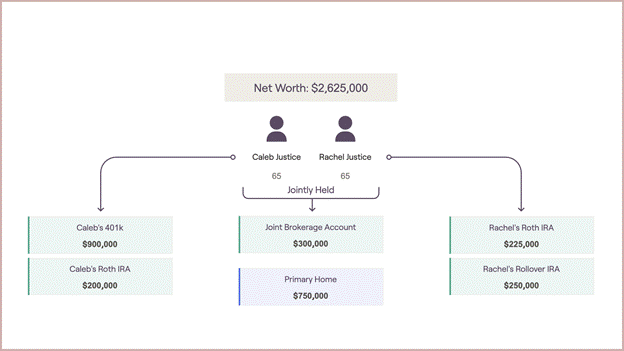
buckets:


  • Tax-deferred
    accounts:

    $1.15
    million
    (Caleb’s
    401k
    +
    Rachel’s
    Rollover
    IRA)

  • Tax-free
    accounts:

    $425,000
    (both
    Roth
    IRAs)

  • Taxable
    accounts:

    $300,000
    (Joint
    Brokerage)

Rachel
and
Caleb
had
a
critical
decision
to
make
about
Social
Security
timing
and
withdrawal
sequencing.
In
their
case,
they
were
solving
for
lifetime
income
while
paying
the
least
amount
in
projected
taxes.

They
employed
an
intentional
withdrawal
strategy:
taxable
accounts
first,
then
tax-free,
then
tax-deferred.
And
instead
of
taking
Social
Security
immediately,
they
delayed
until
full
retirement
age
(67
in
their
case).

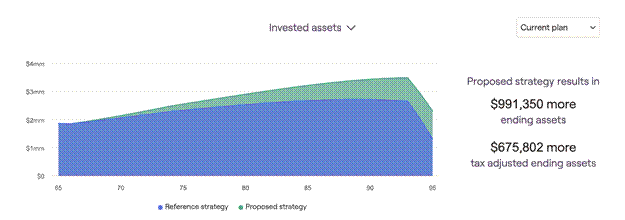
The
result?
This
strategy
added
over
$675,000
in
tax-adjusted
ending
assets
to
their
plan
compared
to
the
conventional
pro-rata
approach.

But
they
didn’t
stop
there.


The
Power
of
Strategic
Roth
Conversions

First,
let
me
explain
what
a
Roth
conversion
actually
is.
It’s
pretty
simple:
you
take
money
from
your
tax-deferred
accounts
(like
a
401k
or
traditional
IRA)
and
move
it
to
a
Roth
IRA.
You
pay
taxes
on
that
money
today,
but
then
it
grows
tax-free
forever.
No
taxes
when
you
withdraw
it.
No
Required
Minimum
Distributions
forcing
you
to
take
money
out.
It’s
like
paying
the
tax
bill
upfront
to
never
get
another
tax
bill
on
that
money
again.

With
that
introduction
to
Roth
conversions
out
of
the
way,
let’s
get
back
to
Caleb
and
Rachel:

Between
ages
65
and
73
(when
Required
Minimum
Distributions
kick
in),
they
made
a
strategic
move:
they
converted
money
from
their
tax-deferred
accounts
(401k
and
Rollover
IRA)
to
Roth
IRAs

enough
to
fill
up
their
10%
tax
bracket
each
year.

They
didn’t
spend
this
money.
Instead,
they
elected
to
pay
taxes
today
at
a
lower
rate
than
they
were
projected
to
be
once
those
pesky
RMDs
kicked
in.
Think
of
it
as
“topping
off”
their
lowest
tax
bracket
and
moving
money
from
the
“pay
taxes
later”
bucket
to
the
“never
pay
taxes
again”
bucket.

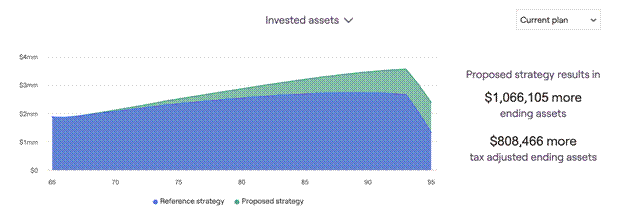
This
additional
wrinkle?
Now
we’re
looking
at
over
$800,000
in
more
tax-adjusted
ending
assets.


Let’s
bring
this
concept
home


proper
coordination
between
Social
Security
timing,
pension
sources,
and
your
distribution
strategy
can
dramatically
impact
your
lifetime
income.
It’s
not
just
about
having
money

it’s
about
keeping
more
of
it.


Capital
Gains
Harvesting:
The
“0%”
Sweet
Spot

Here’s
something
that
might
surprise
you:
there’s
actually
a
0%
capital
gains
tax
bracket
in
retirement.

Here’s
how
it
works

When
you
sell
investments
in
your
taxable
accounts,
you
pay
capital
gains
tax
on
the
profit.
If
you
hold
those
investments
for
more
than
one
year,
you
get
preferential
tax
treatment
called
“long-term
capital
gains”

which
is
taxed
at
much
lower
rates
than
ordinary
income.
But

and
this
is
the
beautiful
part

if
your
taxable
income
stays
below
certain
thresholds,
you
pay
exactly
zero
percent
on
long-term
capital
gains.

For
2025,
married
couples
filing
jointly
can
have
up
to
$94,050
in
taxable
income
and
still
qualify
for
the
0%
capital
gains
rate.
Single
filers
get
up
to
$47,025.
Again,
this
is

taxable
income,

which
means
with
a
standard
deduction
a
couple
filing
jointly
could
have
up
to
$127,250
in
total
income
and
still
qualify
($94,050
plus
standard
deduction
of
$33,200).

Where
does
this
fit
in?
Well,
let’s
head
back
to
our
example
with
Caleb
and
Rachel:

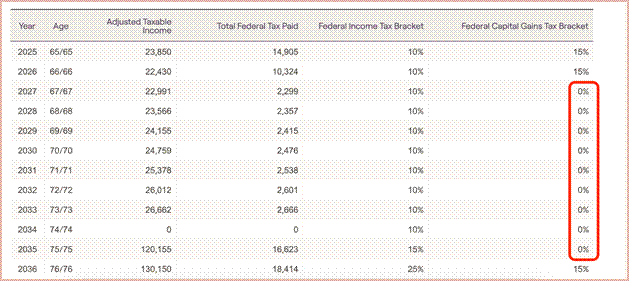
Between
ages
67
and
75,
their
strategic
withdrawal
sequencing
kept
their
taxable
income
in
that
sweet
spot.
The
result?
They
paid
0%
in
capital
gains
taxes
during
those
crucial
early
retirement
years.

This
isn’t
about
fancy
financial
engineering.
It’s
about
understanding
how
the
tax
code
works
and
positioning
yourself
to
take
advantage
of
it.


Your
Retirement
Blueprint
Starts
Here

Remember
my
daughter’s
morning
question?
“What
are
we
doing
today?”

The
lawyers
I
work
with
need
that
same
clarity
about
retirement.
Not
just
the
warm,
fuzzy
vision
of
“more
time
with
family”

though
that’s
important
too.
You
need
a
concrete
financial
blueprint
that
shows
exactly
how
the
money
flows,
when
taxes
hit,
and
how
to
keep
more
of
what
you’ve
worked
so
hard
to
build.

Tax-smart
withdrawal
strategies
aren’t
just
about
minimizing
taxes
(though
they
do
that
beautifully).
They’re
about
creating
a
clear,
executable
plan
that
gives
you
confidence
in
your
next
chapter.

And
I’ve
learned
that
when
you
have
that
financial
blueprint
in
place,
the
emotional
piece
starts
falling
into
place
too.
You
begin
to
see
retirement
not
as
an
ending,
but
as
a
strategic
transition
to
a
new
phase
of
life.

Your
retirement
deserves
more
than
a
“wing
it
and
hope”
withdrawal
strategy

and
so
do
you.


DISCLOSURE:


The
information
in
this
article
is
not
intended
as
tax,
accounting,
retirement
or
legal
advice,
as
an
offer
or
solicitation
of
an
offer
to
buy
or
sell,
or
as
an
endorsement
of
any
company,
security,
fund,
or
other
securities
or
non-securities
offering.
This
information
should
not
be
relied
upon
as
the
sole
factor
in
an
investment
making
decision
or
your
decision
to
retire.
In
any
examples
or
case
studies
used,
all
client
names
have
been
changed.


David
Hunter,
CFP®
is
a
CERTIFIED
FINANCIAL
PLANNER™
and
owner
of First
Light
Wealth,
LLC
,
a
financial
planning
&
wealth
management
firm
with
a
unique
focus
on
serving
attorneys
nationwide.
David
has
over
a
decade
of
experience
helping
clients
build
financial
plans
and
has
been
featured
in
publications
such
as
Attorney
at
Work,
ThinkAdvisor,
MarketWatch,
Financial
Planning,
and
InvestmentNews.
David
also
writes
weekly
to
attorneys
in
his
popular Money
Meets
Law
 newsletter.
For
more
about
David,
visit firstlightwealth.com/lawyers or
connect
with
him
on LinkedIn.

Morning Docket: 06.13.25 – Above the Law

*
A
president
might
be
able
to
send
troops
to
kill
a
political
rival,
but
we
draw
the
line
at
sending
them
into
cities
for
no
reason.
[Law360]

*
LOL,
just
kidding,
we
can
give
fascism
a
TRO!
[Bloomberg
Law
News
]

*
E.
Jean
Carroll
has
a
shotgun
and
a
new
book.
[New
York
]

*
Plaintiffs’
bar
thinks
Kennedy
report
too
crazy
to
use.
[Law.com]

*
How
in-house
lawyers
want
to
see
AI
[Roll
on
Friday
]

*
Trump
asks
another
half
million
to
leave
the
country.
[Bloomberg
Law
News
]

*
Harvey
Weinstein
secures
mistrial
on
part
of
that
case.
[Reuters]

*
Administration
sues
NY
over
banning
ICE.
[New
York
Times
]

How Appealing Weekly Roundup – Above the Law


Ed.
Note
:

A
weekly
roundup
of
just
a
few
items
from
Howard
Bashman’s

How
Appealing
blog
,
the
Web’s
first
blog
devoted
to
appellate
litigation.
Check
out
these
stories
and
more
at
How
Appealing.


“Woman
accused
of
being
a
witch
in
Brazil
can
seek
asylum
in
U.S.,
court
rules”:
 Bob
Egelko
of
The
San
Francisco
Chronicle
has this
report
 on a
ruling
 that
the U.S.
Court
of
Appeals
for
the
Ninth
Circuit
 issued
yesterday.


“Supreme
Court
press
corps
asks
chief
justice
to
live-stream
court’s
opinions”:
 NPR
has this
report
.


“Georgia
high
court
rejects
election
board
rules
for
hand
counts,
inquiries;
Republican-controlled
State
Election
Board
tried
to
alter
ballot-counting
rules
ahead
of
presidential
election”:
 Mark
Niesse
of
The
Atlanta
Journal-Constitution
has this
report
.


“Federal
appeals
court
to
hear
arguments
in
Trump’s
long-shot
effort
to
fight
hush
money
conviction”:
 John
Fritze
of
CNN
has this
report
.


“Muscogee
Nation
Supreme
Court
to
decide
if
Creek
Freedmen
descendants
can
be
citizens”:
 Alexia
Aston
of
The
Oklahoman
has this
report
.


“State
Supreme
Court
strikes
down
2021
abortion
restrictions;
The
challenged
laws
would
have
barred
telemedicine
abortions,
prohibited
procedures
after
20
weeks
and
mandated
the
offer
of
ultrasounds”:
 Mara
Silvers
of
Montana
Free
Press
has this
report
.