A Fragile State: Zimbabwe Reckons With the Catastrophic Loss of US Aid

HARARE,
ZIMBABWE

Eliza
Mandove
was
a
child
when
her
brother
was
killed
during
Zimbabwe’s
war
for
independence.
She
was
beaten
during
the
same
attack
and
sustained
injuries
to
her
hands
and
legs.
Now
46,
Mandove
has
no
motor
function
in
her
left
hand
and
struggles
to
walk
and
carry
heavy
loads.
She
suffers
from
chronic
headaches.
She
can’t
work
in
the
fields.
Her
husband
once
farmed,
but
years
of
drought
and
erratic
rainfall
have
led
to
diminishing
yields.

Aid
from
the
United
States
was
crucial.
It
kept
Mandove’s
family
of
seven
fed.

In
January,
that
food
aid
abruptly
stopped.
On
his
first
day
in
office,
US
President
Donald
Trump
signed
an
executive
order
that
ended
nearly
all
foreign
aid.
Mandove
and
her
family

and
many
others

were
left
with
very
little.

The
end
of
US
foreign
aid
was
abrupt.
In
Zimbabwe,
the
sudden
suspension
put
many
at
immediate
risk
of hunger.
In
Uganda,
health
workers
told
patients
to
collect
their
antiretroviral
drugs
before
clinics shut
down
.
In
Bangladesh,
tuberculosis
specialists
were
immediately laid
off
,
leaving
people
with
that
illness
without
care.

Stories
like
this
emerged
around
the
world.

The
sudden
pullout
has
left
a
crisis
behind.
The
aid
had
been
a
lifeline
for
millions
since
the
United
States
Agency
for
International
Development,
the
US
foreign
aid
agency,
was
formed
in
1961.
At
the
same
time,
it
failed
to
transform
the
economies
and
governance
of
low-income
countries.
In
the
worst
cases,
it
enabled
corruption.

In
Zimbabwe
alone,
nearly
US$7
billion
in
US
aid
poured
in
between
1980
and
2025.
But
in
the
four
decades
since
its
independence
from
colonial
rule,
the
country’s
per
capita
gross
domestic
product
has fallen
by
almost
 10%.
It
is
poorer
today
than
it
was
then.

Foreign
aid,
in
most
cases,
feeds
people
and
offers
them
medical
aid
one
day
at
a
time.

Investment
from
China,
on
the
other
hand,
continues
to
sweep
across
the
continent.
Overall,
that
investment
is
creating
stable
jobs
and
infrastructure
that
has
the
potential
to
upend
decades
of
reliance
on
that
aid.
The
question
now
in
Zimbabwe,
as
in
other
African
countries,
is
whether
this
new
era
will
be
the
one
that,
at
last,
brings
economic
transformation.

Turning
that
corner
won’t
be
easy,
says
Persistence
Gwanyanya,
a
member
of
the
monetary
policy
committee
of
the
Reserve
Bank
of
Zimbabwe.
Reliance
on
aid
led
to
the
country’s
leadership
being
“a
bit
relaxed”
when
it
comes
to
economic
responsibility.

“Donors
were
coming
in
to
fill
the
gap,”
he
says.

Now,
he
adds,
is
the
time
for
change.

“We
just
have
to
live
within
our
budget,”
he
says.
“We
need
to
be
more
accountable.”

‘There
was
no
food’

Zimbabwe
was
one
of
the
last
African
countries
to
gain
its
independence
from
European
colonial
occupation.
In
1980,
following
a
bitter
civil
war,
a
revolutionary
movement
led
by
Robert
Mugabe
succeeded
in
overthrowing
a
white
minority
government
that
had
itself
seceded
from
the
British
empire
in
1965.
The
country
benefited
from
infrastructure
built
under
the
white-controlled
government
that,
for
a
while,
sustained
society.

“Our
parents
could
take
care
of
us
with
ease,”
says
Tellmore
Mutize,
63,
a
dressmaker
from
Harare
who
reached
adulthood
just
as
the
country
gained
independence.

There
were
jobs,
she
says.
Groceries
were
cheap,
and
schools
were
free.
When
she
gave
birth
to
her
first
child
in
a
public
hospital
in
1980,
she
paid
nothing
and
received
top-quality
care.
When
she
had
twins
five
years
later,
the
experience
was
much
the
same.

From
Colonialism
to
US
Assistance

Colonialism
left
many
parts
of
Africa
in
shambles
and
with
an
impossible
task:
emerge
from
decades
of
oppressive
foreign
control
to
effectively
manage
natural
resources,
maintain
infrastructure
and
meet
peoples’
health
care,
humanitarian
and
economic
needs.

During
the
Cold
War,
a
decadeslong
showdown
between
the
US
and
Russia,
the
US
wielded
soft
power
and
won
global
influence
with
USAID.
Since
1946,
the
US
has
budgeted
over
US$1.1
trillion
in
foreign
assistance
to
Africa,
for
everything
from
emergency
food
aid
to
HIV/AIDS
relief,
from
early
childhood
education
programs
to
civil
society
development.

Deep
corruption
was
beginning
to
take
root,
and
human
rights
abuses
were
a
real
threat.
Poverty
remained
a
problem.
But
for
many
black
Zimbabweans,
life
was
easier
than
it
had
been
for
generations.

Abundant
rainfall
boosted
agriculture,
reinforcing
Zimbabwe’s
reputation
as
Africa’s
breadbasket.
The
economy
grew
in
bursts,
and
the
health
care
system drew
medical
tourists
 from
across
Africa.

Then
came
disaster.
The
region’s
worst
drought
set
in
in
1992,
leading
to
a
widespread
food
shortage.
The
price
of
groceries
skyrocketed.
The
drought’s
effects
rippled
through
many
sectors,
including
health
care,
where
hospitals
struggled
to
maintain
adequate
services.

As
crops
dried
up,
so
did
public
spending.
The
World
Bank
began
to
require
countries
receiving
funding
to
agree
to
market
reforms,
often
characterized
by
privatizing
state-owned
industries,
ending
food
subsidies
and
enacting
user
fees
at
hospitals.

Maize
flour
and
cooking
oil
began
to
flow
in
from
donors
like
the
Red
Cross
and
Save
the
Children.

“When
they
came,
we
were
happy
because
in
1992,
there
was
no
food,”
Mutize
says.

Eight
years
later,
Mugabe
began
expropriating
thousands
of
large,
white-owned
farms
dating
from
the
country’s
colonialism
era.

Farm
workers,
villagers
and
veterans
of
Zimbabwe’s
war
for
independence
invaded
those
white-owned
farms,
leading
to
40
deaths
(34
black
Zimbabweans
and
six
white
farmers)
and
countless
assaults.
Eventually,
those
large
farms
were
converted
into
about
170,000
smaller
properties.
Much
of
the
land
was
snatched
up
by
powerful
political
players;
other
parcels
went
to
ordinary
people
who
reveled
in
owning
land
after
generations
of
oppression.

The
chaotic,
rushed
and
violent
nature
of
the
land
reforms
led
to
a
massive
withdrawal
of
international
investment.
Zimbabwe’s
central
bank
began
recklessly
printing
cash.
Hyperinflation
took
root.
Corruption
ballooned.
Public
services
collapsed.

By
the
time
Mutize
was
ready
to
give
birth
to
her
last
child
in
2003,
public
hospitals
had
deteriorated.
She
paid
out
of
pocket
to
give
birth
at
a
private
hospital.

Two-thirds
of
the
population
required
food
aid
in
2002
and
2003.
US
aid quickly
grew
,
from
US$42
million
in
2002
to
US$120
million
in
2007
and
US$260
million
in
2009.
Even
so,
between
1999
and
2008,
Zimbabwe’s
GDP
dropped
by
49%

the
most
severe
economic
downturn
in
a
country
not
at
war,
according
to
2019
report
from
the
African
Development
Bank
.

Between
2014
and
2024,
PEPFAR,
a
giant
US
health
program
aimed
at
treating
and
containing
the
spread
of
HIV/AIDS,
supplied
on
average
18%
of
Zimbabwe’s
national
health
budget.
In
2019,
amid
chaotic
inflation
and
massive
cuts
to
the
health
budget,
donor
contributions
to
the
health
budget
were
4.5
times
larger
than
Zimbabwe’s
contribution
to
its
own
health
ministry’s
budget.

Total
US
aid
to
Zimbabwe
peaked
at
US$340
million
in
2022.
In
2024,
the
last
full
year
before
the
US
slashed
foreign
aid,
it
totaled
US$290
million.

Nevertheless,
over
a
third
of
Zimbabweans
continue
to
live
in
poverty:
Around
35%
of
Zimbabwe’s
close
to
17
million
people
live
on
just
US$2.15
per
day.

Stalled
progress

Economists
in
Africa
and
throughout
the
world
have
struggled
to
understand
why
so
much
aid
hasn’t
brought
about
structural
transformation.
Though
health
aid
has
had
some
big
successes

new
HIV
infections
in
Zimbabwe,
for
example, declined
more
than
tenfold
 from
a
high
in
the
early
1990s

the
Zimbabwean
economy
is
chronically
unstable.

In
February,
Elon
Musk,
the
unelected
man
who
was
tasked
with
dramatically
downsizing
the
US
government,
claimed
that
USAID
was
corrupt.
But
there’s
scant
evidence
of
widespread
corruption
in
USAID
projects
in
Zimbabwe.
In
58
audits
of
USAID
projects
in
Zimbabwe,
commissioned
by
the
USAID
Office
of
Inspector
General
between
2017
and
2024,
three
projects
were
flagged
for
having
“unsupported
costs”
totaling
US$660,000.
In
at
least
two
of
those
examples,
the
corruption
was
at
the
local
level,
not
within
USAID.

The
real
corruption
is
in
Zimbabwe’s
halls
of
power.
In
2024,
the
US
sanctioned
President
Emmerson
Mnangagwa
and
10
other
Zimbabwean
leaders
for
corruption
and
human
rights
abuses.
The
announcement
from
the
US
Department
of
Treasury,
which
implements
such
sanctions,
noted
that
Mnangagwa,
his
wife
and
senior
government
leaders
are
engaged
in
corruption
related
to
gold
and
diamond
smuggling
networks,
as
well
as
a
host
of
other
illicit
financial
schemes
and
human
rights
abuses.

And
that’s
just
a
small
sampling
of
the
known
corruption.

“We
need
to
deal
with
some
nefarious
activities
that
have
been
resulting
in
the
leakages
of
the
revenue
from
the
fiscus,”
says
Gwanyanya.
“We
need
to
be
more
efficient
as
a
government.
We
need
to
be
more
efficient
in
terms
of
operations

but
also
in
terms
of
dealing
with
the
wastages
and
leakages.”

That
corruption
ripples
down
into
daily
life.
Bribery
is
rife.
New
mothers
have
to
bribe
nurses
to
get official
birth
cards
for
their
infants
.
Ruling
political
party
leaders give
away
land
to
their
supporters
.
The
black
market
is
now
the backbone
of
the
local
economy
.

Everything
happening
in
Zimbabwe
now
is
a
part
of
the
economic
crisis
that
began
in
the
1990s,
says
Eldred
Masunungure,
a
retired
University
of
Zimbabwe
political
scientist.

“We
are
still
in
that
crisis,”
he
says.

Fragility,
he
says,
has
become
the
country’s
defining
feature:
fragile
politics,
fragile
economy
and
a
fragile
social
order.
When
corruption
is
so
routine,
he
says,
“How
do
you
uproot
that?”

People
are
desperate,
and
those
who
can
leave,
do
so.
Masunungure’s
children
live
in
Canada.


Decades
of
brain
drain
 have
left
the
country
with
far
fewer
skilled
people
than
it
needs
to
fill
the
void
left
by
aid
agencies.
Some
African
countries
won’t
be
able
to
fill
the
gap,
and
even
with
the
resources,
they
might
struggle
to
manage
services
that
were
previously
run
by
donors,
says
Ken
Opalo,
an
associate
professor
at
the
Walsh
School
of
Foreign
Service
at
Georgetown
University.
That,
he
says,
“is
my
biggest
worry.”

China’s
promise

Economic
transformation
is
possible

and
China
could
make
it
happen,
Opalo
says.

“More
than
any
other
donor,
China
has
been
willing
to
partner
with
countries
of
programs
and
projects
that
have
the
potential
to
deliver
structural
economic
transformation,”
he
says.

More
than
70%
of
US
funding
focuses
on
health
and
saving
lives,
while
more
than
70%
of
China’s
investment
goes
toward
infrastructure
projects
like
electricity,
roads
and
bridges
to
drive
economic
growth,
says
Deborah
Bräutigam,
director
of
the
China-Africa
Research
Initiative
at
Johns
Hopkins
University.
China’s
influence
in
Zimbabwe
includes
mining
claims
worth
billions
of
US
dollars
in
the
diamond,
platinum,
coal,
chrome
and
lithium
sectors.

Between
2000
and
2023,
China
loaned
about
US$182
billion
throughout
Africa

ranging
from
US$3
billion
to
Zimbabwe
to
US$46
billion
to
oil-rich
Angola

according
to
the
Boston
University
Global
Development
Policy
Center.
Most
of
these
loans
were
for
either
energy
or
transportation
projects

in
line
with
China’s
US$1
trillion
Belt
and
Road
Initiative

and
have
an
average
interest
rate
of
3%,
higher
than
World
Bank
rates
but
lower
than
private
lender
rates
of
6–7%.

China’s
approach
is
often
called
“debt
trap
diplomacy,”
meaning
that
the
intent
is
to
overwhelm
low-income
countries
with
debt
they
can’t
repay.
But
there’s
no
evidence
that
these
Chinese
loans
are
somehow
predatory,
Bräutigam
says.
So
far,
there
are
no
examples
of
China
deliberately
entangling
another
country
in
debt,
then
using
that
debt
to
extract
an
unfair
or
strategic
advantage,
she
adds.

China
has
also
been
keen
to
make
symbolic
donations.
In
2022,
China
built
Zimbabwe
a
parliament
building
at
an
estimated
cost
of
US$120million.
It’s
one
of
15
African
parliament
buildings
that
China
has
either
built
or
refurbished,
though
it’s
the
biggest
and
most
expensive
to
date.

More
investment
from
China
isn’t
necessarily
a
good
thing,
says
Sabiti
Makara,
a
professor
in
the
Department
of
Governance
at
Kabale
University
in
Uganda.

“Seeing
that
America
is
withdrawing
its
influence,
the
Chinese
might
set
new
terms
that
may
render
Africa
dependent
on
them,”
Makara
says.

On
the
ground,
Chinese
investment
brings
jobs.
Chinese
Foreign
Minister
Wang
Yi
said
in
March
at
a
press
conference
that
China
has
created
more
than
1.1
million
jobs
in
Africa
over
the
past
three
years.

But
Zimbabweans
say
those
jobs
aren’t
necessarily
good
ones.

Nathan
Chiwundo
worked
for
a
Chinese
brick
molding
company
in
Harare.
There
were
poor
labor
conditions
and
frequent
regulation
violations,
he
says.
There
were
no
days
off

he
worked
weekends
and
public
holidays.

But
jobs
are
rare,
Chiwundo
says,
so
people
will
continue
to
fill
them
if
China
provides
them.

For
regular
people,
he
says,
more
investment
from
China
“will
be
meaningless
if
employees
are
not
well
taken
care
of.”

‘No
need
to
panic’

Zimbabwean
leaders
say
they’ve
been
able
to
respond
to
the
country’s
most
urgent
needs,
despite
the
lack
of
aid.

There
are
enough
antiretroviral
drugs
for
all
who
need
them,
Dr.
Douglas
Mombeshora,
minister
of
health
and
child
care,
told
journalists
at
a
media
workshop
in
April.
Spending
has
also
been
reprioritized
to
care
for
people
who
have
tuberculosis
and
provide
malaria
treatment,
and
US$12
million
has
been
earmarked
to
import
medication.

“There
is
no
need
to
panic,”
he
said.

Gwanyanya,
the
Reserve
Bank
of
Zimbabwe
committee
member,
says
he’s
confident
that
everything
will
work
out.
“We
just
need
to
adjust
to
the
new
reality,”
he
says.
“Otherwise,
we
can’t
survive.”

Mandove,
the
woman
injured
during
the
war
for
independence,
isn’t
so
sure.

US
aid
helped
ensure
that
countless
Zimbabweans

and
people
across
the
world

had
enough
to
eat.
China
might
invest
in
roads
and
factories,
but
USAID
kept
food
on
tables.

Now,
Mandove
says,
her
family
eats
just
two
meals
a
day,
usually
wheat
with
wild
okra.
It’s
cheaper
than
maize,
the
country’s
staple
food.
Her
youngest
son,
just
10
years
old,
herds
cattle
for
neighbors
to
earn
money.
But
the
family
doesn’t
have
what
it
needs.

“The
food
is
not
enough,”
she
says.
“I
am
usually
hungry.”


Apophia
Agiresaasi
,
GPJ,
contributed
reporting
to
this
story.
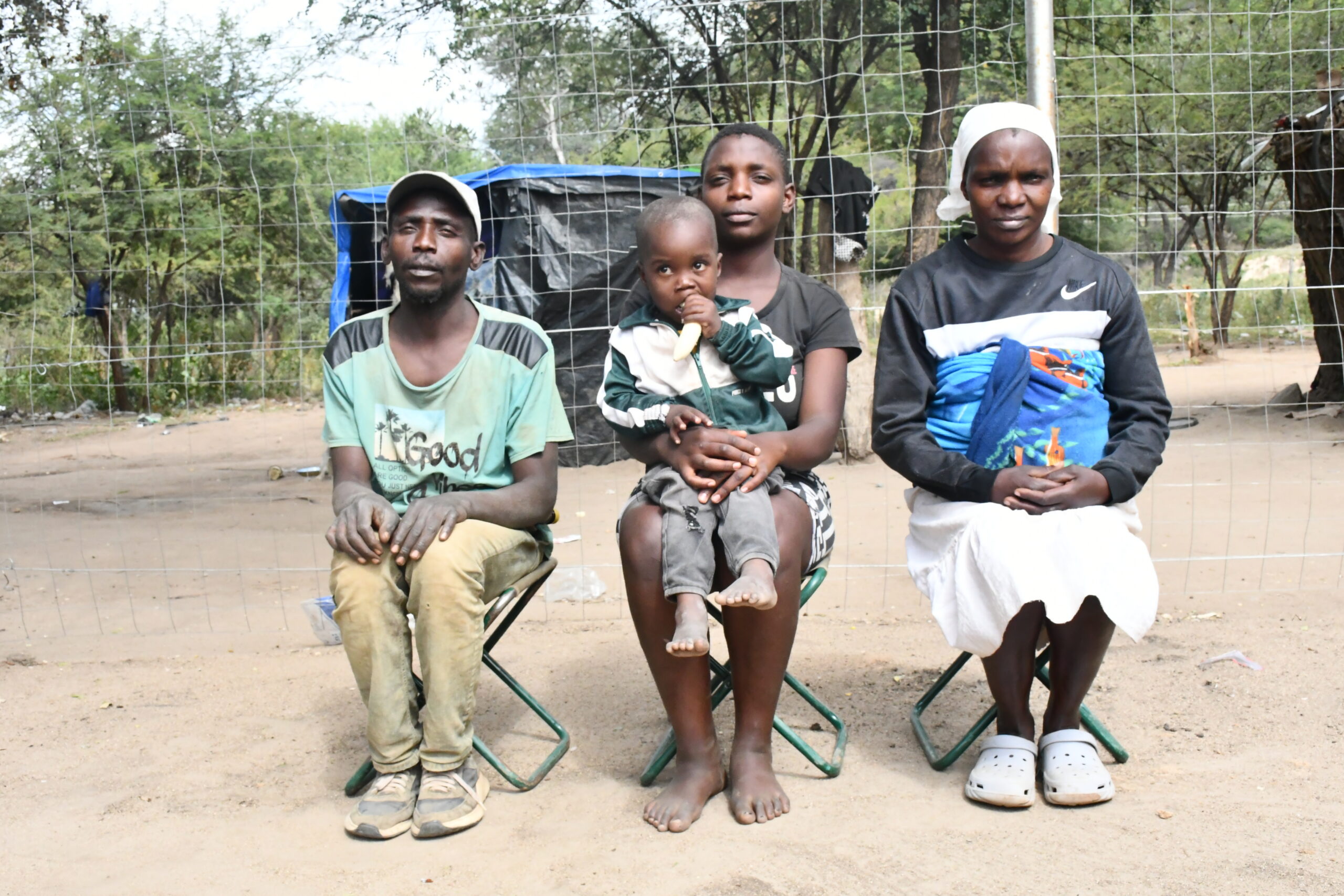
Father first, miner Second: Why a Gwanda artisanal miner puts family before all.


Zibusiso
Ndlovu
(left)
with
his
family,
his
wife
(right)
and
eldest
daughter
and
one
of
his
sons
(centre)

With
the
fear
of
losing
his
job
and
the
little
income
he
was
getting
at
the
end
of
each
month
weighing
heavily
on
him,
Zibusiso
decided
to
leave
his
general
hand
job
at
one
of
the
foreign-owned
commercial
gold
mines
in
Gwanda.
He
became
one
among
thousands
of
people
who
had
joined
the
gold
mining
rush
at
small
scale
artisanal
mining
sites
across
the
country
as
the
deteriorating
economic
situation
continued
to
affect
the
population.

But
life
has
not
been
as
kind
as
he
hoped
it
would
be.
After
20
years,
Zibusiso
is
still
here.
The
promises
of
gold
have
faded,
but
his
determination
remains.

“There
is
not
so
much
change”,
Zibusiso
recounts.
“Life
is
not
as
good
as
people
think
it
is
for
miners.
We
go
for
two
months
without
an
income.
To
survive,
we
must
borrow
from
our
‘sponsors’*
who
will
then
recover
their
money
once
we
realise
any
profits”,
adds
Zibusiso.

Regardless,
Zibusiso
continues
to
toil
daily
to
meet
the
basic
needs
of
his
family
of
six
children,
four
of
them
still
in
school,
and
a
wife
he
met
in
2003
in
Tshebetshebe,
just
two
years
after
he
arrived
in
2001.

“On
a
good
day,
we
make
between
500
to
1,500
Rands.
But
good
days
are
rare,”
he
says.

Daily,
Zibusiso
works
long
hours
underground
in
mine
shafts
that
are
anything
between
30
and
300
metres
deep.
He
is
painfully
aware
of
the
dangers

unstable
shafts,
toxic
dust
and
harmful
chemicals,
and
the
ever-present
risk
of
injury,
yet,
driven
by
the
need
to
provide
for
his
family,
he
soldiers
on,
armed
with
little
more
than
a
shovel,
plastic
containers,
a
hammer
and
a
wheelbarrow
among
other
basic
mining
equipment-no
safety
gear,
no
personal
protective
equipment.
This
exposes
him
and
many
other
small-scale
artisanal
miners
to
serious
health
conditions
such
as
respiratory
issues,
silicosis,
tuberculosis
and
physical
injuries.

“It’s
dangerous,
I
know,
but
these
are
the
sacrifices
we
make
for
our
loved
ones,”
says
Zibusiso.
“My
family
comes
first.
I
make
sure
that
I
support
them
from
the
proceeds
I
get
from
mining.
This
means
that
things
such
as
protective
clothing
and
proper
mining
equipment
are
not
a
huge
priority
for
me.”

Zibusiso’s
family
lives
about
five
kilometres
from
the
mine.
They
visit
every
two
to
three
weeks
to
check
up
on
him
and
collect
money
for
the
family’s
basic
needs.
Sadly,
Zibusiso’s
eldest
daughter
was
home
when
we
met
him
as
he
was
yet
to
pay
school
fees
for
her
and
three
other
siblings
two
weeks
after
schools
had
opened.

*Sponsors
for
gold
mining
are
individuals
who
typically
provide
funding,
equipment,
food
and
other
necessities
to
a
group
of
artisanal
miners.
In
exchange,
the
small-scale
artisanal
miners
(also
known
as
othseketstha
in
Ndebele),
pay
some
proceeds
from
the
sale
of
gold
and
give
a
certain
percentage
to
these
sponsors
for
their
support.

“As
you
can
see,
she
is
still
home
because
I
haven’t
been
able
to
raise
school
fees
yet,
but
I
hope
that
I
will
get
something
so
I
can
pay
the
school.”

While
the
economic
situation
has
not
changed
much
for
Zibusiso,
he
has
found
a
ray
of
hope
on
the
healthcare
side.
In
the
past,
he
and
his
colleagues
could
not
even
afford
to
take
time
off
work
to
seek
treatment,
often
enduring
severe
symptoms
silently.

But
now
things
have
improved
due
to
a
Médecins
Sans
Frontières
(MSF)
comprehensive
health
outreach
programme,
as
artisanal
miners
and
the
host
community
can
now
access
healthcare
services.

The
outreach
programme
aims
to
bridge
the
health
services
gap
and
bring
essential
healthcare
services
directly
to
the
miners’
doorsteps.
Through
the
Artisanal
Small-Scale
Gold
Mining
Basic
Healthcare
project
(ASGM-BHC),
MSF
works
hand
in
hand
with
the
Ministry
of
Health
and
Child
Care
to
deliver
free,
accessible
care
to
over
30
mining
sites
in
the
Gwanda
district.
The
project
offers
screenings,
treatment
for
common
illnesses,
mental
health
support,
and
health
education,
all
while
working
closely
with
the
Ministry
of
Health
and
Child
Care
to
improve
service
delivery
for
hard-to-reach
communities.

“We
used
to
walk
long
distances
of
up
to
5km
to
the
nearest
clinic.
Sometimes
we
would
commute
to
Gwanda
which
is
about
20km
away
to
receive
treatment.
Besides
paying
for
treatment,
getting
the
service
itself
was
hard
because
sometimes
medication
was
not
available
regardless
of
time
spent
in
queues
and
travel
time.
We
would
only
seek
treatment
when
one’s
health
condition
deteriorated
because
we
did
not
always
have
the
money
and
time
to
do
so.
Our
work
demands
that
we
work
every
day,
this
is
how
one
gets
more
money,
and
in
the
spirit
of
teamwork,
you
cannot
be
away
from
work,”
Zibusiso
says.

“For
the
first
time
in
24
years
of
my
experience
as
an
artisanal
miner,
I
had
never
experienced
this.
We
are
getting
treatment
for
almost
everything
here,
where
we
work.
We
are
now
receiving
treatment
for
most
of
the
conditions
here
at
the
mine.
TB,
HIV
and
STIs
are
very
common
conditions
affecting
miners,”
Zibusiso
says.

Artisanal
miners
like
Zibusiso
are
often
criminalised
or
forgotten,
operating
in
informal
spaces
where
survival
is
the
only
constant
but
he
is
grateful
to
MSF
for
giving
him
and
his
fellow
miners
a
health
life
line
to
enable
them
to
at
least
work
for
the
betterment
of
their
families
with
less
worry
on
their
health
needs
and
that
of
their
families.

Post
published
in:

Business

Sitting U.S. Senators Aren’t Safe From Arrest – See Also – Above the Law

Senator
Padilla
Arrested
For
Doing
His
Job:
“Agents”
tried
to
stop
recordings
of
the
arrest,
citing
“FBI
rights.”
California
Widens
Door
On
Who
Can
Practice
Law:
Just
get
rid
of
the
bar
at
this
point.
Former
Judges
Call
Out
State
Bar
For
Being
Cowards:
Wisconsin
isn’t
known
for
its
backbone.
Talking
About
The
Environment
Hurt
The
Governor’s
Feelings:
Law
school
bans
clinic
for
the
dumbest
reason
you’ve
ever
read.
Cyber
Scams
Are
Alive
And
Well
At
Latham:
Mind
your
e-mails!

A Huge Thanks To Our Advertisers On ATL

We’d like to express gratitude to our fantastic sponsors here at Above the Law:

If you’re interested in advertising on Above the Law or any other site in the Breaking Media network, please download our media kits or email advertising.

The post A Huge Thanks To Our Advertisers On ATL appeared first on Above the Law.

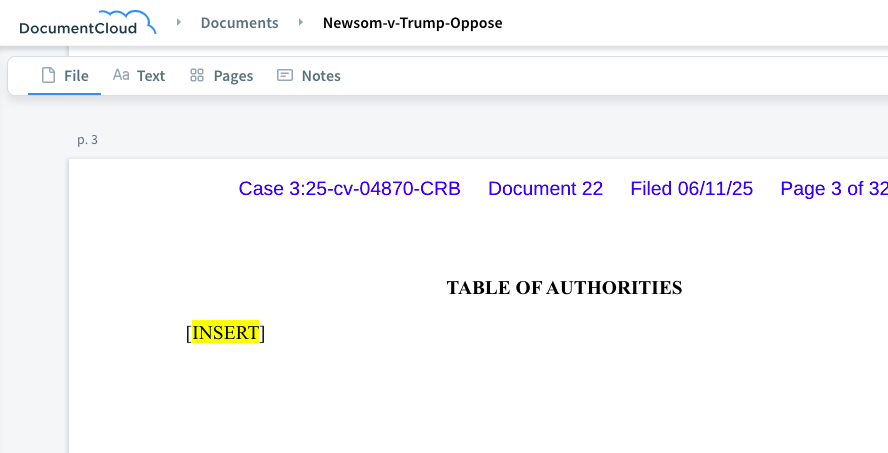
Trump’s Half-Assed Lawyers Didn’t Even Include A Table Of Authority When They Tried To Justify Flooding L.A. With Troops – Above the Law

(image
via
iStock)

Quick
question,
what
do
you
get
when
you
drain
the
swamp
and
don’t
replace
it
with
anything
of
value?
Answer:
[Insert
Here].

Trump
has
maintained
a
tradition
of
putting
people
who
blank
out
when
it
comes
to
answering
basic
questions
about
the
Constitution
in
power.
His
last
Supreme
Court
justice
pick

made
headlines
for
not
recalling
the
right
to
protest
:

This
term,
Trump’s
Fox
&
Friends
fighting
fanatic
pick
for
Secretary
of
Defense
Pete
Hegseth
was
asked
to
cite
the
part
of
the
Constitution
that
allows
the
President
to
flood
a
state
with
the
National
Guard
without
the
governor’s
consent
and
he
came
up
goose
egg:

As
shameful
as
it
is
for
a
Supreme
Court
judge
to
forget
about
the
right
to
protest
or
for
the
Secretary
of
Defense
to
not
know
the
conditions
for
deploying
troops,
things
happen.
Public
speaking
is
scary
enough
before
you
factor
in
the
flashing
lights
and
high-profile
questioning.
Given
some
time
and
the
opportunity
to
write
things
down,
surely
Trump’s
people
would
do
a
better
job
of
justifying
their
bullshit:

Oh.

Is
Trump’s
legal
team
three
undergrads
in
a
trench
coat?
ChatGPT
would
have
at

least

made
the
attempt
to
hallucinate
something
under
the
table
of
authorities.
And
to
make
matters
worse,
their
table
of
contents
somehow
has

less

in
it.

Run
on
anti-intellectualist
rhetoric
and
kick
out/force
all
of
the
competent
lawyers
to
resign,
and
this
is
what
you
get.


Chris
Williams
became
a
social
media
manager
and
assistant
editor
for
Above
the
Law
in
June
2021.
Prior
to
joining
the
staff,
he
moonlighted
as
a
minor
Memelord™
in
the
Facebook
group Law
School
Memes
for
Edgy
T14s
.
 He
endured
Missouri
long
enough
to
graduate
from
Washington
University
in
St.
Louis
School
of
Law.
He
is
a
former
boatbuilder
who
is
learning
to
swim, is
interested
in
critical
race
theory,
philosophy,
and
humor,
and
has
a
love
for
cycling
that
occasionally
annoys
his
peers.
You
can
reach
him
by
email
at [email protected]and
by
tweet
at @WritesForRent.

Kristi Noem’s Goons Just Roughed Up A Sitting U.S. Senator And Called It A Slow Thursday – Above the Law

For
those
following
the
fascism
thermometer,
we’ve
gone
from

mayors

to

representatives

and
have
just
now
reached
senators.
Congratulations,
everybody!

Senator
Alex
Padilla
showed
up
to
a
DHS
press
conference
held
by
Gestapo
Barbie
Kristi
Noem,
a
perfectly
reasonable
thing
for
a
California
senator
to
do
while
Noem
explained
that
the
administration
intends
to
“liberate
the
city
from
the
socialists.”
Tenth
Amendment
schmenth
amendment.
For
his
trouble,
Noem
had
some
of
her
stormtroopers
manhandle
Padilla,
shoving
him
out
of
the
room
and
then
shoving
him
on
the
ground
and
handcuffing
him.

She
treated
a
sitting
U.S.
senator
little
better
than
a
dog,
which
I
guess
we
should
be
thankful
for
considering
we’re
talking
about

known
puppy
murderer
Noem
.

When
the
administration
decided
to
gin
up
some
charges
against
Representative
McIver,
they
cited
her
for
forcibly
impeding
federal
officers
while
they
tried
to
make
(an
illegal)
arrest.
Hard
to
imagine
what
they
can
come
up
with
here
when
a
U.S.
Senator
just
shows
up
and
politely
announces
that
he
plans
to
ask
questions
of
a
cabinet
secretary.
But
I’m
sure
this
administration
has
enough
creative
writing
majors
in
the
DOJ
to
come
up
with
something.

That
video
ends
with
the
cosplay
cops
taking
Padilla
around
a
corner,
presumably
in
an
effort
to
avoid
all
those
media
outlets
catching
what
they
planned
to
do
next.
However,
a
second
video
captures
what
they
did.

It’s
hard
to
believe
anyone
actually
in
the
FBI
would
so
egregiously
violate
their
oath
of
office.
As
a
former
white-collar
defense
lawyer,
I
worked
with
several
FBI
agents
over
the
years
and
even
on
the
other
side,
they
always
exhibited
the
height
of
professionalism.

This
is
thug
behavior
and
they
should
know
it.

OK,
now
I’m
really
incredulous.
“FBI
Rights”?
What
the
hell
is
that?
That’s
not
even
TRYING
to
sound
official.
Just
say,
“no
recording
per
69
USC
Section
420,”
it’s
just
as
nonsensical
but
sounds
more
believable.

Though
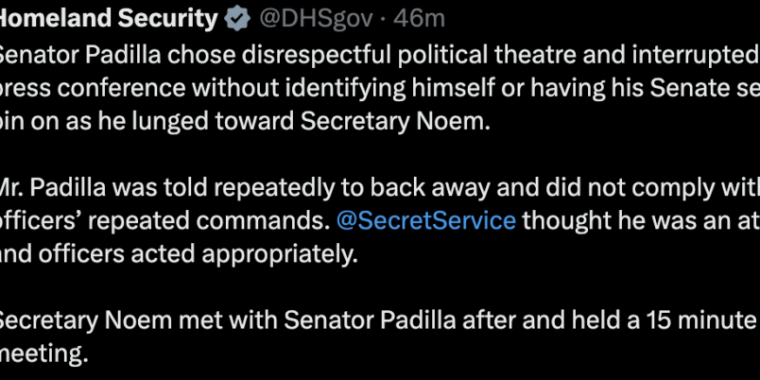
Noem’s
office
is
claiming
this
is
the
Secret
Service

who
REALLY
should
know
how
to
identify
a
senator

but
maybe
they’re
just
randomly
making
up
what
to
call
their
bodyguards
these
days.

This
is
a
lie
of
course
because
the
video
shows
him
repeatedly
identifying
himself
and
doing
nothing
remotely
threatening.
Also,
if
the
Secret
Service
(or
FBI
or
ICE
or
whoever
they
really
were)
didn’t
know
who
Padilla
was,
there
was
one
person
in
the
room
who
definitely
did:

KRISTI
FUCKING
NOEM!

Alex
Padilla
is
the
ranking
member
on
the
Subcommittee
on
Immigration,
Citizenship,
and
Border
Safety…
a
committee
that
tends
to
matter
to
the
cabinet
department
in
charge
of

Immigration,
Citizenship,
and
Border
Safety
.
She
could
have
stopped
this
from
the
podium
at
any
time.

Expect
Grand
Moff
Noem
to
announce
that
the
Emperor
has
dissolved
the
Senate
entirely
next
week.


HeadshotJoe
Patrice
 is
a
senior
editor
at
Above
the
Law
and
co-host
of

Thinking
Like
A
Lawyer
.
Feel
free
to email
any
tips,
questions,
or
comments.
Follow
him
on Twitter or

Bluesky

if
you’re
interested
in
law,
politics,
and
a
healthy
dose
of
college
sports
news.
Joe
also
serves
as
a

Managing
Director
at
RPN
Executive
Search
.

Lawyer Hiring Is Down, But There’s No Need To Panic – Above the Law

(Image
via
Getty)


Ed.
note
:
Welcome
to
our
daily
feature,

Quote
of
the
Day
.


One
minute
the
recession
was
imminent,
the
next
minute
the
stock
market
has
rebounded
to
where
it
was
at
the
beginning
of
Q1.
So
things
can
change
at
the
drop
of
a
hat.
And
we
did
see
strong
hiring
numbers
for
the
majority
of
Q1,
so
nothing
here
necessarily
tells
me
we’re
in
for
any
kind
of
a
downturn.
It’s
more,
people
taking
a
breath
and
people
trying
to
make
an
assessment
about
where
they’re
headed
before
they
commit
resources.


Craig
Savitzky,
manager
of
research
and
insight
at
Leopard
Solutions,
in
comments
given
to
the

American
Lawyer
,
on
the
state
of
the
legal
job
market,
with
new
job
openings
for
lawyers
at
midsize
and
Biglaw
firms
falling
32%
in
May
2025,
compared
to
May
2024.
Savitzky
went
on
to
say
that
the
hiring
data
was
“not
a
pullback,
but
more
of
a
pause,”
because
things
have
been
“so
whipsaw”
this
year.


Staci Zaretsky


Staci
Zaretsky
 is
a
senior
editor
at
Above
the
Law,
where
she’s
worked
since
2011.
She’d
love
to
hear
from
you,
so
please
feel
free
to

email

her
with
any
tips,
questions,
comments,
or
critiques.
You
can
follow
her
on BlueskyX/Twitter,
and Threads, or
connect
with
her
on LinkedIn.

Law School Banned Clinic From Talking About Studies That Made Governor Sad – Above the Law

Kimberly
Terrell
resigned
from
her
role
as
director
of
community
engagement
at
Tulane’s
Environmental
Law
Clinic
after
law
school
administrators
slapped
a
gag
order
on
the
clinic
doing
any
“engaging”
of
the
“community”
over
its
work.

The
Environmental
Law
Clinic
represents
numerous
residents
of
Louisiana’s
“Cancer
Alley,”
a
long
stretch
of
riverside
communities
suffering
from
industries
using
the
Mississippi
River
as
a
toxic
dumping
ground
for
decades.
The
clinic
also
produces
research
detailing
the
impact
of
the
pollution
on
residents,
having
found
both
statistically
higher
cancer
rates
and
incidence
of
premature
and
underweight
births.
While
suffering
the
brunt
of
the
damage,
the
Black
community
in
Louisiana
also
got
significantly
fewer
jobs
in
the
petrochemical
industry
when
controlled
for
training
and
education
according
to
the
clinic’s
studies.
All
the
negatives,
few
of
the
positives.

As
one
might
imagine,
the
state’s
Republican
government
and
big-pocketed
bosses
don’t
appreciate
anyone
pointing
out
the
damage
being
done
by
unchecked
industry,
but
no
one
expected
a
private
law
school
to
cater
to
those
complaints.


From
the
AP
:

Marcilynn
Burke,
dean
of
Tulane’s
law
school,
wrote
in
a
May
4
email
to
clinic
staff
that
Tulane
University
President
Michael
Fitts
worried
the
clinic’s
work
threatened
to
tank
support
for
the
university’s
long-sought
efforts
to
redevelop
New
Orleans’
historic
Charity
Hospital
as
part
of
a
downtown
expansion.

“Elected
officials
and
major
donors
have
cited
the
clinic
as
an
impediment
to
them
lending
their
support
to
the
university
generally
and
this
project
specifically,”
Burke
wrote.

School
administrators
shouldn’t
have
to
deal
with
elected
officials
abusing
the
public
trust
to
lean
on
private
schools
to
stifle
academic
work,
but
those
are
the
breaks.
But
holding
the
line,
sticking
up
for
the
academic
mission,
and
maybe
making
a
few
hardball
threats
about
making
a
big
deal
about
killing
the
new
home
for
the
public
health
school
just
to
protect
donor
egos…
that’s
the
job.
What’s
not
part
of
the
job
is
downplaying
cancer
research
because
the
governor’s
office
is
sad.

For
what
it’s
worth,
the
governor’s
office
said
they
never
threatened
to
withhold
funding,
which
sounds
like
the
sort
of
denial
an
office
makes
when
they’ve
very
carefully
never

explicitly

said
a
particular
set
of
words.

In
her
resignation
letter,
Terrell
wrote
that
she
had
been
told
the
governor
“threatened
to
veto”
any
state
funding
for
the
expansion
project
unless
Tulane’s
president
“did
something”
about
the
clinic.

The
AP
report
suggests
that
what
the
school
“did”
about
the
clinic
was
impose
a
gag
order
on
“all
external
communications”
from
social
media
posts
to
interviews
without
administration
approval.
The
administration
then
blanket
denied
all
requests.

In
a
May
21
audio
recording
obtained
by
the
AP,
Provost
Robin
Forman
said
that
when
Tulane
leadership
met
with
elected
officials
in
April,
they
were
pressed
as
to
why
“‘Tulane
has
taken
a
stand
on
the
chemical
industry
as
harming
communities’,”
and
this
“left
people
feeling
embarrassed
and
uncomfortable.”

You
know
what
can
be
embarrassing
and
uncomfortable?
Dying
slowly
of
cancer
while
state
officials
cover
it
up.
The
AP
collected
so
many
smoking
guns
for
this
report
that
they
should
be
immediately
shipping
them
to
our
allies
in
Ukraine.
They
got
the
dean
citing
the
university
president
questioning
how
this
research
was
connected
to
representing
clients…

when
the
research
is
cited
in
the
court
filings
!

This
AP
piece,
about
Tulane’s
admin
(university
and
law
school)
interfering
with
public
communications
about
research
done
by
a
law
school
clinic
that
the
governor
apparently
doesn’t
like
is

ominous.Esp
since
Tulane
is
a
private
school.apnews.com/article/canc…


John
Pfaff
(@johnpfaff.bsky.social)


2025-06-12T17:36:05.801Z

It’s
definitely
bad
that
a
private
school
is
on
marionette
strings
held
by
the
governor,
but
at
least
as
a
private
actor,
Tulane
is
free
to
make
its
own
bad
decisions.
The
real
danger
to
higher
education
is
when
public
institutions
become
propaganda
factories
for
the
government,
an
ever-growing
risk
as
conservatives
starve
public
schools
of
resources
and
then
come
for
the
foreign
student
tuition
that
many
use
to
fill
the
gap.
A
more
dependent
education
system
coupled
with
government
officials
willing
to
abuse
their
offices
makes
a
noxious
cocktail.

On
par
with
drinking
out
of
the
Mississippi.


Tulane
scientist
resigns
citing
university
censorship
of
pollution
and
racial
disparity
research

[AP]


HeadshotJoe
Patrice
 is
a
senior
editor
at
Above
the
Law
and
co-host
of

Thinking
Like
A
Lawyer
.
Feel
free
to email
any
tips,
questions,
or
comments.
Follow
him
on Twitter or

Bluesky

if
you’re
interested
in
law,
politics,
and
a
healthy
dose
of
college
sports
news.
Joe
also
serves
as
a

Managing
Director
at
RPN
Executive
Search
.

Didn’t Pass The California Bar? No Problem! You Might Still Be Able To Practice! – Above the Law

‘Please
let
me
get
this
job!’

The
bar
exam
is
meant
to
do
one
thing:
sift
the
people
who
are
minimally
competent
enough
to
be
lawyers
from
the
people
that
need
to
hit
the
books
before
they
can
practice.
It’s
a
vetting
process
that
is
meant
to
make
sure
that
lawyers
are
somewhat
familiar
with
the
ins
and
outs
of
their
trade.
You
know
what
else
would
do
that?
Hands-on
experiential
lawyering.
Four
states
(Vermont,
Virginia,
Washington,
and
California)
offer
the
option
of
apprenticeship
as
a
means
to
be
able
to
later
practice
law.
In
the
scramble
to
make
up
for
the

disastrous

February
bar
exam,
California
is
leaning
in
to
apprenticeships
as
one
of
the
ways
test
droppers
and
fail-ers
can
gain
the
right
to
practice.

Reuters

has
coverage:

First-time
test
takers
who
withdrew
from
or
failed
California’s
troubled
February
bar
exam
will
have
the
option
to
work
under
the
supervision
of
an
experienced
attorney
while
they
wait
to
retake
the
attorney
licensing
exam,
the
Supreme
Court
of
California
ruled
on
Wednesday.

Can
we
be
serious
for
a
moment?
Either
require
the
bar
before
you
let
people
work
or
let
people
work
and
give
the
bar
the
boot.
The
“work
under
supervision
until
you
re-take
the
bar”
option
is
a
cop-out
solution
whose
only
merit
is
that
it
makes
everyone
unhappy.
What
is
the
point
of
letting
people
get
hands-on
experience
for
two
years
and
pretending
passing
the
bar
is
the
only
way
to
know
if
they’re
competent?
Future
employers
shouldn’t
need
their
bar
scores,
when
they
could
just
ask
to
speak
with
their
prior
employer
and
see
if
the
applicant
hit
all
their
deliverables
or
not.
If
you’ve
been
doing
a
job
well
for
two
years,
your
work
experience
should
trump
whatever
grade
you
get
on
a
test.
If
you’re
trying
your
best
and
aren’t
up
to
snuff,
that’s
your
sign
to
take
a
break
and
go
hit
the
books.
It
could
all
be
so
simple.

There’s
good
news
beyond
the
“try
before
you
test”
deal
being
offered
to
the
test
drop-outs
and
low
scorers.
Some
of
the
test
takers
will
be
able
to
pass
go
without
any
of
the
extra
fixings:

The
court
on
Wednesday
also
granted
the
state
bar
permission
to
“impute”
performance
test
scores
for
those
unable
to
complete
that
test
section
due
to
technical
problems—a
process
that
involves
using
submitted
answers
to
project
their
performance
on
sections
that
were
missing.

The
state
bar
estimates
that
imputing
performance
test
scores
will
result
in
79
more
people
going
from
failing
to
passing
and
bump
up
the
overall
pass
rate
from
the
current
63%
to
65%—which
is
nearly
double
the
average
35%
rate
in
recent
years.

If
you’re
a
member
of
the
79,
buy
a
lottery
ticket
to
see
if
you
have
some
residual
luck
running
through
your
veins.


Some
Who
Did
Not
Pass
California
Bar
Exam
Get
A
Chance
To
Practice,
For
Now

[Reuters]


Earlier
:

California
Bar
Exam
Managed
To
Be
Even
Worse
Than
Expected


The
Number
Of
People
Who
Passed
California’s
February
Bar
Exam
Has
Grown
By
The
Hundreds


Chris
Williams
became
a
social
media
manager
and
assistant
editor
for
Above
the
Law
in
June
2021.
Prior
to
joining
the
staff,
he
moonlighted
as
a
minor
Memelord™
in
the
Facebook
group Law
School
Memes
for
Edgy
T14s
.
 He
endured
Missouri
long
enough
to
graduate
from
Washington
University
in
St.
Louis
School
of
Law.
He
is
a
former
boatbuilder
who
is
learning
to
swim, is
interested
in
critical
race
theory,
philosophy,
and
humor,
and
has
a
love
for
cycling
that
occasionally
annoys
his
peers.
You
can
reach
him
by
email
at [email protected]
and
by
tweet
at @WritesForRent.