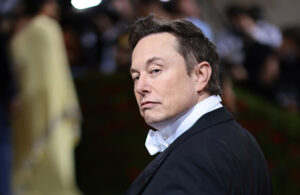
(Photo
by
Dimitrios
Kambouris/Getty
Images
for
The
Met
Museum/Vogue)
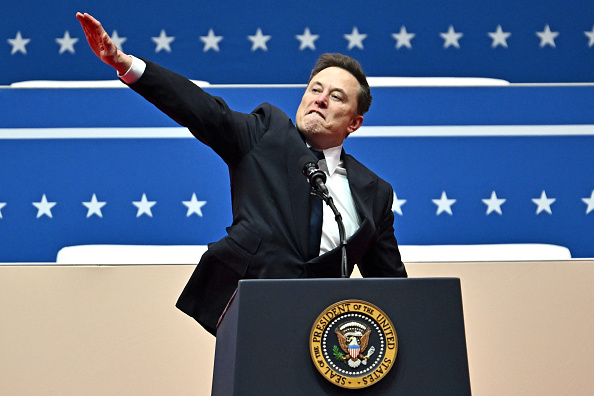
(Photo
by
ANGELA
WEISS/AFP
via
Getty
Images)
There’s
a
point
where
every
person
who
is
a
fan
of
Kanye
West’s
music
has
to
come
to
terms
with
recognizing
that
dude’s
a
Nazi.
For
some
it
was
when
Alex
Jones
of
all
people
had
to
tell
him
to
chill
out
on
the
“Hitler
had
redeemable
qualities”
claims.
For
others
it
was
the
track
HH
—
those
two
Hs
stand
for
exactly
what
you
think
they
do.
Playing
anything
that
Ye
has
recently
put
out
will
get
you
side-eyed
for
many
things,
one
of
them
likely
being
his
Nazi
sympathizing.
You
could
play
something
from
Graduation
and
earlier,
but
you
will
still
get
side-eyed.
Which
brings
us
to
Elon
Musk.
There’s
a
point
where
every
person
that
owns
a
Tesla
has
to
come
to
terms
with
recognizing
that
Elon
is
very
comfortable
with
Nazis.
For
some
it
was
when
he
cozied
up
with
the
AfD
or
when
he
sieg-gave-his-heart-out
shortly
after
Donald
Trump’s
re-election.
Driving
around
in
a
Tesla
after
everything
Musk
has
done
will
get
you
side-eyed:
As
a
linguist
who
conducts
critical
discourse
analysis,
I’m
intrigued
to
learn
people
are
now
calling
Teslas
“Swastikars”
because,
well,
the
Tesla
CEO
is
a
Nazi.
Faced
with
this
reality,
what
do
you
do?
It’s
a
little
harder
to
change
out
your
car
than
to
take
Kids
See
Ghosts
out
of
the
rotation.
Some
people
are
rebranding
their
Teslas:
Shame
over
owning
an
EV
associated
with
the
world’s
richest
Nazi,
Elon
Musk,
is
causing
Tesla
owners
to
do
some
funny
shit.
$TSLA
😂🤣😂🤣😂🤣👇
pic.twitter.com/wxql05rzwc
Some
people
who
bought
a
Tesla
before
Elon
Musk
started
duck
walking
at
the
podium
are
having
their
property
damaged:
🚨#BREAKING:
A
North
Carolina
man,
who
refused
to
go
on
camera
out
of
fear
for
his
own
safety,
discovered
the
word
“NAZI”
etched
into
the
side
of
his
Tesla
today.
He
says
he
bought
the
car
5
years
ago
and
just
finished
paying
it
off
this
month.
The
reputational
damage
Musk
has
been
doing
isn’t
just
an
American
phenom.
Tesla
owners
in
France
are
getting
their
reputations
hurt
by
Musk’s
actions
and
they
want
to
sue
Tesla
over
it.
Reuters
has
coverage:
“Tesla
vehicles
have
become
powerful
political
symbols
and
are
now
perceived
as
true
far-right
‘totems,’
much
to
the
dismay
of
those
who
purchased
them
solely
as
innovative
and
eco-friendly
vehicles”,
the
plaintiffs’
lawyers
Patrick
Klugman
and
Ivan
Terel
at
law
firm
GKA
said
in
a
statement. … The
group
is
seeking
to
terminate
their
lease
contracts
and
recover
legal
costs
at
the
Paris
Commercial
Court,
citing
the
“direct
and
concrete”
harm
caused
by
Musk’s
public
behaviour
after
he
rallied
in
support
of
Donald
Trump’s
presidential
bid
and
Germany’s
far-right
AfD
party.
There
should
be
a
threshold
question:
what
model
of
Tesla
are
these
litigants
driving?
There
is
some
credence
if
they’re
lamenting
the
social
value
of
their
Model
T
going
to
shit,
but
any
plaintiff
making
this
argument
with
a
Cyber
Truck
needs
to
get
slapped
with
a
summary
judgment.
Cyber
Truck
is
to
Alt-Right
grifter
as
Subaru
Outback
is
to
shared
homeowners
that
historians
will
describe
as
“good
friends.”
Umm,
no
you
didn’t.
That
Kenmore
refrigerator
monstrosity
you’re
driving
wasn’t
released
until
after
Elon
went
full
nazi
pic.twitter.com/twgLMVKVc7
So
far
10
Tesla
leaseholders
are
in
on
the
suit.
Gotta
bump
those
numbers
up!
In
the
meantime,
here’s
a
picture
to
drive
the
Elon
Musk
and
Kanye
West
are
doing
the
same
dumb
shit
point
home:
Chris
Williams
became
a
social
media
manager
and
assistant
editor
for
Above
the
Law
in
June
2021.
Prior
to
joining
the
staff,
he
moonlighted
as
a
minor
Memelord™
in
the
Facebook
group Law
School
Memes
for
Edgy
T14s
.
He
endured
Missouri
long
enough
to
graduate
from
Washington
University
in
St.
Louis
School
of
Law.
He
is
a
former
boatbuilder
who
is
learning
to
swim, is
interested
in
critical
race
theory,
philosophy,
and
humor,
and
has
a
love
for
cycling
that
occasionally
annoys
his
peers.
You
can
reach
him
by
email
at [email protected]
and
by
tweet
at @WritesForRent.
Rights
can’t
just
exist
in
dusty
law
books,
recited
in
classrooms
and
promptly
forgotten,
or
in
tiny
font
in
contracts
most
of
us
don’t
read
and
can’t
understand.
And
rights
can’t
be
reserved
just
for
corporations
and
wealthy
individuals
who
can
pay
for
legal
representation.
Few
chapters
in
our
history
have
more
directly
called
on
our
profession’s
skills
and
obligations
than
this
one.
The
private
bar
must
now
step
up
in
defense
of
equal
justice,
or
we
will
all
fall.
—
Kathleen
Rubenstein,
former
executive
director
of
the
Skadden
Foundation,
in
an
essay
published
in
Bloomberg
Law,
where
she
calls
upon
lawyers
to
defend
the
rights
of
others
during
a
time
when
the
rule
of
law
is
under
attack
by
the
Trump
administration.
In
the
wake
of
Skadden’s
deal
with
Trump,
Rubenstein
resigned
from
the
Foundation
“rather
than
endorse
actions
that
[she]
believe[s]
will
undermine
its
mission.”
Staci
Zaretsky is
a
senior
editor
at
Above
the
Law,
where
she’s
worked
since
2011.
She’d
love
to
hear
from
you,
so
please
feel
free
to
email
her
with
any
tips,
questions,
comments,
or
critiques.
You
can
follow
her
on Bluesky, X/Twitter,
and Threads, or
connect
with
her
on LinkedIn.
Another
milemarker
on
the
George
Orwell
expressway
blurred
past
America’s
window
this
morning
while
the
country
metaphorically
looked
down
to
text-and-drive.
As
Marines
descended
upon
Los
Angeles
to
join
the
National
Guard
units
already
questionably
legally
called
up,
the
Defense
Department
assured
critics
that
they
would
only
NOT
arrest
people
—
something
they
cannot
legally
do
—
but
merely
involuntarily
detain
people
to
hand
over
to
local
law
enforcement.
Which
is
what
the
rest
of
us
call
“an
arrest.”
The
distinction
lovingly
crafted
by
the
administration’s
Newspeak
Generator
matters
so
much
because
Trump
has
not
invoked
the
full
force
of
the
Insurrection
Act.
It
may
be
shocking
to
see
self-driving
cars
on
fire
—
or
more
accurately,
shocking
to
see
self-driving
cars
that
aren’t
Teslas
on
fire
—
but
a
couple
burning
cars
does
not
a
rebellion
make.
When
storming
the
Capitol
to
hang
the
vice
president
isn’t
an
insurrection,
it’s
hard
to
see
where
one
even
draws
the
line
with
this
administration.
But
as
long
as
the
Insurrection
Act
remains
holstered,
the
troops
deployed
to
L.A.
are
constrained
by
Posse
Comitatus,
barring
law
enforcement
activity
and
limiting
the
units
to
support
and
logistics.
In
other
words…
no
arresting
people.
As
the
commanding
officer
leading
the
Marine
detachment
explained,
“They
do
not
do
any
arrest,
they
are
strictly
there
to
detain,
to
wait
for
law
enforcement
to
come
and
handle
those
demonstrators.”
Yep,
that’s
an
arrest.
An
arrest
is
effected
once
an
individual
is
no
longer
free
to
walk
away
from
the
arresting
official.
It
doesn’t
matter
if
they’re
being
detained
by
a
police
officer
or
a
Marine
sent
in
to
break
up
a
rash
of
dancing
like
the
parents
from
Footloose
except
with
assault
rifles
—
which,
in
fairness,
the
parents
from
Footloose
probably
would
have
in
2025.
That
the
detention
is
for
the
process
of
future
prosecution
only
strengthens
the
case
that
a
reasonable
person
would
see
this
as
an
arrest.
Because,
you
know,
they’re
holding
someone,
domestically,
so
they
can
face
enforcement…
for
some
sort
of
law
that’s
been
violated.
“Domestic
law
enforcement,”
if
you
will.
The
thing
that
the
military
cannot
do.
At
some
point,
the
government
will
analogize
the
troops
to
a
retail
security
guard
nabbing
a
shoplifter
and
claim
that
this
is
no
more
than
a
“citizen’s
arrest,”
which
somehow
magically
takes
this
outside
the
definition
of
law
enforcement.
Something
about
being
ziptied
by
guys
in
body
armor
carrying
automatic
weapons
sent
there
explicitly
by
order
of
the
government
pushes
this
past
what
a
reasonable
person
would
consider
a
mere
citizen’s
arrest.
A
CNN
report
added
that
the
Marines
will
only
be
allowed
to
make
these
detentions
if
de-escalation
is
not
working.
Yeah,
that
doesn’t
really
change
anything.
A
lot
of
arrests
begin
as
an
effort
to
de-escalate.
As
of
now,
the
Marines
aren’t
out
there.
They’ve
got
to
finalize
their
rules
governing
the
use
of
force,
which
likely
will
take
more
time
under
the
circumstances
given
that
domestic
law
enforcement
is
not
one
of
the
situations
they
ever
prepared
for
since
it’s
patently
illegal.
But
once
they’re
out
there,
it
won’t
be
long
until
they
“detain”
someone.
Then
we
begin
the
countdown
to
a
courtroom
showdown
over
the
scope
of
the
executive’s
power
to
sic
the
armed
forces
on
civilians.
It
is
one
vainglorious
outrage
after
another
in
this
White
House.
If
you
write
about
some
dumbfounding
scandal
in
the
morning,
another
is
fairly
likely
to
arise
by
the
afternoon.
That’s
the
idea,
of
course:
President
Trump
is
trying
to
wear
everyone
out,
to
overload
us,
to
atomize
our
attention.
So,
let’s
slow
down
for
a
moment
…
and
focus.
This
weekend,
instead
of
charging
taxpayers
millions
for
yet
another
golf
outing,
Trump
is
instead
charging
taxpayers
tens
of
millions
to
throw
himself
a
military
birthday
parade.
This
Saturday,
June
14,
dozens
of
military
aircraft,
hundreds
of
armored
vehicles,
and
thousands
of
U.S.
troops
will
descend
upon
Washington,
D.C.,
to
take
part
in
a
parade.
Sycophantic
feds
have
been
parroting
the
lie
that
the
parade
is
to
honor
the
250th
anniversary
of
the
U.S.
Army,
though
we
all
really
know
it
is
to
stroke
Donald
Trump’s
ego
on
his
79th
birthday.
There
were
no
plans
for
such
a
military
parade
before
Trump
personally
intervened
weeks
ago
in
the
planning
of
the
celebration
of
the
Army’s
250th
year.
Like
when
Trump’s
favorite
former
weekend
Fox
News
host
restored
the
name
of
“Fort
Bragg”
from
“Fort
Liberty”
by
finding
some
random
brave
soldier
who
happened
to
be
named
“Bragg”
and
then
pretended
it
was
a
coincidence
that
he
shared
a
last
name
with
the
camp’s
former
namesake,
Confederate
monster
Braxton
Bragg,
the
official
fig
leaf
is
fooling
no
one.
Trump
assures
us
that
the
cost
will
be
“[p]eanuts
compared
to
the
value
of
doing
it,”
much
as
he
assured
us
that
“Mexico
is
paying
for
the
wall”
that
Mexico
did
not
actually
pay
one
penny
for.
To
be
clear,
there
is
no
value
to
be
gained
by
needlessly
tearing
up
the
streets
of
the
nation’s
capital
as
a
bunch
of
60-ton
Abrams
tanks
that
get
0.6
mpg
roll
over
them.
I
am
far
from
the
first
to
point
out
that
military
parades
on
leaders’
birthdays
are
far
more
common
in
weak
foreign
dictatorships
than
in
strong
western
democracies.
Strong
nations
have
not
found
blocks
of
marching
soldiers
to
be
intimidating
for
quite
a
long
time.
Meanwhile,
in
Ukraine,
where
our
allies
are
actually
bravely
fighting
a
brutal
war
in
defense
of
democracy
rather
than
putting
on
war-themed
street
theater,
the
Trump
administration
continues
to
jerk
U.S.
support.
Most
recently,
Trump’s
defense
secretary
redirected
20,000
specialized
anti-drone
weapons
that
the
U.S.
had
already
promised
Ukraine
to
the
Middle
East
instead.
Canada
continues
to
step
up
to
help
fill
the
void
created
by
the
Trump
administration.
Instead
of
pointlessly
driving
military
equipment
around
Ottawa,
this
June
our
neighbor
to
the
north
is
sending
$22
million
worth
of
its
Bison
and
Coyote
armored
vehicles
to
Ukraine
to
be
used
against
the
Russian
invaders.
It
is
a
drop
in
the
bucket
compared
to
the
billions
in
aid
Canada
and
other
countries
have
already
pledged
to
Ukraine,
yet
it’s
a
notable
one
considering
how
American
taxpayers
are
spending
a
similar
amount
on
armored
vehicles
this
weekend.
What
do
you
think
makes
a
nation
look
stronger
on
the
global
stage:
showing
the
world
it
has
plenty
of
advanced
military
equipment
to
spare
when
the
time
comes
to
assist
an
ally
in
desperate
need,
or
using
tens
of
millions
to
shatter
the
pavement
of
its
own
capital
city
so
that
its
president
can
feel
like
a
big
shot
on
his
birthday?
President
Theodore
Roosevelt,
a
real
patriot,
a
combat
veteran,
and
deserved
winner
of
the
Nobel
Peace
Prize,
popularized
and
applied
to
his
foreign
policy
what
he
believed
was
a
West
African
proverb:
“Speak
softly
and
carry
a
big
stick.”
Trump’s
foreign
policy,
on
the
other
hand,
as
exemplified
by
his
birthday
military
parade,
could
be
better
characterized
as,
“Speak
loudly
but
carry
a
limp
dick.”
Enjoy
your
parade,
MAGA.
Jonathan
Wolf
is
a
civil
litigator
and
author
of Your
Debt-Free
JD (affiliate
link).
He
has
taught
legal
writing,
written
for
a
wide
variety
of
publications,
and
made
it
both
his
business
and
his
pleasure
to
be
financially
and
scientifically
literate.
Any
views
he
expresses
are
probably
pure
gold,
but
are
nonetheless
solely
his
own
and
should
not
be
attributed
to
any
organization
with
which
he
is
affiliated.
He
wouldn’t
want
to
share
the
credit
anyway.
He
can
be
reached
at [email protected].
HARARE
–
Zimbabwe
will
ban
the
export
of
lithium
concentrates
from
2027
as
it
extends
its
push
for
more
local
processing,
mines
minister
Winston
Chitando
said
on
Tuesday.
Africa’s
top
producer
of
lithium,
used
in
batteries
to
power
renewable
energy
technologies,
banned
the
export
of
lithium
ore
in
2022
and
has
been
pushing
miners
to
process
more
domestically.
Lithium
miners
in
Zimbabwe,
who
are
mostly
from
China,
have
been
exporting
concentrates
to
their
home
country.
Chitando
said
lithium
sulphate
plants
were
currently
being
developed
at
two
Zimbabwean
mines,
Bikita
Minerals,
owned
by
Sinomine,
opens
and
Prospect
Lithium
Zimbabwe,
owned
by
Zhejiang
Huayou
Cobalt.
Lithium
sulphate
is
an
intermediate
product
which
can
be
refined
into
a
battery-grade
material
such
as
lithium
hydroxide
or
lithium
carbonate
used
in
battery
manufacturing.
“Because
of
that
capacity
which
is
now
in
the
country,
the
export
of
all
lithium
concentrates
will
be
banned
from
January
2027,”
Chitando
said
during
a
media
briefing
following
a
weekly
cabinet
meeting.
In
2023,
Zimbabwe
gave
lithium
miners
up
to
March
2024
to
submit
plans
for
developing
local
refineries,
but
softened
its
stance
after
prices
of
the
metal
collapsed.
Sinomine
and
Zhejiang
Huayou
Cobalt
are
part
of
a
group
of
Chinese
firms,
including
Chengxin
Lithium
Group,
Yahua
Group
and
Canmax
Technologies,
which
have
spent
more
than
$1
billion
since
2021
to
acquire
and
develop
lithium
projects
in
Zimbabwe.
–
Reuters
HARARE
–
MPs
demanded
a
ministerial
statement
from
higher
and
tertiary
education
minister
Frederick
Shava
as
a
strike
over
poor
pay
by
University
of
Zimbabwe
lecturers
entered
its
58th
day
on
Tuesday.
Lawmakers
accused
Shava
of
routinely
snubbing
parliament
as
the
crisis
at
the
university
deepens.
Charles
Moyo
(CCC)
described
the
situation
at
UZ
as
“chaotic”
and
a
“sheer
waste
of
time”
for
students,
warning
that
dissertations
are
going
unsupervised,
exams
are
not
being
written,
and
even
newly
recruited
adjunct
lecturers
were
sometimes
not
turning
up
for
work.
“Yesterday
(Tuesday)
there
were
demonstrations
from
the
lecturers,
yet
other
students
are
to
go
for
attachments.
It
seems
this
semester
is
a
sheer
waste
of
time
to
students
as
well
as
a
loss
to
parents’
hard-earned
money,”
Moyo
said
in
the
National
Assembly.
”There
is
chaos
and
uncertainty
at
our
institution.
If
it
pleases
you
Honourable
Speaker
Sir,
I
request
the
absent
minister
of
higher
education,
innovation,
science
and
technology
development
to
come
just
once
and
give
us
a
ministerial
statement
on
the
negotiations,
deadlocks
or
practical
interventions
to
bring
normalcy
to
our
tertiary
institution.”
Speaker
of
Parliament
Jacob
Mudenda
accepted
the
request
and
pledged
to
notify
the
minister.
The
crisis
has
escalated
in
recent
days
after
the
university
withheld
salaries
for
striking
lecturers
in
an
apparent
retaliation
for
their
continued
industrial
action.
The
lecturers
are
demanding
a
return
to
pre-2018
wage
levels
of
US$2,250
per
month
for
junior
lecturers
—
a
steep
increase
from
the
current
US$230.
Obvious
Vengeyi,
the
spokesman
for
the
Association
of
University
Teachers
(AUT),
slammed
the
move
as
an
attempt
to
intimidate
lecturers
back
to
work.
“Of
course,
it
is
an
act
of
trying
to
force
our
members
to
return
to
work
for
the
US$230
they
initially
rejected.
It’s
a
way
of
arm-twisting
certain
members
of
our
community
to
resume
teaching,”
Vengeyi
said.
He
added
that
the
salary
cuts
had
only
strengthened
the
lecturers’
resolve.
“Many
here
who
have
not
been
paid
have
resolved
that,
whether
they
receive
the
US$230
or
not,
they
will
not
return.
Until
junior
lecturers
get
US$2,250,
we
will
not
go
back
to
class.”
The
university
has
remained
officially
silent
on
the
strike
but
has
hired
adjunct
lecturers
in
an
attempt
to
fill
gaps
left
by
striking
staff.
However,
the
AUT
has
dismissed
the
replacements
as
largely
unqualified
and
ineffective.
“There
is
no
teaching
happening
at
the
university.
No
supervision
is
taking
place.
A
few
scabs
have
been
hired
to
replace
—
sort
of
—
the
lecturers
on
strike,”
Vengeyi
added.
This
week,
thousands
of
clerkship
hopefuls
apply
broadly
for
federal
clerkships
via
the
Online
System
for
Clerkship
Application
and
Review
(OSCAR).
Then,
over
a
several-day
period,
judges
extend
interview
offers,
and
students
hop
on
planes
or
trains
with
as
little
as
24
or
48
hours
of
notice
to
vie
for
prestigious
post-graduate
opportunities.
This
year,
as
judges
review
candidates,
the
reverse
happens,
too.
Judges
are
reviewed
in
The
Legal
Accountability
Project’s
(LAP)
Centralized
Clerkships
Database
(also
known
as
“Glassdoor
for
Judges”)
by
their
law
clerks;
and
judges
are
being
reviewed
by
applicants
as
potential
employers.
Rather
than
being
a
two-way
street,
historically,
the
opaque
clerkship
system
forced
students
into
vulnerable
positions,
applying
without
adequate
information
and
accepting
their
first
offer
without
informed
consent.
It’s
the
second
clerkship
application
cycle
where
applicants
benefit
from
exponentially
more
—
and
more
candid
—
information
about
judges
as
managers
and
chambers
culture.
LAP’s
database
has
served
more
than
2,000
student
and
recent
graduate
users.
Students
“do
their
research”
thoroughly
throughout
the
year
—
voting
with
their
feet
for
positively
reviewed
judges
(who
should
expect
more,
better
applicants)
and
against
bad
bosses
and
abusive
judges
(who
should
expect
fewer).
LAP’s
database
is
accountability
through
transparency,
since
there
are
few
things
imperious
federal
judges
hate
more
than
negative
feedback
traveling
through
the
grapevine
that
they
cannot
see.
This
is
my
vision
for
clerkship
transparency,
realized:
it’s
the
resource
I
wish
existed
as
a
Washington
University
School
of
Law
student
a
decade
ago
“applying
blind”
for
judicial
clerkships,
misled
into
an
unsafe
work
environment
because
my
school
lacked
information
about
judges.
Three
years
ago
this
month,
I
had
an
audacious
idea:
a
nonprofit
squarely
focused
on
judicial
accountability
and
clerkship
transparency.
I
launched
LAP
to
correct
injustices
I
personally
experienced
as
a
student
and
clerk,
with
little
more
than
a
great
idea
and
the
grit
to
see
it
through.
Democratizing
judicial
clerkship
information
and
opportunities
through
a
nationwide
database
was
something
many
thought
couldn’t
be
done,
and
a
few
thought
shouldn’t
be
done.
But
I
identified
an
unmet
need
for
candid
clerkship
information
and
set
out
to
fill
the
void.
I
was
determined
to
both
prevent
future
clerks
from
enduring
what
I
endured,
and
to
create
a
resource
for
mistreated
clerks
seeking
support
after
a
career-altering
clerkship
like
mine.
I
was
fueled
in
the
early
days
by
overwhelming
outreach
from
clerks
confiding
in
me
about
mistreatment.
Setbacks
galvanize
me:
I
was
activated
by
pushback
and
hostility
from
law
schools
and
the
federal
judiciary,
intent
on
maintaining
the
entrenched
status
quo
whereby
schools
maintained
a
competitive
advantage
in
clerkship
advising
by
gatekeeping
information,
and
judges
who
mistreated
clerks
got
away
with
it
year
after
year
by
preventing
applicants
from
discovering
toxic
work
environments
until
it
was
too
late.
LAP
has
blown
the
doors
off
the
clerkship
system
and
upended
the
federal
judiciary,
to
the
benefit
of
law
students,
law
clerks,
the
legal
industry,
the
judiciary,
and
society
generally.
We’ve
barnstormed
onto
dozens
of
law
school
campuses,
participating
in
over
50
impactful
clerkship
programs
to
educate
students
about
what
can
go
wrong
during
a
clerkship,
to
underscore
the
importance
of
being
mindful
of
who
they
clerk
for.
Students
understand
the
necessity
of
subscribing
to
LAP’s
database,
rather
than
blindly
accepting
their
school’s
existing
resources
as
sufficient,
because
only
through
LAP’s
database
can
they
identify
judges
to
avoid.
LAP
events
are
unlike
anything
else
students
attend
in
law
school,
because
I
tell
it
like
it
is.
No
one
else
is
willing
to
share
negative
clerkship
experiences
with
students
—
failing
to
understand
the
difference
between
discouraging
students
from
abusive
clerkships
and
discouraging
them
from
clerking,
period.
I’ve
worked
with
Congress
on
two
urgently
necessary
bills
—
the
Judiciary
Accountability
Act
(JAA),
which
would
extend
federal
anti-discrimination
protections
to
over
30,000
exempt
federal
judiciary
employees;
and
the
TRUST
Act,
which
would
close
the
loophole
in
the
federal
judicial
complaint
process
that
enables
judges
to
evade
accountability
for
misconduct
by
stepping
down,
as
former
Minnesota
bankruptcy
judge
Kesha
Tanabe
did
earlier
this
year.
Because
LAP’s
database
is
not
a
substitute
for
workplace
protections
or
legal
accountability
for
abusive
judges.
And
14
months
ago,
LAP
launched
our
innovative,
first-of-its-kind,
award-winning
Clerkships
Database,
transforming
clerkship
hiring
by
removing
information-sharing
from
law
schools’
control.
What
will
applicants
find
inside?
Over
1,600
candid
clerkship
surveys
about
more
than
1,000
federal
and
state
judges
from
every
state
and
federal
circuit.
But
more
important
than
its
size
—
several
times
the
size
of
the
largest
law
school
clerkships
databases
—
is
the
breadth
and
candor
of
information.
LAP
asks
the
right
survey
questions
of
clerks
to
compile
information
students
need
before
clerking:
hours,
tasks,
relationship
with
the
judge,
and
feedback
provided.
We
ask
about
mistreatment
and
whether
the
clerk
left
early.
We
facilitate
candid
reflection
on
what
type
of
clerk
would
fit
best
and
the
overall
value
of
the
experience.
Importantly,
clerks
rate
both
the
judge
as
a
manager
and
the
overall
clerkship
experience
(positive,
negative,
or
neutral),
and
we’ve
seen
discrepancies
between
these:
around
75%
of
clerks
describe
the
overall
experience
as
positive
(i.e.,
a
valuable
experience)
but
only
70%
rate
the
judge
as
a
good
manager
—
an
important
data
point,
should
the
judiciary
ever
train
judges
on
how
to
manage
employees.
Most
importantly,
LAP
is
the
only
source
of
candid
negative
information
about
judges
to
avoid.
We
don’t
hide
the
ball.
Any
student
with
access
to
both
their
school’s
database
and
LAP’s
should
compare
a
judge
reviewed
negatively
in
LAP’s
database
with
reviews
in
their
school’s
database:
they’ll
probably
either
find
no
information
in
their
school’s
or,
disturbingly,
misleading
positive
surveys
about
the
judge.
Historically,
law
students
applied
indiscriminately
to
100
or
more
federal
judges
nationwide.
Clerkship
“research”
was
conducted
through
their
school’s
internal
database,
if
one
existed
(where
surveys
are
almost
uniformly
positive)
or
by
Googling
to
discern
political
ideology.
Neither
tells
you
whether
this
judge
—
who
wields
incredible
power
over
your
career
—
is
someone
you’d
want
to
work
closely
with
in
stressful
circumstances
without
workplace
protections
for
a
year
or
two.
While
some
schools’
alumni
networks
facilitate
individual
clerk-to-student
conversations,
this
is
both
inefficient
and
challenging
to
navigate.
Due
to
a
combination
of
law
school
pressure
and
“bird
in
the
hand”
desperation,
applicants
accepted
clerkships
with
abusive
judges
anyway.
LAP’s
database
solves
these
problems,
enabling
applicants
to
efficiently
narrow
their
searches
and
avoid
clerkships
with
bad
bosses
and
abusive
ones.
We
succeeded
where
law
schools
failed,
compiling
and
disseminating
both
positive
and
negative
information
from
anonymous
clerks
we
verified
to
thousands
of
subscribers
nationwide.
This
year,
thanks
to
LAP’s
database,
several
thousand
students
will
avoid
hundreds
of
bad
bosses
—
a
huge
win
at
a
time
when
many
nonprofits
struggle
just
to
survive.
Second,
some
applicants
accept
clerkships
even
after
learning
the
judge
mistreats
their
clerks
—
even
after
I
warn
them
personally.
“I
can
handle
it,”
or
“It
won’t
happen
to
me,”
they
say.
Or,
echoing
their
law
schools,
“Any
clerkship
is
better
than
no
clerkship
at
all.”
I’ve
spent
hundreds
of
hours
counseling
clerks
who
were
harassed,
fired,
retaliated
against,
or
blackballed
from
the
legal
industry.
They
tell
me,
universally,
if
they
knew
how
bad
it
would
be,
they
would
not
have
accepted
the
clerkship;
and
they
wish
LAP’s
database
existed
when
they
were
applying.
More
than
1,000
clerks
invested
time
sharing
their
experiences
—
around
20%
of
them
negative
—
in
writing,
some
sharing
for
the
first
time
and
shouldering
perceived
risk:
heed
clerks’
warnings.
Today’s
law
students
won’t
remember
a
time
when
clerkship
hiring
was
less
than
transparent:
when
the
only
information
they
might
access
about
judges
to
avoid
traveled
through
the
fear-infused
clerkship
“whisper
network.”
It’s
not
too
late
to
register
for
database
access
for
the
real
deal
on
clerking:
frankly,
you’d
have
to
be
a
masochist
to
apply
without
this
resource.
Deciding
where
to
clerk
is
one
of
the
most
important
career
decisions
you’ll
make.
Maybe
you’ll
find
a
lifelong
mentor.
Perhaps
your
clerkship
will
just
check
a
box.
But
what
few
were
willing
to
admit,
before
LAP,
is
that
clerking
can
also
be
a
career-
and
life-altering
negative
experience:
one
that
can
be
avoided.
At
a
time
when
news
out
of
Washington,
D.C.,
is
bleak,
and
many
ask
how
they
can
help
preserve
and
protect
our
democracy,
LAP
is
a
“right
now”
solution.
We’re
not
waiting
on
anyone
—
neither
Congress
nor
the
courts
—
to
make
the
change
we
know
is
necessary.
We’ve
proven
that
even
the
most
entrenched
and
intransigent
area
of
the
government
—
the
judiciary
—
can
be
reformed.
Where
there’s
a
will,
there’s
a
way.
Aliza
Shatzman
is
the
President
and
Founder
of The
Legal
Accountability
Project,
a
nonprofit
aimed
at
ensuring
that
law
clerks
have
positive
clerkship
experiences,
while
extending
support
and
resources
to
those
who
do
not.
She
regularly
writes
and
speaks
about
judicial
accountability
and
clerkships.
Reach
out
to
her
via
email
at [email protected] and
follow
her
on
Twitter
@AlizaShatzman.
After
Elon
Musk
transformed
Twitter
into
a
racial
slur
generator
and
users
fled
en
masse,
advertisers
understandably
scaled
back
their
ad
spend.
Apparently
brands
don’t
like
it
when
MAGAKing6969’s
Great
Replacement
Theory
post
shows
up
next
to
a
company’s
“Speaking
of
replacement…
is
it
time
to
replace
your
mobile
carrier?”
ad.
The
advertising
exodus
put
the
mogul
in
a
bind
as
he
scrambled
to
make
good
on
the
investment
he’d
accidentally
made
because
he’s
too
stupid
to
figure
out
how
Delaware
law
works.
Early
efforts
to
stem
the
tide
flopped
when
Media
Matters
decided
to
test
the
protections
the
newly
branded
X
team
promised
advertisers
from
having
their
brands
appear
next
to
racist
content
and…
it
turns
out
they
didn’t
stop
the
problem.
Musk
trashed
the
Media
Matters
test
as
manufactured
since
it
would
only
bypass
X’s
promised
protections
if
the
feed
was
specifically
curated
for
a
comically
racist
user,
overlooking
that
this
describes
a
solid
20
percent
of
X
these
days.
So
Elon
sued
Media
Matters.
And
a
bunch
of
advertisers.
Just
flinging
legal
gibberish
all
over
the
docket
(and
social
media)
about
how
it’s
super-duper-unlegal
antitrust
or
criminal
RICO
for
corporations
to
not
give
him
money.
His
credible
lawyers
wouldn’t
touch
this
nonsense,
so
he
turned
to
Harmeet
Dhillon,
who
now
heads
up
the
increasingly
hollow
DOJ
Civil
Rights
Division.
If
companies
agreed
to
buy
ads
of
dubious
utility
from
him,
they
could
avoid
the
hassle
of
legal
action.
And,
unfortunately
for
the
sanctity
of
law,
this
strategy
proved
reasonably
successful.
The
Wall
Street
Journal
has
a
detailed
report
based
on
interviews
with
over
two
dozen
sources
covering
concessions
from
the
likes
of
Unilever
and
Verizon
to
avoid
getting
dragged
into
court.
While
X
reportedly
seeks
commitments
from
companies
to
spend
at
least
as
much
as
they
did
pre-Musk
—
and
in
some
cases
double
—
the
companies
by
and
large
are
coming
back
with
lower
spend.
The
company
is
on
track
to
have
about
half
the
revenue
it
once
boasted.
Some
antitrust
experts
said
X
faces
a
high
bar
to
prove
its
claims.
“It
would
be
an
antitrust
violation
if
the
advertisers
got
together
and
said,
‘Let’s
boycott
X
to
get
lower
ad
rates,’”
said
Cardozo
Law
School
Professor
Sam
Weinstein,
a
former
Justice
Department
antitrust
lawyer.
But
if
advertisers
were
motivated
by
a
desire
not
to
be
associated
with
the
kind
of
speech
X
was
allowing,
he
said,
“that’s
unlikely
to
be
an
antitrust
violation.”
The
frivolous
lawsuits
aren’t
really
news,
but
the
WSJ
report
also
noted
that
Musk’s
game
has
leveled
up:
On
May
20,
the
Federal
Trade
Commission
sent
Media
Matters
a
civil
investigative
demand,
signaling
that
the
agency
is
investigating
the
entity.
The
document,
which
was
reviewed
by
the
Journal,
requests
information
from
the
group,
including:
“all
documents
that
Media
Matters
either
produced
or
received
in
discovery
in
any
litigation
between
Media
Matters
and
X
Corp.
related
to
advertiser
boycotts
since
2023.”
The
agency
is
investigating
whether
ad
and
advocacy
groups
violated
antitrust
laws
by
coordinating
boycotts
of
certain
sites,
including
X.
On
Monday,
the
FTC
sent
requests
for
information
to
ad
companies
including
Omnicom,
WPP,
Publicis
and
Interpublic.
The
FTC,
currently
boasting
zero
of
the
ostensibly
required
Democratic
commissioners,
is
lending
an
official
veneer
to
the
bonkers
argument
that
it’s
an
antitrust
violation
to
publicize
that
a
company
isn’t
delivering
on
a
promise.
That
companies
acted,
in
part,
upon
the
Media
Matters
finding
doesn’t
convert
this
into
any
sort
of
antitrust
conspiracy.
It’s
as
though
X
reached
the
point
of
diminishing
returns
on
the
lawsuits
and
decided
leveraging
the
government
—
who
doesn’t
have
to
drag
a
loser
of
a
complaint
past
a
motion
to
dismiss
to
get
some
quasi-discovery
via
demand
letters
—
against
Media
Matters
might
dig
up
something
to
turn
the
screws
on
more
advertisers.
Though
the
FTC
isn’t
the
only
government
lever
that
Musk
brings
to
the
party:
This
tracks
the
ongoing
CBS
News
drama,
where
Paramount’s
desire
to
close
deals
without
undue
administration
meddling
has
put
60
Minutes
under
the
prospect
of
corporate
censorship.
Musk’s
infiltration
of
the
executive
branch
—
which
may
be
on
again?
—
elevates
his
already
troubling
lawfare
strategy
to
new
heights.
Moreover,
if
he
finds
success
in
leveraging
executive
threats
against
boycotts,
it
opens
a
new
vector
for
other
companies
to
override
market
decisions
through
legal
extortion.
Or
maybe
he’ll
point
out
that
Donald
Trump
partied
with
Epstein
again
and
the
FTC
will
drop
the
case.
Place
your
bets!
HARARE
–
The
National
Prosecuting
Authority
on
Wednesday
withdrew
corruption
charges
against
business
partners
Moses
Mpofu
and
Mike
Chimombe,
who
were
accused
of
defrauding
the
City
of
Harare
in
a
US$9
million
tender
to
supply
and
install
streetlights.
The
matter
was
withdrawn
before
plea
when
the
duo
appeared
before
Justice
Benjamin
Chikowero
of
the
Harare
High
Court
for
the
commencement
of
their
trial.
Whisper
Mabhaudhi,
for
the
National
Prosecuting
Authority,
did
not
give
reasons
for
the
withdrawal.
Mpofu
and
Chimombe
remain
on
trial
in
a
separate
matter
in
which
they
are
accused
of
defrauding
the
ministry
of
agriculture
in
a
scheme
to
supply
goats. “The
withdrawal
of
the
charges
by
the
state
is
a
welcome
development,”
Mpofu’s
lawyer
Tapson
Dzvetero
said
outside
court.
“Our
clients
are
on
the
record
regarding
the
weakness
of
the
state
case
and
that
the
charges
they
are
facing
are
trumped
up,
baseless
and
unfounded.
“They
have
no
case
to
answer.
It
is
only
unfortunate
that
such
withdrawal
happens
after
all
this
long
and
after
the
long
pre-trial
incarceration
for
so
long.”
Chimombe’s
lawyer
Ashiel
Mugiya
added:
“We
had
prepared
and
submitted
our
defence
outlines.
I’m
certain
the
state
just
realised
that
its
case
against
our
clients
was
too
weak.”
Last
year
Chimombe
took
the
state
to
task
challenging
the
NPA
to
prove
how
he
is
linked
to
the
streetlights
tender.
His
challenge
was
however
thrown
out
by
magistrate
Dennis
Mangosi.
Mpofu
was
the
main
suspect
in
the
alleged
crime.
The
two
were
arrested
by
officers
from
the
Zimbabwe
Anti-Corruption
Commission
(ZACC)
at
a
time
they
were
already
languishing
in
remand
prison
following
their
arrest
over
the
$7
million
goat
supply
tender.
Chimombe
argued
that
he
was
neither
an
employee
nor
director
of
Juluka
Enndo
Joint
Venture,
the
company
at
the
centre
of
the
deal.
The
prosecution
was
alleging
that
the
business
partners
criminally
misrepresented
facts
when
they
submitted
their
list
of
previous
works
for
consideration
for
the
tender.