Trump’s National Guard Stunt May Finally Give the Third Amendment Its Moment – Above the Law

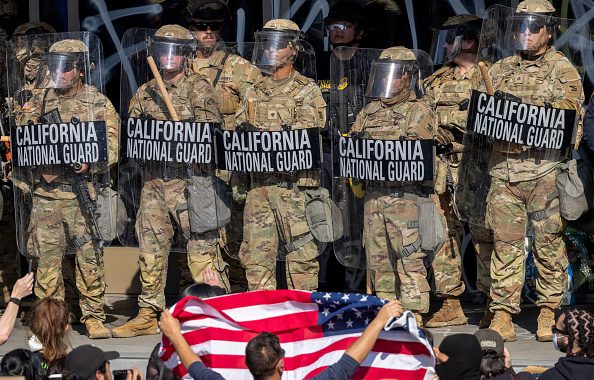
(Photo
by
David
McNew/Getty
Images)

Is
it
legal
for
Donald
Trump
to
seize
control
of
the
National
Guard
to
assist
ICE
over
the
objections
of
state
government?
Probably
not.
Despite
what
the
current
Supreme
Court
might
say,
the
Tenth
Amendment
isn’t
just
for
forced
birthing
after
all.
Is
it
legal
to
send
in
the
Marines?
Even
more
probably
not.
But
Elon
Musk
publicly
posted
that

Donald
Trump
is
in
the
Epstein
files

so
now
we’ve
got
to
have
martial
law
to
change
the
headlines.
Sorry,
that’s
just
how
the
world
works!

Trump’s
current
justification
for
the
move

though
it’s
worth
noting
this
administration
plays
whack-a-mole
with
legal
arguments
all
the
time,
so
this
may
not
last

is
that
protesting
ICE
disappearing
people
from
their
workplaces
amounts
to
a
“rebellion
or
danger
of
rebellion.”
The
specific
statutory
justification,
for
now,
falls
short
of
the
full
fall
of
Weimar
wet
dream
that
is
the
Insurrection
Act.
As
is,
the
troops

can
only
support
ICE
and
not
actively
police
protests
.

Either
way
though,
it
still
seems
that
the
LA
protests
fall
well
short
of
a
rebellion
since
most
rebellions
notably
boast

less
line
dancing
.

However,
it’s
exciting
times
for
law
professors
already
working
on
their
next
final.

https://www.instagram.com/p/DKsjq2CBXKI

Silly
meme…
assuming
we’ll
still
have
“Constitutional
Law”
by
next
semester.

But
buried
just
beneath
this
top
line
Constitutional
crisis
is
another
one
that
law
students
joke
about
but
never
seriously
thought
might
come
up
in
their
lifetimes.

THIRD
AMENDMENT
AVENGERS
ASSEMBLE!!!

The
Third
Amendment,
of
course,
reads
that
“No
Soldier
shall,
in
time
of
peace
be
quartered
in
any
house,
without
the
consent
of
the
Owner,
nor
in
time
of
war,
but
in
a
manner
to
be
prescribed
by
law.”
It’s
been
such
a
wildly
uncontroversial
provision
that
the
Supreme
Court
has
never
explicitly
touched
on
it.
The
closest
any
court
has
come
to
fleshing
out
the
scope
of
the
amendment
is

Engblom
v.
Carey
,
where
the
Second
Circuit
ruled
that
state
corrections
officers
living
in
state
housing
couldn’t
be
kicked
out
and
replaced
by
the
National
Guard
just
because
they
were
striking.
And
even
that
decision
is
more
about
who
owns
the
right
to
the
“house.”

Despite
laying
low
for
a
couple
centuries,
the
Third
Amendment
was
made
for
this
moment.

For
now,
the
National
Guard
troops
that
Trump
called
up
are
sleeping
on
the
floor.
That
might
be
good
enough
for
Trump
who
already
seized
control
of
the
units
without
bothering
to
figure
out
where
they
would
sleep.
Will
the
government
try
to
press
the
issue
and
commandeer
better
space
for
them?
The
Third
Amendment
faithful
are
ready
for
that
fight.

Everyone’s
pretty
cocky
about
this
subject
right
now,
but
they
might
not
fully
appreciate
the
right-wing’s
growing
antipathy
toward
the
Third
Amendment,
which
they’ve
decided
no
longer
matters
because
a
rent
moratorium
happened
under
the
Biden
administration.
Really
makes
sense
the
less
you
think
about
it.

This
isn’t
just
a
conspiracy…
it

made
its
way
into
a
brief
by
a
bunch
of
landlords
angry
about
the
eviction
freeze
.
The
argument
was,
and
is,
quite
stupid.
But
it
should
give
everyone
pause
that
the
echo
chamber
Trump
lives
in
has
already
started
normalizing
the
idea
of
ignoring
the
Third
Amendment.

And
Trump
stoked
Third
Amendment
doubters
during
his
first
term
when
he

fancied
more
and
more
military
presence

in
response
to
police
brutality
protests
following
the
murder
of
George
Floyd.
Nothing
came
of
it
at
the
time
as
active-duty
forces
were
never
deployed
and
the
government
found
places
to
put
up
the
Guard,
but
it
got
critics
agitated
about
the
practice
and
his
apologists
geared
up
with
excuses.
The

closest
the
country’s
come
to
a
full-blown
Third
Amendment
dispute

happened
in
Washington
D.C.
when
Trump
placed
a
Utah
National
Guard
contingent
called
up
in
response
to
the
Floyd
protest
in
a
hotel
booked
to
house
Guard
units
called
up
for
COVID
response.
The
Mayor
demanded
the
troops
outside
the
scope
of
the
hotel
contract
leave.
Trump
blathered
about
it,
but
ultimately
the
Utah
troops
moved
hotels
without
anyone
ever
explicitly
pushing
the
Third
Amendment
issue.

But
the
pump
was
primed
and
the
issue
might
become
ripe
sooner
rather
than
later.

ICE
agents
are
not,
technically
speaking,
soldiers.
But
when
does
law
enforcement
become
militarized
enough
to
count
as
a
soldier?
The
history
and
tradition
of
the
amendment
would
seem
more
concerned
with
guaranteeing
the
right
to
exclude
government
personnel
from
your
property,
having
been
conceived
as
a
direct
response
to
the
British
quartering
acts
compelling
the
owners
of
“inns, livery
stables,
ale
houses,
victualing
houses,”
etc.
to
let
Redcoats
crash
on
their
couch.

And
it’s
as
important
as
ever,
because
no
one
wants
JD
Vance
on
their
couch.

As
long
as
AC
Hotel
remains
an
outlier,
the
Trump
administration
will
probably
just
shuttle
its
personnel
to
another
hotel.
But
if
more
lodging
establishments
follow
their
lead,
this
is
exactly
the
administration
that
could
test
Third
Amendment
waters.

This
is
all,
of
course,
bad
news
for
America’s
most
successful
advocacy
group
according
to

The
Onion
.


Well,
it
was
a
good
run.

Getty Sues AI Company For IP Infringement On Both Sides Of The Pond – Above the Law

If
the
average
person
were
to
go
on
Getty
and
take
a
bunch
of
their
photos
without
paying,
it
would
be
a
pretty
clear
case
of
IP
infringement.
How
much
changes
if
an
AI
program
does
the
taking?
Is
it
theft
or
training?
Getty
is
taking
Stability
AI
to
court
in
the
UK
to
get
what
they
think
they’re
due
and
the
outcome
could
change
the
line
between
theft
and
training
for
many
creatives.

Reuters

has
coverage:

Getty
Images’
landmark
copyright
lawsuit
against
artificial
intelligence
company
Stability
AI
began
at
London’s
High
Court
on
Monday,
with
Getty
rejecting
Stability
AI’s
contention
the
case
posed
a
threat
to
the
generative
AI
industry.

Seattle-based
Getty,
which
produces
editorial
content
and
creative
stock
images
and
video,
accuses
Stability
AI
of
using
its
images
to
“train”
its
Stable
Diffusion
system,
which
can
generate
images
from
text
inputs.

Getty,
which
is
bringing
a parallel
lawsuit against
Stability
AI
in
the
United
States,
says
Stability
AI
unlawfully
scraped
millions
of
images
from
its
websites
and
used
them
to
train
and
develop
Stable
Diffusion.

Stability
AI
denies
infringing
on
Getty’s
IP.
A
spokesperson
went
on
to
talk
about
how
people
use
Stability
AI
for
creative
ends,
which
is
a
weird
response
to
give
when
being
accused
of
theft.
I
may
be
showing
my
biases,
but
the
responses
to
theft
accusations
I
generally
expect
are
either
denying
that
you
took
anything
or
ponying
up
the
receipt.
So
what
if
the
results
are
creative?
Do
you
know
how
creative
I’d
be
if
I
were
allowed
to
steal
photographs
from
photographers
whenever
I
see
them?
Not
very,
but
that’s
quite
beside
the
point.

If
Stability
AI’s
argument
is
that
this
lawsuit
(and
others
like
it)
is
a
threat
to
its
business
model
and
AI
as
an
industry,
Getty’s
response
needs
to
be
“So
be
it.”
And
the
“so
be
it”
has
to
be
multi-national.
What’s
the
point
of
strong
IP
rights
in
the
UK
if
there
are
lax
protections
in
the
US?
That
just
means
that
AI
companies
will
catch
a
flight
before
they
scrape
all
the
content
they
want
to.
The
lawsuits
involving
big
names
like
Getty
and
Elton
John
are
important
in
their
own
right,
but
it
is
hard
to
underestimate
the
spillover
effects
that
the
holdings
will
have
for
artists
and
IP
holders
that
don’t
have
the
capital
to
defend
themselves
against
having
their
hard
work
turned
into
training
materials.


Getty
Argues
Its
Landmark
UK
Copyright
Case
Does
Not
Threaten
AI

[Reuters]


Chris
Williams
became
a
social
media
manager
and
assistant
editor
for
Above
the
Law
in
June
2021.
Prior
to
joining
the
staff,
he
moonlighted
as
a
minor
Memelord™
in
the
Facebook
group Law
School
Memes
for
Edgy
T14s
.
 He
endured
Missouri
long
enough
to
graduate
from
Washington
University
in
St.
Louis
School
of
Law.
He
is
a
former
boatbuilder
who
is
learning
to
swim, is
interested
in
critical
race
theory,
philosophy,
and
humor,
and
has
a
love
for
cycling
that
occasionally
annoys
his
peers.
You
can
reach
him
by
email
at [email protected]
and
by
tweet
at @WritesForRent.

Balancing between development and preservation of the environment: The case of The Hills Luxury Golf Estate


By
Environmental
News
Channel

Located
at
Warren
Hills
Golf
Course
with
more
than
862
residential
units,
the
project
will
accommodate
about
4
310
people.

According
to
WestProp,
the
Hills
Luxury
Golf
Estate
is
“Zimbabwe’s
first
integrated
golf
estate
where
nature,
elegance,
and
community
meet”.

“The
Hills
Lifestyle
Estate,
a
secure
gated
community
nestled
in
the
lush
greenery
of
Zimbabwe’s
first
USGA-length
golf
course.
This
ultra-luxury
estate
in
Harare’s
New
North
redefines
modern
living
with
a
full
suite
of
residential,
commercial,
and
recreational
offerings.

Located
at
the
corner
of
Princes
Road
and
Sherwood
Drive,
The
Hills
is
where
luxury,
lifestyle,
and
leisure
converge,”
reads
a
statement
on
WestProp’s
website.

Prior
to
the
project
being
undertaken,
there
were
concerns
over
the
Environmental
impact
of
the
project
with
issues
that
include
wetland
degradation
and
biodiversity
loss
being
raised.

The
Environmental
News
Channel
(ENC)
spoke
to
Westprop
Spokesperson,
Michael
Chideme
who
clarified
on
the
firm’s
development
and
the
need
for
environmental
protection.


Below
are
excerpts
from
the
interview;

ENC:
Harare
is
largely
a
wetland
city
and
what
strategies
have
you
implemented
to
balance
between
the
need
for
development
and
the
need
to.peotect
our
wetlands.

MC:
The
Hills
Luxury
Golf
Estate
has
incorporated
sustainability
into
its
design
by
ensuring
that
green
spaces
remain
a
priority.
The
project
includes
an
afforestation
initiative,
with
several
hundreds
of
indigenous
trees
being
planted
throughout
the
estate.
Additionally,
the
golf
course
has
been
designed
to
integrate
seamlessly
with
the
natural
terrain,
minimizing
environmental
disruption.

ENC:
What
are
the
strategies
in
place
to
ensure
preservation
of
the
environment
including
wetlands?

MC:
The
estate
has
undertaken
wetlands
rehabilitation
efforts,
which
have
led
to
the
return
of
fish
and
birdlife
to
the
area.
Before
we
began
the
rehabilitation
of
the
golf
course
there
was
not
a
single
water
body
and
now
there
are
several
large
water
bodies
which
have
even
encouraged
two
resident
fish
eagles
to
take
up
home
at
The
Hills
Luxury
Golf
Estate.
We
expect
more.
This
demonstrates
a
commitment
to
maintaining
biodiversity
while
developing
luxury
infrastructure.
Furthermore,
the
estate
uses
eco-conscious
landscaping
techniques
to
prevent
soil
erosion
and
improve
air
quality.

ENC:
What
are
the
measures
you
have
put
in
place
to
ensure
environmental
sustainability?

MC:
The
Hills
Luxury
Golf
Estate
prioritizes
sustainability
by
ensuring
that
over
80%
of
the
development
is
dedicated
to
green
spaces.
The
estate
also
features
advanced
drainage
systems
using
imported
silica
sand
to
prevent
waterlogging
and
protect
the
natural
ecosystem.
These
measures
contribute
to
a
balance
between
urban
development
and
environmental
conservation.

Post
published
in:

Environment

Axinn’s New Office In Rockefeller Center Promises To Be Collaborative Hub Designed To ‘Attract Top Talent’ – Above the Law

With
the
push
to

bring
attorneys
back
to
the
office

more
often
in
the
wake
of
the
pandemic,
some
law
firms
are
making
an
effort
to
turn
the
office
into
an
attractive
venue.
Firms
are
now
experimenting
with
open
floor
plans
in
the
hope
of
creating
an
atmosphere
where
collaboration
is
the
name
of
the
game,
enabling
partners
and
associates
alike
to
easily
exchange
ideas
and
experience
true
team-building
moments.

One
of
the
firms
that’s
taken
advantage
of
a
new
office
space
like
this
is
Axinn,
a
midsize
firm
with
one
of
the
largest
antitrust
practice
groups
in
the
country.
The
firm
recently
relocated
its
NYC
headquarters
to
the
iconic
Rockefeller
Center,
in
a
thoughtfully
designed,
28,000
square
foot
space
that
will
afford
lawyers
room
to
grow
together,
both
creatively
and
professionally.

Nick
Gaglio
,
a
New
York
partner
who’s
been
with
the
firm
since
its
founding,
took
the
time
to
answer
some
questions
for
us
about
the
unique
nature
of
Axinn’s
brand
new
office
in
the
city
that
never
sleeps.


Staci
Zaretsky
(SZ)
:
Congratulations
on
the
firm’s
beautiful
new
office
space!
Could
you
please
tell
me
a
little
bit
more
about
why
the
firm
chose
this
type
of
open
floor
plan?


Nick
Gaglio
(NG)
:
Thank
you!
Our
move
to
45
Rockefeller
Plaza
gave
us
an
opportunity
to
rethink
what
a
law
firm
office
could
be.
We
knew
we
didn’t
want
a
traditional
hierarchy-based
layout
with
corner
offices
reserved
for
partners.
Instead,
we
set
out
to
design
a
space
that
encourages
interaction,
collaboration,
and
creativity
at
every
level.

As a
firm
specializing
in
antitrust,
intellectual
property, and
high-stakes
litigation
in
competitive
markets,
we compete
by offering
bespoke,
incisive,
deep
insights. Clients
need
to see that
we’re
not
just
different—we’re
better,
so we
deliver work
product
that
is more
tailored
to
their
business
problems.
That
kind
of
bespoke
service
isn’t
just
about
legal
knowledge—it’s
about
how
we
work
together
to
generate
business-focused
solutions. Given
this, it
just
makes
sense
to
orient
our workplace around breaking down
silos
and
amplifying the
Axinn
ethos: we
are
one collaborative,
integrated
team,
regardless
of
geography,
title,
or
practice
group.

That
philosophy
drove
every
design
choice.
We
replaced
traditional
corner
offices
with
shared
collective
spaces—for
team
huddles
and
client
meetings,
a
work
café
where
attorneys and
business
professionals at
all
levels
can
gather,
and
pods
for
summer
associates.
The
space
is
intentionally
hybrid:
some attorneys still
have
offices,
but
many
choose
to
sit
in
open
areas,
depending
on
what’s
most
efficient
for
the
work
at
hand. Attorneys can
plug
in
at
common
tables
or
jump
into
breakout
rooms for
client
calls
or
meetings.
Glass
walls
and
AV-forward
meeting
rooms
make
collaboration
seamless,
whether
you’re
meeting
in
person
or
across
offices.
The
result
is
a
floorplan
that
encourages
bold
ideas
and
impromptu
conversations—and
makes
it
easy
to
tap
into
the
collective
intelligence
of
the team.


SZ
:
How
do
you
think
this
reflects
Axinn’s
culture,
and
what
are
some
of
the
benefits
for
attorneys
and
clients
alike?


NG
:
This
office
is
a
physical
expression
of Axinn’s culture.
From
day
one,
Axinn
has
been
about
entrepreneurialism,
ambition,
and
collaboration.
These
values are built
into
how
we
train,
evaluate,
and
work
together
across
practice
areas
and
seniority
levels.
Our
new
space supports and
reflects those
values.

We’ve
also
built
in
spaces
for
team
huddles,
informal
coaching,
and
chance
encounters
that
spark
ideas.

For
attorneys,
it’s
about
accessibility
and
shared
ownership
of
the
work.
Everyone,
from
junior
associates
to
senior
partners,
shares
the
same
open,
energized
environment.
You’ll
see
partners
sitting
alongside
associates
in
open
areas
or
walking
the
loop
around
the
office
and
checking
in
with
colleagues.
There’s
visibility—literally,
thanks
to
the
glass
walls—which fosters
mentorship,
learning,
and
a
shared
sense
of
purpose.
The
layout
also
creates
a
more
social
atmosphere, where chance
meetings
and
informal
conversations
strengthen
relationships.
That
kind
of
everyday
connection
supports
individual
well-being,
deepens
internal
trust,
and
ultimately
benefits
the
firm
and
our
clients
alike.

For
clients,
the
benefit
is
real.
When
your
lawyers
operate
in
a
space
that
promotes
horizontal
collaboration,
the
solutions
they
develop
are
more
creative,
more
precise,
and
more
attuned
to
business
needs.
You
get
a
group
that
acts
as
a
true
team
rather
than
a
loose
collection
of
individuals.
That
cohesion—across
roles,
practices,
and
offices—is
part
of
our
go-to-market
strategy.
It
enables
us
to
deliver
the
kind
of
forward-thinking
advocacy
that
clients
expect
from
a
specialized
firm
like
ours.


SZ
:
Do
you
think
that
an
office
like
yours
may
be
the
next
step
for
all
offices
going
forward?


NG
:
I
think
it’s
where
the
industry
is
heading—especially
for
firms
that
want
to
attract
top
talent
and
deliver
sophisticated,
cross-disciplinary
service.
We’re
seeing
the
limitations
of
legacy,
static office
design
in
an
agile world.
At
Axinn,
we
didn’t
just
want
to
adapt;
we
wanted
to
evolve.
This
space
gives
us
the
agility
to
meet
the
needs
of
our
clients
and
teams,
whether
that
means
hosting
depositions, CLEs,
or client
strategy
sessions.

That
said,
it’s
not
about
forcing
everyone
into
one
model.
What
works
for
us
is
that
the
space
accommodates
a
range
of
work
styles.
Some attorneys have
private
offices;
others choose a
fully
agile
approach. The
key
is
that
everyone
has
a
choice—and
that
the
environment
supports
collaboration.

We
designed
this
office
to
make
it
easy
to
engage.
That’s
already
creating
momentum:
our
newer
associates
are
more
eager
to
be
in-person,
and
our
senior
lawyers
are
more accessible
than
ever
before.
The
physical
space
is
reinforcing
our
culture
in
ways
we
couldn’t
have
predicted.
I
wouldn’t
say
every
firm
should
copy
our
blueprint, but
I
do
think
every
firm
should
ask:
does
our
space
reflect
how
we
want
to
work
now
and
into
the
future?

Without
further
ado,
here
are
some
photos
that
will
provide
a
brief
tour
of
Axinn’s
new
office
space
in
New
York
City.
(All
images
courtesy
of
Axinn.)

On
behalf
of
everyone
here
at
Above
the
Law,
we’d
like
to
thank
Nick
Gaglio
of
Axinn
for
taking
the
time
to
give
us
insights
on
the
firm’s
beautiful
new
office
space
in
New
York.


Staci Zaretsky


Staci
Zaretsky
 is
a
senior
editor
at
Above
the
Law,
where
she’s
worked
since
2011.
She’d
love
to
hear
from
you,
so
please
feel
free
to

email

her
with
any
tips,
questions,
comments,
or
critiques.
You
can
follow
her
on BlueskyX/Twitter,
and Threads, or
connect
with
her
on LinkedIn.

Spotlight Is On Sullivan & Cromwell’s Questionable Ethics – Above the Law

Bob
Giuffra


Nine
feckless
Biglaw
firms

inked
deals
with
President
Donald
Trump
that
netted
the
president
a
$940
million
war
chest
of

pro
bono
payola

to
spend
on

his
political
priorities
,
The
deals
meant
the
firms
acquiesced
to
the
president’s
bullying
rather
than
fight
the

unconstitutional

Executive
Orders

Trump
has
been
issuing

(or
merely
threatening)
in
order
to
get
what
he
wants.
The
deals
are

a
black
eye
to
the
rule
of
law
,
and
though
the
firms
that
signed
onto
them
say
they
were
in
their
best
business
interests,
there’ve
been

consequences
to
the
capitulation

that
suggest
otherwise.

The
highly
unusual
deals
themselves
have
become
fodder
for
the
legal
industry’s
gossip
mill.
That’s
been
especially
true
since
it
came
out
that
Bob
Giuffra,
co-chair
of
Sullivan
&
Cromwell,

was
involved
in
the
negotiation
of
the
deal
between
Paul
Weiss
and
Trump

(the

first
of
the
Biglaw
deals
).

Now,
we
know
Giuffra
was
involved,
but
*how*
exactly
he
got
roped
into
it
is
a
bit
of
a
mystery

he
says
he
was
asked
by
a
PW
partner
to
get
involved,
but
Brad
Karp,
chair
of
Paul
Weiss,
says
he
was
only
aware
of
Giuffra’s
role
once
the
negotiations
between
PW
and
the
administration
had
begun.
Plus
S&C
represents
Donald
Trump
in
a
personal
capacity
in
his
criminal
appeal
(despite

internal
strife

caused
by
that),
so
there’s
a
lot
going
on.

The
curious
relationship
between
Giuffra,
Trump,
and
Biglaw
is
the
subject
of
a

new
piece
in
Business
Insider
.
Jacob
Shamsian
and
Jack
Newsham
note
just
how
unusual
this
all
is,
writing,
“Giuffra,
with
no
official
role
in
the
White
House,
was
weighing
in
on
how
the
president
of
the
United
States
used
the
powers
of
his
office
to
subjugate
a
rival
law
firm.”

At
the
same
time,
Giuffra
has
helped
Trump
collapse
the
distinction
between
the
presidency
and
personal
matters.
During
the
negotiations
with
Paul
Weiss,
Giuffra
didn’t
appear
to
draw
any
distinction
between
his
role
as
Trump’s
personal
lawyer
and
as
someone
who
was
weighing
in
on
how
Trump
would
use
his
presidential
powers,
one
person
familiar
with
the
negotiations
told
Business
Insider.

Giuffra,
along
with
another
of
Trump’s
personal
attorneys,
Boris
Epshteyn,
played
a
central
role
in
the
deal
between
Paul
Weiss
and
the
Trump
administration.
That
is
deeply
problematic.

The
blurred
lines
raise
“very
severe
issues
of
ethics
and
professional
responsibility,”
according
to
Harold
Koh,
a
law
professor
who
served
as
the
top
State
Department
lawyer
in
the
Obama
administration.

Epshteyn
and
Giuffra
played
a
role
in
how
Trump
should
use
his
government
powers.
But
as
Trump’s
personal
lawyers,
rather
than
government
employees,
it’s
not
clear
if
they’re
acting
on
behalf
of
the
people
of
the
United
States,
or
on
behalf
of
Trump’s
personal
interests,
Koh
said.

“Government
lawyers
should
do
the
government’s
business
and
personal
lawyers
should
deal
with
personal
matters,”
Koh
added.
“And
the
fact
that
we
can’t
tell
whether
these
lawyers
are
operating
in
official
or
personal
capacity
shows
why
they’re
so
problematic.”

Blurred
lines
is
more
than
a
controversial
Robin
Thicke
song!
But
it
also
represents
a
theme
of
the
second
Trump
reign.
Trump’s
personal
vendettas
were
often

the
justification
for
the
EOs

in
the
first
place,
so
using
his
personal
lawyers
to
force
Biglaw
firms
to
their
knees
follows
suit.


Earlier:


The
Curious
Case
Of
Sullivan
&
Cromwell’s
Relationship
With
Donald
Trump


Kathryn
Rubino
is
a
Senior
Editor
at
Above
the
Law,
host
of

The
Jabot
podcast
,
and
co-host
of

Thinking
Like
A
Lawyer
.
AtL
tipsters
are
the
best,
so
please
connect
with
her.
Feel
free
to
email

her

with
any
tips,
questions,
or
comments
and
follow
her
on
Twitter

@Kathryn1
 or
Mastodon

@[email protected].

3 Takeaways From The Lex Machina 2025 Patent Report – Above the Law

For
the
fifth
year
in
a
row,
it
is
time
for
this
column
to
share
some
thoughts
on
the
release
of
the

Lex
Machina

Patent
Report. As
always,
I
highly
recommend
that
readers

register

for
the
report
and
give
it
a
read,
as
there
may
be
more
relevant
information
in
the
report
than
what
follows
for
any
given
reader. 

As
in
prior
years,
what
follows
are
three
idiosyncratic
takeaways
based
on
my
review
of
the
report.
First,
as
always,
the
report’s
information
on
the
number
of
patent
case
filings
deserves
further
consideration.
Second,
we
should
discuss
the
reasons
behind
the
EDTX’s
resurgence
to
the
top
of
the
charts
in
terms
of
patent
litigation
workload

and
why
changes
at
the
PTAB
might
serve
to
cement
EDTX
as
the
busiest
patent
trial
court
for
the
foreseeable
future.
Third,
we
will
check
in
on
the
upward
trend
in
patent
damages
awards,
with
at
least
a
nod
to
the
potential
impact
third-party
litigation
funding
might
be
having
in
that
regard. 

In
last
year’s
review,
I
mentioned
the
overall
decline
in
patent
case
filings
in
2023,
which
this
year’s
report
categorizes
as
a
“sharp
decline.”
At
the
same
time,
I
made
clear
that
“the
(2023)
report
takes
pains
to
note
that
much
of
the
decrease
is
actually
attributable
to
a
decline
in
what
the
report
calls
cases
filed
by
HVPs

or
high-volume
plaintiffs.“
2024,
however,
saw
a
“notable
surge
in
filings
from
plaintiffs
who
are
not
classified
as
high-volume
plaintiffs,”
helping
fuel
a
22%
in
cases
filed
in
2024
over
2023.
Still,
the
report
notes,
“the
overall
volume
of
patent
complaints
in
2024
still
fell
short
of
the
three-year
average
of
3,930
filings
observed
from
2020
through
2022.”
Replacing
the
high-volume
plaintiff
cases
that
helped
fuel
that
2020-22
average
were
ANDA
case
filings
(21.6%
increase
over
2023)
and
design
patent
filings
(34.2%
increase
over
2023.) 
In
short,
2024
saw
an
overall
increase
of
patent
cases
filed,
while
also
heralding
a
new
mix
of
plaintiffs

a
mix
less
driven
by
lower
value
high-volume
plaintiff
cases
and
more
by
claims
arising
out
of
generic
pharma
challenges
and
design
patent
assertions.

The
current
mix
of
plaintiffs
in
patent
cases
is
in
some
ways
more
reflective
of
where
patent
litigation
can
help
drive
significant
value
for
those
initiating
it.
Perhaps
the
easiest
example
is
ANDA
litigation,
where
a
successful
result
for
a
generic
challenger
can
unlock
sales
that
will
quickly
dwarf
the
cost
of
litigation
and
the
costs
of
seeking
regulatory
approval
to
market
a
generic
drug
in
nearly
all
instances.
Likewise,
design
patent
owners
are
often
able
to
use
their
patents
to
get
injunctive
relief
or
even
default
judgments
against
infringers,
making
the
investment
in
patent
filings
necessary
to
obtain
those
remedies
well
worth
it.
And
the
rise
of
cases
being
filed
by
“non-HVPs”
is
likely
being
driven
by
the
availability
of
third-party
funding,
as
well
as
the
promise
of
higher
damages
rewards
for
parties
able
to
successfully
navigate
their
cases
to
trial.
Higher
value
for
plaintiffs
equals
more
patent
litigation,
so
it
will
be
interesting
to
see
if
2025
matches
or
exceeds
2024
in
overall
number
of
cases
filed.

Second,
the
report’s
insights
into
the
resurgence
of
EDTX
as
the
preferred
venue
for
non-ANDA
and
nondesign
patent
litigation
is
of
interest.
As
striking
as
it
is
to
see
over
a
thousand
new
patent
cases
filed
in
EDTX
in
2024,
it
is
perhaps
even
more
striking
to
see
the
decline
in
popularity
of
both
Delaware
and
WDTX

the
two
most
popular
districts
in
2022

as
a
venue
of
choice
for
patent
owners.
With
respect
to
Delaware,
the
decline
in
filed
cases
from
668
in
2022
to
under
400
in
2024
is
notable,
especially
considering
the
uptick
in
ANDA
patent
cases
that
is
likely
buttressing
Delaware’s
tally.
It
is
not
surprising
to
see
patent
owners,
particularly
those
partnering
with
a
third-party
funder,
choosing
to
take
their
business
elsewhere
in
light
of
certain
disclosure
obligations
in
front
of
at
least
one
of
Delaware’s
judges.
Likewise,
the
changing
rules
in
WDTX
that
have
removed
the
certainty
for
plaintiffs
in
securing
Judge
Albright
for
their
cases
have
more
than
halved
the
number
of
case
filings
in
WDTX
from
2022
to
2024. 

Wild
stuff,
with
the
cumulative
effect
of
cementing
EDTX
as
the
go-to
jurisdiction
for
patent
cases,
for
reasons
that
most
if
not
all
of
the
readership
are
well
aware
of.
That
will
likely
continue
if
the
PTAB
continues
with
its
current
discretionary
denial
practice
in
IPRs,
which
have
put
a
premium
on
quick
and
certain
trial
dates
as
potent
tools
for
securing
patent
owner-friendly
denials

with
trial
timing
and
certainty
an
area
where
EDTX
continues
to
shine.
Put
another
way,
for
those
of
us
who
remember
what
it
was
like
to
go
to
a
movie
theater,
the
current
dominance
of
EDTX
is
the
equivalent
of
a
weekend
where
a
new
Marvel
blockbuster
came
out
and
was
showing
on
every
screen.
Sure,
you
could
also
buy
tickets
for
the
romantic
comedy,
but
it
would
probably
be
at
an
off-hour
in
the
screening
room
with
the
prime
combination
of
broken
seats
and
sticky
floor. 

Lastly,
the
statistics
for
patent
owners
regarding
damages
awards
remain
on
an
encouraging
upward
trend
according
to
the
report.
For
the
fourth
year
in
a
row,
awarded
patent
damages
that
have
not
(yet)
been
reversed
on
appeal
exceed
$1
billion,
with
2023
and
2024
seeing
awarded
damages
in
excess
of
$3.5
billion.
Perhaps
more
importantly,
the
number
of
cases
seeing
a
damages
award
has
experienced
a
rise
as
quick
as
Ozempic
users
shed
weight,
from
57
cases
in
2021
to
nearly
95
last
year.
That
significant
jump
may
reflect
the
increased
presence
of
third-party
litigation
funding
in
the
market,
which
in
theory
would
be
contributing
to
better
selection
of
cases
likely
to
win
at
trial,
as
well
as
increased
staying
power
for
patent
owners
to
decline
earlier
settlement
in
favor
of
rolling
the
trial
dice.
While
the
report
correctly
notes
that
“recent
figures
for
reversed
damage
awards
may
change,”
the
increased
success
that
patent
owners
have
seen
in
cases
that
go
to
trial
should
only
serve
to
encourage
more
such
efforts
in
the
coming
years.  

Ultimately,
we
once
again
can
see
from
the
report’s
presentation
of
data
that
modern
patent
litigation
remains
a
vibrant
and
challenging
pursuit
for
both
plaintiffs
and
defendants.
As
always,
I
consider
myself
blessed
to
have
found
a
career
in
such
an
interesting
and
ever-changing
area
of
practice.
I
am
sure
that
many
in
this
readership
feel
the
same
way.
Thanks
once
again
to
Lex
Machina
for
pulling
together
and
presenting
the
data
in
a
way
that
highlights
how
well
our
little
area
of
law
continues
to
adapt
and
grow.

Please
feel
free
to
send
comments
or
questions
to
me
at

[email protected]

or
via
Twitter:

@gkroub
.
Any
topic
suggestions
or
thoughts
are
most
welcome.


Gaston
Kroub
lives
in
Brooklyn
and
is
a
founding
partner
of 
Kroub,
Silbersher
&
Kolmykov
PLLC
,
an
intellectual
property
litigation
boutique,
and 
Markman
Advisors
LLC
,
a
leading
consultancy
on
patent
issues
for
the
investment
community.
Gaston’s
practice
focuses
on
intellectual
property
litigation
and
related
counseling,
with
a
strong
focus
on
patent
matters.
You
can
reach
him
at 
[email protected] or
follow
him
on
Twitter: 
@gkroub.

Legal Departments Show Growing AI Adoption But Implementation Challenges Remain, New Survey Finds

A
new
benchmarking
study
reveals
that
artificial
intelligence
adoption
in
corporate
legal
departments
is
gaining
momentum,
with
38%
of
surveyed
teams
already
using
AI
tools
and
another
50%
actively
exploring
implementation.
However,
significant
barriers
around
trust,
data
privacy,
and
measurement
persist
as
the
legal
profession
navigates
this
technological
shift.

The
inaugural


AI
in
Legal
Departments:
2025
Benchmarking
Report
,
published
this
week
by

Counselwell

and

Spellbook
,
surveyed
256
in-house
legal
professionals
across
North
America
to
understand
current
AI
adoption
patterns
and
future
expectations.

Ninety
percent
of
the
respondents
were
in-house
lawyers, with
the
majority
(86.8%)
based
in
Canada
and
10.5%
in
the
United
States.

Contract
Work
Dominates
AI
Use
Cases

Among
legal
departments
already
using
AI,
contract-related
tasks
are
the
clear
leader
in
use
cases.
Sixty-four
percent
of
AI
users
employ
tools
for
contract
drafting,
review,
and
analysis,
followed
by
legal
research
(49%)
and
document
translation
(38%).


Looking
ahead,
respondents
expect
significant
expansion
into
operational
areas
over
the
next
1-2
years,
with
32%
planning
to
adopt
legal
operations
and
workflow
automation
tools
and
28%
considering
document
automation.

“The
results
show
a
clear
trend:
legal
departments
are
starting
with
foundational
AI
applications
like
contract
drafting
and
legal
research,
but
are
preparing
to
expand
their
AI
usage
into
broader
operational
areas,”
the
report
states.

ChatGPT
Leads
Tool
Adoption

When
it
comes
to
specific
platforms
used
by
legal
departments,
ChatGPT
dominates,
with
74%
usage
among
AI-adopting
respondents.
Microsoft
Copilot
follows
at
40%,
while
legal-specific
tools
such
as
Spellbook
capture
22%
adoption.
Rounding
out
the
top
platforms
are
tools
such
as
Gemini
(17%)
and
Claude
(11%).

Nearly
universal
satisfaction
marks
early
AI
implementations,
with
97%
of
users
reporting
their
tools
are
somewhat
(63%)
or
highly
(34%)
effective.
Among
active
users,
68%
engage
with
AI
tools
daily
or
weekly,
suggesting
these
technologies
are
becoming
integral
to
legal
workflows.

However,
trust
remains
a
significant
barrier.
Sixty
percent
of
respondents
cited
“lack
of
trust
or
quality
in
AI
outputs”
as
their
top
implementation
challenge,
followed
closely
by
data
privacy
concerns
(57%).
These
concerns
far
outweighed
traditional
barriers
like
cost
(33%)
or
system
integration
issues
(36%).

ROI
Still
A
WIP

While
83%
of
users
cite
increased
efficiency
as
the
primary
benefit
of
AI
adoption,
formal
measurement
of
return
on
investment
remains
underdeveloped.
Only
7%
of
departments
use
specific
KPIs
to
track
AI
value,
and
40%
of
respondents
remain
“not
sure
yet”
whether
their
AI
tools
are
worth
the
investment.

Monthly
spending
on
AI
tools
remains
modest
for
most
departments,
with
26%
spending
under
$100
per
month
and
only
9%
spending
more
than
$2,000
monthly.
However,
44%
of
respondents
didn’t
know
their
department’s
AI
spending,
suggesting
budget
tracking
may
also
need
refinement.

Looking
ahead,
legal
professionals
express
measured
optimism
about
AI’s
impact
on
their
roles.
Sixty-four
percent
believe
AI
will
automate
some
tasks
without
replacing
lawyers,
while
26%
expect
more
fundamental
changes
to
how
in-house
lawyers
operate.
Only
10%
anticipate
minimal
impact.

When
it
comes
to
decision-making,
66%
favor
AI
playing
a
supporting
role
by
suggesting
options
while
keeping
lawyers
in
control,
with
just
1%
supporting
full
AI
autonomy
in
legal
decisions.

Knowledge
Gaps
Remain

Despite
growing
adoption,
significant
knowledge
gaps
remain.
While
59%
of
respondents
describe
themselves
as
“somewhat
familiar”
with
AI
tools,
only
24%
feel
they
have
strong
understanding
of
AI
fundamentals
and
implications
for
legal
work.

Organizational
readiness
also
varies
widely.
While
48%
of
organizations
have
implemented
AI
policies
or
guidelines,
26%
are
still
developing
them
and
21%
lack
policies
entirely.

When
asked
what’s
missing
from
the
AI
discussion
in
legal,
respondents
highlighted
three
key
areas:
the
need
for
better
training
and
skill
development,
concerns
about
AI
accuracy
and
reliability,
and
the
lack
of
clear
regulatory
guidelines.

“Lawyers
need
to
be
trained
on
AI
prompting
to
get
the
full
value
from
GenAI
tools.
If
you
don’t
ask
the
right
questions,
you
will
never
get
the
right
answers,”
one
respondent
noted,
reflecting
broader
calls
for
enhanced
AI
literacy
among
legal
professionals.

The
survey
found
that
legal
departments
at
technology
companies
are
leading
the
adoption
wave,
with
36%
of
AI-using
respondents
working
in
the
tech
sector,
despite
tech
companies
representing
only
23%
of
all
survey
participants.

Bottom
Line

The
report
positions
itself
as
“a
valuable
early
benchmark
for
in-house
legal
teams
navigating
the
rapidly
evolving
legal
AI
ecosystem”
while
highlighting
opportunities
for
improved
training,
clearer
ROI
frameworks,
and
stronger
organizational
policies.

As
the
legal
profession
continues
to
grapple
with
AI
integration,
this
data
suggests
that
while
early
adoption
is
promising,
success
will
depend
heavily
on
addressing
trust,
training,
and
governance
challenges
that
currently
limit
broader
deployment.

While
the
findings
indicate
that
AI
in
legal
departments
is
moving
beyond
experimental
phases
toward
practical
implementation,
significant
work
remains
in
developing
the
infrastructure
and
expertise
needed
for
mature
AI
adoption.

Brad Bondi Can Still Be DC Bar President If Mike Pence Has The Courage – Above the Law

Paul
Hastings
partner
Brad
Bondi
ran
a
star-crossed
campaign
for
DC
Bar
president
and

got
predictably
shellacked
.
In
normal
times,
the
Biglaw
partner
running
a
campaign
focused
on
mundane
priorities
like
CLE
reform
would’ve
been
an
ideal
candidate.
But
his
sister
is
busy

flouting
the
Constitution

and
running
a
Justice
Department
in

open
conflict
with
the
nation’s
bar
associations
.
Even
if
the
presidency
of
the
DC
Bar
doesn’t
carry
authority
over
the
institution’s
professional
disciplinary
function,
the
optics
of
putting
Pam
Bondi’s
brother
atop
the
entity
were
always
bad.

And
that’s
why
he
lost
roughly
91%-9%.

Like
a
proper
Biglaw
partner,
he
took
to
LinkedIn
to

post
a
concession
message
.

The
post
begins
by
hitting
the
notes
that
we
all
came
to
expect
of
a
concession

at
least
before
January
6

noting
that
“although
I
did
not
prevail,
I
stand
with
a
heart
full
of
gratitude”
before
offering,
in
a
concluding
paragraph,
to
“recommit
to
a
Bar
that
lifts
us
all”
with
a
thank
you
to
supporters.
Had
he
limited
his
message
to
these
two
paragraphs,
he’d
have
a
nice
little
send
off
message.

But
he
didn’t.

Instead,
I
am
disgusted
by
how
rabid
partisans
lurched
this
election
into
the
political
gutter,
turning
a
professional
campaign
into
baseless
attacks,
identity
politics,
and
partisan
recrimination.
Never
before
has
a
DC
Bar
election
been
leveraged
along
partisan
lines
in
this
way,
an
explicit
call
for
members
to
vote
based
not
on
what’s
best
for
the
institution
but
according
to
their
political
affiliations.
Their
tactics,
which
included
smearing
me
over
my
family
and
peddling
conspiracies
about
my
intentions,
were
not
just
an
assault
on
my
integrity
but
on
the
D.C.
Bar’s
very
mission.

Oh,
man,
Brad.
Discretion
is
the
better
part
of
valor,
buddy.
It’s
posts
like
this
that
transform
what
should
be
an
Above
the
Law
story
about
lawyerly
inside
baseball
into

something
the
Huffington
Post
covers
.
The

Streisand
Effect

is
real!

It
also
shows
that
Bondi
never
understood
the
fundamental
problem
with
his
candidacy.
Bar
associations
are
frontline
institutions
for
protecting
the
rule
of
law.
They’re
the
organs
issuing
condemnations

when
the
White
House
denigrates
legal
institutions

and
it’s
why
the
administration

floats
threats
against
bar
associations
.
Put
aside
any
“conspiracies”
that
the
DC
Bar
president
could
shut
down
disciplinary
inquires
into
the
next
generation
of
Big(ger)
Lie
lawyers,
the
DC
Bar
president
is,
by
virtue
of
increasing
attacks
on
the
rule
of
law,
a
political
job

right
now
.

And,
more
to
the
point,
it’s
a
political
job
that
requires
someone
who
will
not
hesitate
for
a
second
to
call
out

Pam
Bondi

for
trampling
on
due
process.
Or,
hell,
put
aside
proactively
criticizing
the
administration,
the
president
needs
to
be
able
to
stand
up
for
lawyers
when
the
White
House
inevitably
puts
the
bar
association
on
blast
for
disbarring
Rudy
or
whatever.
Like
it
or
not,
Trump
has
put
lawyers
on
the
other
side
of
the
“v”
and
the
presidency
race
of

any

bar
association
at
this
moment
is
about
electing
a
spokesperson
willing
to
condemn
the
administration.

Early
on
in
this
campaign,
we
suggested
that
Brad
Bondi’s
only
real
hope
in
this
race
was
to
say
he’s
always
been
a
brat
to
his
sister
and
won’t
stop
now.
That
he’s
still
characterizing
the
concept
of
calling
out
the
Justice
Department’s
lawlessness
as
“smearing”
his
family,
proves
he
never
grasped
the
issue.

But
by
giving
in
to
these
partisan
impulses,
we
risk
a
never-ending
cycle
of
political
strong-arming,
where
every
election
becomes
a
proxy
for
national
divides,
and
the
Bar’s
unity
is
fractured
beyond
repair.
I
caution
that
the
Bar
may
never
recover
from
this
politicization

a
tragedy
that
would
erode
its
ability
to
serve
as
a
home
for
all
members,
replacing
impartiality
with
ideological
litmus
tests
that
alienate
and
divide.
We’ve
seen
other
institutions
fall
to
this
temptation,
losing
their
credibility
and
purpose.
The
Bar
must
not
follow
that
path.

“We’ve
seen
other
institutions
fall
to
this
temptation”…
you
mean
like

rebranding
the
Justice
Department
as
Trump’s
personal
law
firm
?
Yeah,
that’s
sort
of
how
the
DC
Bar
got
to
this
point.
It
might
suck,
but
as
long
as
“warrantless
roundups
to
sell
people
to
El
Salvadoran
slave
camps”
is
a
partisan
position,
then
a
bar
association
election
is
going
to
be
partisan.

Championing
the
“apolitical”
is
just
fancy
enabling.
It’s
about
shaming
gullible
people
to
take
themselves
out
of
the
game
when
the
stakes
are
at
their
highest.
A
better
take
might
be
that
the
bar
association
needs
to
be
at
the
forefront
of
pushing
back
against
an
administration
turning
the
rule
of
law
into
a
partisan
issue.
Suggesting
that
lawyers
should
withdraw
from
that
fight
to
hunker
down
as
docile
bullshit
receptacles
collecting
CLE
credits
and
comparing
books
of
business
over
cocktails
is,
in
fact,
very
political.

And
DC
Bar
members
seemed
to
agree
9-to-1.
It’s
one
thing
to
say
voters
missed
the
point
in
a
close
election,
but
when
it’s
a
decimation
it’s
probably
worth
asking
if
maybe
you’re
the
one
who
missed
the
key
point.


Brad
Bondi,
Pam
Bondi’s
Brother,
Loses
Election
And
Says
‘Rabid
Partisans’
Were
‘Smearing
Me’

[Huffington
Post]


Earlier
:

Pam
Bondi’s
Brother
Decimated
In
D.C.
Bar
Race


HeadshotJoe
Patrice
 is
a
senior
editor
at
Above
the
Law
and
co-host
of

Thinking
Like
A
Lawyer
.
Feel
free
to email
any
tips,
questions,
or
comments.
Follow
him
on Twitter or

Bluesky

if
you’re
interested
in
law,
politics,
and
a
healthy
dose
of
college
sports
news.
Joe
also
serves
as
a

Managing
Director
at
RPN
Executive
Search
.

Yellow Peril 2.0 – Above the Law


Ed.
note
:
Please
welcome
Vivia
Chen
back
to
the
pages
of
Above
the
Law.
Subscribe
to
her
Substack,
“The
Ex-Careerist,” here
.

I
WAS
WALKING
along
the
south
edge
of
Central
Park
when
I
saw
a
woman
in
handcuffs.
I
usually
pay
scant
attention
to
this
type
of
scene
(hey,
I’m
a
New
Yorker),
but
this
time
I
stopped.

She
was
a
middle-aged
Asian
woman
in
cheap,
nondescript
clothes
and
sneakers.
She
didn’t
look
threatening.
Flanked
by
officers
in
plain-clothes,
she
seemed
terrified,
as
she
was
pushed
into
an
unmarked
SUV.

What
did
this
woman
do
to
merit
such
ceremony?
Assault
someone
in
the
park?
Run
a
drug
cartel?
Offer
illicit
services?

None
of
those
possibilities
felt
right.
Quickly,
I
wondered:
Could
this
be
an
ICE
raid?

It’s
only
logical.
Immigrants,
including legal
residents
,
are
now
being
hunted
down,
getting
detained
at
airports,
picked
up
off
the
street,
held
without
explanation,
or
speedily
deported.
Just
like
that.
Gone.

To
be
clear,
I
have
no
idea
if
this
woman’s
travails
had
anything
to
do
with
immigration.
But
her
arrest
touched
a
nerve,
tapping
a
vein
of
insecurity
I
didn’t
know
I
had.


I
am
a
Taiwan-born,
naturalized
American
citizen.
 I
came
to
this
country
legally.
My
parents
came
here
legally.
My
slate
is
squeaky
clean.
I
have
no
rational
reason
to
be
afraid.
Yet
I
am.

Soon
after
taking
office,
Donald
Trump
resuscitated
the Alien
Enemies
Act
of
1798
 to
carry
out
his
mass
deportation
agenda.
Under
this
rarely
invoked
law,
immigrants
can
be
quickly
expelled
without
due
process.
(So
far,
the
administration
has
sent
at
least
137
Venezuelan
nationals,
alleged
gang
members,
to
a
notorious
maximum-security
prison
in
El
Salvador,
without
any
kind
of
hearing.)

Trump
is
also
stymying
legal
immigration
and
throwing
a
monkey
wrench
at
established
routes
to
citizenship.
He’s
ending
DACA,
which
protects
immigrants
who
grew
up
in
this
country
from
deportation,
and
revoking
the
protected
status
of
political
refugees,
including
Afghans
who
served
the
U.S.
government.
And,
of
course,
he’s
hellbent
on
ending
birthright
citizenship.

I
am
not
affected
by
any
of
these
measures,
but
I
am
jumpy.
If
established
rights,
such
as
birthright
citizenship,
can
be
stripped
away,
are
naturalized
citizens
like
me
vulnerable
as
well?


Lately,
my
imagination
has
been
running
wild.
 Did
my
father
make
a
mistake
in
his
immigration
paperwork
(mind
you,
that
was
over
50
years
ago)
that
could
jeopardize
my
citizenship?
Could
I
be
deemed
a
security
threat
for
something
I’ve
written
or
said?
Am
I
naive
to
assume
that
my
rights
as
an
American
are
unassailable?

You
might
think
I’m
paranoid.
Yet,
history
shows
I’m
not
completely
nuts.


Yung
Wing
,
the
first
Chinese
graduate
from
Yale
College
(class
of
1854),
was
a
naturalized
American,
yet
his
citizenship
was
revoked
under
the Chinese
Exclusion
Act
 of
1882.
(Interestingly,
the
Supreme
Court
later
ruled
in United
States
v.
Wong
Kim
Ark
 that
the
Exclusion
Act
did
not
prevent
the
children
of
Chinese
immigrants
born
in
the
U.S.
from
acquiring birthright
citizenship
.)


Yung
Wing,
the
first
Chinese
graduate
of
Yale.

Once
again,
Trump
is
making
China
the
boogeyman.
He’s
launched
an
all-out
trade
war
against
China,
blaming
that
nation
for
America’s
economic
woes.
While
there
are
legitimate
reasons
to
go
after
China
on
trade,
what’s
disturbing
is
the
jingoistic
language
Trump
deploys
in
his
attacks.

“China
is
ripping
us
off,”
he’s
ranted.
“They’re
killing
us
in
trade.
They’re
killing
us
in
manufacturing.
China
is
eating
our
lunch.”
In
sum,
China
is
not
just
a
rival
but
an
insatiable
monster
that
gorges
on
what
belongs
to
America.

Yellow
Peril
2.0,
anyone?


Give
Trump
credit
for
not
hiding
his
racism
.
During
his
first
term,
he
labeled
Covid-19
the
“China
virus”
and
the
“Kung
Flu,”
fueling
a
torrent
of
racial
hate
in
which
Asians
were
viciously
attacked
and
even
killed
across
America.
(Studies
show
correlation between
Trump’s
anti-China
rhetoric
and
incidences
of
Asian
hate.)

The
tentacles
of
xenophobia
extend
beyond
trade.
The
latest
example
is
the
sweeping
travel
ban
on
citizens
of
12
countries
who
happen
to
be
mainly
Black,
brown,
or
Asian.

Then,
there’s
academia
where
China
gets
extra
attention.
Recently,
Secretary
of
State
Mark
Rubio
announced
that
the
U.S.
will “aggressively
revoke”
 the
visas
of
Chinese
students,
and
that
those
“with
connections
to
the
Chinese
Communist
Party
or
studying
in
critical
fields”
will
be
targeted.
(Though
Trump
throws
out
the
welcome
mat
to buyers
of
his
cryptocurrency
with
ties
 to
the
Chinese
Communist
Party.)

It’s
totally
unclear
what
constitutes
“connections
to
the
Chinese
Communist
Party”
or
what
defines
“critical
fields.”
But
that
hardly
matters.
Because
the
message
is
clear:
The
Chinese
are
a
threat
to
America
and
need
special
scrutiny.


What’s
insidious
about
all
this 
is
that
it
blurs
the
line
between
the
Chinese
government
and
Chinese
people. And
that’s
precisely
the
cruel
genius
of
Trump’s
rhetoric

it
erases
distinctions.
Between
Asians
and
Asian
Americans.
Between
immigrants
and
citizens.
It
makes
all
Asians
suspect.

At
heart
is
the
idea
that
Asians
in
America
are
secretly
loyal
to
their
country
of
national
origin

that
they
can
never
be
true
Americans.
That
was
the
rationale
for
the
internment
of
Japanese
Americans
during
World
War
II,
which
too
was
based
on
the
Alien
Enemies
Act
of
1798.

Until
recently,
I
thought
imprisoning
Americans
based
on
race
could
never,
ever
happen
again

that
it’s
as
unimaginable
as
reinstating
segregated
bathrooms
or
taking
away
women’s
right
to
vote.
But
perhaps
it
behooves
us
to
think
outside
of
that
box.

I
can
still
see
that
woman
in
handcuffs
in
Central
Park

her
bowed
head,
her
look
of
fear.
And
her
shame.
There’s
no
reason
for
her
to
have
this
pull
on
me,
but
she
does.
Because
that’s
the
thing
about
being
Asian
in
America
right
now:
you’re
suspect,
even
when
all
you’ve
done
is
walk
through
the
park.


Subscribe
to
read
more
at
The
Ex-Careerist….


Vivia
Chen writes “The
Ex-Careerist”(Opens
in
a
new
window)
 column
on
Substack
where
she
unleashes
her
unvarnished
views
about
the
intersection
of
work,
life,
and
politics.
A
former
lawyer,
she
was
an
opinion
columnist
at
Bloomberg
Law
and
The
American
Lawyer.
Subscribe
to
her
Substack
by
clicking
here:


Why CVS, Express Scripts Are Suing Over the Arkansas PBM Law – MedCity News

There
have
been
several
recent
efforts
to
crack
down
on
pharmacy
benefit
managers,
from

bills
in
Congress

to
an

investigation

by
the
Federal
Trade
Commission.

But
the
state
of
Arkansas
has
been
the
one
to
actually
take
definitive
action.

In
April,
Republican
Governor
Sarah
Huckabee
Sanders

signed
legislation

that
states
that
starting
January
1,
2026,
no
PBMs
can
own
and
operate
pharmacies
in
the
state.
PBMs
have

increasingly

bought
up
pharmacies
in
recent
years,
which
allows
them
to
increase
drug
prices
and
put
competitors
out
of
business,
the
governor’s
office
stated
in
the
announcement. 

The
law
was
likely
intended
to
check
the
influence
of
the
three
largest
PBMs

CVS
Caremark,
Express
Scripts
and
Optum
Rx

that
cumulatively
process
80%
of
all
prescriptions
in
the
U.S.
But
it
should
come
as
no
surprise
that
some
of
the
PBMs
are
fighting
back.
Last
week,
CVS
Caremark
and
Express
Scripts
filed
separate
lawsuits
challenging
the
law,
arguing
that
it
is
unconstitutional,
will
force
pharmacies
to
close,
eliminate
hundreds
of
jobs
and
actually
increase
costs.

“With
Act
624
signed
into
law,
the
Arkansas
legislature
and
governor
are
forcing
23
community
pharmacies
to
close
by
January
1,
2026,
including
some
of
the
very
few
that
are
open
24
hours;
fire
more
than
500
local
healthcare
workers;
erode
access
to
specialized
pharmacy
care
for
the
10,000
Arkansas
patients
with
serious
conditions
who
rely
on
additional
support;
and
increase
the
cost
of
Arkansas
health
benefits
by
millions
of
dollars
each
year,”
argued
Amy
Thibault,
executive
director
of
corporate
communications
at
CVS
Health,
in
an
email.

Express
Scripts
echoed
these
comments.

“If
this
law
takes
effect
in
January,
hundreds
of
thousands
of
Arkansans
will
be
left
scrambling
to
navigate
the
forced
closure
of
pharmacies
and
finding
new
ways
to
get
their
medicines
and
critical
clinical
support,”
said
Susan
Peppers,
RPh,
vice
president
of
pharmacy
practice
at
Evernorth
Health
Services,
in
a
statement.

The
decision
to
sue
is
just
out
of
fear
that
they
will
lose
marketshare,
said
a
Sanders
spokesperson.

“Governor
Sanders
is
proud
that
Arkansas
is
the
first
state
in
the
nation
to
hold
PBMs
accountable
for
their
anticompetitive
practices,”
Sam
Dubke,
Sanders’
communications
director,
told
MedCity
News
in
an
email.
“These
big
drug
middlemen
are
only
attacking
Arkansas
in
the
courts
because
they’re
worried
other
states
will
join
Governor
Sanders
in
fighting
for
patient
access
and
affordable
prescriptions.”


The
lawsuits

In
their
separate
lawsuits
against
Act
624,
CVS
Health
and
Express
Scripts
both
argue
that
the
new
law
is
intended
to
protect
in-state
pharmacy
businesses,
which
they
argue
charge
higher
prices,
while
punishing
out-of-state
competitors.

“Act
624’s
text,
context,
and
legislative
history
make
abundantly
clear
that
the
statute’s
purpose
and
effect
is
to
protect
local
pharmacies
domiciled
in
Arkansas
from
out-of-state
competition,
and
to
do
so
by
punishing
specific
out-of-state
competitors,”
according
to
Express
Scripts’

complaint
.

The
company
noted
that
the
purpose
of
Act
624
is
to
eliminate
certain
anticompetitive
business
tactics.
However,
these
tactics
are
already
prohibited
in
current
Arkansas
law,
Express
Scripts
argued.
It
gave
the
example
of
one
statute
that
prohibits
PBMs
from
reimbursing
a
pharmacy
or
pharmacist
in
the
state
less
than
what
it
reimburses
an
affiliate
for
the
same
services. 

CVS
also
noted
the
same

in
its
complaint
,
and
added
that
it
actually
reimburses
non-affiliated
pharmacies
at
a
higher
rate
than
its
own
pharmacies.

In
addition,
CVS
argued
that
the
law
unfairly
exempts
Walmart,
one
of
Arkansas’
largest
employers,
which
the
company
said
“effectively
operates
PBM-affiliated
pharmacies.”
The
original
draft
of
the
bill
would
have
applied
to
Walmart,
but
it
“almost
died”
in
committee
because
of
this,
the
complaint
stated.
The
complaint
noted
that
one
senator
said
he
couldn’t
vote
for
the
original
bill
because
it
would
have
prevented
Walmart
from
having
pharmacies.
But
the
bill’s
“architects
devised
a
fix,”
CVS
charged.

“Notwithstanding
the
legislature’s
putative
concern
that
PBMs
act
as
‘fox[es]
guarding
the
henhouse’
when
they
serve
as
‘a
price
setter
and
price
taker,’
HB
1150
was
amended
to
include
an
exemption
for
PBM-affiliated
pharmacies
if
the
PBM
serves
only
the
pharmacy’s
own
employee
benefit
plan,”
CVS
argued
in
its
complaint.
“That
exemption
covers
Walmart.
So
while
Walmart
could
continue
to
operate
its
pharmacies,
one
of
its
biggest
out-of-state
competitors

CVS

would
be
forced
to
leave
Arkansas
altogether.”

It’s
important
to
note
that
Walmart
is
not
a
PBM.
However,
the
company
provides
PBM
services,
according
to
CVS.
The
CVS
spokesperson
pointed
this
MedCity
News
reporter
to
an
article
that
announced
that
the
Purchaser
Business
Group
on
Health,
an
employer
coalition
that
includes
Walmart,

launched

a
firm
called
EmsanaRx
in
2021
that
provides
PBM
services
for
employers. PBGH
no
longer
owns
EmsanaRx,
which
has
since
changed
its
name
to
AffirmedRx.

CVS
noted
in
the
complaint
that
Walmart
has
announced
plans
to
expand
its
pharmacy
offerings
in
Arkansas
and
has
seen
an
increase
in
prescription
orders
since
the
law.

CVS
and
Express
Scripts
argue
that
this
law
violates
the
constitution
in
several
ways.
However,
according
to
one
healthcare
legal
expert,
their
strongest
case
is
on
the
Dormant
Commerce
Clause,
which
says
that
states
cannot
pass
laws
that
unfairly
hurt
or
discriminate
against
businesses
from
other
states.
Both
CVS
and
Express
Scripts
have
this
same
claim.
Other
than
that,
they
have
different
arguments
for
ways
this
law
is
unconstitutional,
noted
Jesse
C.
Dresser,
partner
in
Frier
Levitt’s
Life
Sciences
Department.

In
addition,
even
if
the
law
is
justified,
it
will
hurt
out-of-state
PBM
affiliated
pharmacies
in
favor
of
Arkansas-based
pharmacies,
which
could
be
viewed
as
discriminatory,
he
said.

“That
all
being
said,
I
do
not
think
that
the
PBMs’
lawsuit
will
be
successful,”
Dresser
added.
“States
have
broad
authority
to
regulate
pharmacies
under
the
general
police
powers,
and
recent
cases
have
shown
that
the
Dormant
Commerce
Clause
does
not
prohibit
all
state
regulation
that
affects
interstate
commerce.”


What
could
come
next?

Like
Arkansas,
several
other
states
are
considering
similar
efforts,
including
Vermont
and
New
York.
And
the
results
of
these
lawsuits
in
Arkansas
could
spur
them
into
action.

“It
may
be
that
once
we
see
how
these
cases
shake
out
with
Express
Scripts
and
CVS,
that
these
other
states
might
pick
up
the
mantle
and
try
to
do
something
similar
as
well,”
Dresser
said.

A
major
reason
for
why
Arkansas
was
the
first
state
to
pass
this
law
could
be
that
it
has
a
smaller
concentration
of
some
of
these
PBM-affiliated
pharmacies,
meaning
it
wouldn’t
take
as
big
of
a
hit
of
pharmacies
closing
compared
to
some
other
states,
according
to
Dresser. 

He
added
that
he
was
surprised
when
CVS
said
that
it
will
only
have
to
close
23
pharmacies,
expecting
the
company
to
have
a
much
bigger
presence. 

For
Express
Scripts,
the
company
doesn’t
operate
brick
&
mortar
pharmacies
in
Arkansas,
but
it
does
have
25
non-resident
pharmacy
licenses
in
Arkansas
that
would
be
affected
by
the
law.
The
company
would
not
be
able
to
provide
care
to
50,000
Arkansans
who
fill
prescriptions
or
receive
in-home
nursing
care
through
an
Evernorth
Pharmacy,
which
is
a
subsidiary
of
Cigna. 

Several
advocacy
organizations
have
come
out
in
support
of
Arkansas’
law.
This
includes
the
National
Community
Pharmacists
Association,
who
said
the
legislation
is
groundbreaking
because
it
tackles
vertical
integration
itself
instead
of
creating
laws
to
deal
with
its
downstream
effects.

“HB
1150
removes
many
of
the
bad
actors
who
have
massive
conflicts
of
interest,
actors
who
have
not
complied
with

or
have
found
ways
to
work
around

previously
enacted
laws,”
said
Joel
Kurzman,
director
of
state
government
affairs
at
the
National
Community
Pharmacists
Association.
“The
legislation
levels
the
playing
field
for
a
more
competitive
pharmacy
environment
that
is
ultimately
more
friendly
to
patients.”

NCPA
gave
the

example

of
an
audit
by
the
Tennessee
Department
of
Commerce
and
Insurance,
which
found
that
Express
Scripts
reimbursed
its
owned
or
affiliated
pharmacies
at
higher
rates
than
those
not
owned
or
affiliated
by
the
PBM,
which
is
against
the
state’s
law.

Patients
for
Affordable
Drugs
Now
echoed
the
issues
around
vertical
integration.


Vertical
integration
allows
PBMs
to
control
which
drugs
are
covered
and
where
prescriptions
are
filled

steering
patients
toward
their
own
pharmacies,
favoring
higher-priced
drugs
that
increase
their
profits,
and
squeezing
out
independent
pharmacies
that
many
patients,
particularly
in
rural
areas,
rely
on,”
said
Merith
Basey,
executive
director
of
Patients
For
Affordable
Drugs
Now. 

There
are
also
efforts
at
the
federal
level
to
ban
PBMs
from
owning
pharmacies,
such
as
the

Patients
Before
Monopolies
Act
.
This
was
a
bipartisan
bill
introduced
by
Senators
Elizabeth
Warren
(D-Massachusetts)
and
Josh
Hawley
(R-Missouri)
in
December.
However,
Dresser
finds
it
unlikely
that
this
would
be
the
first
significant
PBM
reform
to
come
at
the
federal
level.
Instead,
there
will
probably
be
legislation
that
requires
more
transparency
from
PBMs
first.


Photo:
bong
hyunjung,
Getty
Images