
LexisNexis Says Data Breach Has Been Cointained; Hackers Claim Access to Government and Law Firm User Data

LexisNexis
Legal
&
Professional
has
confirmed
that
hackers
breached
its
servers
and
accessed
customer
and
business
information,
after
a
threat
actor
calling
itself
FulcrumSec
publicly
posted
stolen
files
and
a
detailed
account
of
the
intrusion.


(This
story
was
updated
after
receiving
a
statement
from
LexisNexis.)

According
to
news
reports
from

BleepingComputer
,

TechRadar
,
and
others,
the
threat
actor
FulcrumSec
says
it
gained
initial
access
on
Feb.
24
by
exploiting
the
React2Shell
vulnerability
in
an
unpatched
React
frontend
application

a
flaw
the
company
had
reportedly
left
unaddressed
for
months.
The
group
then
leveraged
its
position
inside
a
React
container
that
had
been
granted
read
access
to
hundreds
of
Redshift
tables,
VPC
database
tables,
AWS
Secrets
Manager
secrets,
employee
password
hashes,
and
millions
of
database
records.

The
attackers
posted
a
lengthy
manifesto
on
March
3
and
a
link
to
more
than
3.9
million
internal
records
allegedly
exfiltrated
from
the
company’s
AWS
infrastructure,
including
plaintext
login
credentials
and
profile
data
tied
to
roughly
400,000
users,
news
reports
say.

Among
the
most
sensitive
claims,
FulcrumSec
says
it
obtained
information
related
to
more
than
100
users
with
.gov
email
addresses,
including
federal
judges
and
law
clerks,
U.S.
Department
of
Justice
attorneys,
and
SEC
staff.

In
a
statement,
LexisNexis
said:


“LexisNexis
Legal
&
Professional
has
investigated
a
security
matter
and
based
on
the
investigation
and
testing
we
have
done
to
date,
we
believe
the
matter
is
contained.
We
have
no
evidence
of
compromise
of
or
impact
to
our
products
and
services.
We
engaged
a
preeminent
cybersecurity
forensic
firm
to
assist
in
our
investigation
and
response
and
have
reported
this
issue
to
law
enforcement.


“Our
investigation
has
confirmed
that
an
unauthorized
party
accessed
a
limited
number
of
servers.
These
servers
contained
mostly
legacy,
deprecated
data
from
prior
to
2020,
including
information
such
as
customer
names,
user
IDs,
business
contact
information,
products
used,
customer
surveys
with
respondent
IP
addresses,
and
support
tickets.


“The
impacted
information
did
not
contain
Social
Security
numbers,
driver’s
license
numbers,
or
any
other
sensitive
personally
identifiable
information;
credit
card,
bank
accounts,
or
any
other
financial
information;
active
passwords;
or
customer
search
queries,
customer
client
or
matter
information,
or
customer
contracts.


“We
take
our
responsibility
to
safeguard
customer
information
extremely
seriously
and
have
informed
impacted
current
and
previous
customers
of
this
matter.
We
are
continuing
to
investigate
and
have
implemented
containment
and
remediation
steps,
in
coordination
with
our
expert
cybersecurity
forensic
firm.”

FulcrumSec
said
it
attempted
to
contact
LexisNexis

most
likely
seeking
a
ransom

but
the
company
“decided
not
to
work
with
us.”
The
hackers
were
derisive
about
what
they
characterized
as
lax
security
practices.
Among
other
things,
they
claimed
the
password
“Lexis1234”
had
been
reused
five
different
times,
and
mocked
the
company
in
their
post,
writing:
“The
company
that
indexes
the
world’s
legal
information
could
not
index
its
own
IAM
policies.”

This
is
not
LexisNexis’s
first
recent
security
incident.
In
a
separate
breach
disclosed
in
2025,
an
unauthorized
party
stole
personal
data,
including
Social
Security
numbers,
belonging
to
over
364,000
individuals
from
a
third-party
software
development
platform
used
by
LexisNexis
Risk
Solutions.
FulcrumSec
explicitly
stated
that
the
current
incident
is
unrelated
to
that
earlier
GitHub
breach.

The
company
said
it
has
notified
law
enforcement
and
engaged
an
external
forensics
firm.
Security
researchers
have
noted
that
the
combination
of
exposed
government
user
data
and
enterprise
credentials
could
fuel
phishing
and
social
engineering
attacks
long
after
the
initial
breach
is
contained.

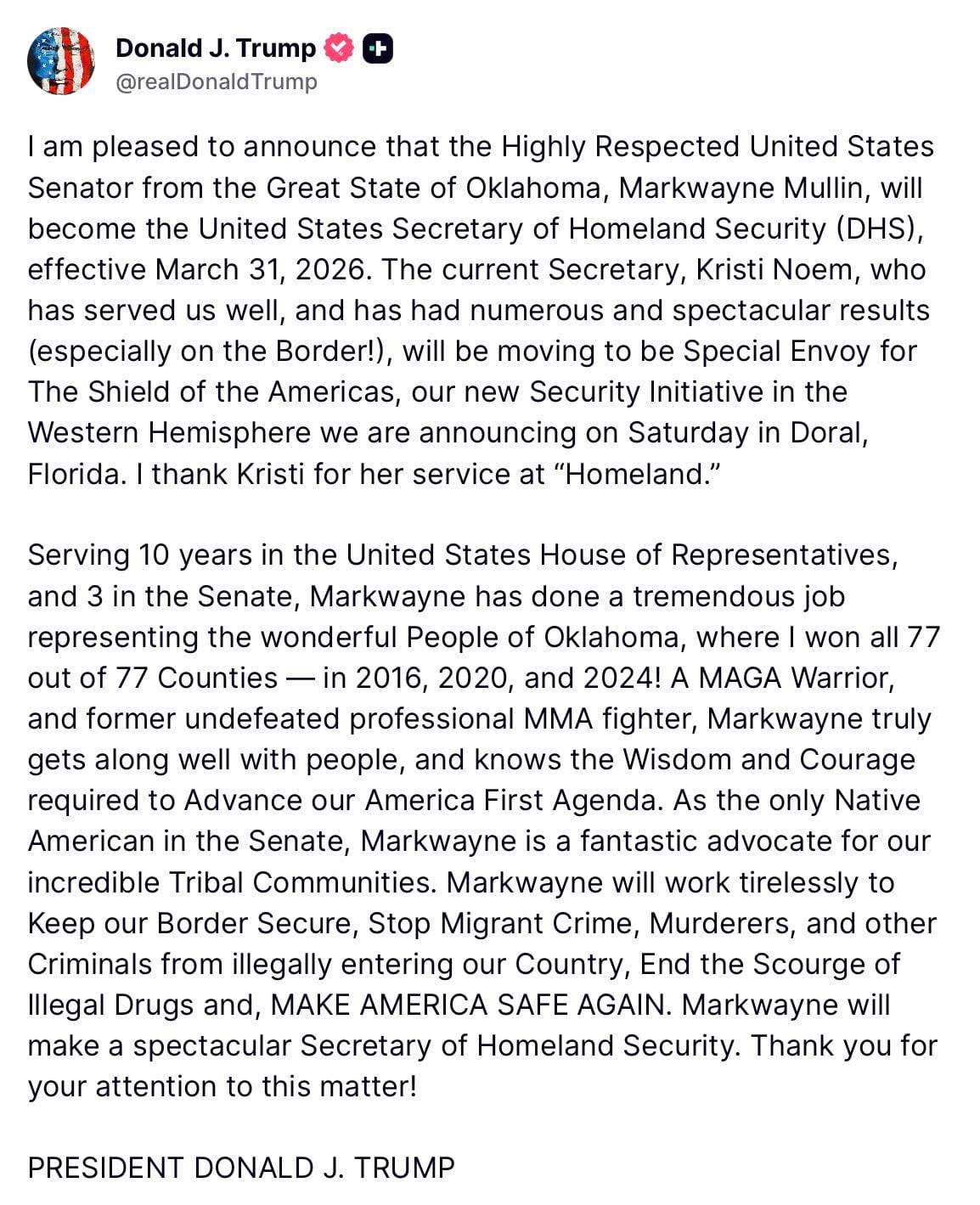
Trump Dumps Kristi Noem In The Middle Of Her Speech, Which Is Objectively Very Funny – Above the Law

(Photo
by
Nathan
Posner/Anadolu
via
Getty
Images)

Despite
building
his
whole
brand
around
saying
“you’re
fired,”
Donald
Trump
still
can’t
bring
himself
to
say
those
words
out
loud.
At
least
not
when
it
would
involve
admitting
responsibility
for
making
a
catastrophic
hire
in
the
first
place.
And
so
Homeland
Security
Secretary
Kristi
Noem
isn’t
getting
“fired”
as
much
as
having
her
job
taken
from
her
and
being
exiled

at
taxpayer
expense,
no
doubt!

to
“Envoy
for
The
Shield
of
the
Americas.”

Which
is
the
sort
of

super
important
job

you
assign
a
toddler
to
get
them
out
of
the
kitchen.

At
least
Donald
Trump
afforded
Noem
the
dignity
of
leaving
the
job
on
her
own
terms.


Fabulous!

Noem’s
tenure
at
DHS
was
a
rolling
catastrophe.
Her
mismanagement
included
a
massive
expansion
of
immigration
agents
who
couldn’t
pass
the
basic
fitness
tests
of
their
predecessors,
militarized
surges
involving
thousands
of
illegal
detentions,
bottlenecking
FEMA
disaster
relief
by
requiring
personal
approval
on
expenditures,
and

serious
questions
about
the
Department’s
finances
.
And
that’s
before
we
address
the
innocent
people
her
agents
killed.

But
she
did
show
off
a
number
of
new,
thematic
outfits!

And
yet,
despite
all
the
substantive
failures,
what
ultimately
spelled
the
end
of
Gestapo
Barbie
was
the
unforgivable
sin
of

being
terrible
on
television
.

Trump
was
reportedly
frustrated
with
Noem’s
appearances
before
the
Senate
and
House
Judiciary
committees
this
week,
where
she
managed
the
impressive
feat
of
uniting
Democrats
and
Republicans
in
shared
contempt.
Republican
Senator
Thom
Tillis
called
her
leadership
“a
disaster”
and
compared
it
to
the
time
she

bragged
about
shooting
her
own
dog
for
being
“untrainable
.”

“Those
are
bad
decisions
made
in
the
heat
of
the
moment

not
unlike
what
happened
up
in
Minneapolis,”
Tillis
said.

Senator
John
Kennedy,
channeling
Foghorn
Leghorn
as
always,
attacked
Noem
over
a
$220
million
ad
campaign
that
Kennedy
found
only
“effective
in
your
name
recognition.”
DHS
spent
nearly
a
quarter
of
a
billion
dollars
on
commercials
of

Noem
herself

telling
migrants
to
leave
the
country
against
the
backdrop
of
Mount
Rushmore.
In
a
curious
twist,
that
money
was
funneled
through
a
company

created
just
11
days
before
it
won
the
contract
.
Normally
federal
contracts
have
more
oversight
than
this,
but
Noem
invoked
a
national
emergency
to
dispense
with
the
bidding
process.
That
company
then
subcontracted
the
work
to
a
firm
run
by
the
husband
of
Noem’s
former
chief
DHS
spokesperson.
The
firm
also
has
ties
to
Noem’s
longtime
adviser
and
alleged
romantic
partner
Corey
Lewandowski.
Subcontractors
can,
of
course,
get
around
public
disclosure
altogether.

Maybe
giving
her
a

$30
billion
slush
fund
was
a
bad
idea
.

When
Kennedy
pressed
her
on
whether
Trump
had
approved
the
campaign,
Noem
said
yes.
Repeatedly.
Under
oath.
The
White
House
claims

Trump
doesn’t
know
anything
about
it
.
In
Noem’s
defense,
Trump
doesn’t
seem
to
know
where
he
is
day-to-day
so
they
might
both
be
right.

Republicans
had
no
problem
last
year
when
she
went
before
Congress
and
beclowned
herself
for

not
knowing
what
habeas
corpus
meant
.
But
being
a
moron
is
not
as
grave
a
transgression
as
looking
embattled
on
screen.

On
that
point

that
the
Republicans
don’t
care
how
stupid
an
administration
official
might
be:

Markwayne
Mullin
really
did
need
to
get
out
of
the
Senate.
Tommy
Tuberville
is
running
for
governor
of
Alabama
and
he’s
the
only
thing
standing
between
Mullin
and
the
title
of
dumbest
U.S.
Senator.
Mullin
is
a
former
MMA
fighter
who
once

tried
to
physically
fight
a
Teamsters
union
president
during
a
Senate
hearing
.
Recently,
Mullin

appeared
on
CNN

and
struggled
to
explain
how
Iran
could
be
rebuilding
nuclear
facilities
that
Trump
had
supposedly
“obliterated.”
When
pressed
three
times
on
the
logical
contradiction,
Mullin
compared
it
to
rebuilding
a
house
after
a
tornado.
Which
is
a
fair
analogy
as
long
as
you
accept
that
thermonuclear
devices
are
roughly
as
complex
as
a
double
wide
trailer.

None
of
this
should
change
how
Homeland
Security
functions.
Mullin
isn’t
being
brought
in
to

cure
all
those
illegal
detentions
,
he’s
being
brought
in
to
keep
his
head
mostly
down
amid
the
criticism.
And
when
it
comes
to
keeping
his
head
down,
Mullin
has
a
lot
of
experience
dating
back
to
January
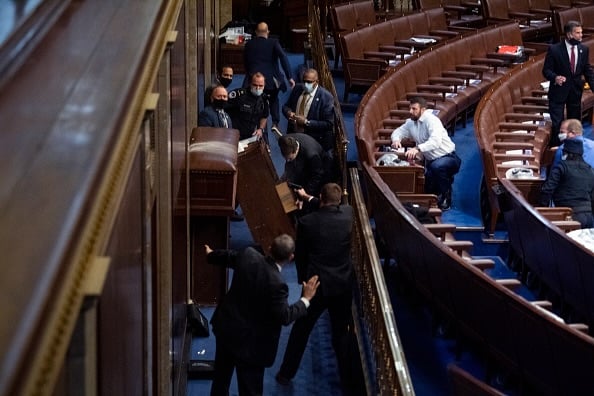
6:

(Tom
Williams/CQ-Roll
Call,
Inc
via
Getty
Images)

Meanwhile,
Noem
is
unceremoniously
dispensed
with
by
her
cruel
and
unforgiving
master
for
being
bad
at
her
job.
And
they
say
karma
doesn’t
have
a
sense
of
humor.


Earlier
:

Kristi
Noem
Thinks
Habeas
Corpus
Is
A
Deportation
Spell


HeadshotJoe
Patrice
 is
a
senior
editor
at
Above
the
Law
and
co-host
of

Thinking
Like
A
Lawyer
.
Feel
free
to email
any
tips,
questions,
or
comments.
Follow
him
on Twitter or

Bluesky

if
you’re
interested
in
law,
politics,
and
a
healthy
dose
of
college
sports
news.
Joe
also
serves
as
a

Managing
Director
at
RPN
Executive
Search
.

How Trump’s True Believer Judges Are Warping The Federal Courts – Above the Law

(via
ChatGPT)

Overall,
Donald
Trump
and
his
administration
prevailed
in
just
41%
of
district
court
cases
and
45%
of
circuit
court
cases.
That’s…
embarrassing.
(Well,
what’s
truly
embarrassing
for
our
form
of
government
is
the
eye-popping
84%
win
rate
Trump
jumps
to
at
the
highest
court
in
the
land,
thanks
in
large
part
to
a
steady
stream
of
shadow-docket
interventions.)

But
a

new
report

from
Court
Accountability
shows
something
much
more
alarming
than
a
middling
win
rate
(in
courts
below
SCOTUS).
It
reveals
that
Trump-appointed
judges
are
statistical
outliers
who
are
dramatically
more
likely
to
rule
for
him
than
any
other
bloc
of
judges,
including
Republicans
appointed
by
prior
GOP
presidents.

And
that’s
exactly
what
the
far-right
planned
all
along.

Here’s
the
headline
stat:
Trump
wins
69%
of
cases
before
Trump-appointed
district
judges.

Now
compare
that
to:

  • 21%
    win
    rate
    before
    non-Trump
    Republican
    appointees
  • 38.6%
    win
    rate
    before
    Democratic
    appointees

Earlier
Republican-appointed
judges

the
supposedly
conservative
stalwarts

rule
against
Trump
at
a
rate
approaching
four
out
of
five
cases.
That
means
Trump’s
69%
success
rate
before
his
own
appointees
isn’t
some
partisan
alignment,
but
rather
a
notable
statistical
anomaly.
Because
if
this
were
merely
about
ideology,
you’d
expect
pre-Trump
Republican
judges
and
Trump
judges
to
land
in
roughly
the
same
neighborhood.
But
in
reality,
the
gulf
is
enormous
between
conservatives
and
MAGA
judges.
The
latter
has
turned
out
to
be
a
cohort
of
judges
who
function
as
reliable
validators
of
Trump’s
executive
power.

Remember
how
Trump
and
his
allies

dismissed
concerns
about
qualifications

during
his
first
term?
Remember
the

parade
of
nominees

rated
“Not
Qualified”
by
the
ABA?
Remember
when
competence
was
treated
as
optional
so
long
as
the
nominee
was
ideologically
pure
and
politically
dependable?

Instead
of
prioritizing
institutionalists
steeped
in
judicial
norms,
Trump
prioritized
true
believers

candidates
vetted
not
just
for
conservatism,
but
for
their
willingness
to
advance
an
expansive
view
of
executive
authority
aligned
with
Trump’s
agenda.
Trump’s
bet
was
that
loyalty
and
ideological
rigidity
matter
more
than
broad
professional
consensus
or
institutional
temperament.
The
data
suggests
that
bet
has
paid
off
for
him.

For
the
rule
of
law?
That’s
another
question
entirely.


Kathryn
Rubino
is
a
Senior
Editor
at
Above
the
Law,
host
of

The
Jabot
podcast
,
and
co-host
of

Thinking
Like
A
Lawyer
.
AtL
tipsters
are
the
best,
so
please
connect
with
her.
Feel
free
to
email

her

with
any
tips,
questions,
or
comments
and
follow
her
on
Twitter

@Kathryn1
 or
Mastodon

@[email protected].

Zimbabwe evacuated embassy staff from Iran, cricket team finally heads home

HARARE

Zimbabwe
has
evacuated
officials
from
its
embassy
in
Tehran,
Iran,
to
neighbouring
Armenia
as
fighting
intensifies
following
joint
strikes
by
the
United
States
and
Israel,
the
presidency
said.

Non-essential
government
staff
in
the
wider
Middle
East
and
their
families
who
wish
to
leave
are
also
being
flown
back
home.

President
Emmerson
Mnangagwa’s
spokesman
George
Charamba
said
Tuesday
the
decision
followed
a
review
of
the
deteriorating
security
situation
in
Iran.

“Following
a
review
of
the
security
situation
in
the
Islamic
Republic
of
Iran,
which
has
been
jointly
aggressed
by
the
United
States
and
Israel,
Zimbabwe
embassy
staff
in
Tehran
has
been
evacuated
to
neighbouring
state
of
Armenia
for
safety,”
Charamba
said.

“Non-essential
members
of
staff
are
being
flown
home.
Similarly,
Zimbabwe
is
in
touch
with
all
its
missions
in
the
Middle
East
to
assess
their
security
requirements
and
those
of
Zimbabweans
in
the
region.”

The
ministry
of
foreign
affairs has
also
urged
Zimbabwean
citizens
in
the
region
to
register
with
the
nearest
embassy
and
limit
their
movements
in
accordance
with
regulations
issued
by
host
governments.

The
United
States
and
Israel
launched
a
joint
attack
on
Iran
on
February
28,
killing
Iran’s
Supreme
Leader
Ali
Khamenei
and
several
senior
officials
in
the
first
wave
of
strikes.

Iran
has
since
responded
by
firing
missiles
at
American
military
facilities
in
neighbouring
countries
including
Saudi
Arabia,
Qatar,
Kuwait,
Jordan
and
the
United
Arab
Emirates,
effectively
closing
much
of
the
region’s
airspace
and
grounding
flights.

The
disruption
briefly
stranded
Zimbabwe
national
cricket
team
in
India
after
their
elimination
from
the
ICC
Men’s
T20
World
Cup,
as
their
connecting
flight
had
been
scheduled
to
depart
from
Dubai
in
the
UAE.

On
Wednesday,
Zimbabwe
Cricket
said
the
team
had
begun
travelling
home
after
making
alternative
arrangements.

Chiwenga says future generations will ‘spit on our graves’ over minerals plunder

HARARE

Vice
President
Constantino
Chiwenga
has
warned
against
the
export
of
unprocessed
minerals,
declaring
that
Zimbabwe
risks
being
remembered
with
contempt
by
future
generations
if
it
fails
to
industrialise
rural
communities
and
retain
value
from
its
vast
mineral
wealth.

Speaking
during
a
familiarisation
tour
of
Sandawana
Mine
in
Mberengwa
on
Wednesday,
Chiwenga
backed
the
cabinet’s
decision
to
immediately
ban
the
export
of
raw
lithium
and
concentrates
accelerating
a
prohibition
originally
planned
for
2027.

The
mine
is
owned
by
the
Mutapa
Investment
Fund
under
its
energy
minerals
portfolio.

Chiwenga
said
it
would
be
unforgivable
for
the
current
generation
to
squander
what
he
described
as
Africa’s
largest
lithium
resource
without
creating
wealth
that
outlives
today’s
leadership.

“It
would
be
foolish
to
leave
no
legacy
for
future
generations,”
he
said
as
he
stood
before
a
vast
open
pit.
“They
will
ask
about
those
pits
and
we
will
tell
them
it
was
a
lithium
mine.

“They
will
ask
what
we
benefitted,
and
if
there
is
nothing
to
show,
it
will
be
a
shame
on
us.”

He
warned
that
history
would
judge
leaders
harshly
if
they
allowed
the
country’s
resources
to
be
stripped
without
value
addition.

“If
we
don’t
leave
anything
for
the
future
generations,
they
will
spit
on
our
graves,”
he
said.
“Let
us
leave
a
legacy
that
will
be
respected.”

He
criticised
the
country’s
past
experience
with
raw
lithium
exports,
saying
it
brought
environmental
harm
and
infrastructural
damage
without
tangible
national
returns.

“We
were
exporting
lithium
ore,
our
roads
were
getting
destroyed
by
trucks,
pollution
and
everything
but
we
were
getting
nothing.
When
we
do
mining,
we
should
do
value
addition
for
economic
growth.”

The
vice
president
said
Zimbabwe
must
urgently
shift
from
being
a
supplier
of
raw
materials
to
a
hub
of
mineral
processing
industries,
especially
in
rural
areas
where
the
resources
are
found.

“We
want
rural
industrialisation
and
the
growth
of
our
nation,”
he
said.
“We
want
to
live
to
see
the
day
where
we
will
have
tall
buildings
in
Mberengwa,
modern
infrastructure
where
we
once
had
pastures
and
mines.
We
must
build
cities
here
in
the
rurals.”

His
comments
came
as
Sandawana
Mine
announced
it
is
advancing
plans
for
a
lithium
concentrator
plant
costing
up
to
US$275
million,
expected
to
process
three
million
tonnes
of
ore
annually
with
commissioning
targeted
for
December
2027.

Government
officials
say
the
accelerated
ban
on
raw
lithium
exports
was
triggered
by
widespread
abuse
of
the
window
period
meant
to
allow
companies
to
prepare
for
beneficiation.

On
Tuesday
mines
minister
Polite
Kambamura
announced
that
some
actors
had
instead
rushed
to
mine
and
stockpile
ore
including
illicitly
transporting
it
to
a
neighbouring
country
for
future
export.

Information
secretary
Ndavaningi
Mangwana
called
the
conduct
“nothing
less
than
the
plunder
of
our
national
heritage”
and
“a
direct
undermining
of
our
sovereignty.”

The
cabinet
decision
shuts
the
door
on
the
export
of
unprocessed
lithium
with
immediate
effect.

Chiwenga
told
traditional
leaders
during
the
tour
that
beneficiation
was
“no
longer
optional”
but
the
cornerstone
of
economic
transformation.

“We
are
not
the
first
nor
the
last,”
he
said.
“There
are
generations
who
came
before
us
and
left
these
natural
resources.
We
should
do
the
same
and
leave
wealth
for
the
future
generations.”

Chiwenga
will
also
visit
other
mining
projects
in
Midlands
during
the
next
three
days
on
a
similar
mission.

Litera Celebrates Creative Use Of Foundation With Innovation Awards, Crowning Troutman Pepper Locke As Winner – Above the Law


Editor’s
note:

Latest
in
a
series. Read
the
prior
installment
here
.

Foundation,
Litera’s
knowledge
management
platform,
doesn’t
just
have
customers

it
has
superfans.
These
are
law
firms
that
continually
find
new,
creative
ways
to
use
the
platform
to
boost
efficiency
and
foster
cross-departmental
collaboration. 

So
passionate
is
this
community
that
it
even
has
its
own
annual
gathering,
Trailblazers
Summit,
where
firms
independently
share
best
practices,
tips,
and
tricks
for
getting
the
most
out
of
Foundation.

At
the
heart
of
this
enthusiasm
is
Foundation’s
simplicity
and
adaptability.
The
platform
gives
users
a
unified,
intuitive
interface
to
access
all
data
related
to
firm
matters,
clients
and
people

eliminating
the
need
to
juggle
sprawling
spreadsheets
or
reconcile
disconnected
data
sources.

This
shared
access
to
clean,
centralized
information
empowers
firms
to
adopt
a
data-first
approach
across
a
wide
range
of
functions

from
pricing
and
pitching
to
client
development.
And
because
Foundation
integrates
seamlessly
with
other
tools,
firms
can
tailor
it
to
fit
their
unique
workflows.

To
help
firms
unlock
the
full
potential
of
Foundation,
Litera
recently
launched
the
inaugural Foundation
Innovation
Awards.
The
awards
are
a
celebration
of
inventive
use
cases
from
firms
that
have
moved
beyond
the
basics
and
into
more
transformative
applications
to
encourage
incremental
value
and
knowledge-sharing
across
Foundation’s
customer
base.

One
of
Foundation’s
standout
features
is
its
flexibility:
Firms
can
bring
in
virtually
any
data
source
and
configure
the
platform
to
align
with
their
specific
processes.
As
a
result,
customers
are
constantly
uncovering
new
use
cases

ranging
from
simple
enhancements
to
complex,
firmwide
transformations.

“That’s
why
Foundation
is
so
great,”
says
Litera’s
Ashley
Gibbs.
“You
don’t
have
to
build
a
rocket
ship
and
fly
to
space
to
make
an
impact
for
your
firm.”

To
kick
off
the
awards,
firms
submitted
examples
of
how
they’re
using
Foundation
beyond
its
traditional
applications
in
marketing,
business
development,
and
knowledge
management.
The
submissions
showcased
the
platform’s
broad
impact

aiding
lawyers,
staff,
pricing
teams,
business
developers,
and
knowledge
managers
alike.

Examples
included
advanced
matter
profiling,
streamlined
pitch
and
content
organization,
and
even
a
complete
overhaul
of
an
industry
taxonomy.

At
the
Innovation
Awards, Troutman
Pepper
Locke
 took
home
first
place,
with Arnold
&
Porter
Cleary
Gottlieb
Frost
Brown
Todd
,
and Perkins
Coie
 named
as
finalists.


The
Winning
Use
Case

Troutman
Pepper
Locke
took
the
top
spot
in
the
Foundation
Innovation
Awards
for
the
firm’s
innovative
and
resourceful
approach
to
integrating
litigation
matter
data
into
its
existing
Foundation
instance.  

This
accolade
particularly
recognizes
the
firm’s
innovative
use
of
Foundation
to
tackle
data
challenges
including
inconsistency
and
fragmentation,
integration
with
existing
systems,
and
accuracy
in
supporting
decision-making. 

The
award
was
presented
to
Carrie
Remhof,
Director
of
Firm
Intelligence
at
Troutman
Pepper
Locke,
at
the
Trailblazers
Summit
in
Atlanta. 

“By
innovating
across
firm
intelligence
and
knowledge
management,
Troutman
Pepper
Locke
is
setting
a
new
standard
for
how
firms
capture,
govern,
and
apply
knowledge
at
scale,”
Carrie
says.
“We’re
proud
to
be
leading
this
work
and
shaping
what
excellence
looks
like
in
the
industry

building
trusted
knowledge
foundations
that
will
define
how
firms
compete,
serve
clients,
and
leverage
data
and
AI
well
into
the
future.

While
Foundation
had
long
supported
litigation
matter
tracking,
the
firm
lacked
a
consistent,
scalable
way
to
capture
and
integrate
court
docket
information
into
its
experience
management
ecosystem.
To
address
this
gap,
Troutman
Pepper
Locke
implemented
an
approach
that
leverages
third-party
data,
normalizing
docket
data
across
jurisdictions
to
seamlessly
integrate
it
into
Foundation
and
other
firm
systems.

To
streamline
litigation
data
capture,
the
firm
established
a
hybrid
profiling
model
that
combines
limited
attorney
or
paralegal
input
with
automated
docket
data
enrichment.
This
allows
knowledge
managers
to
build
comprehensive,
reliable
matter
profiles
using
only
a
small
amount
of
initial
information

dramatically
reducing
friction
while
improving
consistency
and
reuse
of
litigation
experience
data.

Before
such
a
system
was
implemented,
gathering
this
data
would
require
busy
lawyers
to
fill
out
multiple
forms
in
detail

a
highly
difficult
request. 

The
new
process,
however,
allows
this
information
to
be
quickly
gathered
and
normalized
before
being
integrated
into
Foundation,
ensuring
compatibility
with
all
of
the
law
firm’s
systems. 

This
integration
also
enhances
the
firm’s
data
retrieval,
resulting
in
better
support
for
decision-making
and
case
management. 

Ultimately,
this
breakthrough
addresses
the
long-standing
legal
industry
issue
of
fragmented
and
inconsistent
data,
providing
a
unified
and
reliable
source
of
information
for
the
firm
and
its
clients. 

Troutman
Pepper
Locke’s
innovative
use
of
Foundation
positions
it
as
a
forward-thinking
organization
that
leverages
advanced
technology
to
deliver
elite
client
service,
and
Litera
is
pleased
to
recognize
the
team’s
achievements. 

In
fact,
this
particular
use
case
has
since
inspired
Litera
to
partner
with
similar
solutions
to
streamline
docket
information
retrieval,

as
shown
in
a
recent
webinar


This
and
other
use
cases
will
form
the
basis
of
a
business
of
law
eBook
this
year.
You
can
pre-register
for
your
copy
by
filling
out
the
form
below.

Fuel price increase set to trigger fare increases for travellers

HARARE

Commuters
could
soon
face
higher
transport
fares
as
escalating
conflict
in
the
Middle
East
drives
up
global
crude
oil
prices.

The
Zimbabwe
Energy
Regulatory
Authority
(Zera)
announced
a
sharp
increase
in
fuel
prices
on
Wednesday,
with
ripple
effects
expected
across
public
transport,
freight
and
household
budgets.

Zera
raised
the
maximum
pump
price
of
petrol
(Blend
E5)
to
US$1.71
per
litre,
up
from
US$1.56,
while
diesel
climbed
to
US$1.77
per
litre
from
US$1.52.

The
increases
represent
a
9.6
percent
rise
for
petrol
and
a
steep
16.4
percent
jump
for
diesel.

Diesel
powers
most
public
transport
vehicles,
freight
trucks,
mining
equipment
and
agricultural
machinery,
making
its
price
especially
significant
for
inflation
and
commuter
fares.

Zera
said
government
intervention
prevented
even
steeper
increases.

“Without
government
cushioning,
the
actual
prices
would
have
been
US$1.90
per
litre
for
diesel
and
US$1.81
per
litre
for
blend,”
the
regulator
said.

To
limit
the
impact,
the
government
reduced
the
Strategic
Reserve
Levy
to
5.7
cents
per
litre
on
diesel
from
18.7
cents,
and
to
13.6
cents
on
petrol
from
24.7
cents.
The
levy
funds
Zimbabwe’s
strategic
fuel
reserves,
which
guard
against
global
supply
disruptions.

Acting
energy
minister
Zhemu
Soda
told
the
National
Assembly
on
Wednesday
that
Zimbabwe
holds
sufficient
fuel
stocks
to
meet
demand
for
the
next
three
months,
even
amid
growing
concerns
over
the
Middle
East
conflict.
A
preparedness
report
tabled
in
parliament
confirmed
reserves
remain
adequate.

Transport
operators
warn
the
diesel
hike
could
force
a
review
of
fares,
as
fuel
accounts
for
a
significant
share
of
operating
costs,
a
burden
that
will
ultimately
fall
on
commuters
and
households.

Because
Zimbabwe
imports
all
its
fuel,
pump
prices
are
largely
determined
by
international
oil
prices,
freight
costs
and
other
import-related
charges.
Economists
warn
that
fuel
price
increases
typically
ripple
through
the
broader
economy,
pushing
up
the
cost
of
goods
and
services.

Driver Injured As Armed Men Brandishing Rifles Storm Biti’s Office

In
a
statement,
the
CDF
said
the
men,
who
appeared
heavily
intoxicated
and
extremely
aggressive,
assaulted
Biti’s
driver
and
the
women
with
him,
beating
them
with
batons
while
brandishing
what
looked
like
AK-47
rifles.
The
driver
was
left
injured
in
the
attack.
Reads
the
statement:

“During
this
attack,
the
assailants
loudly
declared
that
CDF
will
not
launch
in
Zimbabwe
and
repeatedly
threatened
that
they
were
going
to
kill
Hon.
Tendai
Biti.

“They
further
stated
that
they
had
full
knowledge
of
CDF’s
activities
and
chillingly
warned
that
they
would
‘do
more
than
what
was
done
to
Professor
Lovemore
Madhuku.’

“After
the
group
appeared
to
have
dispersed,
Hon.
Biti
left
his
office,
accompanied
by
other
CDF
leaders.
Moments
later,
three
vehicles
suddenly
emerged
and
began
following
their
car.

“At
this
moment,
we
are
extremely
concerned
because
we
have
lost
contact
with
them
and
cannot
ascertain
their
safety
or
whereabouts.

“As
if
this
was
not
alarming
enough,
additional
vehicles,
including
unmarked
cars,
police
vehicles,
and
officers
both
in
uniform
and
in
plain
clothes,
have
now
surrounded
our
Convener’s
offices
and
the
entire
street
area.

“It
has
also
become
extremely
difficult
to
obtain
pictures
or
document
what
is
happening,
as
suspected
State
vehicles
are
parked
throughout
the
area,
and
the
individuals
involved
are
aggressively
charging
at
anyone
who
attempts
to
approach
our
Convener’s
law
firm.

“Even
clients
visiting
the
law
offices
are
not
being
spared
from
intimidation
and
harassment.”

CDF
said
the
developments
are
deeply
troubling,
raising
serious
concerns
for
the
safety
of
Tendai
Biti
and
those
with
him.

The
forum
added
that
this
incident
occurs
in
a
context
where
activists
and
political
leaders
opposing
the
2030
constitutional
agenda
have
recently
been
subjected
to
abductions,
torture,
assaults,
and
intimidation.
It
said:

“Given
Zimbabwe’s
painful
history,
we
cannot
and
will
not
treat
such
threats
lightly.
The
patterns,
the
vehicles,
the
methods,
and
the
language
used
by
these
attackers
bear
the
hallmarks
of
operations
Zimbabweans
have
tragically
witnessed
before.
History
has
taught
us
what
this
system
is
capable
of.”

CDF
has
called
on
Zimbabweans
to
remain
vigilant
and
urged
regional
bodies,
including
SADC
and
the
African
Union,
to
take
urgent
note
of
these
developments
and
closely
monitor
the
safety
of
Biti
and
all
CDF
leaders.

Bondi Says She’s The Bar Now – Above the Law

(Photo
by
Chip
Somodevilla/Getty
Images)

On
her
first
day
in
office,
Attorney
General
Pam
Bondi
delivered
a

warning

to
Justice
Department
lawyers:
Refusing
to
zealously
advocate
for
the
president’s
position

no
matter
how
unethical
or
contrary
to
law

was
a
firing
offense.

A
year
later,
morale
has
cratered
and
her
agency
is
a

hollowed
out
shell
.
The
DOJ
has
been
reduced
to

recruiting
online
,
urging
would-be
prosecutors
to
hit
up
US
Attorneys
via
DM.
Turns
out
lawyers
don’t
love
being
marched
into
court
with
a
gun
in
their
backs
and
forced
to
light
their
credibility
on
fire!

The
problem
reached
a
crisis
point
this
winter
thanks
to
the
Department
of
Homeland
Security’s
dogged
insistence
that
its

creative


reinterpretations

of
settled
law
allow
it
to
indefinitely
detain
any
immigrant
without
a
green
card.
Hundreds
of
judges
have
said
they
can’t,
and
yet
district
courts
are
still
buckling
under
the
weight
of
hundreds
of
identical
habeas
petitions.
DHS
routinely
ignores
court
orders
to
release
immigrants,
or,
when
it
does
comply,
dumps
people
on
the
street
a
thousand
miles
away
from
home
without
their
identity
documents.

Unsurprisingly,
judges
are
furious.
Just
this
past
week,
courts
in

New
Jersey
,

West
Virginia
,
and

Minnesota

warned
that
they’re
going
to
start
holding
DHS

and
prosecutors

in
contempt.
And
in
California,
Judge
Sunshine
Sykes
was

incensed

by
a
leaked
memo
from
Chief
Immigration
Judge
Teresa
Riley
instructing
immigration
courts
(which
are
part
of
DOJ)
to
disregard
district
court
rulings.

Knowing
that
risking
contempt
is
a
job
requirement
won’t
help
Bondi
recruit
and
retain
staff.
Nor
will
the
inevitable
bar
complaints
that
quote
judicial
orders
excoriating
AUSAs
for
bringing
frivolous
cases
and
failing
in
their
duty
of
candor
to
the
court.
So
Bondi
is
running
to
where
the
ball
is
about
to
be.

In
a

proposed
rule
change

flagged
by

Bloomberg
Law
,
she
floats
a
plan
to

take
over
state
bar
complaints
against
DOJ
attorneys

and
“request
that
the
bar
disciplinary
authority
suspend
any
parallel
investigations
until
the
completion
of
the
Department’s
review.”

Bondi
adds
that,
“should
the
relevant
bar
disciplinary
authorities
refuse
the
Attorney
General’s
request,
the
Department
shall
take
appropriate
action
to
prevent
the
bar
disciplinary
authorities
from
interfering
with
the
Attorney
General’s
review
of
the
allegations.”

The
“appropriate
action”
would
be

nothing
,
but
considering
the
number
of
garbage
lawsuits
her
agency
files,
she
probably
means
pointless
litigation.

Fittingly,
Bondi
relies
on
a
creative
statutory
reinterpretation
of
her
own

a
little
hair
of
the
dog,
if
you
will.

Since
it
was
passed
in
1998,
the
McDade
Amendment
(28
USC
§
530B
)
has
subjected
government
attorneys
to
local
ethical
and
professional
standards
“to
the
same
extent
and
in
the
same
manner
as
other
attorneys
in
that
State.”
In
fact,
the
law
was
enacted
because
Attorneys
General
Janet
Reno
and
Dick
Thornburgh
kept
trying
to
exempt
DOJ
lawyers
from
local
rules.

Bondi’s
theory
is
that
the
McDade
Amendment
only

prescribes

standards
of
conduct
for
government
lawyers,
but
leaves

enforcement

to
the
Attorney
General
herself
by
instructing
her
to
“make
and
amend
rules
of
the
Department
of
Justice
to
assure
compliance
with
this
section.”
She
also
gestures
vaguely
in
the
direction
of
the
Supremacy
Clause,
claiming
that
fear
of
“weaponized”
bar
complaints
deters
her
staff
from
zealous
advocacy
and
thus
interferes
with
“the
broad
statutory
authority
of
the
Attorney
General
to
manage
and
supervise
Department
attorneys.”

The
problem
is
that
all
of
that
is
bullshit.

In
1979,
the
Supreme
Court

said

that
Larry
Flynt’s
lawyers
had
no
right
to
be
admitted
in
Ohio
pro
hac
vice
because,
“Since
the
founding
of
the
Republic,
the
licensing
and
regulation
of
lawyers
has
been
left
exclusively
to
the
States
and
the
District
of
Columbia
within
their
respective
jurisdictions.
The
States
prescribe
the
qualifications
for
admission
to
practice
and
the
standards
of
professional
conduct.
They
also
are
responsible
for
the
discipline
of
lawyers.”

Jeff
Clark,
the
MAGA
goon
serving
as
acting
head
of
the
Civil
Division
in
2020,
tried
to
escape
discipline
by
the
DC
Bar
on
the
exact
same
theory
that
Bondi
is
floating
now
(plus
several
other
even
nuttier
ones),
and
got

laughed
out

of
the
DC
Circuit.

Bondi’s
fakakta
claims
don’t
even
make
sense
on
their
own
terms,
since
the
AG
has
zero
power
to
impose
professional
discipline
after
an
investigation

or
“investigation,”
since
Bondi

gutted

the
Office
of
Professional
Responsibility
and
the
White
House

defunded

the
Inspectors
General.
She
can
fire
a
lawyer
for
misconduct,
or
maybe
go
after
his
pension,
but
she
can’t
suspend
him
from
the
practice
of
law.

As
for
her
whining
about
weaponized
attorney
grievance
proceedings,
that,
too,
is
nonsense.
State
bars
have
handled
Trumpland
lawyers
with
kid
gloves,
refusing
to
discipline
Alina
Habba
and
Lindsey
Halligan
after
they
falsely
held
themselves
out
as
US
Attorneys
for
months
after
courts
had
already
ruled
they
were
nothing
of
the
kind.
And
Bondi
herself,
as
well
as
her
Principal
Deputy
Todd
Blanche,
shrugged
off
bar
complaints
in
Florida
and
New
York.

The
proposed
rule
change
will
get
30
days
for
comment,
and
perhaps
the
negative
publicity
will
lead
the
DOJ
to
withdraw
it.
But
even
it
becomes
official
policy,
this
rule
is
effectively
a
nullity.
Supreme
Court
precedent,
settled
law,
and
the
Tenth
Amendment
will
protect
state
bars
when
they
tell
the
AG
that
they’ll
be
conducting
their
own
disciplinary
investigations,
TYVM.
But
there
is
something
Bondi

could

do
to
protect
DOJ
lawyers
from
professional
discipline.

If
she
cared
about
keeping
her
staff
out
of
trouble,
she
could
just
quit
asking
them
to
do
wildly
unethical
stuff.
It
would
be
a
twofer,
saving
them
from
contempt
sanctions
as
well
as
possible
disbarment.
Plus
it
would
probably
help
a
lot
with
retention
and
morale!

I’m
kidding

we
all
know
she’s
not
going
to
do

that
.


Liz
Dye
 produces
the
Law
and
Chaos Substack and podcast.
 You
can
subscribe
by
clicking
the
logo:


The Billable Hour’s Existential Crisis Has An Access To Justice Silver Lining – Above the Law

The
billable
hour’s
obituary
has
become
a
genre
unto
itself.
Every
few
years,
the
trendy
prediction
is
that
the
clock
will
soon
hit
midnight
for
the
billable
hour.
And
every
few
years,
law
firms
manage
to
charge
more
for
those
metaphorical
minutes.
It’s
the
circle
of
life,
if
the
life
cycle
begins
with
a
hot
take,
spawns
a
thousand
“well,
actually”
replies
on
LinkedIn,
and
then
settles
into
everyone
returning
to
billing
six-minute
increments.

But

as
the
infamous
last
words
go

this
time
is

different
.

The

2026
Legal
Industry
Report

from

8am

released
this
morning,
detailing
its
findings
from
a
survey
of
more
than
1,300
legal
professionals
about
where
the
practice
of
law
is
heading.
Since
this
is
2026,
the
AI
adoption
numbers
will
dominate
the
conversation.
Individual
use
of
generative
AI
tools
more
than
doubled
year
over
year

from
31
percent
of
legal
professionals
in
2025
to
69
percent
today.
Nearly
three-quarters
of
lawyers
are
now
regularly
deploying
ChatGPT,
Gemini,
and
Claude
for
actual
work
product.

Thirty-eight
percent
of
these
AI
users
report
saving
one
to
five
hours
per
week.
Another
14
percent
save
6-10
hours
weekly.
Even
the
skeptics
mostly
concede
something:
33
percent
say
AI
improved
the
quality
of
their
work
even
when
it
produced
no
measurable
efficiency
gains.
The
share
reporting
zero
productivity
benefit
dropped
from
16
percent
last
year
to
just
6
percent.

There’s
a
lot
to
say
about
these
numbers,
but
let’s
put
that
aside
for
the
moment
and
focus
on
what
this
portends
for
the
billable
hour.
If
lawyers
start
losing
6-10
hours
of
work
every
week,
at
a
$300/hr
rate,
that’s
$86,000-$144,000
lost
per
year
(assuming
a
comfortable
4
weeks’
worth
of
vacation).
Maybe
they’re
finding
new
work
to
fill
those
hours,
but
it’s
not
like
most
small
law
firms
are
turning
down
work
right
and
left.
And
because
our
cardinal
rule
around
here
is
that

lawyers
like
money
,
they’re
going
to
find
some
way
to
get
that
money
back.

When
the
report
asked
lawyers
to
predict
AI’s
impact
on
firm
billing
practices,
nearly
half
said
they
expect
some
change

25
percent
predicted
reduced
billable
hours
per
matter,
and
22
percent
anticipated
a
broader
shift
toward
flat
fees
and
alternative
fee
arrangements.

Lawyers
can’t
bill
hourly
for
the
hypothetical
time
they
saved
with
AI.
Well,
they
CAN,
but
then
they’ll
rightly
end
up
getting
reamed
by
disciplinary
authorities.
Assuming
lawyers
want
to
keep
their
licenses,
they
won’t
be
billing
for
fictional
time
and
that
means
they’ve
got
to
find
a
new
way
to
collect.

There
are
really
two
options
:
raise
hourly
rates
or
start
billing
a
flat
fee
that
pegged
to
what
the
work
traditionally
brought
in
under
the
hourly
billing
model.

The
former
risks
client
sticker
shock,
making
the
latter
almost
inevitable.

Conventional
wisdom

operating
from
the
premise
that
they
are
the
whiniest
population
on
the
planet

assumed
that
clients
would
react
to
AI
by
demanding
massive
discounts
on
their
bills.
But
the
report
found
that
market
pressure
isn’t
actually
coming
from
clients.
At
least
so
far.
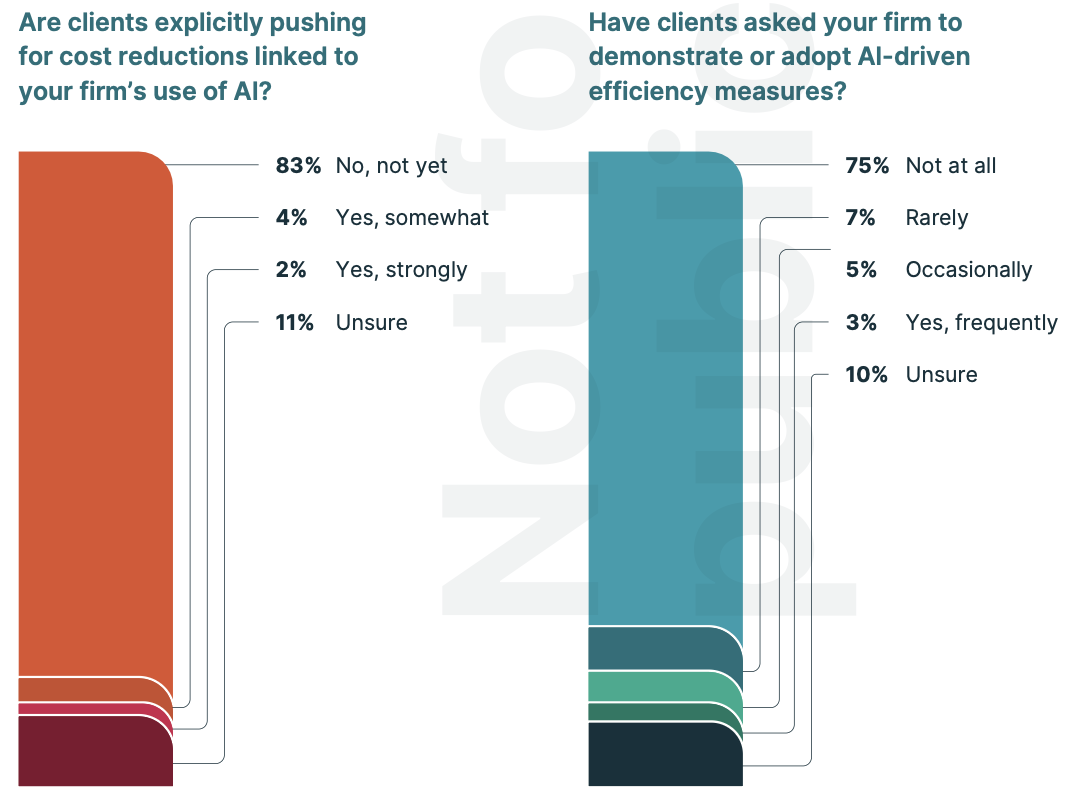
According
to
the
survey,
83
percent
of
respondents
said
clients
are
not
pushing
for
AI-related
price
reductions.
In
fact,
75
percent
said
clients
haven’t
even
asked
their
firms
to
demonstrate
AI-driven
efficiency.

There’s
the
window.
Start
using
AI
to
save
time
and
replace
that
lost
revenue
with
a
value
model
that
the
clients
will
pay

because
they’ve
already
made
it
clear
that
they’re
willing
to
pay
the
current
price
.

And
when
you
take
into
account
that

AI
might
save
lawyers
money

as
well
as
time,
adoption
would
leave
the
practice
with
both
of
legal’s
two
most
precious
resources.

The
8am
report
also
asked
about
access
to
justice,
and
the
results
were
as
bleak
as
you’d
expect.
The
profession
has
nominally
committed
to
addressing
this
for
decades,
with
results
roughly
consistent
with
things
that
have
been
nominally
committed
to
for
decades.
More
than
half
of
lawyers
described
the
current
state
of
access
to
justice
in
the
United
States
as
“poor.”
The
primary
barrier,
according
to
72
percent
of
respondents,
was
cost,
and
55
percent
percent
said
expanded
funding
for
legal
aid
and
public
defenders
would
be
the
single
most
effective
solution.

Most
of
the
buzz
around
AI
and
access
to
justice
focuses
on
directly
using
the
tools
for
pro
bono
matters.
According
to
the
survey,
76
percent
of
respondents
believe
AI
has
the
potential
to
help
narrow
the
access-to-justice
gap,
noting
the
potential
to
automate
routine
legal
tasks
(53
percent),
expand
self-help
tools
(52
percent),
and
increase
remote
services
(51
percent).
But
these
are
all
downstream.
The
underrated,
indirect
advantage
of
AI
adoption
is
the
basic
efficiency
argument:
AI
frees
up
lawyer
time,
and
time
can
be
used
for
people
who
can’t
pay
for
it.

Flat-fee
arrangements
and
AI
efficiency
can
provide
revenue
stability
while
building
structural
space
for
more
pro
bono
work.
A
hypothetical
lawyer
who
previously
spending
12
hours
on
a
straightforward
transactional
matter
can
complete
it
in
six
hours,
collect
their
fixed-fee,
keep
the
same
(or
more)
revenue,
and
have
six
hours
freed
up
to
provide
for
the
underserved.

The
pessimistic
read
is
that
client
pressure
hasn’t
arrived
yet,
so
firms
may
simply
absorb
the
surplus
into
profit.
But
the
optimistic
read
is
that
we
have
a
window
to
get
ahead
and
make
a
deliberate
choice
about
what
happens
to
the
hours
AI
gives
back.

And
maybe
nothing
happens…
but
if
we
take
the
lawyers
lamenting
the
justice
gap
at
their
word,
this
is
their
moment
to
do
something
that
brings
real
change.


Earlier:


Law
Firms
Prepare
To
Automate
Themselves
Out
Of
Their
Own
Business
Model


Biglaw’s
Worst
Enemy
Isn’t
AI,
It’s
Clients
Using
AI
To
Stop
Paying
Them


Billable
Hour
Dying
So
Slowly,
You’d
Think
It’s
Billing
By
The
Hour


HeadshotJoe
Patrice
 is
a
senior
editor
at
Above
the
Law
and
co-host
of

Thinking
Like
A
Lawyer
.
Feel
free
to email
any
tips,
questions,
or
comments.
Follow
him
on Twitter or

Bluesky

if
you’re
interested
in
law,
politics,
and
a
healthy
dose
of
college
sports
news.
Joe
also
serves
as
a

Managing
Director
at
RPN
Executive
Search
.