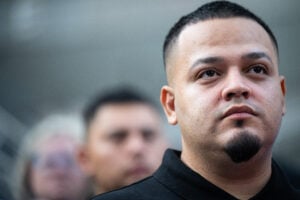
Kilmar
Abrego
Garcia
Photo
by:
Graeme
Sloan/Bloomberg
via
Getty
Images
The
DOJ
has
been
using
the
“throw
spaghetti
until
something
sticks”
method
against
Kilmar
Abrego
Garcia
for
ages
now.
With
too
much
egg
on
their
face
to
just
leave
him
alone
after
it
came
to
light
that
he
was
wrongly
deported
to
an
El
Salvadoran
slave
camp
and
forced
back
here
by
SCOTUS,
the
administration
is
desperate
for
anything
it
can
find
to
charge
him
with
something.
They’ve
recently
landed
on
human
smuggling
charges,
but
his
legal
team
is
trying
to
get
the
charges
thrown
out
as
harassment.
NBC
News
has
coverage:
[Abrego
Garcia]
was
eventually
returned
to
the
U.S.
only
to
face
criminal
charges
of
human
smuggling
based
on
a
2022
traffic
stop
in
Tennessee.
He
has
pleaded
not
guilty.
Body
camera
footage
from
a
Tennessee
Highway
Patrol
officer
shows
a
calm
exchange
with
Abrego
after
he
was
pulled
over
for
speeding.
There
were
nine
passengers
in
the
car,
and
the
officers
discussed
among
themselves
their
suspicions
of
smuggling.
However,
Abrego
was
eventually
allowed
to
continue
driving
with
only
a
warning. … U.S.
District
Judge
Waverly
Crenshaw
previously
found
some
evidence
that
the
prosecution
against
Abrego
“may
be
vindictive.”
The
judge
said
many
statements
by
Trump
administration
officials
“raise
cause
for
concern.”
He
cited
a
statement
by
Deputy
Attorney
General
Todd
Blanche
that
seemed
to
suggest
the
Department
of
Justice
charged
Abrego
because
he
won
his
wrongful-deportation
case.
Rob
McGuire,
First
Assistant
U.S.
Attorney
for
the
Middle
District
of
Tennessee,
admits
that
the
timing
of
the
charge
is
strange,
but
holds
that
he
wasn’t
aware
of
the
police
footage
back
in
2022.
McGuire
pointed
to
the
number
of
people
Garcia
was
driving,
that
they
didn’t
have
bags,
and
the
owner
of
the
car
as
reasons
for
suspicion
—
but
those
aren’t
enough
to
calm
everyone
else’s
suspicions
that
this
has
more
to
do
with
politics
than
justice.
If
this
wasn’t
about
vengeance,
he’d
have
been
in
Costa
Rica
months
ago:
Hard
to
think
of
a
story
more
pundits
misunderstand.
Kilmar
Abrego
Garcia
*agreed
to
be
deported*—months
ago—to
Costa
Rica,
which
accepted.
The
admin
refuses
&
is
insisting
on
sending
him
to
various
African
countries,
which
declined.
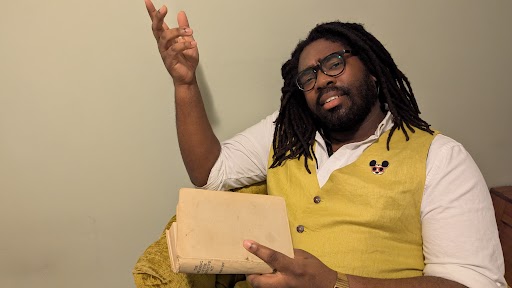
Chris
Williams
became
a
social
media
manager
and
assistant
editor
for
Above
the
Law
in
June
2021.
Prior
to
joining
the
staff,
he
moonlighted
as
a
minor
Memelord™
in
the
Facebook
group Law
School
Memes
for
Edgy
T14s
.
He
endured
Missouri
long
enough
to
graduate
from
Washington
University
in
St.
Louis
School
of
Law.
He
is
a
former
boatbuilder
who
is
learning
to
swim, is
interested
in
critical
race
theory,
philosophy,
and
humor,
and
has
a
love
for
cycling
that
occasionally
annoys
his
peers.
You
can
reach
him
by
email
at [email protected]
and
by
tweet
at @WritesForRent.
For
all
of
the
administration’s
big
talk
of
meritocracy
coming
back
to
put
the
people
who
actually
deserve
the
jobs
in
power,
there’s
been
a
lot
of
incompetency
at
the
helm.
Planes
falling
out
the
sky,
repeated
failures
to
indict
pedophiles
—
let
alone
a
sandwich
—
the
list
goes
on.
An
explanatory
thread
that
runs
through
the
Kakistocracy
is
absolute
fealty
to
Trump.
And,
given
his
self-declared
love
for
the
“poorly
educated,”
he
has
done
a
great
job
of
empowering
people
that
are
quicker
to
chant
“USA!
USA!”
than
to
ask
if
they’re
being
told
to
act
in
ways
that
are
un-American.
That
comes
at
a
great
cost,
namely
the
brain
drain
that
comes
from
nixing
competent
people
that
put
concepts
like
“justice”
or
“the
Constitution”
above
Trump’s
orange,
bloated
ego.
Maurene
Comey
was
one
of
the
competent
prosecutors
hit,
but
she’s
already
pivoted
successfully.
Reuters
has
coverage:
Maurene
Comey,
who
brought
criminal
cases
against
Jeffrey
Epstein
associate
Ghislaine
Maxwell
and
music
mogul
Sean
“Diddy”
Combs
before
she
was
fired
as
a
Manhattan
federal
prosecutor
last
year,
has
moved
into
private
practice
at
Patterson
Belknap
Webb
&
Tyler,
the
law
firm
said
on
Wednesday.
Comey
was
among
several
federal
prosecutors
fired
by
the
U.S.
Justice
Department
since
President
Donald
Trump
returned
to
office
last
year.
In
September,
she
sued
the
DOJ
and
the
Executive
Office
of
the
President,
alleging
she
was
not
provided
any
cause
for
her
removal. … Comey
will
be
a
partner
at
New
York-based,
200-lawyer
Patterson
Belknap.
She
noted
on
Wednesday
that
the
law
firm
was
among
those
that
signed
onto
briefs
denouncing
U.S.
President
Donald
Trump’s
targeting
of
law
firms
through
punishing
executive
orders
last
year.
There’s
a
reasonable
suspicion
that
she
was
singled
out
because
she
is
the
daughter
of
James
Comey,
a
man
whose
sea-shell-on-sand
art
project
was
taken
so
seriously
that
Kash
Patel
launched
an
FBI
investigation
over
it.
Or
maybe
it
had
something
to
do
with
her
successful
prosecution
of
very
big
names
involved
in
sex
crimes.
Just
shooting
in
the
dark
here
because,
again,
she
wasn’t
given
any
cause
for
her
removal.
This
is
a
high
profile
example
of
the
brain
drain,
but
trust
that
this
won’t
be
the
last
time
it
happens.
Not
too
long
ago
the
Pentagon
flagged
most
of
the
T14
and
other
top
ranked
institutions
(go
WashU!)
as
ineligible
for
DoD
tuition
assistance
programs
because
the
schools
were
deemed
‘too
woke.”
As
much
as
I’d
like
to
think
no
angels
will
have
to
cry
over
a
law
student
getting
into
Yale
only
to
be
forced
out
because
the
money
evaporated,
these
funding
cuts
will
keep
minds
from
flourishing
to
the
degree
they
would
if
they
could
afford
getting
in
to
NYU,
Harvard,
or
Princeton’s
non-existent
law
school.
Check
the
list
—
they
actually
banned
Princeton
and
Brown’s
non-existent
law
schools
from
eligibility.
That’s
what
happens
when
you
have
the
“poorly
educated”
determining
America’s
future.
Congrats
to
Comey
on
her
new
role
at
Patterson
Belknap!
Chris
Williams
became
a
social
media
manager
and
assistant
editor
for
Above
the
Law
in
June
2021.
Prior
to
joining
the
staff,
he
moonlighted
as
a
minor
Memelord™
in
the
Facebook
group Law
School
Memes
for
Edgy
T14s
.
He
endured
Missouri
long
enough
to
graduate
from
Washington
University
in
St.
Louis
School
of
Law.
He
is
a
former
boatbuilder
who
is
learning
to
swim, is
interested
in
critical
race
theory,
philosophy,
and
humor,
and
has
a
love
for
cycling
that
occasionally
annoys
his
peers.
You
can
reach
him
by
email
at [email protected]
and
by
tweet
at @WritesForRent.
I’m
a
practicing
attorney,
and
I
want
my
clients
to
use
AI.
That
might
sound
counterintuitive
coming
from
someone
who
earns
her
keep
selling
legal
advice.
Plus,
many
attorneys
express
frustration
when
clients
show
up
with
contracts
full
of
unlawful
provisions
drafted
by
ChatGPT
or
implausible
case
strategies
concocted
by
Gemini
and
then
have
to
spend
time
explaining
why
those
won’t
work.
But
after
more
than
three
decades
of
small
law
practice
where
I
frequently
harness
my
clients’
sweat
equity
to
fight
Big
Energy,
I
see
things
differently.
My
clients
who
use
AI
to
research
their
legal
situation
are
better
clients.
They
arrive
well-organized.
They
understand
the
documents
I’ve
sent
so
we
don’t
waste
precious
billable
hours
on
the
basics.
They’re
fully
engaged
in
the
case
without
monopolizing
my
time.
For
clients
on
a
budget
especially,
AI
can
be
transformational.
A
recent
federal
court
opinion
threatens
to
change
all
of
that.
In
a
memorandum
opinion
dated
February
17,
2026,
Judge
Jed
Rakoff
of
the
Southern
District
of
New
York
ruled
in
United
States
v.
Heppner
that
documents
a
defendant
generated
using
Claude
were
not
protected
by
attorney-client
privilege
or
the
work-product
doctrine.
The
defendant,
Bradley
Heppner,
charged
with
securities
fraud,
had
used
Claude
to
research
his
case
and
generate
detailed
legal
analyses.
When
the
FBI
seized
his
devices,
prosecutors
claimed
those
documents
were
fair
game.
The
court
agreed,
finding
that
(1)
Claude
is
not
an
attorney,
(2)
that
the
communications
were
not
confidential
given
Anthropic’s
privacy
policy
allowing
disclosure
to
third
parties,
and
(3)
that
even
assuming
the
documents
were
prepared
in
anticipation
of
litigation,
they
were
not
protected
by
work-product
privilege
because
they
were
not
prepared
by
or
at
the
behest
of
counsel.
The
ruling
may
be
defensible
under
existing
doctrine.
But
it
is
a
disaster
for
the
21st-century
justice
system.
To
understand
why,
consider
the
crisis
the
American
legal
system
already
faces.
According
to
the
Legal
Services
Corporation, roughly
92
percent
of
low-income
Americans
receive
inadequate
or
no
legal
help
for
civil
legal
problems.
In
most
civil
cases
like
evictions,
debt
collections,
and
custody
disputes,
at
least
one
party
is
unrepresented.
For
these
people,
AI
is
a
lifeline
that
Heppner
turns
into
a
liability.
The
court
treated
Heppner’s
AI
conversations
as
no
different
than
a
Google
search,
which
we
all
know
from
Court
TV
is
not
protected
(think
of
all
the
convictions
that
have
flowed
from
queries
like
“how
do
I
clean
blood
stains
from
my
carpet?”).
But
that
equivalence
isn’t
quite
right.
When
you
Google
“elements
of
securities
fraud,”
you
generate
links
to
public
web
pages
and
factual
materials.
No
new
information
is
created.
AI
is
an
entirely
different
animal.
To
get
anything
useful
from
an
AI
model,
users
must
feed
it
specifics
like
a
timeline
and
perceived
vulnerabilities.
What
comes
back
is
a
custom
analysis
reflecting
a
user’s
mental
impressions
and
developing
legal
strategy.
Produced
in
discovery,
it
hands
your
adversary
your
strategic
calculations
and
your
assessment
of
where
a
case
is
weakest.
By
declaring
AI
research
discoverable,
Judge
Rakoff
allowed
the
government
to
rely
on
“wits
borrowed
from
its
adversary.”
This
is
exactly
what
the
Supreme
Court
sought
to
prevent
in
the
foundational
1947
case Hickman
v.
Taylor,
which
established
the
work
product
doctrine.
The
Hickman
court
recognized
that
for
the
adversary
system
to
work,
a
party
must
have
a
“zone
of
privacy”
to
prepare
their
case.
Without
that
privacy,
the
court
warned,
“much
of
what
is
now
put
down
in
writing
would
remain
unwritten,”
and
“the
cause
of
justice
would
be
poorly
served.”
The
Heppner
decision
also
rests
on
a
legal
fiction
about
user
expectations.
The
court
found
Heppner
had
no
reasonable
expectation
of
privacy
because
the
terms
of
service
for
Claude
stated
that
data
may
be
disclosed.
But
the
design
of
AI
tools
suggests
otherwise.
The
conversational
interface,
the
personalized
one-on-one
format,
and
the
way
the
AI
chatbots
invite
users
to
share
their
situation
cultivates
the
sense
of
a
confidential
consultation.
The
Heppner
ruling
expects
ordinary
people,
often
at
their
darkest
hour,
to
parse
complex
terms
of
service
that
most
lawyers
skip,
while
the
product
itself
beckons
with
a
siren’s
song
to
“tell
me
everything.”
And
the
more
these
tools
absorb
your
facts
to
sharpen
their
analysis,
the
more
damaging
the
trail
they
leave
behind.
To
follow
the
Heppner
logic
to
its
conclusion
rewards
ignorance
and
disempowerment.
Do
no
research,
and
you
have
no
trail.
Try
to
be
a
diligent,
informed
participant
in
your
own
legal
matter,
and
you
hand
your
opponent
a
gift.
What
is
most
aggravating
about
the
Rakoff
ruling
is
how
tone-deaf
it
is
to
the
high
cost
of
legal
services
and
to
AI’s
potential
to
reduce
those
costs.
Heppner’s
Quinn
Emanuel
lawyers
bill
upwards
of
$3000/hr,
so
why
wouldn’t
Heppner
try
using
AI
to
save
a
few
bucks?
The
opinion
also
acknowledges
AI’s
novelty
–
but
instead
of
crafting
an
approach
to
encourage
use
of
AI
to
level
the
playing
field,
it
defaults
to
relying
on
an
article
penned
by
Ira
Robbins,
an
ivory
tower
academic
who
arrives
at
the
mean
and
utterly
unimaginative
conclusion
that
privilege
for
AI
communications
is
“neither
doctrinally
justified
nor
normatively
sound.”
Privilege
isn’t
some
type
of
inherent
protection.
Some
privileges
like
attorney-client
privilege
are
created
by
legislatures
while
others
like
work
product
doctrine
have
been
crafted
by
courts
or
even
ethics
regulators.
For
example,
ABA
Opinion
477
says
that
unencrypted
email
carries
with
it
a
sufficient
expectation
of
privacy
to
confer
confidentiality
–
even
though
we
all
know
that’s
a
fiction.
So
why
can’t
we
just
say
that
an
expectation
of
privacy
applies
to
generative
AI
and
speak
a
privilege
into
existence?
Under
Rakoff’s
opinion,
work-product
protection
arguably
survives
if
a
client
undertakes
AI
research
at
the
direction
of
an
attorney.
But
that
only
makes
life
more
complicated,
requiring
lawyers
like
me
to
micromanage
our
clients’
work
and
remind
them
like
a
nagging
parent
to
include
the
magic
words
“prepared
under
lawyer’s
direction”
every
time
they
enter
an
AI
chatbox.
And
that
narrow
exception
doesn’t
protect
pro
se
litigants
or
clients
who
want
to
do
their
homework
before
ever
stepping
foot
into
an
attorney’s
office.
Judge
Rakoff’s
ruling
mechanically
applied
old
rules
to
a
new
world.
Today,
millions
of
Americans
are
turning
to
interactive
AI
to
survive
a
legal
system
that
has
become
too
expensive
and
too
complex
for
ordinary
people
to
navigate.
As
a
lawyer,
I
want
my
clients
and
my
potential
clients
to
keep
using
AI
tools.
The
law
should
encourage
them
to
do
so,
not
punish
them
for
it.
Carolyn
Elefant
is
one
of
the
country’s
most
recognized
advocates
for
solo
and
small
firm
lawyers.
She
founded
MyShingle.com
in
2002,
the
longest-running
blog
for
solo
practitioners,
where
she
has
published
thousands
of
articles,
resources,
and
guides
on
starting,
running,
and
growing
independent
law
practices.
She
is
the
author
of
Solo
by
Choice,
widely
regarded
as
the
definitive
handbook
for
launching
and
sustaining
a
law
practice,
and
has
spoken
at
countless
bar
events
and
legal
conferences
on
technology,
innovation,
and
regulatory
reform
that
impacts
solos
and
smalls.
Elefant
also
develops
practical
tools
like
the AI
Teach-In to
help
small
firms
adopt
AI
and
she
consistently
champions
reforms
to
level
the
playing
field
for
independent
lawyers.
Alongside
this
work,
she
runs
the
Law
Offices
of
Carolyn
Elefant,
a
national
energy
and
regulatory
practice
that
handles
selective
complex,
high-stakes
matters.
Delivering
economic
growth
is
a
top
priority
for
both
the
UK
and
Zimbabwe,
and
one
of
the
keyways
we
can
do
that
is
by
increasing
trade.
By
connecting
Zimbabwean
horticulture
businesses
with
new
UK
and
international
markets,
we
are
increasing
trade
and
investment
with
the
UK,
creating
jobs,
increasing
foreign
exchange
earnings
and
strengthening
climate
and
economic
resilience.
Such
initiatives
also
support Zimbabwe’s
National
Development
Strategy
II
(NDS
II)
for
2026–2030.
The
trade
mission
marks
a
new
milestone
for
the
horticulture
businesses.
In
February,
the
UK
funded
eight
Zimbabwean
exporters
to
attend
the
Fruit
Logistica
Trade
Show
in
Germany,
in
collaboration
with
ZimTrade
and
the
Horticultural
Development
Council
(HDC).
In
preparation
for
the
outward
trade
mission
to
Germany,
the
exhibitors,
worked
with
coaches
on
customised
upgrades
to
product
presentation
and
marketing.
Now
they’re
set
to
showcase
their
products
including
peas,
mangetout/snow
peas,
rock
melons/cantaloupe,
Victoria
pineapples
and
chillies
to
the
UK
and
European
buyers.
If
the
mission
is
successful,
the
entrepreneurs
could
sign
deals
that
send
their
products
to
one
of
the
world’s
most
competitive
food
markets.
As
the
UN
small
business
agency,
the
ITC
offers
a
full
range
of
services
that
bring
the
benefits
of
global
trade
to
more
entrepreneurs.
As
the
rules
of
global
trade
shift,
trade
missions
like
the
one
in
Zimbabwe
ensure
that
small
businesses
can
diversify
their
markets,
plus
Zimbabwean
goods
can
enter
the
UK
market
tariff
free
under
the
Economic
Partnership
Agreement
between
Eastern
and
Southern
African
countries
and
the
UK
(the
ESA-UK
EPA).
The
buyers
will
begin
the
trade
mission
with
a
visit
to
Harare-based
farms,
followed
by
an
official
welcome
reception
at
the
British
Embassy
where
they
will
meet
with
additional
farmers
from
the
Harare
area
and
wider
Zimbabwe.
They
will
then
travel
to
Mutorashanga,
Mvurwi,
Chegutu,
Shurugwi.
and
Mutare.
Agribusinesses
on
the
trade
mission
include:
Kacholo
Kuminda
Takura
Farm
Avomac
Farm
Forrester
Estate
Navaco
Agrilikimo
Farmers
Procitru
Pvt
Ltd
Edenchase
Pvt
Ltd
Surrey
Group
/
Tanaka
Dodhill
Interviews
with
the
buyers
can
be
held
in
Harare
on
2
or
7
March.
Interviews
with
farmers
can
be
organized
separately
on
request.
Tom
Goldstein
argued
over
40
cases
before
the
Supreme
Court
and
co-founded
the
go-to
publication
for
live
doomscrolling
the
decline
and
fall
of
the
Constitution.
In
a
profession
that
doesn’t
breed
a
lot
of
celebrities,
Goldstein
worked
his
way
to
legal
royalty
through
pure
gumption
—
literally,
to
the
extent
it
included
a
stint
with
Akin
Gump
—
establishing
his
Supreme
Court
advocacy
street
cred
by
covering
the
Supreme
Court
for
the
National
Law
Journal
(under
then-NLJ
editor-in-chief
current
Above
the
Law
columnist
Bob
Ambrogi)
before
ultimately
establishing
SCOTUSBlog.
He
was
also,
unfortunately,
a
high-stakes
poker
player.
Raking
in
roughly
$50
million
in
winnings
in
2016
alone
—
including
$22
million
playing
in
Asia
—
Goldstein
kept
income
hidden
from
his
accountants,
the
IRS,
and
mortgage
lenders.
The
indictment
read
like
the
unauthorized
sequel
to
Rounders,
with
Mikey
finishing
law
school,
but
losing
it
all
because
he
can’t
stop
flying
to
Macao
to
play
Teddy
CCP.
Underground
poker
games,
duffel
bags
stuffed
with
nearly
a
million
in
cash
at
the
border,
firm
money
diverted
to
cover
personal
gambling
debts,
and
a
24-page
poker
strategy
memo
which
is
the
most
lawyer-ass
allegation
in
this
whole
story.
Billionaire
Alec
Gores
testified
about
losing
$26.4
million
to
Goldstein
in
heads-up
matches.
Rick
Salomon
of
Paris
Hilton
sex
tape
fame
testified
about
the
Asia-Pacific
poker
scene.
And
Tobey
Maguire
told
jurors
about
hiring
Goldstein
to
recover
a
$7
million
poker
debt
from
a
Texas
businessman.
Even
Spider-Man
needs
a
lawyer
sometimes.
DOJ
prosecutor
Sean
Beaty
told
the
jury
it
was
a
“textbook
tax-evasion
scheme”
that
Goldstein
“executed
nearly
flawlessly.”
Which
seems
like
an
overstatement
given
how
it
epically
unraveled.
The
scheme
apparently
unraveled
when
a
disgruntled
fellow
gambler
ratted
him
out
to
the
IRS
over
a
2016
debt.
Et
tu,
California
Businessman-1?
Goldstein
took
the
stand
in
his
own
defense,
acknowledging
that
he
should
have
paid
more
attention
to
his
taxes
and
law
firm
finances,
but
insisted
there
was
no
criminal
intent.
His
defense
attorney
Jonathan
Kravis
of
Munger
Tolles
argued
this
was
all
about
“innocent
mistakes”
and
accountants
who
committed
a
—
to
quote
the
defense
—
“catastrophic
f***-up.”
“A
mistake
is
not
a
crime,”
Kravis
told
the
jury.
The
jury,
having
heard
six
weeks
of
evidence
about
secret
poker
ledgers,
luxury
watches,
Bentleys,
hidden
gambling
debts,
and
diverted
law
firm
funds,
apparently
disagreed.
Goldstein
also
allegedly
omitted
$15
million
in
gambling
debts
from
mortgage
applications
while
house-hunting
in
D.C.
with
his
wife.
Kravis
argued
his
client
left
the
debts
off
“because
he
wanted
to
keep
them
secret
from
his
wife.”
The
defense
that
“you
can’t
spell
mens
rea
if
men…
are
just
lying
to
their
wives”
did
not
prove
persuasive
to
the
jury.
The
whole
saga
also
dragged
in
Jeffrey
Toobin,
who
co-authored
a
New
York
Times
Magazine
profile
of
Goldstein
in
December
because
—
in
a
move
that
probably
took
ten
years
off
the
lives
of
his
defense
attorneys
—
Goldstein
sat
for
an
on-the-record
interview
while
facing
trial.
The
government
reached
a
deal
that
spared
Toobin
having
to
testify.
Goldstein
faces
a
maximum
of
five
years
on
the
tax
evasion
count
and
up
to
30
years
on
the
false
loan
statement
counts,
but
it’s
hard
to
imagine
the
value
of
a
lengthy
jail
sentence
for
a
nerdy
appellate
lawyer.
Tax
evasion
is
serious,
but
wasting
taxpayer
resources
to
keep
Goldstein
in
prison
doesn’t
seem
like
much
of
an
answer.
Just
conscript
him
to
take
down
Le
Chiffre
on
behalf
of
the
government
and
call
it
good.
If
the
indictment
came
off
as
a
wild
and
lawyerly
edition
of
“Behind
the
Music,”
we’ve
moved
on
from
the
“But
Storm
Clouds
Were
Gathering”
chapter
and
are
squarely
entering
the
“Where
Are
They
Now?”
segment.
And
we’ll
find
out
soon.
Long
gone
are
the
days
when
demonstrating
the
value
of
legal
work
was
more
art
than
science.
Today’s
organizations
are
increasingly
demanding
data-backed
evidence
to
measure
the
work
of
law
departments
and
outside
counsel.
And
with
the
rapid
pace
of
advancement,
legal
technology
provides
ever
more
ways
to
track
the
full
scope
of
this
work
—
along
with
the
value
it’s
providing.
Join
our
expert
panel
on
March
3rd
at
1
p.m.
ET
for
an
exploration
of
the
traditional
and
emerging
ways
your
law
department
can
proactively
showcase
its
value
in
2026.
Along
with
our
friends
at
LinkSquares,
we’ll
be
discussing:
The
emerging
KPIs
that
businesses
are
examining
Why
these
metrics
are
important
and
how
you
can
track
them
yourself
The
opportunities
to
turn
your
contract
portfolio
into
a
source
of
revenue
The
evolving
role
of
the
billable
hour
and
AI’s
impact
Register
today!
1
Hour
CLE
credit
is
available
for
live
attendees.
The
plaintiffs’
bar
spends
a
lot
of
time
reminding
the
world
that
it
exists
to
hold
bad
actors
accountable.
Which
is
why
the
plea
struck
by
former
Motley
Rice
attorney
William
Christopher
Swett
lands
with
a
particularly
sour
thud.
Federal
prosecutors
say
Swett
didn’t
just
cut
corners
or
play
fast
and
loose
with
billing.
Instead,
from
at
least
2018
through
March
2024,
he
allegedly
ran
a
multi-year
fraud
scheme
that
involved
fake
companies,
fake
clients,
fake
claims,
and
very
real
money
—
at
least
$1.5
million
of
it
—
siphoned
from
his
own
firm
and
the
clients
he
was
supposed
to
be
representing.
According
to
charging
documents
filed
by
Assistant
U.S.
Attorney
Emily
Limehouse,
Swett
allegedly
“knowingly
devised
a
scheme
and
artifice
to
defraud
the
law
firm
and
his
clients”
using
(what
else)
false
representations,
fraudulent
pretenses,
and
a
whole
lot
of
creativity
that
would
have
been
better
applied
to
literally
anything
(legal).
To
further
the
scheme,
Swett
allegedly
created
multiple
legal
services
companies
that
were
designed
to
appear
legitimate.
He
then
allegedly
expensed
Motley
Rice
and
his
clients
for
services
that
were
never
performed,
padded
invoices
with
inflated
and
illegitimate
expenses,
and,
crucially,
failed
to
disclose
that
he
had
a
financial
interest
in
the
companies
receiving
the
money.
You
know.
Minor
details.
Federal
prosecutors
say
Swett
didn’t
stop
there.
He
allegedly
submitted
reimbursement
requests
for
fake
clients,
fabricated
death
and
personal
injury
claims,
and
even
falsified
medical
records
and
other
documents
to
keep
the
fraud
going.
“To
conceal
his
crimes,
Swett
laundered
the
funds
through
accounts
he
controlled
and
siphoned
the
money
for
his
own
personal
enrichment,”
the
prosecutor’s
office
said.
“Swett
fraudulently
obtained
at
least
$1.5
million.”
The
plea
agreement
covers
eight
felony
counts
total,
each
carrying
a
maximum
penalty
of
20
years
in
federal
prison,
along
with
potential
fines
of
up
to
$250,000.
Swett’s
attorney,
Nathan
Williams,
offered
the
familiar
mitigation
framework,
saying
Swett
had
“for
a
long
time”
struggled
with
“personal
challenges”
and
had
made
“poor
and
regretful
decisions.”
Williams
emphasized
that
Swett
“has
made
significant
changes
in
his
life”
and
that
the
plea
agreement
reflects
an
effort
to
show
accountability.
Williams
added
that
he
hopes
the
judge
will
eventually
hear
“the
full
explanation
for
the
circumstances
of
the
case,”
likely
at
sentencing.
As
for
Motley
Rice,
the
firm
issued
a
succinct
statement
through
a
spokesperson,
“We
await
the
next
steps
in
this
criminal
prosecution
regarding
this
former
employee.”
Which
is
about
as
restrained
as
you
can
be
when
one
of
your
former
lawyers
allegedly
spent
years
running
a
private
fraud
operation
while
holding
himself
out
as
a
champion
for
plaintiffs.
Kathryn
Rubino
is
a
Senior
Editor
at
Above
the
Law,
host
of
The
Jabot
podcast,
and
co-host
of
Thinking
Like
A
Lawyer.
AtL
tipsters
are
the
best,
so
please
connect
with
her.
Feel
free
to
email
her
with
any
tips,
questions,
or
comments
and
follow
her
on
Twitter
@Kathryn1 or
Mastodon
@[email protected].
*
Tom
Goldstein
convicted
on
tax
evasion
charges.
[Politico]
*
Hillary
Clinton
set
to
testify
in
Epstein
probe,
meanwhile
an
investigation
reveals
the
DOJ
hid
documents
related
to
Donald
Trump’s
dealings
with
Epstein.
[Reuters]
Supreme
Judges
Banter
Over
Oral
Argument:
They’re
much
nicer
to
each
other
in
person
than
in
writing!
It
Ain’t
The
Size
Of
The
Firm:
9th
Circuit
rules
small
law
firms
can
get
paid
their
worth
too.
This
Wasn’t
Covered
In
Bar
Prep:
New
York
test
takers
had
to
fight
a
blizzard
on
the
way
to
their
fact
patterns.
FASORP
Wants
To
Revive
Their
Northwestern
Case:
They
couldn’t
even
muster
up
any
new
arguments.
It
Just
Keeps
Getting
Worse
For
This
Guy:
Fix
The
Court
filed
a
judicial
misconduct
complaint
against
Judge
Ludington.
On
This
Week
Of
Thinking
Like
A
Lawyer:
Hot
mics
and
“wing”
style
nonsense.









 Kathryn