Whether
you’re
cross-examining
or
putting
forth
an
expert
witness,
effectively
managing
their
testimony
is
a
difficult
task.
Experts
must
garner
the
respect
of
the
judge
and
jury
while
also
defending
their
own
credibility
—
a
precarious
balancing
act,
particularly
when
faced
with
effective
cross-examination.
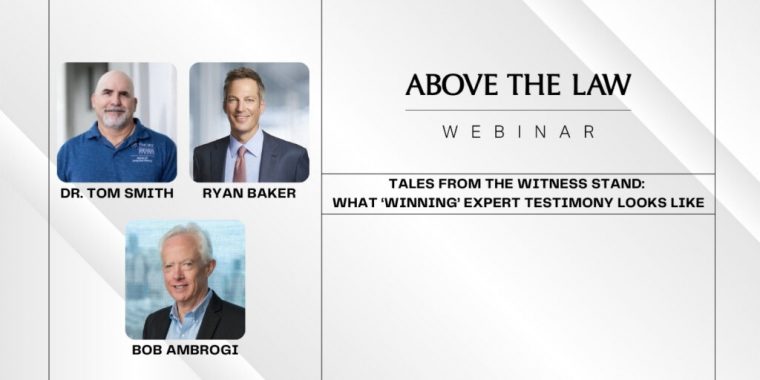
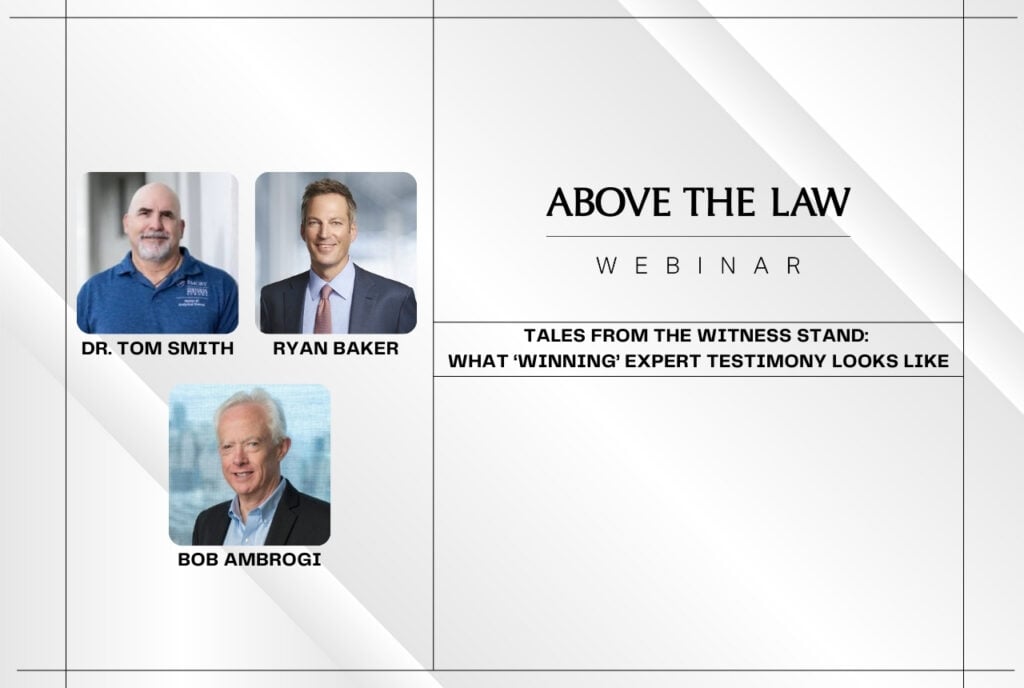
In
this
webinar,
Above
the
Law’s
Bob
Ambrogi
is
joined
by
litigator
Ryan
Baker
of
Waymaker
LLP
and
Dr.
Tom
Smith
of
Emory
University,
an
experienced
expert
witness,
to
explore
all
things
expert
testimony
in
2026.
•
What
“winning”
expert
testimony
looks
like •
Examples
of
expert
testimony
from
notable
cases •
How
effective
lawyers
cross-examine
experts •
How
top
expert
witnesses
translate
specialized
jargon
for
factfinders •
Trends
in
expert
witness
preparation,
including
the
role
of
technology
This
morning,
the
nine
Supreme
Court
justices
spent
170
pages
whacking
the
crap
out
of
each
other.
Also,
they
declared
Trump’s
“emergency”
tariffs
illegal,
which
everyone
who
listened
to
oral
argument
knew
was
inevitable.
The
Constitution
gives
Congress
the
right
to
enact
levies,
and
the
International
Emergency
Economic
Powers
Act
(IEEPA)
does
not
authorize
the
president
to
unilaterally
enact
a
constantly
shifting
scheme
of
tariffs
based
on
whoever
fails
to
genuflect
sufficiently
on
any
given
day.
No
shit,
dude.
Trump:
“So
I
put
on
a
30%
tariff,
which
is
very
low.
I
got
an
emergency
call
from
I
believe
the
prime
minister
of
Switzerland.
She
was
very
aggressive
…
I
didn’t
really
like
the
way
she
talked
to
us,
so
instead
of
giving
her
a
reduction,
I
raised
it
to
39%.”
The
only
real
question
was
how
long
it
would
take
them
to
publish
the
opinion
and
how
ugly
it
would
be
—
with length
of
time
between
argument
and
opinion
correlating
directly
with
cumulative
vituperation.
In
the
event,
it
took
almost
four
months,
enough
time
for
Justice
Kavanaugh
to
barf
out
four
pages
insisting
that
Trump
does,
too
have
the
power
to
shout
emergency
and
do
whatever
he
wants,
plus
59
pages
explaining
how
this
does
not
contradict
the
major
questions
doctrine.
The
Calvinball
rule
the
conservative
justices
dummied
up
to
restrain
Democratic
presidents
is
alive
and
well,
he
insists
…
just
not
when
a
Republican
is
in
the
White
House.
Chief
Justice
Roberts,
who
wrote
the
majority/plurality
opinion,
spent
much
of
it
slagging
Kavanaugh
for
parroting
the
Trump
administration’s
arguments
uncritically.
“The
central
thrust
of
the
Government’s
and
the
principal
dissent’s
proposed
exceptions
appears
to
be
that
ambiguous
delegations
in
statutes
addressing
‘the
most
major
of
major
questions’
should
necessarily
be
construed
broadly,”
he
sniffed,
adding
that
the
government’s
briefs
are
“echoed
point-for-point
by
the
principal
dissent.”
The
major
questions
doctrine,
and
its
freckle-faced
sibling,
the
non-delegation
doctrine,
animate
the
entire
order.
Chief
Justice
Roberts,
along
with
Justices
Barrett
and
Gorsuch
agree
that
Congress
could
not
possibly
have
given
Trump
tariff
authority
without
saying
so
with
their
full
chest.
The
three
liberal
justices
refused
to
join
in
the
part
of
the
holding
based
on
shit
conservatives
just
made
up
to
ensure
that
the
EPA
couldn’t
rein
in
polluters,
although
they
agreed
with
the
part
about
there
being
no
secret
proviso
in
IEEPA
that
gives
the
president
the
power
to
screech
tariffs
into
existence
on
social
media.
This
prompted
a
45-page
lecture
from
Justice
Gorsuch
on
the
sacred
virtues
of
the
major
questions
doctrine.
Indeed,
none
of
his
female
colleagues
were
spared;
Gorsuch
heaped
extra
scorn
on
Justice
Barrett
for
suggesting
that
one
might
infer
a
congressional
delegation
of
authority
from
context.
Barrett
crafted
her
own
concurrence,
mostly
as
a
response
to
Gorsuch’s
attack.
“If
JUSTICE
GORSUCH
thinks
that
we
should
forgo
the
most
natural
reading
of
a
statute
because
it
is
preferable
for
Congress,
rather
than
the
President,
to
make
big
decisions,
that
way
lies
‘a
lot
of
trouble’
for
the
textualist,”
she
sighed.
Justice
Kagan
has
clearly
had
quite
enough
of
Gorsuch
patronizingly
douchesplaining
HOW
TO
LAW
GOOD.
“Given
how
strong
his
apparent
desire
for
converts,
see
ante,
at
2–26,
I
almost
regret
to
inform
him
that
I
am
not
one,”
Justice
Kagan
wrote
in
a
dissent
joined
by
Justices
Sotomayor
and
Jackson,
adding
that
“I’ll
let
JUSTICE
GORSUCH
relitigate
on
his
own
our
old
debates
about
other
statutes,
unrelated
to
the
one
before
us.”
Justice
Thomas
spent
17
pages
peering
into
the
psyches
of
the
Framers
to
divine
their
thoughts
on
the
president’s
right
to
levy
tariffs
—
Shocker,
they’re
for
it!
—
padded
with
dozens
of
cites
to
his
own
prior
writings.
And
Justice
Jackson
chimed
in
to
add
that,
if
you
want
to
go
spelunking
to
determine
legislative
intent,
the
proper
inquiry
doesn’t
begin
in
the
1770s
but
in
the
1970s
when
IEEPA
was
passed.
It
was
a
slugfest,
with
the
Court’s
conservatives
bludgeoning
each
other
over
the
issue
of
whether
the
locus
of
power
should
be
in
the
unitary
executive,
or
the
Court
itself.
Why
shouldn’t
the
conservatives
take
this
opportunity
to
block
any
law
or
executive
action
they
don’t
like
when
they
have
a
6-3
majority?
Jesus,
Brett,
get
with
the
program!
And
meanwhile,
no
justice
explained
how
to
unwind
this
mess
and
refund
the
$200
billion
in
tariffs
paid
by
American
companies
and
consumers
—
although
Kavanaugh
cited
the
chaos
as
a
reason
to
let
Trump
keep
violating
the
law
forever.
Probably
something
they
should
have
considered
before
they
let
the
president
collect
them
for
a
year,
even
after
lower
courts
said
it
was
totally
illegal?
Anyway,
here’s
the
president
with
his
very
rational
response.
I
know
Victoria’s
Secret And
girl,
you
wouldn’t
believe She’s
an
old
man
who
lives
in
Ohio Making
money
off
of
girls
like
me
In
2022,
Jax
put
out
a
song
called
Victoria’s
Secret
calling
out
how
Les
Wexner
is
horrible
for
profiting
off
women’s
insecurities.
The
artist
probably
should
add
another
verse
to
cover
Wexner’s
close
ties
with
Jeffrey
Epstein.
Because
that
seems
simultaneously
way
worse
and
thematically
connected.
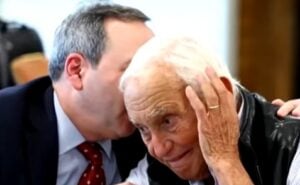
Wexner
submitted
to
a
House
Oversight
deposition
this
week,
and
—
like
a
lot
of
old,
rich,
self-important
men
—
rambled
a
bit.
Until
his
attorney,
Michael
Levy,
stepped
in
with
a
contender
for
best
hot
mic
moment
of
the
year.
“I’ll
fucking
kill
you
if
you
answer
another
question
with
more
than
five
words,
OK?”
Social
media
is
divided
over
this
moment
between
lawyers
and
non-lawyers.
The
latter
are
incensed
and
see
this
as
another
example
of
a
rich
guy
avoiding
accountability
with
a
high-priced
lawyer’s
protection.
The
lawyers
see
it
as…
“man,
been
there.”
The
non-lawyer
reaction
is
understandable,
but
rambling
is
usually
not
in
anyone’s
interest.
While
rambling
can
involve
the
witness
spilling
the
beans
on
something
important,
it’s
more
likely
wasting
everyone’s
time.
The
lawyer
taking
the
deposition
has
limited
time
and
specific
questions
they
need
answered.
If
they
need
more
than
the
“five
word”
answer,
they’ll
ask
for
it.
Speaking
of
old,
rich,
self-important
men
losing
the
plot
at
a
deposition,
Wexner
should
thank
his
lawyer
for
stopping
him
before
he
took
a
page
from
the
deposition
of
former
LA
Clippers
owner
Donald
Sterling.
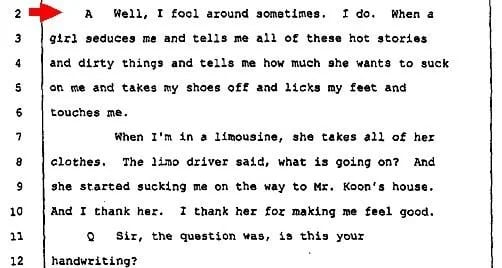
In
2003,
Sterling
gave
us
this
all-timer
of
a
deposition
transcript:
University
of
Pennsylvania
Carey
Law
School
student
groups
hosted
a
training
about
rights
in
the
face
of
immigration
enforcement
on
Tuesday.
The
Feb.
17
Immigration
Know
Your
Rights
Training
aimed
to
give
attendees
a
plan
of
action
should
they
encounter
United
States
Immigration
and
Customs
Enforcement
officers
in
Philadelphia. … After
the
event,
organizers
distributed
Immigration
Know
Your
Rights
cards
which
outlined
the
constitutional
rights
of
citizens
and
noncitizens,
and
contained
information
about
what
to
do
in
the
case
of
an
interaction
with
an
ICE
agent.
As
important
as
it
is
to
have
protocol
in
place
for
how
things
should
go
in
an
ICE
encounter,
the
unfortunate
reality
is
that
a
shamefully
sizeable
amount
of
the
executive
either
don’t
know
enough
about
the
Constitution
for
it
to
change
how
they
do
their
jobs,
or
are
openly
ignoring
it
so
they
can
say
and
do
things
that
must
seem
really
cool
to
a
6-year-old
who
still
believes
wrestling
is
real:
Chris
Williams
became
a
social
media
manager
and
assistant
editor
for
Above
the
Law
in
June
2021.
Prior
to
joining
the
staff,
he
moonlighted
as
a
minor
Memelord™
in
the
Facebook
group Law
School
Memes
for
Edgy
T14s
.
He
endured
Missouri
long
enough
to
graduate
from
Washington
University
in
St.
Louis
School
of
Law.
He
is
a
former
boatbuilder
who
is
learning
to
swim, is
interested
in
critical
race
theory,
philosophy,
and
humor,
and
has
a
love
for
cycling
that
occasionally
annoys
his
peers.
You
can
reach
him
by
email
at [email protected]
and
by
tweet
at @WritesForRent.
There
was
a
time
when
the
Department
of
Justice
operated
in
isolation
from
political
whims.
That
era
appears
to
be
officially
over.
Welcome
to:
The
Rule
of
Law,
sponsored
by
Donald
Trump!
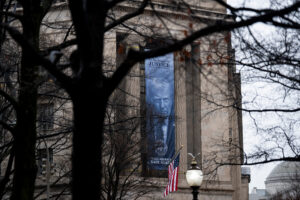
A
massive
new
banner
now
hangs
at
DOJ
headquarters,
featuring
a
glowering
image
of
Donald
Trump
looming
over
the
words
“MAKE
AMERICA
SAFE
AGAIN.”
It’s
the
kind
of
visual
you
expect
outside
a
rally
or
pasted
onto
merch,
not
installed
at
the
nation’s
chief
law
enforcement
agency.
And
yet,
here
we
are,
marinating
in
what
can
only
be
described
as
peak
authoritarian
aesthetic.
If
you
were
worried
that
Trump’s
second-term
takeover
of
the
DOJ
might
still
have
some
guardrails,
the
banner
is
here
to
reassure
you
nope!
Early
in
Trump’s
second
term,
Attorney
General
Pam
Bondi
rebranded
the
Department
of
Justice
into
what
can
only
be
described
as
Trump’s
personal
law
firm.
Under
her
direction,
DOJ
has
advanced
paper-thin
cases
against
Trump’s
political
and
personal
enemies
like
James
Comey,
Letitia
James,
and
John
Bolton
while
conveniently
redefining
“prosecutorial
discretion”
to
mean
“whatever
the
boss
wants
today.”
And
this
banner
is
a
full-volume
declaration
that
DOJ
now
exists
to
serve
one
man
and
his
brand.
A
fact
folks
are
noticing.
Former
Rep.
Barbara
Comstock
summed
it
up
with
brutal
efficiency,
“Nothing
says
Justice
is
Blind
like
hanging
a
Dear
Leader
Banner
at
DOJ…”
Republican
strategist
Sarah
Longwell
was
even
less
restrained,
saying,
“Can’t
imagine
why
people
call
him
a
fascist.”
Former
George
W.
Bush
speechwriter
David
Frum
put
a
finer
point
on
it,
“The
Trump
DoJ
is
a
pure
creature
of
presidential
whim,
retribution,
and
cover-up
—
so
this
banner
has
the
virtue
of
candor
at
least.”
Ouch.
And
that
criticism
is
coming
from
Trump’s
own
party.
The
banner
also
arrives
amid
an
ongoing
brain
drain
at
the
department,
as
career
attorneys
continue
to
flee
rather
than
lend
their
law
licenses
to
what
increasingly
looks
like
a
grievance
machine
with
subpoena
power.
When
the
message
from
leadership
is
that
loyalty
to
Trump
matters
more
than
fidelity
to
the
law,
the
people
who
still
care
about
the
latter
tend
to
head
for
the
exits.
Symbols
matter,
particularly
to
authoritarian
regimes.
And
plastering
the
visage
of
Trump
with
a
cult-of-personality
slogan
over
the
headquarters
of
federal
law
enforcement
is
a
disturbing
image
to
say
the
least.
Kathryn
Rubino
is
a
Senior
Editor
at
Above
the
Law,
host
of
The
Jabot
podcast,
and
co-host
of
Thinking
Like
A
Lawyer.
AtL
tipsters
are
the
best,
so
please
connect
with
her.
Feel
free
to
email
her
with
any
tips,
questions,
or
comments
and
follow
her
on
Twitter
@Kathryn1 or
Mastodon
@[email protected].
Legal
teams
aren’t
asking
if
AI
belongs
in
legal
work.
They’re
deciding
how
and
where
it
should
be
operationalized.
In
previous
years,
the
conversation
centered
on
whether
AI
could
be
trusted
for
legal
work.
In
2026,
that
question
has
largely
been
answered.
To
understand
the
true
scope
of
legal
AI
adoption,
LegalOn
Technologies
partnered
with
in-house
counsel
to
survey
452
in-house
legal
professionals.
The
data
shows
a
clear
shift
from
curiosity
to
reality.
Download
this
report
for
the
findings
from
the
study,
including:
Legal
Department
Adoption
of
AI
for
Contract
Review
When
we
last
checked
in
on
Judge
Thomas
L.
Ludington
of
the
Eastern
District
of
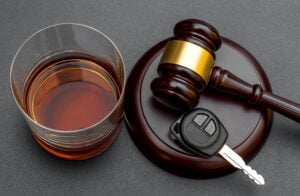
Michigan,
the
72-year-old
jurist
was
accused
of
driving
“super
drunk,”
with
a
blood-alcohol
content
more
than
three
times
the
legal
limit.
Now,
thanks
to
a
newly
released
police
report,
we
have
more
detail
about
just
how
impaired
the
judge
allegedly
was
—
and
it’s
not
pretty.
According
to
the
report
cited
by
Bloomberg
Law,
after
crashing
his
vehicle
back
in
October,
Ludington
struggled
through
field
sobriety
tests
in
ways
that
would
be
concerning
in
a
22-year-old
spring
breaker,
let
alone
a
life-tenured
federal
judge.
Asked
to
recite
the
alphabet
from
C
to
Q,
Ludington
reportedly
offered:
“A,
B,
C,
D,
F,
U.”
He
also
allegedly
told
the
responding
trooper
—
twice
—
that
he
was
a
federal
judge,
which
is
certainly
one
way
to
try
to
establish
credibility
while
“he
appeared
to
have
urinated
himself.”
Ludington
said
he
hadn’t
been
drinking,
and
claimed
he
didn’t
remember
crashing.
Police
said
they
smelled
alcohol.
A
post-crash
blood
draw
later
clocked
him
at
0.27.
Bloomberg
has
additional
details:
The
trooper
tried
to
give
Ludington
a
breath
test,
but
the
judge
either
couldn’t
properly
blow
or
understand
the
instructions.
On
a
fifth
attempt
the
trooper
told
the
judge
he’d
consider
his
actions
a
refusal
if
he
didn’t
perform
the
test
the
right
way,
after
which
the
judge
became
“argumentative”
and
the
test
ended.
Ludington
was
handcuffed,
put
in
the
front
seat
of
the
patrol
vehicle,
and
taken
to
a
hospital,
where
his
blood
was
drawn.
Emergency
department
staff
medically
cleared
him,
after
which
he
was
taken
to
jail
and
released
upon
posting
a
$500
bond.
It’s
one
thing
for
a
federal
judge
to
find
himself
facing
a
DUI
charge.
It’s
another
for
the
public
record
to
include
allegations
that
he
couldn’t
complete
the
alphabet
and
responded
to
instructions
with
what
reads
like
a
middle-schooler’s
idea
of
edgy
humor.
Ludington
—
a George
W.
Bush
appointee
who
remains
on
the
bench
—
has
pleaded
not
guilty
to
misdemeanor
charges
of
operating
a
vehicle
with
a
blood-alcohol
content
of
0.17
or
more
and
operating
while
intoxicated.
His
jury
trial
is
scheduled
for
May
8.
Staci
Zaretsky is
the
managing
editor
of
Above
the
Law,
where
she’s
worked
since
2011.
She’d
love
to
hear
from
you,
so
please
feel
free
to email her
with
any
tips,
questions,
comments,
or
critiques.
You
can
follow
her
on Bluesky, X/Twitter,
and Threads, or
connect
with
her
on LinkedIn.
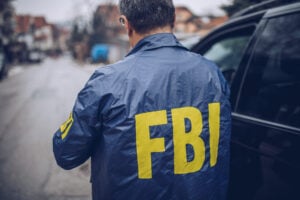
Earlier
this
month,
the
FBI
decided
it
was
going
to
help
Donald
Trump steal
back
the
election he’s
claimed
for
half-a-decade
was
stolen
from
him.
The
state
whose
Secretary
of
State
was
asked
directly
by
the
outgoing
president
in
January
2021
to
“find
11,780
votes”
was
raided
by
Trump
2.0,
who
still
somehow
thinks
he
can
win
the
election
he
lost
back
in
2020.
It’s
not
just
revenge
Trump
is
seeking.
He’s
also
hoping
to
find anything that
will
allow
him
to
cast
doubt
on
midterm
election
results
now
that
it
seems
entirely
possible
the
GOP
might
lose
its
majority
in
the
legislature.
The
FBI
walked
off
with
tons
of
stuff
after
its
raid
of
the
Fulton
County
election
hub
in
Georgia.
The
raid
—
which
was
attended
by
the
current
DNI
Tulsi
Gabbard
for
no
apparent
reason
—
saw
the
Trump
government
seize
as
many
2020
ballots
and
voter
records
as
possible.
The
stated
reason
for
this
raid
was
to
collect
evidence
related
to
two
alleged
crimes:
not
retaining
election
records
long
enough
and
attempts
to
“intimidate
voters
or
procure
false
votes/false
voter
registration.”
One
of
several
glaring
problems
with
this
raid
is
the
fact
that
some
of
the
criminal
acts
alleged
have
already
surpassed
the
five-year
statute
of
limitations.
The
rest
of
the
glaring
problems
are
far
less
subtle.
Like
Trump
using
the
FBI
and
DOJ
to
engage
in
vindictive
prosecution.
And
the
FBI
appearing
to
have
deliberately
mislead
the
magistrate
judge
to
get
this
search
warrant
approved.
This declaration [PDF]
by
Ryan
Macias,
a
project
manager
for
the
voting
system
used
in
Fulton
County
who
also
served
as
the
Acting
Director
of
the
Voting
System
Program
during
the
2020
election,
points
out
multiple
flaws
in
the
FBI’s
warrant
affidavit
—
all
of
which
it
would
be
safe
to
assume
were
deliberate
“errors.”
The
Affidavit
asserts
that
there
were
five
“deficiencies
or
defects
with
the
November
3,
2020,
election
and
tabulation
of
the
votes
thereof.”
The
Affidavit
concludes
that
“[i]f
these
deficiencies
were
the
result
of
intentional
action,
it
would
be
a
violation
of”
Title
52
U.S.C.
§§
20511
(Criminal
Penalties)
and
20701
(Retention
and
Preservation
of
Records
of
Elections).
In
all
five
areas
identified
by
Special
Agent
Evans’
Affidavit,
there
are
a
multitude
of
false
or
misleading
statements
and
omissions. In
fact,
there
are,
as
set
forth
below, over
a
dozen
omissions
of
critical
parts
of
the
reports
and
related
materials that
I
identified
in
paragraph
4
above. This
is
in
addition
to
the
absence
of
any
recognition
that
much
of
what
the
Affidavit
references
as
concerning
are
widely
known
as
benign
and
common
election
practices. As
noted
there,
all
of
thosematerials
are
publicly
available
and
could
have
been
referenced
by
Special
AgentEvans.
Even
when
Special
Agent
Evans
cites
to
one
of
these
sources, he
repeatedlyomits
crucial
facts
and
findings
inconsistent
with
his
characterizations. Once
thestatements
and
omissions
in
the
Affidavit
are
corrected
and
based
on
my
experienceadministering
elections
in
accordance
with
the
statutes
cited
in
the
Affidavit,
theAffidavit
loses
any
basis
in
reality.
The
whole
thing
needs
to
be
read,
but
here
are
just
a
couple
of
the
things
we’re
going
to
generously
call
“errors,”
even
though
they’re
really
deliberate
omissions.
The
criminal
allegations
allege
ballot
images
weren’t
retained
in
violation
of
the
law.
But,
as
this
declaration
points
out,
the
retention
of
images
wasn’t
mandated
by
law
in
Georgia
until
2021,
which
would
be after the
2020
election.
If
images
weren’t
retained,
it
was
likely
because
election
staffers
obviously
didn’t
think
it
was
necessary
to
do
so.
Second,
the
affidavit
claims
something
is
shady
about
the
audits
performed
by
county
officials,
insinuating
that
this
somehow
resulted
in
votes
mysteriously
swinging
the
state
in
Biden’s
direction.
This
declaration
states
the
actual
truth:
“risk
limiting
audits”
only
aid
in
determining
whether
or
not
a
recount
might
be
warranted.
Only
official
counts
and
recounts
can
actually
alter
voting
results.
Fulton
County’s challenge [PDF]
of
the
search
contains
even
more
information
that
indicates
the
FBI’s
search
warrant
application
was
crafted
to
basically
trick
a
judge
into
authorizing
an
illegal
search
(all
emphasis
in
the
original):
First,
the
Fourth
Amendment
demands
“probable
cause”—not
“possible
cause.”
The
Affidavit
fails
that
constitutional
requirement.
Despite
years
of
investigations
of
the
2020
election,
the
Affidavit
does
not
identify
facts
that
establish
probable
cause
that anyone committed
a
crime.
Instead,
FBI
Special
Agent
Evans
(the
“Affiant”)
all
but
admits
that
the
seizure
will
yield
evidence
of
a
crime only
if certain
hypotheticals
are
true.
See,
e.g.,
Aff.
¶
10
(“If these
deficiencies
were
the
result
of
intentional
action, it
would
be a
violation
of
federal
law[.]”);
¶
85
(“If
these
deficiencies
were
the
result
of
intentional
action,
the
election
records
.
.
.
are
evidence
of
violations[.]”).
Unsupported
by
probable
cause
and
dependent
on
unsubstantiated
hypotheticals,
Respondent’s
seizure
violated
the
Fourth
Amendment.
There’s
more
(emphasis
mine):
Second,
instead
of
alleging
probable
cause
to
believe
a
crime
has
been
committed,
the
Affidavit
does
nothing
more
than
describe
the
types
of
human
errors
that
its
own
sources
confirm
occur
in
almost
every
election—without
any
intentional
wrongdoing
whatsoever. Mislabeling
an
expected
margin
of
error
as
“deficiencies”
or
“defects”
cannot
establish
probable
cause,
let
alone
for
a
seizure
of
this
magnitude.
Third,
the
Affidavit
omits
numerous
material
facts—including
from
the
very
reports
and
publicly-disclosed
investigations
that
the
Affiant
cites—that
confirm
the
alleged
conduct
was
previously
investigated
and
found
to
be
unintentional.
Moreover,
the
Affidavit
not
only
fails
to
allege
that
any
particular
witness
is
reliable
or
credible; it
omits
discrediting
information
about
those
witnesses
that
was
obviously
available
to
the
Affiant.
These
omissions
are
serious. The
ex
parte
warrant
process
would
be
rendered
a
nullity
if
the
government
were
permitted
to
hide
material
and
probative
facts
that
refute
probable
cause
from
a
magistrate
judge
and
nevertheless
retain
the
fruits
of
its
misconduct.
It
then
goes
on
to
note
that
even
if
the
affidavit
wasn’t
more
about
what
was
deliberately
left
out
of
it,
rather
than
what
Kash
Patel’s
FBI
decided
to
include,
it
would
still
suck,
constitutionally-speaking:
Fourth,
even
if
the
Affidavit
established
probable
cause,
the
seizure
of
original
election
materials
would
be
unreasonable
and
in
callous
disregard
of
the
Fourth
Amendment because
(1)
the
statutes
of
limitation
have
lapsed
on
the
only
crimes
under
investigation;
(2)
the
warrant
violates
Georgia’s
state
sovereignty
by
effectively
enjoining
a
pending
state
court
proceeding
and
preventing
Georgia
from
performing
its
constitutionally-mandated
role
in
administering
its
elections;
and
(3) the
Respondent
improperly
used
the
criminal
warrant
process
to
circumvent
a
pending
civil
lawsuit
in
which
it
requested
the
same
records.
That
last
sentence
is
a
particularly
spicy
zinger.
It
shows
the
administration
will
do
anything
to
rack
up
a
few
rabble-rousing
“victories,”
no
matter
how
fleeting
or
Pyrrhic.
This
is
a
fully-cooked
collection
of
gassed-up
bigots
and
conspiracy
theorists
(or
both!)
who
have
managed
to
turn
their
extremely
online
“own
the
libs”
bullshit
into
a
24/7
attack
on
the
Constitution,
the
system
of
checks
and
balances,
and
anything
else
that
stands
in
the
way
of
their
autocratic
wet
dreams.
What’s
standing
between
us
and
further
destruction
of
the
stuff
that
makes
America
great
is
a
court
system
that
doesn’t
actually
seem
to
know
what
to
do
when
it
has
to
deal
with
an
entire
administration
that
refuses
to
play
by
the
rules
that
have
held
this
nation
together
for
more
than
two
centuries.
It’s
time
for
the
courts
to
dig
deep
and
start
breaking
the
glass
on
every
judicial
tool
labeled
“IN
CASE
OF
EMERGENCY.”
Giving
any
of
these
fuckers
the
benefit
of
a
doubt
only
allows
them
to
dig
in
deeper.
*
Files
reveal
Kathy
Ruemmler
conferred
with
Jeffrey
Epstein
on
Secret
Service
prostitution
scandal.
On
the
one
hand,
it’s
important
to
confer
with
experts.
On
the
other…
[Yahoo
Finance]
*
“A
furious
daughter
has
sent
an
email
to
hundreds
of
law
firms
alleging
that
a
legal
recruiter
had
an
affair
with
her
father.
The
outraged
daughter
sent
the
email
with
the
subject
heading
of
“WHORE”…”
[Roll
on
Friday]
*
DHS
issues
new
order
asserting
more
authority
to
potentially
detain
legal
refugees.
[PBS]
*
JPMorgan
Chase
argues
Donald
Trump
fraudulently
added
them
to
his
$5B
debanking
LOLsuit.
[CNN]
*
Practicing
for
17
years
after
losing
license
earns
$30,000
sanction.
[ABA
Journal]
*
Trump
nominating
his
lawyer
from
E.
Jean
Carroll
losses
to
the
Eighth
Circuit.
[National
Law
Journal]
*
DOJ
claims
former
Google
engineers
took
trade
secrets
to
Iran.
So,
soon,
the
Iranians
will
have
their
search
results
buried
under
30
sponsored
links
too.
[Law360]
The
Barry
University
School
of
Law
Professor
Is
Alleged
To
Have
Thousands
Of
Images:
The
Dow
won’t
protect
him.
Second
Time
The
Error:
Gordon
Rees
gets
caught
in
another
AI
hallucination
mishap!
Want
To
Brush
Up
On
International
Law?:
These
schools
should
be
at
the
top
of
your
list!
Trial
Attorney
Pens
Legal
Thriller:
The
story
is
set
in
Florida
during
the
Reefer
Madness
era.
Want
Some
Advice
On
Being
A
Lawyer?:
Here’s
a
list
of
100
things!
That’s
A
Lot
Of
Giving
Back!:
3Ls
did
millions
of
hours
of
pro
bono
work
in
2025!


 Kathryn