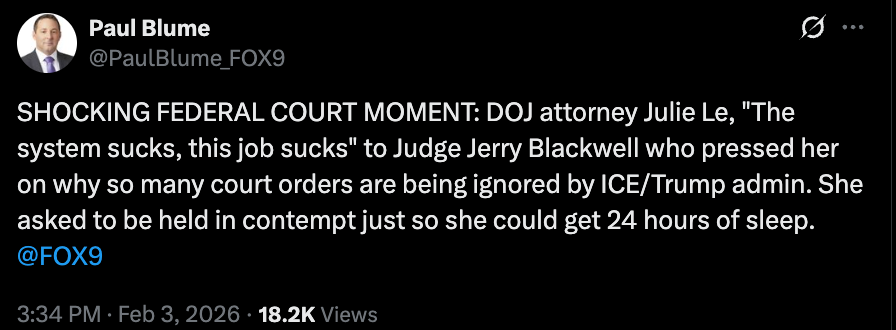
Hey,
they
built
ICE
by
indiscriminately
recruiting
people
who
failed
even
the
barest
of
entry
qualifications
and
then
refusing
to
train
them
to
follow
the
bare
minimum
of
rules
that
bound
federal
law
enforcement…
maybe
it
will
work
for
prosecutors!
In
the
meantime,
let’s
see
how
it’s
going
on
the
ground
over
at
DOJ.
So,
I
guess
they
haven’t
seen
a
flood
of
new
applications
based
on
Chad
Mizelle
asking
potential
prosecutors
to
slide
into
his
DMs.
It’s
early,
but
Julie
Le
now
takes
a
commanding
lead
in
the
race
for
quote
of
the
year.
“The
system
sucks,
this
job
sucks,”
she
told
Judge
Blackwell.
Given
the
multiple
recorded
incidents
of
DOJ
attorneys
lying
to
the
courts,
this
is
refreshing
candor.
In
any
normal
setting,
she
would
likely
get
her
24
hours
of
sleep
starting
roughly
5
minutes
after
getting
back
to
the
office
and
learning
that
she’d
been
fired.
But
these
are
not
normal
times,
and
the
DOJ
may
need
to
hang
on
to
the
lawyer
even
if
she’s
willing
to
go
on
the
record
as
actively
hating
her
job.
This
is
what
“flooding
the
zone”
looks
like.
Trump’s
braintrust
long
thought
that
bombarding
the
system
with
abuses
would
overwhelm
the
guardrails.
What
they’re
finding
out
is
that
the
guardrails
hold
and
the
administration
itself
just
ends
up
squished.
For
her
sake,
hopefully
she
can
cut
ties
with
this
Justice
Department
on
her
own
terms
sooner
rather
than
later.
There’s
a
lot
of
recent
talk
about
Paul,
Weiss’s
chair
Brad
Karp
—
not
much
of
it
flattering
right
now.
The
Biglaw
partner’s
relationship
with
the
infamous
sexual
predator
Jeffrey
Epstein
has
been
in
the
news,
after
the
release
of
the
latest
tranche
of
government
files
related
to
the
late
Epstein.
We’ve known
for
a
while that
Karp
—
and
a
lot
of
rank
and
file
PW
attorneys
—
would
appear
in
the
Epstein
files.
The
firm
represents
Apollo
Global
Management
and
its
CEO
Leon
Black,
who
worked
extensively
with
Epstein.
Black
and
Epstein
had
a
fee
dispute,
and
Paul,
Weiss
was
involved
in
that
negotiation.
But
the
recent
doc
drop
paints
a
cozier
picture
of
the
relationship
between
Karp
and
Epstein
than
anticipated.
The
documents
show
Karp
fawning
over
social
engagements
with
Epstein;
asking
for
favors
on
behalf
of
his
son;
gossiping
about
Biglaw
leadership
changes;
and
editing
a
defense
of
Epstein’s plea
agreement
in
a
Florida
sex
abuse
and
trafficking
case.
This
is
something
Karp
regrets,
but
perhaps
now
isn’t
the
time
for
Karp
to
be
out
in
front
of
a
crowd.
According
to
Bloomberg
Law,
Karp
is
no
longer
appearing
at
an
event
today
where
he
was
slated
to
discuss
“leadership
in
uncertain
times.”
Karp
was
a
promoted
speaker
at
the
Wall
Street
Journal’s
Invest
Live
two-day
conference
in
West
Palm
Beach,
Florida.
He
was
scheduled
to
discuss
how
he’s
guiding
clients
through
geopolitical
developments,
artificial-intelligence
transformation,
and
a
rapidly
evolving
US
political
landscape,
according
to
the
Journal’s
original
itinerary.
The
discussion
has
been
replaced
with
the
publication’s
reporting
and
outlook
on
the
Federal
Reserve.
Kathryn
Rubino
is
a
Senior
Editor
at
Above
the
Law,
host
of
The
Jabot
podcast,
and
co-host
of
Thinking
Like
A
Lawyer.
AtL
tipsters
are
the
best,
so
please
connect
with
her.
Feel
free
to
email
her
with
any
tips,
questions,
or
comments
and
follow
her
on
Twitter
@Kathryn1 or
Mastodon
@[email protected].
Ed.
note:
This
is
the
latest
in
the
article
series, Cybersecurity:
Tips
From
the
Trenches, by
our
friends
at Sensei
Enterprises,
a
boutique
provider
of
IT,
cybersecurity,
and
digital
forensics
services.
Lawyers
have
long
known
that
expert
testimony
can
make
or
break
a
case.
Whether
the
issue
concerns damages,
causation,
medical
matters,
engineering
analysis,
or
economic
modeling,
experts
provide
the
specialized
knowledge
courts
rely
on.
Artificial
intelligence (AI) has
now
entered
this
space,
not
as
a
replacement
for
experts
but
as
a
tool reshaping how
expert
testimony
is
analyzed,
prepared,
and
challenged.
To
be
clear,
no
AI
system
is
about
to
take
the
stand.
What
AI
can
do,
and
already
does,
is
change
the
mechanics
of
how
expert
evidence
is
reviewed
and
tested.
Used
thoughtfully,
AI
offers
real
strategic
advantages.
Used
carelessly,
it
can
undermine
credibility
and,
in
some
cases,
lead
to
the
exclusion
of
critical
testimony.
What
we
are
seeing
is
not
an
AI
takeover
of
expert
witnesses,
but
a supplemental model in
which lawyers
and
experts
use
AI
to
amplify
insight
and
scrutiny.
AI
as
a
Litigation
Multiplier
One
of
the
most
powerful
uses
of
AI
in
expert
work
is
large-scale
review.
Expert
reports,
deposition
transcripts,
prior
testimony,
data
tables,
and
technical
literature
can
now
be
analyzed
at
a
scale
no
human
team
could
reasonably
manage.
AI
tools
can
flag
internal
inconsistencies,
identify
conflicts
with
prior
opinions,
and
surface
alternative
explanations
that
might
otherwise
go
unnoticed.
This
changes
the
dynamic
in
the
war
room.
Instead
of
spending
countless
hours
on
review,
lawyers
can
focus
on
interpretation,
judgment,
and
strategy.
AI
does
all
the
heavy
lifting,
and lawyers
can
decide
what
matters.
Sharpening the
Edge
on Cross-Examination
AI
is
also
being
used
to
simulate
adversarial
questioning.
By
feeding
an
expert’s
report
and
prior
statements
into
a
model
configured
to
challenge
assumptions
and
probe
weaknesses,
lawyers
can pressure-test testimony
before
it
ever
reaches
the
courtroom.
This
does
not
replace
traditional
mock
examinations.
It
enhances
them.
Experts
can
refine
responses,
anticipate
lines
of
attack,
and
identify
weak
points
early.
On
the
flip
side,
lawyers
challenging
opposing
experts
can
use
AI
to
synthesize
prior
testimony
and technical
literature
into
focused
lines
of cross-examination that
expose
contradictions
or
unsupported
assumptions.
Translation,
Accessibility,
and
Persuasion
Expert
testimony
often
fails
not
because
it
is
wrong,
but
because
it
is
incomprehensible.
AI
can
help
translate
dense
technical
analysis
into
language that judges
and
juries
can understand.
Used
properly,
AI
can
help
recast
complex
engineering
conclusions
into
practical
explanations,
distill
economic
models
into
plain
language,
and
highlight
the
core
takeaways
without
distorting
substance.
This
is
not
about
dumbing
things
down.
It
is
about
effective
communication.
Lawyers
who
can
present
expert
findings
clearly
and
persuasively
will
always
have
an
advantage
over
those
who
bury
the
factfinder
in
technical
jargon.
Hallucinations
and
Overreliance
Are
Real
Risks
The
risks
of
AI
use
are
not
hypothetical.
Courts
have
already
rejected
expert
submissions
that
included
AI-generated
citations
or
analyses
that
did
not
exist.
In
those
cases,
the
very
tool
meant
to
improve
efficiency
became
a
source
of
false
information
because
it
was
not
adequately
supervised.
This
is
a
cautionary
tale
every
litigator
should
internalize.
AI
can
generate
content
that
looks
plausible
but
is
not
real.
A
human
must
still
verify
every
citation,
dataset,
and
conclusion.
The
duty
to
ensure
accuracy
has
not
changed.
Ethics
and
Best
Practices
AI
is
not
a
magic
solution.
Responsible
use
in
expert
work
requires
structure
and
discipline.
Lawyers
should
clearly
document
how
AI
tools
were
used
in preparation or
review
of expert
testimony.
Experts
should
receive
guidance
on
avoiding hallucinogenic content
and
ensuring
that
all
conclusions
are
independently
validated.
Confidential
data
must
be
protected,
and
sensitive
material
should
not
be
fed
into
tools
that
lack
appropriate
safeguards.
Transparency
also
matters.
As
courts
become
more
familiar
with
AI,
judges
may
expect
disclosure
when
AI
plays
a
meaningful
role
in
expert
analysis.
That
expectation
is
not
about
discouraging the
use
of
AI.
It
is
about
maintaining
trust
in
the
reliability
of
evidence.
The
Bottom
Line
AI
is
not
replacing
expert
witnesses,
but
it
is
transforming
how expert testimony
is
handled
in
litigation.
Lawyers
who
use
AI
thoughtfully
can
review
more
material,
prepare
more
effectively,
and
present
complex
ideas
more
clearly.
Those
who
ignore
it
risk
falling
behind.
Those
who
misuse
it
risk
harming
their
cases and
their
credibility.
At
its
best,
AI
turns
overwhelming
volumes
of
information
into
actionable
insight.
At
its
worst,
it
turns
fiction
into
fact.
The
difference
is
human
oversight,
and
that
responsibility
still
rests
squarely
with
the
lawyer
Michael
C.
Maschke
is
the
President
and
Chief
Executive
Officer
of
Sensei
Enterprises,
Inc.
Mr.
Maschke
is
an
EnCase
Certified
Examiner
(EnCE),
a
Certified
Computer
Examiner
(CCE
#744),
an
AccessData
Certified
Examiner
(ACE),
a
Certified
Ethical
Hacker
(CEH),
and
a
Certified
Information
Systems
Security
Professional
(CISSP).
He
is
a
frequent
speaker
on
IT,
cybersecurity,
and
digital
forensics,
and
he
has
co-authored
14
books
published
by
the
American
Bar
Association.
He
can
be
reached
at [email protected].
Sharon
D.
Nelson
is
the
co-founder
of
and
consultant
to
Sensei
Enterprises,
Inc.
She
is
a
past
president
of
the
Virginia
State
Bar,
the
Fairfax
Bar
Association,
and
the
Fairfax
Law
Foundation.
She
is
a
co-author
of
18
books
published
by
the
ABA.
She
can
be
reached
at [email protected].
John
W.
Simek
is
the
co-founder
of
and
consultant
to
Sensei
Enterprises,
Inc.
He
holds
multiple
technical
certifications
and
is
a
nationally
known
digital
forensics
expert.
He
is
a
co-author
of
18
books
published
by
the
American
Bar
Association.
He
can
be
reached
at [email protected].
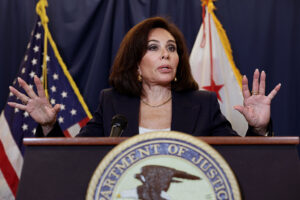
Sure,
unlike
some
of
her
colleagues,
Jeanine
Pirro
was
actually
nominated
and
confirmed
by
the
Senate
to
her
U.S.
Attorney
position,
but
that
doesn’t
mean
she
isn’t
out
of
her
depth.
The
latest,
but
far
from
only,
example
of
that
happened
Monday
at
her
old
stomping
grounds,
Fox
News.
The
attorney
that
rose
to
prominence
as
a
TV
personality
found
that
not
all
cable
news
hits
are
going
to
be,
well
a
hit
with
the
MAGA
base.
Yesterday,
Pirro
appeared
on
Fox
News
with Martha
MacCallum,
and
made
some
interesting
comments.
“I
don’t
care
if
you
have
a
license
in
another
district,
and
I
don’t
care
if
you’re
a
law-abiding
gun
owner
somewhere
else.
You
bring
a
gun
into
this
district,
count
on
going
to
jail
and
hope
you
get
the
gun
back,
and
that
makes
all
the
difference,” Pirro
said
in
a
rant
worthy
of
any
flaming
liberal.
Particularly
when
Pirro
followed
up,
adding,
“And
you
bring
a
gun
into
the
district,
you
mark
my
words,
you’re
going
to
jail.”
Now,
sure,
she
was
trying
to
give
Donald
Trump
and
his
gross
occupation
(and
9,500
arrests)
of
Washington
D.C.
credit
for
the
decline
in
homicides
in
2026
(there
was
also
subfreezing
weather
for
a
significant
portion
of
January
keeping
people
indoors,
but
SHHHHH),
but
these
strident
statements
about
the
limits
of
the
Second
Amendment
were
noteworthy
for
the
MAGA
faithful.
“I
bring
a
gun
into
the
district
every
week,”
Rep.
Greg
Steube wrote
on
X.
“I
have
a
license
in
Florida
and
DC
to
carry.
And
I
will
continue
to
carry
to
protect
myself
and
others.
Come
and
Take
it!”
Rep.
Thomas
Massie asked
his
followers,
“Why
is
a
‘conservative’
judge
threatening
to
arrest
gun
owners?”
Well,
she’s
the
current
U.S.
Attorney
for
the
District
but
the
point
remains.
Stephen
Gutowski,
founder
of
The
Reload,
slammed
Pirro
and
Fox’s
MacCallum
for
“cheering
her
on.”
Florida
Gov.
Ron
DeSantis
sounded
off
on
X,
“Second
Amendment
rights
are
not
extinguished
just
because
an
American
visits
DC.”
Kostas
Moros,
director
of
legal
research
for
the
nonprofit
Second
Amendment
Foundation,
said
it
was
a
“moronic
statement.”
The
backlash
led
Pirro
to
walk
back
her
statements,
saying
“We’re
taking
guns
off
the
street,
illegal
guns
in
the
hands
of
criminals
who
want
to
use
those
guns
to
victimize
law-abiding
citizens.
There’s
a
big
difference
here.
You’re
responsible,
you
follow
the
laws,
you’re
not
going
to
have
a
problem
with
me.”
Ahh,
Pirro
is
just
using
gun
laws
as
a
pretext
to
go
after
the
“wrong”
kind
of
gun
owners.
Gotcha.
That’s
disappointing,
but
much
more
on
brand
for
her.
Kathryn
Rubino
is
a
Senior
Editor
at
Above
the
Law,
host
of
The
Jabot
podcast,
and
co-host
of
Thinking
Like
A
Lawyer.
AtL
tipsters
are
the
best,
so
please
connect
with
her.
Feel
free
to
email
her
with
any
tips,
questions,
or
comments
and
follow
her
on
Twitter
@Kathryn1 or
Mastodon
@[email protected].
As
part
of
the
Legal
Marketing
Association’s
(LMA’s)
partnership
with
Above
the
Law,
each
month
we
share
a
roundup
of
insights
and
intel
from
Strategies
&
Voices,
LMA’s
official
online
publication
dedicated
to
the
craft
of
legal
marketing.
This
edition
provides
an
exclusive
look
at
a
legal
marketer’s
self-forged
path
into
the
profession,
what
the
future
holds
for
legal
marketing
and
questions
to
answer
when
considering
marketing
investments.
LMA
40th
Anniversary
Member
Spotlight
Series:
Abby
Wright
As
part
of
LMA’s
40th
anniversary
spotlight
series,
Abby
Wright
shares
how
she
created
a
path
for
herself
in
legal
marketing,
her
take
on
the
role
of
business
development
and
firm
strategy,
and
advice
for
the
next
generation
of
professionals.
Defining
the
Future
of
Legal
Marketing:
LMA
Members
Offer
Predictions
Last
year,
the
legal
marketing
profession
turned
40
years.
We
asked
LMA
members
for
predictions
of
where
the
profession
is
heading.
From
an
increased
emphasis
on
personalization
to
relationship
building,
embracing
zero-click
marketing
and
more,
these
are
the
trends
LMA
members
told
us
to
watch
for
in
the
years
to
come.
12
Questions
to
Ask
When
Considering
a
Marketing
Investment
Law
firms
face
a
flood
of
“pay-to-play”
marketing
opportunities,
from
events
and
sponsorships
to
awards
and
directories.
But
not
all
investments
deliver
real
value.
How
do
you
separate
the
high-ROI
options
from
the
noise?
This
infographic
authored
by
James
Stapleton
outlines
12
essential
questions
to
help
you
evaluate
marketing
opportunities
strategically
and
make
smarter
budget
decisions.
Back
in
December,
the
Virginia
State
Bar
declined
to
pursue
an
ethics
probe
into
the
insurance
lawyer
posing
as
the
U.S.
Attorney
for
the
Eastern
District
of
Virginia.
The
Trump
administration
had
illegally
installed
Lindsey
Halligan
into
that
role,
and
she
took
advantage
of
that
opportunity
to
pursue
bad
cases
against
the
president’s
perceived
enemies
list.
And
she
even
managed
to
screw
those
up.
Despite
the
judicial
scoldings,
Halligan
continued
to
play
act
as
U.S.
Attorney
until
Judge
David
Novak
leveled
a
scathing
rebuke,
forcing
the
DOJ
to
finally
back
away
from
Halligan.
At
the
time,
Virginia
professional
regulators
refused
to
act
on
a
complaint
filed
by
the
Campaign
for
Accountability,
claiming
“Whether
criminal
indictments
were
obtained
through
material
misrepresentations
of
fact
and
done
for
political
purposes
falls
within
the
authority
of
the
court
to
determine
and
not
this
office.”
Fast
forward,
and
the
courts
have
adjudicated
this
and
more,
so
the
Campaign
has
filed
its
renewed
complaint.
Which
frankly
showed
tremendous
restraint
by
not
opening
with
“Yes,
Virginia,
there
is
a
code
of
professional
conduct.”
Federal
judges
have
now
issued
rulings
finding
that
Halligan
operated
without
legal
authority,
defied
judicial
orders,
and
made
“fundamental
misstatements
of
the
law.”
The
bar
wanted
the
courts
to
do
their
job.
The
courts
did
their
job.
Tag,
you’re
it.
Magistrate
Judge
William
E.
Fitzpatrick
first
found
that
Halligan
made
“fundamental
misstatements
of
the
law”
in
the
grand
jury
process,
including
suggesting
the
former
FBI
director
didn’t
have
a
Fifth
Amendment
right
not
to
testify.
Then
Judge
Cameron
McGowan
Currie
ruled
Halligan
had
been
unlawfully
serving
as
U.S.
Attorney
since
September
22,
2025,
and
had
no
lawful
authority
to
present
indictments
against
James
Comey
or
New
York
Attorney
General
Letitia
James
in
the
first
place.
Which
brought
us
to
Judge
David
Novak
wondering
why
Halligan
kept
signing
filings
as
though
she
hadn’t
already
been
told
to
stop.
After
conclusively
demanding
Halligan
knock
it
off,
Judge
Novak
warned
that
he’d
refer
her
to
the
Virginia
Bar
if
she
continued.
But
a
judge
referral
isn’t
required
for
a
state
bar
to
perform
its
baseline
ethical
obligations.
In
fact,
the
Virginia
bar
previously
disciplined
prosecutors
without
judicial
referrals.
A
Fairfax
County
prosecutor
got
disciplined
for
suborning
perjury.
A
Prince
George’s
County
prosecutor
got
disciplined
for
incompetence.
If
there’s
any
difference
here,
it’s
that
there’s
an
even
deeper
record
of
possible
violations.
“Two
federal
judges
found
that
Ms.
Halligan
operated
without
legal
authority,
with
one
finding
she
openly
defied
court
orders,
and
another
concluded
she
misled
a
grand
jury,”
CfA’s
Michelle
Kuppersmith
explained.
“Contrary
to
the
Virginia
State
Bar’s
claims,
it
has
the
authority
and
must
act
to
investigate
these
serious
allegations
and
hold
Ms.
Halligan
accountable.”
The
new
complaint
provides
another
whirlwind
journey
through
the
ethical
rules,
highlighting
a
treasure
trove
of
“stuff
lawyers
shouldn’t
do.”
Failing
to
investigate
under
these
egregious
circumstances
sends
the
message
that
powerful
prosecutors
can
violate
ethical
rules
with
impunity,
safe
in
the
knowledge
that
the
Bar
will
turn
a
blind
eye.
While
they
claimed
to
be
deferring
to
the
courts,
it’s
impossible
to
read
the
bar’s
earlier
retreat
as
anything
but
an
attempt
to
avoid
the
administration’s
ire.
From
Biglaw
firms
to
institutions
of
higher
learning,
anyone
crossing
the
White
House
finds
itself
on
the
receiving
end
of
government
harassment.
Those
petty
efforts
consistently
wither
in
litigation,
but
it
is
easier
to
avoid
the
issue
entirely.
But
gatekeeping
the
profession
isn’t
supposed
to
be
easy.
It’s
a
serious
job
and
attorneys
deserve
a
regulator
that
isn’t
going
to
shirk
that
responsibility.
When
it’s
all
said
and
done,
the
only
accountability
that
these
lawyers
are
likely
to
ever
face
for
their
abuses
will
have
to
come
from
the
profession
itself.
It’s
going
to
be
on
lawyers
to
police
our
own
and
make
sure
that
attorneys
filing
frivolous,
retaliatory
criminal
suits
or
lying
to
tribunals
don’t
get
to
saunter
through
the
revolving
door
back
to
a
cushy
firm
job
when
this
is
over.
They
can’t
be
allowed
to
practice
again.
Whether
you’re
cross-examining
or
putting
forth
an
expert
witness,
effectively
managing
their
testimony
is
a
difficult
task.
Experts
must
garner
the
respect
of
the
judge
and
jury
while
also
defending
their
own
credibility
—
a
precarious
balancing
act,
particularly
when
faced
with
effective
cross-examination.
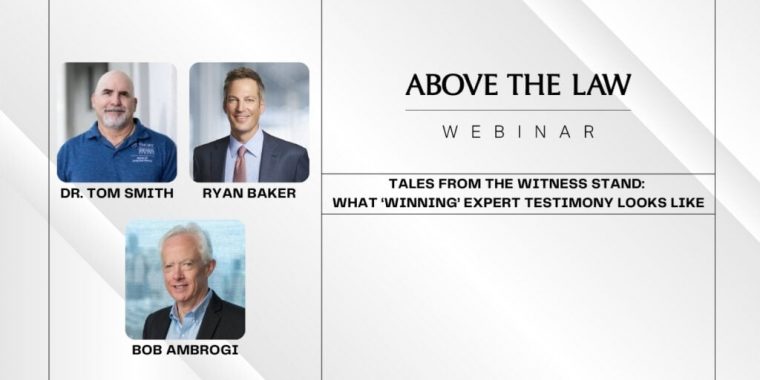
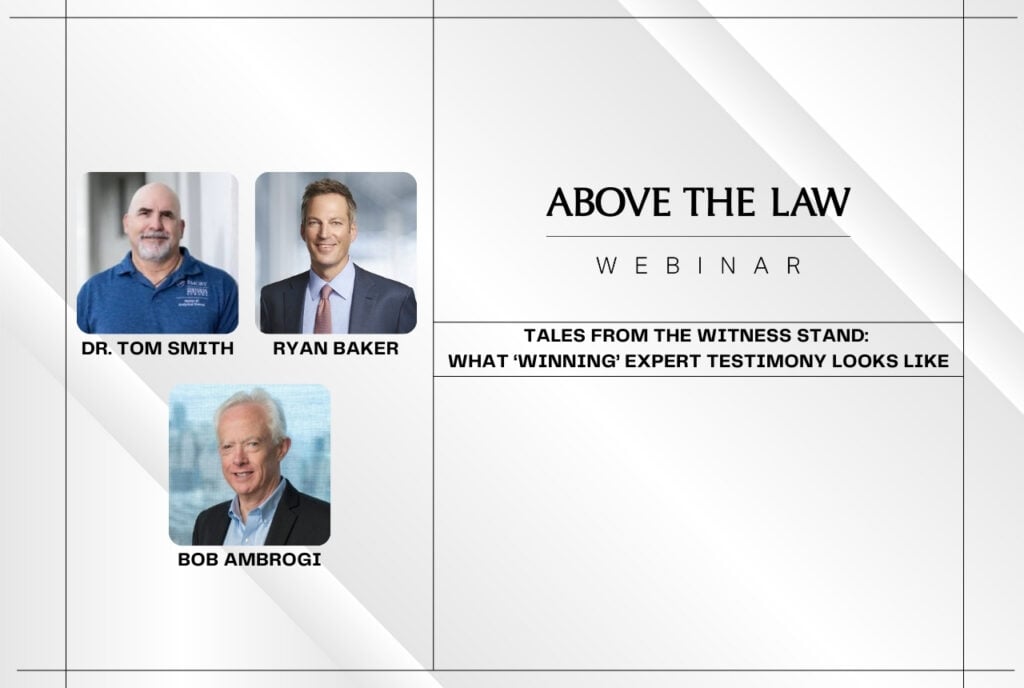
In
this
webinar,
Above
the
Law’s
Bob
Ambrogi
is
joined
by
litigator
Ryan
Baker
of
Waymaker
LLP
and
Dr.
Tom
Smith
of
Emory
University,
an
experienced
expert
witness,
to
explore
all
things
expert
testimony
in
2026.
•
What
“winning”
expert
testimony
looks
like •
Examples
of
expert
testimony
from
notable
cases •
How
effective
lawyers
cross-examine
experts •
How
top
expert
witnesses
translate
specialized
jargon
for
factfinders •
Trends
in
expert
witness
preparation,
including
the
role
of
technology
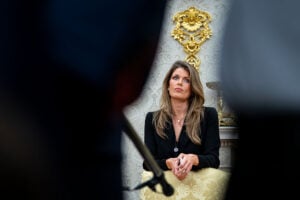
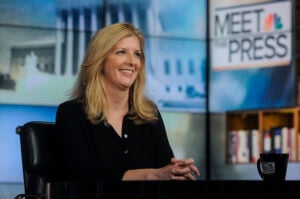
Kathryn
Ruemmler
(Photo
by
William
B.
Plowman/NBC/NBC
Newswire/NBCUniversal
via
Getty
Images)
The
3
million
pages
of
materials
in
the
latest
government
dump
of
Epstein
files
—
“organized,”
such
as
it
is,
in
a
clunky
database
—
contain
a
dark
look
into
the
machinations
of
the
ultra
wealthy.
The
legal
industry
has
not
escaped
scrutiny
in
the
files,
and
it
turns
out
the
infamous
Jeffrey
Epstein
was
weirdly
involved
in
the
career
choices
of
a
prominent
attorney.
Kathryn
Ruemmler’s
legal
career
is
noteworthy
by
any
measure.
The
former White
House
counsel under
President
Barack
Obama,
she
was
a
partner
at
Latham
&
Watkins
and
co-chair
of
its
white-collar
defense
group.
In
2020
Ruemmler
left
Biglaw
for
the
in-house
world
at
Goldman
Sachs,
where
she
currently
serves
as
Chief
Legal
Officer
and
General
Counsel. But
her
relationship
with
Epstein
has
put
quite
the
spotlight
on
her.
The
Epstein
files
reveal
thousands
of
communications
between
the
pair.
Ruemmler
said
of
their
connection,
“I
was
a
defense
attorney
when
I
dealt
with
Jeffrey
Epstein.
I
got
to
know
him
as
a
lawyer
and
that
was
the
foundation
of
my
relationship
with
him.
I
had
no
knowledge
of
any
ongoing
criminal
conduct
on
his
part,
and
I
did
not
know
him
as
the
monster
he
has
been
revealed
to
be.”
But
their
relationship
went
beyond
the
typical
attorney/client
one.
Ruemmler
called
Epstein
“Uncle
Jeffrey”
when
she
thanked
him
for
the
“boots,
handbag,
and
watch”
he
gifted
her.
And
she
also
turned
to
Epstein
for
career
advice.
In
2015
Ruemmler
reached
out
to
Epstein
when
she
was
considering
leaving
Latham
and
heading
to
Hogan
Lovells
—
forwarding
him
the
“latest state of play”
and
the
potential
economics
of
a
lateral
move.
And
Epstein
shared
that
intel
with
Paul,
Weiss’s
chair,
Brad
Karp.
Epstein
emailed
Karp
in
December
2015,
telling
Karp,
“if
you
are
really
interested
in
Ruemmler
we
should
t=lk
sooner
rather
than
later.”
Karp
replied,
“I’m
certain
we
are.”
Epstein
dished
on
the
details
of
HoLove’s
then-CEO Steve
Immelt’s
pitch
to
Ruemmler,
“re
the
future
–
all
major
litigation
will
be
global
in
scope.
International
regulators
and
regulation.
He
said
he
would
build
a
dept
around
her.
.
blah
blah.”
Ruemmler
stayed
at
Latham,
but
it
wasn’t
the
end
of
Epstein’s
interest
in
Ruemmler’s
career.
In
2018,
after
Latham
chair
Bill
Voge stepped
down over
a
sexting
scandal,
Epstein
emailed
Karp
asking
“should
ruemmler
be
chairman
of
the
firm?”
Karp
responded
that
the
move would
be
“perceived
very
positively
by
the
marketplace.”
But
there
would
be
a
downside,
“Kathy
taking
this
on
would
be
a
real
mitzvah
for
Latham,
but
at
a
huge
personal/professional
cost
to
Kathy.”
Epstein
was
also
involved
in
Ruemmler’s
move
in-house.
Between
2018
and
2019
she
sought
a
position
at
Facebook,
something
Epstein
coached
Ruemmler
over.
As
reported
by
the
Financial
Times
Epstein
attempted
to
use
his
influence
with
Larry
Summers
—
then-chief
operating
officer
Sheryl
Sandberg’s
mentor
—
on
Ruemmler’s
behalf:
“I
suggest
you
prep
for
your
meeting
as
a
case.
Read
up
mark,
sheryl,
prepare
an
opening
and
summary.
Along
with
a
case
strategy.
III
help,”
he
wrote
to
her,
days
after
the
initial
approach.
The
emails
also
show
Epstein
lobbying
Summers,
who
was
close
to
Sandberg,
at
the
time
Facebook’s
chief
operating
officer.
“your
friend
sheryl
could
use
ruemmlers
help,”
Epstein
wrote
to
Summers
in
January
2019.
Weeks
later
he
wrote
to
Summers
again,
saying:
“sheryl
needs
ruemmler.”
Ruemmler
also
shared
with
Epstein
her
concurrent
job
search
at
Google
and
her
eventual
job
at
Goldman.
Karp
and
Ruemmler
both
say
they
regret
their
relationship
with
Epstein.
Kathryn
Rubino
is
a
Senior
Editor
at
Above
the
Law,
host
of
The
Jabot
podcast,
and
co-host
of
Thinking
Like
A
Lawyer.
AtL
tipsters
are
the
best,
so
please
connect
with
her.
Feel
free
to
email
her
with
any
tips,
questions,
or
comments
and
follow
her
on
Twitter
@Kathryn1 or
Mastodon
@[email protected].
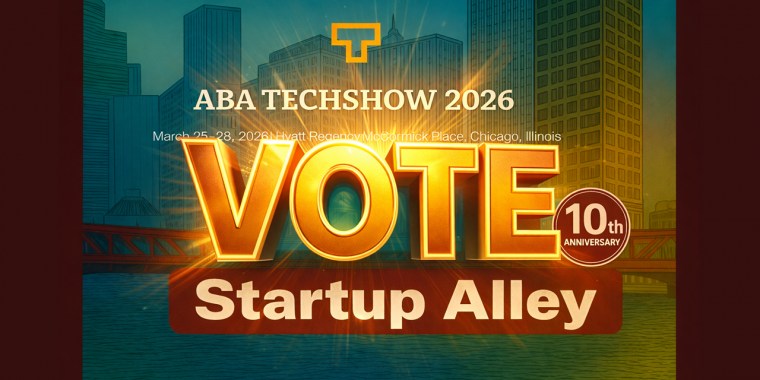
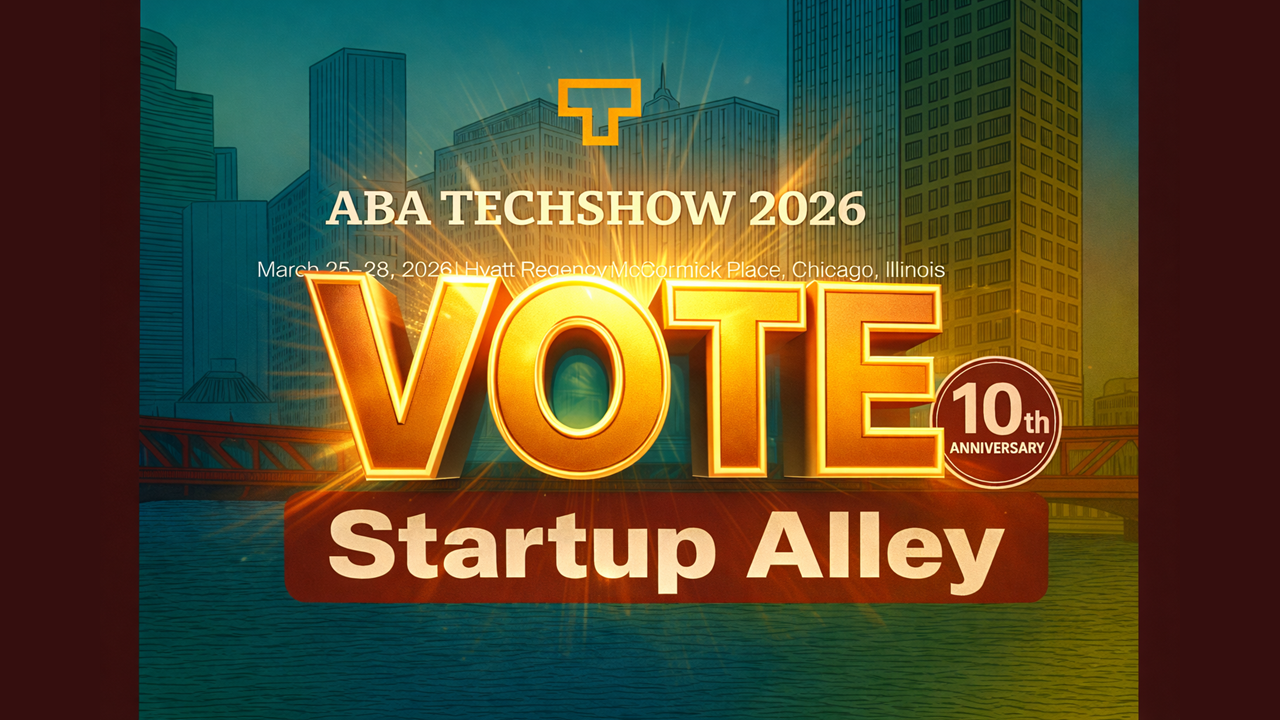
With
just
two
weeks
left
to
pick
the
15legal
tech
startups
that
will
get
to
compete
at
the
10th-annual
Startup
Alley
atABA
TECHSHOW,
below
are
the
standings
so
far,
ranked
by
total
votes
received.
Remember,
your
votes
determine
the
15
companies
that
get
the
opportunity
to
face
off
in
a
live
pitch
competition
on
the
opening-night
of
this
year’s
TECHSHOW,
which
takes
place
in
Chicago
March
25-28.
They
also
get
to
exhibit
in
a
special
Startup
Alley
portion
of
the
exhibit
hall.
DEADLINE
FOR
VOTING
IS
FRIDAY,
FEB.
13,
AT
11:45
P.M.
ET.
Voting
is
easy:
Here
are
the
current
standings.
Only
15
of
the
25
startups
will
make
the
cut.
In
2026,
generative
artificial
intelligence
(AI)
use
in
law
firms
is
becoming
commonplace.
Data
from
the
soon-to-be-released
8am
2026
Legal
Industry
Report
shows
that
the
majority
of
legal
professionals
have
personally
used
generative
AI
for
work-related
purposes.
If
you’re
one
of
those
lawyers,
you’ve
undoubtedly
discovered
that
AI
tools,
both
legal-specific
and
general-purpose
versions,
can
rapidly
draft
legal
briefs
that,
at
first
glance,
are
thorough
and
convincing.
But
look
closer,
and
you’ll
discover
that
the
output
often
includes
inaccurate
information,
including
fake
case
citations,
misquotes,
and
misstated
legal
principles.
Unfortunately,
not
all
lawyers
take
that
step,
ultimately
failing
to
realize
that
what
appears
to
be
a
high-quality
legal
document
is,
in
fact,
a
house
of
hallucinated
cards.
Overwhelmed
by
looming
deadlines
and
full
caseloads,
they’ve
conducted
cursory
reviews
of
AI-drafted,
mistake-ridden
briefs
and
unknowingly
submitted
them
to
the
courts.
Don’t
make
that
mistake!
AI
can
assist
with
traditional
legal
research,
but
does
not
replace
the
need
to
verify
all
cited
authoritative
sources.
You
must
review
the
cases,
laws,
and
regulations
to
confirm
their
accuracy
and
applicability
to
the
issues
at
hand.
But
don’t
take
my
word
for
it.
Let’s
see
what
the
judges
have
to
say
about
your
ethical
obligations
when
using
AI
tools
as
part
of
the
legal
research
process.
First,
there’s
Special
Master
Michael
R.
Wilner,
former
United
States
Magistrate
Judge
for
the
Central
District
of
California.
He
recently
expressed
his
frustration
with
briefs
submitted
to
the
court
that
included
“bogus
AI-generated
research.”
In
Lacey
v.
State
Farm
General
Ins.
Co.,
Case
No.
CV
24-5205
FMO
(C.D.
Cal.
May
5,
2025),
he
granted
the
motion
to
strike
the
offending
attorneys’
supplemental
briefs,
denied
their
discovery
motion,
and
imposed
sanctions
in
the
amount
of
$26,100
to
reimburse
the
court
for
its
time
and
$5,000
in
fees
for
opposing
counsel.
The
Special
Master
explained
the
rationale
for
his
decision:
“The
initial,
undisclosed
use
of
AI
products
to
generate
the
first
draft
of
the
brief
was
flat-out
wrong.
Even
with
recent
advances,
no
reasonably
competent
attorney
should
out-source
research
and
writing
to
this
technology
—
particularly
without
any
attempt
to
verify
the
accuracy
of
that
material.
And
sending
that
material
to
other
lawyers
without
disclosing
its
sketchy
AI
origins
realistically
put
those
professionals
in
harm’s
way.”
Similarly,
United
States
Magistrate
Judge
for
the
Southern
District
of
Indiana,
Mark
J.
Dinsmore,
was
equally
displeased
in
Mid
Cent.
Operating
Eng’rs
Health
&
Welfare
Fund
v.
HoosierVac
LLC,
No.
2:24-cv-00326-JPH-MJD
(S.D.
Ind.
Feb.
21,
2025).
He
recommended
that
the
attorney
before
the
court
—
who,
on
three
occasions,
submitted
hallucinated
briefs
—
should
be
personally
sanctioned
in
the
amount
of
$15,000.
According
to
Judge
Dinsmore,
“It
is
one
thing
to
use
AI
to
assist
with
initial
research,
and
even
non-legal
AI
programs
may
provide
a
helpful
30,000-foot
view.
It
is
an
entirely
different
thing,
however,
to
rely
on
the
output
of
a
generative
AI
program
without
verifying
the
current
treatment
or
validity
—
or,
indeed,
the
very
existence
—
of
the
case
presented.
Confirming
a
case
is
good
law
is
a
basic,
routine
matter
and
something
to
be
expected
from
a
practicing
attorney.”
The
need
to
carefully
review
material
cited
in
AI-generated
legal
documents
was
also
emphasized
in
N.Z.
v.
Fenix
Int’l
Ltd.,
8:24-cv-01655-FWS-SSC
(C.D.
Cal.
December
25,
2025).
The
court
determined
that
sanctions
were
appropriate
because
the
attorney
“used
ChatGPT
to
assist
in
drafting
the
opposition
briefs
but
failed
to
verify
the
validity
of
the
AI-generated
material
…
and
failed
to
realize
when,
and
to
what
event,
ChatGPT
was
modifying
her
research/writing
—
supplementing
and/or
cross-pollinating
concepts
and
authorities.”
Courts
and
ethics
committees
have
made
one
point
unmistakably
clear:
using
AI
does
not
change
your
duties
or
lower
the
standard
of
competence.
Every
case,
citation,
and
legal
proposition
must
still
be
read,
checked,
and
confirmed
as
part
of
your
professional
and
ethical
obligations.
Generative
AI
does
not
exercise
legal
judgment,
and
it
cannot
tell
you
what
the
law
is,
whether
a
case
exists,
or
whether
it
applies
to
your
facts.
That
responsibility
remains
with
the
lawyer.
You
bear
responsibility
for
the
finished
work
product,
and
AI
has
not
changed
that
fact.
The
buck
stops
with
you.


 Joe
Joe
 Kathryn