The
governments
of
Zambia
and
Zimbabwe
are
brushing
aside
concerns
about
the
worsening
effects
of
climate
change,
with
the
two
southern
African
nations
recently
pledging
$220
million
each
in
seed
capital
for
the
construction
of
the
Batoka
Gorge
Hydro
Electric
Scheme
(BGHES).
The
decision
by
the
two
countries
to
commit
the
$440
million
—
about
10
per
cent
of
the
project’s
expected
cost
of
$4.5
billion
—
was
taken
at
a
December
29,
2025
meeting
of
the
Council
of
Ministers
of
the
Zambezi
River
Authority
(ZRA),
the
bi-national
body
that
manages
water
resources
on
the
shared
river.
The
ZRA
will
manage
the
proposed
project,
just
as
it
already
manages
the
bi-national
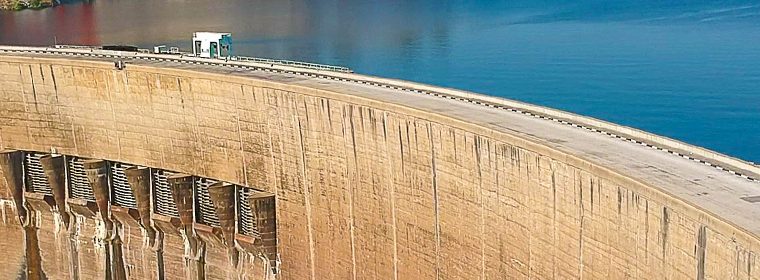
Kariba
Dam
and
its
hydropower
station.
The
$440
million
is
intended
to
improve
the
project’s
bankability
and
attract
private
investors.
Funding
has
previously
been
one
of
the
major
obstacles
faced
by
the
project.
A
2,400-megawatt
hydropower
project
Located
on
River
Zambezi,
a
short
distance
from
the
Victoria
Falls
on
the
border
between
Zambia
and
Zimbabwe,
the
BGHES
plant
has
a
design
power-generating
capacity
of
2,400
megawatts
(MW).
Once
completed,
it
is
expected
to
supply
1,200
MW
to
each
country,
helping
boost
electricity
supplies
for
two
countries
currently
experiencing
severe
power
cuts.
The
project
was
first
conceived
in
1972
but
has
remained
on
the
drawing
board,
with
several
false
starts
over
the
decades.
However,
as
climate
change
increasingly
affects
southern
Africa
—
making
the
region
drier
due
to
erratic
rainfall
and
increased
evapotranspiration
driven
by
rising
temperatures
—
water
levels
on
the
Zambezi
River
have
been
declining.
This
has
led
to
serious
misgivings
about
the
long-term
viability
of
the
hydropower
project.
The
Zambezi
is
Africa’s
sixth-largest
river.
It
originates
in
Zambia
and
flows
through
Angola,
Namibia,
Botswana,
Zimbabwe
and
Mozambique.
Two
major
dams
lie
on
the
river:
Lake
Kariba,
shared
by
Zambia
and
Zimbabwe,
and
Cahora
Bassa,
downstream
in
Mozambique.
Hydropower
plants
on
both
dams
—
with
a
combined
capacity
of
3,800
MW
—
have
in
recent
years
been
affected
by
climate
change-related
low
water
levels.
Power
generation
at
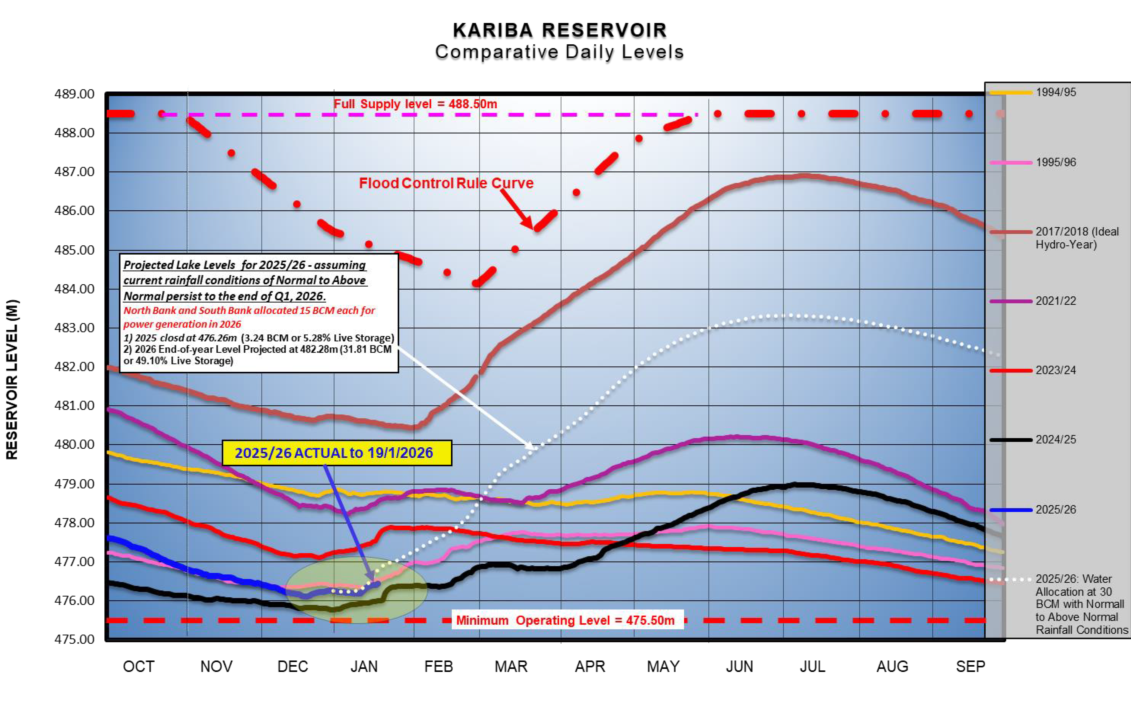
Kariba
—
downstream
from
the
proposed
project
site
—
was
halted
in
2022
and
2024,
due
to
low
water
levels.
Generation
was
also
reduced
at
Cahora
Bassa
in
Mozambique.
In
Zambia,
climate
change
has
not
only
affected
power
generation
on
its
plant
on
River
Zambezi,
but
also
at
three
others,
namely
Kafue
Gorge,
Lower
Kafue
Gorge
and
at
Itezhi-Tezhi.
Studies
raise
viability
questions
These
developments
reflect
projections
from
earlier
studies
that
raised
concerns
about
the
viability
of
the
BGHES.
One
study
by
researchers
at
the
University
of
Edinburgh
in
the
United
Kingdom,
which
used
the
Batoka
Gorge
scheme
as
a
case
study,
found
that
while
expanding
renewable
energy
—
including
hydropower
—
is
a
key
strategy
for
limiting
climate
change,
the
paradox
is
that
climate
change
itself
is
altering
the
availability
of
water
resources,
adversely
affecting
the
financial
viability
of
both
existing
and
planned
schemes.
The
study
assessed
the
relationship
between
climate
change
and
the
technical
and
financial
viability
of
hydropower
development,
and
the
results
were
not
encouraging.
“Simulations
with
climate
change
scenarios
illustrate
the
sensitivity
of
the
Batoka
Gorge
scheme
to
changes
in
climate,”
the
study
noted.
“They
suggest
significant
reductions
in
river
flows,
declining
power
production,
reductions
in
electricity
sales
revenue
and,
consequently,
an
adverse
impact
on
a
range
of
investment
measures.”
It
concluded
that
trends
towards
deregulation
in
the
electricity
sector
would
require
increasing
levels
of
private
investment,
which
may
not
favour
hydropower
projects.
“More
importantly,
the
very
fact
that
climate
is
changing
may
alter
the
availability
of
this
natural
resource,
and
the
impact
of
such
changes
on
the
financial
viability
of
schemes
will
be
of
particular
interest
to
investors.”
Another
study,
conducted
in
2014
by
four
researchers
focusing
on
southern
Africa,
warned
that
worsening
climate
change
would
not
only
reduce
available
water
but
also
increase
demand
for
irrigation
and
other
uses,
resulting
in
much
lower
flows
on
the
Zambezi
River.
“Accelerating
economic
growth
increases
the
potential
for
competition
for
water
between
hydropower
and
irrigated
agriculture,
and
climate
change
will
add
further
stress
to
this
system,”
the
researchers
wrote.
“The
objective
of
this
study
was
to
assess
the
vulnerability
of
major
existing
and
planned
hydropower
plants
to
changes
in
climate
and
upstream
irrigation
demand.”
“Our
results
show
that
Kariba
is
highly
vulnerable
to
a
drying
climate,
potentially
reducing
average
electricity
generation
by
12
per
cent.
Furthermore,
expansion
of
Kariba’s
generating
capacity
is
unlikely
to
deliver
expected
increases
in
production
even
under
a
favourable
climate.
The
planned
Batoka
Gorge
plant
may
also
fail
to
reach
anticipated
production
levels
outlined
in
the
original
feasibility
study.”
“This
implies
that
climate
change
and
upstream
development
must
be
explicitly
incorporated
into
both
project
planning
and
system
expansion.”
Project
proceeds
despite
risks
Despite
these
warnings,
the
governments
of
both
countries
insist
on
proceeding
with
the
project.
“Batoka
was
high
on
our
agenda,
and
we
agreed
that
the
two
governments
must
put
some
money
on
the
table
to
demonstrate
commitment,”
Zimbabwe’s
Energy
Minister
July
Moyo
said
after
the
most
recent
Council
of
Ministers
meeting.
“The
intention
is
clear
—
this
project
must
take
off.”
In
a
statement,
Zambia’s
Energy
Minister
Makozo
Chikote
defended
the
decision.
“Comprehensive
feasibility
studies,
including
climate
change
assessments,
confirm
that
the
Zambezi
River
can
sustainably
support
the
project,”
he
said.
“The
Batoka
Gorge
Hydro
Electric
Scheme
remains
technically
sound,
environmentally
compliant,
economically
justified
and
central
to
Zambia’s
long-term
energy
security.”
Chikote
added
that
Batoka
Gorge
is
part
of
a
sequential
hydropower
system
on
the
Zambezi
River
—
alongside
Victoria
Falls,
Kariba
and
future
developments
—
designed
to
maximise
power
generation
from
the
same
water
resource
in
line
with
international
best
practice.
ZRA
chief
executive
officer
Munyaradzi
Munodawafa
also
said
the
project
remains
viable.
“Batoka
will
serve
as
a
mitigation
measure
for
some
of
the
hydrological
challenges
at
Kariba,
while
directly
contributing
a
significant
increase
to
the
urgently
needed
power
supply
capacity
of
Zambia
and
Zimbabwe.”
Hydropower
remains
central
despite
climate
risks
Engineer
Stephen
Dihwa,
executive
director
of
the
Southern
African
Power
Pool
Coordination
Centre,
which
coordinates
regional
power
systems,
said
hydropower
would
remain
central
to
electricity
supply
despite
climate
risks.
He
noted
that
periods
of
low
rainfall
are
often
followed
by
higher
rainfall,
allowing
dams
to
refill.
“This
shows
there
is
still
a
future
for
both
existing
and
planned
hydropower
plants,”
he
said.
“What
is
required
is
plant
operation
based
on
well-forecast
hydrology
and
careful
management
of
reservoir
water
use,”
Dihwa
told Down
To
Earth.
He
added
that
studies
are
under
way
on
reducing
the
impact
of
drought
on
hydropower
plants,
including
the
possibility
of
inter-basin
water
transfers.
Two
years
ago,
after
all
four
of
Zambia’s
hydropower
plants
were
either
severely
restricted
or
shut
down
due
to
climate
change-related
drought,
Lusaka
proposed
an
inter-basin
water
transfer
project.
It
engaged
the
Chinese
government
to
help
dig
a
300-km
canal
to
transfer
water
from
the
Luapula
River
—
a
tributary
of
the
Congo
River
in
the
north
—
to
the
Kafue
River
in
the
south,
where
two
major
hydropower
plants
are
located.
Zimbabwe’s
hydropower
generation
at
Kariba
has
also
been
severely
affected
by
poor
rains
and
the
country
is
exploring
a
1,200-km
tunnel
to
draw
around
16
billion
cubic
metres
of
water
annually
from
the
Lualaba
River
in
the
Democratic
Republic
of
the
Congo
to
Lake
Kariba.
IPCC
climate
projections
indicate
that
Central
Africa
is
likely
to
become
wetter,
while
southern
Africa
continues
to
dry.
The
two
regions
lie
in
different
river
basins.
“There
are
ways
to
reduce
the
impact
of
drought
on
hydropower
plants,
but
much
more
effort
is
needed,”
Dihwa
said.
“Studies
on
drought
resilience
in
southern
Africa
are
already
under
way
and
should
provide
practical
and
sustainable
solutions.”
“Some
solutions
are
based
on
regional
integration
and
coordinated
operation
of
plants
on
shared
watercourses.
Others
recognise
that
not
all
river
basins
are
affected
by
drought
at
the
same
time.
For
example,
the
Congo
Basin
in
the
DRC
is
relatively
less
affected,
and
ways
in
which
it
could
support
power
generation
in
other
basins
should
be
explored.”
Source:
Zambia
and
Zimbabwe
Push
Forward
with
Controversial
Hydro
Project
Amid
Climate
Concerns










 Kathryn