Trump
Team
Fights
Incitement
Charge
By
Invoking
The
Spirit
Of
Hip-Hop:
He
made
sure
to
imagine
all
hypothetical
rappers
were
White.
And
There
Goes
Pam
Bondi:
Wow,
a
member
of
The
Trump
Team
getting
kicked
out
when
they’re
not
useful
anymore?
Quick,
check
the
Dow!
Ty
Cobb
States
The
Obvious:
He
thinks
its
time
to
invoke
the
25th
amendment.
Once,
Twice,
Five
Times
A
Prosecutorial
Error:
Deborah
Leslie
got
caught
citing
cases
that
didn’t
exist
to
prevent
a
murder
retrial.
According
to
CBRE’s
latest Law
Firm
Benchmarking
Survey,
what
percentage
of
surveyed
law
firms
say
they
intend
to
increase
their
office
space
over
the
next
three
years?
Hint:
That’s
in
addition
to
46%
of
surveyed
firms
that
say
they
are
planning
on
keeping
their
current
space,
which
seems
to
indicate
the
pandemic
office
space
downsizing
trend
is
over.
Following
its
February
news
that
it
had
entered
into
a
brand
partnership
withj
Gabriel
Macht,
who
played
Harvey
Specter
in
the
TV
series
Suits,
the
legal
AI
company
Harvey
said
today
that
it
has
entered
into
another
such
partnership
involving
another
iconic
Harvey
—
only
this
time
it
is
using
AI
to
make
the
partnership
possible.
This
time,
the
Harvey
in
question
is
the
six-foot-three-and-a-half-inch
invisible
white
rabbit
from
the
1950
film
Harvey,
starring
Jimmy
Stewart
as
Elwood
P.
Dowd,
a
man
whose
best
friend
happens
to
be
a
pooka
—
a
benevolent
but
mischievous
Celtic
spirit
in
rabbit
form.
Having
now
raised
more
than
$1
billion
and
with
what
the
company
described
as
“boatloads
of
cash
to
burn,”
it
is
describing
this
partnership
as
its
“most
ambitious
use
of
generative
AI
to
date.”
Using
its
proprietary
AI
technology,
Harvey
will
digitally
resurrect
actor
Jimmy
Stewart
to
serve
as
the
company’s
newest
brand
ambassador.
“Gabriel
Macht
was
wonderful,
but
we
realized
we
were
leaving
an
entire
Harvey
untapped,”
said
Harvey
cofounder
and
CEO
Winston
Weinberg,
pictured
above
with
cofounder
Gabriel
Pereyra
and
Stewart.
“Jimmy
Stewart
embodies
everything
we
stand
for
—
he’s
trustworthy,
relatable,
and
he
sees
things
that
aren’t
really
there.
Which,
honestly,
describes
about
half
our
user
base
when
they
first
try
legal
AI.”
The
AI-generated
Stewart
will
appear
in
Harvey’s
marketing
materials
delivering
his
signature
folksy
charm,
reportedly
saying
things
like,
“Well
now,
this
here
legal
research
platform
is
just
about
the
finest
invisible
friend
a
lawyer
could
ask
for.”
When
asked
whether
Harvey
the
rabbit
would
also
be
involved
in
the
campaign,
Weinberg
demurred.
“Harvey
—
the
rabbit,
not
the
company
or
the
actor
—
has
yet
to
commit.
But
between
you
and
me,
I
think
he’s
holding
out
for
equity.”
The
partnership
also
marks
Harvey’s
expansion
beyond
traditional
social
media
into
what
the
company
is
calling
“spectral
social
media”
—
platforms
visible
only
to
those
who
truly
believe
in
AI.
“This
is
either
a
stroke
of
marketing
genius
or
a
sign
that
the
legal
tech
industry
has
finally
lost
its
collective
mind,”
said
one
analyst
who
asked
not
to
be
named
because
they
weren’t
sure
if
they’d
actually
seen
the
announcement
or
hallucinated
it.
Harvey
says
the
AI-generated
Stewart
campaign
will
launch
on
April
1,
2026,
and
will
run
indefinitely
—
or
at
least
until
someone
representing
Stewart’s
estate
uses
some
other
AI
product
to
generate
a
lawsuit
to
shut
down
the
campaign.
“Details,”
said
Weinberg.
Happy
April
Fools’
Day
from
LawSites.
In
reality,
Harvey
the
company
partnered
only
with
Gabriel
Macht,
who
played
Harvey
Specter
in
Suits.
But
we’re
still
holding
out
hope
for
the
rabbit.
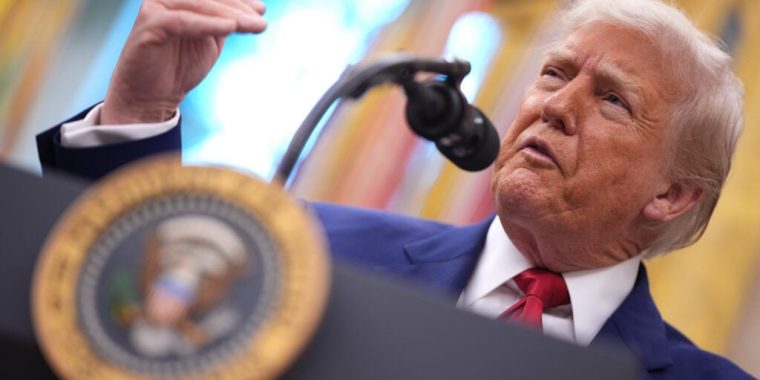
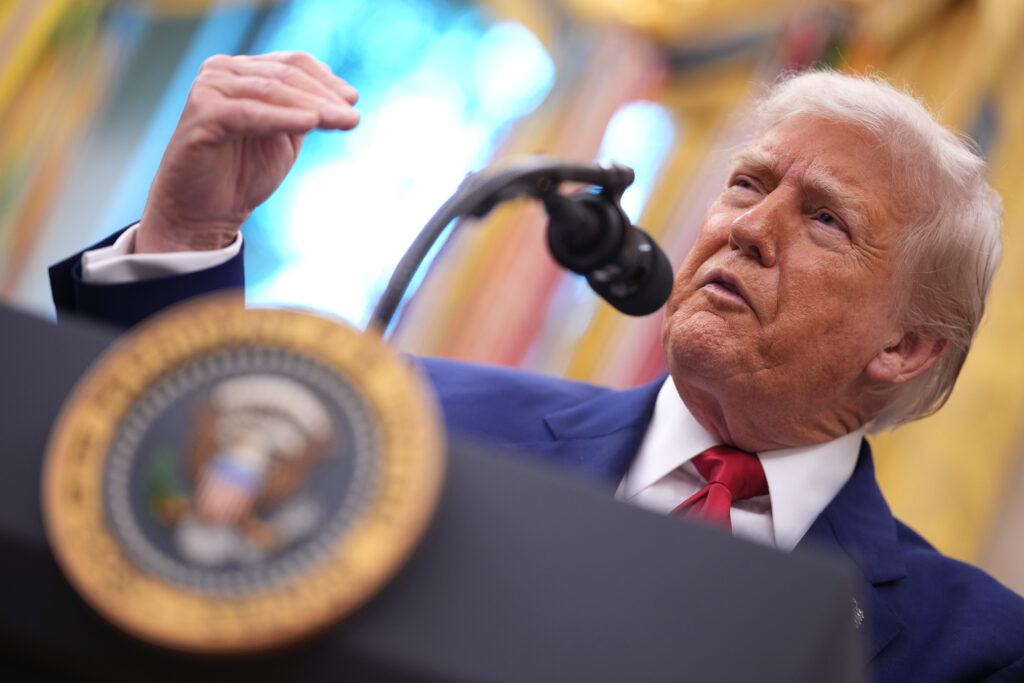
Donald
Trump
really
wants
to
get
out
of
the
civil
case
arising
from
his
role
in
the
January
6
hootenanny,
where
he
told
his
assembled
followers
to
“fight
like
hell”
or
“you’re
not
gonna
have
a
country
any
more,”
and
then
they
stormed
the
Capitol,
rubbed
feces
on
the
walls,
and
tried
to
hang
Mike
Pence.
Trump
hoped
to
get
the
case
tossed
with
the
help
of
the
Supreme
Court’s
newly
minted
immunity
standard,
figuring
if
it’s
good
enough
to
allow
him
to
send
SEAL
Team
6
to
assassinate
a
rival,
then
it’s
got
to
be
good
enough
to
get
him
out
of
a
civil
suit.
Alas,
Judge
Amit
Mehta
just
ruled
that,
at
least
some
of
the
president’s
alleged
actions
in
whipping
up
the
crowd
that
morning
fell
outside
even
the
Supreme
Court’s
wildly
expansive
view
of
what
counts
as
an
“official”
act
for
the
purposes
of
immunity.
Trump
also
asked
the
court
to
reconsider
its
prior
ruling
that
Trump’s
speech
on
the
Ellipse
that
morning
could
plausibly
be
construed
as
incitement
and
fall
outside
the
protection
of
the
First
Amendment.
And
one
gem
tucked
away
toward
the
back
of
the
79-page
opinion
—
helpfully
flagged
by
Lawfare’s
Roger
Parloff
—
addressed
Trump’s
First
Amendment
argument
that,
if
you
think
about
it,
he’s
basically
like
a
rapper.
As
a
final
salvo,
President
Trump
resuscitates
an
argument
the
court
previously
rejectedbut
with
a
twist.
He
again
insists
that
an
adverse
ruling
“will
open
floodgates
for
incitement
decisions”
and
thereby
constrain
First
Amendment
protections.
Before,
his
focus
was
on
the
impact
such
ruling
would
have
on
political
speech.
Now
his
concern
is
over
the
“ramifications
for
public
citizen
speech.”
To
illustrate
the
point,
he
poses
the
hypothetical
of
a
popular
rapper
(bearing
some
resemblance
to
Eminem)
whose
concert
performance
leads
to
fan
violence.
(citations
omitted)
I
assume
“some
resemblance
to
Eminem”
means
that
even
as
a
longshot
hypothetical
Trump
made
sure
his
lawyers
made
him
white.
It
goes
something
like
this.
The
rapper
is
known
for
his
provocative
and
controversial
lyrics,
which
“describe
explicit
violent
acts,
including
gun
violence,
rape,
and
a
description
of
the
rapper
drowning
his
wife.”
It
is
widely
reported
in
the
news
that
his
song
lyrics
are
inspiring
young
people
to
“act
emotionally
and
sometimes
violently.”
The
rapper
is
aware
of
this
phenomenon.
Yet,
when
he
takes
the
stage
in
front
of
thousands
of
fans,
he
performs
his
“most
aggressive”
songs
and
stokes
his
audience’s
passions
saying,
“Fight
the
Man!
Fight
the
Establishment!
Don’t
let
them
tell
you
what
to
do!
Fight
like
hell!”
Chaos
ensues.
Inspired
by
these
words,
concert
goers
“storm[]
the
nearest
establishments,”
stealing
food
from
concession
stands,
attacking
vendors,
and
“beating
down
security
guards
to
access
the
backstage
areas
of
the
venue.”
(citations
omitted)
Stan
could
still
get
that
autograph
if
Mike
Pence
has
the
courage.
Personally,
I
never
liked
the
argument
that
Trump
should
be
responsible
for
his
Ellipse
speech.
The
whole
thing
felt
too
similar
to
the
frivolous
lawsuits
against
DeRay
Mckesson,
alleging
that
the
civil
rights
activist
should
be
responsible
for
injuries
caused
by
others
at
a
protest
he
attended.
Trump’s
role
in
exacerbating
the
riot
by
failing
to
take
reasonable
steps
to
quell
the
violence
and
withholding
National
Guard
assistance
could
give
rise
to
a
claim,
but
the
speech
itself
always
felt
like
a
bridge
too
far.
But,
if
the
courts
are
going
to
indulge
the
Mckesson
case
nonsense,
then
it’s
only
fair
to
hold
Trump
to
the
same
standard.
As
for
the
rap
analogy,
Judge
Mehta
found
it
lacking
a
few
critical
elements:
But
here
is
what
is
missing
from
the
President’s
hypothetical.
There
is
no
contention
that,
for
weeks
before
the
concert,
the
rapper
told
his
fans
that
the
Establishment
had
taken
something
valuable
from
them
through
fraud
and
deceit.
No
assertion
that
the
rapper
knew
his
fans
had
prepared
to
act
violently
on
that
very
day
(including
by
bringing
weapons
to
the
show)
to
reclaim
what
was
taken
from
them.
No
averment
that
during
the
performance
the
rapper
specifically
identified
the
members
of
the
Establishment
who
took
this
thing
of
value.
And
no
allegation
that,
at
the
show’s
crescendo,
he
implored
his
fans
to
“Fight
the
Establishment”
and
“Fight
like
hell”and
then
directed
them,
without
warning
local
law
enforcement,
to
descend
thousands
strong
onthe
very
place
the
Establishment
was
working
to
finally
take
away
that
thing
of
value.
Only
if
those
facts
are
included
does
the
rap
concert
begin
to
resemble
January
6,
and
only
then
do
the
artist’s
song
lyrics
and
exhortation
to
“Fight
like
hell”
mirror
the
Ellipse
Speech.
The
court
would
agree
that,
in
this
revised
hypothetical,
the
rapper’s
expression
plausibly
are
words
of
incitement.
But
not
in
the
incomplete
one
posed
by
the
President.
While
Trump
was
always
a
long
way
from
forging
a
complete
analogy
to
January
6,
he
could
have
at
least
met
some
of
Judge
Mehta’s
conditions
if
he’d
just
built
the
analogy
around
any
of
the
many
musical
acts
from
60s
folk
to
90s
rap
with
songs
explicitly
about
“Fighting
the
Man
and
the
Establishment.”
But
the
legal
team
would
rather
have
a
suboptimal
example
like
Eminem
than
let
Trump
be
compared
to
N.W.A.
And,
to
be
clear,
it
shouldn’t
be
incitement,
but
Fuck
Tha
Police
would
make
for
a
stronger
comparison
in
a
case
about
a
crowd
attacking
the
literal
Capitol
Police.
So
the
case
can
proceed
with
Democratic
members
of
Congress
and
Capitol
Police
officers
who
were
there
that
day
getting
their
shot
in
court.
As
for
the
rap
concert
analogy,
it
now
joins
the
proud
lineage
of
Trump
legal
arguments
that
managed
to
be
both
creative
and
self-defeating.
Once
in
a
generation,
a
new
technology
comes
on
the
scene
that
radically
transforms
how
government
work
happens.
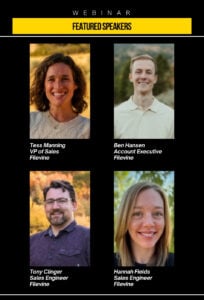
In
this
on-demand
webinar,
our
friends
at
Filevine
explore
the
possibilities
available
to
transform
government
legal
work.
During
this
session,
you’ll
see:
•
How
agencies
are
using
AI
to
modernize
outdated
systems,
automate
work
securely,
and
free
staff
from
manual
tasks
that
slow
operations
down. •
How
Filevine’s
Legal
Operating
Intelligence
System
(LOIS)
helps
government
legal
teams
modernize
responsibly
with
secure,
compliant
technology
designed
for
agency
needs. •
A
live
demo
of
Filevine’s
AI-powered
tools
—
AskAI,
DraftAI,
and
AIFields
—
showing
how
legal
teams
can
chat
with
a
case,
generate
drafts,
and
capture
key
data
within
one
secure
platform.
Built
into
Filevine, LOIS is
the
Legal
Operating
Intelligence
System
that
embeds
intelligence
into
the
DNA
of
your
legal
work.
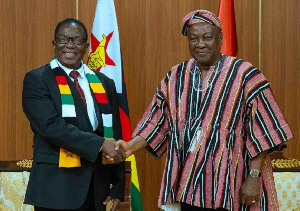
President
Emmerson
Mnangagwa
being
welcomed
by
President
John
Dramani
Mahama
As
part
of
the
three-day
visit,
a
State
Banquet
is
being
held
in
honour
of
President
Emmerson
Mnangagwa
on
Wednesday,
April
1.
The
State
Banquet
is
being
held
at
Ghana’s
seat
of
government,
the
Jubilee
House.
The
event
is
expected
to
be
attended
by
the
President
of
Ghana, John
Dramani
Mahama,
Vice
President
Prof. Jane
Naana
Opoku-Agyemang,
the
Speaker
of
Ghana’s
Parliament,
Alban
Bagbin,
as
well
as
other
top
government
officials.
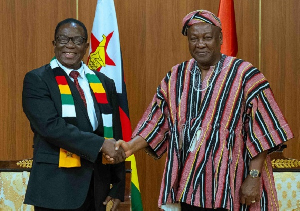
President John
Dramani
Mahama welcomed
President
of
Zimbabwe,
H.E.
Emmerson
Dambudzo
Mnangagwa,
to
Ghana
for
a
three-day
State
Visit
earlier
on
Wednesday.
The
Zimbabwean
leader
was
received
in
Accra
with
full
military
honours.
Aside
from
the
State
Banquet,
other
activities
to
mark
the
visit
include
a
tête-à-tête
and
expanded
delegation
talks
targeting
enhanced
cooperation
in
trade,
tourism,
agriculture,
healthcare,
sanitation,
and
joint
efforts
to
address
corruption
and
unemployment.
The
two
leaders
are
also
expected
to
witness
the
signing
of
key
Memoranda
of
Understanding.
The
visit
underscores
the
strong
and
longstanding
ties
between
Ghana
and
Zimbabwe,
reaffirming
a
shared
commitment
to
advancing
a
strategic
partnership
for
sustainable
development
and
deepening
bilateral
relations.
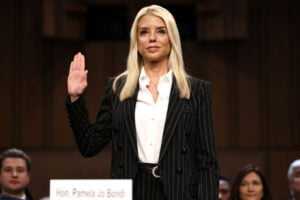
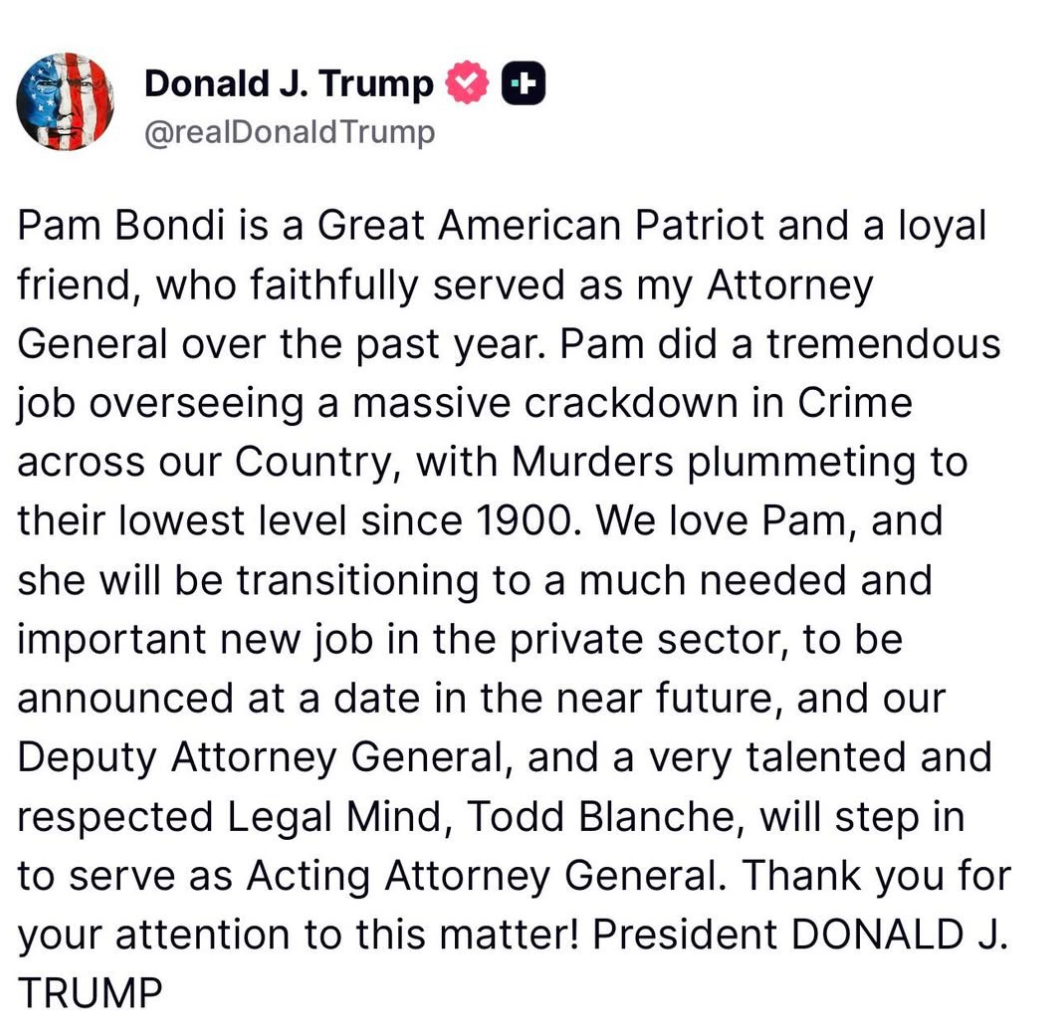
Last
night,
rumors
began
to
circulate
that
Donald
Trump
would
soon
fire
Attorney
General
Pam
Bondi.
This
morning,
those
rumors
transitioned
to
reports
that
he’d
informed
her
that
she’d
be
shitcanned
soon.
Now,
Trump
is
reporting
on
his
social
media
network
that
Bondi
will
be
moving
to
a
new
job
in
the
private
sector
“in
the
near
future”
and
that
Todd
Blanche
would
be
taking
over
on
an
interim
basis.
But
it
could
also
be
the
fact
that
his
administration
keeps
getting
handed
its
ass
in
court,
the
Justice
Department
cannot
miracle
up
anything
but
frivolous
claims
against
the
president’s
enemies,
and
a
bizarre
rumor
that
Bondi
tipped
off
Rep.
Eric
Swalwell
about
an
effort
to
use
the
FBI
to
rehash
his
long
ago
relationship
with
a
woman
suspected
of
ties
to
Chinese
intelligence.
Murder
rates
are
at
historic
lows,
though
they’ve
been
trending
down
for
decades
now,
making
this
boast
similar
to
claiming
this
year
marked
an
all-time
low
in
people
driving
1981
Honda
Accords.
“Transitioning
to
a
much
needed
and
important
new
job
in
the
private
sector”
is
brutal.
Trump
invented
a
fake
new
job
in
the
administration
when
Kristi
Noem
got
canned.
Bondi
isn’t
even
getting
that
courtesy.
And
if
Trump
hoped
that
this
move
could
distract
from
the
growing
frustration
in
Congress
over
the
Justice
Department’s
effort
to
keep
Trump’s
ties
to
Jeffrey
Epstein
covered
up:
This
does
raise
the
saliency
of
our
aforementioned
bracket
challenge.
Bondi
is
heading
to
the
private
sector
a
little
prematurely,
but
this
is
the
risk
to
the
profession’s
legitimacy.
After
supervising
the
Department
of
Justice
as
it
racked
up
tons
of
documented
instances
of
lying
to
tribunals
and
contemptuous
acts,
Bondi
is
poised
to
waltz
over
to
a
fat
paycheck
from
a
law
firm
who
wants
to
put
“former
Attorney
General”
on
their
letterhead.
And
we
can’t
depend
on
the
law
firms
to
restrain
themselves
because
they
will
just
see
the
dollar
signs
they
could
secure
by
marketing
themselves
as
having
a
former
Justice
Department
insider
around.
The
only
way
to
protect
the
profession
and
the
public
is
through
ethics
probes
and
licensing
consequences.
Who
replaces
Bondi
long-term?
Blanche
will
take
over
in
the
short
run,
but
despite
Trump’s
curiously
capitalized
description
of
Blanche
as
a
“very
talented
and
respected
Legal
Mind,”
he
isn’t
considered
the
favorite.
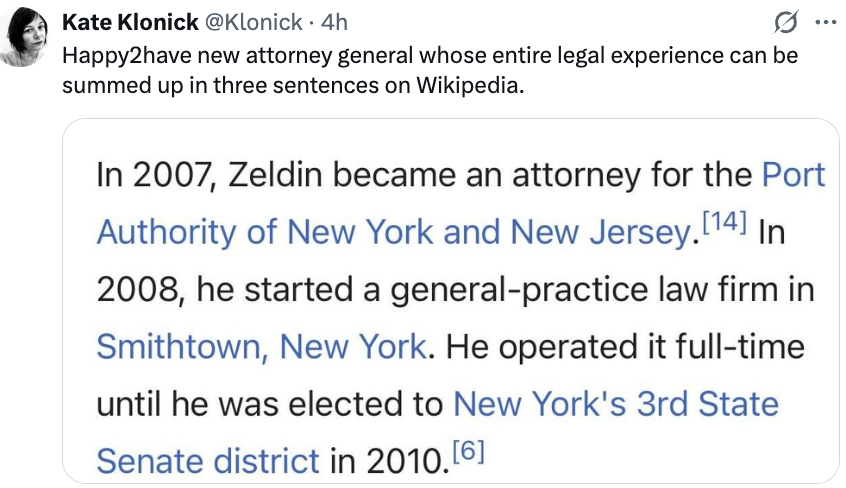
Early
indications
point
to
EPA
Chief
Lee
Zeldin.
That
would
certainly
track
Trump’s
preference
for
parking
garage
lawyers
and
insurance
attorneys
over
those
with
actual
experience.
There’s
one
candidate
no
one
is
talking
about
out
there
and
Trump
has
already
publicly
expressed
that
he
believed
the
man
was
capable
of
doing
this
job.
He’s
tanned,
rested,
and
ready!
When
people
hear
“FIFA
Fan
Festival,”
they
picture
music,
massive
video
screens,
jerseys
from
every
corner
of
the
globe,
and
crowds
flowing
in
all
day
to
watch
matches
together.
What
most
fans
do
not
picture
are
site
maps,
barricade
layouts,
power
distribution
plans,
evacuation
routes,
or
medical
staging
areas.
Those
details
are
where
these
events
succeed
or
fail.
New
Jersey
is
preparing
to
host
several
World
Cup–related
fan
festival
sites.
Current
plans
include
Riverside
Park
in
Lyndhurst,
Overpeck
Park
in
Bergen
County,
downtown
Secaucus,
downtown
East
Rutherford,
and
at
least
one
additional
location
that
has
not
yet
been
publicly
announced.
Liberty
State
Park
is
expected
to
host
the
region’s
primary
official
FIFA
Fan
Festival
during
the
tournament
window.
From
a
public
safety
standpoint,
that
is
not
one
event
repeated
several
times.
It
is
a
series
of
entirely
different
environments,
each
with
its
own
layout,
infrastructure
limits,
ownership
structure,
and
risk
profile.
I
spend
much
of
my
professional
life
looking
at
what
happens
after
large
gatherings
go
wrong.
The
same
patterns
show
up
again
and
again.
Crowd
density
builds
in
narrow
areas.
Temporary
cables
cross
walking
paths.
Rain
turns
open
ground
slick.
People
cluster
near
stages
and
screens
until
movement
slows
to
a
standstill.
Alcohol
lowers
inhibitions.
Heat
strains
medical
response.
Traffic
backs
up
and
pedestrians
spill
into
roadways.
Put
tens
of
thousands
of
people
into
a
park
and
the
issues
tend
to
revolve
around
terrain,
distance,
lighting,
drainage,
and
temporary
structures.
Grass
turns
to
mud.
Uneven
ground
disappears
under
foot
traffic.
Generators
run
in
the
background
while
cables
stretch
across
active
walkways.
Medical
teams
have
to
move
across
wide
open
spaces
instead
of
along
defined
routes.
Downtown
sites
create
a
different
set
of
pressures.
Streets
become
part
of
the
venue.
Sidewalks
turn
into
lines.
Ride
share
drop-offs
compete
with
foot
traffic.
Buildings
create
natural
choke
points.
The
focus
shifts
to
entry
and
exit
flow,
intersection
control,
and
preventing
dangerous
crowd
compression
when
people
surge
toward
a
screen
or
leave
all
at
once
after
a
match.
Fans
will
not
think
about
any
of
this.
They
will
see
FIFA
branding,
municipal
logos,
and
official
announcements
and
assume
that
the
same
baseline
level
of
safety
exists
everywhere.
That
assumption
is
reasonable.
The
challenge
is
that
“security”
is
not
a
single
box
to
check.
It
is
a
system
that
includes
screening,
perimeter
control,
staffing,
crowd
monitoring,
medical
response,
structural
integrity,
weather
planning,
and
coordination
among
multiple
agencies.
Each
site
stresses
that
system
in
different
ways.
This
is
where
the
legal
reality
enters
the
conversation,
whether
planners
like
it
or
not.
Many
of
these
venues
involve
public
property
or
public
entities.
But
they
also
involve
private
contractors,
event
operators,
security
companies,
and
vendors.
If
something
goes
wrong,
figuring
out
who
is
actually
responsible
is
not
always
straightforward.
New
Jersey’s
Tort
Claims
Act,
commonly
referred
to
as
Title
59,
is
likely
to
shape
part
of
that
analysis.
The
statute
gives
public
entities
significant
protections
and
immunities,
but
it
also
imposes
strict
procedural
rules
and
defines
when
liability
may
exist.
At
the
same
time,
private
entities
operating
within
these
events
may
face
liability
under
entirely
different
standards.
In
practice,
responsibility
is
often
shared,
contested,
and
heavily
litigated.
Two
features
of
Title
59
matter
immediately
in
the
real
world.
Claims
against
public
entities
typically
require
a
formal
notice
of
claim
within
90
days.
Miss
that
deadline
and
even
a
strong
case
can
disappear.
And
when
injuries
involve
public
property,
litigation
often
turns
on
whether
a
dangerous
condition
existed,
whether
the
risk
was
foreseeable,
and
whether
reasonable
steps
were
taken
to
address
it.
Large
fan
festivals
create
foreseeable
risks
almost
by
definition.
Crowd
surges
near
entrances.
Poor
lighting
along
walking
paths.
Cables
or
hoses
crossing
pedestrian
routes.
Barriers
that
funnel
people
too
tightly
near
stages.
Emergency
lanes
blocked
by
vendor
vehicles.
Intersections
where
vehicles
and
foot
traffic
collide.
These
are
not
unusual
scenarios.
They
are
the
kinds
of
conditions
that
show
up
repeatedly
when
events
are
examined
after
something
goes
wrong.
The
uncomfortable
truth
is
that
“festival
vibes”
do
not
replace
serious
planning.
These
events
have
to
be
treated
less
like
casual
gatherings
and
more
like
temporary
stadium
operations
built
from
the
ground
up.
That
means
realistic
capacity
limits
tied
to
physical
space,
not
optimistic
projections.
It
means
redundant
exit
routes
that
remain
visible
and
accessible,
even
at
night.
It
means
thorough
inspection
of
stages,
screens,
fencing,
and
electrical
systems,
along
with
contingency
planning
for
weather.
It
means
medical
teams
positioned
for
heat-related
illness
and
long
dwell
times.
It
means
traffic
plans
that
protect
surrounding
communities
while
keeping
pedestrian
routes
safe.
It
means
unified
command
structures
so
that
public
officials,
law
enforcement,
private
security,
medical
providers,
and
contractors
are
working
from
the
same
plan.
I
also
want
to
speak
directly
to
fans,
because
awareness
matters.
If
you
attend
one
of
these
events,
treat
it
like
a
stadium.
Take
note
of
exits
when
you
arrive.
Pay
attention
to
how
crowds
are
moving.
If
you
see
a
hazardous
condition
that
is
being
ignored,
document
it.
If
something
happens,
gather
witness
information
and
preserve
what
you
can.
And
if
the
venue
is
public
property
and
negligence
may
be
involved,
do
not
assume
you
have
unlimited
time
to
act.
Title
59
timelines
move
faster
than
most
people
expect.
The
good
news
is
that
New
Jersey
has
real
experience
hosting
large-scale
events.
The
region
has
strong
infrastructure,
seasoned
emergency
management
professionals,
and
agencies
that
have
handled
complex
operations
before.
There
is
no
reason
these
fan
festivals
cannot
become
a
model
for
how
to
host
global
events
safely.
But
once
multiple
sites
are
in
play,
the
stakes
increase.
Each
location
brings
its
own
vulnerabilities.
Fans
will
still
expect
the
same
level
of
protection.
The
law
will
still
demand
competent
planning.
And
if
something
goes
wrong,
every
decision
made
months
earlier
will
be
examined
closely.
Different
parks.
Different
streets.
Different
risks.
Same
expectation.
Let’s
make
sure
the
story
people
remember
from
2026
is
the
celebration
itself,
not
what
happens
afterward.
Being
loyal
Zimbabwean
Citizens,
members
of
the
Zimbabwe
Diaspora
Initiative
across
the
globe
have
followed
developments
around
the
Zimbabwe
Constitutional
Amendment
Number
Three
Bill
(CAB3)
process
with
keen
interest.
We
have
watched
footage
of
the
process
at
the
public
hearings
organised
to
gather
evidence
as
part
of
the
process,
and
noted
how
all
the
presentations
made
in
the
first
two
days
of
the
process
point
to
the
need
for
a
referendum.
Presenters
supporting
the
amendments
have
said
they
want
the
term
of
office
of
the
President,
Parliament
and
Councillors
extended
to
enable
them
to
complete
projects
they
promised
to
deliver
during
their
election
campaign.
In
the
process,
they
have
confirmed
that
some
of
the
proposed
amendments
are
term
extension
amendments
as
defined
by
the
Constitution
of
Zimbabwe
and
require
a
referendum.
A term-limit
provision is
defined
in
the
Constitution
of
Zimbabwe
as
“a
provision
of
this
Constitution
which
limits the
length
of
time
that
a
person
may
hold
or
occupy
a
public
office”.
Subsection
7
of
Section
328
states
that Notwithstanding
any
other
provision
of
this
section,
an
amendment
to
a
term-limit
provision, the
effect
of
which
is
to extend
the
length
of
time that
a
person
may
hold
or
occupy
any
public
office,
does
not
apply
in
relation
to
any
person
who
held
or
occupied
that
office,
or
an
equivalent
office,
at
any
time
before
the
amendment.
The
need
for
a
referendum
was
confirmed
by
former
Attorney
General,
and
Zanu
PF
Politburo
Member
Comrade
Patrick
Chinamasa
to
correctly
interpret
the
constitution
before
the
current
process
got
into
motion.
We
have
noted
with
concern
footage
of
the
selective
selection
of
people
to
make
presentations,
with
people
speaking
against
CAB3
having
microphone
snatched
away
from
them.
We
have
seen
footage
of
people
being
threatened
by
other
participants
when
they
give
views
opposed
to
the
bill,
and
we
have
read
stories
of
people
who
spoke
against
the
bill
being
assaulted.
We
have
also
seen
footage
of
people
being
assaulted,
and
property
being
snatched
away
from
people
who
have
spoken
against
CAB3
before
the
hearings
by
rowdy
crowds
in
the
capital.
Footage
of
the
violent
manner
in
which
the
process
took
place
have
been
screened
on
South
African
Broadcasting
Corporation
and
other
regional
and
international
news
outlets. The
police
who
we
expected
would
maintain
order
at
this
consultation
have
been
nowhere
to
be
seen
to
protect
the
speakers
and
those
being
assaulted,
both
inside
and
outside
the
venues.
We
have
also
noted
with
concern
the
limited
number
of
centres
available
for
people
to
air
their
views.
Very
few
people
have
had
access
to
the
venues,
hence
have
been
denied
their
democratic
right
to
express
themselves.
The
process
has
failed
to
meet
democratic
standards
where
people
are
allowed
to
freely
voice
their
opinion
without
being
interrupted
or
attacked.
Parliament
of
Zimbabwe
must
accept
that
errors
were
made
and
to
gain
credibility,
a
fresh
start
to
the
process
whose
framework
will
include
the
holding
of
a
referendum
is
the
way
forward.
With
Parliament
having
failed
to
manage
the
process,
we
strongly
recommend
the
involvement
of
the
Southern
Africa
Development
Community
(SADC)
in
guiding
the
process.
At
least
one
centre
should
be
provided
for
every
urban
constituency
where
travel
distance
is
short,
and
two
or
three
centres
must
be
provided
for
large
rural
constituencies
depending
on
size
and
travelling
distance
for
people
to
get
to
the
centres.
For
further
information
contact
Padmore
Kufa,
the
Zimbabwe
Diaspora
Vote
Initiative
Secretary
for
Information
and
Publicity
on
+61
414
477
659
“AI
Hallucinations”
in
legal
work
product
have
aged
like
macaroni
art.
At
first
it
was
cute
enough
that
you
ignored
the
childish
errors
and
inattention
to
detail.
But
once
your
refrigerator
runs
out
of
room
for
macaroni
glued
to
printer
paper
you
start
to
realize
the
severity
of
this
shit
popping
up
everywhere.
The
silver
lining
used
to
be
that
the
underlying
cases
tended
to
be
some
contract
dispute
that
doesn’t
mean
much
in
the
scheme
of
things.
Now
we
see
judges
and
assistant
US
Attorneys
caught
red-handed
outsourcing
legal
writing
to
blackbox
LLMs.
And
as
the
ubiquity
of
AI
enabling
bad
lawyering
goes
up,
it’s
only
a
matter
of
time
before
this
conversation
happens:
Inmate
1:
So
what
are
you
in
for?
Inmate
2:
AI
Hallucinations.
And
while
that
conversation
could
happen
anywhere,
Georgia
wouldn’t
be
a
bad
state
to
bet
on.
Atlanta
News
First
has
coverage:
Calling
her
efforts
to
oppose
a
new
trial
for
a
convicted
murderer
“expanded
legal
research,”
a
metro
Atlanta
attorney
has
admitted
using
AI
to
cite
nonexistent
cases
in
a
recent
appearance
before
the
Supreme
Court
of
Georgia.
In
a
signed
affidavit,
Deborah
Leslie
–
who
is
listed
as
an
attorney
for
the
appellate
and
assets
forfeitures
unit
in
the
Clayton
County
District
Attorney’s
Office
–
has
apologized
for
citing
some
cases
that
don’t
exist.
On
March
18,
Payne
appeared
before
the
state
Supreme
Court
as
it
was
hearing
arguments
in
Hannah
Payne’s
attorneys’
request
for
a
new
trial.
“Expanded
Legal
Research?”
That’s
what
we’re
calling
it
now?
At
least
“This
was
one
revealed
to
me
in
a
dream”
was
earnest
and
quasi-poetic.
That
said,
I
admit
“I
went
to
the
make-shit-up
machine
to
help
me
with
my
job
and
submitted
the
made-up
shit
without
bothering
to
check
its
veracity”
doesn’t
roll
as
cleanly
off
the
tongue.
Dealing
with
prosecutors
is
rough
enough
without
having
to
worry
if
they’re
just
throwing
spaghetti
at
the
wall
to
see
what
sticks.
Georgia’s
public
defender
office
has
been
facing
a
staffing
shortage
for
years
—
to
be
overburdened
with
work
and
know
that
the
other
side
isn’t
even
bothering
to
check
their
work
must
be
maddening.
Thankfully
Payne’s
lawyers
had
the
time
to
call
out
the
prosecutorial
misconduct.
One
of
them,
Brian
Steel,
has
built
a
reputation
for
putting
belt
to
ass
when
prosecutors
step
out
of
line.
At
least
it
wasn’t
a
secret
ex
parte
meeting
this
time!
Payne’s
lawyers
argue
that
that
the
underlying
murder
case
relied
on
a
botched
jury
instructions.
Hopefully
she
gets
a
second
chance
at
justice.
Chris
Williams
became
a
social
media
manager
and
assistant
editor
for
Above
the
Law
in
June
2021.
Prior
to
joining
the
staff,
he
moonlighted
as
a
minor
Memelord™
in
the
Facebook
group Law
School
Memes
for
Edgy
T14s
.
He
endured
Missouri
long
enough
to
graduate
from
Washington
University
in
St.
Louis
School
of
Law.
He
is
a
former
boat
builder
who
is
learning
to
swim
and
is
interested
in
rhetoric,
Spinozists
and
humor.
Getting
back
in
to
cycling
wouldn’t
hurt
either.
You
can
reach
him
by
email
at
[email protected]
and
by
Tweet/Bluesky
at @WritesForRent.