Designed
to
reduce
manual
docket
work
by
prioritizing
what
litigators
need
most:
on-demand
full
docket
summarization
that
explains
the
whole
case
to
date,
followed
by
on-demand
document
summaries
for
filing
triage,
and
AI-powered
natural
language
searching
for
faster
search
and
retrieval.
Law
firms
still
believe
strategy
happens
in
markup.
That
belief
is
increasingly
wrong.
In
modern
litigation,
the
most
consequential
strategic
move
often
happens
before
outside
counsel
ever
opens
a
document.
It
happens
when
the
first
draft
is
written.
And
more
often
than
many
firms
realize,
that
draft
is
now
being
created
in-house.
This
shift
is
not
theoretical.
It
consistently
shows
up
in
empirical
interviews
and
in
pilots
conducted
with
in-house
legal
teams
using
structured
litigation
and
discovery
systems.
The
implication
is
uncomfortable
for
firms
that
still
equate
influence
with
redlines.
Control
no
longer
comes
from
who
edits
best.
It
comes
from
who
defines
the
starting
point.
Why
The
First
Draft
Matters
More
Than
Firms
Admit
Every
experienced
litigator
knows
this,
even
if
the
profession
rarely
names
it
outright.
The
first
draft
frames
the
dispute.
It
defines
scope,
embeds
assumptions,
and
establishes
defaults
that
later
negotiation
tends
to
orbit
around
rather
than
overturn.
Markup
refines.
The
first
draft
defines.
When
in-house
teams
control
that
moment,
they
are
no
longer
reacting
to
law
firm
instincts
or
templates.
They
are
anchoring
the
strategy
before
engaging
outside
counsel.
The
firm’s
role
shifts
from
author
to
advisor,
from
originator
to
optimizer.
That
is
not
a
loss
of
relevance.
It
is
a
redistribution
of
leverage.
Why
This
Shift
Is
Happening
Now
This
change
is
not
driven
by
novelty
or
cost-cutting
alone.
It
is
the
result
of
structural
changes
in
how
corporate
legal
departments
operate.
First,
in-house
litigation
teams
have
matured.
Many
now
manage
disputes
as
portfolios
rather
than
isolated
matters.
They
know
which
elements
vary
by
jurisdiction
or
case
type
and
which
remain
stable
across
matters.
That
knowledge
lends
itself
to
repeatable
structures
and
internally
defined
standards.
Second,
AI-assisted
drafting
has
lowered
the
cost
of
producing
competent
first
versions
of
litigation
documents.
In-house
teams
are
not
trying
to
generate
perfect
pleadings
or
protocols.
They
are
producing
usable
drafts
that
reflect
institutional
preferences
and
risk
posture
before
engaging
outside
counsel.
Third,
courts
and
businesses
are
demanding
earlier
clarity.
Discovery
obligations,
ESI
coordination,
and
proportionality
expectations
now
surface
at
the
outset
of
disputes.
Waiting
for
outside
counsel
to
generate
a
first
pass
often
introduces
a
delay
that
clients
increasingly
view
as
unnecessary.
The
result
is
predictable.
In-house
teams
are
writing
first.
What
The
Research
Shows
This
pattern
is
not
anecdotal.
It
reflects
a
broader
shift
documented
in
recent
qualitative
research
published
by
Stanford
Law’s
CodeX
research
center.
Based
on
interviews
with
in-house
legal
leaders,
legal
operations
professionals,
and
litigation
specialists
across
industries,
the
research
identifies
internal
first-draft
ownership
as
one
of
the
clearest
structural
changes
underway
in
litigation
practice.
The
findings
align
closely
with
empirical
results
from
ESI
Flow
interviews
and
pilots,
in
which
in-house
teams
consistently
described
generating
initial
drafts
of
ESI
protocols,
discovery
frameworks,
and
litigation
guardrails.
They
did
so
not
to
bypass
law
firms,
but
to
arrive
prepared,
aligned,
and
faster.
The
Stanford
analysis
frames
this
as
a
transfer
of
strategic
control
rather
than
a
tooling
trend.
The
first
draft
has
become
a
strategic
asset,
not
a
clerical
step.
Where
Law
Firms
Often
Misread
The
Moment
Many
firms
interpret
internal
drafting
as
a
signal
that
clients
are
trying
to
reduce
fees.
That
is
an
incomplete
reading.
This
is
about
control,
not
cost.
When
a
company
sends
outside
counsel
a
first
draft,
it
is
signaling
that
certain
decisions
are
already
made.
Scope
boundaries,
fallback
positions,
escalation
thresholds,
and
proportionality
assumptions
are
embedded
upstream.
These
are
not
open
questions
awaiting
firm
creativity.
Firms
that
respond
by
discarding
client
drafts
in
favor
of
their
own
templates
often
believe
they
are
adding
rigor.
From
the
client’s
perspective,
they
are
often
undoing
deliberate
choices.
The
firms
that
perform
best
in
this
environment
understand
the
client’s
system.
They
work
with
the
draft
rather
than
against
it.
They
add
judgment
where
it
matters
and
restraint
where
it
does
not.
Discovery
Is
Where
This
Shift
Becomes
Most
Visible
Nowhere
is
this
dynamic
clearer
than
in
discovery
and
ESI.
Discovery
is
where
early
decisions
compound
quickly.
Custodian
scope,
search
methodologies,
preservation
limits,
and
review
protocols
all
shape
downstream
costs
and
risks.
When
those
decisions
are
made
early
and
consistently,
litigation
becomes
more
predictable.
When
they
are
improvised
matter
by
matter,
inefficiency
follows.
In
ESI
Flow
pilots,
in-house
teams
reported
that
owning
the
first
draft
of
ESI
protocols
materially
changed
conversations
with
outside
counsel.
Instead
of
debating
fundamentals,
discussions
moved
directly
to
edge
cases,
jurisdictional
nuances,
and
court-specific
constraints.
Platforms
designed
around
this
model,
such
as
ESI
Flow,
reflect
the
reality
that
litigation
governance
increasingly
begins
inside
the
enterprise.
The
value
is
not
automation
for
its
own
sake.
It
is
institutional
memory
made
operational.
What
This
Means
For
Litigation
Strategy
This
shift
changes
where
strategy
lives.
Strategy
is
no
longer
discovered
primarily
through
iterative
markup.
It
is
increasingly
embedded
earlier,
before
formal
escalation,
in
systems
that
reflect
how
a
company
litigates
rather
than
how
a
firm
prefers
to
draft.
That
has
cascading
effects.
Pricing
models
evolve
when
drafting
time
compresses.
Firm
performance
is
evaluated
on
integration
and
responsiveness
rather
than
originality
alone.
Playbooks
and
protocols
become
governance
tools
rather
than
static
reference
documents.
In-house
teams
are
not
asking
firms
to
type
faster.
They
are
asking
them
to
collaborate
within
a
structure
that
the
client
increasingly
owns.
The
Mistake
Firms
Keep
Making
Some
firms
treat
this
shift
as
a
threat.
Others
dismiss
it
as
an
experiment.
Both
miss
the
point.
This
is
not
about
replacing
outside
counsel.
It
is
about
redistributing
when
expertise
is
applied.
Firms
still
win
on
judgment,
creativity,
and
advocacy.
They
lose
when
they
insist
that
the
strategy
must
originate
with
them
to
matter.
The
firms
that
adapt
do
not
fight
the
first
draft.
They
recognize
it
as
the
signal
that
real
strategic
work
is
about
to
begin.
The
Bottom
Line
The
most
consequential
strategic
move
in
modern
litigation
often
happens
before
outside
counsel
is
looped
in.
It
happens
before
the
markup. Before
the
call. Before
the
billing
discussion.
It
happens
when
the
first
draft
is
written.
Law
firms
that
understand
this
will
find
their
role
sharpened,
not
diminished.
Those
who
ignore
it
will
continue
to
wonder
why
clients
feel
harder
to
please
and
less
loyal
than
they
once
were.
The
power
move
has
already
been
made.
The
only
question
is
whether
firms
are
paying
attention.
Olga
V.
Mack
is
the
CEO
of
TermScout,
where
she
builds
legal
systems
that
make
contracts
faster
to
understand,
easier
to
operate,
and
more
trustworthy
in
real
business
conditions.
Her
work
focuses
on
how
legal
rules
allocate
power,
manage
risk,
and
shape
decisions
under
uncertainty.
A
serial
CEO
and
former
General
Counsel,
Olga
previously
led
a
legal
technology
company
through
acquisition
by
LexisNexis.
She
teaches
at
Berkeley
Law
and
is
a
Fellow
at
CodeX,
the
Stanford
Center
for
Legal
Informatics.
She
has
authored
several
books
on
legal
innovation
and
technology,
delivered
six
TEDx
talks,
and
her
insights
regularly
appear
in
Forbes,
Bloomberg
Law,
VentureBeat,
TechCrunch,
and
Above
the
Law.
Her
work
treats
law
as
essential
infrastructure,
designed
for
how
organizations
actually
operate.
Todd
Blanche
and
Donald
Trump
(Photo
by
Brendan
McDermid-Pool/Getty
Images)
Todd
Blanche
wants
to
talk
about
the
White
House
ballroom.
Or
the
Southern
Poverty
Law
Center.
Or
how
to
transfer
taxpayer
dollars
into
Donald
Trump’s
personal
account.
But
he
definitely
does
NOT
want
to
talk
about
the
Epstein
files,
a
subject
of
inquiry
that
he’s
bent
over
backward
to
obfuscate,
frustrate,
and
affirmatively
conceal
from
production.
Faced
with
an
explicit
statutory
command
to
turn
over
the
Epstein
files
without
any
redactions
or
withholdings
designed
to
protect
the
men
involved,
Blanche
worked
tirelessly
to
keep
the
men
engaged
in
Epstein’s
sex
trafficking
operation
from
the
public
eye.
There’s
an
argument
that
his
willingness
to
go
in
front
of
cameras
and
say
that
the
Epstein
files
have
all
been
released
—
a
demonstrable
lie,
that
even
he
acknowledges
in
other
statements
—
and
that
the
topic
“should
not
be
a
part
of
anything
going
forward.”
It’s
almost
like
Blanche’s
boss
has
a
vested
interest
in
this
criminal
investigation
disappearing!
This
weekend,
journalist
Katie
Phang
filed
a
lawsuit
laying
out
Blanche’s
violations
of
the
Epstein
Transparency
Act,
styling
her
complaint
as
Administrative
Procedures
Act
and
ultra
vires
claims
that
Blanche
directed
the
Department
of
Justice
to
arbitrarily
and
improperly
act
in
direct
opposition
to
statute.
In
a
sense,
this
is
the
other
shoe
dropping.
The
authors
of
the
Epstein
Transparency
Act,
Thomas
Massie
and
Ro
Khanna,
tried
to
get
a
judge
to
recognize
the
DOJ’s
contemptuous
approach
to
the
Epstein
files
and
to
secure
an
independent
monitor
to
complete
the
orderly
release
of
the
remaining
documents,
but
Judge
Paul
Engelmayer
turned
away
the
request
as
outside
the
purview
of
the
Maxwell
criminal
case
he
oversees.
Still,
Judge
Engelmayer
explained
that
they
were
free
to
bring
a
new
lawsuit
to
seek
compliance.
Phang
just
did
it.
After
months
of
stonewalling,
public
pressure
overwhelmed
the
Trump
administration’s
effort
to
sweep
the
matter
under
the
rug
and
the
Transparency
Act
became
law.
The
Act
gave
DOJ
30
days
to
produce
documents.
The
full
production
was
due
December
19
and
the
DOJ…
did
not
comply.
Blanche
promised
“several
hundred
thousand”
more
“over
the
next
couple
weeks”
—
a
number,
the
complaint
dryly
notes,
that
“was
several
orders
of
magnitude”
higher
than
what
actually
came
out.
By
February
2,
Blanche
wrote
Congress
to
declare
that
“[t]oday’s
production
marks
the
Department’s
compliance
with
its
production
obligations
under
the
Act.”
It
did
not
mark
that.
Documents
could
be
withheld
in
only
five
enumerated
circumstances:
victim
PII,
child
sexual
abuse
material,
narrowly
tailored
and
temporary
withholding
to
protect
active
investigations,
images
of
injury
or
abuse,
and
properly
classified
national
security
material.
Critically, the
Act
explicitly
forbids
redactions
based
on “political
sensitivity,
or
because
of
the
embarrassment
or
reputational
harm”
to
government
officials,
public
figures,
or
foreign
dignitaries.
Congress
wrote
that
with
intent.
DOJ’s
response
was
to
redact
things
that
fall
into
none
of
the
permitted
categories
and
several
of
the
prohibited
ones
while
pumping
out
clearly
irrelevant
material
like
the
Above
the
Law
newsletter
written
after
Epstein’s
death.
The
complaint
catalogs
the
kind
of
redactions
that
DOJ
apparently
believes
are
statutorily
authorized.
The
identities
of
people
in
a
draft
indictment
who
allegedly
conspired
with
Epstein
“to
persuade,
induce,
and
entice
individuals
who
had
not
attained
the
age
of
18
years
to
engage
in
prostitution.”
The
identity
of
whoever
wrote
Epstein
in
2014
to
thank
him
for
“a
fun
night”
and
praise
his
“littlest
girl”
for
being
“a
little
naughty.”
The
identity
of
the
person
who
in
2017
told
Epstein,
“I
met
[REDACTED]
today.
She
is
like
Lolita
from
Nabokov,
femme
miniature.”
The
person
who
told
Epstein
in
2018
about
three
“very
good
young
poor”
girls.
And
—
because
apparently
the
limiting
principle
here
is
“anything
Trump’s
friends
might
find
awkward”
—
the
identity
of
whoever
Epstein
wrote
to
in
2009
saying,
“where
are
you?
are
you
ok
I
loved
the
torture
video.”
These
are,
as
the
complaint
correctly
notes,
names
of
potential
co-conspirators.
That’s
not
victim
PII,
CSAM,
or
national
security.
The
only
conceivable
hook
is
“active
federal
investigation,”
which
Blanche
himself
foreclosed
when
he
announced the
investigation
“is
over.”
Which,
as
an
aside,
was
an
amateurish
own
goal.
The
DOJ
has
a
lot
of
latitude
to
pretend
they’re
investigating
something.
They
only
needed
to
say
“we’re
taking
this
seriously
[wink,
wink]”
and
held
onto
a
colorable
excuse
for
years.
But
they
didn’t.
The
complaint
points
to
the
DOJ
failure
to
produce,
retracted,
or
improperly
redacted
multiple
categories
of
material
referencing
the
President,
including
the
accusation
from
a
woman
that
the
FBI
interviewed
four
times
who
said
Trump
forced
her
to
perform
oral
sex
when
she
was
a
minor,
a
document
describing
Epstein
introducing
a
13-year-old
girl
to
Trump
at
Mar-a-Lago
with
the
line
“this
is
a
good
one,
huh,”
and
an
email
in
which
Epstein
contradicted
Trump’s
later
public
claims
about
being
kicked
out
of
Mar-a-Lago.
Some
of
these
documents
were
produced
to
Maxwell’s
defense
team
during
her
prosecution.
They
appeared
briefly
on
DOJ’s
website
before
disappearing.
Sometimes
they
came
back.
Sometimes
they
didn’t.
Phang
and
her
attorneys
from
the
Public
Integrity
Project
argue
that
the
DOJ
has
a
“nondiscretionary
duty”
—
a
phrase
that
does
a
lot
of
work
in
APA
litigation
—
to
produce
the
materials.
The
two
big
questions
going
forward
are
standing
and
remedy.
On
standing,
Phang’s
contention
is
that
she’s
a
journalist
who
has
covered
the
Epstein
matter for
years
across
MSNBC,
her
YouTube
channel,
and
Substack,
and
the
complaint
maps
the
harm
with
the
kind
of
specificity
that
survives
a
12(b)(1)
motion:
she
can’t
report
on
documents
that
don’t
exist,
can’t
analyze
redactions
that
aren’t
explained,
can’t
assess
scope
when
DOJ
keeps
unringing
the
bell.
Whether
that’s
enough
informational
injury
will
be
the
first
real
fight.
But
whatever
happens,
Blanche
is
back
to
talking
about
the
Epstein
files,
the
one
topic
his
boss
never
wants
to
hear
about
again.
It
opens
more
doors
and
more
opportunities
when
you
have
that
[income]
tier.
Firms,
I
believe,
are
also
looking
to
protect
their
equity
partnership
and
ensure
it’s
healthy
and
economically
viable.
So,
finding
a
path
where
you
can
make
someone
a
partner
without
diluting
the
equity
partnership
is
solved
by
having
a
nonequity
tier.
—
Lorie
Almon,
chair
and
managing
partner
at
Seyfarth
Shaw,
in
comments
given
to
the
American
Lawyer,
concerning
the
possible
motives
for
Biglaw
firms
to
adopt
different
partnership
tiers.
Almon
added,
however,
that
partnership
tiers
can’t
become
a
“caste
system,”
explaining,
“All
of
our
partners
participate
in
financial
calls.
They’re
sharing
the
same
information.
We
don’t
see
it
as
sort
of—’the
equity
partners,
who
are
the
owners,
and
then
other
people
who
are
not
as
valuable.’”
Staci
Zaretsky is
the
managing
editor
of
Above
the
Law,
where
she’s
worked
since
2011.
She’d
love
to
hear
from
you,
so
please
feel
free
to email her
with
any
tips,
questions,
comments,
or
critiques.
You
can
follow
her
on Bluesky, X/Twitter,
and Threads, or
connect
with
her
on LinkedIn.
(Photo
by
SAUL
LOEB
/
AFP)
(Photo
by
SAUL
LOEB/AFP
via
Getty
Images)
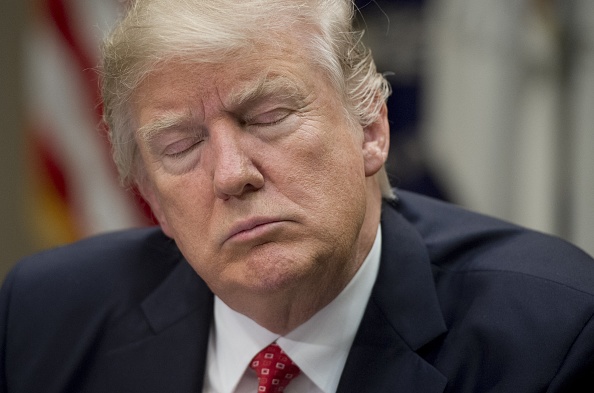
Donald
Trump
has
met
his
match.
Twice.
First,
Trump
has
probably
learned
that
one
should
not
pick
online
fights
with
the
Vicar
of
Christ. Those
fights
are
hard
to
win
—
maybe
because
the
Pope’s
got
a
certain
someone
on
his
side.
Having
failed
in
jousting
with
the
Pope,
Trump
decided
to
up
the
ante. The
President
suggested
that
the
Pope
is
merely
the
Vicar
of
Christ,
whereas
Trump
is
Christ
himself. But
when
Trump
posted
a picture
of
himself
as
Christ —
dressed
in
a
toga,
surrounded
by
angels,
and
hands
glowing
with
heavenly
light
—
even
the
MAGA
faithful
wouldn’t
buy
it.
Trump
had
to
explain
his
blasphemy. He
decided
to
say
that
he
didn’t
realize
this
was
an
image
of
Trump
as
Christ;
he
thought
it
was
an
image
of
Trump as
a
physician.
How
many
ways
is
that
excuse
pitiful? Let
me
count
the
ways. First,
look
at
the picture. Any
person
who
thinks
that’s
an
image
of
Trump
as
a
physician
is
a
moron. But
Trump
says
he
thought
the
picture
was
of
him
as
a
physician. Is
Trump
a
moron?
The
alternative
is
that
Trump
is
not
a
moron. He
knows
full
well
that
the
picture
shows
himself
as
Christ,
but
he
decided
to
lie
about
the
picture
in
order
to
excuse
himself.
How
does
this
explanation
reflect
on
Trump? He’s
ready
to
lie
about
his
understanding
of
the
image. He
disdains
the
public,
thinking
that
the
public
is
stupid
enough
to
believe
this
obvious
lie. And
his
previously
keen
political
instincts
are
fading,
as
Trump
believes
that
blasphemy,
coupled
with
telling
an
obvious
lie,
coupled
with
disdain
for
one’s
voters
is
somehow
a
useful
public
relations
strategy.
Protip: Politicians
should
not
pick
fights
with
the
Vicar
of
Christ.
Or
Christ
himself.
Got
it?
What’s
another
target
that’s
too
hot
to
troll?
Iran.
In
the
battle
of
military
might,
the
United
States
is
defeating
Iran. The
U.S.
is
destroying
the
targets
that
it
attacks,
and
the
Iranian
counter-attacks
are
doing
only
modest
damage.
U.S.
1;
Iran
0.
In
the
battle
of
political
wills,
however,
Iran
is
winning. Iran
may
be
suffering
economically,
but
the
Iranian
government
consists
of
religious
fanatics
who
aren’t
worrying
about
the
Iranian
people. And
the
Iranians
have
managed
to
close
the
Strait
of
Hormuz
with
relatively
little
firepower,
thus
creating
a
crisis
for
the
U.S.
and
the
world. The
Iranian
government
may
be
feeling
less
political
pressure
than
Trump,
who’s
haunted
by
higher
gas
prices
and
upcoming
midterm
elections.
U.S.
1;
Iran
1.
In
the
battle
of
controlling
the
narrative,
the
victor
probably
depends
on
how
you
look
at
the
situation. Iran
says
Trump
started
this
war
two
months
ago
by
launching
an
unprovoked
attack
on
it. Trump
says
the
war
actually
started
in
1979,
with
the
Iranian
revolution
and
later
attacks
that
Iran
or
its
proxies
launched
on
American
targets. Iran,
of
course,
could
say
that
the
war
started
in
1953,
when
the
United
States
returned
the
Shah
to
power
in
a
coup
against
Prime
Minister Mohammad
Mosaddegh.
And
why
stop
there? I
bet
historians
could
keep
going
back
in
time,
blaming
the
United
States
and
Iran
for
various
things
that
occurred
ever
since
the
sixth
century
B.C.,
when
King
Croesus
misinterpreted
the
prophecy
saying
that,
if
Lydia
attacked
Persia,
a
mighty empire
would
fall. (Oops! His
bad.)
But
think
about
it
differently. You
don’t
need
to
go
back
2,500
years
to
see
how
this
problem
started.
The
Obama
administration
negotiated
the
Iran
nuclear
deal,
which
restricted
Iran’s
right
to
enrich
uranium.
Trump
decided
this
was
the
worst
deal
ever
negotiated,
and
he
tore
it
up
in
2018.
Relieved
of
the
obligations
of
Obama’s
deal,
Iran
started
to
enrich
uranium
to
a
higher
level.
This
posed
a
threat
to
the
United
States,
which
the
U.S.
supposedly
obliterated
in
its
attack
on
Iran
last
year,
and
had
to
re-obliterate
in
its
follow-up
attack
on
Iran
this
year.
I’d
say
the
war
is
Trump’s
fault,
because
he
never
should
have
abandoned
the
Obama
nuclear
deal,
but
I
guess
there’s
room
to
argue
about
that.
Finally,
who’s
winning
the
battle
of
the
online
trolls?
It’s
very
hard
to
troll
Iran.
Even
if
Iran
is
an
Islamic
republic
with
a
theocratic
core,
thousands
of
its
people,
many
of
them
innocent,
have
died.
Pete
Hegseth
can
post
his
online
images
of
powerful
American
weaponry,
but
that’s
not
really
trolling.
It’s
more
like
showing
the
bully
kicking
sand
in
the
face
of
the
98-pound
weakling.
Trump
can
spout
about
how
he’s
going
to
instruct
the
military
to
bomb
Iran
back
to
the
Stone
Age,
but
at
this
point
those
repeated
bluffs
sound
like
a
senile
old
man
who’s
had
one
too
many.
So
the
U.S.
is
not
trolling
Iran
effectively.
But
the
Iranians,
for
their
part,
are
actually
pretty
good
at
trolling.
Iran
has
done
a
remarkably
good
job
of
using
images
created
out
of Legos or artificial
intelligence to
poke
fun
at
Trump,
divide
America,
and
move
global
public
opinion
to
its
side.
Trump,
the
ultimate
cyberbully,
is
getting
out-cyberbullied.
Iran
is
owning
the
Trumpists.
And
the
Pope
and
Iran
are
targets
too
hot
to
troll.
(Photo
by
Bill
O’Leary/The
Washington
Post
via
Getty
Images)
It
is
easy
to
think
about
Judge
Pauline
Newman’s
ongoing
shadow
impeachment
as
a
one-off
event.
In
many
ways
it
is
—
thankfully,
there
is
no
long
string
of
courts
fabricating
heart
attacks
and
diminished
brain
capacity
claims
to
boot
a
colleague
off
the
court
—
but
if
it
can
happen
to
one
high-profile
federal
judge,
what
prevents
it
from
happening
to
the
next?
Judges
are
generally
left
to
police
themselves,
but
the
glaring
due
process
issues
that
rose
from
the
U.S.
Court
of
Appeals
for
the
Federal
Circuit’s
treatment
of
Newman
could
use
the
Supreme
Court
stepping
in.
Hoping
for
clarity
on
the
process
judges
should
be
able
to
rely
on
if
their
colleagues
decide
on
their
early
retirement
despite
good
behavior,
law
clerks
and
judges
wrote
to
the
Supreme
Court.
Law.com
has
coverage:
Former
law
clerks
and
retired
judges
have
urged
the
U.S.
Supreme
Court
to
review
U.S.
Court
of
Appeals
for
the
Federal
Circuit
Judge
Pauline
Newman’s
failed,
long-running
challenge
to
her
suspension
over
mental
fitness
concerns.
Newman’s
former
clerks
and
the
colleagues
on
the
bench
submitted
amicus
briefs
asking
the
justices
to
reconsider
a
D.C.
Circuit’s
ruling
from
last
year
that
the
98-year-old
could
not
challenge
her
indefinite
suspension
as
unconstitutional
in
court.
“Amici
are
concerned
that
permitting
misconduct
of
the
sort
alleged
here
to
proceed
unchecked
and
unexamined
by
the
federal
courts
poses
a
grave
threat
to
the
independence
of
all
federal
judges,
particularly
the
50%
of
judges
who
are
68
or
older,”
the
brief,
submitted
by
Virginia
attorney
Richard
A.
Samp,
contends.
One
quirk
of
being
a
federal
judge
is
that
they
are
not
protected
by
the
Americans
with
Disabilities
Act.
If
that
were
the
case,
things
may
have
centered
on
what
accommodations,
if
any,
Newman
would
have
needed
to
continue
doing
her
job.
It
doesn’t
seem
like
said
accommodations
would
have
been
substantial
—
the
Supreme
Court
affirmed
one
of
her
dissents
during
her
apparent
mental
illness
problems.
As
things
are,
the
number
of
judges
leaving
because
of
the
disability
path
seems
to
be
growing:
The
retired
judges
also
sounded
a
broader
alarm
about
judicial
independence,
warning
that
misconduct
complaints
under
the
Judicial
Conduct
and
Disability
Act
have
become
“an
increasingly
common
method”
by
which
a
judge’s
antagonists
can
“circumvent
the
constitutionally
prescribed
impeachment
process.”
Judges
could
really
use
some
guidance.
Limbo
isn’t
a
great
place
to
be
left
in.
Dissents
have
taken
a
noticeable
drop
since
Newman’s
shadow
impeachment.
While
there’s
no
clear
causality,
it
is
an
open
question
if
the
drop
in
dissenting
is
because
the
realization
that
you
could
be
kicked
for
stepping
out
of
line
has
chilled
judges
from
sharing
their
opinions.
Chris
Williams
became
a
social
media
manager
and
assistant
editor
for
Above
the
Law
in
June
2021.
Prior
to
joining
the
staff,
he
moonlighted
as
a
minor
Memelord™
in
the
Facebook
group Law
School
Memes
for
Edgy
T14s
.
He
endured
Missouri
long
enough
to
graduate
from
Washington
University
in
St.
Louis
School
of
Law.
He
is
a
former
boat
builder
who
is
learning
to
swim
and
is
interested
in
rhetoric,
Spinozists
and
humor.
Getting
back
in
to
cycling
wouldn’t
hurt
either.
You
can
reach
him
by
email
at
[email protected]
and
by
Tweet/Bluesky
at @WritesForRent.
Over
the
course
of
the
past
month,
Vault
has
rolled
out
a
variety
of
law
firm
rankings
—
from
the
firms
that
are
the most
prestigious to
the
firms
that
offer
the best
quality
of
life to
the
firms
with
the top-ranked
practice
areas
in
their
region —
and
there’s
yet
another
important
one
that
we’ll
dive
into
today.
Money
can
buy
prestige
and
can
certainly
improve
your
quality
of
life,
but
the
diversity
of
your
colleagues
is
worth
more
than
what
any
Biglaw
salary
scale
can
pay.
But,
because
diversity
is
a
dirty
word
that
the
legal
profession
can
no
longer
stomach
thanks
to
the
Trump
administration’s
empty
threats,
we
now
have
a
ranking
that
instead
goes
by
a
familiar
synonym
to
assess
the
diversity
of
Biglaw:
inclusion.
In
a
companion
ranking
to
the
Vault
100,
associates
were
asked
to
rank
their
own
law
firms
based
on
categories
most
relevant
to
how
the
firm
does
at
creating,
maintaining,
and
fostering
an
inclusive
workforce,
including
but
not
limited
to
“inclusion
as
it
relates
to
women,
LGBTQ+
individuals,
people
of
color,
and
people
with
disabilities.”
To
create
the
overall
Best
30
Firms
for
Inclusion
ranking,
Vault
averages
the
scores
from
all
four
ratings.
There
was
a
huge
amount
of
movement
in
the
Top
10
this
year.
Which
firms
made
the
cut?
Without
any
further
ado,
here
are
the Top
10
Best
Law
Firms
for
Inclusion
based
on
Vault’s
Annual
Associate
Survey
for
2027:
O’Melveny
&
Myers
Hanson
Bridgett
Gibson
Dunn
Robinson+Cole
Hall
Booth
Smith
Carlton
Fields
Sheppard
Mullin
Eversheds
Sutherland
US
Proskauer
Rose
Orrick
Here
are
some
kind
words
from
associates
on
O’Melveny’s
work
to
improve
inclusion
within
the
firm:
“OMM
has
great
intentions
here
and
works
genuinely
hard
to
maintain
an
inclusive
community.”
“I
feel
like
the
firm
in
general
and
our
office
in
particular
make
a
real
effort
to
foster
inclusion
in
the
legal
industry
while
also
cultivating
the
best
legal
talent.”
“Great
variety
of
people
at
the
firm.
Everyone
has
very
different
life
experiences.”
“The
firm
hires
and
supports
[a
wide
range
of
individuals].
Retention
and
promotion
practices
emphasize
inclusivity,
with
robust
parental
leave
and
benefits.”
Congratulations
to
each
of
the
Biglaw
firms
that
made
the
latest
edition
of
the
Vault
Best
Firms
for
Inclusion
rankings,
and
a
huge
congratulations
to
O’Melveny
&
Myers
for
this
rankings
win.
How
did
your
firm
do? Email
us,
text
us
at (646)
820-8477,
or
tweet
us @atlblog to
let
us
know.
Staci
Zaretsky is
the
managing
editor
of
Above
the
Law,
where
she’s
worked
since
2011.
She’d
love
to
hear
from
you,
so
please
feel
free
to email her
with
any
tips,
questions,
comments,
or
critiques.
You
can
follow
her
on Bluesky, X/Twitter,
and Threads, or
connect
with
her
on LinkedIn.
As
Perkins
Coie
and
Ashurst
advance
toward
their
upcoming
merger,
it
provides
both
firms
an
opportunity
to
reflect
on
their
own
calcified
practices
and
embrace
change
where
needed.
Like,
for
example,
how
the
new
firm
might
handle
a
hypothetical
situation
where
a
female
associate
is
subjected
to
sexual
rumors
spread
by
partners.
The
sort
of
situation
where
the
woman
receives
emails
from
her
supervising
partner’s
husband
with
subject
lines
like
“Greetings,
sad
people,”
that
begin
“I
don’t
know
which
of
you
two
nitwits
is
more
to
blame….”
Unfortunately,
this
isn’t
as
hypothetical
as
one
would
hope.
On
LinkedIn,
Perkins
Coie
counsel
Breanna
Philips
expressed
her
hope
that
the
merger
between
her
firm
and
Ashurst
will
bring
some
soul-searching
and
tangible
change
in
managing
hostile
work
environments.
Per
Philips’s
own
account,
here
is
the
rough
timeline.
In
September
2025,
a
female
partner
who
was
Philips’s
direct
supervisor
allegedly
started
a
rumor
that
Philips
had
been
sexually
assaulted
by
a
male
partner
in
another
group.
That
rumor
resulted,
Philips
says,
in
a
closed-door
meeting
—
“held
without
notice,”
per
the
email
Philips
sent
firm
leadership
in
January
—
in
which
the
male
partner
in
question
asked
Philips
about
her
sexual
history.
There
is
approximately
no
version
of
HR
training
that
recommends
that
response.
Philips
reported
both
the
rumor
and
the
closed-door
meeting
to
HR.
“I
was
concerned
that
request
might
not
be
taken
seriously,
so
I
escalated
to
a
more
senior
HR
representative
a
few
days
later,”
Philips
writes.
“And
a
third
HR
representative
joined
shortly
after
to
lead
the
investigation.”
Despite
this,
Philips
just
waited.
A
month
later,
in
October,
the
husband
of
the
supervising
partner
—
who
was
himself
a
former
Perkins
partner
—
sent
the
aforementioned
“greetings,
sad
people”
email
to
Philips’s
work
account.
Quick
housekeeping:
the
firm
has
noted
that
all
the
partners
involved
have
left,
though
Philips’s
account
makes
clear
that
the
female
partner
accused
of
starting
the
rumors
was
still
her
supervisor
when
this
happened,
and
Bloomberg
reports
the
female
partner
left
“of
her
own
accord
due
to
an
unrelated
reason.”
The
email
itself
—
you
can
read
it
in
full
(with
names
redacted)
—
accuses
Philips
and
another
Perkins
lawyer
of
spreading
the
rumor
that
the
husband
was
“having,
or
interested
in
having,
an
affair.”
The
partner’s
husband
insists
that
an
affair
with
him
would
be
“about
as
plausible
as
my
being
one
of
the
people
who
robbed
the
Louvre,”
which
is
a
bizarre
tonal
shift
in
such
a
confrontational
email.
He
then
suggests
Philips
and
her
colleague
are
“needy,
gossipy
vampires”
who
“suck
the
life
out
of”
his
wife.
He
recommends
that
Philips
read
David
Foster
Wallace’s
“The
Depressed
Person”
—
perhaps
the
most
stuck-in-the-90s-Pacific-Northwest
advice
ever
—
and
“stop
emulating
it.”
The
male
senior
lawyer
also
expresses
his
hope
that
the
email
humiliates
the
junior
female
lawyer
—
“If
receiving
this
is
humiliating
or
embarrassing
for
you,
if
it
makes
you
scared
or
feel
shame,
that’s
good.
It
should.”
—
and
signs
off
“Sincerely
(more
sincere
than
you
can
possibly
imagine).”
Where
did
this
rumor
come
from?
According
to
the
Philips
account:
I
called
the
sender
and
the
female
partner
immediately.
He
told
me
that
during
a
marital
spat,
she
accused
him
of
having
an
affair—an
idea
she
later
tried
to
blame
on
another
associate,
also
copied
on
the
email.
When
he
asked
her
who
the
affair
was
supposedly
with,
she
named
me.
As
she
explains
“my
direct
supervisor
had
now
sexualized
me
two
times
(first
the
assault
rumor,
second,
the
affair
lie),”
which
seems
to
be
an
accurate
characterization
of
those
alleged
facts.
This
is
why
firms
have
HR
departments.
Philips
claims
HR
told
her
to
“do
nothing”
and
she
took
that
as
an
indication
that
it
was
being
handled
by
personnel.
Apparently,
it
wasn’t.
By
January,
Philips
had
had
enough
and
sent
a
January
21
email
to
HR,
employment
counsel,
and
several
firm
leaders.
The
email
listed
seven
specific
items
she
expected
the
firm
to
address,
including
the
September
rumor,
the
closed-door
meeting
in
which
a
partner
asked
her
about
her
sexual
history,
and
“the
firm’s
decision
to
let
[the
husband
partner]
attend
the
Christmas
party
this
year,
despite
knowing
of
his
harassing
messages.”
She
requested
a
written
response
by
January
28,
but
also
WAIT,
THEY
LET
THE
GUY
GO
TO
THE
HOLIDAY
PARTY!
That
seems…
problematic.
According
to
Philips,
only
after
this
email
did
the
firm
tell
her
a
third-party
investigator
would
be
retained,
and
the
outside
investigator
first
contacted
her
on
February
27
—
roughly
five
months
after
she
first
reported
the
rumor.
Perkins
Coie
provided
a
statement
to
Bloomberg:
“Perkins
Coie
has
long
sought
to
foster
an
inclusive
workplace
that
values
a
broad
array
of
perspectives,
backgrounds,
and
experiences,”
the
firm
said
Thursday.
“When
an
employee
raises
a
concern
with
HR,
it
is
fully
investigated,
including
in
some
cases
by
a
third
party,
and
appropriate
action
taken.”
Sort
of
glosses
over
the
five-month
lag.
And
that’s
the
assessment
Philips
makes
in
another
LinkedIn
post,
noting
her
“concern
is
not
whether
outside
investigators
are
ever
used;
it
is
that
a
prompt,
neutral
investigation
did
not
happen
here.
That
distinction
matters.”
It
does.
Honestly,
if
there’s
a
silver
lining
here,
it’s
that
Philips
still
works
at
Perkins
Coie
and
was,
in
fact,
promoted
to
counsel
in
January.
That
should
not
be
remarkable,
but
unfortunately,
corporate
America
is
littered
with
stories
of
junior
female
employees
getting
tagged
with
some
sort
of
previously
undisclosed
“performance
issue”
and
nudged
out
the
door
as
companies
move
to
shield
managers.
The
response
described
in
these
posts
is
unacceptable,
but
it
could
have
been
much
worse.
The
tie-up
with
Ashurst
will
produce
a
roughly
$2.8
billion,
3,000-lawyer
transatlantic
operation.
“Seem
reasonable
to
require
accountability
amongst
partners
and
HR
personnel?”
as
Philips
puts
it
to
Ashurst.
“Certainly
seems
to
be
less
monetary
exposure
in
doing
so.”
As
for
suggestions,
she
writes:
At
a
minimum,
these
questions
should
be
asked:
1.
Is
there
an
internal
SOP
for
investigating
complaints,
and
will
the
firm
commit
to
making
a
copy
available?
2.
What
disciplinary
action
exists
for
misconduct,
and
is
application
discretionary
or
structured?
3.
Will
the
firm
commit
to
supplying
partners
with
demographic
data
for
recent
firings?
She
addressed
these
to
her
own
future
firm,
but
these
should
be
questions
every
law
firm
takes
a
second
to
make
sure
they
know
how
to
answer.
Because
law
firms
are
a
lot
closer
to
hosting
a
hostile
work
environment
than
they
think.
Less
than
24
hours
after
a
gunman
was
tackled
outside
the
ballroom
at
the
Washington
Hilton
during
the
White
House
Correspondents’
Dinner,
the
Department
of
Justice
had
already
drafted
a
letter
addressed
to
Greg
Craig
of
Foley
Hoag
demanding
the
firm
drop
its
case
against
the
administration
for
redesigning
the
White
House
without
any
congressional
approval.
Acting
AG
Todd
Blanche
subsequently
posted
this
letter
to
X
with
the
six-word
summary:
“It’s
time
to
build
the
ballroom.”
That’s…
a
lot
of
hustle
for
a
Sunday
morning.
To
be
clear
about
what
actually
happened
Saturday
night:
the
suspect,
a
California
teacher
and
engineer,
rushed
a
security
checkpoint
and
ran
toward
the
ballroom
where
the
black-tie
dinner
was
being
held,
armed
with
a
shotgun,
handgun,
and
knives.
He
exchanged
gunfire
with
law
enforcement
and
was
tackled
to
the
ground.
One
Secret
Service
agent
was
hit
in
his
bulletproof
vest,
treated,
and
released.
No
one
was
killed.
The
shooter
was
arrested.
A
scary
incident,
genuinely,
and
one
that
could
have
been
catastrophically
worse.
We
can
all
agree
on
that.
But
the
Trump
administration
did
not
wait
to
agree
on
that
and
move
on.
Instead,
Assistant
AG
Brett
Shumate
fired
off
a
letter
to
the
National
Trust
for
Historic
Preservation’s
outside
counsel
demanding
the
Trust
voluntarily
dismiss
its
lawsuit
against
the
White
House
ballroom
by
9
a.m.
Monday,
or
the
DOJ
would
move
to
dissolve
Judge
Richard
Leon’s
injunction
and
kill
the
case
itself.
“Your
lawsuit
puts
the
lives
of
the
president,
his
family,
and
his
staff
at
grave
risk,”
Shumate
wrote.
“Enough
is
enough.
Your
client
should
voluntarily
dismiss
this
frivolous
lawsuit
today
in
light
of
last
night’s
assassination
attempt
on
President
Trump.”
The
letter
then
argued
that
the
shooter
targeting
Trump
“at
the
Washington
Hilton,
the
only
ballroom
in
Washington,
D.C.,
suitable
to
host
large
gatherings
for
the
President”
proved
the
White
House
ballroom
was
“essential
for
the
safety
and
security
of
the
President,
his
family,
his
cabinet,
and
his
staff.”
Strong
language…
just
a
few
not-so-minor
details
that
prevent
it
from
landing.
Like
how
the
White
House
Correspondents’
Dinner
is
not
a
White
House
event,
but
rather
hosted
by
the
White
House
Correspondents’
Association.
And
that
attending
is
a
presidential
choice
—
indeed
Trump
has
skipped
out
on
every
other
Correspondents’
Dinner
he
was
invited
to.
Plus
the
administration
did
not
even
designate
the
event
as
a
National
Special
Security
Event,
a
classification
that
would
have
required
a
higher
threshold
of
security
measures.
So…
Trump
voluntarily
attended
a
non-White
House
event,
the
Secret
Service
chose
to
skimp
on
security
measures,
and
because
something
bad
happened
there
—
that
the
Secret
Service
still
successfully
thwarted
—
the
president
should
be
afforded
unilateral
authority
to
throw
a
tumorous
ballroom
onto
a
national
landmark?
Maybe
we
shouldn’t
be
surprised,
the
administration
has
been
calling
everything
a
national
security
necessity
since
the
East
Wing
came
down
(Judge
Leon
already
had
occasion
to
note
that
“national
security
is
not
a
blank
check
to
proceed
with
otherwise
unlawful
activity”).
It’ll
be
interesting
to
see
how
Judge
Leon
—
the
same
George
W.
Bush
appointee
who
has
been
watching
this
administration
make
increasingly
strained
arguments
for
the
better
part
of
a
year
—
reacts
to
this
one.
The
DOJ
letter
is
also,
to
put
it
charitably,
in
significant
tension
with
the
position
this
administration
has
staked
out
in
every
other
gun-related
tragedy
in
recent
memory.
When
children
are
murdered
in
their
classrooms,
the
answer
from
this
crowd
is
invariably:
thoughts
and
prayers,
mental
health,
it’s
too
soon
to
talk
about
policy.
But
shots
fired
in
the
vicinity
of
GOP
politicians
and
suddenly
something
needs
to
be
done
by
9
a.m.
Monday?
The
whiplash
would
be
funny
if
it
weren’t
so
grotesque.
And
then
there’s
the
part
that
the
administration
has,
seemingly,
not
thought
through
at
all:
the
optics
of
this
move
are
doing
absolutely
nothing
to
tamp
down
the
false
flag
speculation
that
immediately
erupted
online
after
the
shooting.
Now,
to
be
clear,
there
is
no
credible
evidence
this
was
a
false
flag.
The
suspect
sent
his
family
a
note
about
10
minutes
before
the
attack
apologizing
to
his
parents,
colleagues,
and
students
for
what
he
was
about
to
do,
writing,
“I
don’t
expect
forgiveness.”
That
is
not
the
behavior
of
a
government
plant.
The
shooter
appears
to
be
exactly
what
he
appears
to
be.
But
false
flag
theories
don’t
survive
and
thrive
on
evidence.
They’re
built
on
the
appearance
of
suspicious
opportunism.
And
the
DOJ
—
less
than
24
hours
after
the
shooting
—
publicly
calling
on
the
plaintiff’s
attorney
to
drop
a
specific
ongoing
lawsuit
that
directly
benefits
the
president,
using
language
like
“I
hope
yesterday’s
narrow
miss
will
help
you
finally
realize
the
folly”
of
your
lawsuit…
is
not
a
great
look
for
an
administration
trying
to
project
good
faith.
Kathryn
Rubino
is
a
Senior
Editor
at
Above
the
Law,
host
of The
Jabot
podcast,
and
co-host
of Thinking
Like
A
Lawyer.
AtL
tipsters
are
the
best,
so
please
connect
with
her.
Feel
free
to
email her with
any
tips,
questions,
or
comments
and
follow
her
on
Twitter @Kathryn1 or
Bluesky @Kathryn1