DOJ
Argues
Scared
Biglaw
Firms
Show
They
Did
Something
Right!:
That’s
not
how
the
Founders
expected
EOs
to
work.
The
Former
Director
Of
The
DOJ’s
Departmental
Ethics
Office
Weighs
In:
The
weakening
of
the
Hatch
Act
will
have
long
lasting
consequences.
These
Law
Schools
Fight
To
Expand
The
Legal
Pipeline:
Check
out
the
Justice
&
Opportunity
Honor
Roll!
These
Millions
Are
Ear
Marked
For
Full
Rides:
The
University
of
New
Mexico
Law
School
just
got
a
huge
gift!
According
to
a
new
Feedspot
ranking
of
the
100
best
legal
blogs
—
ranked
using
multiple
factors
including
content
relevancy,
subject
expertise,
posting
frequency,
and
freshness
of
content
—
which
blog
took
the
top
spot?
Hint:
Above
the
Law
came
in
second,
and
since
the
institution
has
109
years
on
ATL,
we’ll
have
to
give
them
their
due.
Everyone
says
that
we
don’t
know
how
the
war
in
Iran
will
end.
Nonsense. We
know
exactly
how
the
war
will
end. We
even
know
when
it
will
end.
But
let’s
start
at
the
beginning. As
the
war
begins,
reporters
foolishly
ask
three
questions.
First,
they
ask
a
supposedly
hard
question
for
Democrats: “Do
you
feel
safer
now
than
you
did
a
week
ago,
when
Ali
Khamenei
was
ruling
Iran?”
It’s
not
so
hard: Of
course
we
feel
safer
now. The
U.S.
got
rid
of
an
evil
man.
Second: “So
that
means
you’re
happy
with
how
the
war
is
going
so
far?”
Again,
not
so
hard: Of
course
we’re
happy
with
how
the
war
is
going
so
far. Generally,
when
the
United
States
enters
a
war
of
choice
with
another
country,
things
go
swimmingly
for
the
first
few
days. How
were
you
feeling
about
the
war
in
Afghanistan
for
the
first
week
or
two,
when
B-52’s
were
bombing
the
hell
out
of
the
Taliban
and
the
Northern
Alliance
had
them
on
the
run? How
were
you
feeling
about
the
war
in
Iraq
for
the
first
week
or
two,
when
American
troops
were
on
a
fast
track
to
Baghdad
and
the
Iraqis
were
putting
up
essentially
no
resistance?
We
always
feel
great
for
the
first
week
or
two. Ask
again
next
year. Or
next
decade.
Finally,
a
supposedly
tough
question
for
Republicans: “Will
the
United
States
deploy
ground
troops
in
Iran?”
The
only
answer
that
a
senior
official
can
give
to
this
question
publicly
is: “I
haven’t
ruled
out
the
use
of
ground
troops.”
This
is
common
sense. You
never
tell
the
enemy
the
limits
of
your
strategy.
You
never
rule
out
any
possible
escalation. You
absolutely
must
be
noncommittal
when
asked
about
ground
troops,
even
knowing
that
tomorrow’s
headline
will
be,
“Trump
[or
Hegseth,
or
whomever]
Declines
to
Rule
Out
Use
of
Ground
Troops!”
At
the
same
time,
everyone
in
the
United
States
knows
to
a
moral
certainty
that
the
U.S.
will
never
deploy
ground
troops
in
Iran. Trump
promised
no
“forever
wars”;
the
American
public
opposes
deploying
ground
troops;
the
Republican
party
knows
(as
does
Trump
himself)
that
deploying
ground
troops
would
hand
the
midterm
elections
to
the
Democrats.
So: (1) Trump
and
Hegseth
won’t
rule
out
the
possibility
of
deploying
ground
troops
and
(2) No
ground
troops
will
be
ever
deployed.
Finally,
you
know
exactly
how
this
war
will
end.
Pundits
are
saying
that,
“No
one
knows
how
the
war
in
Iran
will
end.”
Silly
pundits.
No
one
knows
how
the
war
in
Iran
will
end on
the
Iranian
side.
Everyone
knows
how
the
war
in
Iran
will
end on
the
American
side.
The
war
in
Iran
will
be
over
from
the
American
side
no
later
than
June
1.
Period.
From
the
American
side,
the
war
might
end
tomorrow,
or
next
week,
or
in
May,
but
I
guarantee
that
it
will
be
over
by
June
1. If
the
war
were
to
continue
into
June,
then
it
would
begin
to
influence
the
midterm
elections. The
Republicans
(and
Trump)
will
not
run
that
risk. The
war
will
be
over
(for
our
side)
no
later
than
May
31.
Also,
Donald
Trump
will
declare
victory
on
the
day
the
war
ends. Trump
never
loses
anything. (See,
for
example,
the
2020
election.) Nothing
involving
Trump
ever
plays
to
a
draw. Trump
always
wins.
So
Trump
will
say
that
he
won
the
war
in
Iran.
If
a
hardline
regime
remains
in
power
in
Iran,
then
Trump
will
say
that
he
killed
Khamenei. That
was
his
goal
all
along. The
regime
—
that
is,
Khamenei
personally
—
was
eliminated. Mission
accomplished. We
won
the
war.
If
the
war
has
accomplished
a
little
more
than
that,
so
much
the
better. We
put
in
place
people
slightly
less
radical
than
Khamenei,
or
whatever.
Trump
won.
The
one
thing
that
will
not
have
been
happened
by
June
1
is
for
us
to
have
any
idea
about
how
the
war
in
Iran
will
end
from
Iran’s
perspective.
How
could
we
possibly
know? What
did
Afghanistan’s
future
look
like
three
months
after
the
United
States
attacked?
What
did
Iraq’s
future
look
like
three
months
after
the
American
invasion?
What
did
Libya’s
future
look
like
three
months
after
Gaddafi
fell?
Three
months
into
this
war,
the
lingering
elements
of
this
regime
may
be
holding
power. The
elements
of
some
other
regime
may
be
trying
to
establish
power. Iran
may
have
broken
out
into
civil
war. Kurdish
troops
may
be
running
wild
in
the
streets
of
Tehran. The
country
may
have
collapsed
into
sectarian
violence. It
may
be
obvious
that
Iran
has
become
a
failed
state
(with
stockpiles
of
enriched
uranium
lying
around
unprotected).
We
don’t
know
how
this
war
will
end
from
Iran’s
perspective.
But
we
certainly
know
how
it
will
end
from
our
perspective: The
U.S.
government
will
announce
that
major
military
operations
have
ended. Trump
will
declare
victory. Sean
Hannity
(and
the
rest
of
the
MAGA
lickspittles)
will
explain
that
Trump
was
a
genius,
and
that
we
live
in
the
best
of
all
possible
worlds. (Why
wait,
Sean? Just
make
that
announcement
now,
and
save
time.)
Many
on
the
left
will
of
course
insist
on
the
opposite: Iran
was
never
an
immediate
threat
to
us. Too
many
lives
were
lost. Too
little
was
achieved
at
too
great
a
cost.
But
please
don’t
tell
me
that
there’s
some
question
about
how
this
war
will
end.
From
our
perspective,
you
know
not
only
how,
but
even
when,
the
war
will
be
over.
Before
summer
arrives,
we’ll
be
able
to
make
the
announcement:
It
feels
like
it’s
trying
to
become
the
next
Kirkland.
If
that’s
the
plan,
Godspeed.
But
it
wasn’t
for
me.
— A
person
reportedly
familiar
with
Sidley’s
international
growth
strategy,
in
comments
given
to
Law.com,
concerning
the
firm’s
rapid
acquisition
of
high-profile
partners
in
London.
Yvette
Ostolaza, Sidley’s
management
committee
chair,
said
the
firm
had
“welcomed
close
to
50
lawyers
from
Latham.”
Staci
Zaretsky is
the
managing
editor
of
Above
the
Law,
where
she’s
worked
since
2011.
She’d
love
to
hear
from
you,
so
please
feel
free
to email her
with
any
tips,
questions,
comments,
or
critiques.
You
can
follow
her
on Bluesky, X/Twitter,
and Threads, or
connect
with
her
on LinkedIn.
Deciding
to
go
to
law
school
is
usually
seen
as
a
self-investment.
If
tuition
costs
are
the
only
thing
that
stand
in
your
way
to
being
the
next
Harvey
Specter,
you’d
be
foolish
to
not
pay
whatever
it
takes
to
change
the
world
(and
your
bank
account)
with
your
lawyering.
But
the
reality
is
that
deciding
to
go
to
law
school
is
a
lot
more
like
gambling.
As
understandable
as
it
is
for
everyone
to
enter
thinking
that
they’ll
graduate
top
of
their
class,
the
math
rarely
works
out
that
way.
Deciding
which
law
school
is
best
for
you
is
aided
by
some
risk
assessment:
how
big
are
the
class
sizes,
where
do
graduates
tend
to
place,
can
you
live
in
this
area
for
three
years?
Huge
classes,
poor
placement,
and
a
city
or
town
you
can’t
stand?
You’d
be
better
off
playing
blackjack.
But
one
of
the
biggest
factors
is
affordability.
Public
and
private
loans
could
lessen
the
financial
blows,
but
the
holy
grail
is
always
gambling
with
the
house’s
money:
full
ride
scholarships.
If
you’ve
been
considering
the
University
of
New
Mexico’s
law
school,
some
great
news
could
change
how
you
view
them.
KRQE
has
coverage:
New
Mexico’s
only
law
school
has
received
its
largest
donation
in
history,
to
go
towards
scholarships
to
help
more
students
get
their
degrees.
Each
year,
about
one
hundred
law
students
are
admitted
to
UNM
Law
School,
and
one
lucky
student
is
granted
a
full
tuition
scholarship
every
three
years
by
alumni
Eric
and
Dana
Marie
Knapp. … Thanks
to
the
Knapps’
latest
donation,
the
largest
in
UNM
Law
School
history,
the
$4.5
million
endowed
scholarship
will
help
ten
students
get
full
tuition
rides
through
law
school.
A
tenfold
increase
in
students
who
won’t
have
to
worry
about
law
school
debt
is
huge!
Assuming
prices
remain
stable
(which
is
a
big
ask
right
now),
the
donation
will
cover
the
tuition
costs
of
10
in-state
future
lawyers
over
the
course
of
30
years.
Unfettered
by
debt,
full
ride
recipients
could
take
on
public
service
jobs
and
live
comfortably,
not
to
mention
work
toward
buying
a
home
or
being
able
to
afford
having
a
family.
One
major
caveat:
the
scholarship
money
won’t
be
doled
out
until
the
Knapps
pass
away.
Congratulations
to
the
school
and
their
future
generations
of
lawyers!
Chris
Williams
became
a
social
media
manager
and
assistant
editor
for
Above
the
Law
in
June
2021.
Prior
to
joining
the
staff,
he
moonlighted
as
a
minor
Memelord™
in
the
Facebook
group Law
School
Memes
for
Edgy
T14s
.
He
endured
Missouri
long
enough
to
graduate
from
Washington
University
in
St.
Louis
School
of
Law.
He
is
a
former
boat
builder
who
is
learning
to
swim
and
is
interested
in
rhetoric,
Spinozists
and
humor.
Getting
back
in
to
cycling
wouldn’t
hurt
either.
You
can
reach
him
by
email
at [email protected]
and
by
tweet
at @WritesForRent.
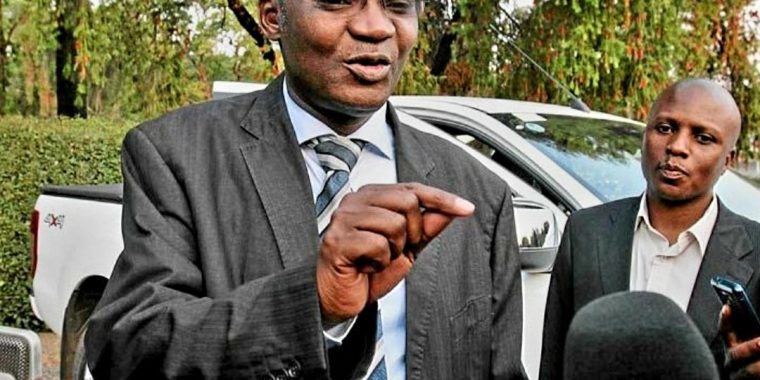
Moyo,
a
professor
of
politics,
was
accused
by
Advocate
Method
Ndlovu,
Ibhetshu’s
ex-lawyer,
a
few
days
ago
of
being
the
“principal
architect
of
the
litigation”,
something
he
vehemently
denies.
𝗧𝗵𝗲
𝗡𝗲𝘄𝘀𝗛𝗮𝘄𝗸𝘀:
What
is
your
view
on
Mbuso
Fuzwayo’s
and
Ibhetshu
LikaZulu
’s
withdrawal
of
its
Constitutional
Court
case?
𝐏𝐫𝐨𝐟𝐞𝐬𝐬𝐨𝐫
𝐉𝐨𝐧𝐚𝐭𝐡𝐚𝐧
𝐌𝐨𝐲𝐨:
I’ve
seen
the
ongoing
media
frenzy
and
that
unsigned
press
statement
floating
around,
but
let’s
be
crystal
clear:
I
have
zero
view
on
the
withdrawal
—
and
I
won’t
pretend
otherwise.
I
know
nothing
about
their
reasons
beyond
what
the
headlines
are
breathlessly
repeating.
Without
facts,
speculation
is
just
noise.
I
refuse
to
play
the
speculation
game.
𝗡𝗲𝘄𝘀𝗛𝗮𝘄𝗸𝘀:
Advocate
Method
Ndlovu,
former
lawyer
for
Fuzwayo
and
Ibhetshu,
alleged
in
a
letter
he
circulated
dated
5
March
2026
that
you
are
“the
principal
architect
of
the
litigation”
for
the
applicants;
so,
one
would
think
that
you
would
have
been
the
first
person
they
informed
about
their
withdrawal
of
the
case
—
how
come
they
did
not
inform
you?
𝐌𝐨𝐲𝐨:
They
didn’t
inform
me
because
they
had
no
reason
to
—
and
neither
did
I.
Full
stop.
I
have
not
spoken
a
single
word
to
Mbuso
Fuzwayo
or
Ibhetshu
LikaZulu
about
anything
—
let
alone
this
case
—
for
several
years.
Zero
contact.
Not
in
October
2025.
Not
yesterday.
Not
ever
on
this
matter.
So,
the
idea
that
I’d
be
their
first
call
is
laughable.
Advocate
Method
Ndlovu’s
wild
claim
that
I
am
the
“principal
architect”
of
their
litigation
is
not
just
false
—
it
is
a
brazen,
evidence-free
fabrication
designed
to
monetise
a
lie.
I
never
discussed
the
case
with
Fuzwayo
or
Ibhetshu
LikaZulu.
I
never
approached
Ndlovu.
I
don’t
know
him
from
a
bar
of
soap,
and
don’t
have
his
number.
Besides
the
illegally
recorded
and
maliciously
leaked
16
December
2025
WhatsApp
call
audio
initiated
by
Counsel
Zibusiso
Ncube
who
placed
me
on
speakerphone
without
prior
warning,
only
to
reveal
Advocate
Ndlovu’s
presence
well
over
a
minute
into
the
call
—
I
have
never
had
any
conversation
whatsoever
with
Advocate
Method
Ndlovu
about
hiring
his
services,
payment,
reputational
risk,
or
anything.
The
entire
story
is
pure
fiction,
cooked
up
by
Ndlovu
and
his
unprofessional
handlers,
some
of
them
lawyers,
in
a
desperate
attempt
to
smear
and
extort
money.
It’s
delusional,
fraudulent,
and
frankly
embarrassing
for
Ndlovu
to
claim
that
I’m
the
principal
architect
of
something
I’m
not
involved
in,
and
don’t
know
its
origins.
Let
the
record
be
clear:
I
had
nothing
to
do
with
that
case
—
period.
Anyone
peddling
otherwise
is
a
snake
oil
merchant
selling
smoke
and
mirrors
for
political
reasons,
extortion
or
both.
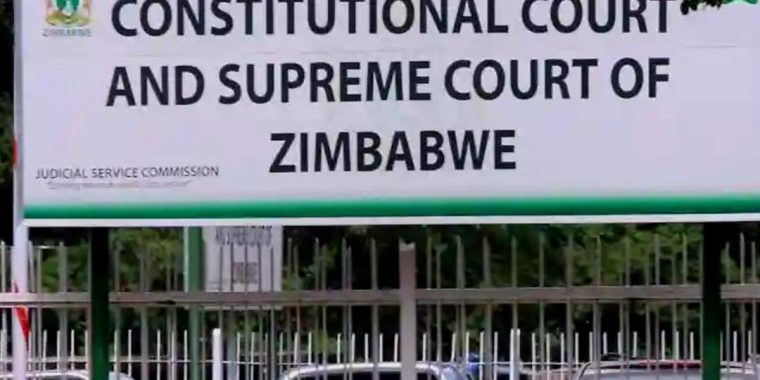
THE
Zimbabwean
Constitutional
Court
(ConCourt)
has
swiftly
rejected
local
pressure
group
Ibhetshu
LikaZulu
and
its
secretary-general
Mbuso
Fuzwayo’s
arbitrary
withdrawal
of
their
apex
court
application
to
stop
President
Emmerson
Mnangagwa’s
term
extension
bid
and
a
battery
of
contentious
constitutional
amendments
changing
the
country’s
political,
electoral
and
governance
systems.
A
Harare
senior
constitutional
lawyer
told
The
NewsHawks:
“I
have
just
checked
the
𝐢𝐞𝐜𝐦𝐬
𝐬𝐲𝐬𝐭𝐞𝐦
looking
for
a
different
case
and
then
i
realised
that
Case
N0.
CCZ10/26
(Ibhetshu
LikaZulu
&
Mbuso
Fuzwayo
vs
President
Emmerson
Mnangagwa,
Zanu
PF,
Ziyambi
Ziyambi,
Jacob
Mudenda
&
Virginia
Mabiza)
withdrawal
has
been
rejected.
It
was
rejected
on
account
of
the
legal
costs
issue.
But
ask
other
lawyers,
they
will
explain
to
you
how
the
system
works.”
A
Zimbabwean
constitutional
lawyer
based
in
Johannesburg,
South
Africa,
explained
to
The
NewsHawks
in
detail
how
things
work
on
such
cases:
“Withdrawing
a
Constitutional
Court
case
is
not
always
a
simple,
absolute
right,
particularly
when
it
involves
important
constitutional
issues
and
matters
of
public
interest
or
when
significant
proceedings
have
already
occurred
like
in
this
case
because
the
court
had
already
granted
the
applicants
direct
access
after
a
serious
consideration
of
the
initial
application
for
permission
to
file.
While
an
applicant
may
request
to
withdraw
a
case,
the
court
retains
discretion
to
proceed,
particularly
regarding
legal
cost
implications
or
to
prevent
abuse
of
process,
as
seen
in
different
various
matters,
including
the
Jacob
Zuma
litigation
cases
in
South
Africa.
Once
a
matter
is
before
ConCourt,
the
court
may
deny
a
withdrawal
if
it
strongly
believes
a
judgment
is
necessary
for
legal
certainty
or
if
the
case
has
already
proceeded
too
far.
So,
the
important
issues
at
stake
here
in
this
case
include
costs,
judicial
discretion,
procedural
rules
and
abuse
of
court
process.”
The
lawyer
further
explained:
“Firstly,
simply
withdrawing
does
not
necessarily
escape
liability
for
costs.
The
court
may
still
order
the
applicant
to
pay
the
legal
costs
of
other
parties,
as
shown
in
recent
rulings
regarding
Zuma’s
applications.
The
same
applies
in
this
case.
“Secondly,
the
court
may
continue
to
hear
a
case
even
if
the
original
applicant
wishes
to
withdraw,
especially
if
the
matter
concerns
public
interest
or
serious
legal
questions.
Thirdly,
procedural
rules.
The
process
requires
formal
procedures,
such
as
filing
a
notice
of
withdrawal,
which
may
require
permission
of
the
court
or
Chief
Justice.
Fourthly,
there
is
abuse
of
court
process.
If
a
withdrawal
is
seen
as
a
tactical
maneuvre,
which
it
is
in
this
case,
the
court
may
impose
conditions
or
reject
it.
In
the
case
of
former
president
Zuma,
multiple
attempts
to
rescind
or
appeal
orders,
for
instance
regarding
his
contempt
of
court
sentence,
were
dismissed
by
the
ConCourt
rather
than
simply
withdrawn.
Fifthly,
put
differently
withdrawing
a
case
from
the
ConCourt
is
not
always
‘at
will’
or
‘automatic’,
particularly
if
the
case
raises
important
constitutional
issues. While
a
party
can
request
withdrawal,
the
court
controls
its
docket
and
may
refuse
to
stop
proceedings
if
it
believes
it
is
in
the
public
interest
to
decide
the
matter.
In
short,
while
an
applicant
can
ask
to
withdraw
a
case,
it
is
not
always
a
simple,
guaranteed,
or
unilateral
action
in
constitutional
matters.
It’s
up
to
the
court
to
decide.”
Fuzwayo
has
announced
withdrawal
from
the
case,
citing
a
sustained
smear
campaign
and
mudslinging
by
his
critics.
Highly-placed
sources
say
Nqobani
Sithole
of
Sithole
Law
Chambers
and
Method
Ndlovu
of
Apex
Legal
Group
of
Advocates’
were
paid
US$225
000
each
and
will
keep
their
money,
since
the
client
withdrew
the
case
on
their
own.
The
bill
for
the
whole
project
was
US$450
000
which
Ibhetshu
and
Fuzwayo
settled.
The
money
was
initially
supposed
to
be
equally
divided
among
three
senior
lawyers,
including
Sithole
as
the
instructing
lawyer,
Ndlovu
as
the
advocate
and
another
advocate
from
the
Advocates’
Chambers
in
Harare
who
later
withdrew.
A
top
legal
source
told
The
NewsHawks:
“They
will
keep
their
money
since
the
client
withdrew
on
their
own.
There
will
be
no
refunds
to
Ibhetshu
LikaZulu.
When
the
case
started
Sithole,
as
instructing
lawyer,
looked
for
an
advocate
and
initially
choose
a
Harare
lawyer
from
Advocates’
Chambers.
However,
their
negotiations
broke
down
as
the
advocate’s
fees
were
astronomically
high.
He
wanted
US$450
000.
Yet
US$450
000
was
the
whole
budget.
So
Sithole
then
approached
Ndlovu
with
a
US$150
00
offer.
But
when
the
money
was
out
and
ready
for
collection,
Ndlovu
took
US$225
000;
US$75
000
more.
Sithole
took
the
balance
since
the
preferred
advocate
had
withdrawn.
Now
the
problem
is
Ndlovu
wants
more
money,
claiming
US$450
000,
the
whole
budget.
This
is
the
source
of
the
current
fight,
the
other
issues
arise
from
this.
With
this
new
development,
the
situation
is
fast-changing
but
the
money
will
remain
with
lawyers.”
Ndlovu
last
week
withdrew
from
the
case,
citing
a
breakdown
in
trust,
reputational
risk
and
lack
of
payment.
However,
The
NewsHawks
found
out
and
confirmed
–
through
documents
–
that
he
had
been
paid
US$225
000.
The
legal
profession
talks
a
big
game
about
access
to
justice,
but
that
promise
doesn’t
mean
much
if
the
path
to
becoming
a
lawyer
remains
narrow,
expensive,
and
opaque.
That’s
why
the
new
preLaw
Magazine
Justice
&
Opportunity
Honor
Roll
is
worth
a
closer
look.
Instead
of
obsessing
over
the
usual
metrics
—
LSAT
medians,
employment
stats,
or
prestige
signaling
—
the
list
highlights
law
schools
actually
working
to
widen
the
pipeline
into
the
profession
through
admissions
innovation,
affordability
efforts,
flexible
program
design,
and
meaningful
support
for
students
once
they
arrive.
Because
if
the
legal
system
is
supposed
to
serve
everyone,
the
profession
itself
needs
to
start
looking
a
lot
more
like
the
communities
it
represents.
The Justice
&
Opportunity
Honor
Roll
lists
the
law
schools
that
are
doing
their
best
to
expand
access
to
legal
education,
highlighting
schools
that
have
created
innovative
pathways
into
the
legal
profession.
Here’s
the
methodology
that
was
used:
preLaw
invited
law
schools
to
submit
information
about
initiatives,
partnerships
or
strategies
that
reflect
the
mission
of
expanding
access
to
legal
education.
Schools
were
evaluated
based
on
the
scope
and
maturity
of
their
efforts,
including
evidence
of
scale,
longevity
and
measurable
impact
where
available.
Institutions
designated
as A demonstrate
multiple,
well-established
access
strategies
that
work
together
to
lower
barriers
to
entry
and
persistence.
Schools
recognized
at
the A- level
meet
the
Honor
Roll
criteria
through
defined
initiatives,
with
distinctions
reflecting
breadth
and
scale
rather
than
quality.
The
Honor
Roll
is
not
a
ranking,
but
a
recognition
of
meaningful
action
at
a
moment
when
access
pathways
matter
more
than
ever.
Without
further
ado,
according
to
preLaw
magazine,
these
are
the
law
schools
that
earned
A
grades
for
their
efforts
to
expand
access
to
legal
education
(listed
in
alphabetical
order):
Staci
Zaretsky is
the
managing
editor
of
Above
the
Law,
where
she’s
worked
since
2011.
She’d
love
to
hear
from
you,
so
please
feel
free
to email her
with
any
tips,
questions,
comments,
or
critiques.
You
can
follow
her
on Bluesky, X/Twitter,
and Threads, or
connect
with
her
on LinkedIn.
Fuzwayo,
who
also
serves
as
Secretary
General
of
Ibhetshu
Likazulu,
announced
the
move
on
Monday,
9
March
2026,
citing
an
“unrelenting
smear
campaign”
targeting
the
leadership.
He
said
the
tough
decision
was
made
following
advice
from
stakeholders
concerned
about
attempts
to
damage
both
the
organisation’s
and
his
own
personal
reputation.
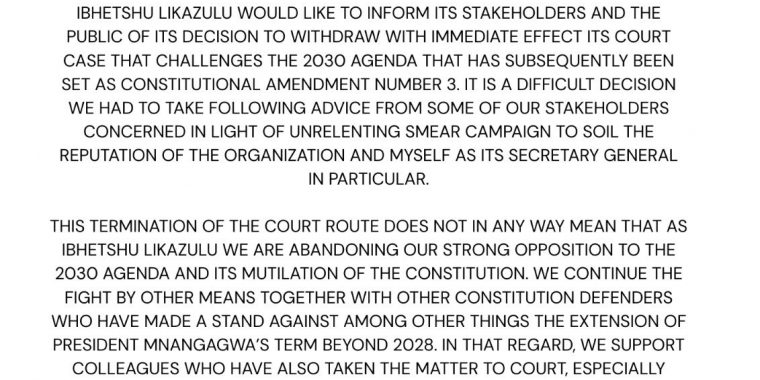
Said
Fuzwayo:
“Ibhetshu
Likazulu
would
like
to
inform
its
stakeholders
and
the
public
of
its
decision
to
withdraw
with
immediate
effect
its
court
case
that
challenges
the
2030
Agenda
that
has
subsequently
been
set
as
Constitutional
Amendment
Number
3.
“It
is
a
difficult
decision
we
had
to
take
following
advice
from
some
of
our
stakeholders
concerned
in
light
of
unrelenting
smear
campaign
to
soil
the
reputation
of
the
organization
and
myself
as
its
secretary
general
in
particular.”
Fuzwayo
insisted
that
withdrawing
the
case
from
the
Constitutional
Court
of
Zimbabwe
should
not
be
seen
as
a
concession
in
the
wider
battle
against
the
proposed
constitutional
changes. He
said:
“This
termination
of
the
court
route
does
not
in
any
way
mean
that
as
Ibhetshu
Likazulu
we
are
abandoning
our
strong
opposition
to
the
2030
agenda
and
its
mutilation
of
the
constitution.
“We
continue
the
fight
by
other
means
together
with
other
constitution
defenders
who
have
made
a
stand
against
among
other
things
the
extension
of
President
Mnangagwa’s
term
beyond
2028.
“In
that
regard,
we
support
colleagues
who
have
also
taken
the
matter
to
court,
especially
those
represented
by
Professor
Lovemore
Madhuku.”
Madhuku
and
his
associates
have
also
launched
a
separate
legal
challenge
against
the
proposed
amendment.
Fuzwayo
said
their
court
application
has
been
undermined
by
a
campaign
of
vicious
propaganda
from
negative
forces
seeking
to
sow
division,
mistrust
and
suspicion
among
members
and
the
wider
public.
He
stressed
that
neither
he
nor
Ibhetshu
Likazulu
has
ever
engaged
with,
or
received
support
from,
regime
enablers—past
or
present.
He
added:
“As
Ibhetshu
Likazulu
we
continue
to
draw
lessons
from
all
experiences,
good
and
bad.
At
no
time
did
we
ever
have
an
illusion
that
this
struggle
would
be
easy,
but
we
shall
soldier
on
and
remain
focused.
“Nothing
and
absolutely
nothing
can
change
our
set
goals
and
the
fight
for
justice
and
the
upholding
of
the
rule
of
law
and
respect
of
human
rights
in
Zimbabwe.
“The
setbacks
we
suffer
do
not
discourage
us,
but
they
strengthen
our
resolve
and
commitment
to
our
goals.”
The
case
was
originally
brought
before
the
Constitutional
Court
to
contest
plans
by
the
ruling
ZANU-PF
to
extend
Mnangagwa’s
tenure.
Critics
accused
Fuzwayo
of
fronting
what
they
called
a
“sham”
court
application
intended
to
fail,
creating
a
legal
opening
for
the
proposed
extension.
Fuzwayo
strongly
rejected
the
claims,
calling
them
entirely
unfounded.
He
said
the
controversy
arose
after
a
draft
version
of
the
Constitutional
Court
application
was
leaked
online
while
still
being
finalised.