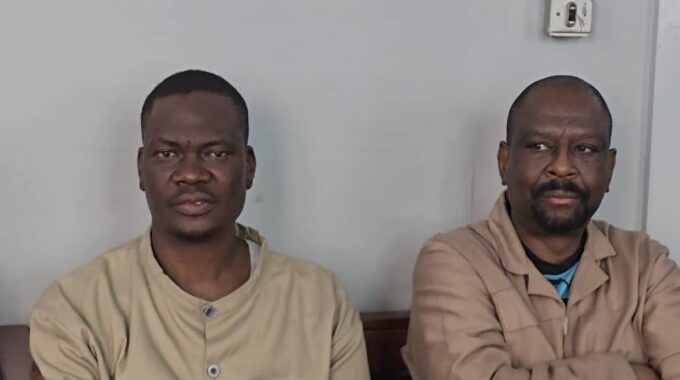
Bad news for Mike Chimombe and Moses Mpofu, to spend more years in jail as deadline passes


Mike
Chimombe
(left)
and
Moses
Mpofu
(right)

This
development
is
the
latest
in
a
series
of
high-profile
fraud
cases
that
have
entangled
the
duo,
raising
serious
questions
about
accountability
and
the
recovery
of
public
funds.
At
the
heart
of
the
immediate
concern
is
the
US$3
million
that
Mpofu
and
Chimombe
were
ordered
to
repay
following
their
conviction
in
December
last
year
for
defrauding
the
government
of
over
US$7
million.
The
fraud
was
perpetrated
through
the
Presidential
Goat
Pass-On
Scheme,
a
programme
designed
to
uplift
rural
communities
by
improving
food
security,
nutrition,
and
incomes
for
vulnerable
groups,
including
orphans
and
the
elderly.
The
High
Court
had
stipulated
a
deadline
of
28
February
for
the
restitution,
a
date
that
has
now
come
and
gone
without
the
required
payments
being
made.

According
to
the
court’s
sentencing,
Moses
Mpofu,
aged
50,
received
a
22-year
jail
sentence.
Three
years
of
this
sentence
were
suspended
for
good
behaviour,
and
an
additional
four
years
were
suspended
on
the
condition
that
he
repaid
US$2,060,250.60
by
the
aforementioned
deadline.
Similarly,
Mike
Chimombe,
aged
44,
was
handed
a
17-year
sentence,
with
three
years
suspended
for
good
behaviour
and
two
years
suspended
if
he
repaid
US$964,064.64
by
the
same
date.
The
Ministry
of
Lands,
Agriculture,
Fisheries,
Water,
and
Rural
Development
has
confirmed
that
no
payments
have
been
received
thus
far.
Permanent
Secretary
Professor
Jiri
stated,
“We
have
not
received
an
update,
yet.”

This
failure
to
meet
the
restitution
deadline
could
have
further
implications
for
the
convicted
businessmen.
While
they
may
still
petition
the
High
Court
for
an
extension,
their
current
predicament
highlights
a
broader
pattern
of
alleged
financial
misconduct
that
has
plagued
their
business
dealings.


The
Presidential
Goat
Pass-On
Scheme:
A
Betrayal
of
Trust

The
details
of
the
Presidential
Goat
Pass-On
Scheme
fraud
reveal
a
meticulously
planned
deception.
Mpofu
and
Chimombe
were
found
to
have
used
forged
documents
to
secure
an
US$87
million
government
contract.
The
contract
was
for
the
supply
of
over
500,000
goats
intended
for
rural
households.
To
facilitate
their
scheme,
the
pair
created
a
fictitious
company
named
Blackdeck
Livestock
and
Poultry
Farming.
They
further
bolstered
their
fraudulent
claims
by
presenting
fake
certificates
from
the
Zimbabwe
Revenue
Authority
(ZIMRA)
and
the
National
Social
Security
Authority
(NSSA)
to
mislead
government
officials.

An
advance
payment
of
ZWL$1.6
billion,
equivalent
to
approximately
US$7.7
million
at
the
time,
was
disbursed
to
Blackdeck
Livestock
and
Poultry
Farming.
However,
instead
of
delivering
the
promised
85,000
goats,
only
a
paltry
4,208
were
supplied.
The
vast
majority
of
the
funds
were
allegedly
diverted
into
other
accounts
and
subsequently
traded
on
the
black
market.
The
presiding
judge
in
the
case
underscored
the
severity
of
the
crime,
noting
that
it
was
carefully
planned
and
caused
significant
reputational
harm
to
the
Government.


Appeals
and
Further
Legal
Battles

Despite
their
conviction
and
sentencing,
Mpofu
and
Chimombe
are
not
yet
at
the
end
of
their
legal
journey.
The
Supreme
Court
is
scheduled
to
hear
their
application
for
leave
to
appeal
their
conviction
and
sentence.
This
hearing,
set
to
take
place
in
chambers,
will
occur
shortly
after
the
restitution
deadline
has
passed,
adding
another
layer
of
complexity
to
their
ongoing
legal
battles.

The
Presidential
Goat
Pass-On
Scheme
is
not
the
only
instance
where
Mpofu
and
Chimombe
have
found
themselves
embroiled
in
allegations
of
corruption
and
fraud.
Their
names
have
also
been
prominently
linked
to
a
controversial
US$40
million
tender
involving
the
Zimbabwe
Electoral
Commission
(ZEC)
for
the
supply
of
electoral
materials
for
the
2023
general
elections.
This
scandal
also
involved
prominent
businessman
Wicknell
Chivayo.

Reports
indicate
that
Mpofu
and
Chimombe,
who
were
once
business
partners
with
Chivayo,
felt
sidelined
from
the
ZEC
deal.
They
accused
Chivayo
and
a
South
African
company,
Ren-Form,
of
inflating
costs
by
as
much
as
235%.
Leaked
audio
recordings,
which
Chivayo
later
claimed
were
fabricated
using
artificial
intelligence,
suggested
a
deep-seated
conflict
among
the
trio
regarding
the
ZEC
tender.

During
court
proceedings
related
to
the
goat
scheme
fraud,
Mpofu
and
Chimombe
reportedly
claimed
that
government
officials
received
the
bulk
of
the
money
from
Chivayo’s
US$40
million
ZEC
tender,
suggesting
a
wider
network
of
corruption.
However,
the
Zimbabwe
Anti-Corruption
Commission
(ZACC)
later
cleared
Chivayo
in
the
US$100
million
election
tender
scandal,
stating
that
Mpofu
and
Chimombe
failed
to
provide
evidence
of
a
contract
with
ZEC.
This
outcome
has
led
to
speculation
that
Mpofu
and
Chimombe
were
allegedly
sacrificed
to
protect
other
officials
involved
in
the
deal.


The
Harare
City
Council
Street
Lights
Tender:
Another
Disputed
Contract

Adding
to
their
legal
woes,
Mpofu
and
Chimombe
have
also
faced
charges
related
to
a
US$9.2
million
tender
for
the
installation
of
street
lights
in
Harare.
In
August
2024,
the
businessmen
appeared
in
court
seeking
bail
in
connection
with
allegations
that
they
used
false
documents
to
win
this
lucrative
contract.

Moses
Mpofu,
identified
as
the
managing
director
and
majority
shareholder
of
Juluka
Projects
and
Plant
Hire
(Pvt)
Ltd,
and
Mike
Chimombe,
a
company
representative,
were
accused
of
misrepresenting
their
compliance
with
procurement
regulations.
Specifically,
they
allegedly
failed
to
pay
a
special
procurement
oversight
committee
fee
of
US$400.

However,
in
a
surprising
turn
of
events,
the
State
later
withdrew
fraud
charges
against
Mpofu
and
Chimombe
in
the
US$9
million
streetlights
scandal
in
June
2025.
This
withdrawal
came
despite
earlier
reports
of
an
ugly
fallout
between
the
duo
and
other
parties
involved
in
the
tender,
including
claims
that
the
US$206,146
paid
by
the
City
of
Harare
was
for
services
already
rendered,
not
an
advance
payment,
as
alleged
by
the
State.

Chimombe,
in
his
defence,
vehemently
denied
any
affiliation
with
Juluka
Projects
and
Plant
Hire
(Pvt)
Ltd,
stating
he
was
neither
an
employee,
director,
nor
shareholder.
He
argued
that
the
payment
in
question
was
made
to
Mpofu’s
company
for
work
completed,
not
to
him
personally.
Mpofu’s
lawyer
also
contended
that
his
client,
as
a
director,
was
not
directly
involved
in
the
tender
process,
which
was
handled
by
the
company’s
procurement
department.


The
Broader
Implications:
A
Crisis
of
Accountability

The
repeated
involvement
of
Mpofu
and
Chimombe
in
high-value
government
contracts
that
subsequently
lead
to
fraud
allegations
highlights
a
systemic
issue
within
Zimbabwe’s
procurement
processes.
The
Presidential
Goat
Pass-On
Scheme,
intended
to
alleviate
poverty,
instead
became
a
vehicle
for
alleged
illicit
enrichment,
depriving
vulnerable
communities
of
much-needed
support.
The
ZEC
tender
scandal,
though
charges
against
Chivayo
were
cleared,
still
casts
a
shadow
over
the
integrity
of
electoral
processes,
while
the
Harare
City
Council
street
lights
tender
raises
concerns
about
urban
development
projects.

The
failure
to
recover
the
US$3
million
restitution
in
the
goat
scheme
case,
despite
a
court
order,
underscores
the
challenges
faced
by
the
government
in
enforcing
accountability
and
recovering
stolen
public
funds.
This
situation
not
only
impacts
the
immediate
beneficiaries
of
these
schemes
but
also
erodes
public
trust
in
government
institutions
and
the
justice
system.
The
continuous
legal
battles,
withdrawals
of
charges,
and
appeals
create
a
perception
of
impunity,
where
powerful
individuals
can
navigate
the
legal
landscape
with
relative
ease,
even
when
faced
with
serious
allegations.


The
Human
Cost
of
Corruption

Beyond
the
financial
figures
and
legal
complexities,
these
cases
have
a
profound
human
cost.
The
Presidential
Goat
Pass-On
Scheme,
for
instance,
was
designed
to
provide
tangible
benefits
to
rural
households.
The
diversion
of
funds
meant
that
thousands
of
families,
including
orphans
and
the
elderly,
were
denied
the
opportunity
to
improve
their
livelihoods
through
livestock
farming.
This
directly
impacts
food
security,
nutrition,
and
the
overall
well-being
of
some
of
Zimbabwe’s
most
vulnerable
citizens.

Similarly,
the
alleged
irregularities
in
the
ZEC
tender
could
undermine
the
democratic
process
by
compromising
the
integrity
of
elections.
The
street
lights
tender,
if
indeed
marred
by
fraud,
would
mean
that
essential
public
services
in
Harare
are
either
delayed,
substandard,
or
unnecessarily
costly,
directly
affecting
the
quality
of
life
for
urban
residents.


Looking
Ahead:
The
Path
to
Justice
and
Recovery

As
Mpofu
and
Chimombe
await
the
Supreme
Court’s
decision
on
their
appeal
for
the
goat
scheme
conviction,
the
focus
remains
on
the
government’s
ability
to
recover
the
outstanding
US$3
million.
The
outcome
of
this
case,
and
others
like
it,
will
be
a
critical
test
of
Zimbabwe’s
commitment
to
combating
corruption
and
ensuring
that
justice
is
served.
The
public
will
be
watching
closely
to
see
if
the
legal
system
can
effectively
hold
powerful
individuals
accountable
and,
crucially,
recover
the
funds
that
were
allegedly
stolen
from
the
public
purse.
Source:
myzimbabwe.com

Post
published
in:

Featured

Armed Robbers Strike Mukuru Outlet In Bulawayo

The
robbery
reportedly
occurred
during
business
hours.
Responding
to
the Chronicle,
Bulawayo
provincial
police
spokesperson
Inspector
Nomalanga
Msebele
said
she
could
not
comment
on
the
incident
at
the
time.

The
city
has
a
history
of
high-profile
cash
heists.
On
3
October
2024,
six
masked
gunmen
carried
out
what
is
considered
the
biggest
cash
robbery
in
Zimbabwe’s
history
at
the
Ecobank
Parkade
Centre
branch
on
the
corner
of
9th
Avenue
and
Fife
Street.

During
that
robbery,
a
Safeguard
Security
cash-in-transit
van
was
ambushed
as
guards
were
loading
cash
boxes.

The
gunmen
fired
a
single
warning
shot,
forced
the
guards
to
the
ground,
and
loaded
six
trunks
of
cash
into
a
white
Ford
Ranger
before
speeding
off.
A
total
of
US$4.4
million
was
stolen
in
just
149
seconds

under
three
minutes.

Chinese miner jailed 5 years for killing gold panner in shooting incident

BULAWAYO

A
Chinese
mining
supervisor
who
shot
dead
a
suspected
illegal
gold
panner
during
a
confrontation
at
a
mine
in
Gwanda
has
been
sentenced
to
an
effective
five
years
in
jail
after
the
court
ruled
that
his
actions
were
“completely
reckless”.

Yang
Zhian,
37,
was
sentenced
to
eight
years’
imprisonment
by
Bulawayo
High
Court
judge
Justice
Chivhayo.
Three
years
were
conditionally
suspended,
leaving
him
to
serve
five
years
behind
bars.

Zhian,
a
supervisor
at
Long
Fortune
Mine
in
Collen
Bawn,
was
acquitted
of
murder
but
convicted
of
culpable
homicide
over
the
March
5
shooting
of
31-year-old
Pardon
Gumbo
during
a
dispute
over
illegal
gold
prospecting.

The
court
heard
that
Gumbo
and
a
group
of
artisanal
miners
had
entered
the
mine
armed
with
metal
detectors
and
a
mattock.

A
security
guard,
Gift
Tashinga
Mandeya,
tried
to
stop
them,
but
they
allegedly
continued
prospecting
near
a
slime
dam.

Mandeya
alerted
Zhian,
who
armed
himself
with
a
firearm
and
fired
towards
the
group.
Gumbo
was
struck
on
the
forehead
and
later
pronounced
dead
at
Gwanda
Provincial
Hospital.

Zhian,
represented
by
Admire
Rubaya,
claimed
he
was
acting
in
self-defence
and
had
only
fired
three
warning
shots
to
scare
away
the
miners.
But
witnesses

including
Mandeya

told
the
court
they
heard
between
seven
and
eight
gunshots.

Rubaya
pushed
for
a
non-custodial
sentence,
arguing
that
Zhian
had
acted
to
protect
himself
and
company
property.
The
defence
also
said
Zhian
had
spent
a
year
on
remand,
even
after
the
Supreme
Court
granted
him
bail,
due
to
an
outstanding
immigration
warrant
of
detention.

Rubaya
further
told
the
court
that
Zhian
had
paid
US$4,000
towards
funeral
expenses
and
was
prepared
to
offer
US$5,000
for
the
medical
care
of
Gumbo’s
widow
and
their
two-year-old
son.

But
Gumbo’s
father
dismissed
the
claims,
saying
the
family
had
not
received
any
funeral
assistance.

In
an
emotional
address
to
the
court,
he
said
he
had
gone
to
the
mine
seeking
blood-stained
soil
to
bury
with
his
son
and
to
ask
for
help,
but
was
told
the
company
did
not
assist
“people
who
were
stealing.”

“The
death
of
my
child
is
not
worth
any
payment,”
he
said,
declining
the
$5,000
offer
of
compensation.

“When
I
needed
assistance,
I
didn’t
get
it.”

When
asked
what
amount
he
would
consider,
the
grieving
father
replied:
“I’m
emotionally
unstable
to
make
a
rightful
decision.”

The
state
had
urged
the
court
to
impose
a
15-year
jail
term,
saying
a
strong
message
must
be
sent,
particularly
where
foreign
investors
are
involved.

Prosecutors
argued
that
the
level
of
negligence
was
high
and
that
there
were
aggravating
factors,
including
the
daytime
use
of
a
firearm
against
unarmed
prospectors.

In
passing
sentence,
Justice
Chivhayo
outlined
what
he
called
the
“golden
rules
about
guns”

that
if
in
doubt,
one
must
not
fire,
and
where
force
is
unavoidable,
the
aim
should
be
to
disable
rather
than
kill.

“The
deceased
lost
his
life
in
broad
daylight.
He
was
looking
for
gold.
The
use
of
a
firearm
in
those
circumstances
was
completely
reckless,”
the
judge
said.

He
found
that
the
shooting
exhibited
a
high
degree
of
negligence.

Mzembi says Mugabe, Tsvangirai and Mnangagwa backed church TV donations

HARARE

Former
Tourism
minister
Walter
Mzembi
on
Tuesday
mounted
a
vigorous
defence
in
court,
arguing
that
 public-viewing
screens
he
is
accused
of
illegally
donating
to
major
churches
were
not
personal
favours
but
part
of
a
cabinet-sanctioned
strategy
to
rebuild
a
ministry
he
says
had
been
destroyed
by
the
2008
political
violence
and
the
fallout
from
land
reform.

Testifying
before
Justice
Benjamin
Chikowero
of
the
Harare
High
Court
after
losing
his
bid
for
discharge
at
the
close
of
the
state’s
case,
Mzembi
said
he
inherited
“a
very
damaged
sectoral
brand”
when
he
took
over
the
ministry
at
the
height
of
Zimbabwe’s
post-election
crisis.

“When
I
joined
the
ministry,
it
had
only
five
employees…,”
he
said.

“The
ministry
had
collapsed
as
a
result
of
the
toxic
politics
of
2008
and
the
land
reform
programme
of
2000…
Arrivals
had
dropped
to
about
250,000
per
annum
and
US$296
million
in
revenue
were
the
statistics
I
was
handed.”

He
said
the
violence
of
2008
,
a
total
of
241
people
died”
had
shattered
Zimbabwe’s
image,
forcing
him
to
rebuild
the
ministry
from
the
ground
up.

“My
responsibility
was
to
start
a
new
ministry
and
build
it,”
he
testified.
“When
I
left
in
2017…
I
had
steered
the
sector
to
1.5
million
arrivals
and
US$1
billion
in
sector
revenue.”

Led
by
his
lawyers
Killian
Mandiki
and
Emmanuel
Samundombe,
Mzembi
repeatedly
invoked
senior
political
figures
including
the
late
former
president
Robert
Mugabe,
the
late
former
prime
minister
Morgan
Tsvangirai,
and
then
vice-president
Emmerson
Mnangagwa
arguing
that
the
fan-park
screens
were
deployed
with
full
government
authority.

“Mugabe
gave
me
the
power
to
donate
the
TVs,”
he
said.
“Even
Tsvangirai
gave
a
nod…
Mnangagwa
handed
over
the
assets
at
Mbungo
(Zion
Church
of
Christ).
He
was
assigned
by
Mugabe.
Even
Sekeramayi
was
there
when
the
TVs
were
commissioned.
I
can’t
imagine
unilateral
decisions
being
endorsed
by
government.”

He
said
the
screens
originated
from
Zimbabwe’s
preparations
for
the
2010
FIFA
World
Cup,
after
Cabinet
mandated
a
multisector
taskforce
to
set
up
fan
parks
and
use
football
“the
biggest
political
party”
to
heal
a
divided
nation.

“The
genesis
of
the
fan
parks
was
that
they
were
processed
by
the
Sports,
Tourism,
Image
and
Tourism
Taskforce,”
he
said.
“Football
had
the
potential
to
unite
our
people
because
they
were
too
divided
due
to
the
political
tensions
in
2008.”

He
described
a
sprawling,
government-wide
operation
involving
the
army,
Air
Zimbabwe,
the
Ministry
of
Sports,
the
Ministry
of
Transport
and
provincial
governors.

“Army
signals
corps
were
involved
storage
was
done
at
Manyame
Air
Base,
as
well
as
transport
and
installation.
Air
Zimbabwe
airlifted
the
equipment
into
the
country.
Nelson
Chamisa,
who
was
heading
ICTs,
wanted
to
create
information
kiosks
with
these
TVs,”
he
said.

Mzembi
told
the
court
the
screens
were
later
repurposed
for
religious
tourism
a
deliberate
policy
shift
after
government
realised
that
massive
church
gatherings
were
pulling
crowds
but
producing
no
revenue
for
the
fiscus.

“Inside
the
religious
sector
there
were
twin
evils,
tax
avoidance
and
tax
evasion,”
he
said.
“There
was
a
lot
of
traffic
to
religious-branded
events
but
no
money
going
into
the
fiscus.
We
looked
at
the
church
and
said
tithe
we
won’t
touch,
but
commercial
activities
must
be
taxed
and
it
caused
a
lot
of
commotion.”

He
said
government
benchmarked
global
religious
destinations
including
Jerusalem,
Rome,
TB
Joshua
and
ZCC
and
concluded
that
Zimbabwe
could
harness
its
own
high-volume
churches
such
as
PHD,
ZCC
and
UFIC.

“We
actually
gave
more
to
the
church
than
these
PVAs,”
he
said.
“As
beneficiaries
of
SI
173
of
2013,
the
church
received
rebates
for
capital
equipment,
construction
of
churches
and
hotels.”

He
said
Prophet
Walter
Magaya’s
PHD
Ministries
was
among
the
major
beneficiaries.

“At
PHD,
Magaya
said
during
his
‘Night
of
Turnaround’
he
was
going
to
congregate
500,000
people,
so
the
overscreens
were
at
the
overflow
area,”
he
told
the
court.

Mzembi
insisted
that
the
Treasury-authorisation
argument
raised
by
the
State
ignored
the
political
context
of
the
Government
of
National
Unity,
where
“it
was
impossible
to
do
anything
without
consulting
Mugabe
and
Tsvangirai.”

He
said
all
decisions
went
through
deep
consultation:
“As
a
consensus
government,
a
minister
could
not
do
anything
on
his
own.
You
needed
to
brief
the
principals.”

Hearing
continues
Wednesday.

Mzembi
is
expected
to
call
a
witness.

ZTA shuts down over 25 facilities for non-compliance with licensing regulations

HARARE

The
Zimbabwe
Tourism
Authority
(ZTA)
on
Tuesday
launched
a
sweeping
nationwide
blitz,
closing
more
than
25
unregistered
tourism
facilities
for
failing
to
comply
with
licencing
regulations.

The
crackdown
forms
part
of
the
government’s
broader
push
to
regularise
the
tourism
sector,
with
the
ZTA
targeting
a
wide
range
of
businesses
including
hotels,
lodges,
Airbnb
operators,
travel
agencies,
and
food
outlets.

All
tourism-related
enterprises
are
required
to
be
properly
licensed
and
registered
to
operate
legally.

ZTA
CEO
George
Manyaya
said
the
enforcement
drive
underscores
the
authority’s
unwavering
commitment
to
maintaining
a
safe
and
regulated
tourism
environment
for
both
visitors
and
local
residents.

“In
a
bid
to
facilitate
compliance,
the
government
has
reduced
licence
and
registration
fees,
promoting
the
ease
of
doing
business
within
the
sector,”
he
said.

“Many
tourism
operators
have
responded
positively,
with
a
notable
increase
in
registrations
and
licence
fee
payments
in
recent
weeks.
Unfortunately
the
ZTA
has
had
to
conduct
closures
at
several
locations
due
to
non-compliance.”

A
ZTA
inspector
applies
a
sticker
to
a
door
announcing
closure
of
an
Airbnb
that
failed
to
secure
a
ZTA
licence
to
operate

Facilities
closed
span
multiple
locations
across
the
country,
with
Gweru
recording
the
highest
number
of
closures
with
nine,
followed
by
Marondera
with
five,
Mutare
with
four,
and
Masvingo,
Bulawayo,
and
Harare
each
recording
three
closures.
Chinhoyi
recorded
one
closure.

Annual
ZTA
licence
fees
have
been
set
at
$150
for
restaurants
and
$100
for
fast
food
outlets.

The
ZTA
says
it
remains
committed
to
fostering
a
collaborative
environment
in
which
industry
stakeholders
can
contribute
to
upholding
the
integrity
of
Zimbabwe’s
tourism
landscape.

Some
of
the
Closed
Facilities


Mashonaland
East

1.
Delfa
Takeaway
2.
B24
3.
Pagomo
Lodges
4.
2019
Lodges
5.
Zim
Nhaka
Restaurant


Bulawayo

1.
Nyamalicous
Restaurant
2.
Rooftop
Restaurant


Masvingo

1.
Cape
to
Cairo


Mashonaland
West

1.
Shalom
Lodge


Mutare

1.
Mima
Restaurant


Midlands

1.
Ekhaya
Lodge
2.
Al
Majid
Lodge
3.
Diamond
Chicken
Restaurant
4.
Fredos
Chicken


Harare

1.
Mr
Sadza
Restaurant
2.
Veruch
Restaurant
3.
Cottage
Bites
Restaurant​​​​​​​​​​​​​​​​

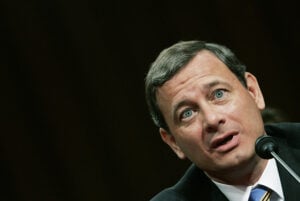
John Roberts Suffers The Slings And Arrows Of Pure Rage Trump – Above the Law

(Photo
by
Alex
Wong/Getty
Images)

After
striking
down
the
Trump
administration’s
tariffs,
Chief
Justice
Roberts
has
earned
nothing
but
disrespect
and
abuse
from
the
president
he
put
in
power.
From
a
hearty
handshake
and
Trump
telling
him,
“Thank
you,
won’t
forget
it”
last
year
to
getting
bypassed
in
the
handshake
line
at
this
year’s
State
of
the
Union,
it’s
been
a
long
strange
trip
for
Roberts.
And
yet
he
wouldn’t
have
it
any
other
way
because
for
Roberts,

ritualistic
humiliation
is
a
small
price
to
pay

for
dismantling
the
Voting
Rights
Act.
A
blizzard
took
out
the
Northeast
right
before
the
bar
exam
and
examiners…

did
not
care
.
And
another
wrinkle
in
the
AI
legal
advice
discussion,
with
a
different
court
ruling
that
chat
prompts
used
in
preparing
a
legal
defense
are

shielded
from
discovery
.

Statement by the High Representative on behalf of the EU on the alignment of certain countries concerning restrictive measures in view of the situation in Zimbabwe


On
17
February
2026,
the
Council
adopted
Decision
(CFSP)
2026/3831.

The
Council
decided
that
the
restrictive
measures
in
view
of
the
situation
in
Zimbabwe
should
be
limited
to
an
arms
embargo
and
should
be
renewed
until
20
February
2027.
The
Council
also
decided
that
the
title
of
that
Decision
should
be
amended
to
reflect
the
fact
that
the
framework
only
includes
an
arms
embargo.

Albania,
Bosnia
and
Herzegovina,
Iceland,
Liechtenstein,
Moldova
(Republic
of),
Montenegro,
North
Macedonia,
Norway,
Serbia
and
Ukraine
align
themselves
with
this
Council
Decision.

They
will
ensure
that
their
national
policies
conform
to
this
Council
Decision.

The
European
Union
takes
note
of
this
commitment
and
welcomes
it.


1
OJ
L,
2026/383,
18.02.2026 ELI: http://data.europa.eu/eli/dec/2026/383/oj.

Source:


Statement
by
the
High
Representative
on
behalf
of
the
EU
on
the
alignment
of
certain
countries
concerning
restrictive
measures
in
view
of
the
situation
in
Zimbabwe


Consilium

Post
published
in:

Featured

Lukashenko describes Zimbabwe as important gateway to Africa

MINSK,
3
March
(BelTA)

Cooperation
with
Zimbabwe
is
important
not
only
because
of
the
country’s
geographic
location,
but
also
because
of
its
role
as
a
gateway
to
establishing
relations
with
other
African
states,
Belarusian
President
Aleksandr
Lukashenko
said
while
approving
the
appointment
of
the
new
Belarusian
ambassador
to
Zimbabwe
on
3
March,
BelTA
has
learned.

“Zimbabwe
is
an
entry
point
into
Africa,
not
just
geographically,
but
also
philosophically,”
the
head
of
state
said,
describing
the
country’s
significance
for
Belarus.

Aleksandr
Lukashenko
stressed
that
Belarus’
most
active
cooperation
in
Africa
is
currently
with
Zimbabwe,
and
this
partnership
is
already
producing
tangible
results.
“We
helped
them
secure
the
necessary
grain
harvest,
although
that
is
probably
only
half
of
what
could
be
possible.
They
have
ensured
their
own
food
security.
Step
by
step,
we
are
moving
forward
in
healthcare,
education,
and
other
areas.
They
are
purchasing
our
machinery,
we
train
their
specialists,
teach
them
how
to
operate
it,
and
transfer
technologies.
They
are
telling
the
whole
of
Africa
about
it,”
he
said.

He
also
emphasized
the
role
of
Zimbabwean
President
Emmerson
Mnangagwa.
“Most
importantly,
President
Mnangagwa,
who
enjoys
authority
in
Africa,
is
our
best
advocate
and
promoter.
All
presidents
listen
to
him,
and
he
says
openly:
the
Belarusians
saved
us,
they
ensured
our
food
security.”

“From
this
point
of
view,
this
is
a
gateway
for
us,”
Aleksandr
Lukashenko
added.
He
cited
cooperation
with
Mozambique
as
an
example:
being
close
to
Zimbabwe
and
seeing
the
results
of
its
interaction
with
Belarus,
Mozambique
also
expressed
interest
in
strengthening
relations.
“They
very
much
want
our
help
as
well,
and
it
is
beneficial
for
us.
It’s
a
coastal
area
with
ports
that
need
to
be
put
in
order.
Zimbabwe,
like
us,
does
not
have
access
to
the
sea,
but
through
Mozambique,
we
can
easily
ship
our
goods
across
Southern
Africa
and
possibly
even
further,”
the
Belarusian
leader
noted.

Addressing
the
new
ambassador,
the
president
clearly
outlined
priorities
for
him:
“You
will
need
to
work
hard
there
and
deliver
results.
I
am
encouraging
our
entrepreneurs,
private
companies,
state
enterprises,
managers
to
go
and
work
there,
and
if
there
are
no
results,
they
will
immediately
tell
me
that
the
ambassador
is
not
the
right
one.”

Regarding
Igor
Marshalov,
who
until
now
headed
the
Belarusian
diplomatic
mission
in
Zimbabwe,
the
head
of
state
said:
“It
seems
it’s
not
really
his
job.
A
young
man.
We
are
not
going
to
lose
anyone.
If
it’s
not
for
him,
if
it’s
not
working
out,
naturally
we
need
to
look
for
another
candidate.
We’ve
found
one.”

Discovery As Truth-Seeking: Win Hard Without Playing Hide-The-Ball – Above the Law

Effective
discovery
requires
more
than
compliance

it
requires
strategy. 

In
this
on-demand
webinar
presented
by
our
friends
at
InfoTrack,
you’ll
hear
from
attorney
and
legal
educator
Drew
Levine,
who
provides
a
practical,
results-focused
tutorial
on
how
litigators
can
balance
expansive
discovery
rights
and
privacy
concerns
without
slowing
cases
down.


Key
topics
include:


Balancing
proportionality
and
broad
discovery
rights 
• Managing
electronically
stored
information
(ESI)
and
privacy
concerns 
• State
and
federal
contrasts
in
discovery
practice 


Kathryn Ruemmler To Give House Testimony After ‘Uncle Jeffrey’ Emails Spark Firestorm – Above the Law

Kathryn
Ruemmler
(Photo
by
William
B.
Plowman/NBC/NBC
Newswire/NBCUniversal
via
Getty
Images)

Welcome
to
the
latest
chapter
in
former
White
House
Counsel
(and

soon-to-be
former

Goldman
Sachs
General
Counsel)
Kathryn
Ruemmler’s
ongoing
reputational
crisis.

Now
Ruemmler
is
headed
to
testify
before
the
House
Oversight
Committee
about
her
longstanding
relationship
with
Jeffrey
Epstein.
A

spokeswoman
says

she
“welcomes
the
opportunity
to
appear
before
the
Committee”
and
insists
she
“did
nothing
wrong
and
had
no
knowledge
of
any
ongoing
criminal
activity
on
his
part.”

That
line
should
sound
familiar.
It’s
the
same
one
that
framed
Ruemmler’s
initial
defense
weeks
ago
when
the
Justice
Department’s
release
showed
she
had
accepted
tens
of
thousands
of
dollars’
worth
of
gifts
and
had
advised
Epstein
on
handling
media
inquiries
related
to
his
crimes.
And
it’s
strikingly
similar
to
the
line
plenty
of
other
public
figures
have
deployed
in
the
face
of
Epstein
scrutiny.

Just
a

few
weeks
ago
,
the
latest
release
of
Epstein
files
showed
thousands
of
communications
between
Ruemmler
and
Epstein
long
after
his
2008
conviction,
including
messages
that
went
well
beyond
perfunctory
legal
exchanges.
The
infamous
sex
trafficker
wasn’t
a
distant
“professional
contact”
of
Ruemmler’s
at
all

he
was
a
booster
of
Ruemmler’s
career,
offering
advice
on
negotiations
and
strategic
introductions
to
potential
employers
while
she
was
contemplating
major
career
moves.

But

it
was
more

than
just
the
volume
of
the
emails

Ruemmler’s
emails
weren’t
abstract
legal
texts
or
dry
status
updates.
They
showed
a
level
of
familiarity

including
affectionate
nicknames
and
personal
engagement

that
goes
well
beyond
the
claim
of
strictly
transactional
professionalism.
Ruemmler
thanked
Epstein
for
expensive
gifts
and
entertained
jokes
and
career-related
counsel
from
him
(including

one
that
aged
particularly
poorly

in
which
she
“joked”
about
trading
one
of
Epstein’s
“Russians”
for
a
better
compensation
package).

The
House
testimony
should
be
illuminating

or
at
least
awkward
AF

as
they
explore
exactly
what
transpired
between
Kathryn
Ruemmler
and
“Uncle
Jeffrey.”

Stay
tuned.
Because
this
one
is
far
from
over.


Kathryn
Rubino
is
a
Senior
Editor
at
Above
the
Law,
host
of

The
Jabot
podcast
,
and
co-host
of

Thinking
Like
A
Lawyer
.
AtL
tipsters
are
the
best,
so
please
connect
with
her.
Feel
free
to
email

her

with
any
tips,
questions,
or
comments
and
follow
her
on
Twitter

@Kathryn1
 or
Mastodon

@[email protected].