The Operational Signal Legal Leaders Should Pay Attention To In 2026 – Above the Law

New
2026
year
progress
bar
on
digital
lcd
display
with
reflection.
Concept
of
new
year,
annual
plan,
growth
strategy,
business
planning,
investment
trends
and
strategy
road
map.

Across
organizations
of
every
size,
I
am
seeing
the
same
operational
pattern
take
shape.
Legal
teams
are
carrying
more
work,
adopting
more
technology,
and
fielding
increasing
demands
from
the
business,
yet
the
underlying
infrastructure
has
not
evolved
at
the
same
pace.

The
result
is
a
readiness
gap
that
grows
quietly
and
gradually,
often
in
the
background
of
an
otherwise
high-functioning
department.
The
encouraging
part
is
that
the
leaders
who
recognize
the
pattern
early
are
already
finding
practical
ways
to
close
it.


When
Work
Outpaces
the
Infrastructure
Supporting
It

Many
legal
departments
continue
to
expand
their
responsibilities,
including
AI
Governance,
Data
Privacy
Programs,
Enterprise
Risk
Management,
and
deal
acceleration.
The
volume
and
complexity
of
the
work
have
increased
significantly,
but
the
operational
foundation
that
supports
it
has
not
always
kept
up.
Intake
still
arrives
informally,
routing
depends
on
who
happens
to
see
a
request
first,
and
workflows
often
rely
on
institutional
memory
rather
than
shared
processes.

These
gaps
do
not
appear
all
at
once.
They
accumulate.
Turnaround
times
begin
to
vary
without
explanation.
Routine
work
slows
down
because
every
matter
feels
unique.
And
teams
that
want
to
introduce
more
self-service
or
automation
cannot
do
so,
simply
because
the
pathways
for
the
work
are
unclear.

One
global
technology
company
we
supported
experienced
this
firsthand.
Once
they
clarified
their
intake
and
routing,
the
entire
dynamic
of
the
department
changed.
Forecasting
became
more
accurate,
escalations
decreased,
and
cross-functional
teams
finally
understood
what
to
expect
from
legal
and
how
to
partner
with
them
effectively.
Nothing
about
the
work
itself
changed.
The
structure
did.


Why
Financial
Clarity
Is
Becoming
a
Leadership
Imperative

The
same
pattern
shows
up
in
financial
visibility.
Legal
leaders
want
to
plan
proactively
for
outside
counsel
spend
and
internal
resource
allocation,
but
many
still
pull
data
from
scattered
systems
or
rely
on
manual
tracking.
Even
highly
capable
teams
find
themselves
in
uncomfortable
conversations
with
Finance
because
the
numbers
are
difficult
to
defend.

When
leaders
take
the
time
to
bring
order
to
the
data,
the
shift
is
immediate.
Several
legal
departments
we
have
worked
with
have
reduced
outside
counsel
spend
by
20
to
50
percent
through
value-based
pricing
efforts.
The
improvement
did
not
come
from
more
aggressive
negotiations.
It
came
from
clarity
about
which
matters
belonged
with
outside
firms,
how
the
work
should
be
scoped,
and
how
outcomes
would
be
measured.

This
level
of
financial
maturity
is
no
longer
optional.
It
is
foundational
to
how
legal
departments
will
operate
in
2026
and
beyond.


Technology
Only
Works
When
the
Foundation
Is
Steady

Every
legal
department
is
evaluating
AI,
workflow
tools,
CLM
platforms,
or
a
combination
of
all
three.
These
tools
hold
enormous
promise,
but
they
also
reveal
operational
weaknesses
faster
than
anything
else.
If
templates
are
inconsistent,
if
playbooks
vary
across
the
team,
or
if
workflows
are
ad
hoc
and
undefined,
the
technology
will
struggle,
adoption
will
lag,
and
the
return
on
investment
will
be
limited.

The
teams
seeing
real
benefits
from
technology
start
with
readiness,
not
with
the
tools
themselves.

A
global
company
we
worked
with
deployed
an
internal
AI
assistant
to
answer
common
employee
questions.
It
now
absorbs
hundreds
of
inquiries
each
month.
The
only
reason
it
works
is
that
the
content
behind
it
was
accurate,
structured,
and
regularly
maintained.

Another
organization,
a
fast-growing
biotech
company,
took
a
governance-first
approach.
Before
piloting
any
AI
tools,
they
created
practical
usage
guidelines
that
clarified
what
AI
could
and
could
not
do
within
the
department.
This
gave
their
leadership
team
the
confidence
to
move
forward
without
creating
unnecessary
risk.

Several
contracting
teams
we
support
have
also
seen
significant
gains.
Once
their
templates,
approval
paths,
and
escalation
criteria
were
aligned,
they
began
using
platform-native
AI
features
to
handle
low-risk
agreements.
Review
cycles
that
previously
took
days
moved
to
hours.

In
each
example,
the
technology
succeeded
because
the
operational
groundwork
was
already
in
place.


Where
Strategic
Leaders
Are
Focusing
Their
Attention

Legal
departments
do
not
need
to
move
faster
to
prepare
for
2026.
They
need
to
build
a
foundation
that
can
support
the
pace
at
which
the
business
already
operates.
The
teams
investing
in
that
structure
now
will
be
in
a
far
better
position
to
adopt
new
tools,
respond
to
the
organization’s
needs,
and
lead
with
confidence
in
the
years
ahead.

Legal
departments
already
carry
the
weight
of
growing
expectations.
The
advantage
goes
to
the
teams
that
stop
treating
operational
readiness
as
a
back-office
project
and
start
treating
it
as
a
leadership
responsibility.
When
the
foundation
is
strong,
everything
else,
such
as
AI,
workflows,
pricing,
and
staffing,
becomes
easier
to
execute
and
easier
to
defend.

2026
won’t
reward
speed
for
its
own
sake.
It
will
reward
clarity,
structure,
and
operational
maturity.

And
the
departments
investing
in
those
fundamentals
now
will
be
the
ones
leading
with
confidence
when
the
next
wave
of
change
arrives.



Stephanie
Corey is
the
co-founder
and
CEO
of
UpLevel
Ops.
She
also
serves
as
the
Global
Chair
of LINK
x
L
Suite

a
premier
community
of
General
Counsel
and
Legal
Operations
leaders
united
to
transform
the
legal
industry
through
collaboration,
innovation,
and
strategic
insight. Stephanie co-founded LINK
(Legal
Innovators
Network),
a
legal
ops
organization
exclusively
for
experienced
in-house
professionals,
and
previously
founded
the Corporate
Legal
Operations
Consortium
(CLOC),
where
she
served
as
an
executive
board
member.
She
is
a
recognized
leader
in
legal
operations
and
a
frequent
advisor
to
corporate
legal
departments
on
scaling
operational
excellence. Please
feel
free
to
connect
with
her
on
LinkedIn

Meme Stocks And The $10,000 Hourly Rate – Above the Law

(Photo
by
Michael
M.
Santiago/Getty
Images)

In
April
2020,
GameStop
(GME)
stock
sank
below

$3
a
share
. By
January
2021,
retail
investors
drove
the
stock
to
an
intraday
high
of
$483,
turning
it
into
what
is
now
known
as
a
meme
stock.

Brick-and-mortar
retail
sales
of
electronic
games
declined
as
online
gaming
grew. In
2013,
GME
diversified
by
acquiring
Spring
Mobile,
a
set
of
AT&T
retail
franchises. But
by
2019,
they
had
already
divested
that
business
for
$700
million.
Following
the
sale,
GME
had
substantial
cash
on
the
balance
sheet. Many
investors
were
pessimistic
about
GME’s
management
and
its
future,
and
short
positions
increased.
But
a
smaller
group
saw
an
undervalued
asset.
Later
in
the
summer,
GME
had
more
cash
on
hand
than
the
company
was
worth,
which
is
counter
to
market
fundamentals.
Activist
investors
advocated
stock
buybacks,
and
the
board
repurchased

34.6
million
shares

through
Q3
2019,
removing
roughly
one-third
of
the
shares
from
the
market. 

The
short
position
remained
high,
and
a
perfect
storm
was
brewing. Michael
Burry,
known
for
his
bet
against
the
housing
industry,
as
depicted
in
the
film
“The
Big
Short,”
has
recently
launched
a

Substack

newsletter
analyzing
market
bubbles.
He
recently
shared

his
view

on
the
events
that
enabled
retail
investors
to
drive
a
short
squeeze
on
GME. (Burry
was
one
of
those
activist
investors.)
Here
are
some
key
points
about
the
mechanics
of
the
unprecedented

short-squeeze

based
mainly
on
Burry’s
account: 

  • GME
    was
    undervalued,
    and
    there
    was
    a
    significant
    short
    position. 
  • The
    Covid
    lockdown
    afforded
    many
    young
    investors
    time
    to
    research
    the
    market. 
  • Stimulus
    checks
    were
    being
    issued,
    giving
    disposable
    cash
    for
    speculative
    investing.
  • Keith
    Gill,
    known
    by
    the
    handle

    Roaring
    Kitty

    on
    Twitter,
    triggered
    awareness
    that
    GME
    may
    be
    undervalued,
    and
    he
    became
    a
    leader
    in
    the
    GME
    retail
    movement. 
  • Retail
    investors
    flocked
    to
    apps
    like

    Robinhood

    and
    started
    buying
    the
    stock
    faster
    than
    hedge
    funds
    and
    other
    short
    interests
    could
    unwind
    their
    positions. 


A
$10,000
Rate
Card?

Some
pundits
assert
that
AI
signals
the
end
of
the
billable
hour,
yet
many
clients
are
still
willing
to

accept
double-digit
rate
increases
.
My

view

is
that
it
is
still
easier
for
traditional
firms
to
increase
their
rates
than
to
change
their
business
model.  

To
that
point,
earlier
this
year,

news
reports

cited
attorneys
charging
$3,000
an
hour.

Could
there
be
a
perfect
storm
brewing
to
drive
top
rates
upward
to
the
unheard-of
$10,000
rate?
GME
became
a
meme
stock
due
to
seemingly
irrational
market
behavior. Perhaps
there
are
dynamics
that
could
produce
similar
market
behavior
in
law,
too.
Rates
aren’t
going
to
spike
as
GME
did
during
its
run-up,
but
here
are
some
dynamics
that
could
push
some
rates
to
unheard-of
levels.  


C-Suite
Views
AI
As
A
Cost
Saver

CEOs
view
AI
as
a
game
changer,
but
more
as
a
lever
to
reduce
headcount
and
to
save
money. This
extends
to
the
law
department. In
general,
AI
is
expected
to
increase
productivity
and
reduce
legal
spend.
This
pressure
is
then
passed
along
to
outside
counsel. 


Outside
Counsel
Guidelines
(OCGs)

Clients
provide
OCGs
to
define
what
a
firm
may
and
may
not
charge. They
are
often
managed
with
procurement
and
can
unintentionally
reinforce
the
hourly
billing
model.
Here
are
some
examples
of
restrictions
from
real
OCGs:

  • No
    charging
    for
    first-year
    associates
  • Pass-through
    of
    legal
    research
    expenses,
    and
    some
    research
    itself
    is
    not
    allowed
  • Clerical
    work,
    internal
    firm
    communication,
    and
    travel
    time
    is
    non-billable

Recently,
I’ve
heard
of
OCGs
that
say
the
client
won’t
pay
for
anything
that
can
be
automated
with
AI. 


Low
Overhead
And
Limited
Technology
Investment

Law
firms
already
struggle
with
change
and
technology
investment.
And
OCGs
tend
to
reinforce
those
challenges.
Clients
want
their
firms
to
be
efficient,
embrace
technology,
and
keep
their
staff
trained. But
right
or
wrong,
OCGs
tend
to
run
counter
to
that.
Smart
firms
recognize
they
must
invest
in
technology
and
embrace
automation
to
remain
competitive,
but
how
can
they
do
so
when
they
must
treat
those
expenses
as
nonbillable
overhead?

This
is
the
perfect
storm
for
rate
increases.
The
most
straightforward
answer
is
to
drive
productivity
and
automation,
and
charge
for
the
value
of
the
engagement
by
raising
hourly
rates. 

This
is
why
it’s
not
out
of
the
realm
of
possibility
to
see
rates
on
high-value
work
skyrocket,
perhaps
to
$10,000
an
hour
in
a
few
years.  

The
US
market
for
legal
services
is
roughly

$400
billion
. There
are
diverse
clients
with
differing
legal
needs,
with
litigation,
compliance,
and
transactional
work
required
across
practice
areas.
There
will
be
work
that
moves
in-house,
while
other
tasks
will
be
automated
out
of
existence. ALSPs
and
managed
services
will
grab
more
market
share
in
the
coming
years. AI
will
make
many
tasks
more
predictable,
even
if
they
are
still
billed
by
the
hour.  

Market
share
for
the
billable
hour
will
shrink,
but
the
billable
hour
will
still
thrive
in
the
coming
years,
even
as
the
market
evolves.  

Look
for
hourly
rates
to
continue
to
rise
for
high-value
work.   

I
want
to
hope
the
systemic
issues,
particularly
those
reinforced
by
OCGs,
can
be
addressed
sooner
rather
than
later.
However,
it
may
take
meme-stock
headlines
about
billable
rates
before
there
is
sufficient
awareness
to
drive
real
change.


The
editing
of
this
article
included
the
use
of
AI.


Ken
Crutchfield
has
over
forty
years
of
experience
in
legal,
tax,
and
other
industries.
Throughout
his
career,
he
has
focused
on
growth,
innovation,
and
business
transformation. His
consulting
practice
advises
investors,
legal
tech
startups
and
others.
As
a
strategic
thinker
who
understands
markets
and
creating
products
to
meet
customer
needs,
he
has
worked
in
start-ups
and
large
enterprises.
He
has
served
in
General
Management
capacities
in
six
businesses.
Ken
has
a
pulse
on
the
trends
affecting
the
market.
Whether
it
was
the
Internet
in
the
1980s
or
Generative
AI,
he
understands
technology
and
how
it
can
impact
business.
Crutchfield
started
his
career
as
an
intern
with
LexisNexis
and
has
worked
at
Thomson
Reuters,
Bloomberg,
Dun
&
Bradstreet,
and
Wolters
Kluwer.
Ken
has
an
MBA
and
holds
a
B.S.
in
Electrical
Engineering
from
The
Ohio
State
University.

Top Biglaw Firm Emerges As Go-To Counsel For Law Firm Mega Mergers – Above the Law


Ed.
note
:
Welcome
to
our
daily
feature,

Quote
of
the
Day
.


The
reason
why
Davis
Polk,
and
other
top
firms,
get
hired
is
the
credibility
they
bring
to
the
process.
When
they
talk
about
what
they
are
doing,
they
bring
credibility.


Kent
Zimmermann
,
strategic
adviser
at
Zeughauser
Group,
in
comments
given
to
the

American
Lawyer
,
concerning
Davis
Polk
&
Wardwell’s
status
as
one
of
the
go-to
firms
for
major
law
firm
mergers.
Davis
Polk
has
advised
on
at
least
five
such
mergers
in
recent
years.


Staci
Zaretsky
 is
the
managing
editor
of
Above
the
Law,
where
she’s
worked
since
2011.
She’d
love
to
hear
from
you,
so
please
feel
free
to

email

her
with
any
tips,
questions,
comments,
or
critiques.
You
can
follow
her
on BlueskyX/Twitter,
and Threads, or
connect
with
her
on LinkedIn.

The Day That ChatGPT Died: Lessons For The Rest Of Us – Above the Law

(Photo
by
Jakub
Porzycki/NurPhoto
via
Getty
Images)


“Cause
the
players
tried
to
take
the
field
The
marching
band
refused
to
yield
Do
you
recall
what
was
revealed
The
day
the
music
died?”


Don
McLean,
American
Pie

That
musical
metaphor
was
painfully
apt
on
November
18,
when
my
own
digital
world
temporarily
went
silent.

On
that
day,
I, like a
lot
of people,
experienced the
outage
of
several
LLM
tools
like
ChatGPT
and
Claude. At
first,
I
didn’t
think
all
that
much
about
it.
But
there
are
some
real
lessons
here
about
technology
and
reliance
on
it
we
should
all
heed.


The 
Day
It
Died
(Temporarily)

November
18
started
like
any
other
day.
I
was
up
early
to finish
some
articles
to
meet
a
deadline. I
was
in
the
middle
of doing
so and
needed some
information to finish them.
I
figured
that
information
would
be
easy
and
quick
to
get from
ChatGPT so
I
had procrastinated doing
the
work. 

Just
what
I
needed: when
I
opened ChatGPT on
my
laptop,
I got
some
strange
message
about
my credentials being
invalid.

My immediate reaction
was
yikes!
I checked my
phone
and
was
able
to
open
ChatGPT
on
it.
I explained the
problem to
ChatGPT
hoping
for
some
solution.
We
went
through
about
45
minutes
of
instructions
on
how
to
change
various security
settings
on
my
laptop,
none
of
which
worked,
of
course.
What
wasn’t
suggested
was
that
there
was
an
outage
and
hang
tight
for
a
bit.

Of
course,
we
all
later
found
out
the
outage
was
caused
by
a failure of
something
called Cloudflare. What Cloudflare does
is
protect
its
customers
which
are
many,
not
just ChatGPT, from
malicious
security
attacks
like credential
stuffing,
cross-site
scripting,
SQL
injection,
bot
attacks,
and
API abuse.
When it failed,
it
blocked
access temporarily to
many
of
its customers
like ChatGPt and
Claude
sites.

The
outage was
corrected and
most
of
us
went
about
our
business.

But
for
the
deadline-driven and
exacting
business lawyers
and
legal
professionals
are
in,
it’s
right
to
hit
pause
and understand
what
actually
happened.

And
in
doing
so,
there
are
a
couple
of
lessons
not
just
for
ChatGPT
and Cloudflare but
for
the
rest
of
us
as well.
Lessons
about cybersecurity
and reliance
on
technology.


So
What
Happened
?

One
of
the
most
astute
observers
of
the cybersecurity scene
is the
journalist
and
investigative
reporter Brian Krebs.
He writes a blog called Krebs
on
Security
.
It’s
a
blog
worth
reading
on
a
regular
basis
since
it brings
the myriads of security risks
we
all otherwise
unknowingly
face
every
day. He
talks regularly about
security
incidents,
cyber-attacks,
vulnerabilities,
and
related
threats.

In
his
post
on November 19,
Krebs
talked
about
the
outage.
The
post
was entitled The Cloudflare Outage
May
be
a Security
Roadmap
. The
title
itself
suggests
why
we
need
to
be
a
little
cautious.

Krebs provides
a
timeline
for
the
incident
which Cloudflare
described
as
“an
internal
service
degradation.” Cloudflare and
Krebs were quick
to
point
out
that
the
outage was
not due
to a
cyberattack
or
any
sort
of
malicious
activity.
But
that
doesn’t
mean
the
incident
didn’t
have
some
significant security
wrinkles.


The
Outage
Impact

So you
say,
so
what? The
system
failed
but
people
couldn’t
access
the
LLMs
anyway.
Not
so
fast, according to
Krebs. Like
me
with
my
cell
phone,
lots
of
people
were
still
able
to
access
tools
like
ChatGPT
with
workarounds, particularly those
with
some
knowledge
about
how
to
do
it
(which
was
not
me,
I
just
got
lucky). 

Since Cloudflare protects
not
just
ChatGPT
but
a
whole
host
of entities, that
means
there
were
a
lot
of
folks
exposed
during
the
limited
time
of
the outage.
And many
of
these entities
themselves
pivoted
away
from Cloudflare during
the
outage so
their
sites
remained
accessible
to customers
and
others.
This
created
a
window
of opportunity for bad
guys that
were previously kept
at
bay by Cloudflare.

The
bottom
line,
if
the Cloudflare customers
relied only on
the Cloudflare protections
and
didn’t
have adequate back-up
protections, they
and their
customers
were exposed, and
they
need
to check to
see
if
they
were
attacked during
that
time
period.


So….

Two
lessons for the
rest
of
us.
First,
when
it
comes
to
cybersecurity,
you
need
to
have double or
even
triple
protections.
The problem with technology is
that
it
can
fail
and fail quickly
and
in
unpredictable
ways.
I
can’t
tell
you
how
many
times
I
have
stood
up
to
give
a presentation only
to
have
the
technology
I
was
going
to
rely
on
fail.
I learned a
long
time
ago
as
a
trial
lawyer
that
when
you
are
going
to
present
evidence
to
a
judge
or
jury,
you
need
to
have
several contingency plans.
The
same
is
true
here.
Remember
the
concept
of a belt
AND a
pair
of suspenders. When
it
comes
to cybersecurity, maybe
it’s
belts
and pairs
of suspenders.

Second
lesson.
We
need to
think before
we
become
overly reliant on
any
technology but
particularly
GenAI.
Why particularly GenAI? It’s
getting significant publicity
and
traction
anywhere
and
everywhere
these
days.
The revolutionary
potential
of
it
has
us
all salivating as
we
picture a
changed
world.

That
may
be
so.
But
it’s
still
technology
that
can
fail

fail unpredictably and spectacularly.
The Cloudflare outage
didn’t
impact
me all
that
much other
than
some inconvenience.
I
got
the
research
I
needed
in
old-fashioned ways.
It just
took
longer.  

But
if
I
were
sweating
a
filing
deadline and
had
no
back-up
plan,
the
result
could
have
been catastrophic. As previously
written
, let’s pause and
get
a
reality
grip here. To
take vendor promises
with
a
grain
of
salt.
For
a
whole
host
of
reasons Melissa
Rogozinski
 and
I discussed in
a
several recent Above
the
Law
articles
,
the
promises
don’t
always
match
reality. 

As discussed before, the
margin
for
error
in
law
is
exceedingly
small.
And
the
impact
of
error
is exceedingly large.
That
means
we
can’t
be
complacent
about
technology,
especially one
seeming
capable
of
doing
so
many
things
that
were
previously
done
either
by
people
or
various
technologies.
That
meant
failure
of either a human
or one
piece
of technology would not be quite
as
impactful
as
the potential failure
of
an
LLM that
does
so
many
things.

We
need
to
all
remember
that
as
we
rush
to
wholesale
adopt
GenAI
in
our
work
and
everyday
life.


Let’s
Not
Forget
the
Day
the
Music
Died

Don’t
overrely on
GenAI
or
any
tech
for
that
matter.
Have
back-up
and
contingency
plans.
Don’t
fall
for
the
idea
that any
tech,
just
like
any
human,
can’t
fail
from
time
to
time. 

That’s
the
nature
of
tech. It
doesn’t
mean
we
don’t
take
advantage
of
it,
it
means
we
do
so
with
eyes
open.

Let’s
not
forget
the
day
our
tech
music
died.
Keep
playing
American
Pie
in
your
head. And yes, if
the
song
is in your
head
today,
you
can
blame
me.


Stephen
Embry
is
a
lawyer,
speaker,
blogger,
and
writer.
He
publishes TechLaw
Crossroads
,
a
blog
devoted
to
the
examination
of
the
tension
between
technology,
the
law,
and
the
practice
of
law

Biglaw Firm Spreads Holiday Cheer With A Bonus Announcement – Above the Law

Alston
&
Bird
just
handed
out
Biglaw’s
version
of
a
golden
ticket:
bonuses!
The
firm
has
been
rolling
in
the
dough

the
American
Lawyer
reported
that
the
firm
grossed
$1,331,414,000
last
year.
When
your
coffers
are
that
full,
you’ve
gotta
make
sure
that
the
associates
get
their
share
of
the
treasure.

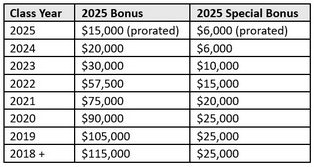
Here’s
the
scale:

To
the
hard
workers
at
Alston
&
Bird,
enjoy
the
money!
And
if
you’re
looking
for
something
fly
to
spend
your
cash
on,
why
not

Falconry
?
You’ll
gain
a
companion,
easy
back-pocket
stories
to
tell
at
the
company
mixers,
and
you’ll
still
have
a
nice
wad
of
cash
left
over.
The
sky
is
the
limit!

We
like
hearing
about
bonuses
almost
as
much
as
you
enjoy
spending
them.
As
soon
as
your
firm’s
memo
comes
out,
please email
it
to
us

(subject
line:
“[Firm
Name]
Bonus”)
or
text
us
(646-820-8477).
Please
include
the
memo
if
available.
You
can
take
a
photo
of
the
memo
and
send
it
via
text
or
email
if
you
don’t
want
to
forward
the
original
PDF
or
Word
file.

And
if
you’d
like
to
sign
up
for
ATL’s
Salary
&
Bonus
Alerts,
please
scroll
down
and
enter
your
email
address
in
the
box
below
this
post.
If
you
previously
signed
up
for
the
bonus
alerts,
you
don’t
need
to
do
anything.
You’ll
receive
an
email
notification
within
minutes
of
each
bonus
announcement
that
we
publish.


Chris
Williams
became
a
social
media
manager
and
assistant
editor
for
Above
the
Law
in
June
2021.
Prior
to
joining
the
staff,
he
moonlighted
as
a
minor
Memelord™
in
the
Facebook
group Law
School
Memes
for
Edgy
T14s
.
 He
endured
Missouri
long
enough
to
graduate
from
Washington
University
in
St.
Louis
School
of
Law.
He
is
a
former
boatbuilder
who
is
learning
to
swim, is
interested
in
critical
race
theory,
philosophy,
and
humor,
and
has
a
love
for
cycling
that
occasionally
annoys
his
peers.
You
can
reach
him
by
email
at [email protected]
and
by
tweet
at @WritesForRent.

Exclusive: Filevine Acquires Pincites, AI-Powered Contract Redlining Company, Strengthening Its Positioning for Corporate Legal and Enhancing Its AI

Legal
technology
company

Filevine

has
acquired

Pincites
,
an
AI-powered
contract
redlining
company,
in
a
deal
that
moves
the
company
further
into
corporate
and
transactional
law,
complementing
its
strong
presence
in
litigation,
and
that
furthers
its
AI
strategy.

The
deal
marks
Filevine’s
second
major
AI
acquisition
of
2025,
following
its

April
acquisition
of
Parrot
,
a
platform
for
transcribing,
scheduling
and
managing
depositions,
and
its
fourth
acquisition
ever.

The
deal
also
strengthens
Filevine’s
stated
strategy
to
become
an
AI-first
operating
system,
by
building,
acquiring
and
evolving
AI
technologies.

Although
the
companies
have
not
yet
formally
announced
the
acquisition,
sources
within
Filevine
tell
me
that
the
all-cash
deal
closed
last
Thursday,
Dec.
18.

The
deal
comes
just
three
months
after

Filevine
announced
it
had
raised
$400
million

across
two
funding
rounds
during
2024
and
2025.
Added
to
the
$226.1
million
it
had
previously
raised,
Filevine
is
now
one
of
the
most
well-capitalized
companies
in
legal
tech.

The
acquisition
brings
aboard
Pincites’
sister
co-founders

Sona
Sulakian

and

Mariam
Sulakian
,
along
with
their
team
of
approximately
four
employees.
Both
founders
will
continue
with
Filevine
post-acquisition,
with
the
company
planning
to
establish
a
new
San
Francisco
office
anchored
by
the
Pincites
team.

They
will
join
a
team
of
some
700
Filevine
employees,
led
by
cofounder
and
CEO Ryan
Anderson
. 


Strategic
Expansion
into
Corporate
Legal

For
Filevine,
a
company
that
started
with
a
focus
on
the
litigation
market,
the
Pincites
acquisition
represents
its
most
significant
push
into
the
corporate
legal
and
transactional
law
space.

Building
on
Filevine’s

2021
acquisition
of
Outlaw
,
the
contract
lifecycle
management
platform
that
had
developed
proprietary
document
technology,
the
Pincites
deal
fills
a
long-standing
gap
in
Filevine’s
contract
redlining
and
Word-native
workflows.

Pincites’
technology
has
been
adopted
by
major
enterprises
including
Meta,
Vercel,
and
Rubrik.
The
Pincites
platform
is
trusted
by
legal
teams
in
high-stakes,
security-sensitive
environments,
the
source
said,
with
adoption
in
both
enterprise
legal
departments
and
law
firms.


Second
AI
Acquisition
of
2025

The
Pincites
deal
follows
Filevine’s
earlier
2025
acquisition
of
Parrot,
a
deposition
technology
company
with
AI
capabilities
for
medical
chronology
work.

Both
acquisitions,
the
source
told
me,
demonstrate
Filevine’s
“AI-first”
strategy,
which
has
been
evolving
over
the
past
three
years.

The
source
stressed
that
Filevine
is
both
building
AI
internally
and
pursuing
outside
acquisitions,
noting
that
the
company

recently
launched
Lois

(Legal
Operating
Intelligence
System),
an
AI
assistant
that
allows
legal
teams
to
ask
questions
and
draft
documents
directly
from
live
case
files,
notes,
calendars
and
custom
fields,
all
within
Filevine.

The
source
said
the
acquisition
was
a
predominantly
cash
deal
in
the
eight
figures,
adding
that
it
signals
continued
M&A
momentum
and
balance-sheet
strength
for
Filevine.

The
company
is
on
pace
to
close
out
what
the
source
characterized
as
its
best
quarter
and
best
year
ever.


Notable
Backing
and
Talent

A
significant
aspect
of
the
Pincites
acquisition
is
the
pedigree
of
its
investors
and
founders.

Nat
Friedman
,
who
Meta
recently
recruited
to
lead
its
Superintelligence
Labs,
served
as
one
of
Pincites’
lead
seed
investors.


Cofounders
Mariam
Sulakian
(left)
and
Sona
Sulakian.

As
cofounders,
the
Sulakian
sisters
bring
complementary
expertise:
Sona
Sulakian
is
a
former
big-law
attorney
at
law
firm
Ropes
&
Gray
who
also
worked
in
strategy
roles
at
Evisort
and
Salesforce.

Mariam
Sulakian
is
a
former
GitHub
product
lead
and
Meta
engineer
with
deep
security
and
scale
background.

The
source
described
their
combination
of
legal
domain
knowledge
and
AI
engineering
capabilities
as
instrumental
in
enabling
them
to
build
a
“best
in
class
product.”

The
source
noted
that
Filevine’s
internal
legal
team
had
been
using
Pincites
for
some
time
and
were
“obsessed”
with
the
product,
which
helped
validate
the
acquisition
decision.


San
Francisco
Expansion
and
Hiring

The
acquisition
will
serve
as
the
foundation
for
Filevine
to
launch
a
new
San
Francisco
office,
positioning
the
company
in
the
heart
of
the
AI
ecosystem.
The
office
will
be
in
downtown
San
Francisco
close
to
major
AI
companies
such
as
Anthropic
and
Meta.

The
office
will
provide
a
base
for
Filevine
to
continue
to
expand
its
hiring
of
AI
talent
over
the
next
year,
the
source
said.

When
I
spoke
with
CEO
Anderson
in
September
at
the
time
the
company
announced
its
$400
million
raise,
he
told
me
that
the
primary
use
of
the
new
capital
would
be
talent
acquisition,
particularly
in
gen
AI
and
machine
learning.

“The
primary
thing
I
think
you’ll
see
us
do
is
try
and
go
out
and
compete
to
get
the
very
best
talent,”
he
said
then. 


Strengthening
the
‘Legal
Operating
Intelligence
System’

The
source
positioned
the
acquisition
as
part
of
Filevine’s
broader
strategy
to
build
a
comprehensive
“legal
operating
intelligence
system”
that
serves
law
firms,
enterprises
and
government
agencies

a
sector
that
has
seen
strong
growth
for
Filevine
this
year,
the
source
said.

The
source
indicated
that
while
Filevine
has
been
successful
in
the
corporate
legal
market,
the
Pincites
acquisition
“will
be
massive”
in
further
opening
opportunities
with
enterprise
legal
teams.

The
deal
comes
as
Filevine
continues
to
position
itself
at
the
intersection
of
legal
technology
and
artificial
intelligence,
with
the
company
having
made
AI
a
central
part
of
its
product
strategy
and
go-to-market
approach.


More
About
Pincites

Pincites
is
an
AI-native
contract
review
and
negotiation
platform
that
embeds
directly
into
Microsoft
Word
to
automate
redlining,
risk
review
and
playbook-driven
guidance
for
in-house
and
enterprise
legal
teams.

Founded
in
2023,
the
company
went
through

Y
Combinator
that
year
.
It
markets
itself
as
“Legal
AI
for
the
enterprise.”

It
runs
as
a
Word
add‑in
so
lawyers
and
business
users
can
review
and
negotiate
contracts
without
leaving
the
application
in
which
they
most
commonly
work.

The
platform
applies
configurable
playbooks
to
contracts,
automatically
redlining
clauses,
inserting
comments
and
flagging
deviations
from
preferred
positions.

It
supports
multi-language
review
in
more
than
80
languages
and
includes
translation
and
summarization
tools
for
cross-border
deals.

Pincites

announced
a
$3
million
seed
round

in
September
2023,
led
by
Nat
Friedman
and

Daniel
Gross
,
who
frequently
invest
together
in
AI
technology,
with
participation
from
Y
Combinator,
General
Catalyst,
and
Liquid
2
Ventures.

ATL Holiday Card Contest: The Finalists! (2025) – Above the Law

(Image
via
Getty)

Hanukkah
is
here,
Christmas
is
nearly
upon
us,
and
everyone
in
the
legal
profession
is
ready
to
ring
in
the
New
Year,
so
it’s
finally
time
to
reveal
the
six
finalists
for
our
seventeenth
annual
holiday
card
contest.
But
first
let’s
give
shout-outs
to
some
honorable
mentions
(click
on
each
firm’s
name
to
see
its
card):

1. Armond
Wilson
:
Yet
another
fantastic
card
“some
of
the
cleverest
IP
litigators
in
the
universe”

this
firm
was
gunning
for
its
third
honorable
mention
in
a
row,
and
here
it
is!
Inspired
by
the
beloved
Charlie
Brown
Christmas
Special,
this
card
features
firm
founder Michelle
Armond
 channeling
Lucy
to
dispense
IP
litigation
help.

2.

Capua
Law
:
This
card
comes
complete
with
some
stereotypical
lawyerly
edits
that
you
need
to
see
for
yourself
to
have
a
little
chuckle.

3.

Diaz
Trade
Law
:
“Who
even
heard
of
a
tariff
before
2025?!
Customs
attorneys
have
really
been
through
the
wringer
this
year.
Somehow
they
still
found
the
time
to
put
together
this
epic holiday
card.”
A
card
featuring
Santa
trying
to
get
around
tariffs?
Say
less!

And
now,
the
six
finalists,
in
alphabetical
order.
Again,
click
on
each
firm’s
name
to
view
its
card.
Please
note
that
most
of
these
cards
have
SOUND,
so
you
might
want
to
turn
your
sound
off
or
down,
or
use
headphones.
Explanatory
comments
come
from
firm
representatives
unless
indicated.

1.

Butler
Snow
:
After
winning
this
competition
in
2023
and
2024,
this
firm
is
back
with
yet
another
memorable
holiday
card.
Can
you
say
threepeat?
From
the
nominator:
“This
year
we
set
out
to
answer
some
of
the
most
pressing
holiday
legal
questions.
If
you’ve
ever
wondered
whether
or
not
you
could
sue
someone
for
giving
you
another
fruitcake,
or
if
you’ve
ever
thought
about
using
municipal
bonds
to
finance
a
holiday
parade,
then
we’ve
got
you
covered!”

2.

Davis
Wright
Tremaine
:
“Created
in
partnership
with
world-renowned
Rube
Goldberg
machine
expert-builder
Zach
Umperovitch,
this
End-of-Year
film
showcases
a
custom
chain-reaction
machine
designed
to
transition
through
all
four
seasons.
Crafted
and
filmed
by
DWT
Studios,
the
piece
reflects
the
firm’s
spirit
of
innovation
and
connection

capturing
the
story
of
a
year
through
motion,
precision,
and
collaboration.”
Don’t
look
away
from
this
incredibly
interesting
holiday
video
card,
you
might
miss
something!

3.

Fish
&
Richardson
:
Our
nominator
wonders,
“Does
navigating
the holidays ever
feel
as
difficult
as
solving
a
complex
math
or
science
problem?”
Not
to
worry,
because
this
IP
firm
has
your
back.
“As
an
IP
firm
where
85%
of
our
legal
staff
have
a
STEM
degree,
our holiday
card lightheartedly
acknowledges
that
each
of
us
must
call
upon
our
inner
scientist
to
navigate
this
season!
The
graphics
support
the
message
by
featuring
math
equations,
computer
algorithms,
and
chemistry
formulas
on
a
blackboard
background.
While
the
square
root
of
a
snowman
remains
one
of
the
great
unsolved
equations
of
our
time,
we
were
lucky
to
be
able
to
call
upon
several
of
the
115
Ph.D.s
at
our
firm
to
validate
the
real
equations
and
formulas!”
(There
really
are
some
complicated
formulas
featured
in
this
card,
and
Fish
is
truly
lucky
to
have
staff
on
hand
who
can
figure
them
out.)

4.

Larson


King
:
From
our
nominator:
“For
many
years
the
firm
has
pushed
the
boundaries
with
their holiday cards.
The
2025
greeting
highlights
this
year’s
Wicked-mania
with
a
legal
twist.
Join
Elf-aba
as
she
journeys
to
Saint
Paul
for
legal
assistance
from
a
familiar
face.
Featuring
parodies
such
as What
is
This
Pleading? (What
is
This
Feeling?
), My
Lawyer
and
I (The
Wizard
and
I
), Litigate (Popular),
and Defending
Legality (Defying
Gravity
).
The
firm
enjoyed
creating
the
parody
of
the
songs
to
turn
them
into
legal
speak.
The
music
and
vocals
were
custom-created
for
this
video
by
a
local
Minneapolis
producer.”
Now
a
12-time
holiday
card
contest
finalist,
this
firm
is
in
it
to
win
it
with

Wicked

legal
flair. This
card
is
simply
“thrillifying”!

5.

Law
Office
of
Andrew
L.
Gradman,
APC
:
This
nominator
has
been
staring
at
the
tax
code
for
far
too
long,
and
he
had
to
figure
out
how
to
make
it
fun
again.
“Most
sections
of
the
Internal
Revenue
Code
are
three-
or
four-digit
numbers. If
you
stare
at
these
long
enough
(as
I
do),
you
begin
to
see
calendar
dates. Once
you
do,
you
can’t
get
it
out
of
your
head. My
hope
was
that
maybe,
if
I
made
a
calendar
where
each
date
honors
a
corresponding
Internal
Revenue
Code
section,
I’d
be
able
to
move
on.”
Check
out
this
clever
calendarfull
of
“tax
holidays”
that
only
a
true
tax
pro
could
love.

6.

Lowenstein
Sandler
:
AI
hallucinations
got
you
down?
This
firm
knows
how
to
prompt
its
way
right
out
of
that.
Our
nominator
notes:
“By
playfully
simulating
an
AI-chatbot
exchange,
Lowenstein
Sandler’s
2025 holiday
card delivers
warm
wishes
with
a
modern,
humorous
touch
that
also
illustrates
the
firm’s
decades-long
reputation
at
the
forefront
of
tech.
It
highlights
the
firm’s
forward-looking
outlook,
its
leadership
in
advising
clients
on
the
productive
and
compliant
use
of
AI,
and
its
own
use
of
AI
to
enhance
efficiency
and
strategy.
Blending
authenticity,
appreciation,
and
tech-savvy
creativity,
we
think
it
stands
out
as
a
clever holiday greeting.”

Now
it’s
time
for
our
audience
to
vote.
We’ll
keep
the
polls
open
through WEDNESDAY,
DECEMBER
31,
2025,
at
11:30
p.m.
 (Eastern
time).
This
gives
you
ample
time
to
campaign
for
your
pick
over
the
holidays
(but
please,
don’t
cheat).


CLICK
HERE
TO
VOTE
.

Thanks
to
all
the
entrants
and
nominators,
good
luck
to
the
finalists,
and
happy
holidays
to
all!
Above
the
Law
is
happy
to
celebrate
holiday
cheer
with
you!


Staci
Zaretsky
 is
the
managing
editor
of
Above
the
Law,
where
she’s
worked
since
2011.
She’d
love
to
hear
from
you,
so
please
feel
free
to

email

her
with
any
tips,
questions,
comments,
or
critiques.
You
can
follow
her
on BlueskyX/Twitter,
and Threads, or
connect
with
her
on LinkedIn.

Lessons From The ABA’s Second Report On The Next Phase Of Legal AI – Above the Law

As
2025
draws
to
a
close,
one
theme
has
defined
the
year:
Artificial
Intelligence
(AI).
No
matter
where
you
looked
or
who
you
talked
to,
AI
was
front
and
center,
from
CLE
seminars
and
conference
keynotes
to
news
coverage
and
industry
reports.

For
example,
the
American
Bar
Association
recently
released
its
AI
Task
Force
on
Law
and
Artificial
Intelligence
Report
.”
This
was
the
second
in
a
series
of
reports
addressing
AI’s
impact
on
the
legal
profession.
The
report
covered
a
lot
of
ground,
with
topics
ranging
from
AI
adoption
and
its
impact
on
access
to
justice
to
how
law
schools
and
the
courts
are
approaching
AI. 

One
of
its
key
conclusions
was
that
our
profession
has
reached
a
crossroads:
AI
adoption
has
surpassed
understanding.
The
majority
of
legal
professionals
now
use
AI
but
do
not
fully
appreciate
the
practical
and
ethical
challenges
that
arise
when
using
AI.
In
other
words,
as
the
report’s
authors
explained,
“the
conversation
has
shifted
from

whether

to
use
the
AI
technology
to

how

to
use
it.”

According
to
the
report,
legal
professionals
continue
to
accomplish
relatively
simple
tasks
with
AI,
such
as
summarization,
document
review,
drafting
brief
documents,
and
issuing
client
alerts,
rather
than
more
complex
legal
work
that
involves
confidential
client
information.
This
finding
aligns
with
the
results
of
the
8am
2026
Legal
Industry
Report
that
I
authored,
and
that
will
be
released
this
spring.
That
data
shows
that
AI
implementation
in
law
firms
focuses
on
routine
work,
with
top
tasks
including
drafting
correspondence,
general
research,
and
brainstorming.

This
pattern
of
use
helps
explain
why
cost
will
play
such
a
significant
role
in
the
next
phase
of
AI
adoption.
As
AI
tools
improve
and
concerns
around
risk
and
reliability
decrease,
practitioners
will
seek
to
apply
additional
AI
tools
to
more
complex
legal
work.
Whether
they’ll
be
able
to
do
so,
however,
will
depend
largely
on
affordability,
and
that
may
be
determined
by
firm
size. 

AI
has
the
potential
to
level
the
playing
field
by
enabling
solo
and
small-firm
lawyers
to
compete
more
effectively
with
larger
firms.
However,
because
“the
legal
industry
is
moving
toward
a
stratification
of
firms
into
various
degrees
of
technology
‘haves’
and
‘have-nots,’”
many
of
the
most
advanced
legal
AI
tools
remain
prohibitively
expensive.
In
the
absence
of
changes
to
pricing
models
or
policy
intervention,
larger
firms
will
continue
to
retain
their
longstanding
competitive
advantage.

That
same
cost
dynamic
extends
beyond
law
firms
and
into
the
access-to-justice
space
where,
once
again,
AI
offers
tremendous
unrealized
potential.
The
report
cites
a
Berkeley-led
study
documenting
100-plus
real-world
AI
use
cases
in
legal
aid,
“including
ratings,
recommendations,
and
estimates
of
efficiency
gains.” However,
pricing
is
once
again
a
barrier,
and
“high
subscription
costs
for
the
best
and
most
reliable
legal
AI
tools
might
make
those
tools
unaffordable
and
inaccessible
to
the
access-to-justice
community.”

The
report
also
highlights
another
area
where
AI’s
promise
has
not
been
fully
realized:
legal
education.
Historically,
law
schools
have
been
slow
to
integrate
technology
into
their
curricula,
but
the
pervasiveness
of
AI
is
beginning
to
reverse
this
trend.

Until
recently,
most
law
schools
turned
a
blind
eye
to
AI,
forcing
law
students
to
fend
for
themselves.
Students
from
16
schools,
including
Harvard
Law,
the
UCLA
School
of
Law,
and
the
University
of
Miami
Law
School,
filled
that
gap
by
forming
student-led
groups
devoted
to
understanding
AI’s
impact
on
the
profession.

Fortunately,
that
tide
is
finally
turning.
Fifty-five
percent
of
law
schools
now
offer
AI-focused
courses.
Another
83%
provide
hands-on
AI
experiences
like
clinics
or
labs,
and
Case
Western
Reserve
Law
School
even
requires
all
first-year
students
to
obtain
legal
AI
certification.
Recognizing
that
AI
isn’t
going
away
and
will
only
become
more
ubiquitous,
law
schools
are
finally
treating
AI
literacy
as
a
core
professional
skill
rather
than
an
optional
add-on.


Our
profession
is
entering
a
pivotal
phase
where
AI’s
impact
can’t
be
ignored
and
must
instead
be
accommodated.
It’s
already
part
of
more
basic
workflows
in
law
firms.
The
next
stage
of
adoption
will
determine
whether
it
benefits
those
who
need
it
most
or
follows
the
money
to
the
top
of
the
food
chain.
Will
it
expand
access
to
legal
services
and
improve
the
quality
of
representation,
or
instead
reinforce
existing
gaps
across
our
profession
and
system
of
justice?
Only
time
will
tell.


Nicole
Black
 is
a
Rochester,
New
York
attorney
and
Principal
Legal
Insight
Strategist
at 
8am,
the
team
behind
8am
MyCase,
LawPay,
CasePeer,
and
DocketWise.
She’s
been 
blogging since
2005,
has
written
weekly
column
 for
the
Daily
Record
since
2007,
is
the
author
of 
Cloud
Computing
for
Lawyers
,
co-authors 
Social
Media
for
Lawyers:
the
Next
Frontier
,
and
co-authors 
Criminal
Law
in
New
York
.
She’s
easily
distracted
by
the
potential
of
bright
and
shiny
tech
gadgets,
along
with
good
food
and
wine.
You
can
follow
her
on
Twitter
at 
@nikiblack and
she
can
be
reached
at 
[email protected].

Payers Made a Bold Prior Auth Commitment in 2025. Here’s What to Expect in 2026 – MedCity News

Prior
authorization
has
long
been
a
sticking
point
between
payers
and
providers,
with
payers
arguing
that
it’s
necessary
to
control
costs
and
ensure
that
care
is
medically
necessary
and
providers
arguing
that
it
creates
administrative
burden
and
delays
care.

Regardless
of
who’s
right
in
this
debate,
it’s
clear
that
the
practice
is
in
desperate
need
of
improvement.
That’s
why
in
June,
more
than
50
health
plans

such
as
UnitedHealthcare,
Aetna,
Cigna
and
several
Blues
plans

made
a

series
of
commitments

in
partnership
with
the
Centers
for
Medicare
and
Medicaid
Services
to
simplify
prior
authorization,
including
providing
more
clear
explanations
of
prior
authorization
determinations,
increasing
turnaround
times
for
determinations
and
ensuring
continuity
of
care
when
patients
switch
plans.
Several
of
these
commitments
will
go
into
place
in
2026,
while
others
will
take
effect
in
2027. 

“We’re
making
meaningful
progress
on
improving
the
prior
authorization
process.

With
many
improvements
going
live
in
January,
we
remain
committed
to
streamlining
processes
and
reducing
the
scope
of
requirements
to
improve
the
experience
for
patients
and
providers,”
a
Blue
Cross
Blue
Shield
Association
representative
who
declined
to
be
named
told
MedCity
News.

Still,
the
question
remains
of
whether
these
commitments
will
be
enough
for
providers,
who
generally
seem
cautiously
optimistic
about
the
commitments. 

“Any
step
toward
reducing
prior
authorization
is
welcome,
and
family
physicians
have
been
asking
for
relief
for
years,”
said
Dr.
Jen
Brull,
board
chair
of
the
American
Academy
of
Family
Physicians.
“From
where
we
sit
in
exam
rooms,
commitments
alone
aren’t
sufficient.
Prior
authorization
still
eats
up
an
enormous
amount
of
time
and
causes
real
delays
in
care;
nearly
90%
of
physicians
say
it’s
extremely
burdensome.
Until
we
see
meaningful
changes
that
actually
reduce
paperwork
and
speed
up
approvals,
patients
and
physicians
will
continue
to
feel
the
strain.”

Beyond
these
commitments,
2025
has
seen
additional
developments
in
the
prior
authorization
landscape,
including
the
introduction
of
the

WISeR
Model
,
which
extends
prior
authorization
requirements
into
traditional
Medicare.
In
2026,
experts
will
also
be
watching
out
for
developments
in
the

Improving
Seniors’
Timely
Access
to
Care
Act
,
which
would
streamline
prior
authorization
in
Medicare
Advantage. 


What
are
the
commitments
in
2026?

According
to
AHIP’s

announcement

in
June,
the
commitments
going
into
effect
in
2026
are: 

  • Reducing
    the
    scope
    of
    claims
    subject
    to
    prior
    authorization:
    The
    insurers
    will
    reduce
    prior
    authorization
    requirements
    for
    certain
    claims,
    which
    will
    depend
    on
    the
    market
    each
    plan
    serves.
    These
    reductions
    are
    expected
    to
    start
    January
    1,
    2026.
  • Ensuring
    continuity
    of
    care
    when
    patients
    switch
    plans:
    When
    patients
    switch
    insurance
    plans
    during
    treatment,
    their
    new
    insurer
    must
    honor
    existing
    prior
    authorizations
    for
    similar
    in-network
    services
    for
    90
    days
    to
    ensure
    continuity
    of
    care
    and
    prevent
    delays.
    This
    will
    begin
    January
    1,
    2026.
  • Improving
    communication
    and
    transparency
    on
    determinations:
    The
    insurers
    pledge
    to
    give
    clear
    explanations
    of
    prior
    authorization
    determinations,
    as
    well
    as
    information
    on
    appeals.
    This
    will
    be
    available
    for
    fully
    insured
    and
    commercial
    coverage
    by
    January
    1,
    2026.

In
2027,
payers
will
focus
on
standardizing
electronic
prior
authorization
and
expanding
real-time
responses.
Insurers
anticipate
that
at
least
80%
of
electronic
prior
authorization
approvals
will
be
answered
in
real-time.

In
total,
53
plans
signed
all
of
these
commitments,
including
the
biggest
names
in
the
world
of
healthcare
insurance:
UnitedHealthcare,
Elevance
Health,
Aetna,
Cigna,
Kaiser
Permanente,
Centene,
Humana,
Highmark
and
several
Blues
plans.

AHIP
Spokesperson
Chris
Bond
told
MedCity
News
that
progress
will
be
tracked
and
reported
publicly.
The
organization
anticipates
that
the
first
report
will
come
in
the
spring
of
2026.

Several
payers
told
MedCity
News
that
they’re
on
track
for
the
commitments
in
2026.
Dr.
Muhannad
Hammash,
corporate
vice
president
of
medical
policy
at
SCAN
Health
Plan,
said
the
nonprofit
Medicare
Advantage
insurer
has
been
working
closely
with
its
provider
partners
to
ensure
readiness,
including
hosting
an
October
summit
to
review
the
commitments
and
holding
one-on-one
meetings
with
individual
groups
to
help
them
understand
and
prepare
for
the
changes.

That
said,
there
are
challenges
to
getting
these
commitments
in
order.
For
example,
meeting
the
2027
commitment
for
electronic
prior
authorization
will
require
a
substantial
effort
to
support
providers
that
currently
lack
the
technology
infrastructure
and
resources
needed
to
submit
prior
authorization
requests
electronically.

“Some
of
these
technologies
are
expensive,
especially
for
smaller
groups,”
Hammash
said.
“That’s
one
of
the
challenges
we
have
to
look
into
and
see
what
is
the
best
way
we
can
work
with
those
providers
in
resolving
these
issues,
because
we
have
to
move
from
the
traditional
way
of
paperwork
and
faxes
to
using
technology
that
would
help
us
speed
up
the
process.”

An
executive
at
Blue
Shield
of
California
echoed
the
need
for
more
advanced
technology
to
ensure
these
commitments
work.

“Health
plans
will
need
to
leverage
their
internal
intelligence
about
members,
policies,
benefits,
and
networks
to
facilitate
automatic
approvals
at
scale,”
said
Dr.
Laurine
Tibaldi,
vice
president
of
medical
management
at
Blue
Shield
of
California.
“We
will
hopefully
see
more
providers
increase
their
use
of
technology
to
communicate
with
health
plans
wherever
possible

in
place
of
faxes
or
phone
calls.
More
real-time
communications
between
health
plans
and
providers
will
help
patients
get
care
faster
and
reduce
stress
for
everyone
involved.” 

Aetna
President
Steve
Nelson
told
MedCity
News
that
the
insurer
is
working
to
fulfill
these
commitments
and
shoot
even
higher.
For
example,
it

announced

in
December
that
it
is
bundling
medical
procedures
and
pharmaceutical
medications
into
one
prior
authorization.
Previously,
providers
had
to
submit
two
separate
prior
authorizations
for
medical
procedures
and
related
medications.
In
addition,
the
insurer
is
working
on
bringing
more
transparency
into
the
process.

“One
of
the
frustrations
about
prior
authorization
is
you
don’t
know
where
you
are
in
the
process,”
Nelson
said
in
an
interview.
“We’ve
added
capabilities
in
a
digital
app
so
you
can
now
know
where
you
are
in
the
process.
Is
it
pending?
Has
it
been
denied?
What’s
the
next
step?
Has
it
been
approved?
What’s
going
on
with
it?”


Will
this
be
enough
for
providers?

While
physicians
are
generally
optimistic
about
these
commitments,
it
goes
without
saying
that
there’s
a
little
skepticism
as
well.

To
hold
payers
accountable,
Brull
said
providers
should
make
sure
to
document
delays,
denials
and
inconsistencies
and
bring
those
concerns
to
lawmakers. 

A
Medicare
policy
expert
at
consulting
firm
McDermott+

Lynn
Nonnemaker

noted
that
the
skepticism
among
providers
is
both
“appropriate
and
healthy,”
and
this
skepticism
will
play
a
role
in
ensuring
that
plans
follow
through.
She
added
that
CMS
Administrator
Dr.
Mehmet
Oz
has
said
that
the
agency
is
prepared
to
act
if
plans
don’t
follow
through.

“Certainly,
CMS
could
go
further
in
restricting
plans’
use
of
prior
authorization,”
she
said
in
an
interview.
“One
important
thing
that
CMS
can
do
is
serve
as
a
convener
in
helping
bring
about
more
standardization
of
the
systems
and
processes
that
plans
use
and
the
way
that
providers
interact
with
them.”

Although
the
onus
is
on
the
insurers
to
carry
out
these
commitments,
providers
can
also
take
their
own
steps
to
improve
prior
authorization,
Nonnemaker’s
colleague
noted.

“It
takes
two
to
tango,”
said
Jeffrey
Davis,
a
director
at
McDermott+.
“So
if
the
payers
want
to
automate
the
process,
that
means
the
provider
side
will
have
to
have
the
technology
in
place,
the
systems
in
place,
to
handle
those
automated
transactions.
Providers
have
to
buy
into
this
too
and
set
up
their
systems.
Payers
can
do
all
they
want
on
their
side,
but
if
the
providers
don’t
participate,
there’s
not
going
to
be
a
seamless
prior
authorization
process.”

An
executive
at
GuideHealth,
a
tech-enabled
value-based
care
services
company,
echoed
this.

“Providers
can
improve
outcomes
by
standardizing
submissions,
using
structured
clinical
data,
and
aligning
with
evidence-based
pathways
in
collaboration
with
payers,”
said
Sanjay
Doddamani,
founder
and
CEO
of
GuideHealth,
in
an
email.
“Treating
prior
auth
as
a
shared
clinical
and
operational
workflow,
rather
than
a
downstream
administrative
task,
is
key
to
reducing
friction.”

Beyond
these
commitments,
Brull
is
hopeful
that
there
will
be
movement
on
the
Seniors’
Timely
Access
to
Care
Act,
which
would
streamline
prior
authorization
in
Medicare
Advantage.

“The
House
has
already
passed
it
once,
and
we’re
working
hard
to
get
it
across
the
finish
line,”
she
said.
“At
the
end
of
the
day,
prior
authorization
should
never
stand
between
a
patient
and
timely
care,
and
physicians
should
be
able
to
focus
on
caring
for
patients,
not
paperwork.”

This
is
a
burden
felt
by
most
physicians,
as
94%

reported

in
an
American
Medical
Association
survey
that
prior
authorization
causes
major
delays
in
necessary
care.
There’s
an
economic
reason
for
reducing
prior
authorization
as
well.
According
to
a

study

published
in
Health
Affairs,
drug
prior
authorization
costs
$93.3
billion
annually,
including
$6
billion
for
payers,
$24.8
billion
for
manufacturers,
$26.7
billion
for
physicians
and
$35.8
billion
for
patients.

Given
the
burden
of
prior
authorization,
Brull
is
also
concerned
about
some
moves
that
CMS
is
taking
that
can
have
a
worrying
impact.
She
said
that
new
innovation
models
could
“reintroduce
prior
authorization
under
different
names
or
mechanisms,
which
means
practices
have
to
stay
vigilant
just
to
keep
patient
care
moving.”

For
instance,
in
June,
CMS
Innovation
Center
introduced
the
WISeR
model
(Wasteful
and
Inappropriate
Service
Reduction
Model),
that
brings
a
prior
authorization
process
into
traditional
Medicare
in
an
effort
to
reduce
“fraud,
waste
and
abuse.”
This
is
concerning
to
Brull
as
traditional
Medicare
has
“long
been
free
from
those
hurdles.”
This
could
slow
care
for
seniors
and
add
more
administrative
challenges
to
practices,
she
said.


Photo:
Piotrekswat,
Getty
Images

Morning Docket: 12.23.25 – Above the Law

*
JP
Morgan
committed
itself
by
agreement
to
pay
Charlie
Javice’s
bills
and
is
very
annoyed
about
having
to
shell
out
$530
for
gummy
bears.
[Law360]

*
Former
CIA
chief
targeted
by
Trump’s
retaliation
campaign
asks
chief
judge
to
prevent
DOJ
from
steering
case
to
administration
lapdog
Aileen
Cannon.
[AP
News
]

*
Freshfields
giving
Gen
Z
“resilience”
training.
[Legal
Cheek
]

*
Sam
Bankman-Fried
fancies
himself
a
jailhouse
lawyer
now.
[NY
Times
]

*
Blake
Lively
and
Justin
Baldoni
legal
teams
reflect
on
the
experience.
[People]

*
Judge
blocks
Trump
effort
to
freeze
Harvard
funding.
[Law.com]

*
New
Biglaw
office
leans
into
collaborative
spaces.
[NY
Law
Journal
]