I’m
sure
she’ll
take
it
under
consideration
and
look
at
it
seriously.
…
Trump
hasn’t
made
a
secret
about
the
retribution
that
he
is
asking
some
of
his
U.S.
attorneys
to
take
against
his
perceived
enemies.
It
is
an
extraordinary
request,
but
maybe
this
is
an
extraordinary
situation.
—
Professor
Carl
Tobias
of
the
University
of
Richmond
School
of
Law,
in
comments
given
to
Law.com,
concerning
a
request
made
by
ex-CIA
Director
John
Brennan’s
lawyers
to
Chief
District
Judge
Cecilia
Altonaga
of
the
Southern
District
of
Florida,
to
block
Judge
Aileen
Cannon
from
hearing
the
case.
The
letter
submitted
by
Brennan’s
lawyers
to
Altonaga
reads,
in
relevant
part:
“The
United
States
attorney’s
efforts
to
funnel
this
investigation
to
the
judge
who
issued
this
string
of
rulings
that
consistently
favored
President
Trump’s
positions
in
previous
litigations
should
be
seen
for
what
it
is.”
Staci
Zaretsky is
the
managing
editor
of
Above
the
Law,
where
she’s
worked
since
2011.
She’d
love
to
hear
from
you,
so
please
feel
free
to
email
her
with
any
tips,
questions,
comments,
or
critiques.
You
can
follow
her
on Bluesky, X/Twitter,
and Threads, or
connect
with
her
on LinkedIn.
Ed.
note: A
weekly
roundup
of
just
a
few
items
from
Howard
Bashman’s How
Appealing
blog,
the
Web’s
first
blog
devoted
to
appellate
litigation.
Check
out
these
stories
and
more
at
How
Appealing.
“Emergency
Docket
Tops
Year’s
Highlights
at
Supreme
Court”: Justin
Wise
and
Jordan
Fischer
of
Bloomberg
Law
have this
report.
“Judges
who
ruled
against
Trump
say
harassment
and
threats
have
changed
their
lives;
More
than
100
pizzas
were
delivered
to
the
homes
of
judges
and
their
families
this
year,
some
with
signs
of
foreign
involvement;
Judges
say
the
message
is
clear:
We
know
where
you
live.” Lawrence
Hurley
of
NBC
News
has this
report.
“Supreme
Court
Rejects
Trump
Bid
to
Use
National
Guard
in
Chicago”: Greg
Stohr
of
Bloomberg
News
has this
report.
You
can
access
today’s
order
of
the U.S.
Supreme
Court at this
link.
“How
Charlie
Javice’s
Legal
Fees
Hit
$74
Million:
Gummy
Bears
and
Star
Lawyers;
A
list
of
legal
expenses
from
her
lawyers
included
$530
in
gummy
bears,
a
seafood
tower
and
thousands
of
dollars
on
hotel
upgrades,
new
court
documents
reveal.” Alexander
Saeedy
of
The
Wall
Street
Journal
has this
report.
“Judge
orders
Trump
admin
to
offer
relief
to
men
deported
under
Alien
Enemies
Act;
But
the
judge,
James
Boasberg,
stopped
short
of
ordering
the
Trump
administration
to
facilitate
the
immediate
return
of
the
men
to
the
U.S.” Kyle
Cheney
and
Josh
Gerstein
of
Politico
have this
report.
“Court
watchers
give
SCOTUS
poor
marks
as
Trump
bulldozes
judiciary
in
2025;
Trump’s
return
to
office
served
as
a
stress
test
for
high
court’s
beleaguered
shadow
docket,
highlighting
the
careful
balance
of
power
between
the
judiciary
and
the
executive”: Kelsey
Reichmann
of
Courthouse
News
Service
has this
report.
“How
the
Supreme
Court’s
Mail-In
Ballot
Ruling
Could
Affect
Voters;
Hundreds
of
thousands
of
Americans
in
rural
and
urban
areas
alike
could
see
their
votes
rejected
if
the
court
decides
that
ballots
must
arrive
by
Election
Day”: Nick
Corasaniti
and
Christine
Zhang
of
The
New
York
Times
have this
report.
Biglaw
firms
across
the
country
continue
to
announce
bonuses
this
holiday
season.
Just
before
Christmas,
one
of
the
most
successful
law
firms
in
America
let
eligible
associates
know
that
they’d
be
receiving
a
match
of
the
Cravath/Milbank
scale
for
year-end
and
special
bonuses.
But
that’s
not
all
—
the
firm
also
let
associates
know
that
enhanced
performance
bonuses
were
up
for
grabs.
The
firm
in
question
is
DLA
Piper,
which
brought
in
$$4,239,832,000
gross
revenue
in
2024,
putting
it
at
No.
3
on
the
Am
Law
100.
Bonus
eligibility
at
DLA
is
based
on
seniority,
performance
rating,
productivity
(the
firm
has
a
2000-hour
billable
goal),
compliance
with
firm
policies,
and
good
standing
status.
This
year,
those
who
meet
the
criteria
for
market
bonuses
will
also
receive
special
bonuses.
Here’s
what
the
bonus
grid
looks
like
at
the
firm:
Class
of
2024
–
$20,000
/
$6,000
Class
of
2023
–
$30,000
/
$10,000
Class
of
2022
–
$57,500
/
$15,000
Class
of
2021
–
$75,000
/
$20,000
Class
of
2020
–
$90,000
/
$25,000
Class
of
2019
–
$105,000
/
$25,000
Class
of
2018+
–
$115,000
/
$25,000
DLA
Piper
is
offering
bonuses
above
and
beyond
the
prevailing
market
rate
for
associates
who
have
gone
above
and
beyond
in
terms
of
billable
hours
and
“exceptional”
client
service,
offering
enhanced
bonuses
for
every
100
hours
above
the
2,000-hour
expectation
as
well
as
for
those
who
earned
qualifying
performance
ratings.
Associates
who
met
their
hourly
goals
by
December
15
will
receive
their
year-end
and
special
bonuses
on
December
26,
with
enhanced
bonus
payouts
to
be
paid
in
February
2026.
Those
who
meet
their
hours
by
December
31
will
receive
all
bonus
payments
in
February
2026.
Congratulations
to
everyone
at
DLA
Piper!
Remember
everyone,
we
depend
on
your
tips
to
stay
on
top
of
compensation
updates,
so
when
your
firm
announces
or
matches,
please
text
us
(646-820-8477)
or email
us (subject
line:
“[Firm
Name]
Bonus/Matches”).
Please
include
the
memo
if
available.
You
can
take
a
photo
of
the
memo
and
send
it
via
text
or
email
if
you
don’t
want
to
forward
the
original
PDF
or
Word
file.
And
if
you’d
like
to
sign
up
for
ATL’s
Bonus
Alerts
(which
is
the
alert
list
we
also
use
for
salary
announcements),
please
scroll
down
and
enter
your
email
address
in
the
box
below
this
post.
If
you
previously
signed
up
for
the
bonus
alerts,
you
don’t
need
to
do
anything.
You’ll
receive
an
email
notification
within
minutes
of
each
bonus
announcement
that
we
publish.
Thanks
for
your
help!
Staci
Zaretsky is
the
managing
editor
of
Above
the
Law,
where
she’s
worked
since
2011.
She’d
love
to
hear
from
you,
so
please
feel
free
to
email
her
with
any
tips,
questions,
comments,
or
critiques.
You
can
follow
her
on Bluesky, X/Twitter,
and Threads, or
connect
with
her
on.
Last
week, Google
filed
suit against
SerpApi,
a
scraping
company
that
helps
businesses
pull
data
from
Google
search
results.
The
lawsuit
claims
SerpApi
violated
DMCA
Section
1201
by
circumventing
Google’s
“technological
protection
measures”
to
access
search
results—and
the
copyrighted
content
within
them—without
permission.
There’s
just
one
problem
with
this
theory:
Google
built
its
entire
business
on
scraping
the
web
without
asking
permission
first.
And
now
it
wants
to
use
one
of
the
most
abused
provisions
in
copyright
law
to
stop
others
from
doing
something
functionally
similar
to
what
made
Google
a
tech
giant
in
the
first
place.
The
lawsuit
comes
on
the
heels
of
Reddit’s equally
problematic
anti-scraping
suit
from
October—which
we
called
an
attack
on
the
open
internet.
Reddit
sued
Perplexity
and
various
scraping
firms
(including
SerpApi),
claiming
they
violated
1201
by
circumventing…
Google’s
technological
protections.
Reddit
was
mad
it
had
cut
a
multi-million
dollar
licensing
deal
with
Google
for
access
to
Reddit
content,
and
these
firms
were
routing
around
both
that
deal
and
Google
itself
to
provide
similar
results
to
users.
The
legal
theory
was
bizarre:
Reddit
didn’t
own
the
copyright
on
user
posts,
and
the
scrapers
weren’t
even
touching
Reddit
directly—yet
Reddit
claimed
standing
to
sue
based
on
circumventing
someone
else’s
TPMs.
So
now,
Google
has
filed
its
own,
similar
lawsuit,
going
after
SerpApi
directly,
focused
on
how
SerpApi
gets
around
its
attempts
to
block
such
scraping.
Google
released a
blog
post
defending
this
lawsuit:
Wefiled
a
suittoday
against
the
scraping
company
SerpApi
for
circumventing
security
measures
protecting
others’
copyrighted
content
that
appears
in
Google
search
results.
We
did
this
to
ask
a
court
to
stop
SerpApi’s
bots
and
their
malicious
scraping,
which
violates
the
choices
of
websites
and
rightsholders
about
who
should
have
access
to
their
content.
This
lawsuit
followslegal
actionthat
other
websites
have
taken
against
SerpApi
and
similar
scraping
companies,
and
is
part
of
our
long
track
record
of
affirmative
litigation
tofight
scammersandbad
actorson
the
web.
Google
follows
industry-standard
crawling
protocols,
and
honors
websites’
directives
over
crawling
of
their
content.
Stealthy
scrapers
like
SerpApi
override
those
directives
and
give
sites
no
choice
at
all.
SerpApi
uses
shady
back
doors
—
like
cloaking
themselves,
bombarding
websites
with
massive
networks
of
bots
and
giving
their
crawlers
fake
and
constantly
changing
names
—
circumventing
our
security
measures
to
take
websites’
content
wholesale.
This
unlawful
activity
has
increased
dramatically
over
the
past
year.
SerpApi
deceptively
takes
content
that
Google
licenses
from
others
(like
images
that
appear
in
Knowledge
Panels,
real-time
data
in
Search
features
and
much
more),
and
then
resells
it
for
a
fee.
In
doing
so,
it
willfully
disregards
the
rights
and
directives
of
websites
and
providers
whose
content
appears
in
Search.
Look,
SerpApi’s
behavior
is
sketchy.
Spoofing
user
agents,
rotating
IPs
to
look
like
legitimate
users,
solving
CAPTCHAs
programmatically—Google’s
complaint
paints
a
picture
of
a
company
actively
working
to
evade
detection.
But
the
legal
theory
Google
is
deploying
to
stop
them
threatens
something
far
bigger
than
one
shady
scraper.
Google’s entire
business is
built
on
scraping
as
much
of
the
web
as
possible
without
first
asking
permission.
The
fact
that
they
now
want
to
invoke
DMCA
1201—one
of
the
most
consistently
abused
provisions
in
copyright
law—to
stop
others
from
scraping
them
exposes
the
underlying
problem
with
these
licensing-era
arguments:
they’re
attempts
to
pull
up
the
ladder
after
you’ve
climbed
it.
Just
from
a
straight
up
perception
standpoint,
it looks bad.
To
be
clear:
this
isn’t
about
defending
SerpApi.
They
appear
to
be
bad
actors
who
built
a
business
on
evading
detection
systems.
The
problem
is
that
Google
chose
to
go
after
them
using
a
legal
weapon
with
a
long
history
of
collateral
damage.
When
you
invoke
Section
1201
against
web
scraping,
you’re
not
just
targeting
one
sketchy
company—you’re
potentially
rewriting
the
rules
for
how
the
entire
open
web
functions.
The
choice
of
weapon
matters,
especially
when
that
weapon
has
been
repeatedly
abused
to
stifle
legitimate
competition
and
could
now
be
turned
against
the
very
openness
that
made
the
modern
internet
possible.
For
many
years,
we’ve
discussed
the
many,
many
problems
of DMCA
Section
1201.
It’s
the
“anti-circumvention”
part
of
the
law
that
says
merely
any
attempt
to
get
around
a
“technological
protection
measure”
(or
even
just
tell
someone
else
how
to
get
around
a
technological
protection
measure)
could
be
deemed
to
violate
the
law,
even
if
the
TPMs
in
question
were
wholly
ineffective,
and
even
if
the
intent
in
getting
around
the
TPM
had
nothing
to
do
with
copyright
infringement.
That
has
lead
to
years
of
abusive
practices
by
companies
who
would
put
silly,
pointless
“TPMs”
in
place
just
in
order
to
be
able
to
use
the
law
to
limit
competition.
There
were
lawsuits
over printer
ink
cartridges and garage
door
openers,
among
other
things.
Here,
Google
is
saying
that
it
put
in
place
a
TPM
in
January
of
2025
called
“SearchGuard”
(which
sounds
like
an
advanced
CAPTCHA
of
some
sort)
to
prevent
SerpApi
from
scraping
its
search
results,
but
SerpApi
figured
out
a
way
around
it:
When
SearchGuard
launched
in
January
2025,
it
effectively
blocked
SerpApi
from
accessing
Google’s
Search
results
and
the
copyrighted
content
of
Google’s
partners.
But
SerpApi
immediately
began
working
on
a
means
to
circumvent
Google’s
technological
protection
measure.
SerpApi
quickly
discovered
means
to
do
so
and
deployed
them.
SerpApi’s
answer
to
SearchGuard
is
to
mask
the
hundreds
of
millions
of
automated
queries
it
is
sending
to
Google
each
day
to
make
them
appear
as
if
they
are
coming
from
human
users.
SerpApi’s
founder
recently
described
the
process
as
“creating
fake
browsers
using
a
multitude
of
IP
addresses
that
Google
sees
as
normal
users.”
SerpApi’s
fakery
takes
many
forms.
For
example,
when
SerpApi
submits
an
automated
query
to
Google
and
SearchGuard
responds
with
a
challenge,
SerpApi
may
misrepresent
the
device,
software,
or
location
from
which
the
query
is
sent
in
order
to
solve
the
challenge
and
obtain
authorization
to
submit
queries.
Additionally
or
alternatively,
SerpApi
may
solve
SearchGuard’s
challenge
with
a
“legitimate”
request
and
then
syndicate
the
resulting
authorization,
that
is,
share
it
with
unauthorized
machines
around
the
world,
to
enable
their
“fake
browsers”
to
generate
automated
queries
that
appear
to
Google
as
authorized.
It
also
uses
automated
means
to
bypass
CAPTCHAs,
another
aspect
of
SearchGuard
that
tests
users
to
ensure
they
are
humans
rather
than
machines.
Getting
around
these
protections
eats
up
Google’s
resources,
and
sure,
that
must
be
annoying
for
Google.
But
the
real
motivation
shows
up
when
Google
gets
to
the
economics
of
the
situation.
Google
has
started
cutting
licensing
deals
with
content
partners—most
notably
the
multi-million
dollar
Reddit
deal—and
now
those
partners
are
pissed
that
SerpApi
lets
others
access
similar
data
without
paying
anyone:
For
Google,
SerpApi’s
automated
scraping
not
only
consumes
substantial
computing
resources
without
payment,
but
also
disrupts
Google’s
content
partnerships.
Google
licenses
content
so
that
it
can
enhance
the
Search
results
it
provides
to
users
and
thereby
boost
its
competitive
standing.
SerpApi
undermines
Google’s
substantial
investment
in
those
licenses,
making
the
content
available
to
other
services
that
need
not
incur
similar
costs.
SerpApi’s
scraping
of
Google
Search
results
also
impacts
the
rights
holders
who
license
content
to
Google.
Without
permission
or
compensation,
SerpApi
takes
their
content
from
Google
and
widely
distributes
it
for
use
by
third
parties.
That,
in
turn,
threatens
to
disrupt
Google’s
relationship
with
the
rights
holders
who
look
to
Google
to
prevent
the
misappropriation
of
the
content
Google
displays.
At
least
one
Google
content
partner,
Reddit,
has
already
sued
SerpApi
for
its
misconduct.
This
is
where
the
1201
theory
becomes
genuinely
dangerous.
Google’s
argument,
if
accepted,
provides
a
roadmap
for
any
website
operator
who
wants
to
lock
down
their
content:
slap
on
a
trivial
TPM—a
CAPTCHA,
an
IP
check,
anything—and
suddenly
you
can
invoke
federal
law
against
anyone
who
figures
out
how
to
get
around
it,
even
if
their
purpose
has
nothing
to
do
with
copyright
infringement.
The
implications
spiral
outward
quickly.
If
Google
succeeds
here,
what
stops
every
major
website
from
deciding
they
want
licensing
revenue
from
the
largest
scrapers?
Cloudflare
could
put
bot
detection
on
the
huge
swath
of
the
internet
it
serves
and
demand
Google
pay
up.
WordPress
could
do
the
same
across
its
massive
network.
The
open
web—built
on
the
assumption
that
published
content
is
publicly
accessible
for
indexing
and
analysis—becomes
a
patchwork
of
licensing
requirements,
each
enforced
through
1201
threats.
That
doesn’t
seem
good
for
the
prospects
of
a
continued
open
web.
Google’s
legal
theory
has
another
significant
problem:
the
requirement
that
a
TPM
must
“effectively
control”
access.
Just
last
week,
a
court rejected Ziff
Davis’s
attempt
to
turn
robots.txt
into
a
1201
violation
when
OpenAI
allegedly
ignored
its
crawling
restrictions.
The
court’s
reasoning
is
directly
applicable
here:
Robots.txt
files
instructing
web
crawlers
to
refrain
from
scraping
certain
content
do
not
“effectively
control”
access
to
that
content
any
more
than
a
sign
requesting
that
visitors
“keep
off
the
grass”
effectively
controls
access
to
a
lawn.
On
Ziff
Davis’s
own
telling,
robots.txt
directives
are
merely
requests
and
do
not
effectively
control
access
to
copyrighted
works.
A
web
crawler
need
not
“appl[y]
.
.
.
information,
or
a
process
or
a
treatment,”
in
order
to
gain
access
to
web
content
on
pages
that
include
robots.txt
directives;
it
may
access
the
content
without
taking
any
affirmative
step
other
than
impertinently
disregarding
the
request
embodied
in
the
robots.txt
files.
The
FAC
therefore
fails
to
allege
that
robots.txt
files
are
a
“technological
measure
that
effectively
controls
access”
to
Ziff
Davis’s
copyrighted
works,
and
the
DMCA
section
1201(a)
claim
fails
for
this
reason.
Google
will
argue
SearchGuard
is
different—it’s
more
than
a
polite
request,
it
actively
challenges
and
blocks
scrapers.
But
if
SerpApi
can
routinely
bypass
it
by
spoofing
browsers
and
rotating
IPs,
does
it
really
“effectively
control”
access?
Or
is
it
just
a
slightly
more
sophisticated
“keep
off
the
grass”
sign
that
determined
actors
can
ignore?
This
question
matters
enormously
because
it
determines
whether
the
statute
that
was
supposed
to
prevent
piracy
of
CDs
and
DVDs
now
also
governs
every
attempt
to
access
publicly-available
web
pages
through
automated
means.
For
decades,
we’ve
operated
under
a
system
where
robots.txt
represented
a
voluntary,
good-faith
approach
to
web
crawling.
The
major
players
respected
these
directives
not
because
they
had
to,
but
because
maintaining
that
norm
benefited
everyone.
That
system
is
breaking
down,
not
because
of
SerpApi,
but
because
of
the
rise
of
scrapers
focused
on
LLM
training,
mixed
with
other
companies
wanting
to
find
licensing
deals
to
get
a
cut
of
the
money
flows.
Reddit
and
Google
negotiating
licensing
deals
over
open
web
content
was
a
warning
sign
of
all
of
this,
and
now
it’s
spilling
out
into
the
courts
with
questionable
1201
claims.
Both
Reddit
and
Google
frame
this
as
protecting
the
open
internet
from
bad
actors.
But
pulling
up
the
ladder
after
you’ve
climbed
it
isn’t
protection—it’s
rent-seeking.
Google
built
an
empire
on
the
assumption
that
publicly
accessible
web
content
could
be
freely
scraped
and
indexed.
Now
it
wants
to
rewrite
the
rules…
using
Hollywood’s
favorite
tool
to
block
access
to
information.
The
real
problem
isn’t
that
Google
is
fighting
back
against
SerpApi’s
evasive
tactics.
It’s
that
they
chose
to
fight
using
a
legal
weapon
that,
if
successful,
fundamentally
changes
how
we
understand
access
to
the
open
web.
Section
1201
has
already
been
wildly
abused
to
stifle
competition
in
everything
from
printer
cartridges
to
garage
door
openers.
Extending
it
to
cover
basic
web
scraping
because
SerpApi
seems
sketchy
threatens
the
foundational
assumption
that
published
web
content
is
accessible
for
indexing,
research,
and
analysis.
Google
has
the
resources
to
solve
this
problem
through
better
engineering
or
by
raising
the
actual
cost
of
evasion
high
enough
that
SerpApi’s
business
model
fails.
Instead,
they’ve
opted
for
a
legal
shortcut
that,
if
it
works,
will
reshape
the
internet
in
ways
that
go
far
beyond
one
sketchy
scraping
company.
The
internet
is
changing,
and
legitimate
questions
exist
about
how
web
scraping
should
function
in
an
era
of
large
language
models
and
AI
training.
But
those
questions
won’t
be
answered
well
by
stretching
copyright
law
to
cover
something
it
was
never
designed
for,
and
empowering
every
website
operator
to
demand
licensing
fees
simply
by
putting
up
a
CAPTCHA.
That’s
not
protecting
the
open
web.
That’s
closing
it.
This
science-driven,
semi-autonomous
institution
is
designed
to
enhance
the
country’s
public
health
capacity
and
resilience.
What
began
as
an
ambitious
vision
has
now
become
a
concrete
reality,
reflecting
strong
national
leadership,
regional
collaboration,
and
global
support.
A
Strategic
Investment
in
Health
Security
and
Universal
Health
Coverage
National
Public
Health
Institutes
consolidate Essential
Public
Health
Functions
(ePHFs),
including
disease
surveillance,
laboratory
systems,
emergency
preparedness
and
response,
research,
and
workforce
development.
By
establishing
the
Public
Health
Institute
of
Zimbabwe
(PHIZ),
the
country
is
strengthening
its
capacity
to
prevent,
detect,
and
respond
to
public
health
threats,
while
advancing
Primary
Health
Care
(PHC)
and
Universal
Health
Coverage
(UHC).
The
journey
started
with
the
conceptualization
of
the
PHIZ,
led
by
the
Government
of
Zimbabwe
in
partnership
with
the
World
Health
Organization
(WHO)
and
supported
by
catalytic
funding
from
the European
Union under
the Global
Gateway
Team
Europe
Initiative
(TEI).
Zimbabwe
is
one
of
ten
African
countries
benefiting
from
this
initiative,
aimed
at
strengthening
public
health
security.
The
vision
was
clear:
to
create
a
centralized
hub
capable
of
coordinating
disease
surveillance,
emergency
preparedness,
research,
workforce
development,
and
evidence-based
policymaking,
while
addressing
both
infectious
and
non-communicable
diseases
(NCDs).
From
Vision
to
Launch
On
9
October
2025,
Zimbabwe
celebrated
a
historic
milestone
with
the official
launch
of
the
PHIZ.
Government
officials,
academic
institutions,
and
international
partners
gathered
to
define
a
shared
vision
and
roadmap
for
a
resilient
public
health
system.
Hon.
Dr.
Douglas
Mombeshora,
Minister
of
Health
and
Child
Care,
announced
that
he
would
personally
chair
the
PHIZ
Steering
Committee,
signaling
strong
commitment
to
accountability,
collaboration,
and
long-term
health
security.
Following
the
launch, the
Steering
Committee
was
inaugurated
on
12
December
2025,
marking
the
next
phase
in
operationalizing
the
PHIZ.
The
inauguration
was
deliberately
held
on Universal
Health
Coverage
Day,
highlighting
Zimbabwe’s
commitment
to
ensuring
that
all
people
have
access
to
quality
health
services
without
financial
hardship.
The
committee
was
tasked
with
providing
strategic
leadership,
oversight,
and
policy
direction,
ensuring
the
Institute
is
built
on
strong
governance,
integrity,
and
professionalism.
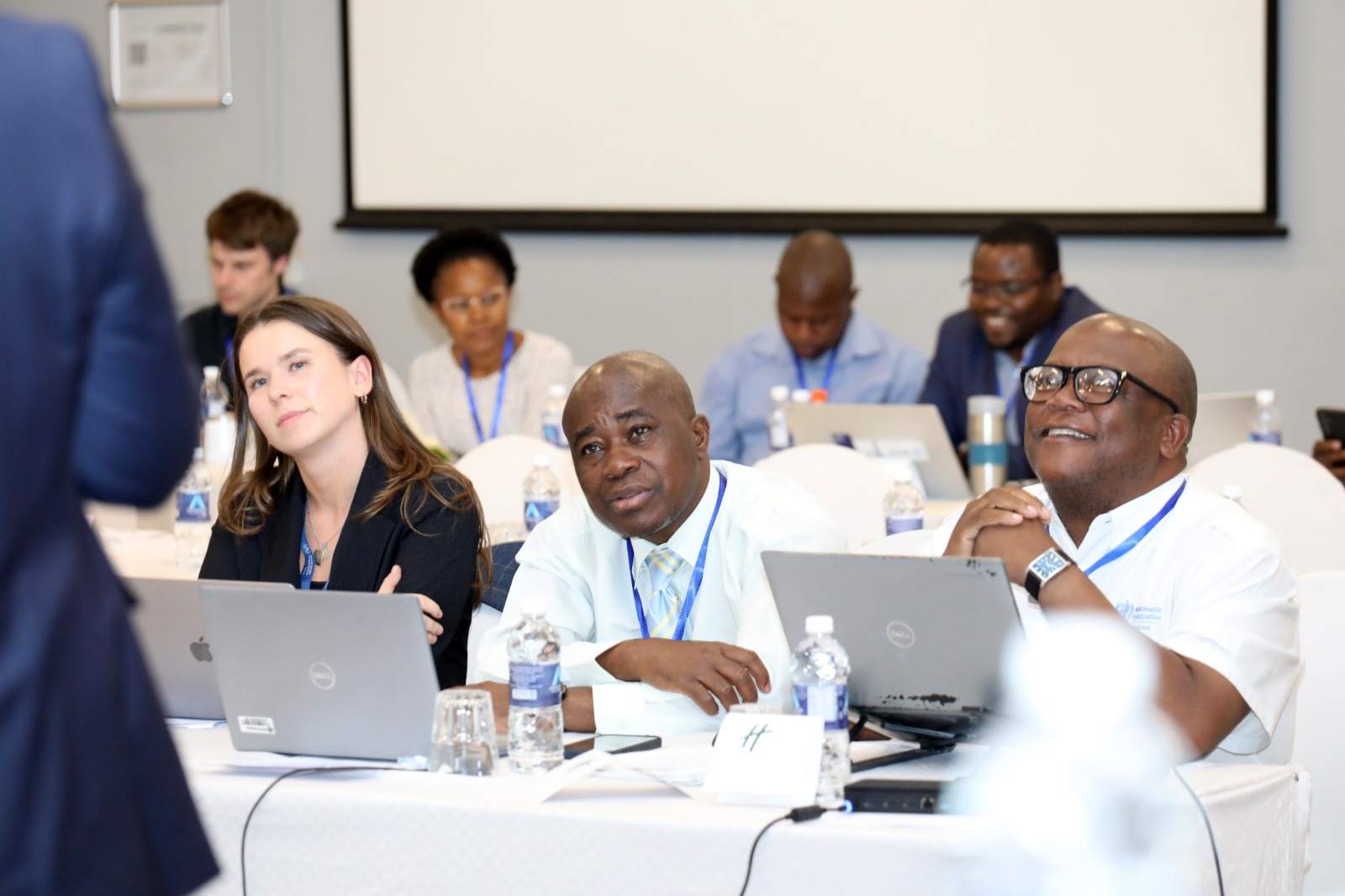
Speaking
at
the
event,
the
WHO
Representative
to
Zimbabwe, Dr.
Desta
Tiruneh,
emphasized
the
institute’s
critical
role:
“A
functional
National
Public
Health
Institute
is
not
a
luxury,
it
is
a
necessity
for
delivering
Universal
Health
Coverage
and
safeguarding
future
generations.”
And
added
“PHIZ
is
more
than
an
institution.
It
is
a
safeguard
for
the
nation.
It
is
a
symbol
of
preparedness.
It
is
an
investment
in
the
future
of
Zimbabwe.”
The
Minister
of
Health
reaffirmed
the
Government’s
vision
of
a
healthy,
resilient,
and
productive
population,
emphasizing
that
a
strong
public
health
institute
is
foundational
to
achieving Zimbabwe’s
Vision
2030 of
becoming
an
upper-middle-income
economy.
Learning
from
the
Region
Shortly
after
the
Steering
Committee
inauguration,
a
high-level
delegation
from
Zimbabwe
conducted
a learning
visit
to
the
Zambia
National
Public
Health
Institute
(ZNPHI) from
15
to
17
December
2025.
The
visit
allowed
Zimbabwean
health
officials
to
gain
practical
insights
on
governance
structures,
laboratory
systems,
operational
models,
and
multi-sectoral
coordination.
This
exchange
underscored
the
value
of
regional
collaboration,
enabling
Zimbabwe
to
adopt
best
practices
and
strengthen
its
public
health
infrastructure
within
a
broader
Southern
African
context.
PHIZ
Today:
A
Centre
for
Public
Health
Excellence
The
PHIZ
now
serves
as
Zimbabwe’s
nerve
center
for
public
health,
consolidating
functions
previously
scattered
across
different
government
units.
It
generates
timely
and
reliable
data,
coordinates
multi-sectoral
actions,
strengthens
emergency
preparedness,
and
promotes
scientific
excellence.
By
doing
so,
Zimbabwe
is
safeguarding
its
population
from
immediate
health
threats
while
laying the
foundation
for
long-term
health
security and Universal
Health
Coverage
(UHC).
From
conception
to
launch,
through
governance
structuring
and
regional
learning,
the
PHIZ
embodies
Zimbabwe’s
ambition,
resilience,
and
readiness
to
lead
in
public
health.
With
strong
national
leadership
and
committed
partners
including
WHO,
the
European
Union,
and
other
stakeholders,
PHIZ
stands
as
a
beacon
of
innovation,
preparedness,
and
scientific
excellence.
Its
establishment
is
a
commendable
example
of
political
commitment,
technical
leadership,
and
partnership-driven
health
system
strengthening,
charting
a
path
toward
a
healthier,
more
secure
future
for
all
Zimbabweans.
WHO
calls
upon
other
partners
to
support
the
PHIZ
and
rally
behind
this
transformative
national
vision
and
strategic
reform
in
the
health
sector.
The
report,
detailing
the
performance
of
the
country’s
12
direct
life
assurers,
shows
the
industry
is
dominated
by
a
few
key
products
and
players,
raising
concerns
about
market
concentration
and
consumer
protection.
Direct
life
insurers
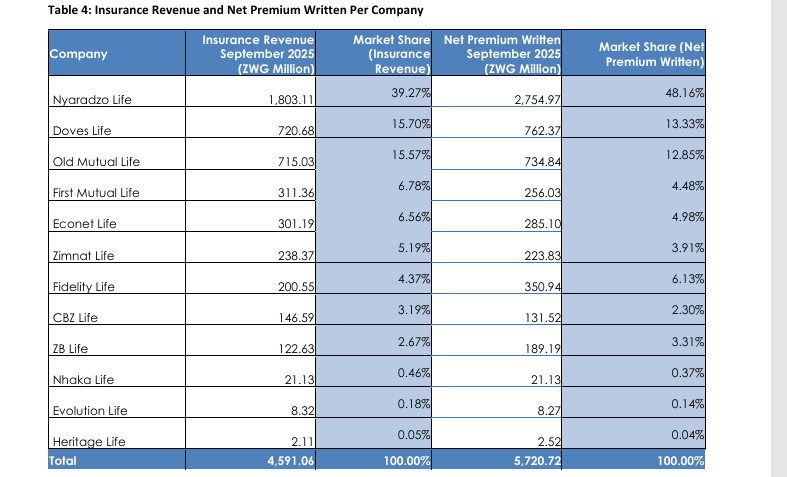
generated
total
insurance
revenue
of
ZWG4.59
billion,
approximately
US$172.05
million,
a
39
percent
increase
from
the
US$123.77
million
recorded
in
the
same
period
in
2024.
However,
this
revenue
is
heavily
concentrated.
Foreign
currency-denominated
revenue
accounted
for
55
percent
of
total
insurance
income,
down
seven
percent
from
the
previous
period’s
62
percent,
mainly
due
to
exchange
rate
stability.
“Heritage
Life
and
Nhaka
Life
failed
to
submit
their
mandatory
foreign
currency
reports.
The
Commission
urges
industry
players
to
submit
all
required
reports
on
time
to
avoid
regulatory
sanctions.”
Funeral
assurance
and
group
life
assurance
continued
to
be
the
primary
sources
of
income
for
the
life
insurance
sector,
together
accounting
for
82
percent
of
the
total
revenue.
The
share
of
revenue
generated
from
funeral
assurance
and
group
life
assurance
is
steadily
rising,
affecting
the
market
share
of
traditional
life
assurance
products.
IPEC
noted
that
a
“notable
trend
in
the
life
insurance
industry
is
the
shift
from
traditional
long
term
products
towards
predominantly
renewable
annual
policies.”
This
change
is
especially
clear
in
funeral
assurance
and
group
life
assurance
policies
currently
available.
This
practice
raises
regulatory
concerns
about
its
compliance
with
the
Funeral
Directive’s
objectives,
particularly
regarding
the
level
of
policyholder
protection,”
read
the
report.
As
a
result,
the
industry
is
strongly
encouraged
to
strictly
follow
the
rules
set
out
in
the
Funeral
Directive.
“Nyaradzo
Life
Assurance
Company
holds
the
leading
position
in
the
life
assurance
sector
with
a
39.27
percent
market
share,
largely
driven
by
its
predominant
revenue
from
funeral
assurance
policies,”
the
report
states.
The
total
revenue
of
the
top
five
companies
in
the
sector
reached
ZWG3.85
billion,
equivalent
to
US$144.33
million.
These
top
five
companies
collectively
account
for
84
percent
of
the
sector’s
total
revenue,
indicating
a
“moderately
concentrated
market.”
The
sector’s
product
mix
remains
narrow,
with
traditional
long-term
products
losing
ground.
“Funeral
assurance
remains
the
main
driver
of
the
life
assurance
sector,
representing
68.04
percent
of
total
revenue.
Group
life
assurance
is
the
second-largest
segment,
making
up
14.27
percent
of
total
revenue,”
the
report
notes.
This
concentration
raises
regulatory
concerns,
with
IPEC
highlighting
“a
notable
trend
in
the
life
insurance
industry
is
the
shift
from
traditional
long-term
products
towards
predominantly
renewable
annual
policies.
“This
change
is
especially
clear
in
funeral
assurance
and
group
life
assurance
policies
currently
available.
This
practice
raises
regulatory
concerns
about
its
compliance
with
the
Funeral
Directive’s
objectives,
particularly
regarding
the
level
of
policyholder
protection.”
A
significant
concern
for
the
regulator
is
the
high
number
of
policies
that
are
sold
but
ultimately
not
activated
by
customers.
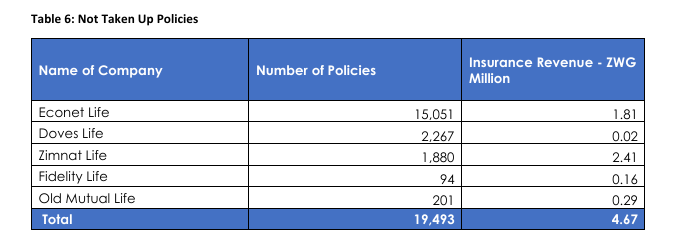
During
the
quarter,
the
sector
reported
19,493
Not
Taken
Up
(NTU)
policies,
leading
to
a
loss
of
projected
revenue
of
ZWG4.67
million.
The
report
singles
out
specific
companies
for
scrutiny
–
Econet
Life,
Doves
Life,
and
Zimnat
Life,
Fidelity
Life
and
Old
Mutual
Life,
which
are
strongly
advised
to
promptly
initiate
an
investigation
into
the
underlying
causes
of
their
high
NTU
rates.
“This
may
include
conducting
surveys
to
identify
specific
issues
such
as
affordability,
poor
product
understanding,
or
dissatisfaction
with
the
onboarding
process.”
IPEC
further
warns
that
“life
assurers
are
encouraged
to
closely
monitor
how
agents
present
their
products
to
potential
clients
to
prevent
misrepresentation.”
The
sector
also
continues
to
struggle
with
policies
lapsing
after
sale.
It
started
the
third
quarter
with
2
122
824
active
policies,
of
which
97
111
lapsed,
resulting
in
a
lapse
ratio
of
4.57
percent.
“Policy
lapses
are
mainly
attributed
to
affordability
issues
and
changes
in
policyholders’
circumstances,”
the
report
finds.
It
urges
insurers
to
maintain
“proactive
and
effective
communication
with
policyholders
before
lapses.”
One
company,
Nhaka
Life,
reported
an
alarmingly
high
lapse
ratio
of
27.59
percent.
“It
is
strongly
recommended
that
Nhaka
Life
conduct
detailed
experience
analyses
to
identify
the
main
reasons
for
these
elevated
lapse
rates,”
IPEC
advises,
urging
the
company
to
“craft
and
execute
targeted,
data-driven
strategies
to
lower
lapse
rates
and
enhance
policyholder
retention.”
The
report
concludes
that
the
sector’s
over-reliance
on
funeral
assurance
is
unsustainable
for
long-term
growth,
calling
for
strategic
innovation
and
diversification
to
rebuild
public
trust
and
ensure
the
industry’s
future
relevance.
Bulawayo
National
AIDS
Council
(NAC)
Programmes
Officer,
Douglas
Moyo
said
the
city
was
witnessing
patterns
that
pointed
to
persistent
risky
sexual
behaviour,
weak
behaviour
change,
and
heightened
vulnerability
to
HIV
infection.
Moyo
said
STIs
remained
a
critical
public
health
issue
because
of
their
direct
link
to
HIV
transmission.
“The
topical
issue
now
of
sexually
transmitted
infections
STIs.
HIV
is
transmitted
easily
when
one
has
a
sexually
transmitted
infection.
Why?
Because
sexually
transmitted
infections
would
provide
easy
passage
through
the
breaking
of
the
skin.
Such
that
there
is
an
easy
entry,”
he
said
to
the
media
recently
while
giving
the
latest
Bulawayo
HIV
Programmes
Update.
Moyo
explained
that
infections
such
as
syphilis,
gonorrhoea
and
chlamydia
significantly
increase
susceptibility
to
HIV
and
act
as
markers
of
high-risk
sexual
behaviour.
“If
you
walk
into
any
health
facility,
be
it
a
private
doctor
or
a
clinic
with
an
STI.
This
is
clear
evidence
that
‘here
is
somebody
who
exposed
themselves
through
having
condomless
sex
or
who
had
an
accident
somehow
during
the
sexual
encounter,’”
Moyo
said.
Drawing
parallels
with
pregnancy,
Moyo
said
STIs
and
PMTCT
data
both
point
to
unprotected
sex.
“Just
like
somebody
who
walks
into
a
facility,
they
are
pregnant,
it’s
evidence
that
they
had
unprotected
sex,
isn’t
it?
Because
there
is
no
way
they
could
get
pregnant
if
they
were
protected.
So
those
two,
PMDCT
and
STI,
are
key
evidence
of
unprotected
sexual
intercourse.
But
the
one
that
we
are
most
worried
about
is
this
one
-Sexually
transmitted
infections,”
he
said.
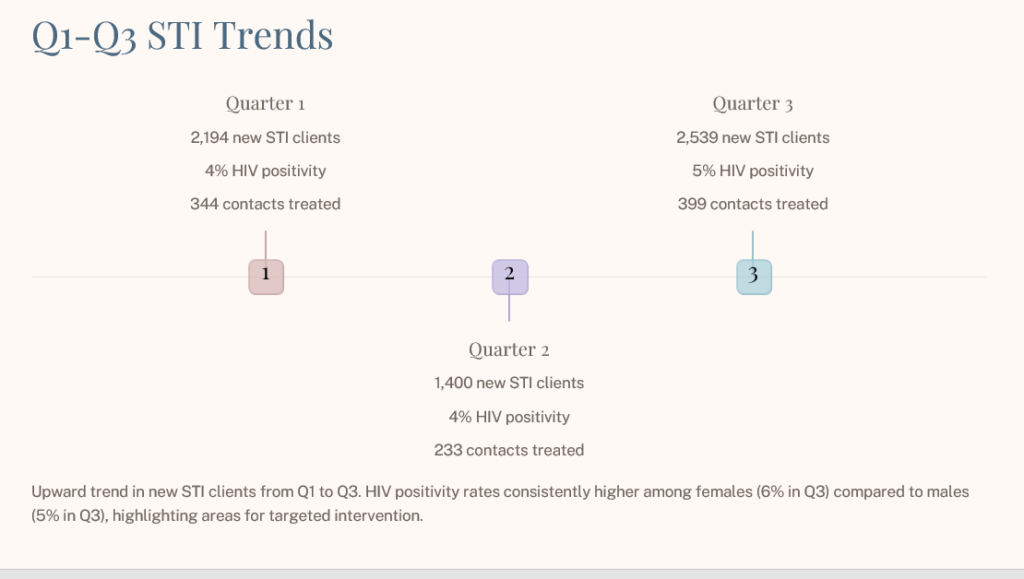
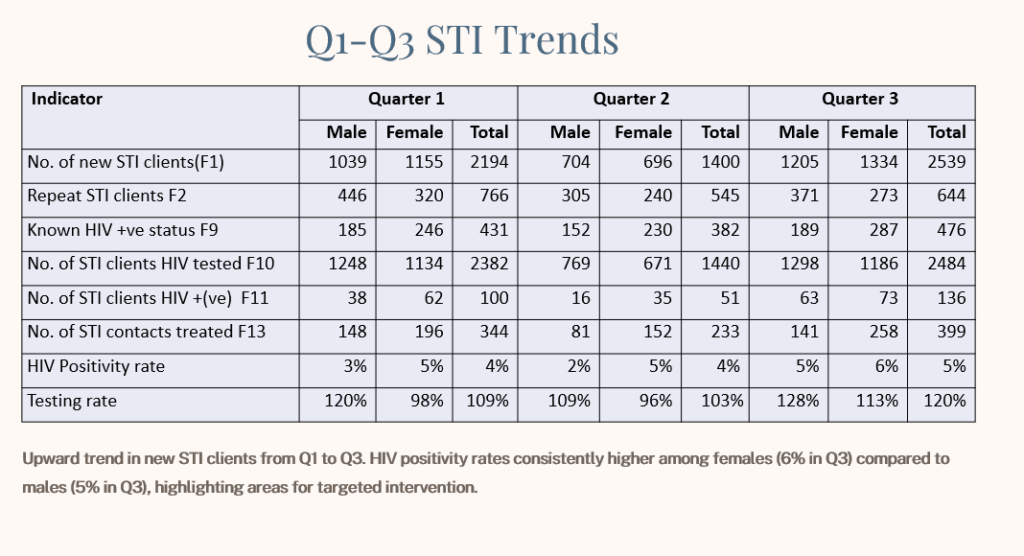
Data
from
the
first
three
quarters
of
the
year
shows
a
troubling
upward
trend.
In
the
first
quarter
alone,
Bulawayo
recorded
2
194
new
STI
cases.
“Look
at
the
trend.
Look
at
what
happened
in
the
first
quarter.
Quarter
one,
we
had
2
194
new
cases
underline
the
word
new
and
a
quarter
has
only
three
months.
In
just
three
months,
we
recorded
2
194
STI
cases,”
Moyo
said.
He
said
all
STI
patients
are
routinely
tested
for
HIV,
with
the
data
revealing
persistent
HIV
positivity
among
those
presenting
with
STIs.
“And
then
the
management
protocol
now
for
STIs
is
that
anyone
who
presents
with
an
STI
should
be
tested
for
HIV.
then
we
can
see
the
positivity
rate
was
4
percent,”
he
said.
Although
the
number
of
new
STI
cases
declined
in
the
second
quarter
to
about
1
400,
Moyo
cautioned
against
celebrating
the
drop
without
deeper
analysis.
“Quarter
two,
the
number
declined.
But
that
decline
needs
to
be
investigated,
to
say,
was
it
a
genuine
or
real
decline,
or
is
there
something
that
happened
with
the
data
capturing?
Because
a
decline
from
that
to
that,
yeah,
we
need
to
find
out,”
he
said.
“We
need
to
find
reasons
if
there
were
programmes,
awareness
sessions,
or
activities
that
resulted
in
that
decline.
We
need
to
find
out
and
celebrate
those
approaches
because
they
did
wonders
but
look
at
the
positivity
rate,
again,
it
remained
at
four
percent
HIV
positivity
in
the
second
quarter
and
we
are
talking
about
new
cases.”
By
the
third
quarter,
new
STI
cases
had
surged
again
to
2
539,
reinforcing
concerns
that
Bulawayo
was
not
making
sustained
progress.
“Then
look
at
the
last
quarter,
which
is
now,
the
previous
quarter,
the
quarter
three.
We
had
2
539
new
STI
cases,”
Moyo
said.
Moyo
said
when
the
first
and
third
quarters
are
compared,
the
overall
direction
is
clearly
upward.
“When
you
look
at
the
trend,
if
we
are
making
any
progress,
look
at
the
number
in
quarter
one
and
compare
it
with
quarter
three,
it’s
going
up.
Don’t
worry
about
the
decline
in
the
second
quarter.
If
you
were
to
draw
a
trend
line
of
a
graph,
it
would
be
going
up,”
he
said.
“So
if
you
were
to
draw
a
trend
line
from
there,
it
would
go
down
and
then
shoot
up
like
that.
That
is
a
cause
for
concern,”
Moyo
added.
He
stressed
that
STI
cases
also
signal
active
sexual
networks,
increasing
the
risk
of
wider
HIV
transmission.
“Remember,
for
anyone
who
presents
with
a
sexually
transmitted
infection,
it’s
clear
evidence
that
they’re
in
a
sexual
network.
How
wide
that
sexual
network
is,
no
one
knows,”
he
said.
“So
it
is
a
cause
for
concern
if
we
continue
to
get
2
539
new
cases
by
the
end
of
last
quarter,”
Moyo
said.
Moyo
said
the
persistently
high
HIV
positivity
rates
among
STI
patients
show
that
HIV
remains
a
serious
threat.
“Somebody
asked
a
question
in
one
of
the
groups
that
is
HIV
still
a
threat?
I
think
this
is
evidence
to
show
that
HIV
is
still
a
threat.
If
you
can
have
a
positive
rate
of
four
percent
and
it
goes
up
to
five
percent,”
he
said.
He
said
fourth-quarter
data
was
still
being
compiled
and
analysed.
“We
are
yet
to
analyse
data
for
the
fourth
quarter
because
the
year
has
not
ended.
December,
I
think,
we
are
finishing
our
data
collection
next
week.
This
is
when
we
will
analyse
and
see
what
this
data
is
going
to
show
us
in
the
fourth
quarter,”
Moyo
said.
Beyond
new
infections,
Moyo
said
repeat
STI
cases
were
one
of
the
most
troubling
indicators,
showing
limited
behaviour
change.
“Look
at
the
repeat
STIs,
which
is
a
cause
for
concern.
When
we
talk
about
the
repeat,
we
are
talking
about
those
people
who
are
presenting
to
a
facility,
not
for
the
first
time
at
the
STI,”
he
said.
Among
males,
repeat
infections
remained
high
across
all
three
quarters.
“For
males,
I
mean
in
the
first
quarter
we
had
766
repeat
cases.
In
the
second
quarter
we
had
545.
And
then
in
the
third
quarter,
644
repeat
STIs,
which
show
that
people
are
not
changing
their
behaviour,”
Moyo
said.
He
said
repeat
infections
often
result
from
failure
to
treat
sexual
partners
and
poor
communication
within
relationships.
“A
change
of
behaviour
could
mean
that
you
have
an
STI.
You
have
challenges
or
fears
of
approaching
your
significant
other.
You
go
and
seek
treatment
clandestinely
or
privately,
you
get
treated.
But
then
you
come
back
and
get
re-infected
from
the
same
partner
because
you
didn’t
discuss
these
issues,”
he
said.
Moyo
emphasised
the
importance
of
partner
notification
and
contact
tracing.
“So
when
it
comes
to
STIs,
it
is
very
important
for
sexual
partners
to
be
treated.
Hence
that
programme
of
tracing
the
contact,”
he
said.
He
said
tracing
sexual
networks
is
critical
to
breaking
cycles
of
reinfection.
“Then
the
sexual
partner
will
be
followed
up.
Then
that
other
partner
will
be
asked
‘who
is
your
other
sexual
partner.’
So
the
whole
network
should
be
followed
up
and
be
brought
to
treatment,”
Moyo
said.
The
high
number
of
repeat
cases,
he
said,
points
to
persistent
risk-taking
and
low
self-perceived
vulnerability.
“So
the
repeat
cases,
the
repeats
are
a
challenge.
They
are
showing
us
that
some
people
are
not
changing
their
behaviour.
Some
people
still
don’t
perceive
themselves
as
at
risk
of
infection,”
he
said.
Moyo
warned
that
this
behaviour
significantly
increases
the
risk
of
HIV
transmission.
“So
if
they
can
get
repeat
STI
cases,
what
about
the
exposure
or
the
risk
of
contracting
HIV?
It
is
heightened
isn’t
it?”
he
said.
Bulawayo
Provincial
Police
Spokesperson,
Inspector
Nomalanga
Msebele,
said
the
first
murder
incident
occurred
on
December
22,
2025
at
around
7:40pm
near
the
corner
of
8th
Avenue
Extension
and
Lobengula
Street,
adjacent
to
the
Manor
Hotel
durawall.
“A
male
adult
aged
25
of
Ross
Camp,
Bulawayo
was
on
his
way
home
when
he
was
notified
by
a
passerby
that
there
was
a
male
adult
lying
in
the
middle
of
the
road
at
corner
8th
Avenue
extension
and
Lobengula
Street
adjacent
to
Manor
Hotel
durawall
bleeding
profusely,”
she
said.
“The
male
adult
tried
to
render
first
aid
but
unfortunately
the
now
deceased
passed
on
before
the
arrival
of
the
ambulance
personnel.”
Inspector
Msebele
said
a
police
report
was
made,
the
police
found
the
now
deceased
lying
lifeless
with
a
stab
wound.
“The
deceased
was
putting
on
a
red
t-shirt,
white
striped
shirt,
black
jean
trousers,
black
cap,
white
vest
and
white
tennis
shoes.
The
body
was
conveyed
to
UBH
awaiting
post-mortem.”
In
a
separate
incident
on
the
same
day,
at
around
midday,
police
received
a
report
concerning
the
death
of
a
herd
boy
identified
as
Agrippa
Ncube,
aged
38,
of
Methodist
Village.
“At
around
1200
hours
a
male
adult
aged
46
of
Gwabalanda
received
a
phone
call
to
the
effect
that
the
now
deceased
who
was
employed
as
their
herd
boy
Agrippa
Ncube
a
male
adult
aged
38
of
Methodist
Village
was
seen
lying
lifeless
in
a
bushy
area
between
Methodist
Village
and
Magwegwe
North,
Bulawayo,”
she
said.
Inspector
Msebele
said
a
police
report
was
made.
“The
now
deceased
was
found
lying
near
a
foot
path
in
a
bushy
area
with
a
deep
cut
on
the
left
side
of
the
head,
above
the
left
eye,”
she
said
.
She
said
investigations
revealed
that
the
now
deceased
had
a
misunderstanding
with
an
unknown
male
adult
over
the
boundary
of
grazing
land.
“The
two
were
refrained
and
they
went
their
separate
ways,
with
the
now
deceased
going
to
check
for
some
of
his
cattle
in
a
nearby
bushy
area
and
was
later
on
found
dead.
The
body
was
conveyed
to
United
Bulawayo
Hospitals
mortuary
for
post
mortem.”
Meanwhile,
police
are
also
investigating
an
attempted
murder
case
that
occurred
on
December
21,
2025
at
around
10:00pm
in
Emganwini
Inspector
Msebele
said
a
24-year-old
vendor
from
Mbundane
was
at
Emganwini
Shops
with
his
22-year-old
younger
brother
when
they
were
approached
by
two
suspects
who
disembarked
from
a
vehicle
and
purchased
drinks
and
cigarettes
“A
misunderstanding
arose
over
the
issue
of
change.
One
of
the
accused
persons
hit
the
elder
brother
with
a
brick
once
on
the
head
and
he
fell.
His
young
brother
intervened
to
rescue
his
brother
and
was
stabbed
with
an
unknown
sharp
object
once
on
the
left
side
of
the
ribs
and
once
on
the
right
side
of
the
stomach.
The
two
accused
persons
embarked
their
vehicle
and
drove
away.
A
police
report
was
made,”
she
said.
Inspector
Msebele
urged
members
of
the
public
not
to
take
the
law
into
their
own
hands
but
try
to
find
amicable
ways
of
solving
their
disputes
as
resorting
to
violence
leads
to
unnecessary
loss
of
lives.
“Anyone
with
a
missing
relative
matching
the
above
description
to
visit
ZRP
Bulawayo
Central
or
any
nearest
police
station
for
body
identification.
On
attempted
murder
cases
we
appeal
to
anyone
with
information
that
may
lead
to
the
arrest
of
the
accused
persons
to
come
forward,”
she
said.
Claudette
Irere,
the
Minister
of
State
for
Education
addresses
new
Zimbabwean
Teachers
Speaking
during
the
official
induction
of
the
second
cohort
of
Zimbabwean
teachers,
Irere
said
early
assessments
indicate
notable
progress
in
learners’
confidence
and
competence
in
English,
despite
the
programme
still
being
in
its
early
stages.
Some
of
the
new
Zimbabwean
teachers
during
the
official
induction
of
the
second
cohort.
Courtesy
“Ordinarily,
comprehensive
results
of
such
programmes
are
evaluated
after
six
years.
However,
although
the
first
cohort
has
only
been
in
Rwanda
for
two
years,
our
visits
and
assessments
already
show
encouraging
improvements
in
English
language
skills,
especially
among
students
in
Teachers
Training
Colleges
(TTCs),
who
are
future
educators
themselves,”
she
said.
The
induction
marked
preparations
for
the
deployment
of
143
specialist
educators
from
Zimbabwe,
who
arrived
in
Kigali
on
Sunday,
December
21.
They
will
join
the
first
cohort
of
154
teachers
dispatched
three
years
ago
under
a
Memorandum
of
Understanding
(MoU)
between
Rwanda
and
Zimbabwe.
The
MoU,
signed
in
December
2021,
provides
for
the
exchange
of
skilled
professionals
in
critical
sectors,
including
education,
health,
and
information
and
communication
technologies,
as
part
of
broader
cooperation
efforts.
Addressing
the
gathering,
Irere
described
the
induction
as
a
reflection
of
the
strong
partnership
between
the
two
countries,
held
under
the
theme
“Cooperation
for
Enhancing
Quality
Education.”
“This
theme
perfectly
encapsulates
the
spirit
of
partnership
and
shared
responsibility
that
unites
us,”
she
said,
commending
both
governments
for
their
commitment
to
strengthening
education
systems
for
the
benefit
of
learners.
She
emphasized
that
the
presence
of
both
the
first
and
second
cohorts
at
the
induction
was
particularly
meaningful,
as
it
creates
opportunities
for
mentorship,
sharing
of
experiences,
and
continuity.
“I
commend
the
teachers
from
the
first
cohort
for
their
dedication
and
professionalism,
and
I
encourage
the
new
arrivals
to
draw
from
their
experiences
as
you
integrate
into
your
respective
institutions,”
she
added.
Irere
also
reminded
the
teachers
that
Rwanda’s
education
system
places
high
value
on
professionalism,
accountability,
ethical
conduct,
and
learner-centred
pedagogy,
urging
them
to
work
collaboratively
with
local
educators
and
institutional
leaders.
Representing
the
first
cohort,
George
Mandhlazi
reaffirmed
their
commitment
to
delivering
quality
education
in
line
with
the
MoU,
adding
that
the
new
teachers
would
build
on
the
strong
foundation
already
established.
He
noted
that
the
programme
is
guided
by
nine
resolutions
under
the
MoU
signed
in
2021,
stressing
that
the
teachers
are
in
Rwanda
to
deliver
meaningful
impact.
One
of
the
representatives
of
the
second
cohort,
Mandindo
Wadzanai,
described
the
opportunity
to
teach
in
Rwanda
as
both
an
honour
and
a
responsibility.
“This
is
a
great
opportunity;
one
that
many
teachers
aspire
to.
We
are
going
to
work
very
hard,
demonstrate
our
competence,
and
bring
new
ideas
from
the
education
system
we
come
from,”
she
said.
Another
teacher,
Dhliwayo
Emmanuel,
paid
tribute
to
the
first
cohort,
crediting
their
professionalism
for
paving
the
way
for
the
second
group.
“If
it
were
not
for
your
hard
work,
intelligence,
and
competence,
this
second
cohort
would
not
be
here.
You
made
us
proud,”
he
said.
He
also
thanked
the
Zimbabwean
government
for
supporting
regional
cooperation,
describing
the
programme
as
a
demonstration
of
Pan-African
solidarity.
“In
Africa,
we
are
one.
Together,
Rwanda
and
Zimbabwe,
and
Africa
as
a
whole,
can
change
lives
through
education,”
he
said.