Former
Hogan
&
Lovells
partner
turned
White
House attorney Ty
Cobb
is
back
to
calling
out
Donald
Trump.
Sure,
the
current cable
news
circuit regular
left
the
hallowed
halls
of
Biglaw
to
join
the
first
Trump
administration,
but
he
quickly
left.
Since
then
he
—
and
his
signature
mustache
—
have
been
a
thorn
in
the
side
of
Trump
with
a folksy way
of cutting
through
the right-wing
BS.
Appearing
on
MS
NOW
this
weekend,
Cobb
took
aim
at
someone
besides
the
president.
Well,
to
be
fair,
he
*did*
call
the
president
“evil”
and
his
attacks
against
the
judiciary
“one
of
the
greatest
threats
to
our
democracy
at
this
stage
of
the
game,”
but
he
reserved
a
good
bit
of
his
ire
for
the
“neutered”
Congress!
Cobb
noted
that
Trump
“dictates
everything”
House
Speaker
Mike
Johnson
(R-La.)
does.
“That’s
tragic
because
the
way
the
Constitution
is
designed,
Congress,
not
the
courts,
were
deemed
to
be
the
first
wave
of
resistance
to
an
evil
president,”
said
Cobb.
Now
that
Congress
“handed
[Congressional
power]
to
Trump
in
a
basket
with
a
bow
on
it,
which
is
dangerous,”
it
is
up
to
the
courts
to
stop
a
unitary
executive.
“The
courts
don’t
have
the
ability
to
say
what’s
best
for
America.
They
can’t
look
at
a
case
that
way,”
said
Cobb.
“They
have
to
say
what
does
the
Constitution
require,
and
the
Constitution
really
is
not
adequate
to
deal
with
a
president
as
evil
as
Trump
is,
somebody
whose
desire
is
to
accumulate
and
abuse
power.”
By
“denigrating
the
judiciary,
Trump
is
basically
trying
to
weaken
one
of
the
only
remaining
pillar
that
is
standing
up
to
prevent
the
total
authoritarianism
that
he
desires,”
Cobb
said.
“And
that
war
is
very
dangerous
for
us
all.
We
need
a
very
strong
judiciary,
particularly
at
this
time,
where
the
constitutional
stresses
are
extreme
and
Trump’s
abuses
of
power
are
unprecedented.”
Watch
the
full
interview
below.
Kathryn
Rubino
is
a
Senior
Editor
at
Above
the
Law,
host
of
The
Jabot
podcast,
and
co-host
of
Thinking
Like
A
Lawyer.
AtL
tipsters
are
the
best,
so
please
connect
with
her.
Feel
free
to
email
her
with
any
tips,
questions,
or
comments
and
follow
her
on
Twitter
@Kathryn1 or
Mastodon
@[email protected].
Simpson
Thacher
is
about
to
give
their
employees
a
reason
to
be
thankful.
After
grossing
$2,896,282,000
in
2024,
the
Biglaw
firm
is
doing
the
right
thing
and
sharing
some
of
the
profits
to
reward
associates
for
their
hard
work.
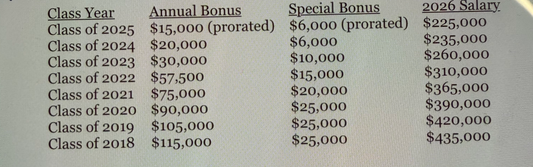
Here’s
the
scale:
To
everyone
at
Simpson
Thacher,
enjoy
the
money.
With
the
extra
cash,
you
could
invest
a
little
more
into
this
year’s
Turkey
day.
According
to
our
tipster’s
email,
you
should
expect
to
see
the
money
come
your
way
by
the
end
of
December.
We
like
hearing
about
bonuses
almost
as
much
as
you
enjoy
spending
them.
As
soon
as
your
firm’s
memo
comes
out,
please email
it
to
us
(subject
line:
“[Firm
Name]
Bonus”)
or
text
us
(646-820-8477).
Please
include
the
memo
if
available.
You
can
take
a
photo
of
the
memo
and
send
it
via
text
or
email
if
you
don’t
want
to
forward
the
original
PDF
or
Word
file.
And
if
you’d
like
to
sign
up
for
ATL’s
Salary
&
Bonus
Alerts,
please
scroll
down
and
enter
your
email
address
in
the
box
below
this
post.
If
you
previously
signed
up
for
the
bonus
alerts,
you
don’t
need
to
do
anything.
You’ll
receive
an
email
notification
within
minutes
of
each
bonus
announcement
that
we
publish.
Chris
Williams
became
a
social
media
manager
and
assistant
editor
for
Above
the
Law
in
June
2021.
Prior
to
joining
the
staff,
he
moonlighted
as
a
minor
Memelord™
in
the
Facebook
group Law
School
Memes
for
Edgy
T14s
.
He
endured
Missouri
long
enough
to
graduate
from
Washington
University
in
St.
Louis
School
of
Law.
He
is
a
former
boatbuilder
who
is
learning
to
swim, is
interested
in
critical
race
theory,
philosophy,
and
humor,
and
has
a
love
for
cycling
that
occasionally
annoys
his
peers.
You
can
reach
him
by
email
at [email protected]
and
by
tweet
at @WritesForRent.
Cravath
may
have
been
the
first
in
Biglaw
to
announce
their
year-end
bonuses,
but
they’re
not
the
only
compensation
heavies!
Spectators
were
waiting
to
what
a
comp
leader,
like
Milbank,
would
do
now
that
bonus
season
has
officially
arrived.
You’ll
recall
Milbank
led
the
charge
on
2025
special
bonuses
(paying
them
to
associates
in
September),
so
would
they
lead
again
at
year-end
or
just
play
follow
the
leader?
Well,
we
have
our
answer.
Today,
Milbank
announced
year-end
bonuses
and
they
are
a
match
of
the
industry
standard
numbers.
The
bonus
scale
is
as
follows:
The
bonuses
will
be
paid
on
December
31st.
Congratulations
to
associates
on
your
bonuses.
Read
the
full
memo
below.
So,
is
your
firm
matching
*both*
the
year-end
and
special
bonuses?
Let
Above
the
Law
know!
We
depend
on
your
tips
to
stay
on
top
of
important
bonus
updates,
so
when
your
firm
matches
(or
if
they
fail
to
do
so),
please
text
us
(646-820-8477)
or email
us (subject
line:
“[Firm
Name]
Matches”).
Please
include
the
memo,
if
available.
You
can
take
a
photo
of
the
memo
and
send
it
via
text
or
email
if
you
don’t
want
to
forward
the
original
PDF
or
Word
file.
Kathryn
Rubino
is
a
Senior
Editor
at
Above
the
Law,
host
of
The
Jabot
podcast,
and
co-host
of
Thinking
Like
A
Lawyer.
AtL
tipsters
are
the
best,
so
please
connect
with
her.
Feel
free
to
email
her
with
any
tips,
questions,
or
comments
and
follow
her
on
Twitter
@Kathryn1 or
Mastodon
@[email protected].
Well,
well,
well
if
it
isn’t
the
logical
and
natural
consequences
of
this
administration’s
actions!
After
playing
musical
chairs
with
the
Eastern
District
of
Virginia’s
U.S.
Attorney’s
Office
to
find
someone
—
anyone
—
with
a
pulse
and
a
JD
willing
to
file
frivolous
criminal
cases
against
former
FBI
Director
James
Comey
and
current
NY
Attorney
General
Letitia
James,
the
Trump
administration
braintrust
landed
on
insurance
lawyer
Lindsey
Halligan.
Fast
forward
to
today,
with
Judge
Cameron
McGowan
Currie
tossing
the
prosecutions
against
both
Comey
and
James
without
prejudice
after
deciding
that
Halligan’s
attempt
to
squat
in
the
office
was
long
on
vibes
and
short
on
“legal
support.”
Judge
Currie,
the
South
Carolina
senior
judge
brought
in
specifically
to
handle
the
disqualification
motion
declared
“The
Attorney
General’s
attempt
to
install
Ms.
Halligan
as
Interim
U.S.
Attorney
for
the
Eastern
District
of
Virginia
was
invalid,”
noting
that
the
120-day
limit
on
an
interim
U.S.
Attorney
appointment
had
lapsed
before
Halligan
even
got
her
crayon-engraved
invitation.
Attorney
General
Pam
Bondi’s
galaxy
brained
argument
that
the
administration
should
be
allowed
to
keep
shuffling
120-day
appointments
indefinitely,
ran
aground
with
Judge
Currie
who
pointed
out
that
this
would
allow
the
administration
“to
evade
the
Senate
confirmation
process
indefinitely
by
stacking
successive
120-day
appointments.”
…the
Attorney
General
“could
not
have
authorized”
Ms.
Halligan,
who
was
not
an
attorney
for
the
Government
at
the
time,
to
present
Ms.
James’s
indictment
to
the
grand
jury
on
October
9….
The
implications
of
a
contrary
conclusion
are
extraordinary.
It
would
mean
the
Government
could
send
any
private
citizen
off
the
street
—
attorney
or
not
—
into
the
grand
jury
room
to
secure
an
indictment
so
long
as
the
Attorney
General
gives
her
approval
after
the
fact.
That
cannot
be
the
law.
Halligan
went
one
better
than
“attorney
or
not,”
by
arriving
on
the
“job”
as
an
insurance
lawyer
from
Florida
with
zero
prosecutorial
experience.
Though
the
“or
not”
might
well
have
brought
more
acumen
to
the
task,
since
Halligan’s
primary
accomplishment
since
she
began
cosplaying
as
a
U.S.
Attorney
involved
turning
in
a
fake
indictment
and
trying
to
weasel
out
of
that.
In
the
Comey
case,
a
flustercuck
from
jump,
this
dismissal
probably
concludes
the
whole
ill-conceived
crusade,
as
the
claims
against
his
supposed
false
statements
should
be
time-barred
absent
Pam
Bondi
securing
a
DeLorean
and
1.21
gigawatts.
So
until
this
DOJ
figures
out
how
to
transfigure
beachside
numerology
into
a
terror
plot,
Comey
should
be
in
the
clear.
If
the
DOJ
understood
that
discretion
is
the
better
part
of
valor
—
or
the
virtue
of
not
looking
a
gift
horse
in
the
mouth
—
or
whatever
your
chosen
folksy
saw
about
prudence,
they
would
take
this
off-ramp
to
drop
the
seemingly
weak
James
case
too.
In
such
a
case,
“the
proper
remedy
is
invalidation
of
the
ultra
vires
action[s]”
taken
by
the
actor.
United
States
v.
Trump,
740
F.
Supp.
3d
1245,
1302
(S.D.
Fla.
2024).
The
two
situations
differ
significantly.
Jack
Smith
was
appointed
under
28
U.S.C.
§
515,
which
specifically
authorizes
the
Attorney
General
to
retain
special
attorneys
to
“conduct
any
kind
of
legal
proceeding,
civil
or
criminal,
including
grand
jury
proceedings
and
proceedings
before
committing
magistrate
judges,
which
United
States
attorneys
are
authorized
by
law
to
conduct,
whether
or
not
he
is
a
resident
of
the
district
in
which
the
proceeding
is
brought.”
The
legality
of
Smith’s
role
is
backed
up
by
decades
upon
decades
of
precedent.
Halligan,
by
contrast,
was
theoretically
appointed
an
interim
U.S.
Attorney
and
28
U.S.C.
§
546
lays
out
a
clear
120-day
limit
on
that
job.
But
putting
the
substance
aside,
if
an
appointment
is
illegal,
the
right
remedy
is
tossing
the
case.
Choosing
Trump’s
literal
get
out
of
jail
free
card
from
Judge
Cannon
for
this
proposition
was
cheeky.
And
we
approve.
Sure,
becoming
an
ICE
agent
sounds
fun,
but
in
between
all
the
tear-gassing
of
clergy
and
shooting
pepper
balls
at
journalists,
the
job
involves
a
lot
of
pesky
paperwork.
I
mean,
the
government
simply
doesn’t
pay
enough
with
its
[checks
notes]
$50,000
signing
bonus,
25
percent
premium
pay,
and
$60,000
in
student
loan
repayment
to
justify
taking
20
minutes
to
write
a
book
report
about
breaking
someone’s
car
window!
After
a
long
day
of
pulling
guns
on
combat
veterans
and
telling
them,
“you’re
dead,
liberal,”
who
has
the
patience
to
sit
down
and
chronicle
these
events
just
because
it’s
the
quote-unquote
“law”?
Fear
not!
Just
fire
up
ChatGPT
and
tell
it
to
turn
its
statistically
significant
word
salad
powers
toward
turning
“picked
up
someone,
idk,
they
looked
vaguely
Mexicanish”
into
an
official,
if
probably
hallucinated,
report.
Because
this
administration
isn’t
just
about
breaking
the
law,
it’s
about
breaking
the
fundamental
concept
of
“effort.”
The
latest
installment
in
Judge
Sara
Ellis’s
seemingly
never-ending
mission
of
reading
the
riot
act
to
the
actual
riot
police,
arrived
as
a
233-page
opinion
that
reads
like
the
tutorial
level
for
a
role-reversed
Wolfenstein
game.
Judge
Ellis’s
account
of
the
Trump
administration’s
ongoing
experiment
with
turning
paramilitary
thugs
loose
on
Chicago
includes
body-cam
footage
contradicting
official
narratives,
false
testimony,
and
the
aforementioned
“agent
rolled
down
his
window,
pointed
a
handgun
out
of
it,
and
said
‘bang
bang’
followed
by
something
like
‘you’re
dead,
liberal.’”
Agents
claimed
protesters
threw
bikes
at
them
(footage
showed
agents
grabbing
and
throwing
the
bikes).
They
said
shields
had
nails
in
them
(footage
showed
cardboard).
They
identified
“Latin
Kings”
by
their
“maroon
hoodies”
(maroon
isn’t
a
Latin
King
color,
and
one
person
in
maroon
was
an
alderman).
The
Court
also
notes
that,
in
at
least
one
instance,
an
agent
asked
ChatGPT
to
compile
a
narrative
for
a
report
based
off
of
a
brief
sentence
about
an
encounter
and
several
images.
Whatever
qualms
one
might
harbor
about
AI-assisted
drafting,
there’s
a
difference
between
asking
a
language
model
to
“help
me
polish
this
memo”
and
and
“here’s
a
picture
and
six
words,
please
brainstorm
why
that
grandmother
shouldn’t
have
mouthed
off
like
that
if
she
didn’t
want
a
billy
club
to
the
solar
plexus.”
A
use-of-force
report
isn’t
a
diary
entry
from
the
front
to
be
read
like
a
“My
Dearest
Emily…”
letter
in
some
future
Ken
Burns
rip-off
documentary
about
the
Great
Siege
of
Michigan
Avenue.
It’s
evidence!
And
this
turns
it
all
into
constitutional
slop.
While
the
justice
system
gnashes
its
teeth
over
a
hallucinated
case
citation,
Trump’s
immigration
goons
have
urged
us
all
to
hold
their
figurative
beer.
To
the
extent
that
agents
use
ChatGPT
to
create
their
use
of
force
reports,
this
further
undermines
their
credibility
and
may
explain
the
inaccuracy
of
these
reports
when
viewed
in
light
of
the
BWC
[body-worn
camera]
footage.
Judge
Ellis
stakes
her
claim
to
the
2025
understatement
of
the
year
trophy.
A
cornerstone
of
America’s
looming
AI
crisis
is
everyone’s
unswerving
belief
that
AI
should
be
used
for
tasks
that
it
absolutely
cannot
perform.
At
the
top
of
the
tech
world,
this
fixation
drives
the
cash-hemorrhaging
effort
to
build
“general
intelligence,”
a
genuine
artificial
person
that
they
can
pretend
would’ve
dated
them
in
high
school.
While
researchers
in
China
are
building
smaller
models
capable
of
handling
the
mundane
writing
and
code
clean-up
tasks
that
AI
can
reliably
handle,
American
AI
companies
are
throwing
exponentially
increasing
resources
toward
diminishing
linear
gains
to
build
a
bot
that
could
achieve
the
private
equity
investor
wet
dream
of
an
economy
with
zero
actual
workers.
But
selling
this
vision
to
the
masses
requires
messianic
messaging
about
AI’s
“potential”
to
shoulder
burdens
that
it’s
incapable
of
shouldering.
AI
is
great
at
cleaning
up
a
run-on
sentence.
Not
so
good
at
coming
up
with
your
whole
motion
to
dismiss
from
scratch.
And
alarmingly,
unconstitutionally
terrible
at
producing
an
accurate
account
of
a
law
enforcement
incident
that
it
didn’t
see
based
off
a
one-sentence
prompt!
The
second
Trump
administration
thrives
upon
“weaponized
laziness.”
The
appointments
are
half-assed,
the
foreign
policy
is
half-assed,
and
the
transportation
policy
is
so
half-assed,
it’s
devolved
into
complaining
that
people
are
dressing
half-assed.
But
unlike
the
passengers
strolling
the
terminal
in
pajamas,
the
Trump
administration’s
half-assery
is
focused
on
the
most
mendacious,
cruel,
and
dangerous
short
cuts
to
life.
Into
this
cretinous
brew,
“ChatGPT
use-of-force
reports”
are
just
another
dog-bites-man
story.
And
in
this
metaphor,
the
dog
is
a
German
Shepherd
K-9
and
the
man
is
an
American
citizen
who
happened
to
be
standing
outside
Home
Depot
at
the
wrong
time.
Like
most
AI
errors,
the
fault
isn’t
with
the
technology,
but
with
the
professional
lapses
involved
in
misusing
it.
ChatGPT
wasn’t
the
one
brake-checking
civilians
to
cause
accidents
as
an
excuse
to
justify
force
or
calling
neighborhood
residents
in
Halloween
costumes
“professional
agitators.”
These
yahoos
ran
a
shoot-first-ask-questions-never
operation
before
ChatGPT
arrived
on
the
scene.
The
irony
that
ICE
is
harassing
people
working
for
a
living
(hat
tip
to
Brett
Kavanaugh
for
the
working
prong
of
the
new
racial
profiling
test)
and
then
outsourcing
its
own
actual
work
to
a
stochastic
parrot
is
appropriately
dystopian.
But
it’s
certainly
lost
on
the
government
driving
this
policy.
There
is
huge
diversity
and
no
simple
story.
As
in
other
areas,
there
have
been
challenges
with
financing
and
so
investment
has
been
intermittent,
but
each
farm
is
different,
making
generalisations
difficult.
By
contrast
to
the
A2
farms
of
Matobo,
these
farms
are
much
less
remote,
and
many
are
connected
by
graded
roads,
with
access
to
urban
areas.
Some
indeed
are
right
next
to
expanding
towns
and
have
been
redesignated
as
town
areas
to
accommodate
urban
expansion.
In
Gutu/Masvingo
there
has
been
some
access
to
patronage
financing,
although
the
official
Command
Agriculture
and
other
options
remain
limited.
The
Masvingo
A2
farms
have
much
potential,
but
many
challenges
have
been
faced
over
the
last
25
years.
Variable
investments
on
the
farms
Investment
in
A2
farms
across
our
sample
varies
from
effectively
zero
with
the
farm
abandoned
or
being
‘held’
through
the
presence
of
a
few
workers
to
major
investments
in
capital-intensive
farming
and
new
on-farm
businesses,
financed
through
off-farm
work
via
NGO/UN
connections
(see
cases
below).
Families
in
Masvingo/Gutu
have
a
long
tradition
of
investing
in
education,
often
originally
through
mission
schools
and
on
to
university.
For
this
reason,
many
in
our
sample
in
this
province
are
well-qualified,
having
studied
at
tertiary
level
and
as
a
result
have
had
highly
qualified
jobs
within
Zimbabwe
or
even
abroad.
Case
1:
RK,
Eastdale,
Gutu
I
am
57
years
old,
and
I
was
born
and
bred
in
Gutu.
I
hold
a
BSc
degree
in
Animal
Science,
a
MSc
in
Nutritional
Biosciences
and
an
MBA.
My
first
job
was
as
a
school
teacher
in
the
late
1990s.
I
then
became
an
Executive
Officer
for
council
where
I
worked
until
2002.
Since
then
I
have
worked
for
UN
organisations,
in
Zimbabwe
as
well
as
Kenya
and
Somalia,
currently
as
a
consultant.
I
also
operate
a
sports
bar,
butchery
and
grocery
shop
in
Gutu.
My
wife
is
a
school
teacher.
I
acquired
a
1079
ha
A2
plot
in
2010.
It’s
relatively
large
because
most
of
the
area
is
mountainous.
The
land
was
initially
set
aside
as
a
conservancy.
However,
plans
to
establish
a
conservancy
were
abandoned
because
of
fear
of
wildlife
poaching
as
the
farm
is
located
close
to
communal
areas.
I
have
invested
substantially
on
the
farm.
In
2021,
I
built
a
six-roomed
house
with
flush
toilets
and
solar
system.
In
2022,
I
bought
a
tractor
for
US$9000,
two
disc
ploughs
for
US$1300
and
US$900.
In
2025,
I
drilled
another
72m
deep
borehole
for
US$2600
and
constructed
a
spray
race
for
US$2360.
I
have
also
invested
in
security
fence
and
paddocks.
When
I
got
this
farm,
my
main
focus
was
cattle
farming,
but
of
late,
I
have
since
diversified
into
goats,
sheep
and
crop
farming.
Currently,
I
own
57
cattle,
a
number
of
goats
and
sheep.
I
am
planning
to
quit
my
consultancy
job
in
the
near
future
and
focus
on
farming.
My
heart
is
now
set
on
the
farm.
In
fact,
my
retirement
package
is
on
the
farm.
My
biggest
challenge
of
late
is
uncertainty
around
land
tenure.
Where
can
you
get
the
money
to
pay
for
title
deeds?
The
mortgage
arrangement
through
participating
banks
is
a
risk.
After
all
these
investments,
you
are
then
told
that
the
farm
now
belongs
to
the
Bank
if
you
get
tittle
through
the
mortgage
arrangement.
This
new
title
deeds
initiative
is
one
of
the
single
largest
threats
to
land
reform
programme.
Case
2:
IN,
Shasha
Fountain
IN
is
an
engineer
by
training
who
owns
an
engineering
company
in
Harare.
His
wife
is
a
draughtsperson
in
the
same
company.
They
acquired
an
A2
plot
around
2007.
Since
settlement,
they
have
made
significant
investments
on
the
farm,
which
include
fencing
and
paddocks,
livestock-handling
facilities,
a
dip
tank
on
the
farm
and
for
a
neighbouring
A1
village
(to
avoid
transmission
of
diseases),
a
guesthouse,
two
dams,
and
so
on.
They
also
own
two
tractors
and
ploughs.
Currently,
IN
specialises
in
cattle
farming,
with
a
herd
of
316
beef
cattle.
He
is
based
in
Harare,
but
has
a
qualified
farm
manager
with
a
university
degree
in
Animal
Science.
He
grows
velvet
beans
for
feeding
cattle.
These
cases
are
outliers
but
shows
the
potential
when
finance
is
available.
Especially
in
the
‘highveld’
areas
of
Gutu,
there
are
investments
in
dip
races
as
well
as
other
livestock
infrastructure
for
the
management
of
cattle.
In
these
areas,
cattle
(and
goat)
farming
dominates,
but
most
farms
in
this
region
are
mixed
farms
with
some
livestock,
some
cultivated
outfields
in
the
wet
vlei
areas
that
are
common
here
and
homefields
for
more
intensive
production.
Across
A2
farms,
intensive
irrigated
horticultural
production
is
probably
most
significant.
Investment
focuses
on
irrigation
infrastructure
often
with
small
Chinese
pumps
linked
to
water
storage
(JoJo
tanks)
and
piping
systems
for
horticulture
on
relatively
small
areas,
with
marketing
to
nearby
towns.
Given
the
proximity
of
many
A2
farms
to
ready
markets
in
Masvingo
or
Mupandawana,
horticulture
offers
decent
returns,
as
the
following
case
shows.
Case
3:
JM,
Maggiesrus,
Gutu
I
was
born
in
1986,
and
grew
up
in
Harare.
After
completing
Form
4
in
2002,
I
joined
the
Central
Intelligence
Organisation
where
I
worked
at
the
President’s
Office
until
2017
when
many
of
us
were
fired
after
the
coup.
I
acquired
a
64
ha
A2
plot
in
2007
through
the
office.
At
the
time,
I
was
not
really
interested
in
acquiring
land
as
I
was
still
young
and
enjoying
my
life
in
Harare
where
I
was
driving
a
Toyota
D4D
double-cab
which
I
had
been
allocated
at
work.
But
my
father
pushed
me
to
acquire
land.
Although
I
was
chucked
out
of
the
‘system’,
I
still
received
my
full
salary
for
two
years.
During
this
period,
I
moved
to
the
farm
and
took
up
farming
on
a
fulltime
basis.
I
realised
that
living
in
Harare
without
a
decent
salary
was
going
to
be
a
tall
order.
As
a
member
of
the
Vapostori
church,
I
have
a
very
big
family
–
two
wives
and
ten
children!
For
four
years,
I
took
up
farming
on
a
fulltime
basis.
I
grew
maize
and
engaged
in
horticulture.
During
good
years,
I
would
harvest
up
to
15
tonnes
of
maize.
But
because
of
droughts,
harvests
were
up
and
down.
In
2022,
I
acquired
a
Class
2
(truck)
driving
license
and
worked
as
a
truck
driver
in
South
Africa.
My
aim
was
to
raise
enough
capital
to
invest
in
irrigation
infrastructure.
I
managed
to
buy
a
small
solar-powered
submersible
pump
(1
HP)
for
US$120,
petrol
pump
and
irrigation
pipes.
In
April
2025,
I
decided
to
quit
my
job
in
South
Africa
and
returned
to
the
farm.
There
is
no
better
feeling
than
having
peace
of
mind,
your
own
space
and
praying!
In
South
Africa,
I
was
robbed
three
times.
I
am
now
a
fulltime
farmer.
I
have
started
irrigation
on
a
0.5
ha
plot.
What
is
noticeable
in
our
Masvingo
province
sites
is
the
quality
of
housing
on
the
A2
farms,
certainly
by
comparison
to
Matobo.
While
far
from
universal,
there
has
been
significant
investment
in
good
homes
on
the
farms,
where
owners
imagine
a
life
of
retirement
or
weekend
retreats
while
still
working.
Farms
become
part
of
a
lifestyle
choice
and
leisure
ideal
as
well
as
sites
for
production.
It
is
therefore
important
for
owners
to
invest
in
the
‘mod-cons’
of
solar
systems,
boreholes
for
domestic
water
and
so
on.
A
Starlink
kit
can
provide
high
speed
internet
for
watching
movies
and
football,
and
a
fridge
is
always
good
to
stock
beers
for
a
braai
on
the
farm
with
friends.
Is
farming
for
me?
Gender
and
generational
questions
Not
all
family
members
may
be
convinced
by
these
(often
rather
male)
visions
for
the
farm,
and
many
wives
resisted
the
idea
of
farming
as
part
of
their
family
occupation
for
many
years.
Farming
in
the
communal
areas
had
been
escaped
from
many
years
before
through
education
and
then
professional
and
business
jobs
in
town,
so
why
return
to
remote
rural
living?
There
was
not
a
strong
tradition
of
being
a
commercial
farmer
amongst
the
black
middle
class,
as
this
was
formerly
the
preserves
of
the
whites
on
their
farms.
That
many
of
the
trappings
of
‘white’
(male)
rural
lifestyles
(even
clothing,
with
shorts,
long
socks
and
veld
shoes)
have
been
adopted
by
the
A2
farmers
is
an
interesting
reflection
on
how
times
change
but
also
stand
still.
As
farms
have
developed
and
domestic
cycles
shift,
with
retirement
and
even
old
age
being
prevalent
among
original
A2
settlers,
the
move
back
to
the
farm
of
different
members
of
the
family
has
been
apparent,
as
the
case
below
highlights.
Case
4:
CM,
Gutu
60-year-old
CM
is
a
widow
who
grew
up
in
town.
“I
grew
up
in
town
as
my
father
was
a
policeman”,
she
told
us.
“I
had
no
farming
or
rural
background
prior
to
settlement.
In
fact,
my
husband
asked
me
if
I
was
sure
about
acquiring
land
when
we
applied
for
this
farm”,
she
continued.
CM
holds
a
degree
in
Economics
from
the
University
of
Zimbabwe,
MBL
from
University
of
South
Africa
and
a
PhD
from
DaVinci
Institute
in
South
Africa.
The
M
family
acquired
the
farm
around
2001.
The
farm
is
around
1490
ha
in
size,
consisting
of
two
A2
subdivisions.
One
of
the
A2
subdivisions
(674
ha)
belonged
to
CM’s
late
parents-in-laws,
while
the
remaining
816
ha
belong
to
CM.
CM’s
father-in-law
(now
late)
was
a
senior
politician
and
before
his
death
in
2003.
Just
like
his
father,
CM’s
husband,
who
passed
away
in
2023,
was
also
a
politician.
Besides
being
a
politician,
he
worked
for
the
mining
sector
in
various
capacities.
CM
started
getting
more
involved
on
the
farm
from
2019
when
she
retired
from
her
job
as
a
researcher.
Following
her
husband’s
death,
she
took
over
the
whole
farm
on
a
fulltime
basis,
and
runs
a
highly
diversified
farming
operation,
including
dryland
cropping,
irrigation/horticulture
and
livestock
(beef
cattle,
poultry
(broilers
and
eggs),
sheep).
A
total
of
160
ha
is
under
irrigation
with
centre
pivots
and
drip
irrigation,
while
20
ha
is
used
for
dryland
cropping.
She
owns
163
cattle,
80
sheep
and
20
goats.
She
grows
wheat,
maize,
and
other
high-value
crops
such
as
butternuts,
cabbages
and
so
on.
She
employs
21
permanent
workers,
with
two
managers
who
hold
degrees
in
Animal
Science
and
Agronomy.
Through
their
political
influence
in
the
past,
the
household
benefitted
from
farm
implements
including
tractors,
combine
harvesters
and
so
on
under
the
Farm
Mechanisation
Programme
of
2007/8.
But
now
it
is
different:
“I
am
subsidising
the
farm
operations
with
other
off-farm
incomes,
particularly
house
rentals”,
she
told
us.
Her
biggest
challenge
is
how
to
get
her
two
children
involved
in
farming.
Her
son
works
for
a
battery
company
in
Harare,
and
it’s
been
five
months
since
he
last
received
his
salary
and
she
has
had
to
financially
assist
him.
Despite
all
this,
the
son
does
not
want
to
return
to
the
farm.
By
contrast,
her
daughter
is
interested
in
farming;
she
is
married,
works
at
Mimosa
mine
and
they
have
their
own
plot
in
Zvishavane.
Case
5:
SJM,
Morvas/Irvine,
Gutu
I
was
born
in
1983,
and
I
am
the
last
born
in
a
family
of
five
(2
boys
and
3
girls).
I
hold
a
degree
in
Economics
from
the
University
of
Zimbabwe.
I
live
fulltime
on
the
farm.
My
late
father
was
a
politician
and
former
minister
who
acquired
a
1381
ha
A2
plot
in
the
early
2000s.
My
father
passed
away
in
2016.
Since
his
death,
the
farm
was
lying
idle
until
2023
when
I
decided
to
return
back
to
the
farm.
Everything
was
looted
–
fences,
bricks
and
pipes.
What
made
me
to
return?
In
2008,
after
completing
my
degree,
I
looked
for
work
but
there
was
no
work
in
Zimbabwe
and
inflation
was
a
record
high.
So
I
came
here
without
any
interest
in
farming.
Once
I
got
at
the
farm,
I
decided
to
grow
leafy
vegetables.
I
managed
to
harvest
a
truck
load
of
vegetables
and
sold
it
in
Gutu.
I
managed
to
get
some
good
cash.
That’s
when
I
realised
that
farming
is
profitable,
but
I
was
still
farming
under
subsidies
from
my
father.
In
2010,
I
left
the
farm
and
returned
to
Harare
where
I
then
opened
an
Internet
Café.
However,
looking
at
the
fast-changing
world
–
especially
the
widespread
use
of
cell
phones
–
I
realised
that
it
was
a
dying
business.
I
then
started
another
delivery
business
with
motorbikes,
specialising
in
delivering
agricultural
produce.
However,
in
2022,
I
stopped
the
business
due
to
illness
and
spent
the
whole
year
in
hospital.
In
March
2023,
following
recovery,
I
decided
to
return
to
the
farm.
I
bought
a
small
pump
and
irrigation
pump,
and
set
up
an
‘experimental’
garden
to
determine
what
grows
well
on
our
soils.
I
then
decided
to
grow
‘custom’
chillies
for
Indians.
I
sell
at
US$12
or
$13
per
kg.
My
sister
who
is
a
lecturer
in
the
Tourism
Department
at
a
local
university,
helps
me
to
market
my
produce.
In
sum,
my
route
back
to
the
farm
was
not
straightforward.
Many
farmers
are
educating
their
children
out
of
farming.
They
educate
their
children
through
farming,
but
the
children
won’t
return
to
the
farm
after
completing
their
education.
Persuading
the
younger
generation
to
commit
to
farming
has
been
the
biggest
challenge,
however.
With
the
long
tradition
of
mission
education
and
high
educational
qualifications,
many
children
of
A2
beneficiaries
have
gone
on
to
well
paid
jobs,
often
abroad.
They
are
keen
to
support
their
parents
and
send
funds
for
farm
investments
but
relatively
few
have
a
concrete
plan
to
return.
This
is
why
there
have
been
shifts
in
inheritance
patterns
in
A2
farms,
as
in
A1
areas.
Parents
will
identify
any
child,
male
or
female,
who
is
interested
in
farming
as
a
potential
inheritor
of
the
farm.
Keeping
the
farm
within
the
family
and
continuing
the
efforts
of
the
parents
is
seen
as
central.
It
is
not
always
successful
as
the
numbers
of
abandoned
farms
is
witness
to.
The
limits
of
patronage
Some
‘big
chefs’
chose
their
home
areas
for
farms
to
be
allocated
during
the
land
reform,
and
we
have
a
scattering
of
(now
late)
former
ministers
even
a
former
vice-president
in
our
sample,
along
with
the
usual
array
of
war
veterans
and
others.
However
generational
changes
are
having
an
impact
on
these
areas,
with
changing
connections
and
allegiances.
As
formerly
‘big
chefs’
retire
and
die
their
families
struggle
to
maintain
access
to
patronage
and
the
land.
Some
such
farms
have
been
abandoned,
and
the
government
has
subdivided
them
leaving
the
family
often
the
largest
but
much
diminished
plot
in
the
farm.
For
example,
at
Winterton
Farm
in
Gut,
following
the
death
of
the
original
beneficiary
in
2021,
a
decision
was
made
by
the
Department
of
Lands
to
downsize
and
subdivide
the
farm.
A
total
of
39
A2
farms
were
carved
out
and
created,
ranging
between
10
and
15
hectares.
These
plots
were
then
allocated
to
ZANU-PF
youth,
civil
servants,
security
services
and
so
on.
In
another
farm,
originally
owned
by
a
former
minister,
the
land
was
also
subdivided.
SM’s
widow
was
left
with
472
ha,
while
one
of
his
sons
was
allocated
75ha
within
the
farm.
“I
negotiated
with
the
lands
officers
to
also
get
a
plot.
I
argued
that
off-spring
of
the
original
beneficiary
should
also
benefit”,
the
son
said.
Patronage
only
lasts
as
long
as
it
is
convenient
to
the
party-state,
and
even
someone
who
contributed
at
the
highest
level
during
the
liberation
war
and
after
Independence
is
not
immune
for
changes
in
how
favouritism
is
applied
especially
after
death.
Demand
for
land
from
the
next
generation
of
civil
servants
and
those
connected
to
the
party
continues
and
such
arrangements
are
part
of
the
on-going
accommodation
of
elites
as
land
reform
continues.
In
our
sample,
there
are
two
such
cases
of
subdivided
farms,
discussed
below.
Competing
land
uses:
towns
and
mines
Across
our
sample,
there
are
a
total
of
six
cases
(12%
of
our
Masvingo/Gutu
sample)
where
urban
expansion
has
meant
that
farms
have
or
will
soon
cease
to
exist.
There
are
for
example
two
A2
farms
in
our
sample
in
Victoria
Range,
which
was
bush
on
the
outskirts
of
Masvingo
in
2002
when
allocations
took
place.
Now
these
areas
are
incorporated
within
the
city
and
compulsory
acquisitions
and
redesignations
are
ongoing,
even
though
the
farmers
in
this
area
continue
to
produce
irrigated
horticulture
products
for
town
markets.
A
further
case
where
urban
designation
has
taken
place
exists
along
the
Beitbridge
Road
at
Netridge
farm.
In
Mpandawana
there
are
three
further
cases
in
our
sample
where
the
new
Master
Plan
has
reallocated
land
for
urban
use.
According
to
one
of
the
three
affected
farmers
in
our
sample,
the
Town
Council
had
initially
proposed
to
take
the
farms
without
any
compensation.
However,
the
farmers
threatened
to
contest
the
decision
in
court.
After
several
rounds
of
lobbying
through
various
methods,
it
was
agreed
that
these
farmers
will
receive
compensation
payments,
which
include
three
‘stands’
(medium-density,
low-density
and
industrial
stands)
and
a
5
ha
peri-urban
plot
in
the
area.
The
farmers
are
still
lobbying
in
order
to
be
allowed
to
develop
the
residential
stands
themselves.
As
one
farmer
argued,
“As
farmers,
we
have
the
capacity
to
develop
our
area.
Amongst
ourselves,
we
have
a
prominent
constructor
who
is
based
in
South
Africa,
with
graders
and
other
construction
equipment.”
Despite
the
uncertainty,
one
farmer
is
still
building
a
school
on
his
farm,
betting
on
the
inefficiencies
of
both
the
Ministry
of
Lands
and
Town
Council;
others
are
expecting
hefty
compensation
payments.
Mining
is
also
having
an
impact
on
land
use
and
ownership
patterns.
Many
farms
have
gold
deposits
on
them
and
there
has
been
a
huge
growth
in
small-scale
gold
mining
across
Masvingo
province.
We
have
one
farm
in
our
sample
where
the
owner
of
mixed
race
has
since
ceased
farming
operations
due
to
small-scale
gold
mining,
and
a
gold
processing
plant
has
been
installed
there.
In
order
to
secure
these
from
separate
claims,
A2
farm
owners
must
claim
the
mining
rights.
In
some
cases,
farm
owners
have
developed
mines
themselves;
in
other
cases,
joint
ventures
with
others
have
emerged;
while
in
other
instances
artisanal makorokoza miners
invade
the
farm’s
rivers.
With
the
value
of
land
increasing,
the
challenges
of
defending
it
from
appropriation
by
others,
particularly
those
with
mining
concessions,
becomes
important.
It
was
on
one
farm
in
Masvingo
that
we
heard
of
the
first
(and
only)
successful
attempt
to
secure
a
title
under
the
new
scheme
a
cross
our
full
sample.
The
owners
claimed
that
they
had
paid
around
$250,000
to
gain
the
title,
but
details
remained
a
bit
murky.
The
formal
title
was,
the
joint
owner
claimed,
an
important
protection
for
them
(see
case
below).
Case
6:
AG,
Constance
farm,
Masvingo
My
late
father
acquired
this
625
ha
A2
plot
in
2000.
He
was
a
war
veteran
who
led
farm
invasions
in
Masvingo.
We
have
successfully
managed
to
receive
title
deeds
for
our
farm.
To
get
the
title
deeds,
we
paid
US$250,000
in
cash.
We
managed
to
finance
the
acquisition
of
title
deeds
using
proceeds
from
gold
mining,
borrowed
US$60,000
from
a
gold
buyer
and
sold
one
of
our
houses
in
Harare.
We
have
a
gold
mine
and
harmer
mill
on
our
farm.
When
we
heard
that
A2
farmers
could
now
apply
for
title
deeds,
we
did
not
waste
time
because
of
two
main
reasons.
First,
since
the
death
of
my
father
in
2011,
some
senior
ZANU-PF
politicians
have
been
trying
to
take
the
farm.
Second,
because
of
its
proximity
to
Masvingo
town,
we
were
told
that
the
farm
is
within
the
new
Master
Plan.
That’s
why
we
didn’t
hesitate
to
apply
for
title
deeds
as
we
wanted
to
fend
off
other
interests.
From
2018
to
2022,
we
have
had
a
serious
gold
rush
in
the
farm,
with
many
prospectors
obtaining
claims
within
the
farm
from
the
Ministry
of
Mines.
Fortunately
for
us,
these
mines
were
not
productive
at
all,
and
the
miners
gave
up
their
claims.
At
one
point,
a
senior
politicians
tried
to
grab
the
farm.
So,
I
went
to
see
the
governor
and
threatened
that
if
they
grab
the
farm
I
will
go
on
social
media
and
expose
the
rot
in
the
system.
I
told
him
that
my
father
was
one
of
the
founders
of
Zimbabwe
National
Liberation
War
Veterans
Association,
and
I
will
therefore
tell
the
world
how
badly
they
treat
the
children
of
deceased
heroes.
My
father
was
ZANU-PF
through
and
through,
and
he
integrated
us
into
ZANU-PF
‘systems’
at
a
young
age.
If
there
are
any
threats,
I
go
straight
to
the
higher
offices.
I
know
how
the
‘system’
works.
Currently,
I
am
the
Secretary
General
of
Miners
for
ED
in
Masvingo
province.
Because
of
these
strong
political
connections
to
the
current
leadership,
I
have
the
guts
to
challenge
anyone
who
wants
to
grab
our
land.
Diverse
labour
arrangements
for
farm
management
There
are
many
different
labour
arrangements
for
managing
A2
farms
seen
across
our
sites
in
Masvingo
province.
This
depends
crucially
on
the
family
arrangement,
and
how
labour
is
deployed.
For
example,
we
see
cases
where
a
retired
farmer
is
working
together
with
a
son
(case
10),
across
different
farms
within
the
area;
we
see
women
managing
the
farm
while
husbands
are
in
town
on
work
(case
11);
we
see
multiple
generations
managing
a
farm,
with
different
roles
following
the
death
of
a
husband
(case
12)
and
we
see
cases
where
death
has
resulted
in
conflicts
between
wives
and
other
relatives,
with
the
result
that
there
is
little
happening
on
the
farm
(Case
14)
Case
7:
SC,
Donachad,
Gutu
I
am
83
years
old.
I
live
in
Gutu
Mpandawana
town.
I
can’t
live
permanently
on
the
farm
because
my
wife
is
elderly
and
infirm.
She
is
diabetic,
has
BP,
suffers
from
back-ache
and
can’t
walk.
I
am
a
former
school
headmaster.
I
retired
from
my
teaching
job
in
2012.
I
acquired
a
52
ha
A2
plot
in
2003.
My
biggest
regret
is
that
I
acquired
this
farm
too
late
when
I
was
already
old.
I
also
wished
that
I
had
studied
agriculture
rather
than
teaching!
Given
my
age,
I
have
encouraged
my
children
to
take
over
the
farm.
I
have
encouraged
them
to
buy
cattle
so
that
they
can
have
interest
in
farming.
Of
the
21
cattle
on
the
farm,
some
belong
to
my
sons.
I
have
six
children:
three
boys
and
three
girls.
One
of
my
sons
(born
1980)
who
works
as
a
farm
manager
in
Gweru
is
building
a
big
house
at
the
farm.
In
partnership
with
him,
we
are
also
raising
broilers
at
the
farm.
We
raise
100
birds
per
batch.
When
they
are
ready
for
the
market,
my
son
comes
to
pick
them
and
sell
them
in
Gweru.
We
also
engage
in
horticulture.
We
grow
leafy
vegetables,
especially
covo,
and
sell
in
Gutu
Mpandawana.
We
have
three
permanent
workers
(one
woman
and
two
girls).
Given
the
proximity
of
the
farm
to
Gutu
Mpandawana,
I
am
able
to
manage
workers
during
the
day
and
return
to
town
in
the
evening.
Case
8:
MG,
Endama,
Gutu
MG
works
at
the
Central
Intelligence
Organisation
and
is
based
in
Harare.
He
acquired
an
A2
plot
in
the
early
2000s.
Given
that
he
is
still
at
work,
her
wife
does
the
day-to-day
management
of
the
farm.
They
also
have
a
farm
manager
who
holds
a
degree
in
horticulture.
The
household
has
five
permanent
workers
(one
women
and
four
men),
including
the
farm
manager.
The
women
permanent
worker
works
as
a
storekeeper
at
the
tuckshop
within
the
farm.
Currently,
the
household
owns
over
70
head
of
cattle
and
30
goats.
They
are
also
rearing
broilers,
which
are
sold
in
Harare.
They
raise
between
150
and
200
birds
per
batch.
They
also
engage
in
horticulture.
Case
9:
AG,
Remainder
of
Constance,
Masvingo
I
was
born
in
1994
in
a
family
of
three
–
two
boys
and
one
girl.
My
father
passed
away
in
2011
due
to
cancer.
Following
his
death,
my
mother
took
over
the
farm.
We
engage
in
various
activities
at
the
farm,
including
cattle
ranching,
gold
mining
and
horticulture.
We
now
work
as
a
family.
My
oldest
brother
(born
1987)
who
has
a
degree
in
Human
Resources
Management
from
the
University
of
Zimbabwe
manages
the
farming
and
mining
operations.
My
younger
brother
(born
1997)
with
a
diploma
in
mining
from
School
of
Mines
deals
with
the
processing
of
gold.
He
also
has
a
blasting
licence.
I
hold
a
degree
in
Business
and
Finance
from
Midlands
State
University,
and
I
do
the
administration
and
finance
duties
at
the
mine
and
farm.
We
also
have
an
A1
villagised
plot
in
Mashava,
where
my
mother
now
lives.
We
operate
all
these
activities
as
a
family
business.
When
we
get
something
from
the
mine,
we
give
20%
of
the
proceeds
to
our
mother
and
share
the
rest
equally
amongst
the
three
of
us.
We
all
do
not
have
any
other
jobs
elsewhere.
In
our
Masvingo
sites
it
is
the
challenges
of
managing
labour
combined
with
the
lack
of
finance
that
means
that
many
farms
are
left
idle.
This
becomes
more
of
an
issue
when
husbands
pass
on
as
widows
are
often
unable
to
manage
the
farm
as
well
as
commitments
in
town
homes.
Workers
may
live
at
the
farm
but
supervision
and
coordination
take
time
and
effort
and
low
pay
means
that
there
is
a
rapid
turnover.
Polygamous
households
face
many
challenges
when
husbands
of
many
wives
die.
Who
takes
over
the
farm?
The
eldest
wife
may
be
still
resident,
but
older
male
children
from
other
mothers
may
stake
claims.
This
causes
conflict
and
confusion,
and
very
often
an
impasse
that
results
in
the
farm
become
effectively
abandoned.
In
other
cases,
people
have
managed
to
engineer
subdivisions,
although
these
are
still
relatively
rare,
especially
given
that
children
have
been
reluctant
to
establish
homes
on
the
A2
farms.
Other
relatives
therefore
may
be
invited
onto
the
farm
when
the
original
owners
become
old,
a
relative
can
be
invited
to
establish
a
home
and
separate
field
on
the
farm
and
can
provide
protection
for
a
widow
on
the
husband’s
passing
(see
cases
below).
Case
10:
AZ,
Nuwejaar,
Gutu
I
am
67
years
old.
I
am
originally
from
Zaka.
My
sekuru
(mother’s
brother’s
son)
acquired
this
A2
plot
in
2010.
In
2013,
he
invited
me
to
come
and
live
with
him
at
the
farm.
He
told
me
to
also
build
my
own
homestead
on
the
plot
as
the
plot
is
big.
Given
that
this
place
is
mainly
bush,
he
wanted
more
people
for
security
reasons.
I
have
since
built
my
own
homestead
on
the
plot,
and
opened
up
5
ha
of
arable
land.
My
sekuru
passed
away
in
2019,
but
his
family
still
lives
on
the
farm.
Case
11:
SM,
Northdale,
Gutu
I
am
69
years
old.
I
was
a
school
teacher
by
profession
and
my
husband
was
a
nurse.
But
we
both
took
early
retirement
in
1979
to
focus
on
our
own
businesses.
We
had
shops
and
grinding
mills
in
Nyamande
area
in
Gutu.
We
had
six
children
–
all
girls,
but
one
passed
away.
The
first-born
(1970)
is
an
accountant
in
Harare,
the
second
born
(1972)
is
a
tailor
in
Harare,
the
third-born
(1974)
is
running
her
care
work
(disability)
business
in
the
USA,
the
fourth-born
(1975)
passed
away,
the
fifth-born
(1978)
is
a
school
teacher,
and
the
last-born
(1982)
is
a
pharmacist.
We
acquired
a
272
ha
A2
plot
in
2002.
Sadly,
my
husband
passed
away
in
2015.
While
he
was
still
sick,
he
asked
an
acquaintance
who
shared
a
same
Madyira
totem
with
him
to
stay
at
the
farm
and
help
him
manage
the
farm.
This
relative
has
since
constructed
his
own
homestead
on
the
farm,
and
help
to
manage
the
farm.
He
has
his
own
cattle,
and
also
farm
on
his
own
account
in
exchange
of
supervising
the
workers.
I
live
in
Masvingo
town,
and
visit
the
farm
occasionally.
One
of
my
biggest
challenges
is
to
try
and
convince
my
children
to
take
over
the
farm.
My
children
are
not
interested
in
farming.
All
they
do
is
buy
inputs
for
me
and
send
to
the
farm.
It’s
a
huge
challenge.
Future
prospects?
The
future
of
A2
farms
in
Masvingo
remains
uncertain.
There
is
clearly
significant
agricultural
potential
and,
with
the
right
investments,
some
A2
farmers
have
shown
what
is
possible.
For
most
though,
the
lack
of
available
finance,
the
challenges
of
labour
recruitment
and
retention
and
the
problems
that
arise
around
inheritance
and
generational
transition
are
creating
problems
that
restrict
opportunities.
Beyond
a
few
patronage-based
schemes
such
as
Command
Agriculture,
the
A2
farms
–
like
the
A1
areas
–
have
been
seriously
neglected
by
the
state
over
the
past
25
years.
Limited
investment,
poor
infrastructure,
few
financing
schemes
and
lack
of
effective
land
administration
hamper
the
success
of
medium-scale
farms.
If
the
government
genuinely
expects
the
A2
farms
to
rise
to
the
challenge
of
being
commercial
farms
supporting
the
agricultural
economy,
then
this
will
have
to
change.
When
it
comes
to
artificial
intelligence,
I
have
heard
more
than
one
lawyer
say,
“I
don’t
need
to
know
how
it
works,
I
just
need
to
know
if
it
is
legal.”
That
is
like
a
pilot
saying,
“I
don’t
need
to
know
how
the
engines
work,
I
just
need
to
know
if
we
can
take
off.”
You
might
get
airborne,
but
I
would
not
book
a
ticket.
AI
products
do
not
exist
in
a
vacuum.
They
are
the
product
of
countless
technical
decisions,
each
with
potential
legal
consequences.
For
in-house
counsel,
understanding
the
mechanics
of
AI
is
no
longer
optional.
It
is
the
foundation
for
giving
advice
that
actually
works
in
the
real
world.
A
New
Skillset
For
A
New
Era
The
old
model,
where
engineers
build
and
lawyers
approve,
is
breaking
down.
AI
systems
are
not
static
products.
They
learn,
adapt,
and
make
decisions
in
ways
that
blur
the
line
between
design
and
deployment.
Reviewing
them
only
at
the
end
of
development
is
too
late
to
catch
many
of
the
most
serious
risks.
Today’s
in-house
product
counsel
needs
a
dual
fluency.
You
must
be
able
to
grasp
how
an
AI
model
operates
while
mapping
those
details
onto
rapidly
evolving
legal
frameworks.
This
combination
allows
you
to
enter
product
discussions
not
only
as
a
risk
manager
but
as
a
partner
in
shaping
design
choices.
Understanding
The
Technical
Side
You
do
not
need
to
be
an
engineer,
but
you
should
be
able
to
follow
a
conversation
about
training
datasets,
model
architecture,
and
performance
testing.
This
means
engaging
with
your
product
teams
early
and
asking
for
explanations
that
are
clear
and
concise.
Understanding
whether
a
model
is
generative
or
predictive,
how
it
was
trained,
and
how
it
will
be
tested
for
fairness
and
accuracy
will
tell
you
far
more
about
potential
legal
exposure
than
a
product
launch
deck
ever
could.
Seeing
The
Legal
Risks
Early
We
have
already
seen
examples
of
what
happens
when
legal
and
technical
teams
work
in
isolation.
An
AI
hiring
tool
that
learned
to
prefer
one
gender
over
another.
An
art
generator
trained
on
copyrighted
images
without
permission.
These
were
not
inevitable
outcomes.
They
were
the
result
of
missed
opportunities
to
ask
the
right
questions
before
the
product
was
locked
in.
When
counsel
understands
the
technical
architecture,
potential
problems
can
be
spotted
while
they
are
still
inexpensive
and
feasible
to
fix.
By
the
time
the
product
is
live,
those
same
issues
can
be
costly,
public,
and
far
more
difficult
to
resolve.
The
Cost
Of
Staying
In
One
Lane
If
you
stay
solely
in
the
legal
lane,
you
may
miss
the
subtle
ways
an
AI’s
design
can
introduce
bias,
create
explainability
gaps,
or
run
afoul
of
privacy
laws.
If
you
focus
only
on
the
technical
side,
you
might
underestimate
how
a
single
compliance
failure
can
escalate
into
a
regulatory
investigation
or
a
reputational
crisis.
Either
approach
leaves
important
risks
unaddressed
and
potential
value
untapped.
Building
Your
AI
Fluency
For
in-house
counsel,
building
fluency
starts
with
curiosity.
Attend
engineering
demos,
sit
in
on
technical
reviews,
and
ask
your
product
teams
to
walk
you
through
how
their
systems
make
decisions.
Keep
track
of
developments
in
AI
regulation,
not
only
in
your
home
jurisdiction
but
in
every
market
where
your
product
might
operate.
Create
ways
to
translate
legal
requirements
into
technical
design
choices
and
vice
versa,
so
both
teams
are
speaking
the
same
language.
This
is
not
about
becoming
a
programmer.
It
is
about
understanding
enough
to
connect
the
dots
between
technical
realities
and
legal
outcomes.
The
Payoff
When
in-house
counsel
can
speak
both
AI
and
law,
they
move
from
being
the
final
checkpoint
before
launch
to
being
a
trusted
partner
in
innovation.
They
help
design
products
that
are
more
compliant,
more
transparent,
and
more
resilient
to
both
market
and
regulatory
pressure.
In
an
AI-driven
world,
translation
between
code
and
case
law
is
not
a
peripheral
skill.
It
is
a
core
leadership
capability
that
separates
the
teams
who
simply
launch
products
from
those
who
launch
products
built
to
last.
Olga
V.
Mack is
the
CEO
of TermScout,
an
AI-powered
contract
certification
platform
that
accelerates
revenue
and
eliminates
friction
by
certifying
contracts
as
fair,
balanced,
and
market-ready.
A
serial
CEO
and
legal
tech
executive,
she
previously
led
a
company
through
a
successful
acquisition
by
LexisNexis.
Olga
is
also
a Fellow
at
CodeX,
The
Stanford
Center
for
Legal
Informatics,
and
the
Generative
AI
Editor
at
law.MIT.
She
is
a
visionary
executive
reshaping
how
we
law—how
legal
systems
are
built,
experienced,
and
trusted.
Olga teaches
at
Berkeley
Law,
lectures
widely,
and
advises
companies
of
all
sizes,
as
well
as
boards
and
institutions.
An
award-winning
general
counsel
turned
builder,
she
also
leads
early-stage
ventures
including Virtual
Gabby
(Better
Parenting
Plan), Product
Law
Hub, ESI
Flow,
and Notes
to
My
(Legal)
Self,
each
rethinking
the
practice
and
business
of
law
through
technology,
data,
and
human-centered
design.
She
has
authored The
Rise
of
Product
Lawyers, Legal
Operations
in
the
Age
of
AI
and
Data, Blockchain
Value,
and Get
on
Board,
with Visual
IQ
for
Lawyers (ABA)
forthcoming.
Olga
is
a
6x
TEDx
speaker
and
has
been
recognized
as
a
Silicon
Valley
Woman
of
Influence
and
an
ABA
Woman
in
Legal
Tech.
Her
work
reimagines
people’s
relationship
with
law—making
it
more
accessible,
inclusive,
data-driven,
and
aligned
with
how
the
world
actually
works.
She
is
also
the
host
of
the
Notes
to
My
(Legal)
Self
podcast
(streaming
on Spotify, Apple
Podcasts,
and YouTube),
and
her
insights
regularly
appear
in
Forbes,
Bloomberg
Law,
Newsweek,
VentureBeat,
ACC
Docket,
and
Above
the
Law.
She
earned
her
B.A.
and
J.D.
from
UC
Berkeley.
Follow
her
on LinkedIn and
X
@olgavmack.
Next
Vigil
meeting
outside
the
Zimbabwe
Embassy. Saturday
6th December
from
2
–
5
pm.
We
meet
on
the
first
and
third
Saturdays
of
every
month.
On
other
Saturdays
the
virtual
Vigil
will
run.
The
Restoration
of
Human
Rights
in
Zimbabwe
(ROHR) is
the
Vigil’s
partner
organisation
based
in
Zimbabwe.
ROHR
grew
out
of
the
need
for
the
Vigil
to
have
an
organisation
on
the
ground
in
Zimbabwe
which
reflected
the
Vigil’s
mission
statement
in
a
practical
way.
ROHR
in
the
UK
actively
fundraises
through
membership
subscriptions,
events,
sales
etc
to
support
the
activities
of
ROHR
in
Zimbabwe.
The
Vigil’s
book
‘Zimbabwe
Emergency’ is
based
on
our
weekly
diaries.
It
records
how
events
in
Zimbabwe
have
unfolded
as
seen
by
the
diaspora
in
the
UK.
It
chronicles
the
economic
disintegration,
violence,
growing
oppression
and
political
manoeuvring
–
and
the
tragic
human
cost
involved. It
is
available
at
the
Vigil.
All
proceeds
go
to
the
Vigil
and
our
sister
organisation
the
Restoration
of
Human
Rights
in
Zimbabwe’s
work
in
Zimbabwe.
The
book
is
also
available
from
Amazon.
The
Vigil,
outside
the
Zimbabwe
Embassy,
429
Strand,
London
meets
regularly
on
Saturdays
from
14.00
to
17.00
to
protest
against
gross
violations
of
human
rights
in
Zimbabwe.
The
Vigil
which started
in
October
2002
will
continue
until
internationally-monitored,
free
and
fair
elections
are
held
in
Zimbabwe.
Set
your
mind
back
to
2011.
Things
are
not
going
well
in
Iraq. A
bunch
of
Republican
members
of
Congress
post
a
video
reciting
the
law:
Members
of
the
military
should
not
obey
illegal
orders.
President
Barack
Obama
takes
to
Twitter
to say
this about the
members
of
Congress:
It’s
called
SEDITIOUS
BEHAVIOR
AT
THE
HIGHEST
LEVEL.
Each
one
of
these
traitors
to
our
Country
should
be
ARRESTED
AND
PUT
ON
TRIAL.
Their
words
cannot
be
allowed
to
stand
—
We
won’t
have
a
Country
anymore!!!
An
example
MUST
BE
SET.
An
hour
later,
Obama
emphasized
his
point:
SEDITIOUS
BEHAVIOR,
punishable
by
DEATH!
What
would
happen
next?
There
would
of
course
be
a
Republican
uproar
in
Congress. The
uproar
would
be
justified. A
bunch
of
Democrats
would
probably
join
the
chorus.
The
main
issue
would
be
the
appropriate
remedy
for
the
president
acting
this
way: Congressional
censure? Surely. Impeachment? Maybe.
Is
falsely
accusing
members
of
Congress
of
sedition,
punishable
by
death,
a
high
crime
or
misdemeanor? Is
the
accusation
an
implicit
threat,
inciting
the
presidents’
supporters
to
commit
violence? Or
maybe
the
Cabinet
should
invoke
the
25th
Amendment
because
the
president’s
sanity,
or
at
least
capacity,
is
in
question? Again,
maybe.
In
any
event,
Obama’s
statement
would
ignite
a
firestorm. The
presidency
would
be
at
risk.
Suppose
in
2022
Joe
Biden
had
been
caught
on
camera
saying
to
a
female
reporter
who
asked
him
a
hard
question:
“Quiet! Quiet,
piggy.”
Would
Republican
operatives
have
said
that
Biden
was
being
“frank
and
honest”
and
this
was
one
of
the
many
reasons
people
had
elected
Biden? Or
would
Republicans
have
been
up
in
arms? “If
the
chief
executive
officer
of
any
public
company
had
been
caught
on
tape
doing
this,
he’d
be
fired
before
the
end
of
the
day!”
I
can
hear
the
Republicans
now: “The
old
coot
is
senile!
He’s
lost
his
sense
of
propriety! An
autopen
must
be
signing
legislation!”
I’m
not
sure
Republicans
would
have
tried
to
impeach
Biden
over
this,
but
it
would
have
been
quite
a
scandal.
These
two
events
—
presidential
allegations
of
sedition
and
the
admonition
“quiet,
piggy”
—
of
course
occurred
last
week
in
Donald
Trump’s
administration. There
was
no
public
outcry.
Indeed,
what’s
remarkable
is
that
those
two
events
were
probably
not
the
most
shocking
things
that
Trump
said
or
did
last
week.
Trump praised the
human
rights
record
of
Mohammed
bin
Salman
—
the
man
who
the
CIA
concluded
with
high
confidence
had
ordered
the
assassination
of
Jamil
Khashoggi. Trump
threatened
war
with
Venezuela. Trump
deployed
the
National
Guard
to
yet
another
American
city.
I
often
think
that
pundits
turn
up
the
volume
too
high,
becoming
hysterical
about
every
one
of
Trump’s
slight
missteps. But
then
I
think
that,
in
normal
times,
people
would
have
gone
nuts
over
behavior
as
erratic
as
Trump’s
was
last
week.
These,
of
course,
are
not
normal
times.
In
the
age
of
Trump,
none
of
Trump’s
comments
or
deeds
is
a
big
deal. It’s
just
Trump
being
Trump.
But
until
something,
or
someone,
restrains
Trump,
this
will
get
worse
before
the
term
is
out.
On
Thursday,
Judge
Paula
Xinis
held
a
hearing
on
Kilmar
Abrego
Garcia’s
habeas
corpus
petition.
The
occasion
was
a
reunion
of
sorts,
heralding
the
return
of
Assistant
US
Attorney
Drew
Ensign,
the
DOJ’s
go-to
guy
when
someone’s
gotta
look
a
federal
judge
in
the
eye
and
make
a
preposterous
and/or
dubiously
truthful
claim
on
the
record.
It
was
also
the
culmination
of
a
tragicomic
series
of
errors
by
the
Trump
administration
in
its
dogged
effort
to
dump
immigrants
into
third-countries
they
have
nothing
to
do
with.
Declaration
of
hostilities
On
March
14,
the
administration
invoked
the
Alien
Enemies
Act,
defining
the
gang
Tren
de
Aragua
as
shock
troops
invading
the
country
on
behalf
of
the
Venezuelan
government
—
reality
be
damned!
By
the
time
the
document
was
released
the
next
day,
hundreds
of
men,
including
Abrego,
were
being
boarded
onto
planes
in
Texas
headed
for
CECOT
prison
in
El
Salvador.
In
an
emergency
hearing,
Judge
James
Boasberg
ordered
the
government
to
turn
the
planes
around
and
give
the
men
an
opportunity
to
challenge
their
deportations
in
court.
But
Ensign
purported
not
to
know
whether
or
when
the
flights
would
be
taking
off.
In
fact
they
left
during
a
recess
Judge
Boasberg
called
to
allow
Ensign
to
convey
the
order
to
DHS.
This
apparent
lie
led
to
a
whistleblower
report
by
former
DOJ
lawyer
Erez
Reuveni,
as
well
as
pending
contempt
proceedings.
Reuveni
was
later
fired
for
admitting
to
Judge
Xinis
that
Abrego
had
been
mistakenly
deported
to
the
one
country
on
earth
where
the
government
could
not
send
him.
Abrego,
a
Salvadoran
man
who
fled
to
America
in
2011,
had
an
order
barring
his
repatriation
to
his
native
country
due
to
danger
from
the
Barrio
18
gang.
But
if
the
government
confessed
the
error
and
brought
him
back,
it
would
have
effectively
conceded
that
the
CECOT
deportees
were
under
de
facto
US
government
control,
and
thus
subject
to
the
jurisdiction
of
US
courts.
And
so
the
administration
loudly
insisted
that
they
had
deliberately
deported
Abrego
for
being
a
dangerous
gang
member.
Karoline
Leavitt
keeps
saying
Kilmar
Abrego
Garcia
“was
engaged
in
human
trafficking”
while
calling
him
a
“foreign
terrorist”
and
a
“MS-13
gang
member”
to
justify
why
he
shouldn’t
be
returned
despite
court
orders.The
administration
hasn’t
argued
anywhere
in
court
docs
that
he’s
a
human
trafficker.
This
charade
went
on
for
two
more
months
until
June
6,
when
the
Justice
Department
announced
that
it
was
bringing
Abrego
back
to
charge
him
with
human
smuggling.
To
all
appearances,
it
retconned
a
criminal
case
based
on
a
2022
traffic
stop
in
Tennessee,
based
largely
on
testimony
of
co-conspirators
facing
deportation
themselves.
For
one
thing,
the
case
revolves
around
a
scheme
that
would
have
involved
Abrego
driving
upwards
of
100
hours
a
week
back
and
forth
between
Texas
and
Maryland
while
holding
down
a
full-time
job.
When
the
judge
in
Tennessee
released
Abrego
from
criminal
custody
in
August
pending
trial,
he
was
promptly
picked
up
by
DHS
and
threatened
with
immediate
deportation.
In
correspondence
with
Abrego’s
lawyers,
the
government
promised
to
deport
him
to
Costa
Rica
if
he
would
accept
a
plea
deal.
That
country
was
willing
to
take
him
and
offered
diplomatic
assurances
that
he
could
live
freely
there
without
fear
of
being
refouled
to
El
Salvador.
But
on
the
eve
of
Abrego’s
release,
those
negotiations
broke
down,
and
DHS
revoked
its
offer
to
send
him
to
Costa
Rica.
Since
then,
it
has
said
it
intends
to
send
him
to
at
least
four
African
nations:
Uganda,
Eswatini,
Ghana,
and
now
Liberia,
a
country
with
a
decidedly
mixed
human
rights
record.
And
so
Ensign
is
now
back
in
front
of
Judge
Xinis
fighting
Abrego’s
second
habeas
petition,
and
defending
the
government’s
decision
to
send
him
to
Africa
as
apparent
punishment
for
refusing
to
plead
guilty.
Defending
the
Indefensible
Abrego’s
new
claim
rests
on
a
2001
case
called
Zadvydas
v.
Davis
in
which
the
Supreme
Court
held
that
the
government
cannot
detain
non-citizens
indefinitely
when
there
is
no
immediate
possibility
of
deporting
them.
After
90
days
of
detention,
the
government
is
obliged
to
release
non-deportable
immigrants.
Abrego
maintains
that
he
was
detained
by
the
US
government
in
CECOT
for
months,
and
thus
the
period
of
lawful
detention
has
expired.
He
also
points
to
8
U.S.C.
§1231(b)(2),
which
appears
to
instruct
the
attorney
general
to
deport
an
immigrant
to
the
country
of
his
choosing
—
in
this
case,
Costa
Rica.
In
August,
Judge
Xinis
issued
an
interim
order
barring
the
government
from
stuffing
Abrego
into
a
plane
and
dropping
him
in
a
continent
he’s
never
seen
and
where
he
he
has
no
cultural
or
family
ties.
Since
then,
she’s
struggled
to
get
the
DOJ
to
explain
why
DHS
won’t
just
let
Abrego
go
to
Costa
Rica.
“Importantly,
it
is
now
the
assessment
of
the
Department
of
State
that
the
Government
of
Costa
Rica
would
not
accept
Petitioner
at
this
time
without
further
negotiations
and,
likely,
additional
commitments
from
the
United
States,”
the
DOJ
argued
on
November
7.
“Importantly,
the
Department
of
State
advises
that
the
Republic
of
Liberia
is
the
only
state
willing
to
accept
Petitioner
without
further
negotiations
or
additional
commitments
by
the
United
States.”
In
support
of
this
“assessment,”
the
government
submitted
a
sealed
declaration
by
John
Cantú,
the
acting
Assistant
Director
for
ICE’s
Removal
Division,
attesting
that
Costa
Rica’s
offer
was
actually
off
the
table.
Not
content
to
take
his
word
for
it,
though,
Judge
Xinis
court
ordered
the
government
to
produce
Cantú
to
testify
on
Thursday.
In
the
past,
the
DOJ
has
offered
up
a
parade
of
witnesses
with
no
personal
knowledge
of
the
relevant
issues,
simply
parroting
the
administration’s
preferred
position.
And
so
astute
observers
might
have
noted
the
reappearance
of
Drew
Ensign
as
a
sign
that
some
shit
was
about
to
go
down.
On
the
stand,
Cantú
admitted
under
cross
examination
by
Abrego’s
lawyer
Andrew
Rossman
that
he
had
no
firsthand
knowledge
of
the
supposed
reversal
by
Costa
Rica.
His
entire
declaration
was
double
hearsay,
based
on
a
five
minute
call
with
an
attorney
named
“Anderson”
at
the
State
Department.
Judge:
how
do
you
know
thatC:
counselJ:
DOS
counsel?C:
now
counsel
[here
at
counsel
table]R:
you
spoke
to
Mr
Anderson
around
11/6?
C:
i
think
11/7R:
in
person?C:
no
a
Teams
meetingR:
how
longC:
5
minutesR:
did
you
ask
any
quesitons?C:
noR:
he
just
told
you
thingsC:
correct/22
Indeed,
Cantú
didn’t
even
understand
some
of
the
language
in
the
declaration
dictated
by
State
Department
counsel
for
him
to
sign.
“This
witness
said
nothing
today,”
a
Judge
Xinis
snorted.
“Mr.
Cantú
knew
nothing
about
anything.
…
Today
was
a
zero,
in
my
view.”
For
his
part,
Ensign
merely
simpered
that
Secretary
Rubio
“has
determined
that
it
would
be
prejudicial
to
the
interests
of
the
United
States”
to
send
Abrego
to
Costa
Rica,
and
that
decision
is
beyond
judicial
review.
Cutting
Costa
Rica
If
Thursday
was
a
zero,
Saturday
was
a
100.
The
Washington
Post
published
a
statement
by
Costa
Rica’s
Security
Minister
Mario
Zamora
Cordero
attesting
that
there’s
been
no
change
in
his
state’s
posture
toward
Abrego.
“That
position
that
we
have
expressed
in
the
past
remains
valid
and
unchanged
to
this
day,”
he
said,
adding
that
“Costa
Rica’s
offer
to
receive
Mr.
Abrego
Garcia
for
humanitarian
reasons
stands.”
That
would
strongly
suggest
that
whoever
told
Cantú
that
Costa
Rica
had
backed
out
was
deliberately
lying
to
the
court.
Abrego’s
lawyers
immediately
submitted
the
article
in
the
habeas
case
as
proof
that
Judge
Xinis
should
not
allow
him
to
be
deported
to
Liberia,
and
in
the
criminal
case
as
further
evidence
to
support
his
motion
to
dismiss
for
selective
and
vindictive
prosecution.
“Mr.
Abrego
is
willing
to
facilitate
that
removal
and
self-deport
to
Costa
Rica,
and
that
country
is
willing
to
accept
him—but
the
only
reason
the
government
will
not
send
him
there
is
because
that
is
where
Mr.
Abrego
is
willing
to
go,”
they
urged.
“That
is
plain
evidence
that
the
government
wants
to
do
nothing
more
than
punish
Mr.
Abrego
for
exposing
its
unlawful
conduct.”
Meanwhile,
another
defect
in
the
government’s
records
threatens
to
completely
upend
the
habeas
case.
No
papers
As
the
DOJ
scrambled
to
get
out
from
under
Judge
Xinis’s
thumb,
they’ve
thrown
a
lot
of
legal
spaghetti
at
the
wall.
One
such
strand
is
an
argument
that
Abrego’s
case
belongs
in
federal
court
in
Massachusetts,
where
Judge
Brian
Murphy
is
adjudicating
D.V.D.
v.
DHS,
a
class
action
for
immigrants
with
final
orders
of
removal
being
deported
to
third
countries.
But,
as
Abrego’s
lawyers
point
out,
there
is
no
“final
order
of
removal”
for
him
in
the
record.
That’s
likely
an
administrative
error
by
Immigration
Judge
David
Jones,
who
took
the
trouble
in
2019
to
pen
14
pages
explaining
why
he
was
withholding
removal
to
El
Salvador,
but
failed
to
sign
the
actual
order
of
removal
itself.
This
is
somewhat
awkward
as
DHS
now
insists
that
it
has
the
absolute
right
to
deport
Abrego
to
Liberia
post
haste,
pursuant
to
a
removal
order
which
appears
not
to
exist.
Ensign,
who
never
shrinks
from
a
courtroom
stretcher,
characterized
the
omission
as
a
mere
technicality
that
can
be
assumed
away
by
“order
of
operation.”
He
insisted
that
Costa
Rica’s
willingness
—
or
not!
—
to
accept
Abrego
is
confirmation
that
a
final
removal
order
is
somehow
implied.
“You
can’t
fake
it
‘til
you
make
it.
You
got
to
have
it,”
Judge
Xinis
scoffed.
“You
have
to
have
the
order.
It’s
got
to
be
an
order
memorialized
somewhere
and
I
don’t
have
it.”
And
so
the
Abrego
cases
plod
along,
a
slow
parade
of
thuggish
buffoonery.
After
kidnapping
him
to
CECOT
and
claiming
that
he
would
never
set
foot
in
the
US
again,
the
government
snatched
him
back
and
crowed
that
this
dangerous
criminal
would
face
justice
in
an
American
courtroom.
Instead
they’re
racing
to
hustle
him
off
to
some
remote
locale
so
as
to
avoid
having
to
present
their
creaky
case
to
a
jury
on
January
27.
Sure,
they
could
send
him
to
Costa
Rica
tomorrow.
But
they’re
pissed
at
him
for
refusing
to
play
ball,
so
…
It’s
a
lot
of
trouble
just
to
cover
up
an
error
back
in
March.
But
luckily,
Drew
Ensign’s
got
the
time.


 Kathryn