Which
top
Biglaw
firm
made
a
mass
investment
in
mass
torts
defense
this
year,
adding
~100
litigators
and
opening
a
Philadelphia
office
(stacked
with
lateral
partners
from
Skadden)?
Hint:
Mass
torts
is
the
new
Biglaw
hotness
this
year,
and
litigators
are
seeing
a
steady
stream
of
work
in
this
space.
We’re
no
stranger
to
covering
Supreme
Court
power
couples.
Few
relationships
have
been
cuter
than
Scalia
and
Ginsburg
or
Thomas
and
Crow.
But
those
have
been
federal;
it
is
worth
pivoting
attention
to
state-level
Supreme
Courts
every
once
in
a
while.
Take
New
Hampshire,
for
instance.
During
October
of
last
year,
Justice
Anna
Barbara
Hantz
Marconi
was
charged
for
allegedly
trying
to
meet
with
the
governor
to
get
some
special
treatment
for
her
husband
during
his
criminal
investigation.
Reuters
has
coverage:
New
Hampshire
Supreme
Court
Justice
Anna
Barbara
Hantz
Marconi
pleaded
no
contest
to
a
misdemeanor
and
was
sentenced
to
a
$1,200
fine
after
striking
a
deal
to
resolve
charges
that
she
attempted
to
interfere
with
a
criminal
investigation
involving
her
husband.
Hantz
Marconi,
69,
was
sentenced
by
Judge
Martin
Honigberg
in
Merrimack
Superior
Court
in
Concord
after
pleading
no
contest
to
criminal
solicitation
of
misuse
of
position.
The
plea
deal
allowed
her
to
avoid
a
trial
where
she
faced
the
possibility
of
a
felony
conviction
and
prison
time.
Nothing
says
“instilling
trust
in
the
judiciary”
quite
like
a
financial
slap
on
the
wrist
and
getting
back
to
work!
While
her
law
license
has
been
suspended
for
the
last
year,
she’s
set
up
to
get
back
to
judging
if
her
license
is
reinstated.
The
only
real
question
is
if
this
ordeal
will
make
her
more
lenient
or
harder
on
family
disputes
that
come
before
her.
For
the
record,
she’s
one
of
five
Republican
appointees
sitting
on
the
bench
—
I
imagine
that
if
a
Democrat
appointed
judge
got
busted
for
trying
to
abuse
her
power
to
get
her
husband
out
of
a
criminal
proceeding,
this
would
be
getting
a
lot
more
news
time
elsewhere.
Chris
Williams
became
a
social
media
manager
and
assistant
editor
for
Above
the
Law
in
June
2021.
Prior
to
joining
the
staff,
he
moonlighted
as
a
minor
Memelord™
in
the
Facebook
group Law
School
Memes
for
Edgy
T14s
.
He
endured
Missouri
long
enough
to
graduate
from
Washington
University
in
St.
Louis
School
of
Law.
He
is
a
former
boatbuilder
who
is
learning
to
swim, is
interested
in
critical
race
theory,
philosophy,
and
humor,
and
has
a
love
for
cycling
that
occasionally
annoys
his
peers.
You
can
reach
him
by
email
at [email protected]
and
by
tweet
at @WritesForRent.
The
Australian
government paid
consultants
Deloitte
440,000
Australian
dollars
($290,000)
for
a
report
on
the
use
of
automated
penalties
in
Australia’s
welfare
system.
The
final
version
of
the
report
was
placed
on
the
Department
of
Employment
and
Workplace
Relation,
but
that’s
far
from
the
end
of
the
story.
Law
professor
Chris
Rudge
at
Sydney
Law
School
read
the
published
report
and
immediately
knew
there
was
a
problem
—
he
says
the
report
was
“full
of
fabricated
references,”
and
he
catalogued
some
20
errors.
The
most
obvious
was
a
citation
to
a
colleague,
Lisa
Burton
Crawford,
that
seemed
suspicious.
Rudge
said,
“I
instantaneously
knew
it
was
either
hallucinated
by
AI
or
the
world’s
best
kept
secret
because
I’d
never
heard
of
the
book
and
it
sounded
preposterous.”
But
there
were
other
issues
—
including
made
up
caselaw.
“They’ve
totally
misquoted
a
court
case
then
made
up
a
quotation
from
a
judge
and
I
thought,
well
hang
on:
that’s
actually
a
bit
bigger
than
academics’
egos.
That’s
about
misstating
the
law
to
the
Australian
government
in
a
report
that
they
rely
on.
So
I
thought
it
was
important
to
stand
up
for
diligence,”
Rudge
said.
Deloitte
re-issued
the
report,
saying
the
recommendations
and
“substance”
of
the
report
remain
unchanged
but
they
“confirmed
some
footnotes
and
references
were
incorrect.”
And
the
new
version
of
the
report
added
a
noteworthy
disclosure
—
that
Azure
OpenAI
was
used.
And
they’re
going
to
refund
some
of
the
money
the
Australian
government
paid,
saying
the
“matter
has
been
resolved
directly
with
the
client.”
But
that’s
not
enough
for
some.
Australian
Senator
Barbara
Pocock
wants
a
full
refund,
noting
Deloitte
“misused
AI
and
used
it
very
inappropriately:
misquoted
a
judge,
used
references
that
are
non-existent.”
Pocock
continued,
“I
mean,
the
kinds
of
things
that
a
first-year
university
student
would
be
in
deep
trouble
for.”
Kathryn
Rubino
is
a
Senior
Editor
at
Above
the
Law,
host
of
The
Jabot
podcast,
and
co-host
of
Thinking
Like
A
Lawyer.
AtL
tipsters
are
the
best,
so
please
connect
with
her.
Feel
free
to
email
her
with
any
tips,
questions,
or
comments
and
follow
her
on
Twitter
@Kathryn1 or
Mastodon
@[email protected].
[T]here
is
so
much
about
this
moment
that
is
trying
to
make
people
feel
like
they’ve
lost
their
minds,
when
in
fact,
these
motherfuckers
are
crazy.
—
Former
Vice
President
Kamala
Harris,
in
comments
referring
to
the
Trump
administration,
during
her
recent
appearance
at
the
fourth
annual
A
Day
of
Unreasonable
Conversation
summit
in
Los
Angeles,
California.
Earlier
in
her
remarks,
Harris
recalled
the
night
she
lost
the
election
to
Donald
Trump,
saying,
“I
had
never
felt
that
level
of
pain
and
grief
except
that
when
my
mother
died,
and
it
was
grieving
for
the
country.
I
knew
what
was
going
to
happen.”
Staci
Zaretsky is
the
managing
editor
of
Above
the
Law,
where
she’s
worked
since
2011.
She’d
love
to
hear
from
you,
so
please
feel
free
to
email
her
with
any
tips,
questions,
comments,
or
critiques.
You
can
follow
her
on Bluesky, X/Twitter,
and Threads, or
connect
with
her
on LinkedIn.
One
of
the
biggest
consequences
of
success
is
the
target
that
magically
appears
on
your
back.
Running
a
firm
involves
more
than
delivering
legal
results
for
your
clients
—
you
also
have
to
protect
whatever
vital
information
that
falls
in
your
lap
in
the
process
of
advocating
for
them.
Like
most
troves
of
protected
personal
information,
law
firms
have
been
subject
to
targeting
by
hackers,
domestic
and
elsewhere.
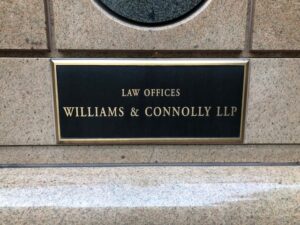
Williams
&
Connolly,
a
firm
that
raked
in
~$665M
in
gross
revenue
2024,
was
the
most
recent
hit
in
a
chain
of
information-grabbing
hacks.
CNN
has
coverage:
Suspected
Chinese
government-backed
hackers
have
breached
computer
systems
of
US
law
firm
Williams
&
Connolly,
which
has
represented
some
of
America’s
most
powerful
politicians,
as
part
of
a
larger
spying
campaign
against
multiple
law
firms,
according
to
a
letter
the
firm
sent
clients
and
a
source
familiar
with
the
hack. … Liu
Pengyu,
a
spokesperson
for
the
embassy,
told
CNN
in
response
to
a
separate
hacking
allegation
last
month:
“China
firmly
opposes
and
combats
all
forms
of
cyber
attacks
and
cybercrime.”
Williams
&
Connolly
has
since
stated
publicly
that
the
threat
actor
has
been
blocked
and
that
there
is
“no
evidence
of
any
unauthorized
traffic
on
our
network.”
A
quick
response
and
transparency
are
to
be
expected
from
the
firm,
along
with
a
boost
in
their
security
measures.
That
said,
an
ounce
of
prevention
is
worth
a
pound
of
cure.
If
you’re
in
a
position
of
authority
at
a
firm
and
know
that
your
security
protocols
are
lagging
behind,
take
this
as
the
push
to
be
proactive
before
you’re
scrambling
to
re-secure
everything.
Chris
Williams
became
a
social
media
manager
and
assistant
editor
for
Above
the
Law
in
June
2021.
Prior
to
joining
the
staff,
he
moonlighted
as
a
minor
Memelord™
in
the
Facebook
group Law
School
Memes
for
Edgy
T14s
.
He
endured
Missouri
long
enough
to
graduate
from
Washington
University
in
St.
Louis
School
of
Law.
He
is
a
former
boatbuilder
who
is
learning
to
swim, is
interested
in
critical
race
theory,
philosophy,
and
humor,
and
has
a
love
for
cycling
that
occasionally
annoys
his
peers.
You
can
reach
him
by
email
at [email protected]
and
by
tweet
at @WritesForRent.
According
to
an
internal
ZINARA
notice,
any
vehicle
with
an
expired
licence
is
considered
non-compliant,
and
owners
risk
being
fined
by
the
police.
Reads
the
notice:
“ZINARA
does
not
offer
a
7-day
grace
period
for
vehicle
licensing.
Our
operations
are
in
accordance
with
Part
IV
to
the
Vehicle
Registration
and
Licensing
Act
(Chapter
13:14),
and
in
terms
of
this
legislation
no
such
grace
period
is
provided
for.
“While
ZINARA
operates
under
the
provisions
of
the
Vehicle
Registration
and
Licensing
Act,
enforcement
is
implemented
by
agencies
or
partners
on
the
basis
of
complementary
statutes
and
by-laws
guiding
their
operations.
“ZINARA
participates
in
enforcement
through
its
designated
blitz
teams
and
in
collaboration
with
law
enforcement
agents.
“Penalties
for
failure
to
renew
vehicle
licenses
start
to
accrue
30
calendar
days
after
the
expiry
date.
During
this
period,
the
vehicle
is
categorised
as
non-compliant
and
will
be
liable
for
any
arrest
or
detention
by
law
enforcement
agents.
“Clients
are
therefore
encouraged
to
renew
their
licenses
on
time.
Renewal
can
be
done
within
60
days
prior
to
the
date
of
expiry
(i.e
two
months
before
expiry)
to
avoid
penalties.”
ZINARA
said
vehicle
licences
can
be
renewed
through
several
convenient
channels,
including
ZINARA
licensing
offices,
selected
tollgates,
registered
licensing
agents
nationwide,
and
online
via
the
ZINARA
website
or
authorised
agents.
Thanks
to
our
fractured
political
landscape,
thousands
upon
thousands
of
college
graduates
have
been
inspired
to
go
to
law
school. Per
recent
LSAC
data,
applications
have
surged
since
last
year,
the
highest
year-over-year
increase
since
2002,
with
more
than
76,000
applicants
vying
for
admission
to
law
school.
According
to
a
new
Kaplan
survey,
we
shouldn’t
expect
this
“application
boom”
to
slow
down
anytime
soon.
Kaplan
asked
law
school
admissions
officers
whether
they
thought
the
current
law
school
admissions
cycle
would
be
as
competitive
as
that
of
last
year’s,
and
a
combined
90%
said
they
expected
the
2025-2026
application
cycle
to
be
at
least
as
competitive
as
that
of
the
year
prior.
Of
that
90%,
13%
said
it
would
be
“much
more
competitive,”
35%
said
it
would
be
“somewhat
more
competitive,”
and
42%
said
the
level
of
competitiveness
would
remain
“about
the
same.”
The
nation’s
political
climate
is
thought
to
be
the
reason
behind
the
rapid
escalation
in
law
school
applications,
with
49%
saying
it
was
a
“major
driver
of
the
increase,”
38%
saying
that
it
“moderately
drove
the
increase,”
and
7%
saying
it
was
“the
main
factor”
behind
the
increase.
Only
5%
said
the
U.S.
political
climate
was
a
“slight
factor
or
non-factor,”
with
1%
saying
they
“weren’t
sure.”
One
of
Kaplan’s
survey
respondents
had
this
to
say
about
the
issue:
“The
current
political
and
economic
climate
has
made
law
school
increasingly
attractive
for
a
wide
range
of
applicants.
Legal
issues,
particularly
in
areas
like
constitutional
law,
civil
rights,
and
the
role
of
the
courts,
are
at
the
forefront
of
national
conversation,
prompting
many
to
see
a
law
degree
as
a
way
to
engage
meaningfully
with
pressing
societal
questions.”
“At
Kaplan,
over
the
past
year,
we’ve
seen
a
massive
increase
in
the
number
of
students
preparing
for
the
LSAT,
a
strong
indication
that
the
number
of
law
school
applicants
will
remain
at
historically
high
levels,
making
it
imperative
for
prospective
students
to
put
together
the
strongest
application
possible.
And
given
the
intensity
of
today’s
political
climate,
we
believe
politics
will
continue
to
exert
a
strong
influence
on
applicant
trends,”
Krystin
Major,
director
of
LSAT
programs
at
Kaplan,
said
in
a
statement.
“While
we
understand
that
passions
are
high,
we
remind
prospective
law
students
that
the
primary
reason
to
pursue
a
J.D.
should
be
to
practice
law—and
not
just
for
the
next
four
years,
but
for
the
next
40.
We
encourage
every
potential
applicant
to
be
introspective
and
make
that
decision
with
purpose.
A
career
in
law
can
be
both
rewarding
and
fulfilling,
but
it
requires
thinking
not
only
about
the
present
moment,
but
about
the
long
road
ahead.”
Speaking
of
the
“long
road
ahead,”
one
admissions
officer
told
Kaplan
that
the
2025-2026
application
cycle’s
“increased
competitiveness
is
a
double-edged
sword
as
it
should
increase
the
talent
level
for
the
legal
community
at
the
expense
of
excluding
many
candidates
who
would
have
been
excellent
contributors
to
the
field.”
Another
survey
respondent
seemed
concerned
about
the
optics
if
law
schools
decide
to
admit
larger
class
sizes
due
to
the
wealth
of
applicants,
saying,
“I
think
the
profession
suffers
if
law
schools
get
greedy
and
bring
in
significantly
larger
classes
than
the
market
can
feasibly
support
down
the
road,
as
we
saw
in
2009-2011,
but
that
may
not
have
recurred
to
the
same
degree
this
past
year.”
Whatever
the
case
may
be,
elections
have
consequences
and
our
political
system
has
attracted
many
worthy
applicants
to
the
legal
field.
We’ll
soon
be
able
to
see
just
how
many
future
lawyers
were
inspired
to
apply
to
law
school
when
LSAC
releases
its
latest
data.
Staci
Zaretsky is
the
managing
editor
of
Above
the
Law,
where
she’s
worked
since
2011.
She’d
love
to
hear
from
you,
so
please
feel
free
to
email
her
with
any
tips,
questions,
comments,
or
critiques.
You
can
follow
her
on Bluesky, X/Twitter,
and Threads, or
connect
with
her
on LinkedIn.
Today,
Comey
pleaded
not
guilty
to
making
false
statements
to
Congress
and
the
obstruction
charges
he’s
facing.
Not
surprising,
since
his
social
media
statement
said,
“I
have
great
confidence
in
the
federal
judicial
system,
and
I’m
innocent.”
But
there’s
more
than
blind
faith
fueling
his
optimism.
According
to
ABC
News,
John
Durham
was
a
special
counsel
—
appointed
by
Donald
Trump
—
who
spent
four
years
looking
into
the
FBI
investigation
of
Russian
influence
in
the
2016
election.
And
Durham
found
there
was
not
sufficient
evidence
to
charge
Comey
with
those
false
statement
charges
Lindsey
Halligan
rubber
stamped.
Moreover,
Durham
reported
his
findings
to
prosecutors
in
the
Eastern
District
of
Virginia
ahead
of
the
charges
—
which
bolster’s
Comey’s
likely
argument
of
selective
prosecution.
Federal
prosecutors
in
Virginia
met
remotely
with
Durham
in
August
to
understand
the
findings
of
his
investigation,
according
to
sources
familiar
with
the
meeting,
and
his
conclusions
raise
the
prospect
that
Durham
—
who
was
once
elevated
by
Trump
and
other
Republicans
believing
he
would
prosecute
high-level
officials
involved
with
the
investigation
of
the
president’s
2016
campaign
—
could
now
become
a
key
figure
aiding
Comey’s
defense.
Oh,
and
there
was
an
additional
investigation
out
of
the
U.S.
Attorney’s
Office
in
Washington,
D.C.
that
*also*
concluded
Comey
committed
no
chargeable
offense.
That’s
a
lot
of
career
prosecutors
all
agreeing
not
to
indict
Comey
—
and
one
former
personal
attorney
for
Trump
willing
to
pursue
this
vendetta.
If
you
are
a
keen
observer
of
Above
the
Law’s
pages,
you
might
have
noticed
that
my
column
was
absent
last
week.
A
couple
weeks
ago,
I
got
in
touch
with
my
editor
to
let
her
know
that
I
would
be
traveling
in
Ukraine
with
my
cousin,
Evan,
for
a
while
and
that
although
I’d
be
doing
some
writing
while
there,
we
travel
light
(like
writing
in
a
little
notebook
with
a
penlight).
She
graciously
told
me
there
was
no
need
to
worry
about
my
column
while
I
was
away.
Well,
I
am
in
Lviv
at
this
very
moment
and
was
able
to
borrow
a
laptop.
That
f*cking
bombardment
overnight
into
Sunday
morning
was
wild,
and
I
felt
the
need
to
try
to
type
something
out
about
it
for
our
readers.
Explosions
rocked
Lviv
for
hours.
Burning
phosphorous
streaked
the
sky.
It
all
started
well
before
sunrise
when
the
Russians
sent
a
cloud
of
Shahed
strike
drones
—
140
of
them
—
careening
into
the
city
as
Kamikazes.
Then
came
the
cruise
missiles.
Russian
ships
in
the
Black
Sea
launched
volleys
of
Kalibr
cruise
missiles,
and
Tu-95MS
strategic
bombers
deployed
air-launched
cruise
missiles
of
their
own.
When
a
cruise
missile
detonates
near
you,
the
ground
beneath
your
feet
quakes.
The
drones
exploding
sounded
like
popcorn
once
the
cruise
missiles
started
to
go
off.
For
good
measure,
the
Russians
also
sent
in
MiG-31
fighter
jets
armed
with
Kinzhal
air-launched
ballistic
missiles.
The
Russian
air
forces
once
again
got
close
enough
to
Poland
to
cause
the
NATO
member
to
scramble
aircraft
of
its
own.
The
air
defense
systems
of
Lviv
are
outstanding,
and
the
brave
soldiers
manning
the
defensive
weaponry
excelled
in
their
missions.
Not
a
lot
got
through.
Still,
five
deaths
in
the
Lviv
metropolitan
area
have
been
reported
thus
far.
Four
of
those
killed
were
a
whole
family
whose
house
was
struck.
A
15-year-old
girl
minding
her
own
business
at
her
own
home
was
one
of
the
victims
of
this
senseless
violence.
I
have
gotten
to
know
Lviv
pretty
well
in
a
relatively
short
time.
Although,
being
wartime,
there
are
soldiers
everywhere
(especially
at
McDonald’s,
they
seem
to
love
that),
this
is
a
peaceful,
artistic
city.
The
night
before
the
bombing,
Evan
and
I
attended
the
ballet
at
the
national
opera
house,
a
landmark
so
beloved
that
its
facade
adorns
the
20
Ukrainian
hryvnia
banknote.
There
are
endless
beautiful
parks,
art
museums,
and
historic
structures.
While,
like
any
city,
there
are
industrial
areas
and
an
industrial
park
was
indeed
one
of
the
sites
hit
in
the
assault
on
Lviv,
for
the
most
part
there
is
very
little
anywhere
near
where
Russia
was
targeting
that
could
be
considered
a
legitimate
military
target
under
any
reasonable
definition
of
that
phrase.
Power
was
cut
to
swathes
of
the
city
and
infrastructure
used
to
heat
homes
and
businesses
was
attacked.
At
least
10
civilian
homes
were
bombed
beyond
repair.
This
was
terrorism,
plain
and
simple,
and
anyone
who
says
otherwise
is
lying.
I
saw
it
with
my
own
eyes.
It
didn’t
work
though.
A
couple
hours
after
the
last
rattle
of
machine
gun
fire
faded
away,
the
cafe
down
below
the
apartment
we
are
renting
unfolded
its
awning
and
opened
for
business.
People
crowded
inside,
excited.
Defiant.
This
was
the
largest
attack
on
the
Lviv
area
of
the
entire
war
so
far,
but
a
few
hours
after
it
ended
Evan
and
I
were
viewing
an
excellent
collection
of
modern
art
at
one
of
Lviv’s
many
fantastic
museums.
People
were
chatting
and
gesturing
enthusiastically
around
the
food
vendor
stalls
at
the
apparently
much
anticipated
Lviv
Book
Forum.
A
group
of
nerds
argued
over
strategy
in
the
back
of
a
game
shop
while
playing
an
indecipherable
Ukrainian
board
game.
Kids
played
in
the
fantastical
playground
at
the
Park
Imeni
Ivana
Franka.
Life
went
on:
not
gloomily,
not
resignedly,
but
lustilly.
Russia
is
trying
to
steal
another
country
and
destroy
the
way
of
life
of
its
people
through
terror
and
indiscriminate
violence.
The
Ukrainians
are
staging
a
heroic
resistance.
If
there
is
anything
more
you
can
do
to
help
these
people
in
this
struggle,
no
matter
how
small
it
may
seem
—
from
a
little
donation
to
a
Ukrainian
cause
to
changing
your
vote
in
the
next
election
to
ensure
support
from
our
lawmakers
—
please,
please
do
whatever
you
can.
Jonathan
Wolf
is
a
civil
litigator
and
author
of Your
Debt-Free
JD (affiliate
link).
He
has
taught
legal
writing,
written
for
a
wide
variety
of
publications,
and
made
it
both
his
business
and
his
pleasure
to
be
financially
and
scientifically
literate.
Any
views
he
expresses
are
probably
pure
gold,
but
are
nonetheless
solely
his
own
and
should
not
be
attributed
to
any
organization
with
which
he
is
affiliated.
He
wouldn’t
want
to
share
the
credit
anyway.
He
can
be
reached
at [email protected].
For
a
long
time,
the
bar
exam
seemed
like
the
nasty
habit
that
the
legal
profession
just
couldn’t
quit.
But
there’s
finally
some
progress
on
that
front,
with
Utah
unveiling
a
new
alternative
pathway
to
licensure
that
values
experience
and
the
skills
that
an
actual
practitioner
needs.
We
also
check
in
on
Cadwalader,
where
the
firm
brings
on
a
new
co-manager
while
taking
some
serious
blows
in
the
lateral
market.
Finally,
the
Supreme
Court
is
back
in
session,
so
we
look
back
at
the
summer
of
shadows,
when
the
Court’s
shadow
docket
finally
crashed
into
the
reality
of
a
president
unwilling
to
play
the
game
and
Justice
Thomas
shed
a
little
light
on
his
decision
to
bail
on
teaching
his
class
after
Dobbs.



 Kathryn