*
Looming
deadline
in
Perkins
Coie
case
may
signal
if
the
DOJ
sees
any
path
forward.
[National
Law
Journal]
*
Former
Justice
Anthony
Kennedy
says
“democracy
is
at
risk.”
Yeah,
buddy,
and
whose
fault
is
that?
[Politico]
*
“Veteran
DOJ
Watchdog’s
Exit
Spurs
Fears
of
Lax
Trump
Oversight.”
Spurs?
[Bloomberg
Law
News]
*
Justice
Department
to
harass
the
University
of
California
over
hiring
practices.
Their
faculty
is
77
percent
white
or
Asian
and
has
a
higher
proportion
of
white
people
than
the
state
does
but…
sure.
[Reuters]
*
Lawyer
accused
of
hitting
Fat
Joe’s
process
server
with
car.
[ABA
Journal]
Speaking
at
the
Zimbabwe
National
Chamber
of
Commerce
(ZNCC)
congress
in
Victoria
Falls
on
Thursday,
26
June,
Chiwenga
condemned
what
he
described
as
a
growing
culture
of
“briefcase
entrepreneurs,”
where
wealth
emerges
from
unknown
sources.
He
said
this
trend
of
phantom
entrepreneurship
is
not
only
damaging
to
the
economy
but
also
morally
bankrupt.
Said
Chiwenga:
We
must
shun
unscrupulous
“so-called
businesspeople”
operating
from
briefcases
with
no
traceable
capital
or
legitimate
enterprise.
This
culture
of
phantom
entrepreneurship,
where
money
appears
without
any
known
source,
is
not
only
economically
corrosive
but
ethically
bankrupt.
We
all
know
that
money
does
not
fall
from
the
heavens
like
manna.
Real
businesses
are
built
through
hard
work,
discipline,
sacrifice,
and
value
creation.
The
day
of
reckoning
is
inevitable
for
those
who
undermine
our
economic
integrity
by
engaging
in
shadowy
dealings.
Let
us
not
mortgage
our
nation’s
future
to
fleeting
gain.
Equally
imperative
to
this
shared
national
and
developmental
Vision
is
our
collective
stance
on
integrity
and
accountability.
As
we
deepen
public-private
partnerships
and
catalyse
economic
growth,
we
must
decisively
shun
corruption
in
all
its
forms.
There
can
be
no
room
for
rent-seeking
behaviours
or
muddy
practices
in
a
modern,
competitive
economy.
It
was
Chiwenga
who
popularised
the
term “Zvigananda” (singular: Chigananda)—a
word
now
widely
used
to
describe
people
who
flaunt
wealth
believed
to
have
been
acquired
through
corrupt
or
opaque
means,
often
with
links
to
political
power.
Chiwenga
first
used
the
term
critically,
targeting
those
enriching
themselves
dishonestly,
in
stark
contrast
to
the
values
of
Zimbabwe’s
liberation
struggle.
Over
time, Zvigananda has
become
a
loaded
label—used
both
as
an
insult
and,
in
some
circles,
as
a
symbol
of
rebellious
pride.
In
everyday
conversation,
it
often
refers
to
flashy,
unaccountable
elites—people
who
showcase
lavish
lifestyles
on
social
media,
yet
do
not
have
credible
sources
of
legitimate
wealth.
MAZOWE,
Zimbabwe
–
A
security
guard
is
battling
for
his
life
after
being
brutally
assaulted
at
a
Mazowe
mining
site,
allegedly
by
former
President
Robert
Mugabe’s
son,
Bellarmine
Chatunga,
and
a
group
of
men
wielding
AK-47
assault
rifles.
Tensions
erupted
on
Wednesday
around
4PM
when
Chatunga
reportedly
led
a
heavily
armed
team
into
the
Ultimate
Mining
concession,
which
borders
Grace
Mugabe’s
farm,
accusing
the
Ultimate
Mining
concession
staff
of
harbouring
trespassers
who
were
repeatedly
making
forays
into
his
mother’s
property.
“We
were
told
our
crime
was
allowing
illegal
gold
panners
to
trespass
on
their
land,”
said
one
of
the
victims
who
asked
not
to
be
named
fearing
reprisal.
The
clash
was
reportedly
sparked
when
trespassers
at
the
Mugabe
estate
fled
into
Ultimate
Mining
grounds.
The
assailants
accused
the
mine
security
of
failing
to
act
on
the
breaches
—
an
alleged
inaction
that
reportedly
angered
Chatunga
and
preceded
the
assault.
“The
next
thing
we
saw
were
men
brandishing
AK-47s,
and
Chatunga
among
them.
Our
security
guard
was
suddenly
attacked
by
Chatunga
himself,
who
shouted,
‘wasiirei
vanhu
vachipinda
mumunda
wapresident
chaivo?!’
(Why
did
you
allow
people
to
enter
the
real
president’s
land?),”
said
a
mine
official
who
requested
anonymity.
At
least
three
workers
were
seriously
injured,
suffering
fractures
to
the
skull,
ribs,
cheekbone,
and
limbs,
according
to
medical
reports
and
X-rays
seen
by
ZimLive.
Amid
the
chaos,
there
was
accidental
firearm
discharge.
A
supervisor
who
rushed
in
to
diffuse
the
situation,
was
allegedly
caught
in
the
crossfire
and
assaulted,
along
with
two
other
staffers
identified
as
Chipara,
Muchemwa
and
the
security
guard
Elvis
Bvumbwe.
“I
tried
to
reason
with
them,
but
they
accused
me
of
hiring
thugs
to
attack
them,”
said
the
supervisor,
who
showed
hospital
scans
of
fractured
cheekbone
and
broken
nose
during
an
interview
with
ZimLive.
The
victims
say
they
were
frogmarched
nearly
200
meters
into
the
Mugabe
compound,
doused
with
water,
and
repeatedly
beaten
with
logs
and
metal
rods.
Bvumbwe,
one
of
the
most
seriously
injured,
sustained
multiple
fractures
while
attempting
to
shield
himself,
doctors
noted.
Broken
…
An
X-Ray
exam
showed
one
of
the
victims
of
the
attack
with
broken
bone
An
affidavit
from
Dr
Motto
Hope
of
Parirenyatwa
Hospital,
provided
at
the
request
of
Mazowe
Police,
confirmed
Bvumbwe
suffered
a
fractured
left
ulna
bone
and
severe
bruising
caused
by
both
sharp
and
blunt
trauma,
with
injuries
classified
as
severe
and
potentially
permanent.
The
formal
police
request
for
medical
examination
sent
to
Parirenyatwa
Hospital,
read:
“Would
you
please
have
this
person
examined
by
a
medical
practitioner
and
the
appropriate
medical
examination
report
form
completed.”
The
statement
added:
“Patient
was
assaulted
all
over
the
body
and
sustained
[injuries]
on
the
head,
back
and
left
hand…
requesting
for
a
medical
affidavit.”
Last
Dube,
an
Ultimate
Mine
employee
who
accompanied
the
victims
to
the
hospital
said:
“I
escorted
the
police
to
the
scene
after
making
the
report.
The
officers
saw
that
the
victims
were
soaked
in
blood
and
visibly
weak.
They
said
given
their
condition,
it
was
better
we
prioritised
medical
attention
because
if
we
take
them
straight
to
the
police
station
they
might
die
there.”
Dube
said
the
victims
were
wheeled
into
Parirenyatwa
Hospital
because
they
were
unable
to
walk.
Despite
this,
witnesses
said
Chatunga
remained
defiant
even
at
the
Mazowe
Police
Station.
“If
(President)
Mnangagwa
hears
I’m
at
Mazowe
Police,
everyone
here
will
be
fired,”
he
allegedly
said,
prompting
the
officer-in-charge
to
retreat
to
his
vehicle.
Chatunga
then
reportedly
drove
off
without
being
detained.
Medical
bills
for
the
injured
have
already
surpassed
US$2,000,
according
to
Ultimate
Mine
General
Manager
Joel
Mushoriwa,
who
says
staff
are
traumatised
and
living
in
fear.
“We
are
deeply
saddened
by
these
events.
The
injuries
are
severe,
and
so
far
we’ve
incurred
over
US$2,000
just
for
initial
check-ups.
We’re
hoping
the
law
takes
its
course,
but
it’s
difficult
when
the
person
involved
claims
to
be
untouchable,”
Mushoriwa
said.
The
case
was
officially
logged
under
Report
Received
Book
(RRB)
Number
6347367
at
Mazowe
Police
Station.
Efforts
to
get
a
comment
from
police
spokesperson
Paul
Nyathi
were
unsuccessful
at
the
time
of
publication.
HARARE
–
Businessman
Kudakwashe
Tagwirei
fired
up
a
storm
on
Wednesday
after
claiming
Zimbabweans
who
have
not
won
government
tenders
are
“foolish”
–
about
99
percent
of
the
population.
Speaking
at
the
National
University
of
Science
and
Technology
in
Bulawayo,
Tagwirei
launched
a
personal
defence
against
accusations
of
being
a
tenderpreneur,
a
derogatory
term
used
to
describe
individuals
—
often
politically
connected
—
who
exploit
their
influence
to
bypass
competition
and
secure
public
tenders
for
personal
enrichment,
typically
through
corrupt
practices
like
overpricing,
substandard
work,
or
kickbacks.
“If
you’re
not
a
tenderpreneuer,
you’re
foolish,”
Tagwirei
said.
“The
biggest
buyer
or
seller
in
this
country
is
government,
so
if
you
don’t
want
to
get
your
tender
from
the
biggest
buyer
and
biggest
seller
where
are
you
going
to
get
your
business
from?
“Anyone
who
tells
you
that
you
must
not
get
tenders
is
foolish,
you
must
actually
strive
to
get
a
tender
from
government.”
The
Sakunda
Holdings
founder,
who
has
scored
government
contracts
worth
billions
of
dollars,
claimed
his
critics
were
“jealous
because
they
don’t
get
the
tenders.”
He
claimed
the
word
tenderpreneuer
was
“coined
by
white
people
to
discourage
blacks
from
gaining
access
to
business
from
government.”
Recently
appointed
to
Zanu
PF’s
central
committee
amid
claims
he
harbours
ambitions
to
be
president,
Tagwirei
has
used
his
proximity
to
the
country’s
political
leadership
to
secure
huge
government
contracts.
A
reported
US$3
billion
payment
to
Tagwirei’s
Sakunda
Holdings
for
the
Command
Agriculture
scheme
caused
a
collapse
of
the
local
currency,
leading
to
the
United
States
and
Britain
imposing
sanctions
against
him
and
his
companies.
The
United
States
treasury
department
said
Tagwirei
“has
utilised
his
relationships
with
high
level
Zimbabwean
officials
to
gain
state
contracts
and
receive
favoured
access
to
hard
currency,
including
U.S.
dollars.
In
turn,
Tagwirei
has
provided
high
priced
items,
such
as
expensive
cars,
to
senior-level
Zimbabwean
government
officials.”
It
added:
“Since
former
Zimbabwe
President
Robert
Mugabe’s
2017
departure,
Tagwirei
used
a
combination
of
opaque
business
dealings
and
his
ongoing
relationship
with
President
(Emmerson)
Mnangagwa
to
grow
his
business
empire
dramatically
and
rake
in
millions
of
U.S.
dollars.”
Economist
Tinashe
Murapata,
reacting
to
Tagwirei’s
comments
in
Bulawayo,
said:
“Tagwirei’s
comments
on
tenderprenuership
miss
the
nuance
and
intelligence
of
a
national
leader
he
is
shaping
himself
to
be.
Command
Agriculture
never
went
to
tender.
The
treasury
bills
he
was
given
were
never
meant
to
be
traded,
in
effect
it
was
pension
funds
and
depositors’
money
that
funded
Command
Agriculture,
savings
from
the
same
people
he
now
calls
foolish.
Savings
which
were
lost
to
hyperinflation
caused
by
the
government.
“I
don’t
understand
political
leadership
that
mocks
distance
from
political
office.
By
its
very
nature
and
definition,
proximity
and
access
to
political
office
is
limited
to
a
few.
Yet
it
is
ordinary
business
people
and
traders
without
political
access
who
drive
the
economy.”
Businessman
Kuda
Musasiwa
weighed
in:
“Tenders
are
not
the
problem.
An
equitable
system
that
allows
all
business
to
access
tenders
would
be
the
answer
to
this.
Currently
tenders
go
to
shelved
companies
with
hotel
rooms
as
addresses.”
Tagwirei
has
won
state
contracts
in
a
wide
range
of
sectors
including
agriculture,
energy,
health
and
road
construction.
MUTARE
–
A
Chipinge
man
has
been
jailed
for
life
by
the
High
Court
in
Mutare
for
the
brutal
rape
and
murder
of
his
neighbour.
Justice
Isaac
Muzenda
on
Wednesday
told
Fanwell
Ndawana
that
he
had
committed
a
“vicious,
callous
and
brutal
attack”
on
a
defenceless
woman
with
clear
intent
for
which
he
must
be
sent
away
for
life.
The
incident
took
place
on
August
13,
2024,
at
Mbezuma
homestead
in
Mukomba
Village
under
Chief
Musikavanhu.
The
National
Prosecuting
Authority’s
star
witness
William
Sithole
was
at
the
homestead
with
two
other
children
at
around
9PM
when
he
heard
the
sound
of
someone
groaning.
He
observed
their
neighbour
Ndawana
walking
up
to
and
peeping
through
the
glass
panel
of
the
dining
room
door.
Moments
later,
Ndawana
opened
the
door
whilst
holding
a
steel
object
and
advanced
towards
Sithole
who
escaped
into
the
spare
bedroom
and
locked
the
door
from
inside.
Sithole
later
heard
Ndawana’s
footsteps
as
he
ran
from
the
house.
Sithole
went
into
the
dining
room
which
was
being
used
by
the
victim
as
a
bedroom
and
saw
her
lying
facing
upwards
on
her
bed
sheet
breathing
heavily
while
bleeding
from
the
right
ear
and
mouth.
The
victim’s
jean
trousers
and
pants
were
pulled
down
to
knee
level.
Sithole
screamed
for
help,
alerting
neighbours.
A
pathologist
concluded
that
the
cause
of
death
was
due
to
subarachnoid
hemorrhage
(bleeding
in
the
brain)
and
head
trauma.
Ndawana
left
a
grey
dust
coat
on
the
sofa
and
a
pair
of
pink
sandals
was
found
besides
the
victim’s
body.
Ndawana
was
arrested
near
Save
River
and
led
the
police
for
indications
as
well
as
the
recovery
of
the
murder
weapon.
Justice
Muzenda
said:
“It
is
our
finding
that
from
the
totality
of
all
the
evidence
placed
before
us
by
the
state,
there
was
clear
intention
to
cause
death.
“Immediately
after
fatally
assaulting
the
now
deceased,
the
accused
fled
from
the
scene
after
he
had
achieved
his
target.
“Accused
sexually
molested
the
now
deceased
given
the
conditions
of
her
attire.
Her
jeans
were
withdrawn
up
to
the
knee
level
exposing
her
private
parts.
“That
condition
shows
that
the
sexual
conduct
of
the
accused
was
not
consensual.
As
a
result
it
is
our
finding
that
the
murder
was
committed
in
aggravating
circumstances.
“Her
nakedness
was
seen
by
people
of
all
ages
as
well
as
male
police
details.
The
aggravatory
factors
far
outweigh
the
mitigatory
features.
The
only
appropriate
sentence
is
custodial.
“Accordingly
you
are
sentenced
to
life
Imprisonment.”
The
hospital
said
the
scam
message
falsely
claims
that
the
institution
is
currently
enrolling
trainees
for
a
Primary
Care
Nurse
(PCN)
programme—an
assertion
the
hospital
has
firmly
denied.
In
a
public
notice
issued
on
Thursday,
26
June,
the
Karanda
School
of
Nursing
clarified
that
it
does
not
offer
PCN
training
and
that
such
a
programme
is
not
part
of
its
curriculum.
The
school
only
trains
Registered
General
Nurses
(RGNs),
and
contrary
to
the
fake
announcement,
there
is
no
intake
scheduled
for
September.
The
hospital
urged
the
public
to
remain
vigilant
and
not
fall
for
scams
targeting
aspiring
healthcare
workers.
The
administration
advised:
Always
verify
any
training
announcements
through
official
channels…
Ministry
of
Health
and
Child
Care
official
platforms…
Government-approved
advertisements.
Last
week,
the
Ministry
of
Health
and
Child
Care
issued
a
notice
inviting
applications
for
the
Two-Year
Primary
Care
Nurse
(PCN)
Certificate
Training
for
the
September
2025
intake.
Surprisingly,
the
notice
listed
Karanda
Mission
Hospital,
along
with
Nkayi
District
Hospital,
Silveira
Mission
Hospital,
St.
Theresa
Mission
Hospital,
Murambinda
Mission
Hospital,
Howard
Mission
Hospital,
Mt.
Darwin
District
Hospital,
and
Tsholotsho
District
Hospital,
as
one
of
the
institutions
offering
the
PCN
training
programme.
Milbank
Fights
Back
Against
Trump
Order:
Better
late
than
never!
Emil
Bove
III
Speaks
At
Judicial
Confirmation:
He
doesn’t
have
the
strongest
memory.
Florida
Law
School
Dean
Misses
The
Point:
The
problem
isn’t
that
he
got
an
A,
it’s
that
THE
JUDGE
THOUGHT
THIS
WAS
A
WORTHY
PAPER.
Vault
Ranked
The
Best
Summer
Associate
Programs:
Check
it
out!
What’s
The
Deal
With
Midsize
Firms?:
How
big
are
they,
actually?
Everyone’s
talking
about
AI
in
legal
—
for
better
or
worse
—
and
lawyers
are
mostly
using
some
mix
of
AI
tools
in
some
form
or
another
occasionally.
But
how
many
firms
out
there
have
a
strategy
beyond,
“I
dunno,
you
all
figure
it
out”?
It
seems
the
answer
is
“not
many,”
which
is
unfortunate
because
having
a
strategy
is
far
more
important
than
whether
or
not
anyone’s
using
it.
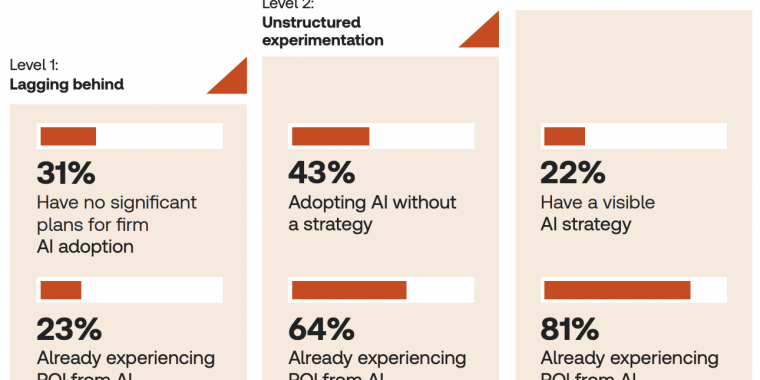
The
Thomson
Reuters
“Future
of
Professionals”
report
just
dropped
and
one
stat
standing
out
among
its
insights
is
that
organizations
with
a
visible
AI
strategy
are
not
only
twice
as
likely
to
report
growth,
they’re
also
3.5
times
more
likely
to
see
actual,
tangible
benefits
from
AI
adoption.
And
yet,
of
a
profession
that
fancies
itself
a
bunch
of
4D
chess
players,
only
22
percent
of
organizations
have
such
a
plan.
Come
on!
This
isn’t
like
the
nation’s
Iran
policy…
you
actually
need
to
do
some
strategic
planning
for
this
one.
While
headlines
have
focused
on
the
gap
between
the
31
percent
with
no
plans
for
adoption
and
everyone
else,
the
more
pressing
concern
might
be
the
43
percent
just
winging
it.
That
31
percent
may
be
left
behind
while
they
fax
their
Word
Perfect
drafts
to
co-counsel,
but
they’ll
be
relatively
harmless
in
their
Faraday
cage
of
sadness.
The
43
percent
are
going
to
reap
fewer
of
the
benefits
while
taking
on
a
whole
lot
of
the
risk.
Sort
of
“malpractice
slow
motion.”
Or,
if
it’s
not
malpractice,
it’s
at
least
leaving
money
on
the
table.
Thomson
Reuters
estimates
AI
will
save
professionals
five
hours
a
week
—
or
nearly
240
hours
per
year
—
which
they
estimate
as
about
$19,000
per
professional
annually.
That
scales
up
to
about
$32
billion
in
unlocked
capacity
across
the
industry.
But
that
industry
estimate
assumes
an
hourly
rate
of
less
than
a
hundred
(because
it’s
mixed
to
include
the
whole
range
of
legal
professionals).
Assuming
lawyers
think
their
time
is
more
valuable
—
and
they
definitely
think
that
—
and
that
there’s
five
hours
a
week
worth
of
work
that
a
junior
associate
can
offload
to
AI,
that’s
like
$150K
in
time
they
can
be
forced
to
toil
on
other
projects.
They
can’t
double
bill
time
of
course,
but
adopt
some
fixed
fee
projects
to
capture
the
value
of
saved
time
and
that’s
money
waiting
to
be
grabbed
BY
YOU.
One
of
the
biggest
stumbling
blocks
in
legal
tech
is
adoption.
Many
firms
have
savvy
tech
professionals
who
can
go
out
and
buy
the
right
products,
but
they’re
only
valuable
if
lawyers
know
they
exist.
That’s
where
a
good
strategy
would
come
in.
The
good
news
is
that
roughly
96
percent
of
respondents
have
a
grasp
that
AI
exists.
The
bad
news
is
that
most
lawyers
are
finding
out
about
AI
by
randomly
hunting
and
pecking
on
their
own:
To
all
of
you
learning
about
AI
strategy
by
voluntarily
coming
to
Above
the
Law
right
now…
welcome!
Please
enjoy
your
stay.
Learn
about
federal
chewing
gum
caselaw
while
you’re
here.
This
is
Underpants
Gnome
territory:
The
question
for
law
firms
isn’t
“Should
we
adopt
AI?”
That
ship’s
left
the
harbor,
and
it’s
firing
on
your
position.
The
question
is
how
to
harness
the
tech,
leverage
the
firm’s
years
of
intellectual
capital,
avoid
pitfalls,
protect
client
data,
and
turn
all
that
free
time
into
new
revenue.
Thankfully
for
firms,
most
of
your
competitors
are
lagging
behind
too
so
there’s
plenty
of
time
to
get
ahead
on
this.
Those
that
don’t,
as
the
report
concludes,
“will
find
themselves
floundering
and
ultimately
failing
to
maintain
a
competitive
advantage
or
deliver
value
to
their
businesses
or
clients.”
According
to
data
from
the
US
Marshals
Service,
how
many
threats
have
been
logged
against
federal
judges
so
far
in
fiscal
year
2025?
Hint:
This
year,
297
different
judges
have
dealt
with
this
problem,
and
the
total
number
of
threats
is
more
than
all
the
threats
made
in
the
2022
fiscal
year
—
and
there
are
still
three
months
left
in
the
2025
fiscal
year!