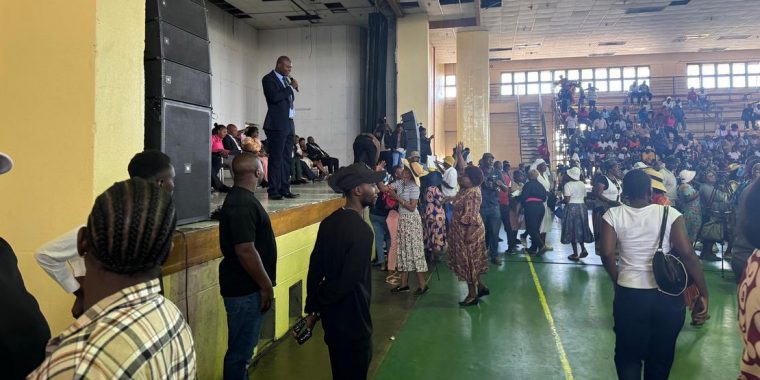
Zimbabwe split as public weighs electoral reforms bill

Hundreds
turned
out
as Zimbabwe‘s
parliament
began
nationwide
public
hearings
on
Constitution
Amendment
Bill
 drafted
by
the
ruling
ZANU‑PF.
The
proposed
changes,
which
include extending
presidential
terms
and
altering
how
presidents
are
elected,
have
drawn
both
strong
support
and
sharp
criticism.

At
a
rural
gathering
in
Chitungwiza,
25
km
(15
miles)
from
Harare,
most
speakers
supported
the
proposed
bill.
Chitungwiza

the
third-largest
urban
center
after
Harare
and
Bulawayo

has
historically
voted
for the
opposition
.
However,
ZANU-PF
has
made
gains
in
recent
years.

The
public
hearing
on
the
electoral
reforms
in
Chitungwiza
turned
into
heated
debate
at
some
pointImage:
Columbs
Mavhunga/DW

Shylock
Muyengwa,
a
medical
doctor,
argued
that
passing
the
bill
would
bring
stability
and
savings
to
the
state.
“The
bill
has
been
crafted
with
a
budget
in
mind,”
Muyengwa
said.
“If
you
look
at
changes
around
the Zimbabwe
Electoral
Commission
 and
the
registrar,
it
saves
us
$15
million
(€13
million).”

He
added
that
the
seven-year
transition
could
save
up
to
36%
of
potential
resources,
amounting
to
about
$20
million
per
year.

From
a
five
to
seven-year
term
limit

One
of
the
key
proposals
is
to extend
the
terms
of
the
presidency
and
parliament.
 Zimbabwe
holds
presidential
and
parliamentary
elections
every
five
years,
with
presidents
elected
directly
by
voters
under
the
2013
Constitution.
This
amendment
would
extend
the
terms
to
seven
years,
delaying
the
next
election
from
2028
to
2030.

If
enacted,
it
would
extend
President
Emmerson
Mnangagwa’s
tenure
beyond
his
current
and
final
term,
which
ends
in
2028.
Nationwide
hearings,
running
from
March
30
to
April
2,
are
being
held
as
part
of
the
constitutional
consultation
process.
Many
Zimbabweans
had
high
hopes
that
the
country
would
usher
in
a
new
era
of
democracy
following
the
2017
coup
that
ousted
the late
President
Robert
Mugabe
.

ZANU‑PF
is
strongly
pushing
for
the
bill
to
pass. Critics
warn
 that
the
changes
could
entrench
one‑party
dominance
and
weaken
democratic
accountability,
especially
the
proposal
to
hold
a
parliamentary
election
to
choose
the
president,
replacing
direct
national
voting.

Another
key
reform
would
alter
the
role
of
Zimbabwe’s
Electoral
Commission
by
returning
some
powers,
such
as
voter
registration,
to
the
Registrar-General.
Those
proposals
could
reshape
Zimbabwe’s
political
landscape
for
decades
to
come.

Critics
of
the
bill
cry
foul

“I
do
not
have
a
problem
with
amendments
to
the
constitution
if it
is
done
properly
,”
Rutendo
Muzirwa
told
DW.
“The
current
constitution
came
through
a
referendum,
so
why
can’t
you
go
through
the
referendum,
if
there
is
no
rigging?
Let’s
go
for
the
referendum,”
she
insisted,
adding
that
a
referendum
gives
everyone
a
chance
to
have
their
say.

“This
bill
is
good
for
others,
but
I
am
against
having
a
president
elected
by
the
parliament.
So
let’s
go
for
the
referendum,”
She
said
to
some
boos
from
the
crowd.

Opponents
began
leaving
the
venue,
saying
Parliament
was
ignoring
their
contributions.
Similar
concerns
about
limited
participation
have
been
raised
nationally,
with
observers
criticizing
the
highly
compressed
four‑day
hearing
schedule.
The
opposition
and civic
organizations
 say
they
would
do
everything
in
their
power
to
stop
the
bill
from
passing.

Ahead
of
the
consultations,
Amnesty
International
called
on
the
Zimbabwean
government
to
do
everything
in
its
power
to
ensure
a
peaceful,
fair
and
transparent
process.

“Amnesty
International
urges
the
Zimbabwean
authorities
to
guarantee,
without
discrimination,
the
rights
to
freedom
of
expression
and
peaceful
assembly
during
the
upcoming
public
hearings,”
Vongai
Chikwanda,
Amnesty
International’s
deputy
regional
director
for
East
and
Southern
Africa,
said.

Amnesty
calls
for
a
fair
process

Quoting
Article
61
of
Zimbabwe’s
constitution,
which
guarantees
freedom
of
expression
and
the
rights
to
peaceful
assembly
and
association,
key
pillars
of
democratic
participation,
Chikwanda
warned
that restrictions
on
public
debate
 before,
during,
or
after
public
hearings
could
shut
down
genuine
participation,
accountability,
and the
rule
of
law
.

Former
finance
minister
Tendai
Biti
has
been
a
vocal
critic
of
the
Constitution
Amendment
BillImage:
Xinhua/IMAGO

“Given
past
incidents
of
violence
and
suppression
of
dissenting
voices,
authorities
must
take
concrete
measures
to
ensure
all
participants
can
freely
express
their
views
and
assemble
without
fear
of
intimidation,
harassment,
assault,
or
arrest,”
he
added.

Reports
have
also
emerged
in
recent
weeks
of
arrests
and
alleged
assaults
of
some
critics
of
the
bill,
including
lawyers Lovemore
Madhuku
and Tendai
Biti
,
heightening
concerns
about
shrinking
civic
space.

Once
the
public
hearings
close
on
April
2,
parliamentary
committees
will
compile
public
submissions
before
the
bill
is
debated
and
most
likely
endorsed
in
the
National
Assembly,
where
the
ruling
ZANU
PF
party
enjoys
a
two-thirds
majority.

How a transgender tobacco farmer in Zimbabwe is fighting for dignity


In
a
rural
area
around
250
kilometres
from
Zimbabwe’s
capital
Harare,
Kevin
(real
name
kept
anonymous
for
safety),
a
transgender
man,
is
rebuilding
his
life
through
tobacco
farming.
In
a
country
where
LGBTIQ+
people
face
discrimination,
criminalisation
and
social
exclusion,
cultivating
a
high-value
cash
crop
has
given
Kevin
something
he
had
long
been
denied:
economic
stability
and
recognition.


Gender
rights
organisations
report
high
levels
of
anxiety,
depression
and
suicidal
thinking
within
the
community,
often
driven
by
family
rejection
and
economic
exclusion.
For
Kevin,
relocating
to
a
rural
region
in
2024
was
a
strategic
decision.
Living
in
urban
areas
had
exposed
him
to
daily
discrimination
linked
to
his
gender
identity,
limiting
both
employment
opportunities
and
personal
safety.


“I
needed
a
way
to
survive
that
didn’t
depend
on
someone
else’s
approval.
People
think
we
have
nothing
to
contribute
except
sex,
forgetting
that
we
can
work
and
contribute
to
the
economy
like
anyone
else,”
he
says.
Tobacco
farming
offered
that
opportunity
because
it
operates
largely
within
Zimbabwe’s
formal
economy.
Unlike
maize
or
vegetables,
which
are
commonly
sold
through
informal
markets
vulnerable
to
exploitation,
tobacco
is
regulated
and
sold
through
licensed
auction
floors
or
contract
farming
systems.


By
obtaining
a
grower’s
licence
from
Zimbabwe’s
Tobacco
Industry
and
Marketing
Board
(TIMB),
Kevin
was
able
to
sell
his
crop
directly.
“Before,
someone
else
sold
my
tobacco
for
me
and
claimed
the
prices
were
low
or
payments
were
delayed,”
he
says.
“Now
I
sell
it
myself,
and
I
can
also
access
contracts
to
grow
tobacco
from
companies.” 


“Queer
people
are
the
first
to
be
excluded
from
community
support”


This
formal
system
provides
a
crucial
layer
of
protection.
At
auction
floors,
tobacco
is
graded
according
to
quality,
not
the
farmer’s
identity.
“The
auction
floor
doesn’t
care
about
my
gender;
it
cares
about
the
grade
of
my
leaf.
For
the
first
time,
I
am
officially
recognised
as
a
farmer,”
Kevin
says.
That
recognition
means
bargaining
power,
predictable
income
and
access
to
inputs
and
contracts

forms
of
stability
that
are
rarely
available
to
LGBTIQ+
people
in
informal
sectors.


However,
tobacco
farming
is
capital-intensive
and
increasingly
affected
by
climate
change.
Kevin’s
first
season
was
marked
by
delayed
rains
and
a
lack
of
infrastructure
such
as
curing
barns.
To
manage
these
challenges,
he
joined Mother’s
Haven,
a
rural
initiative
formed
by
queer
women
and
transgender
men.


Tsitsi
Chiwa,
director
of
Mother’s
Haven,
says
the
initiative
emerged
as
climate
shocks
reduced
rural
livelihoods.“When
resources
become
scarce
because
of
drought,
queer
people
are
the
first
to
be
excluded
from
community
support,”
she
says.
“Agriculture,
especially
high-value
crops
like
tobacco,
became
a
way
to
secure
our
own
income
and
build
safety
nets.”
Through
the
initiative,
members
pool
resources
for
fertiliser
and
firewood,
reducing
individual
risk.
Still,
visibility
in
rural
areas
remains
dangerous.


Teddy
Munyimani,
programmes
manager
at
Gays
and
Lesbians
of
Zimbabwe
(GALZ),
adds
that
young
queer
people
face
higher
risks
of
anxiety,
depression,
trauma
and
low
self-worth,
particularly
when
they
return
to
family
or
community
environments
that
are
not
emotionally
safe.
“Many
experience
isolation,
enforced
silence
and
pressure
to
suppress
their
identity,”
he
says.


Lungelo
Ndhlovu 
is
a
freelance
journalist
based
in
Bulawayo,
Zimbabwe.


ndlovu.lungelo@gmail.com

Source:


How
a
transgender
tobacco
farmer
in
Zimbabwe
is
fighting
for
dignity

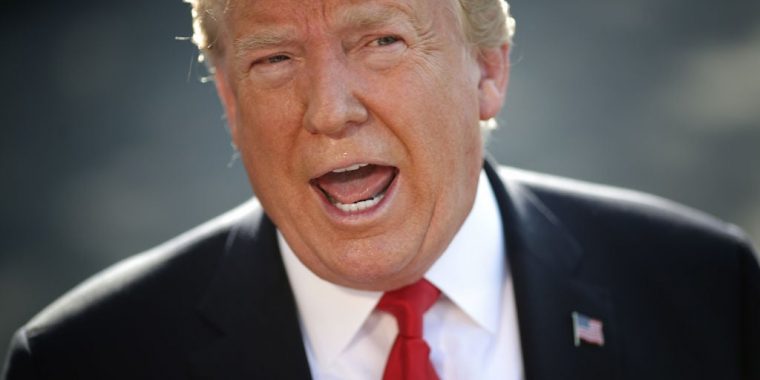
Donald Trump Went To Supreme Court To Watch Live As Birthright Citizenship Policy Got Thoroughly Smoked – Above the Law

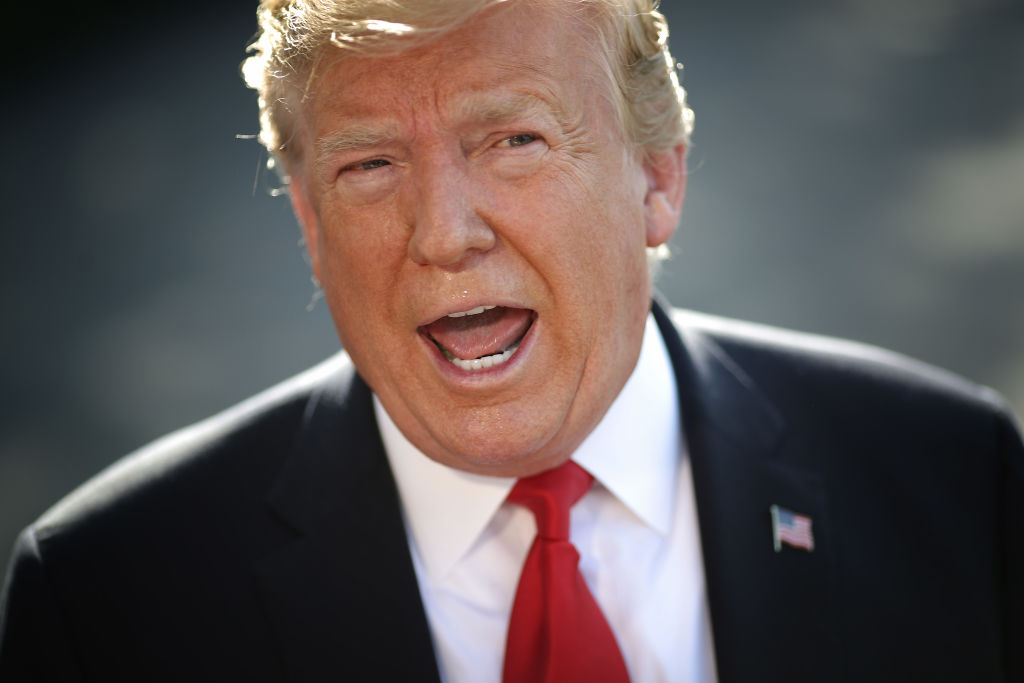
(Photo
by
PAUL
J.
RICHARDS/AFP/Getty
Images)

Under
the
second
Trump
administration,
reality
constantly
keeps
topping
sarcasm.
When
three
Republican
justices
ruled
against
Trump’s
tariffs,
leading

the
president
to
say
they
“sicken”
him
,
I
described

the
Chief
Justice’s
position
to
a
figurative
“cuck
chair.”

He’d
put
aside
any
principles
or
sense
of
institutional
legitimacy
to
give
Trump
the
White
House
and
a
blank
check
of
functional
total
immunity,
only
to
find
himself
ritualistically
humiliated
in
public
for
refusing
to
support
Trump’s
massive,
illegal
tax
hike.

And
then
Donald
Trump
decided
to
take
the
cuck
chair
analogy
much
more
literally,
and
physically
showed
up
to
watch
the
Supreme
Court
humiliate
his
Solicitor
General
as
he
attempted
to
defend
the
administration’s
attack
on
birthright
citizenship.

Indeed,
his
dingbat
Civl
Rights
Division
chief
thought
the
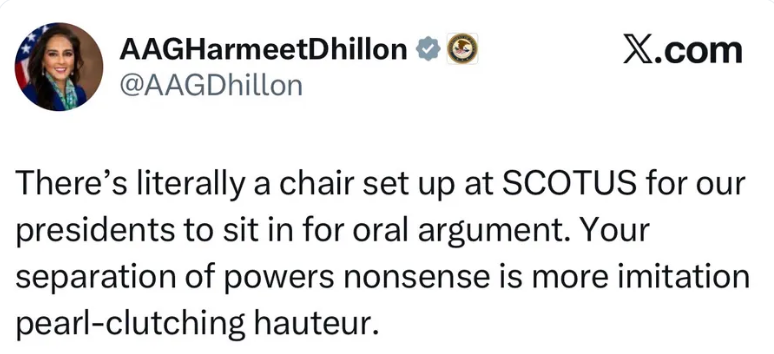
chair
was,
in
fact,
literal:

There
is
not.
And
Jamelle
Bouie
quickly
made
the
explicit
connection:
they
are
calling
it
the
scotus
cuck
chair
.”
Instead,
Trump
arrived
and
took
a
seat
in
the
gallery
to
witness
oral
argument
over
Trump’s
effort
to
undo
the
Fourteenth
Amendment’s
citizenship
language.
The
administration’s
argument
rests
on
a
handful
of
“originalists”
claiming
that
the
original
understanding
of
the
Amendment
did
not
support
birthright
citizenship
despite
this
being
the
unchallenged
understanding
of
the
text
for
well
over
a
century.
And
by,
“unchallenged,”
we
mean
originalists
like
Randy
Barnett
of
Georgetown
who

wrote
a
book
about
the
Fourteenth
Amendment


never
said
anything
about
this
language
until
now
.

A
reading
so
“original”
that
no
one
noticed
it
until
it
happened
to
align
with
contemporary
Republican
party
priorities.
Reality
continues
to
out
pace
snark.

The
Court,
by
and
large,
did
not
seem
prepared
to
overturn
a
bedrock
principle
of
American
law
based
on
Richard
COVID
will
only
kill
500
people

Epstein’s
trenchant
analysis
of
a
subject
where
he’s
not
really
an
expert.

How
bad
did
it
get
for
the
administration?
Solicitor
General
John
Sauer,
when
pressed
about
all
the
clear
historical
evidence
that
the
Fourteenth
Amendment
was
understood
to
apply
to
the
children
of
people
living
here,
beat
a
rapid
retreat
from
originalism,
“We’re
in
a
new
world
where
8
billion
people
are
one
plane
ride
away
from
having
a
child
who’s
a
US
citizen.”
Only
for
the
Chief
to
coldly
reply,
“It’s
a
new
world.
It’s
the
same
Constitution.”

Sauer
didn’t
fare
much
better
with
Justice
Gorsuch.
As
Sauer
listed
descriptions
of
what
constitutes
“unlawfully
present,”
Gorsuch
witheringly
remarked
“The
stuff
you
have
about
‘unlawfully
present,’
it’s
like
Roman
law
sources
you’re
going
to.”
Apparently,
we’ve
found
the
one
man
who
doesn’t
think
about
the
Roman
Empire
every
day.
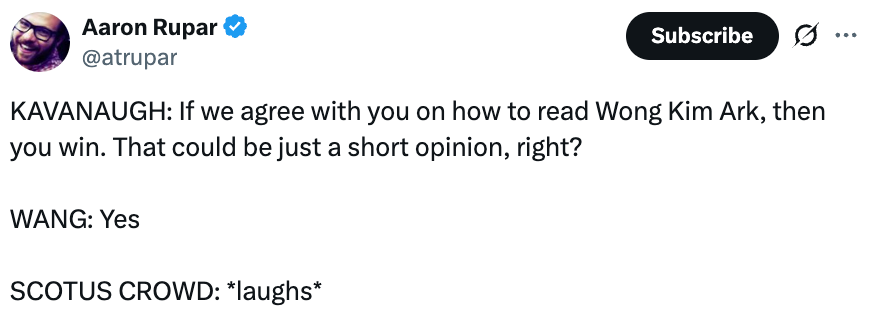
Sauer
mentioned

Wong
Kim
Ark
,
the
Supreme
Court
case
the
unequivocally
closed
the
door
on
Trump’s
birthright
citizenship
over
125
years
ago,
and
Gorsuch
jumped
in
with
“I’m
not
sure
how
much
you
want
to
rely
on

Wong
Kim
Ark
.”
It
was
like
watching
a
pack
of
predators
play
with
their
kill.

And
that
wasn’t
even
the
worst
flub
with
Gorsuch:


Sauer
had
even
raised
the
topic
of
Native
peoples
off-handedly
earlier
in
the
argument
so
someone
in
the
office
had
at
least
a
vague
sense
that
they
were
walking
into
a
minefield
with
Gorsuch.
And,
as
the
principle
of
Gorsuch’s
Gun
teaches:
if
you
raise
the
topic
of
Indian
law
in
the
first
act,
it
must
end
up
embarrassing
the
government
before
the
final
act.


Barrett
didn’t
prove
any
more
friendly
to
the
government.
Sauer
kept
trying
to
create
a
distinction
based
on
people
coming
to
America
with
an
intent
to
remain

advancing
the
dubious
theory
that
African
slaves
brought
to
the
United
States

and
inarguably
covered
by
the
birthright
citizenship
clause

took
the
view
that

slavery
sucks,
but
hey
at
least
we
live
here
now!

Barrett
bypassed
this
insanity
to
ask
the
related
question
about
the
children
of
human
trafficking
victims
brought
to
the
United
States
illegally.
Sauer’s
answer
could
best
be
described
as…
confused.

Kavanaugh
seemed
most
interested
in
finding
a
quick
and
easy
way
out
of
the
case
that
could
make
the
right
decision
while
staying
in
Trump’s
good
graces.


Over
and
over,
Sauer
stressed
“domicile”
as
the
key
to
citizenship,
despite
the
word
appearing
exactly
zero
times
in
the
text.

Even
Clarence
Thomas
seemed
half-assed
in
his
enthusiasm
for
the
administration’s
argument.
He
focused
on

Dred
Scott
,
laying
the
groundwork
for
an
opinion
rewriting
the
Fourteenth
Amendment
to

only

apply
to
the
children
of
freed
slaves
and
a
constitutional
anachronism
in
2026.
Though
by
the
end
it
wasn’t
even
clear
if
his
heart
was
in
it.

Indeed,
Sam
Alito
appeared
to
be
the
only
justice
fully
on
board
with
Trump’s
argument,
trying
to
sell
a
story
about
unwanted
immigration
being
non-existent
at
the
time
of
the
Fourteenth
Amendment,
as
though
there
wasn’t
an
aggressive
anti-Catholic
movement
in
the
19th
Century
whose
nightmare
scenario
was
an
Italian
immigrant’s
son
being
on
the
Supreme
Court.
Imagine
the
look
on
their
faces
if
one
could
go
back
and
tell
them
an
Italian-American
Catholic

with
a
European
knighthood

would
be
the
one
channeling
their
vision
from
the
bench.
At
one
point,
Cecilia
Wang,
arguing
for
the
ACLU,
pointedly
noted
that
the
children
of
Italian
immigrants
in
1898
wouldn’t
be
citizens
under
Alito’s
reading,
though
he
seemed
unmoved
as
though
he
didn’t
get
that
she
was
talking
about
his
community.
It’s
the

Chappelle
Show
‘s
Clayton
Bigsby
bit,
but
real.

As
for
Trump…

he
bailed
on
the
hearing
early

after
it
became
glaringly
obvious
how
badly
he
was
losing.

What
are
the
odds
that
he
fires
Sauer
within
the
next
48
hours?
Got
to
be
pretty
good,
right?
Keep
on
eye
on
the
White
House
insiders
making
huge
Polymarket
bets
on
this
about
10
minutes
before
it
happens.


HeadshotJoe
Patrice
 is
a
senior
editor
at
Above
the
Law
and
co-host
of

Thinking
Like
A
Lawyer
.
Feel
free
to email
any
tips,
questions,
or
comments.
Follow
him
on Twitter or

Bluesky

if
you’re
interested
in
law,
politics,
and
a
healthy
dose
of
college
sports
news.
Joe
also
serves
as
a

Managing
Director
at
RPN
Executive
Search
.

A Dispatch From The Flagship No Kings Rally In The Twin Cities – Above the Law

(Photo
by
Win
McNamee/Getty
Images)

I
parked
at
the
Science
Museum
of
Minnesota

about
a
mile
by
foot
from
the
state
Capitol
grounds.
I
started
alone.

At
the
first
stoplight,
a
woman
came
to
my
side.
We
crossed.
A
few
more
protesters
emerged
and
clustered
around
us
as
we
passed
side
streets.

The
sky
was
a
deep
blue,
save
for
a
few
wisps
of
flattened
contrails.
The
cold
was
biting.

More
and
more
people
joined
our
group,
like
individual
water
droplets
merging
into
a
single
moving
mass.
There
was
a
quiet
word
passed
between
friends
now
and
again,
an
occasional
light
laugh,
but
for
the
most
part
the
mood
was
somber.
It
reminded
me
of

waiting
at
the
border
to
cross

into
Ukraine.

A
chopper
thwacked
through
the
air
overhead
and
circled.
I
peered
up
into
the
brightness
between
the
high-rises
but
couldn’t
tell
whether
the
helicopter
was
the
police
or
the
news.
It
didn’t
really
matter.
That
sound
always
raises
goosebumps
on
my
flesh
now.

As
we
got
closer,
several
strategically
parked
St.
Paul
Police
cars
kept
the
roads
closed
to
traffic.
We
crossed
over
the
freeway,
and
the
moment
I
set
foot
on
the
Capitol
grounds
a
blast
of
wind
nearly
knocked
my
cap
off.
The
group
that’d
coalesced
around
me
on
the
way
there
melted
into
the
massive
crowd
already
present.
I
walked
past
the
columnar
Peace
Officers
Memorial
and
found
a
place
where,
with
the
aid
of
my
binoculars,
I
could
see
the
far-off
stage
at
the
foot
of
the
Capitol
building.

Speakers
were
already
pontificating.
The
audio
system
projected
their
voices
clear
and
crisp
all
the
way
to
the
back.
As
much
as
I
understand
the
importance
of
restraint
when
addressing
a

crowd
of
hundreds
of
thousands

of
pissed
off
people,
and
as
much
as
there
were
plenty
of
joyful
and
even
silly
elements
(including
about
a
dozen
attendees
in
large
inflatable
frog
costumes),
I
wanted
more
of
those
at
the
podium
to
match
the
simmering
mood
on
the
ground.

The
crowd
was
very
diverse,
as
was
the
roster
of
speakers,
and
that
was
self-evident.
There
were
way
too
many
unnecessary
nods
from
the
stage
to
those
of
every
imaginable
creed
and
heritage
and
sexual
orientation.
The
one
acknowledgement
that
was
then
needed,
to
recognize
the
demographic
group
that
had
been
most
harshly
and
most
unfairly
targeted
of
late,
was
to
Minnesota’s
immigrant
community.
The
crowd
repeatedly
rewarded
those
who
made
this
particular
acknowledgment.
However,
when
the
first
chance
arose
to
boo
the
brutal
federal
oppression
of
the
Twin
Cities
in
the
guise
of
immigration
enforcement,
the
crowd
howled
deafeningly,
much
louder
than
they’d
cheered.
Shouts
of
“Fuck
ICE!”
sounded
all
around
me.

Tim
Walz
gave
a
hell
of
a
speech.
The
man
would
have
made
a
powerful
vice
president.
He
introduced
Bruce
Springsteen.
It
was
the
first
time
I’d
ever
listened
to
the
entirety
of
“Streets
of
Minneapolis.”

The
Boss’
tribute

to
Renee
Good
and
Alex
Pretti,
sung
there,
sung
then,
felt
like
a
moment
that
would
matter
beyond
the
next
news
cycle.

Around
the
time
Bernie
Sanders
started
excoriating
billionaires
I
realized
cellphone
service
was
down.
No
doubt
the
network
was
overloaded.
A
good
friend
had
arrived,
and
I
tried
to
make
my
way
to
the
intersection
he
said
he
was
at
in
the
last
text
that’d
come
through.
I
made
it
across
two
rows
of
short,
spindly,
still
leafless
hedges
before
the
crowd
became
impenetrable.
I
never
did
find
my
friend,
but
at
least
now
I
was
positioned
in
front
of
one
of
the
jumbo
screens.

Jane
Fonda
announced
that
she
wouldn’t
give
a
speech
because
things
were
behind
schedule,
which
everyone
appreciated
at
that
point.
As
soon
as
she
said
this,
as
either
a
sign
of
divine
approval
or
a
fortuitous
coincidence,
a
gust
of
wind
ripped
a
sheaf
of
papers
from
her
hands.
She
recovered
and
instead
read
a
short
statement
given
to
her
by
Renee
Good’s
wife.

It
had
been
about
two-and-a-half
hours
since
I’d
arrived.
After
Joan
Baez
sang
a
song,
the
trickle
of
people
who’d
started
to
bow
out
turned
into
a
surge.
The
very
last
speaker
finished
up
around
the
three-hour
mark.
By
then
I
could
get
right
up
to
the
stage.
After
the
end,
10
women
dressed
as
handmaids
stayed
pressed
against
the
frontmost
barrier,
still,
silent,
staring
straight
ahead.

I
wandered
aimlessly
for
a
bit
with
the
other
stragglers.
A
handful
of
State
Patrol
officers
wearing
neon
safety
vests
remained
at
their
posts
adjacent
to
the
stage.
There
hadn’t
been
a
single
violent
incident.

As
I
departed,
I
noticed
two
more
handmaids
stationed
at
the
far
end
of
the
Capitol
grounds.
One
was
off
to
my
left.
The
other
stood
among
the
columns
of
the
Peace
Officers
Memorial.


Jonathan
Wolf
is
a
civil
litigator
and
author
of 
Your
Debt-Free
JD
 (affiliate
link).
He
has
taught
legal
writing,
written
for
a
wide
variety
of
publications,
and
made
it
both
his
business
and
his
pleasure
to
be
financially
and
scientifically
literate.
Any
views
he
expresses
are
probably
pure
gold,
but
are
nonetheless
solely
his
own
and
should
not
be
attributed
to
any
organization
with
which
he
is
affiliated.
He
wouldn’t
want
to
share
the
credit
anyway.
He
can
be
reached
at 
[email protected].

Law School Graduates Gifted $10K For Finishing Law School – Above the Law

*
Obligatory
“This
Is
Not
An
April
Fools’
Joke”
Disclaimer
*

Now
that
that’s
out
of
the
way,
let’s
move
on
to
something
that’s
no
laughing
matter:
student
loan
debt.
According
to
Education
Data
Initiative,

the
average
law
student
graduates
with
~$140K
in
student
loan
debt
.
Damn
I
wish
I
was
closer
to
being
average.

Anyone
that’s
considered
the
FIRE
life
knows
that
there’s
an
incentive
to
paying
off
debt
early.
Over
time
the
compound
interest
can
be
a
bigger
threat
than
the
amount
you
took
out

the
earlier
you
get
to
paying
down
the
principal,
the
easier
it
is
to
stop
the
debt
from
snowballing
out
of
control.
Put
differently,
not
only
is
$10K
a
lot
of
money
to
give
to
a
law
school
graduate,
putting
that
directly
toward
your
student
loans
could
save
them
even
more
cash
over
time.
Great
time
to
be
a
Maurer
School
of
Law
graduate!

WishTV

has
coverage:

All
154
May
graduates
in
the
Indiana
University
Bloomington
Maurer
School
of
Law
Class
of
2026
will
receive
a
$10,000
gift
from
anonymous
donors.

The
school
called
the
gifts
“unprecedented”
in
a
Wednesday
blog
post.

The
gifts
totaling
nearly
$1.6
million
were
intended
to
reduce
the
burden
of
student
debt
as
graduates
prepare
to
enter
the
legal
field.

Forgive
me
for
being
presumptuous,
but
this
is
what
the
entire
graduating
class
is
feeling
right
now:

Cheers
to
your
degrees
and
lightened
debt
loads
Class
of
2026!
And
if
any
anonymous
donors
want
to
mirror
generosity
and
retroactively
do
the
same
for
WashU’s
Class
of
2021,
it
isn’t
too
late!


Anonymous
Donors
Give
$10,000
Gifts
To
154
IU
Law
School
Graduates

[WishTV]


Chris
Williams
became
a
social
media
manager
and
assistant
editor
for
Above
the
Law
in
June
2021.
Prior
to
joining
the
staff,
he
moonlighted
as
a
minor
Memelord™
in
the
Facebook
group Law
School
Memes
for
Edgy
T14s
.
 He
endured
Missouri
long
enough
to
graduate
from
Washington
University
in
St.
Louis
School
of
Law.
He
is
a
former
boat
builder
who
is
learning
to
swim
and
is
interested
in
rhetoric,
Spinozists
and
humor.
Getting
back
in
to
cycling
wouldn’t
hurt
either.
You
can
reach
him
by
email
at [email protected]
and
by
tweet
at @WritesForRent.

Don’t Write ‘April Fools’ On Your Tax Return Or Try A Trump-Protest Stunt Because The IRS Won’t Be Laughing – Above the Law

Today
is
April
Fools’
Day
and
many
of
us
will
participate
in
a
prank
to
get
some
laughs.
But
with
the
tax
return
filing
deadline
coming
in
two
weeks,
some
who
are
unhappy
with
how
the
country
is
doing
may
be
tempted
to
write
“April
Fools”
on
their
tax
returns
and
either
not
pay
their
taxes
or
try
to
get
an
illegally
large
tax
refund.

But
filing
an
incorrect
tax
return
or
not
paying
taxes,
even
if
done
to
conscientiously
protest
policies
they
disagree
with,
is
not
a
good
idea.
The
IRS
or
any
other
tax
agency
will
not
see
this
as
a
prank
but
instead
illegal
and
will
act
accordingly.

Half
of
the
country
disagrees
with
President
Donald
Trump’s
policies,
most
notably
the
large-scale
raids
by
Immigration
and
Customs
Enforcement
(ICE)
officers
and
the
recent
conflict
with
Iran
which
has
significantly
raised
gas
prices.
A
number
of
these
people
want
to
protest
with
their
wallet
by
not
paying
taxes.
Their
rationale
is
that
they
shouldn’t
have
to
pay
taxes
to
fund
policies
they
disagree
with.

A
few
people
have
taken
their
case
to
social
media
telling
their
followers
that
they
won’t
pay
federal
income
taxes
as
a
form
of
protest.
There
are
also
organizations
that
provide
information
and
resources
for
people
who
want
to
avoid
paying
taxes.
After
reading
numerous
news
articles
featuring
these
people
and
organizations,
I
have
decided
not
to
name
them
as
I
believe
their
primary
motivation
is
getting
social
media
clout
and
attention.
Also,
they
are
spreading
incorrect
information
that
could
get
people
in
trouble,
both
civilly
and
criminally.

The
IRS
has
heard
the
moral
objection
argument
before
and
now
considers
these
arguments
to
be

frivolous
.
The
IRS
notes
that
these
individuals
or
groups
claim
that
taxpayers
may
refuse
to
pay
federal
income
taxes
based
on
their
religious
or
moral
beliefs
or
on
an
objection
to
using
taxes
to
fund
certain
government
programs.
In
support
of
this
frivolous
position,
these
persons
mistakenly
invoke
the
First
Amendment.

The
IRS
cites
numerous
court
decisions
which
held
that
the
First
Amendment
does
not
provide
a
right
to
refuse
to
pay
income
taxes
on
religious
or
moral
grounds
or
because
taxes
are
used
to
fund
government
programs
opposed
by
the
taxpayer.
The
First
Amendment
does
not
protect
commercial
speech
or
speech
that
aids
or
incites
taxpayers
to
unlawfully
refuse
to
pay
federal
income
taxes,
including
speech
that
promotes
abusive
tax
avoidance
schemes.

The
people
who
choose
to
take
their
chances
will
be
liable
for
not
only
taxes
but
also
penalties
and
interest.
There
are
penalties
for
failing
to
file
tax
returns
and
not
paying
the
tax
owed
which
can
add
up
quickly
and
raise
the
amount
due
significantly.
The
IRS
will
not
waive
these
penalties
because
they
do
not
consider
protesting
government
policy
to
be
reasonable
cause.

Also,
if
the
IRS
considers
you
to
be
a

frivolous
tax
protestor
,
they
can
also
issue
a
special
$5,000
penalty
for
filing
a
return
containing
frivolous
statements
and
protest
language.
In
extreme
cases,
this
can
result
in
prosecution
for
criminal
tax
evasion.

For
these
tax
protestors,
there
are
a
few
things
to
consider.
First,
your
tax
boycott
must
be
applied
consistently.
Let’s
suppose
you
are
allowed
to
avoid
paying
taxes
to
protest
ICE
or
the
Iran
conflict.
Does
this
mean
someone
else
can
similarly
protest
because
ICE
is
being
too
lenient
on
undocumented
aliens
or
because
the
U.S.
does
nothing
while
Iran
builds
a
nuclear
weapon
and
funds
terrorist
groups?
Many
people
disagree
with
the
government’s
spending
on
welfare
or
warfare
for
many
reasons.
If
they
are
allowed
to
protest
by
not
paying
taxes,
the
government
will
go
broke.

Second,
are
you
really
willing
to
accept
the
consequences
of
not
paying
taxes?
Boycotting
taxes
is
not
the
same
as
boycotting
a
TV
show
or
a
business.
The
IRS
can
seize
bank
accounts
and
garnish
wages,
and
they
don’t
do
this
when
it
is
most
convenient
for
the
delinquent
taxpayer.
This
can
destabilize
a
person
or
family’s
finances.
Once
the
IRS
freezes
your
bank
account
holding
the
money
for
your
rent
or
car
payment,
you
will
seriously
consider
whether
there
is
a
better
way
to
protest
President
Trump.

Taxes
are
the
lifeblood
of
government
that
pays
for
infrastructure,
national
defense,
and
public
services
to
name
a
few
things.
It
also
pays
for
agendas
you
agree
with
and
disagree
with.
But
the
system
is
not
set
up
where
you
can
veto
spending
you
don’t
like,
otherwise
the
public
treasury
will
be
in
chaos.
Avoid
taking
advice
from
grifters
who
will
tell
you
what
you
want
to
hear
but
will
get
you
in
serious
trouble.
So
don’t
think
you
can
play
an
April
Fools’
stunt
this
tax
season
because
the
tax
laws
are
enforced
on
the
basis
of
the
law,
not
feelings.


Steven
Chung
is
a
tax
attorney
in
Los
Angeles,
California.
He
helps
people
with
basic
tax
planning
and
resolve
tax
disputes.
He
is
also
sympathetic
to
people
with
large
student
loans.
He
can
be
reached
via
email
at [email protected].
Or
you
can
connect
with
him
on
Twitter
(
@stevenchung)
and
connect
with
him
on 
LinkedIn.

Trump Gets Brutal News Flash: The White House Ain’t Mar-A-Lago – Above the Law

(Photo
by
Heather
Diehl/Getty
Images)

If
you’ve
been
following
the
slow-motion
legal
trainwreck
that
is
Donald
Trump’s
East
Wing–turned–ego
monument,
then
yesterday’s
preliminary
injunction
wasn’t
a
shock.


Because
from
jump
,
Judge
Richard
Leon
has
been
all
but
skywriting
his
conclusion.
The
case
brought
by
the
National
Trust
for
Historic
Preservation
over
the
Trump
administration’s
unilateral
demolition
of
the
East
Wing
of
the
White
House
to
build
a
$400
million
White
House
ballroom

funded
privately

with
exactly
zero
Congressional
approval
or
oversight.
And
now,
after
months
of
increasingly
incredulous
benchslaps,
Leon
has
finally
done
the
obvious,

granting
the
plaintiff

a
preliminary
injunction
halting
further
work
on
the
ballroom
project,
making
crystal
clear
that
(shocker!)
presidents
do
not,
in
fact,
get
to
freestyle
renovations
on
national
landmarks
like
they’re
flipping
a
condo.


Back
in
March
,
Leon

a
George
W.
Bush
appointee,
not
exactly
a
card-carrying
member
of
the
Resistance

was
already
openly
skeptical
of
the
administration’s
“of
course
the
president
can
do
whatever
he
wants
to
the
White
House”
theory.

He
called
the
government’s
arguments
“brazen.”
He
questioned
whether
demolishing
the
East
Wing
could
possibly
be
described
as
an
“alteration.”
He
reminded
everyone,
repeatedly,
that
the
White
House
is
“an
iconic
symbol
of
this
nation,”
not
a
personal
playground.

So
when
Leon
finally
ruled,
the
opinion
had
a
real
“are
you
fucking
kidding
me
right
now?”
vibe.
Leon
wrote,
“no
statute
comes
close
to
giving
the
President
the
authority
he
claims
to
have.”
And
he
slapped
the
president’s
attempt
at
self-aggrandizement,
writing,
“The
President
of
the
United
States
is
the
steward
of
the
White
House
for
future
generations
of
First
Families.
He
is
not,
however,
the
owner!”

Judge
Leon
went
on
to
swat
away
the
government’s
desperado
move
of
claiming
a
delay
in
the
ballroom
project
would
“imperil
national
security
and
expose
the
White
House
to
damage,”
writing
that’s
just
“grasping
for
straws.”

Of
course,
this
decision
might
not
shield
the
nation
from
whatever
gold
covered
monstrosity
Trump
has
in
mind
for
the
East
Wing.
Leon
makes
it
clear
that
with
Congressional
approval,
the
project
can
move
forward.
Plus
there’s
the
appellate
process,
the
Department
of
Justice
has
already
filed
its
appeal
of
the
ruling.


Kathryn
Rubino
is
a
Senior
Editor
at
Above
the
Law,
host
of

The
Jabot
podcast
,
and
co-host
of

Thinking
Like
A
Lawyer
.
AtL
tipsters
are
the
best,
so
please
connect
with
her.
Feel
free
to
email

her

with
any
tips,
questions,
or
comments
and
follow
her
on
Twitter

@Kathryn1
 or
Mastodon

@[email protected].

The Clio Guide To Starting Your Own Firm – Above the Law

Starting
your
own
law
firm
can
be
a
rewarding
next
step
in
your
career.

But
before
you
make
the
decision
to
hang
your 
shingle,
you
should
consider
whether
this
is
the right
path
for
you

Are
you
prepared
to
juggle
running
your
business
in
addition
to
practicing
law?
Are
you
ready
to
manage
financials,
attract
clients,
do
your
own
marketing,
and
more?

If
you
said
yes,
this
guide
will
help
you
get
started —
from
developing
a
business
plan
and
getting
your
finances
in
order
to
setting
up
your
workspace
and
technology
to
finding
a
steady
client
base. 

Download
it
to
explore how
you
can:

  • Create
    a
    budget
  • Attract
    new
    clients
  • Implement
    systems
    and
    processes
  • Set
    up
    your
    work
    space
  • Create
    your
    online
    presence
  • Get
    support
    through
    networking
    and
    hiring 


Sign
up
to
get
started
today!


Judge Who Embarrassed Himself With IT Outrburst Doubles Down – Above the Law

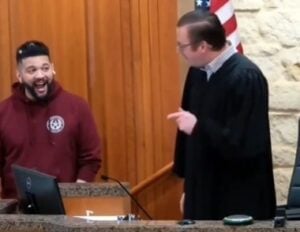
(Screenshot
via
Reddit)

The
most
surprising
takeaway
from
the

viral
video
of
a
Texas
judge
losing
his
temper
at
an
IT
staffer
for
trying
to
fix
the
judge’s
phone
,
is
that
it’s
crazy
that
it’s
taken
this
long
for
Judge
Nathan
Milliron
to
face
a
firestorm
like
this.
Before
we
even
posted
our
coverage
of
the
video,
we’d
already
found
the
judge
seemingly
gloating
online
about
an
earlier
incident
where
he
berated
an
attorney
and
threatened
to
issue
a
bench
warrant
for
a
missing
litigant.


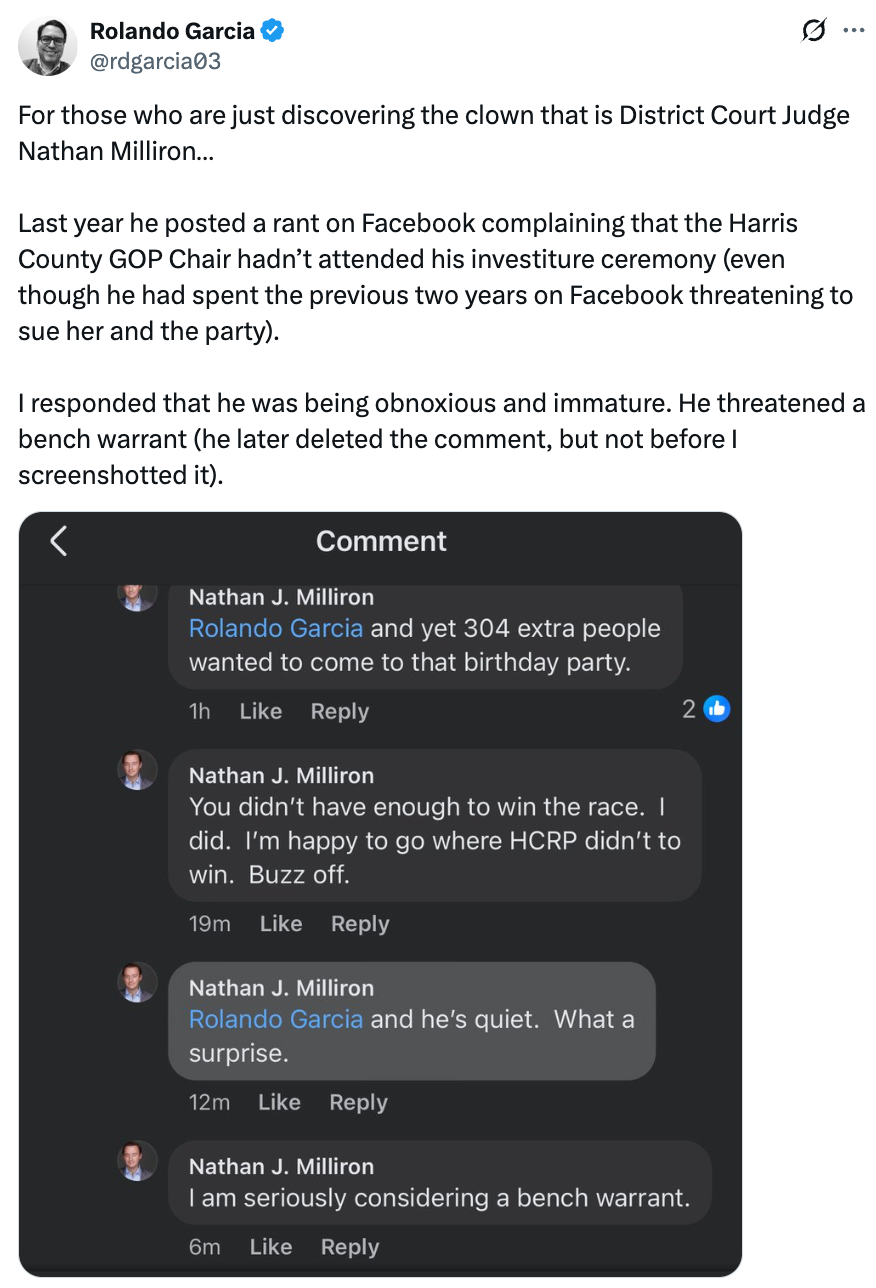
In
a
civil
case
.

It
appears
that
the
altercation
with
IT
was
just
the
peppercorn
the
rest
of
the
Texas
legal
community
needed
to
start
talking
about
the
judge’s
behavior.


This
is
a

Republican

judge
threatening
to
issue
a
warrant
for
a
Texas

Republican

party
official
because
he
criticized
the
judge
for
throwing
a
public
fit
about
the
local

Republican

party
not
attending
his
celebration.
Academics
like
to
say
their
fights
are
so
vicious
because
the
stakes
are
so
small,
but
apparently
they’ve
got
nothing
on
Harris
County
Texas
Republican
politics.

Folks
are
also
going
public
with

his
past
interactions
with
staff
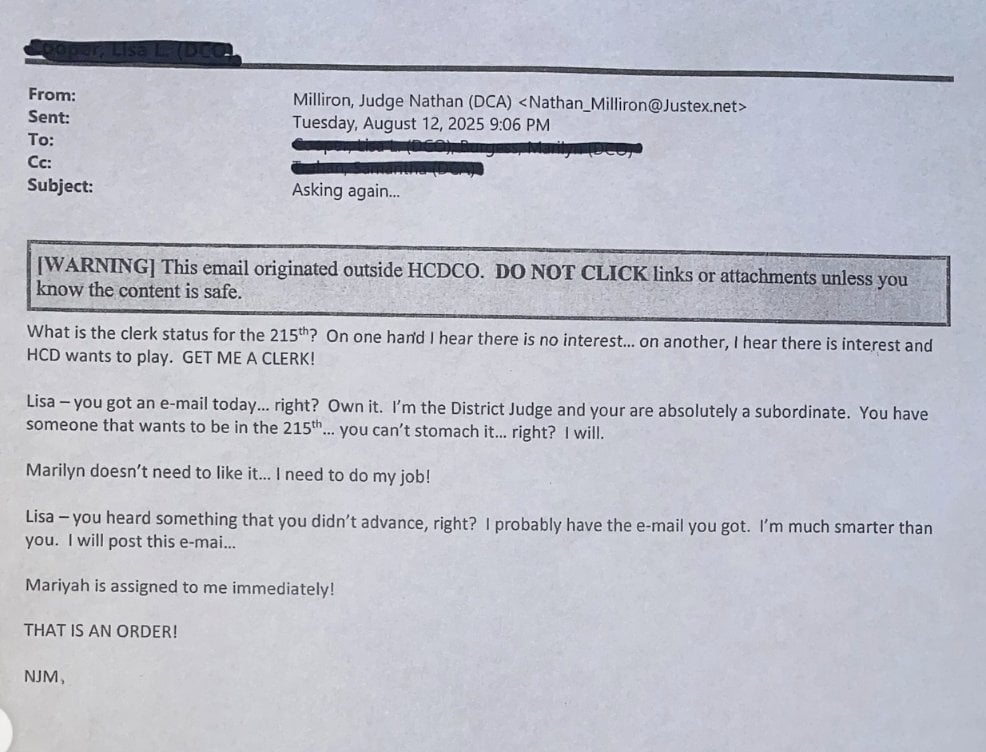
.

An
all
caps
“THAT
IS
AN
ORDER!”
in
an
email
to
the
clerk
staffing
office.
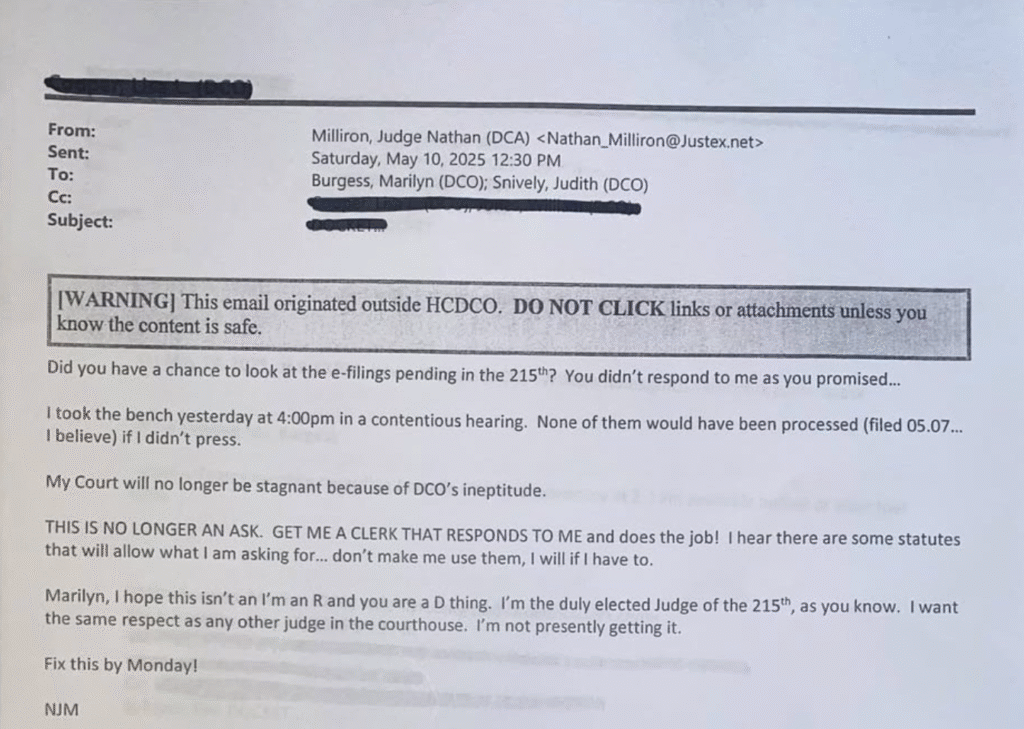
This
message
was,
it
seems,
the
end
result
of
an
ongoing
dispute
with
the
office
that
can
best
be
summed
up
as
“the
judge
was
a
dick
to
all
his
clerks
and
then
got
mad
that
no
one
wanted
to
work
in
his
courtroom.”

From

a
few
months
before
:

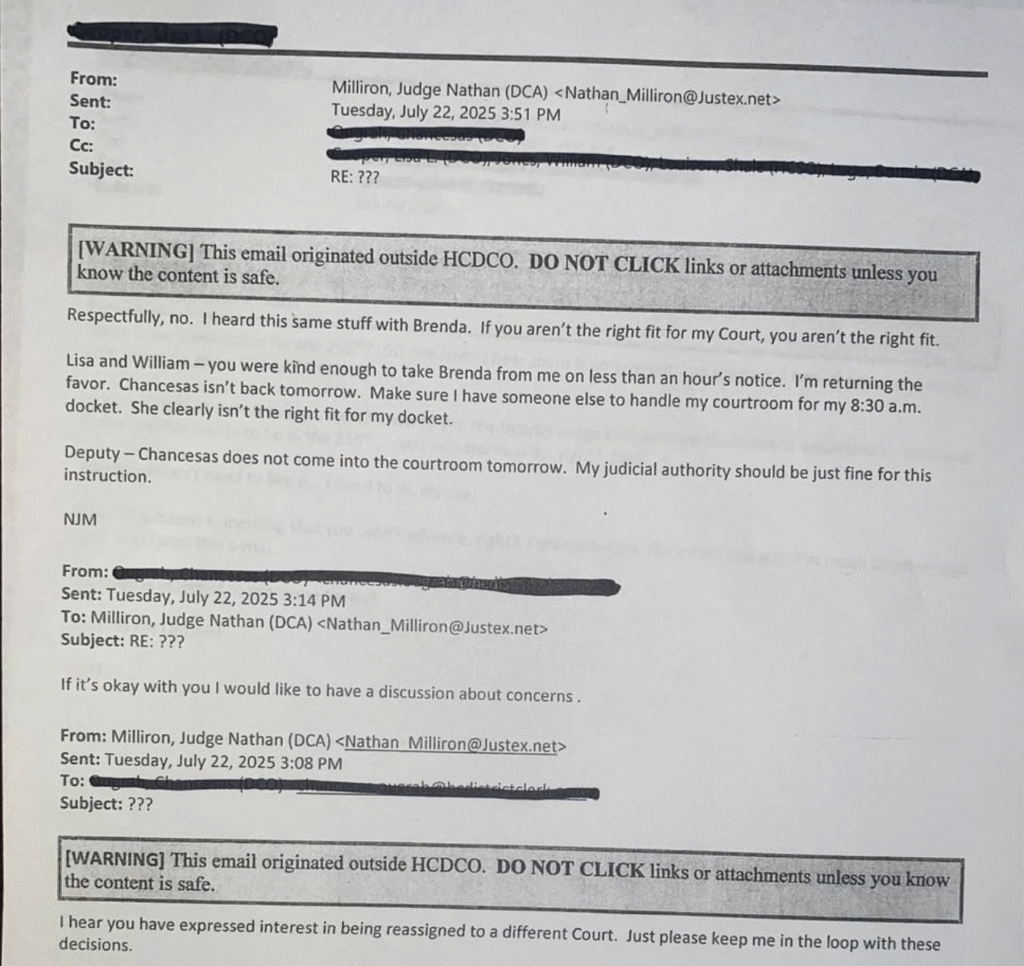
And
then:

It
feels
like
we
were
long
overdue
for
this
bullying
treatment
of
staff
to
spill
out
into
public
view.

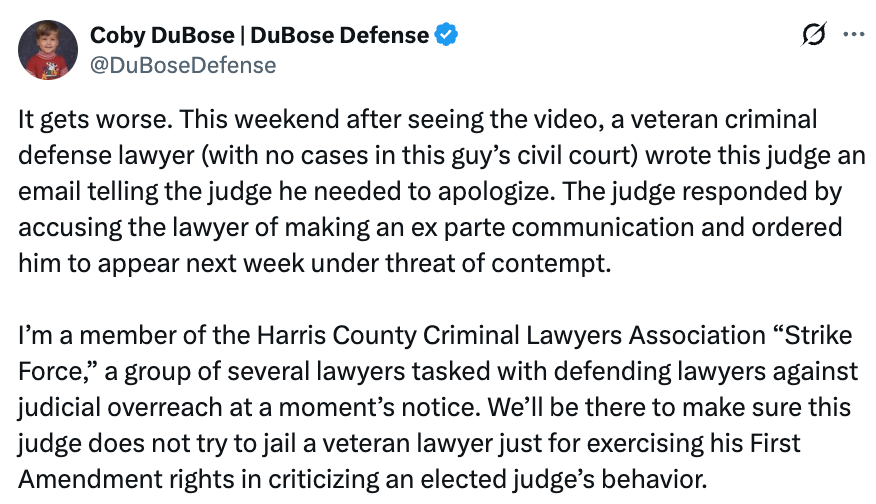
Disturbingly,
the
judge
has
taken
the
intense
public
rebuke
of
his
attitude
and
decided
to
double
down,
retaliating
against
lawyers
who
reached
out
asking
him
to
apologize
for
making
the
profession
look
bad.


Follow
up
reporting
by
Houston
Public
Media

confirmed
that
the
lawyer
in
question
is
James
Stafford.
The
Houston
County
Criminal
Lawyers
Association
put
out

a
social
media
video

of
president
Brent
Mayr
condemning
the
whole
affair.

As
a
reminder,
this
guy
ended
up
on
the
bench
by
a
margin
of
around
300
votes.
Judicial
elections
matter.


Earlier
:

Judge
Throws
IT
Worker
Out
Of
Courtroom
For
Doing
His
Job


HeadshotJoe
Patrice
 is
a
senior
editor
at
Above
the
Law
and
co-host
of

Thinking
Like
A
Lawyer
.
Feel
free
to email
any
tips,
questions,
or
comments.
Follow
him
on Twitter or

Bluesky

if
you’re
interested
in
law,
politics,
and
a
healthy
dose
of
college
sports
news.
Joe
also
serves
as
a

Managing
Director
at
RPN
Executive
Search
.

Deepfakes: A Problem In Search Of A Problem? – Above the Law

I
asked
a
room
full
of
lawyers
and
legal
professionals
recently
how
many
of
them
had
come
across
deepfakes
in
litigation.
Not
a
single
hand
went
up.
Is
the
deepfake
phenomenon
a
problem
that’s
really
not
one?
Or
is
it
like
the
hallucinated
case
citation
problem
once
was:
skepticism
that
hadn’t
caught
up
with
reality?

I
was
giving
a
presentation
on
deepfakes
with
the
esteemed
jurist,

Xavier
Rodriguez
,
at
ABA’s

TECHSHOW

to
some
50
or
so
lawyers
and
legal
professionals
when
I
asked
my
deepfakes
question.
Judge
Rodriguez
is
a
federal
district
judge
for
the
Western
District
of
Texas
and
a
leading
voice
on
technology
and
AI
in
the
federal
judiciary.
I

have
written

before
about
the
threat
of
AI-generated
deepfakes
and,
like
Judge
Rodriguez,
fear
its
impact
on
our
judicial
system.

The
fact
that
not
one
person
raised
their
hands
is
significant.
Granted,
the
sample
size
was
small,
but
TECHSHOW
typically
draws
some
pretty
savvy
tech
people
and
litigators.
So,
of
anyone,
they
should
be
well
aware
of
and
sensitive
to
the
potential
problem.

We
shouldn’t
have
been
all
that
surprised
that
no
hands
went
up
though.
After
all,
the

Advisory
Committee
on
Evidence
Rules

that
proposes
changes
to
the
Federal
Rules
of
Evidence
recently
rejected
a
change
to
Federal
Rule
901
to
strengthen
authentication
rules.
One
major
reason:
the
Committee

reportedly

thought
it
was
premature
given
that
there
were
so
few
reported
cases
involving
deepfake
evidence.
The
Committee
opted
for
a
wait-and-see
approach.

But
with
all
the
publicity
about
deepfakes
and
the
dangers
they
portend
to
our
judicial
system
and
society,
you
have
to
ask
why
it
isn’t
showing
up
more.
Is
it
just
a
problem
in
search
of
a
problem
(to
paraphrase
the
saying
it’s
a
solution
in
search
of
a
problem)?


What’s
the
Why?

There
could
be
several
reasons
that
we
apparently
aren’t
yet
seeing
a
deepfake
problem
in
our
courtrooms.

Maybe
litigants
aren’t
yet
savvy
enough
to
create
the
kind
of
deepfake
that
passes
the
realistic-looking
test
one
would
need
for
litigation.
For
those
with
some
tech
knowledge,
it
seems
pretty
easy
to
create
a
convincing
fake.
But
to
those
with
less
tech
background,
maybe
it
isn’t.

Or
perhaps
litigants
still
have
respect
and
outright
fear
of
brazenly
offering
fake
evidence
in
front
of
a
black-robed
judge.
After
all,
committing
what
is
in
essence
perjury
should
give
anyone
pause.

Or
maybe,
as
one
litigator
who
I
know
well
and
respect
told
me
after
the
presentation,
maybe
deepfakes
are
occurring,
but
lawyers
and
judges
aren’t
catching
them.
After
all,
we
have
been
conditioned
for
years
by
the
photography
and
audio
recording
industry
that
what
you
see
in
a
picture
or
hear
in
a
recording
is,
in
fact,
real.
So,
we
assume
things
are
real
today
when
they
aren’t.

And
the
ability
to
use
AI
to
create
extremely
realistic
but
fake
evidence
is
a
fairly
recent
phenomenon.
It
burst
upon
us
all
quickly
and
continues
to
develop
rapidly.
So,
our
minds
have
not
yet
caught
up
with
the
fact
that
its
use
could
create
a
problem
for
our
litigation
system.


It’s
Easy

And
Tempting

I
tend
to
doubt
the
first
two
reasons
because
it’s
so
easy
to
manufacture
convincing
evidence.
Certainly,
in
the
criminal
law
arena,
the
opportunity
to
engage
in
deepfakes
by
defendants
would
seem
ripe
for
the
taking.
Manufacturing
a
picture
to
establish
an
alibi.
Creating
an
audio
recording
to
suggest
someone
else
committed
the
crime.
The
list
could
go
on
and
on.
Indeed,
prosecutors
have
told
me
that
they
are
in
fact
very
worried
about
just
this.

Another
area
ripe
for
abuse
is
family
law.
Someone
seeking
a
TRO
creates
an
audio
recording
suggesting,
for
example,
domestic
abuse.
That
puts
a
judge
in
a
tough
spot
since
the
impact
of
treating
the
recording
as
a
fake
could
have
a
devastating
impact
if
wrong.

But
it’s
not
just
the
bad
guys.
Even
well-meaning
people
might
be
tempted
to
cross
the
line.
Over
my
career,
I
saw
litigants
and
witnesses
constantly
convince
themselves
of
a
version
of
facts
that
were
just
not
correct.
Their
minds
would
embellish
the
version
they
wanted
and
add
things
to
it
that
simply
didn’t
happen.
Indeed,
it’s
often
not
conscious;
it’s
human
nature.

And
now
it
would
be
an
easy
line
to
cross
from
mind
embellishment
to
creating
proof.
I
had
a
case
once
that
turned
on
whether
a
fire
protective
device
was
or
was
not
present
in
a
building.
One
person
was
sure
it
wasn’t
there
when
in
fact
it
was.
In
the
age
of
deepfakes,
it
would
be
easy
to
create
a
picture
showing
what
the
mind’s
eye
was
certain
was
true:
a
device
that
was
not
there.

Or
if
one
side
had,
say,
a
picture
showing
it
was
there
and
their
adversary
concluded
that
picture
was
fake.
The
temptation
to
counter
the
picture
with
another
fake
one
would
be
high.


Skepticism
vs.
Reality

Which
brings
us
back
to
the
unscientific
poll
in
our
presentation
and
the
Rules
Committee
attitude:
why
aren’t
we
seeing
the
problem
in
our
courtrooms?

Judge
Rodriguez
made
a
good
point
in
our
discussion
that
I
mentioned
above:
there
is
a
presumption
of
validity
for
photos,
recordings,
and
videos.
It’s
the
notion
that
a
picture
is
worth
a
thousand
words.
So,
skepticism
for
what
we
see
has
not
yet
caught
up
with
reality.
At
least
in
the
courtroom.

But
more
and
more
people
are
rightfully
questioning
what
they
are
seeing
on
things
like
social
media
and
elsewhere.
There
is
increased
publicity
about
the
deepfake
phenomenon
as
the
development
of
AI
has
created
greater
opportunity
for
realistic
deepfakes.
Maybe
we
just
aren’t
there
yet.

It’s
like
hallucinated
cases.
Most
people
knew
that
LLMs
could
hallucinate
from
the
time
they
burst
on
the
scene.
Yet
it
wasn’t
until
later
that
the
first
instance
of
a
hallucinated
citation
popped
up
in
a
courtroom.
Now
it
happens
all
the
time.

The
reality
is
that
lawyers
and
judges
have
not
yet
realized
that
virtually
any
piece
of
evidence,
the
realism
of
which
we
have
taken
for
granted,
could
now
be
fake.
And
that
routine
authentication
may
need
to
take
on
a
whole
new
meaning.

But
if
it
does,
litigation
will
turn
into
a
side
show
of
battles
over
whether
any
piece
of
evidence
is
real
or
not.
And,
even
worse,
again
as
Judge
Rodriguez
pointed
out,
fact
finders

judges
and
juries

won’t
or
can’t
believe
any
piece
of
evidence.
It
could
turn
our
litigation
system
designed
for
fact
finding
on
its
head.
Endless
fights
with
no
one
believing
anything
they
see
or
hear.

That
threat
is
real.
Waiting
and
seeing
is
not
an
option.


Stephen
Embry
is
a
lawyer,
speaker,
blogger,
and
writer.
He
publishes TechLaw
Crossroads
,
a
blog
devoted
to
the
examination
of
the
tension
between
technology,
the
law,
and
the
practice
of
law
.