Government shutdown delaying contracts, but no major financial impact yet, defense CEOs say – Breaking Defense

WASHINGTON

The
government
has
been
shut
down
for
a
month,
but
for
the
most
part,
the
CEOs
of

some
of
Am
erica’s
top
defense
companies
say
they’re
not
seeing
a
financial
impact
to
their
business

not
yet,
that
is.

Government
funding
expired
on
Oct.
1,
too
late
to
put
a
dent
into
third
quarter
earnings,
which
defense
executives
have
detailed
over
the
past
two
weeks.
But
although
CEOs
are
not
sounding
the
alarms
to
investors,
they
cautioned
that
a
prolonged
shut
down
will
cause
delays
to
contract
awards
that
could
whittle
away
projected
revenue
for
the
year.

“The
government
shutdown
is
clearly
the
challenge.
It’s
disappointing
where
we
are,
and
we
need
Congress
to
get
together
and
resolve
this
situation,”
said

L3Harris

CEO
Chris
Kubasik,
who
called
the
shutdown
“baffling”
during
an
earnings
call
with
investors
on
Thursday.

L3Harris
is
already
seeing
impacts
to
cash
collection
and
delays
in
the
timing
of
contract
awards,
Kubasik
said.
For
example,
the
government
will
need
to
reopen
to
move
forward
on
programs
like
the
Space
Development
Agency’s
Tranche
3
tracking
system
and
Missile
Defense
Agency’s
Hypersonic
and
Ballistic
Tracking
Space
Sensor.

“There’s
clearly
an
incongruency
within
the
government.
The
DoW
[Department
of
War]
wants
to
go
fast,”
he
said,
using
a
secondary
name
for
the
Defense
Department.
“They
meet
with
us
all
the
time,
[telling
us]
we’ve
got
to
go
quicker,
and
then
Congress
can’t
fund
the
DoW.
So
we’re
kind
of
stuck
between
those
two
situations.”

The
company
remains
confident
it
will
be
able
to
meet
its
financial
guidance
for
the
year
and
is
currently
projecting
that
the
government
will
reopen
in
November,
Kubasik
said.
“Then
we’ll
have
a
busy
December
to
catch
up
on
everything.”


Northrop
Grumman

CEO
Kathy
Warden
noted
that
Northrop’s
latest
financial
guidance
for
2025
already
bakes
in
some
of
the
delays
the
company
anticipates
in
terms
of
getting
programs
under
contract,
and
that
it
does
not
project
any
“significant
impact”
on
financial
results
so
long
as
the
shutdown
is
resolved
“in
the
near
term.”
 

“We
are
assuming
that
this
only
goes
a
few
more
weeks,
say
around
mid-November,”
Warden
said
last
week.
“If
it
goes
beyond
that,
we
may
start
to
see
some
additional
delays
in
getting
funding
on
contract,
or
even
delays
in
receiving
payment
before
year
end that
could
impact
our
cash
flows
for
the
year.
We
don’t
anticipate
that
at
this
time,
but
it’s
certainly
something
we’re
watching.
And
so
we’re
very
hopeful,
as
I
said,
that
the
government
will
agree
to
reopen
soon,
even
if
under
a
continuing
resolution.”

At
the
same
time,
she
added
that
the
shutdown
is
already
slowing
down
the
Pentagon’s
ability
to
make
decisions
on
programs.

For
example,
although
the
Pentagon’s
fiscal
2026
budget
has
yet
to
be
approved
by
lawmakers,
the
reconciliation
legislation
passed
by
Congress
earlier
this
year
includes
$4.5
billion
to
increase
the
B-21’s
production
rate
that
is
already
available
for
the
Pentagon
to
execute.
However,
discussions
with
the
Air
Force
to
define
the
specifics
of
the
ramp-up
plan

including
the
max
production
rate
and
the
timing
for
the
production
acceleration

have
“been
held
up
a
bit”
because
of
the
government
shutdown,
Warden
said.


Leonardo
DRS

is
another
company
that
is
expecting
the
shutdown
to
last
no
longer
than
November.

“As
it
starts
to
go
longer
than
that,
the
people
who
pay
us
and
give
us
the
awards
aren’t
there.
And
so
you’ll
start
to
see
delays
in
awards
and
delay
in
pay,”
said
its
CEO
Bill
Lynn,
who

is
retiring

later
this
year.
“But
it
would
really
have
to
keep
going
for
a
longer
period

where
we’re
already
basically
longer
than
we’ve
ever
seen

but
it
would
have
to
be
a
historic
length
before
we’d
see
an
impact.”


General
Dynamics

CEO
Phebe
Novakovic
said
a
long
shutdown
would have
particular
impact
on
short-cycle
programs
where
contracts
need
to
be
renewed
more
frequently,
although
she
wasn’t
willing
to
say
at
what
point
the
company
would
expect
to
see
a
financial
impact.

“The
uncertain
duration
and
future
potential
impacts
of
the
government
shutdown
creates
a
lack
of
clear
visibility
into
our
cash
forecast
for
the
remainder
of
the
year,”
she
said.
“We
are
taking
prudent
actions
to
conserve
cash
and
liquidity.
If
a
resolution
can
be
reached
in
the
near
term,
we
would
expect
to
be
able
to
achieve
the
forecast
that
I
just
discussed.
However,
in
the
event
of
a
protracted
shutdown,
it
is
unclear
how
and
when
our
cash
flow
will
be
impacted,
despite
our
careful
efforts
to
diligently
manage
cash.”

Novakovic
laid
out
one
such
step:
Following
the
third
quarter,
the
company
re-entered
the
commercial
paper
market

a
financial
term
used
to
describe
what
is
essentially
an
IOU
sold
by
a
company
to
help
finance
short
term
debts

which
she
said
would
support
the
company’s
liquidity
during
the
government
shutdown
in
the
event
of
slow
or
nonpayment
issues.

General
Dynamics
is
evaluating
the
impacts
to
its
contracts
on
a
weekly
basis,
and
while
the
shutdown
has
not
yet
impacted
cash
collection,
the
furlough
of
certain
department
contracting
personnel
has
resulted
in
a
delay
in
awards,
Novakovic
said.

“If
it
goes
into
next
year,
that
increases
the
likelihood
this
will
have
additional
impact,”
she
said,
adding
that
“particular
lines
of
business”
could
begin
to
run
out
of
funding.

For

HII
,
shipbuilding
programs
continue
to
be
supported,
with
no
impact
to
ongoing
shipbuilding
operations
or
the
contract
negotiations
for
the
next
round
of
Columbia-class
ballistic
missile
submarines
and
Virginia-class
attack
submarines,
said
CEO
Chris
Kastner
during
an
earnings
call
Thursday.
However,
there
has
been
an
impact
to
the
company’s
mission
technologies
business,
which
Kastner
characterized
as
“immaterial”
so
far.

“We
are
watching
those
programs
closely
as
they
are
more
likely
to
be
impacted
by
budget
timing.
We
continue
to
support
completion
of
the
FY26
appropriations
process
as
soon
as
possible
to
minimize
the
impact
that
a
lapse
in
funding
could
have
on
our
programs,”
he
said.

Not
all
defense
CEOs
spoke
at
length
about
the
shutdown
or
its
impacts.

Lockheed
Martin

CEO
James
Taiclet,
who
leads
the
world’s
largest
defense
contractor,
said
the
company
is
closely
watching
congressional
deliberations
on
the
shutdown
and
FY26
budget
but
“continue[s]
to
see
broad
support
through
all
of
this
for
national
defense
priorities.”
Two
CEOs
with
a
large
commercial
aerospace
footprint


RTX’s

Chris
Calio
and

Boeing’s

Kelly
Ortberg

did
not
mention
the
shutdown
at
all
during
their
remarks.

Morning Docket: 11.03.25 – Above the Law

*
Government
shutdown
comes
for
bar
exams.
[ABA
Journal
]

*
Kash
Patel
fires
FBI’s
aviation
director
after
media
caught
Kash
Patel
using
taxpayer-funded
FBI
jets
to
go
on
dates.
[Bloomberg
Law
News
]

*
Judges
rule
that
the
White
House
can’t
selectively
shut
down
statutory
obligations
to
target
his
political
enemies.
[Law360]

*
ChatGPT
has
supposedly
stopped
giving
legal
advice,
but…
[Artificial
Lawyer
]

*
Judge
blocks
executive
order
purporting
to
demand
citizenship
proof
in
upcoming
elections.
Experts
say
it

won’t
be
the
last
effort

to
undermine
the
next
election.
[Reuters]

*
Kirkland
&
Ellis
will
soak
up
as
much
cash
from
the

data
center
shell
game

that
they
can
[Law.com
International
]

Why do-gooding animal rights activists are to blame for the bloody slaughter of 600 majestic African elephants: SUE REID

A
three-ton
bull
elephant
lies
dead
on
the
ground
in
a
remote
corner
of
Africa.
His
life
has
been
snuffed
out
by
a
marksman’s
bullet
fired
into
his
brain.
In
a
few
seconds
it
was
all
over.

He
will
have
known
nothing.
Within
minutes
of
his
death
ten
days
ago,
a
wildlife
vet
was
running
to
the
elephant
to
check
he
was
shot
cleanly
and
had
felt
no
pain.

An
hour
later,
I
was
able
to
stand
by
him,
marvelling
at
the
dark
eyes
perfectly
circled
by
bristly
lashes
and
his
four
jumbo
feet,
each
bigger
than
a
dinner
plate,
which
will
never
tramp
the
bush
again.

The
22-year-old
bull
might
have
survived
another
four
decades,
roaming
wild
with
950
other
elephants
on
the
giant
Sango
Conservancy
stretching
over
231
square
miles

a
third
of
the
size
of
Greater London –
in
south-east
Zimbabwe,
near
the
border
with
Mozambique.

He
was
killed
because
here
there
are
far
too
many
elephants.
At
least
100,000
(17,000
more
than
a
decade
ago)
trudge
the
country,
annihilating
the
land
where
they
live.

The
bull
was
among
54
elephants
killed
in
a
purge
at
Sango
to
control
numbers.
By
the
end
of
next
year,
the
private
conservancy
plans
to
have
slaughtered
600,
almost
two-thirds
of
its
resident
elephants,
in
southern
Africa’s
biggest
mass
cull
for
three
and
a
half
decades.

‘It
is
a
horrible
job,
which
we
don’t
like
doing,’
says
the
owner,
Willy
Pabst.
‘There
is
an
elephant
overpopulation,
which
means
they
imperil
their
own
survival.
The
biggest
danger
to
the
elephant
is
the
elephant
itself.’

We
are
sitting
together
at
his
imposing
conservancy,
which
teems
with
every
kind
of
African
wildlife
from
lions,
hippos,
zebras
and
leopards
to
baboons
and
hyenas.

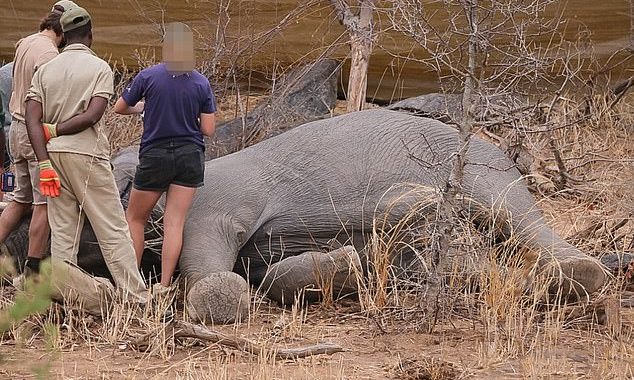
Members
of
the
Zimbabwe
National
Parks
and
veterinarians
examine
the
bull
elephant,
capturing
data
on
the
size
and
weight
of
the
animal

By the end of next year, the private conservancy plans to have slaughtered 600, almost two-thirds of its resident elephants, in southern Africa¿s biggest mass cull for three and a half decades

By
the
end
of
next
year,
the
private
conservancy
plans
to
have
slaughtered
600,
almost
two-thirds
of
its
resident
elephants,
in
southern
Africa’s
biggest
mass
cull
for
three
and
a
half
decades

Marksmen poised to cull a family of elephants herded by helicopter into an enclosure at Sango Conservancy, Zimbabwe

Marksmen
poised
to
cull
a
family
of
elephants
herded
by
helicopter
into
an
enclosure
at
Sango
Conservancy,
Zimbabwe

‘We
were
at
the
end
of
our
tether
about
what
to
do,’
he
continues.

‘Thousands
of
our
trees,
much
of
our
forest,
have
been
destroyed
by
elephants.

‘We
are
trying
to
save
the
elephants
and
the
conservancy.’

Before
we
watched
the
cull,
Kim
Wolhuter,
Sango’s
wildlife
filmmaker,
drove
us
miles
to
see
the
devastation
wreaked
by
elephants
in
their
relentless
quest
for
food.

‘They
are
eating
themselves
out
of
house
and
home,’
he
said.
‘There
are
too
many
for
the
land
and
their
numbers
keep
going
up.’

Sango
experts
stress
that
southern
Africa
is
not
a
Disneyland
full
of
gentle
jumbos
as
portrayed
in
Western
children’s
films.

Neither,
in
many
parts
of
Africa,
are
elephants
an
endangered
species,
despite
the
claims
of
animal
rights
charities
and
their
wealthy
Western
donors.

The
experts
add:
‘Elephants
are
not
fluffy
toys.
A
lion
is
not
a
vegan.
These
are
wild
animals
that,
to
survive,
will
consume
or
kill
everything
in
their
path
just
like
they
always
have.’

Today,
the
hideous
consequences
of
Sango’s
elephant
overpopulation
are
clear.
Some
of
the
conservancy
resembles
a
desert.

Nearly
80
per
cent
of
the
grass
has
disappeared
because
ever-hungry
elephants
use
their
powerful
trunks
to
rip
up
stems
and
roots
together

which
means
it
can
never
regrow.

A
third
of
Sango’s
forest
of
mopane
trees,
native
to
southern
Africa,
are
now
dead
or
stunted
because
the
elephants
like
to
gorge
on
them.

Hundreds
of
huge
1,000-year-old
baobab
trees
have
toppled
over
after
being
assaulted
by
beasts
that
need
to
eat
300
pounds
of
vegetation
a
day
and
drink
enough
water
to
fill
a
bathtub.

The
animals
tear
off
the
baobab
bark
up
to
19
ft,
the
height
their
trunk
tips
can
reach.

Then
they
suck
the
sap
inside
to
slake
their
thirst.
Under
this
attack,
the
ancient
tree
is
hollowed
out.
Finally,
it
collapses,
leaving
a
pile
of
what
resembles
sawdust.

The
result
is
a
single
baobab
can
die
in
a
few
weeks.
Known
in
Africa
as
the
‘upside
down’
tree
(because
its
branches
resemble
roots),
the
baobab
has
thrived
at
Sango
since
the
Middle
Ages

until
now.

Rifle shells are gathered afterwards so an accurate record of how many shots were fired during the culling

Rifle
shells
are
gathered
afterwards
so
an
accurate
record
of
how
many
shots
were
fired
during
the
culling

Pictured: A bull elephant rushes into the enclosure alone as professional hunters and members of the Zimbabwe National Parks wait for the rest of the group to enter the enclosure

Pictured: A
bull
elephant
rushes
into
the
enclosure
alone
as
professional
hunters
and
members
of
the
Zimbabwe
National
Parks
wait
for
the
rest
of
the
group
to
enter
the
enclosure

As
a
rule
of
thumb,
ecologists
say
an
adult
elephant
needs
almost
a
square
mile
of
the
southern
African
bush
to
thrive
(without
destroying
its
own
habitat).
But
even
in
vast
Sango
there
are
five
living
in
this
space
‘far
more
than
we
can
feed’,
said
Pabst.

David
Goosen,
a
Sango
director
and
wildlife
expert,
added:
‘We
had
to
figure
out
a
way
to
save
our
950
elephants
from
themselves.

‘We
may
have
to
cull
over
and
over
again
into
the
future
to
keep
down
numbers.
They
are
destroying
their
own
habitat
and
that
of
other
wildlife
too.’

The
controversial
action
at
Sango
follows
last
year’s
decision
by
the
Zimbabwean
government
to
kill
elephants
to
control
numbers.

It
ended
a
35-year
hiatus
on
culls,
which
wildlife
activists
worldwide
dubiously,
but
successfully,
argued
were
‘cruel
and
unnecessary’.

In
desperation,
ignoring
the
critics,
Zimbabwe
slaughtered
200
elephants
to
feed
its
citizens
left
hungry
by
the
worst
drought
in
decades.

Nearly
half
the
country’s
people
faced
‘acute
food
shortages’,
said
the
United
Nations.

The
environment
minister
said
enormous
elephant
numbers

more
than
in
any
country
apart
from
Botswana

were
endangering
human
life.

Marauding
animals
had
marched
into
villages
and
grown
fearless
of
people.
Some
31
people
in
Zimbabwe
died
from
elephant
attacks
last
year.

A
few
were
farmers
collecting
their
livestock
in
the
evening
or
tending
their
crops.

Children
and
old
people
walking
near
their
round
thatched
homes,
known
as
‘rondavels’,
were
killed
or
injured
when
the
animals
confronted
them.

In
the
middle
of
last
year’s
state-ordered
cull,
I
visited
villages
deep
in
the
bush
where
desperately
hungry
Zimbabweans
were
being
handed
elephant
meat
by
government
officials.

The
people
said
they
hated
and
feared
elephants
and
wanted
them
dead.
‘They
have
become
so
dangerous
and
there
are
so
many
of
them,’
said
one.

‘We
cannot
go
out
at
night
without
hiding
from
an
elephant.
These
animals,
which
we
never
used
to
see
in
our
villages,
take
everything
we
have.’

So
it
was
on
a
Wednesday
morning
that
I
watched
the
first
shootings
at
Sango.
They
were
run
like
a
military
operation
after
months
of
planning.

Since
the
early
hours,
a
helicopter
pilot
with
a
vet
had
begun
searching
Sango’s
rivers
where
elephants
gather
to
drink.

When
a
herd
with
up
to
100
animals
was
spotted,
their
position
was
radioed
to
a
team
below,
which
set
up
an
enclosure,
or
‘boma’
in
Swahili,
made
of
black
plastic
sheeting
to
capture
some
of
them.

The
boma
site
was
chosen
near
a
road
so
that
trucks
carrying
skinners
and
butchers
could
transport
the
carcasses.

The
meat
was
taken
away
to
a
cold
store
to
await
distribution
to
local
communities
or
sale
on
the
commercial
market
(with
villagers
sharing
in
the
proceeds).

At
9.34am
that
morning,
a
suitable
herd
of
elephants
had
been
spotted
from
the
air.

Four
shooters
were
ready,
hidden
from
sight
on
a
platform
at
the
top
end
of
the
boma
and
overlooking
what
the
Sango
team
call,
with
brutal
honesty,
the
shoot
box.

The
helicopter
began
gently
driving
the
herd,
the
wind
behind
them
so
they
could
not
smell
the
plastic
sheeting
or
shooters,
from
the
bush
towards
the
100-yard-wide
entrance
of
the
boma.

A family group of elephant who were driven into the enclosure with the help of a helicopter

A
family
group
of
elephant
who
were
driven
into
the
enclosure
with
the
help
of
a
helicopter

As
they
moved
along,
with
the
helicopter
sounding
an
occasional
siren
to
chivvy
them,
the
animals
split
naturally
into
family
groups.
One
consisted
of
seven
animals
selected
from
the
air.

This
group
(two
females,
four
calves
and
the
22-year-old
bull)
was
then
pushed
towards,
and
into,
the
boma,
which
narrowed
as
it
led
towards
the
shoot
box.

As
the
elephants
trundled
on,
a
series
of
curtains

again
made
of
black
plastic

were
pulled
shut
behind
them.
Once
past
the
first
curtain,
there
was
no
going
back.
The
animals
were
destined
to
die
in
just
a
few
minutes’
time.

The
Sango
team
expected
the
matriarch,
the
leader
and
most
experienced
female
of
any
elephant
family
group,
to
lead
the
way
and
be
shot
first.

But
the
bull
was
ahead
and
he
entered
the
shooting
area
on
his
own.
A
marksman
instantly
stood
up
and
fired
a
bullet
into
the
animal’s
brain
in
front
of
the
left
ear.

Once
he
was
killed,
the
shooters
abandoned
the
platform,
jumping
down
and
walking
towards
the
remaining
six
elephants,
killing
them
from
the
ground.

‘We
had
no
choice.
They
were
already
far
into
the
boma
but
would
not
have
gone
into
the
box
with
the
dead
bull
ahead
of
them,’
explained
one.
It
was
a
clean
sweep,
over
in
the
blink
of
an
eye.

Some
elephants
escaped
the
cull.
One
family
group,
led
by
a
wily
matriarch,
refused
to
enter
the
boma.
It
hid
under
a
patch
of
trees
to
avoid
the
helicopter.

‘We
let
them
go.
They
deserved
their
freedom,’
the
shooters
told
me.

There
are
few
alternatives
to
culling.
Firing
contraceptive-laden
darts
from
the
air
has
been
tried

but
it
failed.

The
mass
translocation
of
herds
to
new
habitats
often
leads
to
unhappy
and
unsettled
elephants,
provoking
more conflict
with
humans.

A
few
years
ago,
Sango
sent
101
elephants
hundreds
of
miles
by
road
to
another
conservancy.
Vets
put
monitoring
collars
on
the
14
matriarchs
to
track
them.

Eight
of
these
females,
crucial
to
each
family
group,
have
unexpectedly
died
from
what
Sango’s
wildlife
experts
believe
is
stress.

Later,
as
we
talked,
sitting
on
a
rock
among
the
carcasses,
one
of
the
Sango
wildlife
vets
said:
‘This
is
the
first
time
in
the
world
that
our
boma
method
has
been
used
to
cull
elephants.
It
is
humane,
there
is
no
screaming
by
them,
no
panicking,
no
stress.’

Of
the
group
of
seven
shot
that
day,
he
made
this
suggestion:
‘We
think
the
lone
bull
had
joined
this
family
group
because
a
female
was
on
heat.’

The
vet
team,
Sango
ecologists
and
researchers,
watched
by
Zimbabwe
wildlife
monitors,
examined
the
animals
immediately
after
they
fell
to
the
ground.

They
counted
the
bullet
wounds,
taking
the
precise
measurements
of
teeth,
ears,
tusks
and
limbs
in
order
to
learn
more
about
the
herds
roaming
the
conservancy.

Soon
enough,
the
enormous
bodies
were
carried
by
crane
or
lorry
to
the
butchery
area
set
up
in
a
bush
clearing.

Over
the
next
few
hours,
on
a
mercifully
cool,
cloudy
day,
they
were
skinned
and
de-boned,
with
the
flesh
sliced
from
every
inch
possible
so
nothing
was
wasted
in
a
country
dogged
by
poverty.

Overhead,
vultures
from
Sango’s
85
nesting
sites
arrived
on
the
bloody
scene.
They
circled
over
the
carcasses,
hoping
to
swoop
down
for
the
remaining
scraps
and
shreds
of
flesh.

That
morning
at
11.50am,
another
eight
elephants
were
culled,
bringing
the
tally
to
15.

It
was
late
afternoon
before
the
grisly
task
of
dealing
with
the
bodies
was
over.

To
one
side
of
the
site,
where
the
ground
was
stained
red,
a
village
chef
called
Livingstone,
49,
was
cooking
scraps
to
make
kebabs.

He
handed
me
a
stick
of
the
meat
to
eat,
as
I
tried
in
vain
to
forget
that
it
came
from
a
wild
animal
living
free
in
the
African
bush
until
that
morning.

Village chef Livingstone cooks kebabs from elephant meat near the culling site

Village
chef
Livingstone
cooks
kebabs
from
elephant
meat
near
the
culling
site

Estanaty, 60, stands in front of her home with a gifted handful of the elephant meat

Estanaty,
60,
stands
in
front
of
her
home
with
a
gifted
handful
of
the
elephant
meat

In
what
had
become
a
celebratory
atmosphere,
Livingstone
handed
kebab
sticks
to
villagers
of
all
ages
who
gathered
in
droves.

‘The
children
aren’t
frightened
of
eating
elephant,’
he
said.
‘They
are
happy
that
they
are
dead.’

The
Sango
cull
was
not
a
pretty
business.
Some
of
the
dead
female
elephants
were
pregnant.
One
was
carrying
a
male
calf
three
weeks
from
being
born.

This
was
removed
respectfully
from
her
body
by
the
butchers,
watched
over
by
the
vets,
and
laid
gently
on
the
ground.

The
trunks
of
the
adult
beasts
were
given
to
the
village
chiefs
as
a
gift.
They
are
a
delicacy,
which
is
often
cooked
for
two
days
in
milk
and
onions
to
make
a
stew.

Just
after
the
first
15
were
culled,
I
visited
the
village
of
Muvava,
near
where
hundreds
of
elephants
live,
to
see
the
first
of
the
meat
distributed
by
Sango’s
community
liaison
manager
Tsumbei
Nemabwe.

The
children
clapped
with
joy
and
a
group
of
ten
year
olds
at
the
primary
school
told
me,
sweetly:
‘We
love
eating
the
elephant’s
meat.
It
is
our
favourite.’

Winfilda
Nedombkie,
the
49-year-old
chief
councillor
and
mother
of
two
daughters,
said:
‘The
elephants
eat
our
crops,
they
damage
and
trample
on
everything
if
they
get
into
the
village
or
our
fields.’

She
said
that
an
electric
fence
had
been
put
up
between
Sango
Conservancy
and
Muvava
village
to
try
to
halt
a
constant
stream
of
marauding,
hungry,
elephants
coming
in.

A
few
years
back,
an
old
lady
from
the
area
was
killed
by
one
of
the
beasts
as
she
walked
in
a
dried-up
river
bed.

As
we
sat
in
the
village
square,
Winfilda
said:
‘The
meat
from
this
cull
will
give
the
children
nutrition,
some
protein.
We
normally
have
a
diet
of
vegetables,
beans
and
maize
mash.
That
does
not
help
our
young
ones
grow
strong
bones
or
get
tall.’

As
we
drove
away,
the
children
ran
after
our
vehicle
shouting
goodbye.
Suddenly,
the
driver
brought
us
to
a
sharp
halt
alongside
a
settlement
of
small
rondavels
on
the
village
outskirts.

In
one
was
a
60-year-old
called
Estanaty
who
was
presented
with
a
large
slab
of
elephant.
Because
of
her
frailty,
she
was
awarded
the
meat
early
(the
rest
of
the
village
were
made
to
wait
a
few
more
days
until
the
official
distribution).

Estanaty’s
response
was
to
give
an
enormous
toothless
grin.
‘Thank
you.
I
am
very
pleased
today,’
she
said,
holding
the
meat
aloft.

To
this
hungry
Zimbabwean,
living
hand-to-mouth
as
so
many
do
near
Sango,
the
meat
she
received
that
day
was
as
precious
as
a
bar
of
gold.

Post
published
in:

Agriculture

Lawyers Read Riot Act For Calling January 6 A ‘Riot’ – See Generally – Above the Law

White
House
Cracks
Down
On
DOJ
Lawyers
Calling
January
6
A
‘Riot’:
Two
suspended
for
declining
to
refer
to
it
as
“enthusiastic
tourism.”
Hot
Dog!:
An
IRS
attorney
sidelined
by
the
shutdown
has
opened
a
hot
dog
stand.
You’d
better
believe
he’s
deducting
that.
Biglaw
Still
Believes
In
Working
From
Home…
That’s
What
Saturdays
Are
For:
Another
firm
announces
a
four-day
in-office
mandate
starting
in
2026.
Government
Lawyers
Just
Accept
The
Premise
That
Trump
Will
Serve
A
Third
Term:
Oral
argument
casually
tosses
out
that
Trump
will
leave
office
in
‘three
years
or
in
seven
years.”
Comey
Asks
To
Get
Case
Against
Him
Tossed
Because
It’s
Very
Stupid:
The
former
FBI
director
gives
judge
multiple
reasons
to
end
this
nonsense.
Public
Service
Legal
Work
Too
Woke
For
Loan
Forgiveness:
New
Department
of
Education
rule
doesn’t
explicitly
target
public
interest
lawyers,
but
it’s
hard
to
see
how
their
work
survives
the
new
language
in
the
loan
program
crackdown.
The
Billable
Hour,
The
Clock
Tolls
For
Thee::
The
rumors
of
the
billable
hour’s
demise
have
historically
been
exaggerated,
but
AI
presents
problems
that
aren’t
easily
avoided.

Zimbabwe Vigil Diary 1st November 2025


2.11.2025


18:57

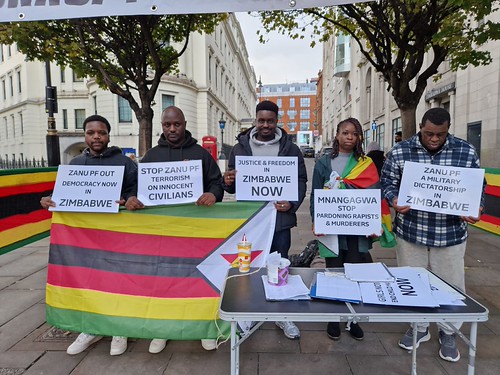
Once
again
Vigil
activists
met
outside
the
Zimbabwe
Embassy
in
London
to
continue
our
protest
against
the
human
rights
abuse
and
lack
of
democracy
in
Zimbabwe
perpetrated
by
ZANU
PF,
the
ruling
regime.


https://www.flickr.com/photos/zimbabwevigil/54895402392/sizes/m/

A
special
thanks
to
Jonathan
Kariwo
and
Philip
Maponga
for
opening
and
managing
the
Vigil
today.
Thanks
also
to
the
others
who
came
today:
Delice
Gavazah,
Anna
Katsande,
Desire
Munyaradzi
Kunaka,
Munashe
Madziyauswa,
Trish
Paidamoyo
Matsikira
and
Arnold
Mukozi.
Photos:https://www.flickr.com/photos/zimbabwevigil/albums/72177720330066283.


Events
and
Notices: 


  • Next
    Vigil
    meeting
    outside
    the
    Zimbabwe
    Embassy. 
    Saturday
    15th November
    from
    2

    5
    pm.
    We
    meet
    on
    the
    first
    and
    third
    Saturdays
    of
    every
    month.
    On
    other
    Saturdays
    the
    virtual
    Vigil
    will
    run.

  • The
    Restoration
    of
    Human
    Rights
    in
    Zimbabwe
    (ROHR)
     is
    the
    Vigil’s
    partner
    organisation
    based
    in
    Zimbabwe.
    ROHR
    grew
    out
    of
    the
    need
    for
    the
    Vigil
    to
    have
    an
    organisation
    on
    the
    ground
    in
    Zimbabwe
    which
    reflected
    the
    Vigil’s
    mission
    statement
    in
    a
    practical
    way.
    ROHR
    in
    the
    UK
    actively
    fundraises
    through
    membership
    subscriptions,
    events,
    sales
    etc
    to
    support
    the
    activities
    of
    ROHR
    in
    Zimbabwe.

  • The
    Vigil’s
    book
    ‘Zimbabwe
    Emergency’
     is
    based
    on
    our
    weekly
    diaries.
    It
    records
    how
    events
    in
    Zimbabwe
    have
    unfolded
    as
    seen
    by
    the
    diaspora
    in
    the
    UK.
    It
    chronicles
    the
    economic
    disintegration,
    violence,
    growing
    oppression
    and
    political
    manoeuvring

    and
    the
    tragic
    human
    cost
    involved. It
    is
    available
    at
    the
    Vigil.
    All
    proceeds
    go
    to
    the
    Vigil
    and
    our
    sister
    organisation
    the
    Restoration
    of
    Human
    Rights
    in
    Zimbabwe’s
    work
    in
    Zimbabwe.
    The
    book
    is
    also
    available
    from
    Amazon.


  • Facebook
    pages:   

  • Vigil : 
    https ://www.facebook.com/zimbabwevigil
  • ROHR: https://www.facebook.com/Restoration-of-Human-Rights-ROHR-Zimbabwe-International-370825706588551/
  • ZAF: https://www.facebook.com/pages/Zimbabwe-Action-Forum-ZAF/490257051027515

The
Vigil,
outside
the
Zimbabwe
Embassy,
429
Strand,
London
meets
regularly
on
Saturdays
from
14.00
to
17.00
to
protest
against
gross
violations
of
human
rights
in
Zimbabwe.
The
Vigil
which started
in
October
2002
will
continue
until
internationally-monitored,
free
and
fair
elections
are
held
in
Zimbabwe.

Post
published
in:

Featured

Mnangagwa’s third term bid foments violence

Zimbabwean
President Emmerson
Mnangagwa
’s
bid
for
an
unconstitutional
third
term
turned
violent
this
week.
A
hall
in
Harare
was
torched
hours
before
his
opponents
were
to
meet
there
to
launch
a
campaign
against
his
efforts
to
run
again.
And
in
the
country’s
second
largest
city
Bulawayo,
riot
police
forcefully
prevented
a
similar
meeting
from
taking
place.

Opposition
politicians
intended
to
plan
how
to
stop
the
ruling
Zimbabwe
African
National
Union-Patriotic
Front
(ZANU-PF)
from
implementing
a
critical
resolution
it
adopted
at
its
annual
conference
in
Mutare
earlier
this
month.

The
resolution
noted
that
at
its
previous
conference
on
26
October
2024
in
Bulawayo,
the
party
resolved
that:
‘In
recognition
of
the
extensive
developmental
milestones
and
the
significant
socioeconomic
progress
achieved
under

Mnangagwa

his
term
of
office
as
President
of
the
Republic
of
Zimbabwe
[should]
be
extended
beyond
2028
to
2030.’

The
absurdity
of
the
claim
that
Zimbabwe
needed
Mnangagwa
to
remain
in power to
continue
his
putative
development
agenda
was
illustrated
by Ringisai
Chikohomero
 in
a
recent
Institute
for Security Studies
report.
It
showed
an
economy
in
persistent
crisis,
including
an
extreme
poverty
rate
of
over
42%.

ZANU-PF’s
2025
conference
resolution
added
that
no
notable
steps
had
been
taken
to
implement
the
Bulawayo
resolution.
And
so
the
Secretary
of
Legal
Affairs
and
Minister
of
Justice
was
directed
to
ensure
that
before
the
next
annual
conference
in
2026,
the
resolution
was
‘fully
implemented.’
The
party
and
government
were
directed
to
initiate
the
required
legislative
amendments
to
‘give
full
effect’
to
the
resolution.

Zimbabwe’s
2013
constitution
is
clear
that
a
president
may
serve
only
two
terms.
Mnangagwa
came
to power in
2017
after
a
military
coup
that
toppled
the
country’s
founding
president, Robert
Mugabe
.
Mnangagwa
was
elected
for
a
first
term
in
2018
and
re-elected
for
a
second
term
in
2023.
That
term
ends
in
2028,
but
now
the
ruling
party
has
decided
to
extend
it
to
2030.

Mnangagwa’s
move
has
been
divisive
not
only
in
the
country,
but
also
inside
ZANU-PF.
Zimbabwe’s
Vice-President Constantino
Chiwenga
 is
apparently
bitterly
opposed,
because
he
would
likely
succeed
Mnangagwa
if
he
stepped
down
in
2028.
He
strongly
criticised
the
so-called
ED2030
plan
at
a
September
meeting
of
ZANU-PF’s
Politburo.

Bulawayo
mayor David
Coltart
,
a
member
of
the
main
opposition
Citizens
Coalition
for
Change
(CCC),
told
ISS
Today:
‘There
is
layer
upon
layer
of
constitutional
safeguards
to
protect’
term
limits.
And
he
should
know
because
he
is
a
lawyer
who
helped
write
the
constitution.

He
says
the
constitution
is
clear
that
the
president
may
serve
just
two
terms
of
five
years
each.
The
safeguards
are,
first,
that
any
amendment
to
the
constitution
requires
a
two-thirds
majority
in
Parliament.
Second,
the
decision
must
be
confirmed
with
a
public
referendum.
Third,
no
such
amendment
may
benefit
an
incumbent.
If
it
were,
then
fourth,
that
decision
would
have
to
be
confirmed
with
a
second
referendum.

Coltart
added
that
section
328,
sub-section
7
of
the
constitution
was
worded
in
such
a
way
that
if
the
effect
of
any
constitutional
amendment
were
to
extend
a
term
limit,
‘then
you
need
a
referendum.
It
doesn’t
matter
how
you
couch
it,
what
language
you
use,
if
the
effect
of
that
is
to
extend
a
term
limit,
it
needs
a
referendum.’

Coltart
was
referring
to
suggestions
from
some
in
ZANU-PF
that
they
might
postpone
the
2028
elections
until
2030,
which
would
implicitly
extend
Mnangagwa’s
term.
But
clearly
he
and
the
other
constitutional
drafters
anticipated
that
possible
ruse.

The
trouble
for
Mnangagwa
is
that
even
one,
let
alone
two,
referenda
on
extending
his
term
would
be
disastrous
for
him,
Coltart
said,
as
opposition
ran
deep
in
the
country
and
even
in
ZANU-PF.
Any
referendum
would
effectively
be
a
referendum
on
Mnangagwa’s
rule,
which
he
would
not
want
right
now.

Coltart
noted
there
had
been
only
two
constitutional
referenda
in
the
past
25
years.
One
in
2000
proposed
a
new
constitution,
which
would
have
increased
presidential
powers
and
allowed
expropriation
without
compensation.
It
became
a
referendum
on
Mugabe’s
rule,
which
he
lost.
The
other
was
the
2013
referendum
on
the
current
constitution,
which
95%
of
the
population
supported.
Neither
outcome
was
favourable
to
Mnangagwa.

Coltart
saw
the
attacks
by
ZANU-PF
thugs
on
the
two
premises
this
week
as
‘a
shot
across
the
bows’
of
any
attempt
to
rally
opposition
against
extending
Mnangagwa’s
term.
Early
Tuesday,
the
SAPES
Trust
premises
in
Harare
were
firebombed,
gutting
the
conference
room
where
the
activists
were
to
meet.
In
Bulawayo,
police
barricaded
the
Bulawayo
Club
where
an
equivalent
meeting
was
planned.

He
also
said
that
with
the
opposition
in
disarray

partly
because
ZANU-PF
has
infiltrated
and
undermined
it

the
plans
to
amend
the
constitution
had
become
a
rallying
cry
for
Mnangagwa’s
opponents,
inside
and
outside
ZANU-PF.

The
fight
now
seems
to
be
on.
Mnangagwa
is
doing
his
best
to
ensure
the
resolution
to
extend
his
tenure
is
implemented.
Coltart
says
this
includes
gifting
new
cars
to
all
300
members
of
the
ZANU-PF
Central
Committee
before
the
conference,
as
well
as
top-notch
Toyota
Land
Cruisers
to
all
provincial
heads.
Mnangagwa
is
also
believed
to
have
removed
Chiwenga
loyalists
from
key
positions.

All
this
looks
like
preparations
for
a
mighty
battle
between
the
party’s
top
two.
None
of
it
bodes
well
for
stability
or
prosperity
in
an
already
poor
and
unstable
country.

Zimbabwe
Council
of
Churches
General
Secretary Kenneth
Mtata
 warned
in
a
statement
that
Mnangagwa’s
bid
to
extend
his
term
would
undermine
all
his
efforts
to
re-engage
the
world
and
bring
Zimbabwe
in
from
the
cold.
It
would
also
jeopardise
negotiations
to
restructure
Zimbabwe’s
international
debt,
which
had
been
led
by
the
African
Development
Bank.
And
it
would
discourage
international
investment.

Perhaps
so,
but
that
is
by
no
means
clear
as
an
increasingly
transactional
world
has
lost
much
of
its
interest
in
Zimbabwe
as
a
moral
issue.


Written
by
Peter
Fabricius,
Consultant,
ISS
Pretoria

Source:


Mnangagwa’s
third
term
bid
foments
violence

Prophet Walter Magaya arrested on rape and fraud charges

HARARE

The
founder
of
the
Prophetic
Healing
and
Deliverance
(PHD)
Ministries,
Walter
Magaya,
was
arrested
on
Saturday
on
rape
and
fraud
charges,
police
said.

The
41-year-old
self-styled
prophet
was
seized
from
his
church
offices
in
Harare
by
a
team
of
detectives
who
arrived
in
several
unmarked
vehicles.

Police
spokesman
Commissioner
Paul
Nyathi
said:
“The
Zimbabwe
Republic
Police
confirms
the
arrest
of
church
leader
Walter
Magaya
in
connection
with
several
reports
of
rape
and
fraud.
The
suspect
was
arrested
early
today
by
a
police
crack
team.”

Rape
allegations
have
long
stalked
Magaya
after
several
female
members
of
his
church
alleged
a
history
of
abuse,
but
police
had
never
acted.


The
Gender
Commission
launched
its
own
investigation
into
the
rape
allegations,
but
the
findings
were
never
publicly
shared.

MAGA Includes Stopping Public Interest Lawyers From Helping Others – See Also – Above the Law

Trump’s
New
Rule
Declares
Totally
Above
Board
Work
‘Illegal’:
Representing
people
in
immigration
cases
could
cost
you
your
student
loan
forgiveness.
Biglaw
Partner
Caught
Up
In
Spyware
Scandal:
Convenient
time
to
make
a
€5
million
personal
investment!
The
Kavanaugh
Stops
Keep
Going:
Over
170
citizens
have
been
detained
despite
the
brilliant
jurist’s
reasoning
in
his
concurrence.
Does
Your
Law
School
Have
An
AI
Society?:
Students
are
trying
their
best
to
stay
ahead
of
the
curve.
The
Comey
Prosecution
Looks
Like
Amateur
Hour:
Halligan
may
have
been
better
off
getting
Chat
GPT
to
write
it
for
her.

Weil Gotshal Partner Caught In Spyware Scandal – Above the Law

Gerhard
Schmidt
via
Weil
Gotshal

Weil
Gotshal
partner
Gerhard
Schmidt,
co-managing
partner
of
the
Biglaw
firm’s
German
offices
and
a
private
equity
and
mergers
&
acquisitions
attorney,
is
on
the
hot
seat
thanks
to
a
€5
million
personal
investment.

According
to

reporting
by

the
Financial
Times,
in
2017
Schmidt
invested
the
money
in
private
equity
group
Novalpina
Capital,
sans
the
typical
investor
fees
due
to
his
relationship
with
the
founders,
and
chaired
Novalpina
Capital.
That
PE
fund
purchased
Israel’s
NSO
Group,
which
infamously
makes
the
military
grade
spyware
Pegasus
which
has
allegedly
been
used
to
spy
on
human
right
activists,
dissidents,
and
journalists.

In
2021,
the
fund
hit
financial
difficulties,
and
its
founders,
Stephen
Peel,
Stefan
Kowski
and
Bastian
Lueken,
had
a
fall
out
–all
of
which
is
the
subject
of
litigation
in
Luxembourg.
A
new
filing
made
in
a
New
York
court,

seeks
to
have
Weil
provide
information
in
that
case.

Court
documents
indicate
Schmidt
advised
Novalpina
on
the
NSO
deal,
and
he
was
a
member
of
the
board
of
the
holding
company
that
oversaw
NSO
operations.
In
November
2021,
the
US
Commerce
Department blacklisted
NSO,
saying
Pegasus
enabled
“transnational
repression,
which
is
the
practice
of
authoritarian
governments
targeting
dissidents,
journalists
and
activists
outside
of
their
sovereign
borders
to
silence
dissent.”

NSO’s
Pegasus
tool
can
read
encrypted
messages,
turn
on
a
phone’s
camera
and
microphone
remotely,
and
track
its
location.

When
NSO’s
oversight
board
took
steps
to
renew
Saudi
Arabia’s
access
to
the
tool
after
the
murder
of
journalist
Jamal
Khashoggi,
Schmidt
was
among
those
who
“would
have
been
voting”,
the
court
filing
said.

NSO
had
halted
a
contract
with
Saudi
Arabia
after
allegations
that
its
technology
had
been
used
to
track
Khashoggi,
who
was
murdered
in
2018.
The
kingdom’s
access
to
the
software
was
restored
by
mid-2019,
according
to
two
people
familiar
with
the
decision.

Schmidt
is
retiring
from
Weil
at
the
end
of
the
year
and

the
firm
is
retooling

its
German
leadership
team
as
a
result.

A
statement
from
NSO
said
it
“complies
fully
with
all
applicable
laws
and
regulations,
and
sells
its
technologies
exclusively
to
vetted
intelligence
and
law
enforcement
agencies.”


Earlier:


Biglaw
Firm
Dragged
Into
Case
Accusing
Client
Of
Whitewashing
Sketchy
Investments


Kathryn
Rubino
is
a
Senior
Editor
at
Above
the
Law,
host
of

The
Jabot
podcast
,
and
co-host
of

Thinking
Like
A
Lawyer
.
AtL
tipsters
are
the
best,
so
please
connect
with
her.
Feel
free
to
email

her

with
any
tips,
questions,
or
comments
and
follow
her
on
Twitter

@Kathryn1
 or
Mastodon

@[email protected].

Chief Justice Roberts Used To Make Fun Of Law Reviews Before FedSoc Started Turning Them Into Constitutional Fan Fiction – Above the Law


Pick
up
a
copy
of
any
law
review
that
you
see,
and
the
first
article
is
likely
to
be,
you
know,
the
influence
of
Immanuel
Kant
on
evidentiary
approaches
in
18th
century
Bulgaria
or
something.


–Chief
Justice
Roberts

back
in
the
day
,
in
a
quote

resurfaced
by
The
New
Republic
this
week

in
a
piece
about
the
growing
influence
of
conservative
ex-clerks
and
legal
scholars
pumping
out
secondary
source
material
for
the
courts
to
cite
when
precedent
and
the
history
don’t
back
up
their
policy
aims.
Specifically,
TNR
examines
the
cottage
scholarship
attempting
to
reimagine
the
Birthright
Citizenship
clause
out
of
the
Fourteenth
Amendment.