Cozen
O’Connor
is
growing
in
Minneapolis!
Today,
the
Philadelphia-based
firm,
ranked
77th
on
the
2025
Am
Law
100
based
on
gross
revenue,
announced
a
merger
with
Moss
&
Barnett.
Cozen
will
add
some
50+
attorneys
as
a
result
of
the
acquisition.
Michael
Heller,
chairman
and
CEO
of
Cozen,
noted,
“This
combination
advances
our
commitment
to
deepen
our
presence
across
the
Midwest,
a
strategically
important
region
for
the
firm
and
our
clients.”
He
also
said
Moss
&
Barnett’s
deep
roots
—
founded
in
1892
—
“make
it
a
perfect
fit
for
Cozen
O’Connor’s
strategic
vision
for
growth.”
Heller
told
Bloomberg
Law
Minneapolis
was
clear
target
for
Cozen,
“We
have
a
strong
middle-market
practice
and
continue
to
pursue
those
clients
while
also
continuing
to
expand
our
client
portfolio
because
now
the
Minneapolis
folks
have
a
national
platform
by
which
to
engage
those
clients,”
he
said.
Moss
&
Barnett
president
and
CEO
Brian
Grogan
said
the
benefits
of
the
merger
outweighed
any
potential
risks:
Grogan
said
his
firm’s
partners,
who
voted
unanimously
in
favor
of
the
merger,
recognized
the
risk
of
losing
their
independence
to
a
larger
firm.
Cozen
is
more
than
10
times
larger
in
terms
of
lawyer
count
and
annual
revenue.
But
Grogan
said
those
concerns
were
“offset
by
the
realities
of
practicing
law
today.”
“Cozen
invests
heavily
in
AI
technology
to
improve
legal
tech
for
their
clients,”
he
said.
“They
can
do
that
at
a
scale
that
a
small
regional
firm
can’t
compete
with.
That’s
something
you
have
to
consider
when
you
ask
how
can
we
continue
to
provide
the
best
opportunities
for
our
lawyers
and
clients.”
The
combined
2025
revenue
for
the
firms
is
expected
to
top
$800
million.
Kathryn
Rubino
is
a
Senior
Editor
at
Above
the
Law,
host
of
The
Jabot
podcast,
and
co-host
of
Thinking
Like
A
Lawyer.
AtL
tipsters
are
the
best,
so
please
connect
with
her.
Feel
free
to
email
her
with
any
tips,
questions,
or
comments
and
follow
her
on
Twitter
@Kathryn1 or
Mastodon
@[email protected].
Our
right
to
vote
is
the
foundation
of
our
democracy,
and
every
voter
should
be
able
to
freely
exercise
that
right.
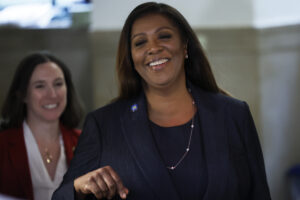
My
office
will
be
available
on
Election
Day
to
help
anyone
who
faces
challenges
voting
and
will
continue
working
to
protect
free
and
fair
elections
throughout
New
York
state.
I
am
proud
to
support
New
Yorkers
as
they
make
their
voices
heard
at
the
ballot
box.
—
New
York
Attorney
General
Letitia
James,
in
comments
given
to
New
Yorkers
concerning
the
Office
of
the
New
York
Attorney
General’s
(OAG)
Election
Protection
Hotline,
which
will
be
available
for
the November
4, 2025 general
election.
New
York
voters
who
are
experiencing
election-related
problems
while
voting
may
call
the
OAG
hotline
at (866)
390-2992,
or submit
a
complaint
online
to
request assistance.
Staci
Zaretsky is
the
managing
editor
of
Above
the
Law,
where
she’s
worked
since
2011.
She’d
love
to
hear
from
you,
so
please
feel
free
to
email
her
with
any
tips,
questions,
comments,
or
critiques.
You
can
follow
her
on Bluesky, X/Twitter,
and Threads, or
connect
with
her
on LinkedIn.
US
Customs
and
Border
Patrol
Commander
Gregory
Bovino
(Photo
by
KAMIL
KRZACZYNSKI/
AFP
via
Getty
Images)
U.S.
District
Court
Judge
Sara
Ellis
isn’t
pleased
with
U.S.
Border
Patrol
commander
Gregory
Bovino.
Bovino
heads
the
Trump
administration’s
military
presence
in
Chicago,
Operation
Midway
Blitz,
and
there
were
some
pretty
serious
allegations
(and
video!)
that
federal
agents
—
and
Bovino,
specifically
—
violated
a
temporary
restraining
order
issued
by
Ellis.
A
group
of
journalists,
protesters,
and
clergy
sued
the
Trump
administration over
the
military
occupation
of
Chicago,
and
Ellis
issued
a
TRO
limiting
the
tactics
federal
agents
can
use.
Amongst
the
banned
methods
of
riot
control
include
the
use
of
tear
gas
and
other
kinds
of
noxious
gas
unless
there
is
an
immediate
safety
threat.
But
then
Bovino
was
caught
on
camera
throwing
canisters
of
tear
gas
into
a
crowd
without
any
warnings
or
verbal
orders
to
disperse.
Ellis
did
what
she
could
at
a
subsequent
hearing
—
that
she
demanded
Bovino
attend
—
to
impress
upon
him
the
importance
of,
you
know,
*not*
violating
a
court
order.
Judge
Ellis
was
(rightfully)
particularly
concerned
with
the
use
of
tear
gas
without
appropriate
warnings
since
it
affected
kids
dressed
in
Halloween
costumes,
headed
to
a
nearby
parade.
And
Ellis
ordered
Bovino
provide
daily
reports
on
his
agents’
use
of
force
in
the
city.
But
that
oversight
never
happened,
thanks
to
the
Seventh
Circuit.
In
an
unsigned
order,
they
found
the
daily
check-ins
with
Bovino
meant Ellis
was
an
“inquisitor”
not
a
“neutral
adjudicator.”
And
that
the
order
made
Ellis
“supervisor
of
Chief
Bovino’s
activities,
intruding
into
personnel
management
decisions
of
the
executive
branch.”
As
a
result,
the
circuit
court
held,
“These
two
problems
are
related
and
lead
us
to
conclude
that
the
order
infringes
on
the
separation
of
powers.”
So…
how’s
the
lack
of
oversight
going?
Fucking
fantastic.
Listen,
even
if
the
Seventh
Circuit
hadn’t
laughed
off
the
notion
of
oversight
on
bad
faith
actors
with
a
demonstrated
lack
of
respect
for
court
orders,
it’s
likely
this
all
would
still
have
happened.
Because,
you
know,
bad
faith
actors
with
a
demonstrated
lack
of
respect
for
court
orders.
But
the
nation
is
spiraling
towards
authoritarianism,
and
Ellis’s
order
feels
less
like
a
separation
of
powers
problem
than
a
necessary
check
and
balance.
Kathryn
Rubino
is
a
Senior
Editor
at
Above
the
Law,
host
of
The
Jabot
podcast,
and
co-host
of
Thinking
Like
A
Lawyer.
AtL
tipsters
are
the
best,
so
please
connect
with
her.
Feel
free
to
email
her
with
any
tips,
questions,
or
comments
and
follow
her
on
Twitter
@Kathryn1 or
Mastodon
@[email protected].
Texas
and
Florida
have
been
Things
1
and
2
when
it
comes
to
following
through
with
Trump
administration
edicts
on
relatively
neutral
entities
being
reclassified
as
aggressively
political
organizations.
In
late
September,
the
Texas
Supreme
Court
penned
an
order
stating
that
the
ABA
shouldn’t
have
the
final
say
on
whether
law
school
alumni
can
sit
for
the
Texas
bar
or
be
licensed.
It
has
been
that
way
for
a
while,
but
the
ABA
is
now
compromised
what
with
its
insistence
on
the
importance
of
the
rule
of
law.
Florida
feels
similarly,
but
they’re
still
trying
to
iron
out
the
kinks
of
replacing
the
largely
unproblematic
accreditation
role
the
ABA
has
played
for
decades.
Florida
Bar
has
coverage:
A
Supreme
Court
workgroup
is
proposing
alternatives
to
Florida’s
near-exclusive
reliance
on
the
ABA
in
the
Bar
admissions
process,
ones
designed
to
“promote
flexibility,
innovation,
access,
and
accountability
in
legal
education.
Promoting
flexibility
and
access
in
legal
education?
That
just
sounds
like
DEI
with
extra
steps!
The
main
problem
is
that
they
have
big
shoes
to
fill.
Like
it
or
not,
the
ABA
is
good
at
the
whole
accreditation
thing.
Err
too
far
on
throwing
out
the
bad
for
the
new
and
you
risk
approaching
new
accreditation
needs
the
way
that
California
approached
needing
a
new
bar.
If,
after
all
that
research
and
development,
you
end
up
dyeing
your
product
so
that
it
looks
like
Heisenberg’s,
you’d
have
been
better
off
tightening
your
belt
and
going
with
the
program.
Remember:
all
this
hubbub
about
diversity
requirements
in
accreditation
doesn’t
hold
that
much
water
considering
the
ABA
has
and
had
extended
the
moratorium
on
that
bit
for
a
while
now.
Speaking
frankly,
Texas
and
Florida
would
probably
be
better
off
lobbying
to
get
the
ABA
proper
to
make
the
changes
they
want
to
see
rather
than
making
a
garment
from
entirely
new
cloth.
One
of
the
most
astute
observations
the
committee
made
is
that
Texas
and
Florida
are
the
only
states
that
are
acting
on
their
beef
with
the
ABA
as
an
accrediting
body.
Even
if
TweedleTex
and
TweedleFlor
figure
out
which
of
their
graduates
can
practice
in
their
own
states,
what
happens
if
and
when
they
decide
to
move
or
work
in
any
of
the
other
48
states?
As
stated
in
the
report,
Florida
could
preempt
some
of
this
challenge
and
reach
out
to
other
states
to
make
multistate
agreements
or
push
for
reform
on
their
own,
but
that’s
a
lot
harder
ask
than
to
let
everyone
else
stick
to
the
program.
All
that
said,
these
two
are
going
to
do
whatever
it
takes
to
own
the
libs.
Good
luck
or
whatever.
Chris
Williams
became
a
social
media
manager
and
assistant
editor
for
Above
the
Law
in
June
2021.
Prior
to
joining
the
staff,
he
moonlighted
as
a
minor
Memelord™
in
the
Facebook
group Law
School
Memes
for
Edgy
T14s
.
He
endured
Missouri
long
enough
to
graduate
from
Washington
University
in
St.
Louis
School
of
Law.
He
is
a
former
boatbuilder
who
is
learning
to
swim, is
interested
in
critical
race
theory,
philosophy,
and
humor,
and
has
a
love
for
cycling
that
occasionally
annoys
his
peers.
You
can
reach
him
by
email
at [email protected]
and
by
tweet
at @WritesForRent.
Abstract
technology
image
of
AI
robot
installing
binary
data
from
node
stream
of
dynamic
array.
“The
customer’s
perception
is
your
reality.”
— Kate
Zabriskie
To
paraphrase
what’s
often
been
said
about
getting
outside
lawyers
to
change
what
they
are
doing:
It’s
hard
to
tell
a
room
full
of
millionaires
the
way
they’re
doing
things
is
all
wrong.
Be
that
as
it
may,
a
new
study
by
the
Association
of
Corporate
Counsel
and
Everlaw
could
spell
trouble
and
be
harbinger
of
change
for
outside
lawyers.
Indeed,
I
have
often
said
that
real
change
in
how
outside
lawyers
deliver
legal
services
and
charge
for
them
won’t
change
unless
and
until
in-house
lawyers
demand
it.
ACC
did
a
survey
of
some
657
in-house
legal
professionals
across
30
countries.
What
the
ACC
wanted
to
find
out
was
what
the
current
rate
of
GenAI
adoption
by
in-house
legal
departments.
And
boy,
did
they
find
out.
The
Key
Findings
Here
are
some
key
findings:
67%
of
those
surveyed
said
they
are
currently
using
GenAI
or
at
least
using
beta
AI
projects
as
compared
to
38%
last
year.
91%
of
those
using
GenAI
report
efficiency
as
the
top
benefit.
64%
expect
to
rely
less
on
outside
counsel
as
a
result
of
AI
use.
24%
of
legal
professionals
are
very
likely
to
push
for
change
in
billable
hour
model.
So
lots
of
GCs
are
using
AI
for
lots
of
things.
But
what
about
their
outside
counsel?
There
are
some
startling
statistics.
What
About
Outside
Counsel
Fifty-nine
percent
of
in-house
professionals
remain
unaware
of
whether
their
law
firms
are
using
the
technology
on
their
legal
matters.
And
even
more
startling:
as
of
now,
80%
—
yes,
80%!
—
of
those
surveyed
are
not
requiring
or
even
encouraging
outside
counsel
to
use
GenAI.
Even
more
telling:
Of
those
firms
who
are
using
GenAI,
59%
of
in-house
counsel
say
they
have
seen
no
noticeable
changes
in
what
is
being
billed.
No
wonder
law
firms
are
slow
to
change.
Why
change
what
you
are
doing
when
what
you
are
doing
has
made
you
millions,
particularly
if
no
one
is
telling
you
to.
And
the
59%
statistic
tells
me
that
firms
who
claim
to
be
using,
are
doing
just
that.
Claiming,
not
using.
The
Paradox
It’s
a
paradox.
In-house
counsel
are
using
GenAI
and
seeing
significant
benefits
but
aren’t
making
demands
on
outside
lawyers.
Why?
Several
reasons.
First,
I
think,
in
part,
in-house
counsel
don’t
want
to
mess
with
how
their
lawyers
do
their
work.
They
hired
the
lawyers
for
a
reason
—
to
do
something
in-house
can’t.
Therefore,
you
need
to
give
them
the
freedom
to
do
it.
Second,
you
can
never
underestimate
the
ability
of
outside
lawyers
to
paint
a
sky-is-falling
picture.
As
in,
I
would
use
GenAI,
but
you
know
if
it
makes
a
mistake,
the
case
could
be
doomed
(unsaid:
and
it
will
show
up
on
your
review,
Mr.
In-House).
Or
there
is
the
argument:
Yeah,
we
could
use
AI,
but
we
have
to
check
everything
and,
in
the
end,
it
will
just
cost
you
more.
(Forty-three
percent
of
the
respondents
cited
this
“fact.”)
Finally,
there
may
also
be
some
mistrust
involved.
In-house
counsel
can
control
and
monitor
in-house
use
of
AI.
They
can’t
control
outside
use.
Other
reasons
given
by
those
surveyed
range
from
it’s
too
early
and
law
firms
haven’t
adjusted
pricing
models
to
reflect
AI
efficiencies.
(Wait,
you
haven’t
asked
them
to.
Do
you
really
think
they
will
do
it
on
their
own
and
wound,
if
not
kill
the
cash
cow?)
I
have
to
say,
based
on
these
statistics,
law
firms
might
be
justified
in
thinking
let’s
just
stay
fat
dumb
and
happy.
But
I
think
despite
the
stats,
that
would
be
misguided
and
shortsighted.
Why?
Let’s
Not
Kid
Ourselves
As
the
study
indicates
and
I
have
written
before,
in-house
counsel
are
using
AI
tools
to
do
more
and
do
in-house
work
that
outside
lawyers
used
to
do.
That
will
inevitably
mean
fewer
matters
for
outside
lawyers
to
bill
for.
Okay,
but
there’s
also
more
work
for
outside
lawyers
to
do
as
I
have
mentioned
before
so
that
should
not
be
a
concern,
right?
Also
wrong.
Here’s
what’s
happening.
In-house
lawyers
are
seeing
the
power
of
these
tools
in
their
everyday
work.
They
are
seeing
how
much
more
they
can
accomplish
using
the
tools.
They
are
seeing
the
efficiencies
that
can
be
achieved.
As
they
come
to
trust
the
tools
more
and
more,
they
can’t
help
but
see
that
outside
legal
spend
could
be
reduced
if
only
outside
lawyers
used
the
tools
like
inside
counsel
are.
And
because
outside
lawyers
are
lagging
so
far
behind
in-house
and
apparently
making
little
effort
to
catch
up,
it’s
not
hard
to
envision
a
day
of
reckoning.
When
inside
counsel
say
enough
is
enough.
Or
vote
with
their
feet
and
flock
to
what
Zach
Abramowitz
has
described
as
AI
first
firms,
firms
that
embrace
AI
and
use
the
tools
to
practice
their
cases
at
a
fraction
of
the
time
it
takes
others.
Think
I
am
wrong?
Compare
again
these
two
sets
of
numbers:
67%
of
in-house
use
the
tools
and
almost
all
see
greater
efficiency.
Yet
80%
aren’t
demanding
outside
counsel
use
the
tools.
Yet.
That’s
like
saying
most
of
us
would
continue
to
use
Amazon
if
it
delivered
goods
by
horse
and
buggy
when
we
know
there
is
a
better
way.
At
some
point,
we
would
demand
a
better
delivery
mechanism
or
go
to
someone
who
provided
something
better.
Your
clients’
perceptions
are
indeed
your
reality.
So,
law
firms,
don’t
kid
yourself.
Your
clients
are
about
to
wake
up.
You
better
do
likewise,
or
your
competition
may
eat
you
alive.
Stephen
Embry
is
a
lawyer,
speaker,
blogger,
and
writer.
He
publishes TechLaw
Crossroads,
a
blog
devoted
to
the
examination
of
the
tension
between
technology,
the
law,
and
the
practice
of
law.
Believe
it
or
not,
President
Donald
Trump
is
in
serious
trouble.
Whether
his
unfavorability
ratings
for
handling
the
economy
are 55%, 57%,
or 60%,
those
ratings
are
about
as
deep
underwater
as
a
U.S.
president
can
be. And
that
unfavorability
is
on
the
very
issue
that
he
rode
to
the
White
House
a
year
ago. Trump’s
unpopularity
could
reduce
his
control
over
the
Republican
Party
(because
members
of
Congress
need
not
fear
Trump
so
much)
or
show
up
in
next
year’s
midterm
elections
(which
would
end
Trump’s
legislative
hopes
and
result
in
a
spate
of
new
investigations).
What’s
a
poor,
beleaguered
president
to
do?
Remarkably,
the
Supreme
Court
may
come
to
Trump’s
rescue.
The
Supreme
Court
will
hear
argument
later
this
week
on
whether
Trump
has
the
constitutional
and
statutory
authority
to
impose
tariffs
under
the
International
Emergency
Economic
Powers
Act
(IEEPA). I’m
no
expert
on
trade
law,
but
I
can
read Article
1,
Section
8
of
the
Constitution,
which
grants
Congress
the
authority
to
“regulate
commerce
with
foreign
nations,
and
among
the
several
states.”
With
that
as
a
starting
point,
I
wouldn’t
be
shocked
if
the
Supreme
Court
holds,
a
few
weeks
or
months
from
now,
that
Trump
improperly
imposed
sweeping
tariffs
for
reasons
such
as
“Brazil
is
prosecuting
Jair
Bolsonaro”
and
“I
didn’t
like
the advertisement the
Province
of
Ontario
ran
during
the
World
Series.”
What
then? What
if
Trump
loses
in
the
Supreme
Court?
Trump
isn’t
one
to
accept
losing
with
grace.
But
assume
for
the
moment
that
Trump
doesn’t
give
a
speech
telling
his
supporters
to
attack
the
Supreme
Court
building
and
hang
John
Roberts.
Assume
Trump
doesn’t
tell
the
Supreme
Court,
“Screw
you,”
and
maintain
the
tariffs
despite
the
ruling.
A
normal
president
might
retreat
to
statutes
other
than
the
IEEPA
that
grant
the
authority
to
impose
tariffs. Trump
might
try,
for
example,
to
impose
tariffs
under Section
301
of
the
Trade
Act
of
1974
(for
unfair
trade
practices)
or
Section
232
of
the
Trade
Expansion
Act
of
1962
(for
tariffs
on
national
security
grounds). Neither
of
these
statues,
however,
gives
Trump
the
unbridled
power
to
impose
sweeping
tariffs
that
he’s
claimed
under
the
IEEPA.
A
normal
president
might
ask
Congress
to
approve
the
tariffs
that
he
has
in
mind. That
would
be
hopeless,
however,
even
in
more
traditional
times. Republicans
have
historically
been
free
traders;
at
least
a
few
would
stand
by
their
principles. And
Democrats
would
never
give
Trump
this
legislative
win.
Suppose
Trump
does
the
unexpected
and
simply
accepts
the
loss: “I’m
right
on
tariffs,
but
the
low-IQ
RINOs
on
the
Supreme
Court
don’t
understand
the
Constitution. Thank
you
for
your
attention
to
this
matter.”
Think
what
that
would
do
to
cure
Trump’s
polling
ills
on
economic
issues.
With
tariffs
reduced
to
their
pre-Liberation
Day
levels,
international
trade
could
flourish
again. We’d
no
longer
owe
50%
more
on
Brazilian
coffee
or
15%
more
for
French
wines. Prices
probably
wouldn’t
drop
dramatically,
but
the
inflation
numbers
would
improve
a
little.
At
the
same
time,
the
uncertainty
hanging
over
the
market,
because
Trump
now
claims
the
authority
to
impose
tariffs
at
whim,
would
disappear. Companies
could
start
building
and
hiring
again,
because
they’d
know
that
future
tariffs
could
be
imposed
only
after
going
through
an
intelligent
process. The
stock
market
would
surely
get
a
lift.
And
—
my
point
at
last!
—
the
Supreme
Court
would
have
helped
solve
Trump’s
economic
woes. By
eliminating
the
president’s
unfettered
ability
to
impose
tariffs,
the
Supreme
Court
would
simultaneously
have
reduced
the
pressures
on
inflation
and
employment
that
make
people
disapprove
of
Trump’s
handling
the
economy.
All
of
this
depends,
of
course,
on
the
Supreme
Court
standing
up
to
Trump,
by
invalidating
his
tariffs,
and
Trump
then
standing
down
to
the
Supreme
Court,
by
begrudgingly
accepting
its
decision.
Perhaps
those
concepts
are
delusional,
but
they
just
might
redound
to
Trump’s
benefit.
Everyone
misses
a
deadline
now
and
then.
Usually,
it’s
something
like
“not
canceling
your
Hulu
account
before
the
automatic
renewal”
and
not
“blowing
the
drop
dead
date
on
your
$400
million
lawsuit.”
Baldoni’s
lawyers
sought
leave
to
amend
—
which
was
granted
—
and
then
never
did
it.
Months
after
the
fact,
the
Times
asked
if
these
claims
were,
you
know,
still
a
whole
thing.
On
October
17,
Judge
Liman
clarified
that
he
didn’t
need
to
issue
a
separate
final
judgment
in
the
combined
case
to
commemorate
the
official
end
of
the
Baldoni
claims,
but
granted
Baldoni
a
week
to
show
cause
why
the
court
shouldn’t
go
ahead
and
issue
a
final
judgment.
October
24
came
and
went…
and
Baldoni’s
lawyers
didn’t
respond
at
all.
Lively’s
claims
carry
on,
but
as
far
as
Baldoni’s
case
is
concerned,
It
Ends
With
A
Deadline
Miss.
Judge
Liman
entered
judgment
this
morning,
though
the
operative
deadline
was
the
October
24
miss.
Which
means
they
can’t
even
blame
forgetting
to
set
their
clocks
for
the
weekend
daylight
saving
time
switch!
Not
that
Baldoni
has
much
to
say.
The
case
is
over
and
they
didn’t
bother
to
amend
it
when
they
had
the
chance.
But
you’ve
got
to
answer!
It’s
not
an
intractable
burden
to
drop
a
letter
with
the
court
explaining
that
you’re
reserving
all
your
rights
but
have
nothing
to
add
to
the
consideration
of
the
order
to
show
cause.
To
borrow
from
a
different
movie,
say
anything.
The
only
good
news
here
is
for
the
lawyers
watching
this
from
afar.
Multiple
legal
social
media
accounts
responded
to
headlines
about
Baldoni
losing
over
a
missed
deadline
by
describing
that
as
the
definition
of
their
own
personal
hell.
Thankfully,
it’s
not
nearly
that
bad.
This
wasn’t
a
random
oversight,
but
the
product
of
a
number
of
filing
decisions
(or
non-decisions
as
the
case
may
be)
in
response
to
a
judge
extending
off-ramps
for
months.
On
Friday,
the
Trump
Justice
Department
got
a
very
unwelcome
treat
from
Judge
Lorna
Schofield.
No,
not
a
Bit-O-Honey!
It
was
an
unsealing
order
in
federal
court
in
New
York.
The
DOJ
tried
every
trick
in
the
book
to
hide
its
harassment
of
New
York
Attorney
General
Letitia
James,
but
the
judge
unwrapped
the
case
anyway.
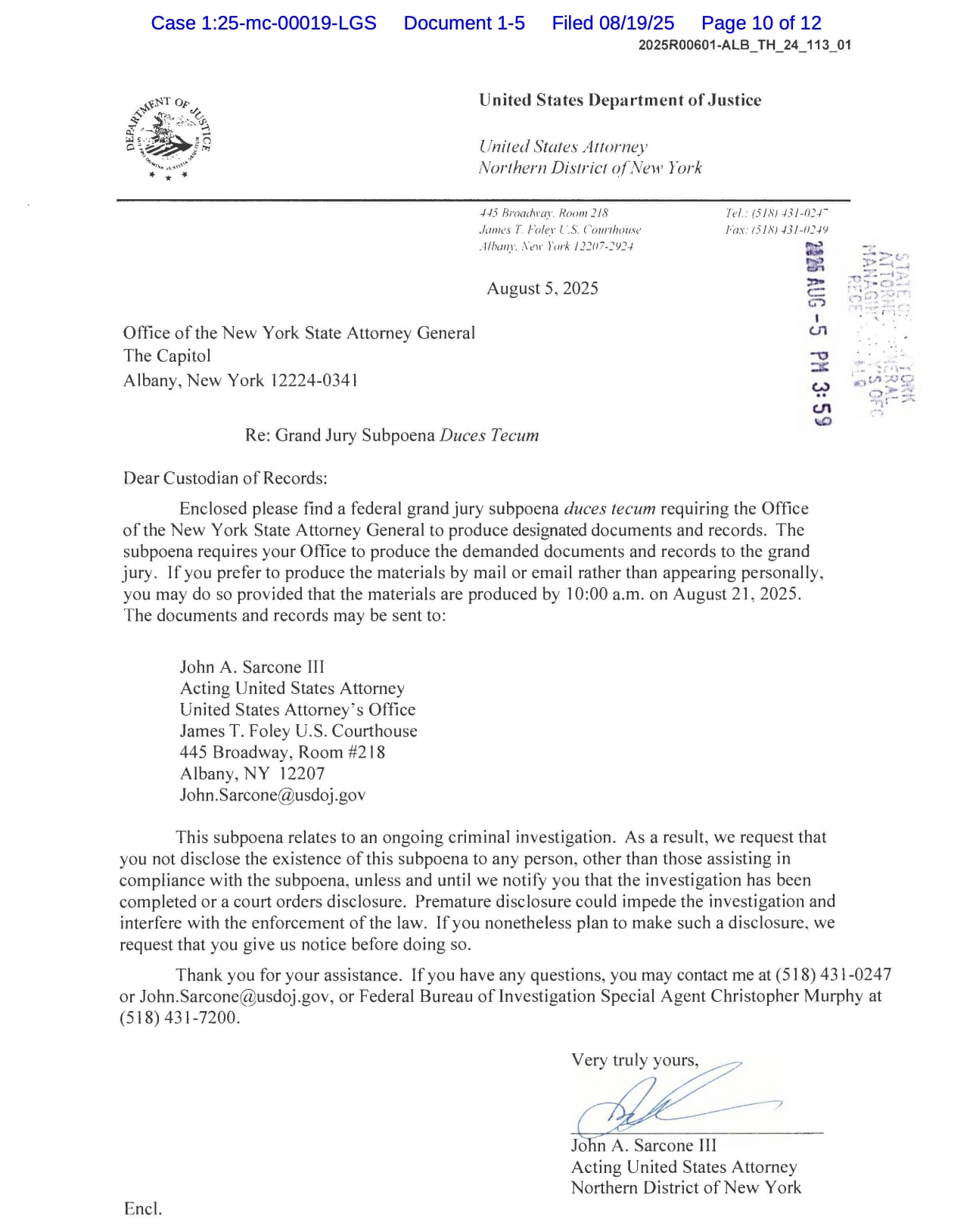
On
August
5,
the
US
Attorney’s
Office
for
the
Northern
District
of
New
York
(NDNY)
subpoenaed
the
New
York
Office
of
the
Attorney
General
(OAG)
for
the
entire
record
in
two
cases:
New
York
v.
Trump
and
New
York
v.
National
Rifle
Association.
The
political
implications
don’t
need
to
be
spelled
out,
but
of
course
Trump
and
his
minions
did
it
anyway.
After
Trump
was
found
liable
for
civil
fraud,
he
and
his
lawyers
brayed
for
retribution.
Future
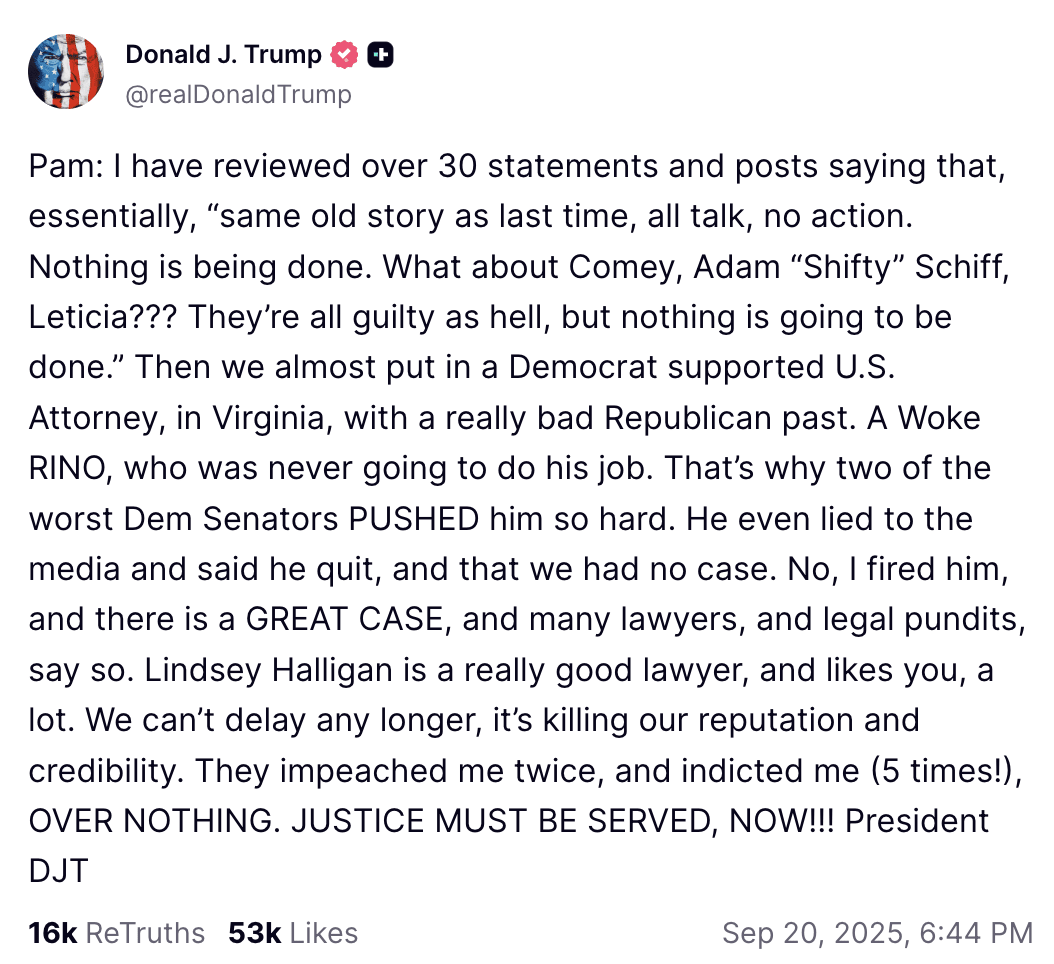
Attorney
General
Pam
Bondi
huffed
that
New
York
Attorney
General
Letitia
James
“needs
to
be
looked
at.”
And
Trump,
who
recently
pushed
out
his
own
nominee
as
US
Attorney
for
the
Eastern
District
of
Virginia
for
failing
to
indict
James,
called
her
a
“reverse
racist”
who
“illegally”
sued
the
NRA.
The
OAG
moved
to
quash
the
federal
subpoenas,
filing
lawsuit
which
implicates
two
of
the
most
persistent
legal
issues
of
Trump’s
second
term:
weaponization
of
the
Justice
Department
and
installing
MAGA
lackeys
as
US
Attorneys
without
Senate
confirmation.
Asked
and
answered
The
legal
sufficiency
of
the
civil
fraud
cases
against
Trump
and
the
NRA
has
been
thoroughly
litigated.
The
defendants
argued
over
and
over
that
the
charges
were
unsubstantiated,
tainted
by
bias,
or
otherwise
defective.
Trump
sued
James
in
multiple
federal
courts
seeking
to
ward
her
off,
as
did
the
NRA,
which
also
tried
to
two-step
its
way
out
of
New
York
into
Texas
by
means
of
a
comically
fraudulent
bankruptcy
filing.
None
of
it
worked.
Court
after
court
agreed
that
the
cases
were
appropriately
predicated,
and
Trump
and
the
NRA
were
both
found
liable
for
years
of
fraud.
On
appeal,
Trump
has
so
far
managed
to
reduce
the
penalty,
but
the
verdict
stands.
With
the
reins
of
the
Justice
Department
in
his
hands,
though,
Trump
is
now
demanding
retribution.
According
to
the
New
York
Times,
the
DOJ
aims
to
criminally
charge
his
enemies
for
civil
rights
violations
under
18
USC
§
242.
The
Times
suggests
that
using
§
242
in
this
way
would
be
“remarkable,”
since
the
law
is
more
often
used
to
hold
accountable
public
officials
who
discriminate
on
the
basis
of
race.
A
more
apt
term
might
be
“perverse.”
In
its
motion
to
quash,
the
OAG
argues
that
the
subpoenas
for
millions
of
pages
of
internal
prosecutorial
deliberations
were
issued
in
transparently
bad
faith
and
“unreasonably
interfere
with
the
State
of
New
York’s
sovereignty.”
Moreover,
they
insist
that
the
subpoenas
are
null
and
void
because
the
US
Attorney
who
issued
them
was
illegally
appointed.
Another
dress-up
prosecutor
The
author
of
this
perversion
is
John
Sarcone,
III,
who
was
installed
as
US
Attorney
for
NDNY
following
a
now-familiar
pattern.
On
March
17,
Trump
tapped
Sarcone,
a
MAGA
loyalist
who
never
worked
as
a
prosecutor,
to
lead
the
office
in
Albany.
Sarcone’s
tenure
has
been
lackluster
at
best.
In
June,
he
claimed
that
a
man
on
the
street
outside
a
hotel
lunged
at
him
and
threatened
to
kill
him.
That
encounter
turned
out
to
have
been
rather
different
from
Sarcone’s
description.
But
it
led
to
an
investigation
by
the
Albany
Times
Union
which
revealed
that
Sarcone’s
putative
residence
in
the
district
was
actually
a
boarded-up
vacant
property.
That
in
turn
led
to
an
ethics
complaint
after
Sarcone
removed
the
paper
and
its
journalists
from
approved
media
lists.
In
short,
Sarcone
is
exactly
the
kind
of
guy
who
would
abuse
the
grand
jury
process
to
seek
revenge
on
Trump’s
nemesis.
After
Sarcone’s
120-day
interim
appointment
timed
out,
he
claimed
that
he’d
been
given
the
nod
to
stay
on
by
the
district’s
judges,
pursuant
to
28
USC
§
546.
He
had
not.
Instead,
AG
Bondi
purported
to
keep
him
on
the
job
by
appointing
him
as
the
first
assistant
US
Attorney
at
NDNY,
and
having
him
succeed
himself
as
acting
US
Attorney
by
operation
of
the
Federal
Vacancies
Reform
Act
(FVRA).
Alternatively,
she
appointed
him
a
“special
attorney”
authorized
to
conduct
“any
kind
of
legal
proceedings,
civil
or
criminal,
including
Grand
Jury
proceedings
and
proceedings
before
United
States
Magistrates,
which
United
States
Attorneys
are
authorized
to
conduct.”
This
may
have
been
the
first
time
Bondi
tried
this
wheeze,
but
it
wasn’t
the
last.
She
executed
the
same
maneuver
in
New
Jersey,
Nevada,
and
California,
and
courts
rejected
it
every
time.
In
each
of
those
cases,
the
motions
to
disqualify
the
district’s
chief
prosecutor
were
assigned
to
out-of-district
judges
to
avoid
potential
conflict.
And
since
the
OAG’s
motion
to
quash
the
subpoena
in
Albany
challenged
legality
of
Sarcone’s
appointment,
it
was
assigned
to
Judge
Schofield,
a
senior
judge
brought
in
from
the
Southern
District
of
New
York.
It’s
not
a
secret
if
we
all
know
about
it
Because
grand
jury
matters
are
presumptively
secret,
the
court
clerk
docketed
the
OAG’s
motion
to
quash
the
Sarcone
subpoenas
under
seal
—
that
is,
it
did
not
appear
on
the
public
docket.
But
here
the
existence
of
the
subpoenas
and
the
DOJ’s
“civil
rights”
investigation
was
widely
reported,
and
so
the
OAG
filed
a
motion
to
unseal,
effectively
heading
off
the
government’s
effort
to
hide
its
harassment
campaign
in
the
jury
room.
On
Halloween,
Judge
Schofield
ruled
that
unsealing
was
not
only
permissible,
but
mandatory.
“The
‘special
circumstances’
of
this
case
—
namely
that
the
grand
jury
information
at
issue
is
not
secret
and
that
the
motion
to
quash
implicates
questions
of
national
concern
—
weigh
decisively
in
favor
of
unsealing,”
she
wrote,
noting
the
widespread
interest
in
potential
weaponization
of
the
DOJ,
intrusions
on
state
sovereignty,
and
the
illegal
appointment
of
(yet
another)
US
Attorney.
None
of
this
bodes
well
for
Sarcone,
who
has
to
prove
to
Judge
Schofield
that
he’s
entitled
to
stay
on
the
job.
In
New
Jersey,
Nevada,
and
California,
trial
judges
ruled
that
Trump’s
lackeys
were
unlawfully
appointed
using
the
identical
first
assistant/special
attorney
ploy.
But
in
each
case,
the
court
denied
the
defendants’
motion
dismiss,
since
other,
legally-appointed
lawyers
participated
in
their
prosecutions.
Judge
J.
Michael
Seabright
went
further,
ruling
that
Bill
Essayli,
the
goon
who
overstayed
his
welcome
as
the
US
Attorney
for
the
Central
District
of
California,
could
still
exercise
authority
as
the
first
assistant.
But
in
the
Eastern
District
of
Virginia,
Bondi
appears
to
have
gotten
sloppy.
She
never
made
Trump’s
insurance
lawyer
Lindsey
Halligan
the
first
assistant
or
a
special
attorney.
She
simply
installed
her
as
interim
US
Attorney
—
a
move
that
has
been
rejected
by
three
different
courts
now.
Halligan’s
position
is
thus
uniquely
vulnerable,
as
are
the
indictments
of
AG
James
and
former
FBI
director
James
Comey.
Halligan
signed
the
indictments
herself,
since
no
other
lawyer
in
EDVA
would
get
near
those
cases.
So,
if
her
appointment
is
illegal,
then
those
indictments
are
likely
a
nullity.
Sarcone
will
have
to
argue
that
his
position
is
more
like
Essayli’s
than
Halligan’s.
On
the
one
hand,
his
name
is
the
only
one
on
the
subpoenas,
which
he
signed
as
“Acting
United
States
Attorney.”
On
the
other,
he
could
almost
certainly
have
secured
the
subpoenas
in
his
capacity
as
first
assistant
or
special
attorney.
So,
perhaps
the
judge
will
disqualify
him
as
US
Attorney,
and
find
that
the
subpoenas
are
still
valid.
Whatever
happens,
the
episode
is
further
proof
that
Trump
has
corrupted
the
Justice
Department.
The
court
should
reject
these
revenge
subpoenas
and
put
an
end
to
this
gross
perversion
of
prosecutorial
authority.
More
and
more
Biglaw
firms
are
mandating
that
associates
work
from
the
office
four
days
each
week.
The
holiday
decorations
won’t
even
be
packed
away
before
reality
hits
at
the
latest
top
firm
to
announce
an
increased
in-office
attendance
policy
—
or,
in
the
firm’s
words,
“doubl[ing]
down
on
the
power
of
presence.”
Goodwin
—
a
firm
that
brought
in
$2,448,850,000
gross
revenue
in
2024,
putting
it
at
No.
19
on
the
Am
Law
100
—
recently
announced
in
a
memo
viewed
by
Above
the
Law
that
it
will
upping
the
ante
on
its
in-person
attendance
requirement
to
four
days
each
week.
Come
January
5,
2026,
the
firm
will
be
expecting
attorneys
to
be
at
their
desks
Monday
through
Thursday
each
week,
with
Friday
remaining
an
optional
day
to
work
from
the
office
or
from
home.
What
a
way
to
spend
the
new
year….
Thankfully,
Goodwin
seems
to
be
keen
on
flexibility,
and
will
be
removing
personal
attendance
dashboards
for
attorneys,
encouraging
everyone
to
instead
focus
on
“developing
the
habit
of
intentional
engagement
and
getting
the
most
out
of
our
time
with
one
another.”
The
firm
is
also
adding
additional
flexible
options
for
attorneys
in
the
lead-up
to
its
new
policy:
We
recognize
this
is
a
shift,
and
we
want
to
make
the
transition
as
smooth
as
possible.
To
support
you
during
this
time,
we
are
adding
an
extra
work-from-anywhere
week
in
December
between
Christmas
and
the
New
Year.
We
are
also
introducing
Thrive
Back,
a
new
re-entry
program
for
colleagues
returning
from
leave.
Flexibility
remains
a
core
value
and
we
appreciate
that
life
happens.
Necessary
focus
time,
medical
appointments,
or
your
child’s
school
play
are
real
human
obligations
–
among
countless
others
–
that
we
make
space
for.
We
are
confident
in
our
collective
ability
to
adhere
to
professional
responsibilities
while
also
managing
the
necessities
of
our
everyday
lives.
As
soon
as
you
find
out
about
office
attendance
plans
at
your
firm,
please email
us (subject
line:
“[Firm
Name]
Office
Reopening”)
or
text
us
at (646)
820-8477.
We
always
keep
our
sources
on
stories
anonymous.
There’s
no
need
to
send
a
memo
(if
one
exists)
using
your
firm
email
account;
your
personal
email
account
is
fine.
If
a
memo
has
been
circulated,
please
be
sure
to
include
it
as
proof;
we
like
to
post
complete
memos
as
a
service
to
our
readers.
You
can
take
a
photo
of
the
memo
and
attach
as
a
picture
if
you
are
worried
about
metadata
in
a
PDF
or
Word
file.
Thanks.
Staci
Zaretsky is
the
managing
editor
of
Above
the
Law,
where
she’s
worked
since
2011.
She’d
love
to
hear
from
you,
so
please
feel
free
to
email
her
with
any
tips,
questions,
comments,
or
critiques.
You
can
follow
her
on Bluesky, X/Twitter,
and Threads, or
connect
with
her
on LinkedIn.
Ed.
note:
Please
welcome
Renee
Knake
Jefferson
back
to
the
pages
of
Above
the
Law.
Subscribe
to
her
Substack,
Legal
Ethics
Roundup,here.
Welcome
to
what
captivates,
haunts,
inspires,
and
surprises
me
every
week
in
the
world
of
legal
ethics.
Happy
First
Monday! On
the
first
Monday
of
each
month,
you
get
a
longer
version
of
the
Roundup
with
the headlines plus reading
recommendations, job
postings, events,
and
other
features.
Greetings
from
Washington
DC! I’m
here
to
attend
a
special
part
of
the
American
Academy
of
Appellate
Lawyers
Fall
Meeting,
where Karen
Cohen will
describe
her
research
about Loving
v.
Virginia,
the
US
Supreme
Court
decision
that
legalized
interracial
marriage.
She’s
the
daughter
of Bernard
Cohen,
one
of
the
attorneys
who
represented Mildred
and
Richard
Loving,
whose
birthdays
my
husband Wallace
Jefferson and
I
share,
in
an
amazing
coincidence
(for
more
on
that,
check
out
the NYT
coverage of
our
own
“Loving”
story).
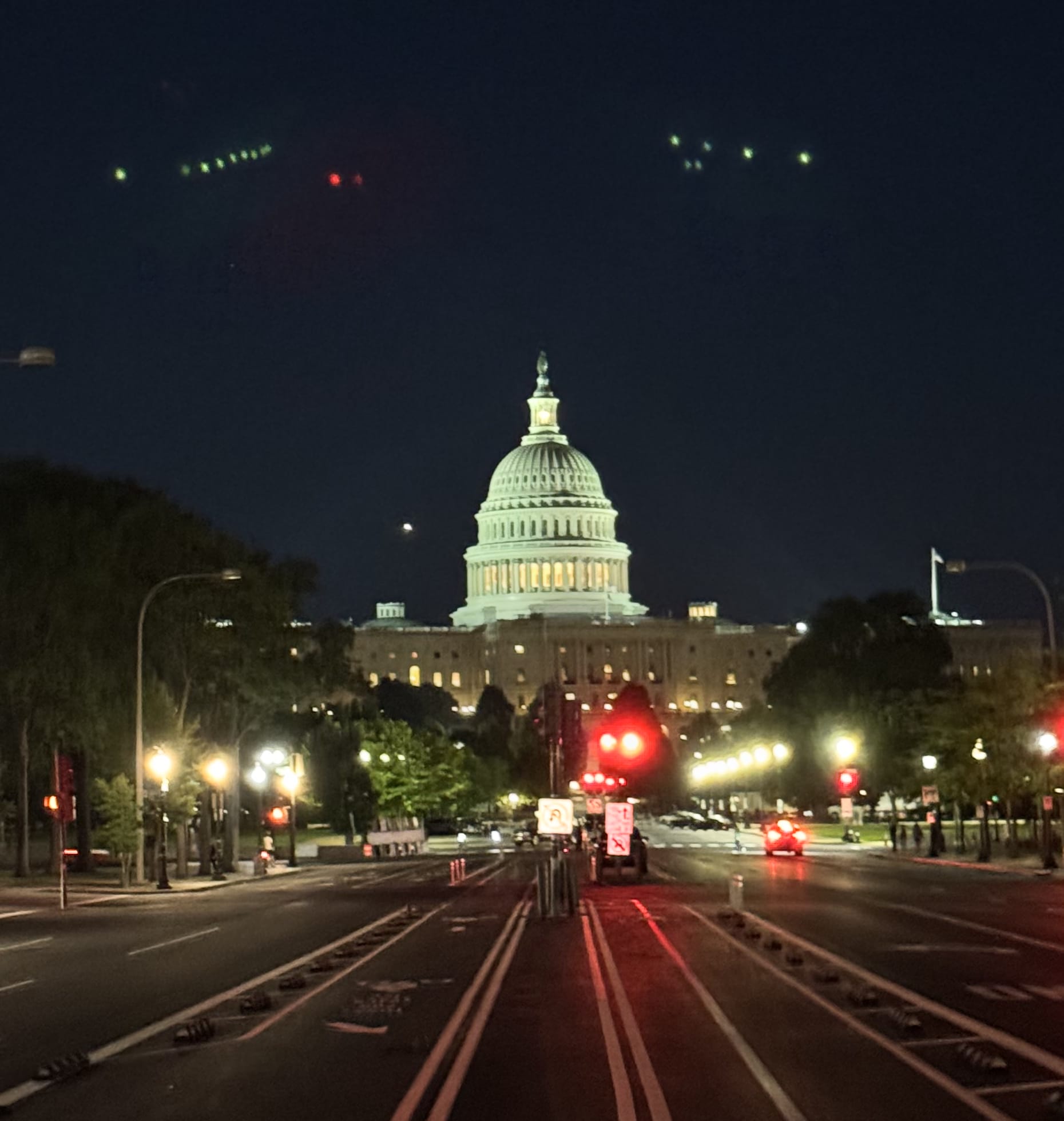
Washington
DC
at
Night
(photo
by
Renee
Jefferson)
A
Call
for
Your
Ideas. Before
we
dive
into
the
headlines,
I
have
a
favor
to
ask
on
behalf
of
the
Planning
Committee
for
the
2026
ABA
National
Conference
on
Professional
Responsibility.
We
are
a
group
of
volunteers
who
want
to
plan
exciting
events
and
panels
around
the
issues
you
consider
“hot
topics”
in
legal
ethics.
Please
take
a
moment
to
share
your
thoughts
via
this very
brief
survey.
Now,
let’s
get
started
with
the
headlines.
Don’t
forget
to
keep
scrolling
down
to
the
end
for
all
the
“First
Monday”
extra
features.
Enjoy!
Highlights
from
Last
Week
–
Top
Ten
Headlines
#1
“After
Law
Firm
Deals
With
Trump,
D.C.
Bar
Warns
of
Ethical
Jeopardy.” From
the New
York
Times: “Months
after
law
firms
made
deals
with
President
Trump
to
ward
off
punitive
executive
orders,
the
ethics
committee
of
the
District
of
Columbia
Bar
is
warning
that
such
arrangements
may
require
firms
to
drop
or
obtain
waivers
from
all
clients
who
have
interests
at
odds
with
the
government. An
opinion
issued
by
the
committee
this
week could
bring
new
scrutiny
to
several
prominent
law
firms
that
chose
to
strike
deals
with
Mr.
Trump
instead
of
challenging
his executive
orders targeting
them.
Any
lawyer
or
law
firm
that
contemplates
making
a
deal
with
a
government
that
includes
conditions
that
may
limit
or
shape
their
practices,
the
opinion
said,
‘must
examine
whether
the
arrangement
would
prevent
the
firm
from
providing
conflict-free
representation
to
clients
—
existing
and
new
—
who
are
adverse
to
the
relevant
government.’”
Read
more here (gift
link).
#2
“Dem-Appointed
Maryland
Supreme
Court
Justice
in
Hot
Seat
Over
Politically
Charged
Halloween
Display.” From Fox
News: “A
liberal
Maryland
Supreme
Court
justice
is
in
the
hot
seat
over
a
politically
charged
Halloween
display
on
his
lawn
that
an
expert
said
casts
doubt
on
his
ability
to
rule
impartially
on
a
high-stakes
case
currently
before
the
court. Maryland
Supreme
Court
Justice
Peter
Killough,
who
was
appointed
to
the
court
by Democratic
Gov.
Wes
Moore,
is
taking
criticism
for
exhibiting
his
left-wing
political
leanings
through
a
Halloween
display
at
his
Maryland
home.
The
display
included
an
environmentalist
sign,
which
the
expert
said
is
particularly
concerning
since
Killough
is
currently
involved
in
a
high-stakes
environmental
case..
The
signs,
painted
on
Halloween-style
gravestones,
depict
politically
charged
messages
like,
‘Here
lies
the
Constitution,’
‘RIP
Freedom
of
Speech,’
‘RIP
Food
Aid,’
‘Beware
Health
Insurance
Cuts,’
‘RIP
Due
Process’
and
‘RIP
Climate
Science.’
… Nick
Cavey,
a
spokesperson
for
the
Maryland
Judiciary,
told
Fox
News
Digital
that
the
‘the
signs
belong
to
Justice
Killough’s
wife’
and
that
‘Killough
has
no
further
comments.’”
Read
more here.
#3“Britain’s
300-Year
Tradition
of
Wearing
Wigs
in
Court
Gets
a
Trim.” From
the Washington
Post: “The
criminal-court
dress
guidelines,
updated
in
July
by
Britain’s
Bar
Council
after
two
years
of
review
but
only
receiving
wide
publicity
now,
specifically
relax
the
rules
for
barristers
with
Afros,
dreadlocks
or
other
‘hairstyle
traditions’
associated
with
their
ethnicities.
The
exceptions
don’t
require
any
advance
permission,
and
some
practitioners
have
already
begun
to
go
wigless.
(The
Hogwarts-style
robes
and
white
wing
collars
are
still
required.)
The
Bar
Council,
which
represents
some
18,000
legal
professionals,
added
permission
for
other
categories
of
attorney
to
appear
bareheaded
as
well,
albeit
with
advance
written
approval
from
a
review
body.
They
include
pregnant
women,
barristers
going
through
menopause
who
may
find
them
too
hot,
and
those
with
physical
disabilities
that
may
make
wig
(or
gown)
wearing
difficult.”
Read
more here (gift
link).
#4
“University
of
Arkansas
Fires
Law
Professor
Over
Charlie
Kirk
Comments.” From Reuters: “The
University
of
Arkansas
at
Little
Rock
has
fired
a
law
professor
for
comments
she
made
on
social
media
about
the
September
10
killing
of
conservative
activist Charlie
Kirk.
The
professor, Felicia
Branch,
appears
to
be
the
first
legal
academic
to
be
dismissed
for
social
media
posts
about
Kirk,
the
Turning
Point
USA
founder
whose
assassination
at
an
event
at
Utah
Valley
University
shocked
the
country
and
ignited
debates
over
political
violence.”
Read
more here.
#5
“DOJ
Faces
Ethics
Nightmare
with
Trump
Bid
for
$230M
Settlement.” From The
Hill: “The
Department
of
Justice
(DOJ)
is
facing
pressure
to
back
away
from
a
request
from President
Trump for
a
$230
million
settlement
stemming
from
his
legal
troubles,
as
critics
say
it
raises
a
dizzying
number
of
ethical
issues.
Trump
has
argued
he
deserves
compensation
for
the
scrutiny
into
his
conduct,
describing
himself
as
a
victim
of
both
a
special
counsel
investigation
into
the
2016
election
and
the
classified
documents
case.
The
decision,
however,
falls
to
a
cadre
of
attorneys
who
previously
represented
Trump
personally. Rupa
Bhattacharyya,
who
reviewed
settlement
requests
in
her
prior
role
as
director
of
the
Torts
Branch
of
the
DOJ’s
Civil
Division,
said
most
agreements
approved
by
the
department
are
typically
for
tens
of
thousands
of
dollars
or
at
most
hundreds
of
thousands.”
Read
more here.
#6
“Federal
Judge
Disqualifies
Trump-Backed
Prosecutor
in
Los
Angeles.” From
the New
York
Times: “A
federal
judge
disqualified
the
United
States
Attorney
in
Los
Angeles
on
Tuesday,
the
latest
rebuke
to
the
Trump
administration’s
attempts
to
circumvent
congressional
approval
for
federal
prosecutors.
The
ruling
creates
leadership
uncertainty
in
the
nation’s
largest
judicial
district,
the
Central
District
of
California,
which
serves
seven
counties
in
the
Los
Angeles
area.
The
order
was
issued
by Judge
J.
Michael
Seabright of
the
Federal
District
Court
in
Hawaii,
who
ruled
that
the
Trump
appointee, Bill
Essayli,
‘is
not
lawfully
serving
as
acting
United
States
Attorney’
and
‘cannot
continue
to
perform
any
role’
that
job
entails.
But
it
was
unclear
what
the
practical
effect
of
his
order
would
be,
since
the
judge
also
allowed
Mr.
Essayli
to
revert
to
the
role
of
the
office’s
top
deputy,
as
the
first
assistant
United
States
attorney.”
Read
more here (gift
link).
#7
“Judge
Orders
Disciplinary
Letter
Hung
Below
Portrait
of
Disgraced
Jurist
in
Hot
Spring
County.” From
the Arkansas
Times: “Calling
a
painting
of
a
disgraced
circuit
judge
a
‘celebration
of
corruption,’
the
chief
administrative
judge
of
Arkansas’s
7th
Judicial
Circuit
ordered
on
Monday
that
a
framed
copy
of
a
judicial
discipline
press
release
be
hung
below
the
portrait.”
Read
more here.
#8
“Texas
Judges
Won’t
Face
Sanctions
for
Turning
Down
Same-Sex
Weddings
on
Religious
Grounds.” From
the Texas
Tribune: “Officiating
weddings
isn’t
a
requirement
for
judges
or
justices
of
the
peace.
A
new
rule
will
let
them
perform
only
opposite-sex
marriage
ceremonies.”
Read
more here.
#9
“Jack
Smith
Asks
Justice
Dept.
for
Guidance
on
Testifying
to
Congress.” From
the New
York
Times: “Jack
Smith,
the
former
special
counsel,
asked
the
Justice
Department
on
Monday
to
detail
what
he
is
allowed
to
tell
Congress
about
investigating President
Trump,
after
Republicans
accused
some
of
his
former
staff
of
hiding
behind
grand
jury
secrecy
rules.”
Read
more here (gift
link).
#10
Call
for
Nominations
–
2026
Michael
Franck
Professional
Responsibility
Award. From
the ABA
Center
for
Professional
Responsibility on LinkedIn: “We
are
excited
to
announce
that
nominations
are
now
open
for
the
2026
Michael
Franck
Professional
Responsibility
Award!
This
prestigious
award
recognizes
individuals
who
have
made
significant
contributions
to
the
field
of
professional
responsibility
in
legal
practice.
Nominations
are
invited
from
colleagues,
organizations,
and
peers
who
can
speak
to
the
nominee’s
dedication,
leadership,
and
impact
on
promoting
ethical
standards
in
the
legal
profession.”
Read
more here.
And
learn
about past
recipients
at
LER
Bonus
Content
No.
19.
Recommended
Reading
“Advocate-Don’t
Hallucinate!
Appellate
Court
Staff
Attorneys
as
Vanguards
for
Ethical
AI
Usage” by Ashley
London (Duquesne).
From
the
abstract:
Appellate
court
staff
attorneys
can
and
should
play
a
special
role
in
promoting
the
ethical
use
of
generative
artificial
intelligence
(“AI”)
systems
for
judges,
lawyers,
and
pro
se
litigants.
This
often-unseen
cohort
of
lawyers
is
uniquely
positioned
to
champion
the
ethical
use
of
AI
due
to
their
high
level
of
responsibility
for
justice,
their
critical
roles
in
ensuring
courts
run
efficiently,
as
well
as
their
close
connections
to
the
judges
charged
with
determining
whether
the
proceedings
below
were
fair
and
the
law
applied
correctly.
The
use
and
misuse
of
AI
is
growing
among
both
lawyers
and
pro
se
litigants.
Citations
to
fake
cases
are
becoming
common
in
state
and
federal
district
courts,
with
one
researcher
showing
that
courts
around
the
globe
–
but
especially
the
United
States
–
are
impacted
by
AI
misuse
in
filings
on
a
near
daily
basis.
The
appeal
of
these
AI
tools
is
that
many
are
free,
easy
to
use,
and
enjoy
a
mythical
reputation
for
trustworthiness,
a
trait
hyped
by
developers,
the
media,
and
even
lawyers.
Absent
an
enforceable
set
of
ethical
codes
for
AI
software
developers,
courts
are
left
to
investigate,
police,
and
sanction
when
algorithms
produce
incorrect
content.
Using
large
language
models
reveals
that
AI
can,
and
often
does,
hallucinate
case
names
and
facts,
which
if
left
unchecked
can
cost
courts
time
and
resources,
while
also
impacting
the
outcome
of
legal
actions.
Despite
this
propensity
to
generate
inaccurate
content,
generative
AI
tools
are
here
to
stay
because
large
corporate
interests
have
invested
billions
in
its
development
and
utilization
by
the
legal
sector.
Courts
across
the
country
have
adopted
variable
and
inconsistent
rules
for
the
use
of
AI,
and
while
lawyers
may
face
discipline
via
sanctions
and
disciplinary
actions,
pro
se
litigants
are
subject
only
to
FRCP
Rule
11
sanctions.
Because
appellate
court
staff
attorneys
are
uniquely
placed
to
review
and
screen
pro
se
cases,
it
is
critical
that
they
learn
about
AI,
study
AI,
and
understand
the
many
ways
in
which
these
programs
fall
short
of
trustworthiness
and
accuracy.
This
article
details
ways
in
which
these
specially-placed
lawyers
can
take
the
lead
inside
their
courts
to
develop
plans
to
incorporate
and
implement
generative
AI
systems
to
make
the
court
process
more
ethical
and
efficient
for
all
litigants.
“Under
Political
Pressure:
How
Courts
and
Congress
Can
Help
Prosecutors
Do
Justice” by Rebecca
Roiphe (New
York
Law
School)
and Bruce
Green (Fordham).
From
the
abstract:
Some
subordinate
federal
prosecutors
faced
a
challenging
professional
dilemma
in
the
early
days
of
the
second
Trump
Administration.
It
arose
from
the
tension
between
their
role
as
public
officials
and
lawyers
who
owe
fiduciary
duties
to
the
public
and
their
role
as
Department
of
Justice
(DOJ)
employees
who
take
direction
from
higher-ups.
The
DOJ
leadership
directed
these
subordinate
prosecutors
to
use
their
considerable
power
in
ways
evidently
designed
to
advance
partisan
political
objectives.
This
was
contrary
to
the
clear
understanding
previously
expressed
by
courts,
the
legal
profession,
and
the
DOJ
itself
that
prosecutors
have
a
duty
to
seek
justice,
which
requires
excluding
partisan
politics
from
charging
decisions.
This
Essay
considers
how
federal
prosecutors
should
navigate
this
dilemma
consistently
with
their
fiduciary
obligations,
which
are
paramount
to
their
employment
obligations.
It
also
analyzes
what
more
Congress
and
the
courts
can
do
to
enable
subordinate
prosecutors
to
carry
out
their
fiduciary
obligations.
We
conclude
that
Congress
can
better
protect
prosecutors
who
resist
questionable
demands,
and
that
in
the
gaps
left
by
federal
legislation,
courts
should
use
their
supervisory
authority
to
reinforce
federal
prosecutors’
ability
to
seek
justice
in
the
face
of
contrary
pressure
or
direction
from
the
DOJ
leadership.
From
the
Texas
Center
for
Legal
Ethics,
here’s
the
question
of
the
month:
“Can
an
attorney
agree
to
pay
a
nonlawyer-owned
company
for
support
services
based
on
a
percentage
of
law
firm
revenues?” Test
yourself
at
this
website where
you
can
read
a
short
hypothetical,
select
an
answer,
and
see
your
results.
So
far,
64%
have
gotten
it
right.
Will
you?
Get
Hired
Did
you
miss
the
350+
job
postings
from
previous
weeks?
Find
them
all here.
Board
of
Ethics,
City
of
Chicago
—
Chicago. From
the
posting:
“The
Board
of
Ethics
has
3
current
vacancies:
for
Senior
Attorney,
Legal
Counsel,
and
Project
Coordinator.”
Learn
more
and
apply here.
Conflicts
Attorney,
Taft
Law
—
Chicago,
Cincinnati,
Cleveland,
Columbus,
Dayton,
Denver,
Detroit,
Indianapolis
or
Minneapolis. From
the
posting:
“Under
the
direction
of
the
Conflicts
Counsel,
the
Conflicts
Attorney
will
be
responsible
for
all
aspects
of
the
conflicts
process,
from
preparing
conflicts
search
reports
as
needed,
to
identifying
and
resolving
possible
ethical
conflicts
and
business
issues
for
both
new
business
and
lateral
matters.
The
Conflicts
Attorney
serves
clients
and
attorneys
by
ensuring
that
the
firm
fulfills
its
ethical
obligations.”
Learn
more
and
apply here.
Conflicts
Counsel,
Lewis
Brisbois
—
Portland. From
the
posting:
You
“will
be
responsible
for
reviewing
conflict
check
reports
and
identifying,
advising,
analyzing
and
resolving
potential
conflicts
of
interest
and
working
directly
with
attorneys
to
clear
conflicts
related
to
the
hiring
of
new
partners,
associates,
paralegals,
and
other
firm
hires.”
Learn
more
and
apply here.
Global
Ethics
&
Compliance
Attorney,
Bath
&
Body
Works—
Columbus/Hybrid. From
the
posting:
“The
Global
Ethics
&
Compliance
Attorney
will
provide
legal
expertise
and
counsel
to
the
business
relating
to
global
compliance
and
regulatory
matters
and
will
help
support
the
development,
implementation
and
continuous
improvement
of
the
organization’s
ethics
and
compliance
programs.”
Learn
more
and
apply here.
Upcoming
Ethics
Events
&
Other
Announcements
Did
you
miss
an
announcement
from
previous
weeks?
Find
them
all here.
December
8-9.
Australia
and
New
Zealand
Legal
Ethics
Colloquium
VIII,
University
of
Otago,
New
Zealand. The
2025
colloquium
will
explore
the
evolving
expectations
of
lawyers
in
a
world
where
professional
conduct
is
increasingly
scrutinized
through
the
lens
of
public
morality
and
social
justice.
We
encourage
submissions
that
engage
with
questions
such
as:
What
are
the
limits
of
role
morality
in
legal
practice?
How
should
legal
ethics
respond
to
the
rise
of
“cancel
culture”
and
public
backlash
against
lawyers?
How
can
the
legal
profession
maintain
its
commitment
to
the
rule
of
law
while
remaining
responsive
to
democratic
values
and
social
change?What
does
accountability
look
like
for
lawyers
representing
controversial
clients
or
causes?
How
should
legal
education
evolve
to
prepare
future
lawyers
for
these
ethical
complexities?
Learn
more here.
December
9
@
noon
–
1PM
Eastern.
Florida
Bar
CLE
“What
Messy
Celebrity
Breakups
Teach
About
Legal
Ethics.” From
the
program
description:
“What
do Gwyneth
Paltrow, J.
Lo,
and Ryan
Seacrest all
have
in
common?
They
all
had
messy,
public
breakups
that
offer
surprisingly
rich
lessons
about
attorney
ethics
and
professional
conduct.
Professional
legal
educator Stuart
Teicher,
Esq. (known
as
The
CLE
Performer)
uses
celebrity
relationship
drama
to
explore
the
rules
of
professional
conduct
in
ways
that
are
both
memorable
and
practical.
From
power
couple
joint
representation
disasters
to
confidentiality
breaches
that
make
tabloid
headlines,
these
high-profile
relationship
meltdowns
mirror
the
ethical
dilemmas
attorneys
face
in
their
own
practices.
You’ll
discover
how
celebrity
scandals
illuminate
key
ethical
principles,
making
complex
rules
easier
to
understand
and
remember
when
real
ethical
challenges
arise
in
your
practice.
This
program
combines
real
celebrity
situations
with
hypothetical
scenarios
to
create
engaging
teaching
moments
that
stick.”
Learn
more here.
January
6-9.Association
of
American
Law
Schools
Annual
Meeting,
Section
on
Professional
Responsibility
Events. I’ll
be
moderating
the
Section’s
main
program
on
“The
Law
Professor’s
Role
in
Protecting
Our
Legal
System”which
will
be
held
January
8
from
2:35-3:50
PM.
Learn
more here.
Keep
in
Touch
News
tips?
Announcements?
Events?A
job
to
post?Reading
recommendations? Email [email protected] –
but
be
sure
to
subscribe
first,
otherwise
the
email
won’t
be
delivered.
Renee
Knake
Jefferson
holds
the
endowed
Doherty
Chair
in
Legal
Ethics
and
is
a
Professor
of
Law
at
the
University
of
Houston.
Check
out
more
of
her
writing
at
the Legal
Ethics
Roundup.
Find
her
on
X
(formerly
Twitter)
at @reneeknake or
Bluesky
at legalethics.bsky.social.


 Kathryn