According
to
data
from
the
first
two
weeks
of
the
Supreme
Court’s
current
Term
analyzed
by
Dr.
Adam
Feldman
of
Legalytics,
which
justice
has
spoken
the
most
words
during
oral
arguments
in
that
time
frame?
Hint:
Unsurprisingly,
the
notably
taciturn
Clarence
Thomas
clocks
in
with
the
fewest
words
spoken
during
the
opening
weeks
of
this
Term.
Ed.
note:
Please
welcome
Renee
Knake
Jefferson
back
to
the
pages
of
Above
the
Law.
Subscribe
to
her
Substack,
Legal
Ethics
Roundup,here.
Welcome
to
what
captivates,
haunts,
inspires,
and
surprises
me
every
week
in
the
world
of
legal
ethics.
Hot
off
the
press
from
West
Academic!
Happy
Monday!
Over
the
past
eighteen
months,
I’ve
been
immersed
in
multiple
collaborative
endeavors
with
more
than
a
dozen
different
coauthors.
Some
are
updates
to
older
casebooks
and
treatises,
but
two
projects
are
new
casebooks,
one
which
hit
the
shelves
last
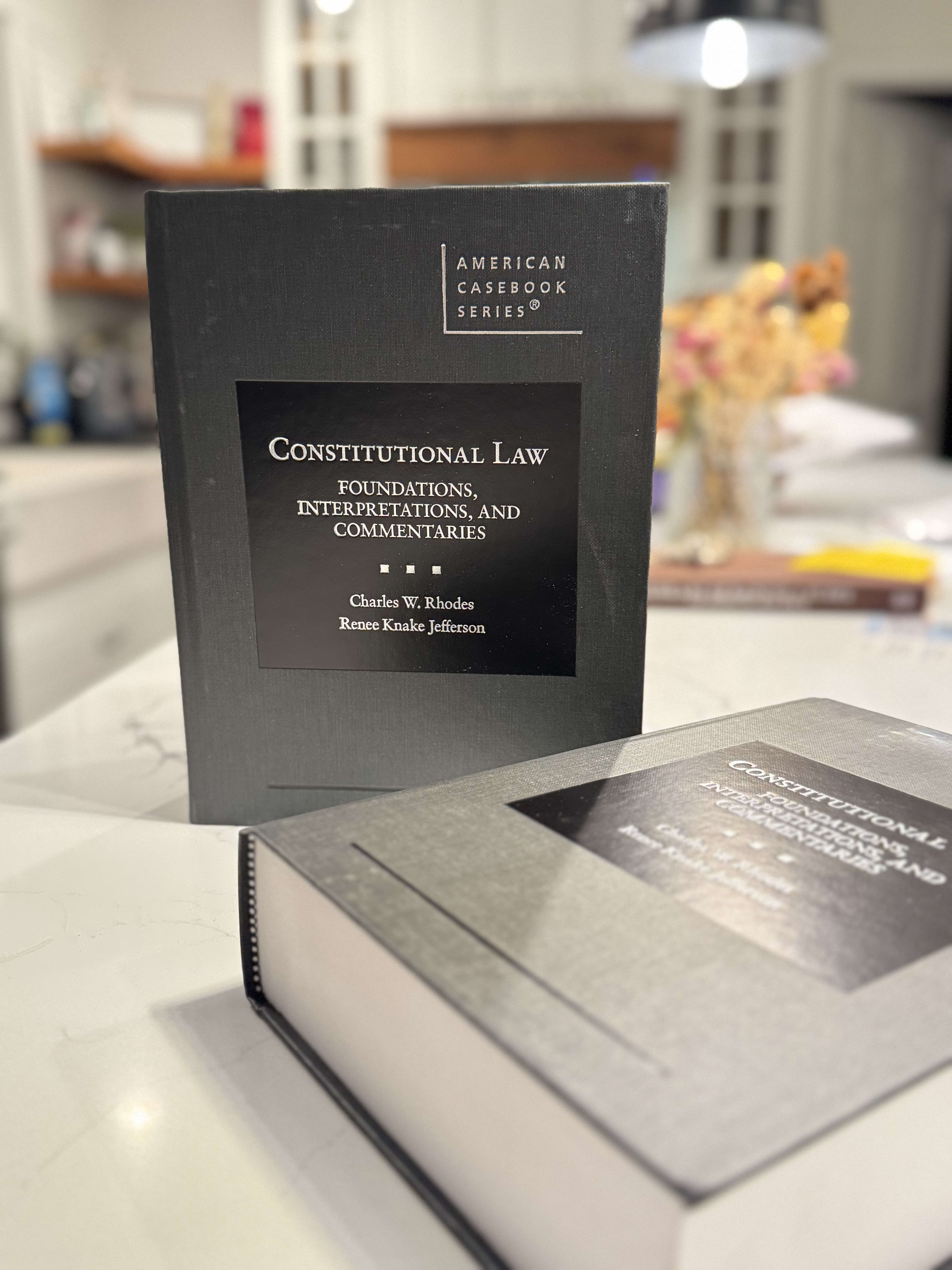
week. Rocky
Rhodes (Missouri)
and
I
are
thrilled
to
release
into
the
world
our
casebook Constitutional
Law:
Foundations,
Interpretations,
and
Commentaries(West
Academic).
We
are
especially
grateful
to
our
publisher Louis
Higgins,
who
suggested
we
work
together.
Stay
tuned
for
more
publication
reveals
from
my
coauthors
and
me
in
the
coming
weeks
and
months!
For
now,
let’s
turn
to
the
headlines.
Highlights
from
Last
Week –
Top
Ten
Headlines
#1
“DOJ
Lawyers’
Courtroom
Lies
Challenge
Judiciary,
Ex-Judges
Say.” From Bloomberg
Law: “Former
federal
judges
are
lamenting
a
new
challenge
their
colleagues
on
the
bench
face:
government
lawyers
making
false
statements
in
court.
Federal
prosecutors
and
lawyers
‘are
lying
to
the
federal
courts,’
and President
Donald
Trump and
top
officials
are
‘trashing
individual
judges,’
retired Judge
J.
Michael
Luttig,
a George
H.
W.
Bushappointee
to
the
US
Court
of
Appeals
for
the
Fourth
Circuit,
said
at
a
Wednesday
event
in
Washington.
In
some
cases,
‘you
are
wondering
whether
or
not
the
information
being
given
by
the
component
of
the
action
is
accurate,
and
you’re
asking
for
details
to
follow
up,
and
getting
gibberish,’
said
former Judge
Paul
Grimm,
director
of
Duke
Law
School’s
Bolch
Judicial
Institute.
The
judges
made
their
remarks
at
a
panel
hosted
by
the
Society
for
the
Rule
of
Law,
a
conservative
legal
group
that’s
been
critical
of
Trump’s
policies.
A study
published
this
month by
nonpartisan
legal
journal
Just
Security
found
over
40
cases
where
federal
courts
have
found
‘serious
defects’
in
the
government’s
representations
in
court,
including
false
statements
and
contradictions.”
Read
more here.
#2
“What
if
the
Big
Law
Firms
Hadn’t
Caved
to
Trump?.” From The
New
Yorker: “It
is
worth
considering
how
we
got
here,
and
whether
we
could
have
done
anything
to
slow
this
downward
spiral.
Counterfactuals
are
impossible
to
prove,
but
it
doesn’t
require
a
giant
speculative
leap
to
conclude
that,
had
major
U.S.
law
firms
not so
quickly
surrendered to
Trump,
this
spring,
he
would
have
been
denied
early
momentum
for
his
lawlessness.
Perhaps
a
united
opposition
might
have
even
provided
the
opposite
momentum,
toward
a
defense
of
the
rule
of
law.”
Read
more here.
#3
“Trump’s
Multi-Million
Request
Puts
DOJ
Integrity
to
the
Test,
Legal
Scholars
Say.” From Axios: “Legal
scholars
told
Axios
that
if
the
Justice
Department
hands President
Trump the
millions
in
damages
he
requested
in
past
administrative
claims,
it
would
present
an
egregious
breach
of
ethical
safeguards.”
Read
more here.
#4
“California
Supreme
Court
Rejects
Plan
to
Expunge
Attorney
Discipline
Records.” From Reuters: “The
California
Supreme
Court
has
rejected
a proposal that
would
have
erased
records
of
disciplinary
actions
against
lawyers
in
the
state
from
public
view
if
they
occurred
more
than
eight
years
ago.
The
court
denied
the
request
by
the
State
Bar
of
California
on
Wednesday,
which
means
the
older
records
will
continue
to
appear
on
lawyers’
public
bar
profiles.
The
court
also
rejected
the
bar’s
proposal
to
lower
fines
for
disbarred
lawyers
from
$5,000
to
$1,000
and
to
eliminate
a
$2,500
fine
on
suspended
attorneys.”
Read
more here (gift
link).
#5
“State
AGs
Attacking
ESG
Are
Flirting
With
Ethics
Violations.” From Victor
Flatt (Case
Western)
in Bloomberg
Law: “The
rise
of
environmental,
social,
and
governance
factors
in
private
sector
shareholder,
financing,
and
consumer
decisions
has
spurred
a
conservative
backlash
that’s
accelerating
in
the
second
Trump
administration.
This
response
has
mutated
from
being
bad
policy
of
questionable
legality
to
possibly
violating
legal
ethics,
including
by
some
state
attorneys
general.
Such
ethical
concerns
simply
can’t
be
ignored
or
glossed
over
and
ultimately
may
provide
a
check
on
government
efforts
to
stamp
out
ESG
completely.”
Read
more here.
#6
“The
Department
of
Justice’s
Broken
Accountability
System.” From
the Brennan
Center
for
Justice: “Attorneys
in
the
U.S.
Department
of
Justice
(DOJ)
must
comply
with
the
professional
and
ethical
standards
set
forth
in
department
regulations
and
policies,
state
bar
rules,
and
federal
law.
Since
January
20,
however,
the
second
Trump
administration
has
systematically
dismantled
the
DOJ’s
internal
controls
that
help
ensure
compliance
with
these
standards.
This
paper
explains
what
those
internal
accountability
systems
were,
how
the
administration
has
broken
them,
and
how
courts
are
grappling
with
the
consequences
as
they
confront
a
DOJ
presenting
questionable
legal
positions
and
assertions
of
fact,
evading
court
orders,
and
overstepping
its
prosecutorial
authority.”
Read
more here.
#7
“More
AI-Using
Litigants
Getting
Caught
Hallucinating.” From Bloomberg
Law: “Litigants’
usage
of
AI-hallucinated
cases,
quotes,
and
citations
in
briefs
and
other
case
filings
is
becoming
increasingly
common,
based
on
a
Bloomberg
Law
analysis
of
court
opinions
and
other
judicial
orders.
In
2025,
instances
in
which
lawyers
and
pro
se
litigants
were
caught
misusing
generative
AI
have
increased
sevenfold.
As
tech-savvy
litigants
swiftly
adopt
artificial
intelligence
tools,
they
take
on
the
risk
associated
with
relying
on
a
generative
AI
chatbot
to
conduct
legal
research,
often
failing
to
verify
hallucinated
case
law
before
building
their
legal
briefs.
The
results
of
the
data
analysis
bolster
the
perception
that
AI
misuse
is
expanding.”
Read
more here.
#8
“Legal
Ethics
Amid
Technological
Change:
From
AI
to
Virtual
Lawyering.” From ABA’s
Business
Law
Today: “Artificial
intelligence
and
digital
tools
are
rapidly
reshaping
the
legal
landscape,
but
they
do
not
eliminate
the
need
for
lawyers
to
comply
with
longstanding
professional
rules.
The
CLE
program The
Great
Tech
Quest
of
2025:
Ethical
Considerations
in
AI,
Deepfakes,
Social
Media,
Cybersecurity,
and
Virtual
Lawyering at
the
ABA
Business
Law
Section
(“BLS”)
2025
Fall
Meeting
delivered
a
timely
and
thought-provoking
exploration
into
the
ethical,
practical,
and
technological
challenges
facing
today’s
legal
professionals.
The
discussion,
moderated
by Jasmine
Smith,
Chair
of
the
BLS
Professional
Responsibility
Committee
and
Partner
at
Robinson
Gray
Stepp
Laffitte,
featured
helpful
insights
from Amy
Richardson,
Partner
at
HWG
LLP
and
Professor
at
Duke
Law
School,
and Jon
Garon,
Associate
Dean
for
Technology
and
Innovation
at
Nova
Southeastern
University’s
Shepherd
Broad
College
of
Law.
Exploring
topics
from
deepfakes
to
cybersecurity,
the
panel
reviewed
the
various
ethical
obligations
that
apply
to
lawyers
in
different
technological
contexts,
including
core
themes
of
competence
and
client
confidentiality.”
Read
more here.
#9
“Appeals
Court
Weighs
Whether
Alina
Habba
Is
a
Lawful
U.S.
Attorney.” From
the New
York
Times: “A
federal
appeals
court
on
Monday
considered
whether Alina
Habba,
a
former
personal
attorney
to President
Trump,
is
lawfully
acting
as
New
Jersey’s
top
federal
prosecutor,
in
a
case
that
could
help
clarify
the
limits
of
a
president’s
power
to
keep
U.S.
attorneys
in
office
without
Senate
involvement.
In
August,
a
district
court
judge
ruled
that
Ms.
Habba
had
been
acting
as
U.S.
attorney
unlawfully,
plunging
a
struggling
New
Jersey
court
system
into
disarray
and
placing
the
work
of
the
federal
prosecutor’s
office
there
into
a
novel
form
of
legal
limbo.
The
judge, Matthew
W.
Brann,
found
that
Ms.
Habba’s
interim
tenure
had
expired
in
early
July
and
that
she
had
not
lawfully
become
the
acting
U.S.
attorney,
despite
what
the
Justice
Department
had
said.
The
department
appealed
that
decision,
and
in
a
Philadelphia
courthouse
on
Monday
three
judges
from
the
U.S.
Court
of
Appeals
for
the
Third
Circuit
bombarded
one
of
its
lawyers
with
questions
while
Ms.
Habba
watched
from
the
gallery.”
Read
more here (gift
link).
#10
“Rural
Institutional
Loss.” From Elizabeth
Chambliss (South
Carolina)
in Jotwell reviewing Lisa
R.
Pruitt,
Jennifer
Sherman,
&
Jennifer
Schwartz, Legal
Deserts
and
Spatial
Injustice:
A
Study
of
Criminal
Legal
Systems
in
Rural
Washington, 134
Yale
L.J.
Forum
847
(2025)
and Michele
Statz,A
World-Threatening
Feeling:
Grief,
Moral
Injury,
and
Institutional
Loss
in
Rural
Courts,
93
Fordham
L.
Rev.
1257
(2025): “Two
recent
studies
of
rural
court
systems
highlight
the
importance
of
institutional
investment
for
improving
access
to
justice
in
rural
communities.
Rural
communities
not
only
need
more
individual
providers,
such
as
lawyers
and
community
justice
workers,
they
also
need
local
nonprofits,
community
action
networks,
mental
health
treatment
centers
and
other
institutional
infrastructure
to
support
and
partner
with
providers
including—critically—more
public
investment
in
rural
county
government
and
courts.”
Read
more here.
Get
Hired
Did
you
miss
the
350+
job
postings
from
previous
weeks?
Find
them
all here.
Upcoming
Ethics
Events
&
Other
Announcements
Did
you
miss
an
announcement
from
previous
weeks?
Find
them
all here.
Keep
in
Touch
News
tips?
Announcements?
Events?A
job
to
post?Reading
recommendations? Email [email protected] –
but
be
sure
to
subscribe
first,
otherwise
the
email
won’t
be
delivered
Renee
Knake
Jefferson
holds
the
endowed
Doherty
Chair
in
Legal
Ethics
and
is
a
Professor
of
Law
at
the
University
of
Houston.
Check
out
more
of
her
writing
at
the Legal
Ethics
Roundup.
Find
her
on
X
(formerly
Twitter)
at @reneeknake or
Bluesky
at legalethics.bsky.social.
These
new
partners
embody
the
bold
thinking,
client
focus,
and
leadership
that
power
our
culture.
This
group
shows
what’s
possible
when
talent
meets
opportunity,
and
their
growth
is
proof
that
McDermott
is
a
true
career
accelerant.
—
Ira
Coleman,
chairman
of
McDermott
Will
&
Schulte,
in
comments
given
to
the
American
Lawyer,
concerning
the
newly
combined
firm’s
announcement
of
its
first
partner
class.
McDermott
promoted
74
lawyers
to
partner
and
13
lawyers
to
counsel.
This
record
round
of
promotion
represents
a
32%
increase
over
prior
combined
promotions
at
legacy
firms
McDermott
Will
&
Emery
and
Schulte
Roth
&
Zabel.
Staci
Zaretsky is
the
managing
editor
of
Above
the
Law,
where
she’s
worked
since
2011.
She’d
love
to
hear
from
you,
so
please
feel
free
to
email
her
with
any
tips,
questions,
comments,
or
critiques.
You
can
follow
her
on Bluesky, X/Twitter,
and Threads, or
connect
with
her
on LinkedIn.
Donald
Trump’s
military
takeover
of
blue
cities
continues,
though
several
federal
judges
are
attempting
to
put
a
few
speed
bumps
in
their
way.
One
such
judge
is
U.S.
District
Court
Judge
Sara
Ellis,
who
issued
a
temporary
restraining
order
barring
the
use
of
certain
tactics
in
federal
law
enforcement
interactions
with
protestors
and
media.
Should
be
pretty
straightforward.
Unfortunately,
U.S.
Border
Patrol
commander
Gregory
Bovino was
filmed
throwing
a
canister
of
tear
gas
during
a
protest
in
Chicago’s
Little
Village
neighborhood.
As
reported
by
CBS
News:
In
the
video,
Bovino
can
be
seen
in
uniform,
but
no
headgear,
pulling
out
a
canister
of
tear
gas
and
tossing
it
into
the
crowd
of
protesters
over
the
heads
of
other
agents.
As
the
camera
begins
to
move
away,
he
can
be
seen
pulling
another
canister
of
tear
gas
off
his
belt.
Plaintiffs
in
the
case
—
a
group
of
journalists,
protesters,
and
clergy
suing
the
Trump
administration
—
accuse
Bovino
of
engaging
in
tactics
on
Judge
Ellis’s
list
of
no-nos.
The
plaintiffs
argue
this
violates
“multiple
paragraphs”
of
the
court’s
Oct.
9
order,
which
prohibits
federal
agents
from
arresting,
threatening
to
arrest
or
using
physical
force
against
journalists
unless
there
is
probable
cause
to
believe
the
individual
has
committed
a
crime.
It
also
prohibits
them
from
issuing
crowd
dispersal
orders,
without
exigent
circumstances,
requiring
people
to
leave
a
public
place
where
they
otherwise
have
a
lawful
right
to
be.
The
order
also
prohibits
federal
agencies
from
using
various
types
of
riot
control
weapons,
including
tear
gas
and
other
kinds
of
noxious
gas,
as
well
as
various
kinds
of
“less-lethal”
weapons
and
ammunition,
unless
there
is
an
immediate
safety
threat.
And
former
Cook
County
prosecutor
Brian
Kolp
witnessed
the
events,
saying,
“They
deployed
the
smoke
canister,
the
one
I
showed
you
a
picture
of,
with
no
audible
warning
whatsoever.”
Which
would
certainly
seem
to
violate
the
judge’s
order.
Now
Bovino’s
being
asked
to
answer
some
questions
about
what
exactly
went
down
—
the
government
was
ordered
to
produce
Bovino
for
an
in-person
hearing
in
front
of
Judge
Ellis
tomorrow.
That’s
in
addition
to
the
deposition
Bovino’s
already
been
ordered
to
sit
for
in
the
case.
But
if
you’re
expecting
a
mea
culpa
in
the
courtroom
tomorrow,
what
with
the
video
evidence
and
scores
of
witnesses,
don’t.
Already,
Assistant
Homeland
Security
Secretary
Tricia
McLaughlin
defended
the
use
of
tear
gas,
saying,
“Border
Patrol
agents
were
surrounded
and
boxed
in
by
a
group
of
agitators.
Federal
law
enforcement
issued
multiple
lawful
commands
and
verbal
warnings,
all
of
which
were
ignored…
Border
Patrol
had
to
deploy
crowd
control
measures.”
Plus
Bovino
has
taken
quite
the
aggressive
approach
himself.
Bovino
says
he
was
hit
in
the
head
with
a
rock,
though
the
video
notably
does
not
capture
that,
nor
does
he
appear
to
have
viable
injuries
post-confrontation
with
protestors.
And,
when
questioned
about
the
incident,
Bovino
reportedly
quipped, “Did
Judge
Ellis
get
hit
in
the
head
by
a
rock
like
I
did
this
morning?”
“Maybe
she
needs
to
see
what
that’s
like
before
she
gives
an
order
like
that,”
he
continued.
Suggesting
a
federal
judge
needs
to
be
hit
in
the
head
by
a
rock
isn’t
likely
to
make
your
cause
sympathetic
to
said
federal
judge.
And
given
the
sharp
increase
in
threats
against
federal
judges
—
up
327%
in
the
Trump
II
era
—
it
feels
like
a
pretty
dangerous
sentiment
too.
Kathryn
Rubino
is
a
Senior
Editor
at
Above
the
Law,
host
of
The
Jabot
podcast,
and
co-host
of
Thinking
Like
A
Lawyer.
AtL
tipsters
are
the
best,
so
please
connect
with
her.
Feel
free
to
email
her
with
any
tips,
questions,
or
comments
and
follow
her
on
Twitter
@Kathryn1 or
Mastodon
@[email protected].
Malcom
Masarira,
better
known
as
Traore,
has
gained
a
large
online
following
for
his
outspoken
support
of
Vice-President
Constantino
Chiwenga’s
presidential
ambitions.
He
is
now
facing
several
charges,
including
inciting
violence
and
attempting
to
undermine
a
constitutional
government.
According
to NewsDay,
sources
close
to
the
investigation
said
Masarira
was
caught
in
a
sting
operation
involving
his
close
friend,
Lovemore
Thomson,
also
known
as
“Shorty”,
who
allegedly
used
the
US$10,000
as
bait.
Masarira
is
currently
being
held
at
Harare
Central
Police
Station.
It’s
understood
that
Thomson
arranged
to
meet
Masarira
in
Harare,
which
led
to
the
activist
revealing
his
home
address.
He
was
later
arrested
after
reportedly
going
on
a
spending
spree
in
the
capital.
Thomson,
however,
has
denied
the
claims,
insisting
he
played
no
role
in
setting
up
his
friend
and
knows
nothing
about
the
alleged
trap.
He
said:
“I
am
told
there
are
people
who
are
saying
I
was
given
US$10
000.
They
just
want
to
tarnish
my
image,
these
are
dogs.
I
am
not
a
bogus
person.
I
cannot
defend
myself
now
because
they
just
want
to
tarnish
my
image.”
National
police
spokesperson
Commissioner
Paul
Nyathi
confirmed
Masarira’s
arrest
but
said
he
could
not
share
more
details.
Masarira,
who
recently
returned
to
Zimbabwe
from
South
Africa,
once
contested
in
the
ZANU-PF
primary
elections
for
the
Chikanga
constituency.
He
has
since
taken
to
social
media
to
rally
support
for
his
political
cause.
His
campaign
for
Vice-President
Constantino
Chiwenga
to
succeed
President
Mnangagwa,
run
under
the
“General
Chiwenga
for
President”
banner,
has
gained
thousands
of
followers
online.
TikTok,
the
alleged
national
security
risk
and
dancing
app,
isn’t
just
getting
attacked
at
the
federal
level.
Most
of
the
heat
has
come
from
the
Foreign
Adversary
Controlled
Applications
Act
that
Donald
Trump
keeps
deterring
until
some
American
billionaires
can
turn
it
into
a
proper
American
propaganda
machine,
but
the
states
want
in
on
kicking
TikTok
while
they’re
down
too.
Virginia
just
make
a
sizeable
inroad
to
to
being
able
to
sue
the
company.
29
News
has
coverage:
A
Virginia
judge
ruled
Friday
that
Attorney
General
Jason
Miyares’
lawsuit
against
TikTok
and
its
China-based
parent
company,
ByteDance
Ltd.,
will
proceed
in
Richmond
City
Circuit
Court…the
court
stated
Miyares’
complaint
contained
sufficient
allegations
of
multiple
violations
of
the
Virginia
Consumer
Protection
Act.
The
suit
makes
a
couple
of
claims
worth
mentioning.
One
claim
is
that
TikTok
is
intentionally
designed
to
be
addictive
to
adolescents.
That
should
just
be
taken
as
a
given.
In
the
social
media
market,
websites
and
applications
are
known
for
using
gamification
tactics
to
arrest
as
much
attention
as
possible:
if
you
didn’t
read
former
Facebook
president
Sean
Parker’s
assessment
of
social
media
addictiveness
back
in
2017,
read
it
and
then
factor
in
another
eight
years
of
apps
perfecting
the
process.
They
also
claimed
that
TikTok
was
deceptive
for
presenting
itself
as
being
appropriate
for
children
over
the
age
of
12;
I’ve
definitely
seen
some
content
on
the
app
that
should
have
an
“Over
18”
or
“BET
Uncut”
disclaimer.
Third,
they
say
that
the
app
obscured
its
connection
to
and
potential
to
be
manipulated
by
the
Chinese
Communist
Party.
Bit
of
potential
fear
mongering
there,
but
whatever.
You’d
think
any
actual
ties
would
have
been
made
clear
now
by
the
federal
investigation
a
while
ago.
Even
if
there
were
potential
for
manipulation
because
of
the
app,
no
psyop
could
compare
to
the
wave
of
people
realizing
America
is
a
third-world
country
with
iPhone
access
after
people
rage
flocked
to
Xiaohongshu.
Believe
me
—
the
CCP
won’t
have
to
do
much
propagandizing
if
things
continue
the
way
they
are
slated
to
be.
SNAP’s
expiration
is
about
to
threaten
40M
Americans
with
not
knowing
where
there
next
meals
will
be
coming
from.
That’ll
do
more
to
radicalize
the
average
person
than
TikTok
dance
challenges
ever
could.
If
you
thought
theory
turned
people
into
lefties,
wait
until
you
see
what
mass
hunger
does.
For
what
it’s
worth,
I
wouldn’t
be
surprised
if
things
were
better
if
TikTok
had
a
stronger
age
verification
system.
The
teenagers
and
20-somethings
would
still
be
subject
to
time-sinking
algorithms
and
compulsions
to
mindlessly
yell
“6,7”
whenever
the
opportunity
presents
itself:
But
at
least
the
mindless
users
will
be
susceptible
adults
instead
of
susceptible
children.
Chris
Williams
became
a
social
media
manager
and
assistant
editor
for
Above
the
Law
in
June
2021.
Prior
to
joining
the
staff,
he
moonlighted
as
a
minor
Memelord™
in
the
Facebook
group Law
School
Memes
for
Edgy
T14s
.
He
endured
Missouri
long
enough
to
graduate
from
Washington
University
in
St.
Louis
School
of
Law.
He
is
a
former
boatbuilder
who
is
learning
to
swim, is
interested
in
critical
race
theory,
philosophy,
and
humor,
and
has
a
love
for
cycling
that
occasionally
annoys
his
peers.
You
can
reach
him
by
email
at [email protected]
and
by
tweet
at @WritesForRent.
The
group
said
the
ruling
party’s
resolution,
adopted
at
its
22nd
Annual
National
People’s
Conference
held
in
Mutare
recently,
poses
a
grave
threat
to
constitutional
democracy
and
signals
a
deepening
authoritarian
turn.
Zanu
PF’s
resolution,
identified
as
Resolution
Number
1,
seeks
to
extend
President
Mnangagwa’s
current
presidential
term
beyond
its
constitutional
limit
set
to
end
in
2028.
According
to
the
party’s
legal
secretary
and
Justice
Minister
Ziyambi
Ziyambi,
the
Ministry
of
Justice
was
directed
to
fast-track
the
necessary
constitutional
amendments
by
October
2026.
If
passed,
this
amendment
would
effectively
cancel
the
2028
election,
possibly
stretching
the
current
administration
and
President
Mnangagwa’s
second
term
to
2030.
Ibhetshu
LikaZulu
Secretary
General,
Mbuso
Fuzwayo,
said
Zimbabweans
have
a
legal
and
moral
duty
to
defend
the
2013
Constitution
from
manipulation
by
political
elites.
“This
naked
attempt
to
manipulate
the
Constitution
represents
an
assault
on
Zimbabwe’s
democracy
and
a
betrayal
of
the
aspirations
of
millions
who
sacrificed
for
a
democratic,
accountable
and
prosperous
Zimbabwe,”
said
Fuzwayo,
as
Ibhetshu
LikaZulu
joins
other
civic
movements
who
are
concerned
about
Zanu
PF’s
apparent
intent
to
rewrite
the
Constitution
for
political
expediency.
Fuzwayo
said
Zimbabwe’s
2013
Constitution,
adopted
through
a
people-driven
process,
was
not
meant
to
be
used
as
a
political
tool
to
perpetuate
one
leader’s
stay
in
power.
“The
Constitution
of
Zimbabwe,
adopted
in
2013
through
a
people-driven
process,
clearly
limits
presidential
terms
to
two.
Any
attempt
to
amend
this
sacred
provision
through
a
partisan
parliamentary
vote
undermines
the
sovereign
will
of
the
people
and
erodes
constitutionalism,
the
very
foundation
of
democratic
governance,”
he
said.
“Such
a
move
is
not
only
legally
questionable
but
morally
reprehensible.
It
turns
Parliament
into
an
instrument
of
authoritarian
consolidation
rather
than
a
guardian
of
the
people’s
mandate.
The
proposed
amendment
would
signal
that
Zimbabwe’s
leadership
sees
itself
above
the
law
and
above
the
people.”
The
Ibhetshu
LikaZulu
SG
called
for
a
broad-based
civic
mobilisation
to
stop
what
he
described
as
an
unconstitutional
extension
of
power.
“Ibhetshu
LikaZulu
calls
upon
all
Zimbabweans,
workers,
students,
churches,
civil
society,
traditional
leaders
and
the
diaspora
to
use
every
democratic
instrument
available
to
resist
this
unconstitutional
extension
of
power,”
he
said.
“We
must
defend
the
2013
Constitution,
the
product
of
national
consensus
and
struggle,
from
being
mutilated
to
serve
personal
ambition.”
Fuzwayo
said
extending
President
Mnangagwa’s
rule
would
not
benefit
citizens
but
rather
entrench
corruption,
economic
decline,
and
repression.
“Instead,
it
entrenches
the
continuation
of
grand
corruption
and
looting
of
national
resources;
economic
decay
and
rising
poverty,
as
Zimbabwe
sinks
deeper
into
crisis;
suppression
of
dissent,
human
rights
abuses,
and
the
closure
of
democratic
space;
and
institutional
collapse,
as
state
organs
are
captured
to
protect
political
elites,”
he
said.
He
added
that
Zanu
PF’s
move
was
a
self-serving
attempt
to
preserve
the
priviledges
of
the
ruling
elite,
not
to
address
the
country’s
pressing
challenges.
“This
resolution
seeks
to
secure
the
privileges
of
the
few
at
the
expense
of
the
many,
a
continuation
of
national
suffering
disguised
as
political
stability,”
Fuzwayo
said.
Fuzwayo
also
urged
Members
of
Parliament,
including
those
within
Zanu
PF,
to
uphold
their
oath
of
office
and
reject
any
proposed
bill
or
motion
that
seeks
to
extend
Mnangagwa’s
presidency.
“History
will
not
absolve
those
who
aid
the
dismantling
of
constitutional
democracy,”
Fuzwayo
said.
Fuzwayo
maintained
that
Zimbabwe’s
crisis
was
not
one
of
leadership
tenure
but
of
governance
failure
and
corruption.
“Zimbabwe
does
not
need
another
extended
presidency.
It
needs
accountability,
rule
of
law,
jobs,
service
delivery
and
a
functioning
economy,”
he
said.
“The
attempt
to
manipulate
the
Constitution
for
personal
and
factional
benefit
must
be
resisted
with
unity,
courage,
and
constitutional
patriotism.
The
people
of
Zimbabwe
deserve
better
than
a
recycled
dictatorship.”
If
implemented,
this
constitutional
amendment
could
mark
the
second
major
alteration
to
presidential
term
limits
after
the
2021
changes
under
Constitutional
Amendment
No.
2,
which
expanded
executive
powers
and
allowed
the
President
to
appoint
judges
beyond
retirement
age.
Zimbabwe’s
second-largest
city,
once
regarded
as
the
nation’s
industrial
powerhouse,
is
now
battling
one
of
its
worst
water
crises
in
decades.
Residents
in
several
suburbs
receive
water
only
twice
or
thrice
a
week,
while
others,
especially
those
in
high-lying
areas,
have
gone
for
months
without
running
water.
Many
now
depend
on
boreholes,
wells
and
Jojo
tanks
to
survive.
A
new
technical
report
titled Glassblock/Bopoma
Dam
and
Groundwater:
Feasibility
and
Strategic
Importance,
prepared
for
the
Bulawayo
City
Council,
reveals
the
scale
of
the
crisis.
It
warns
that
Bulawayo
faces
a
“permanent
water
deficit
by
2040”
unless
decisive
action
is
taken
to
expand
supply.
In
his
foreword
to
the
report,
Cllr
Coltart
said
the
city
“stands
at
a
critical
juncture
in
its
quest
for
water
security,”
noting
that
the
shortages
are
now
undermining
Bulawayo’s
growth
and
resilience.
“For
decades,
the
city
has
endured
chronic
shortages,
severe
rationing,
and
the
erosion
of
confidence
in
its
ability
to
sustain
both
population
growth
and
economic
activity,”
he
said.
“Water
scarcity
in
Bulawayo
is
not
simply
an
environmental
challenge.
It
is
a
structural
constraint
on
the
city’s
growth,
investment
potential,
and
long-term
viability.”
The
report
identifies
the
proposed
Glassblock/Bopoma
Dam
as
the
quickest
and
most
affordable
intervention
to
stabilise
the
city’s
supply.
According
to
its
findings,
the
dam
could
deliver
70
megalitres
(ML)
of
water
per
day
within
three
years,
at
a
cost
of
US$0.90
per
cubic
metre.
“The
Glassblock/Bopoma
Dam
represents
the
most
practical,
least-cost,
and
fastest-to-implement
solution
to
the
city’s
current
water
crisis,”
Coltart
said.
“It
offers
a
realistic
opportunity
to
stabilise
supply
while
other
large-scale
projects
remain
years
away.”
By
contrast,
the
long-term
Gwayi-Shangani
project
will
take
at
least
10
years
to
complete
and
deliver
water
at
a
cost
of
US$2.47
per
cubic
metre,
nearly
three
times
more
expensive
than
the
Glassblock
supply.
The
report
recommends
that
both
construction
phases
of
the
Glassblock
project
proceed
simultaneously
to
ensure
immediate
impact.
“Phase
One
will
involve
the
building
of
the
dam
and
a
water
supply
pipeline
from
Glassblock
to
the
Ncema
pump
station,”
the
report
explained.
“Phase
Two
will
upgrade
the
Ncema
Water
Treatment
Works,
improve
pumping
capacity
to
the
Tuli
Reservoir,
and
double
the
reservoir’s
holding
capacity
from
45
to
90
megalitres.
Both
phases
must
proceed
at
the
same
time
so
that
when
the
dam
fills,
Bulawayo’s
residents
and
industries
can
immediately
benefit.”
The
report
also
points
to
widespread
environmental
degradation
as
a
major
contributor
to
the
crisis.
It
warns
that
illegal
riverbed
mining
has
destroyed
key
catchment
areas,
transforming
a
temporary
shortage
into
a
structural
one.
“Illegal
riverbed
mining
has
turned
what
should
be
a
temporary
shortage
into
a
structural
crisis.
The
destruction
of
catchment
areas
is
undoing
decades
of
investment
in
water
infrastructure,”
the
report
states.
Several
of
the
city’s
main
dams,
including
Umzingwane,
Upper
Ncema
and
Inyankuni,
have
suffered
severe
siltation.
The
report
notes
that
Inyankuni
now
receives
only
six
percent
of
its
intended
inflows,
while
Umzingwane
was
decommissioned
in
2023
after
water
levels
dropped
to
dead
storage.
Although
government
outlawed
alluvial
gold
mining
along
rivers
through
Statutory
Instrument
188
of
2024,
enforcement
has
been
weak,
and
illegal
activities
continue
to
threaten
Bulawayo’s
already
fragile
water
sources.
The
city’s
aquifers,
particularly
Nyamandhlovu
and
Epping
Forest,
also
face
serious
strain.
Originally
designed
to
provide
18
ML
per
day,
they
currently
yield
around
10
ML
due
to
vandalism,
poor
maintenance
and
over-extraction.
“Groundwater
resources
play
an
important
supplementary
role,
but
they
are
neither
sufficient
nor
sustainable
on
their
own,”
the
report
warns.
“Without
urgent
investment,
rehabilitation,
and
protection
of
aquifer
infrastructure,
these
resources
will
remain
vulnerable
to
vandalism,
over-extraction,
and
eventual
depletion.”
Bulawayo’s
water
insecurity
has
stunted
its
growth
and
investment
potential.
The
city’s
population
has
stagnated
at
around
655,000
for
over
a
decade,
a
situation
the
report
attributes
to
“suppressed
demand
driven
by
water
insecurity.”
The
report
estimates
the
city’s
current
minimum
supply
at
155
ML
per
day,
against
a
real
demand
of
more
than
260
ML.
Coltart
said
failing
to
act
decisively
would
have
far-reaching
consequences.
“The
completion
of
Glassblock
Dam
and
its
pipeline
is
not
a
luxury,
it
is
an
existential
necessity,”
he
said.
“Without
it,
Bulawayo
risks
not
only
worsening
shortages
but
also
the
erosion
of
its
role
as
a
dynamic
urban
and
economic
centre
in
Zimbabwe.”
The
report
concludes
that
only
major
infrastructure
investments
can
prevent
Bulawayo
from
sliding
into
a
permanent
state
of
crisis.
“An
integrated
water
security
plan
for
Bulawayo
is
essential,
deliver
Glassblock/Bopoma
Dam
urgently,
secure
and
rehabilitate
aquifers,
and
advance
the
Gwayi-Shangani
project
for
the
future,”
it
states.
“Without
these
measures,
Bulawayo
risks
deepening
shortages,
public
health
crises,
and
constrained
economic
development.”
For
the
past
two
years,
these
children
had
been
learning
in
makeshift
tents
after
the
original
school
was
decommissioned
when
classroom
floors
collapsed
into
a
mineshaft
caused
by
illegal
mining
activities.
The
new
school
was
handed
over
by
Minister
of
Primary
and
Secondary
Education
Torerai
Moyo
during
a
commissioning
ceremony
last
week.
The
facility
was
built
by
The
Church
of
Jesus
Christ
of
Latter-day
Saints.
Minister
Moyo
said
illegal
mining
had
severely
damaged
the
school’s
infrastructure,
culminating
in
the
collapse
of
a
classroom
due
to
ground
destabilisation. The
incident
affected
1,348
learners
—
698
girls
and
650
boys
—
along
with
45
teachers
(39
women
and
six
men).
In
the
meantime,
the
Civil
Protection
Unit
(CPU)
had
relocated
students
to
Russell
Primary
School,
but
the
temporary
setup
was
far
from
ideal.
Pupils
faced
a
shortage
of
toilets,
harsh
weather,
heavy
dust
and
noise,
and
no
sporting
facilities,
making
learning
extremely
difficult.
Damage
to
furniture
and
textbooks
in
the
insecure
tent
classrooms
further
hampered
education,
and
many
parents
withdrew
their
children,
leading
to
a
noticeable
drop
in
enrolment.
Said
Moyo:
“Recognising
the
urgent
need
for
a
sustainable
solution,
The
Church
of
Jesus
Christ
of
Latter-day
Saints
stepped
in
to
address
these
issues.
“They
undertook
the
construction
of
seven
learning
blocks,
an
administrative
block
and
an
ablution
block,
equipping
the
classrooms
with
a
10kVA
solar
system,
600
desks,
600
chairs
and
14
tables
with
chairs
for
teachers.”
Moyo
said
the
new
Globe
and
Phoenix
Primary
School
is
now
ready
to
accommodate
785
learners
—
409
girls
and
376
boys.
The
minister
praised
The
Church
of
Jesus
Christ
of
Latter-day
Saints
for
its
substantial
contributions
to
education
in
Zimbabwe.
Superior,
they
said,
never
gives
up
her
dead
when
the
gales
of
November
come
early,
but
apparently
it
does
give
up
its
life
preservers
when
the
police
misconduct
settlements
of
October
come
on
time.
Half
a
century
on
from
the
wreck
of
the
Edmund
Fitzgerald,
the
legend
has
managed
to
get
just
a
little
weirder,
but
this
time
in
the
form
of
a
litigation
settlement
that
has
exactly
nothing
to
do
with
the
ship.
The
state
is
paying
$600,000
to
settle
claims
brought
by
Larry
Orr,
who
sued
alleging
violations
of
his
rights
as
part
of
a
discredited
sexual
abuse
allegation.
But
even
more
surprising
than
law
enforcement
failing
to
hide
behind
qualified
immunity,
is
the
guest
starring
role
of
a
life
preserver
from
the
famous
vessel
that
washed
ashore.
Orr
owned
one
of
the
orange
rings
and
had
entertained
some
plans
to
auction
it
as
part
of
the
50th
anniversary
remembrance
of
the
disaster.
Instead,
as
part
of
the
deal,
Orr
is
getting
$600,000
from
the
state
and
handing
over
the
ring.
Why
would
the
beneficiary
of
the
settlement
hand
over
anything?
That’s
a
great
question!
According
to
Orr’s
lawyer,
the
police
officer’s
attorney
knew
that
Orr
owned
the
artifact
and
randomly
raised
the
prospect
of
throwing
it
into
the
deal.
“Are
we
at
a
mediation
for
a
wrongful
prosecution
or
an
estate
sale?”
Smith
said
she
wondered
in
the
AP
article.
But
these
misgivings
weren’t
enough
to
keep
the
deal
from
getting
done.
Though
maybe
they
should
have.
Given
that
the
life
ring
is
worth
roughly
$300,000,
its
inclusion
in
the
deal
certainly
makes
this
feel
like
a
$300,000
settlement
with
Orr
along
with
a
$300,000
payment
for
a
piece
of
personal
property
disguised
as
a
settlement
of
claims.
Since
litigation
settlements
would
enjoy
tax
benefits,
this
maritime
deal
seems
very…
fishy.
Hence
the
state’s
spokesperson,
upon
learning
about
the
deal,
expressed
healthy
skepticism:
The
Associated
Press
reached
out
to
the
state
police
this
week
to
try
to
learn
why
it
wanted
the
life
ring
and
who
had
authorized
Lt.
David
Busacca’s
attorney
to
bargain
for
it.
“Upon
learning
the
details
of
the
settlement,
we
are
not
comfortable
with
the
life
preserver
being
included
and
will
be
reaching
out
to
Mr.
Orr’s
attorney,”
spokesperson
Shanon
Banner
said
in
an
email
Thursday.
Perhaps
there’s
some
better
explanation
for
this,
and
the
state
appears
poised
to
get
to
the
bottom
of
this.




 Kathryn