P. Diddy Taps On Trump Administration For Pardon Request – Above the Law

The
Onion
presents
itself
as
America’s
Finest
News
Source.
Speaking
frankly,
that
tongue-in-cheek
moniker
has
a
lot
going
for
it.

NYT
v.
Sullivan

has
to
take
the
cake
for
the
most
famous
legal
case
involving
a
newspaper,
but

The
Onion’s
brief

on
why
parody
requires
the
First
Amendment
as
a
foundation
hits
way
above
its
weight
class.
And
while
its
legal
jokes

like
most
of
its
other
humor

should
be
taken
with
a
grain
of
salt,
the
paper’s
jokes
are

occasionally
burdened
with
Apollo’s
gift
of
prophecy
.
You
may
remember

this
Onion
headline

from
May
of
2025:
“Sean
Combs
Asks
For
Quick
Trial
So
He
Can
Get
To
Part
Where
Trump
Pardons
Him.”

And
while
the
headline
made
for
a
good
guffhaw,
there’s
no
way
that
the
Freakoff
President
would
successfully
nab
a
pardon
from
a
President
accused
of
attending
underage
freakoffs,
right?
That
plan
is
crazy!
So
crazy
in
fact,
that
it
just
might
work:

Sean’s
lawyers
may
have
pitched
a
similar
argument
to
Trump
when
they
reached
out
to
him.

NBC

has
coverage:

Sean
“Diddy”
Combs’
defense
team
has
reached
out
to
President
Donald
Trump
seeking
a
pardon
after
his
conviction
on
prostitution-related
offenses,
a
source
close
to
the
legal
team
told
NBC
News
on
Tuesday.

Asked
about
pardons
in
an
interview
with
Newsmax
on
Friday,
Trump
said
“they
have
talked
to
me
about
Sean”
but
did
not
announce
any
decision.

The
source
close
to
Combs’
legal
team
confirmed
to
NBC
News
that
it
has
been
in
contact
with
the
Trump
administration.

A
zealous
defense
is
a
zealous
defense

Diddy’s
legal
team
would
be
fools
if
they
didn’t
whatever
avenue
could
get
their
clients
to
walk.
Trump
actually
has
a
pretty
strong
track
record
when
it
comes
to
protecting
rappers
from
legal
consequences.
He
famously

pardoned
Lil
Wayne
and
commuted
Kodak
Black’s
sentence

right
before
he
left
office
on
his
first
term
and

threatened
a
damned
trade
war
with
Sweden

if
they
didn’t
release
A$ap
Rocky
before
that.
If
the
amateur
porn
argument
isn’t
persuasive
enough
to
get
Combs
off
the
hook,
a
chance
at
a
presidential
pardon
is
a
strong
ace
in
the
hole.


Sean
‘Diddy’
Combs
Has
Reached
Out
To
Trump
About
Pardon,
Source
Says

[NBC
News]


Earlier
:

First
As
Parody,
Then
As
Free
Speech:
The
Onion
Goes
To
The
Supreme
Court.
It’s
About
As
Awesome
As
You’d
Suspect.


Chris
Williams
became
a
social
media
manager
and
assistant
editor
for
Above
the
Law
in
June
2021.
Prior
to
joining
the
staff,
he
moonlighted
as
a
minor
Memelord™
in
the
Facebook
group Law
School
Memes
for
Edgy
T14s
.
 He
endured
Missouri
long
enough
to
graduate
from
Washington
University
in
St.
Louis
School
of
Law.
He
is
a
former
boatbuilder
who
is
learning
to
swim, is
interested
in
critical
race
theory,
philosophy,
and
humor,
and
has
a
love
for
cycling
that
occasionally
annoys
his
peers.
You
can
reach
him
by
email
at [email protected]
and
by
tweet
at @WritesForRent.

The Bar Exam Death Drive Becomes Dangerously Literal – Above the Law

A
woman
went
into

cardiac
arrest
during
the
New
York
bar
exam
.
Thankfully,
the
administrators
responded
swiftly.
JUST
KIDDING!
They
yelled
at
other
examinees
to
be
quiet
and
keep
working
on
the
test
while
they
deliberated
about
calling
for
emergency
assistance,
according
to
multiple
witnesses.
The
woman
survived,
but
the
bar’s
unwillingness
to
admit
its
mistakes
exposes
the

rotten
incentives
of
this
stupid,
unnecessary
test
.
The
Coldplay
jumbotron
affair

sparks
litigation
rumors

which
might
be
the
only
idea
worse
than
taking
your
affair
to
a
concert.
And
Alan
Dershowitz
is
very
angry
that

no
one
will
sell
him
a
pierogi
.

Free Attorney Time Tracking Templates and Tips for Law Firms

Time
is
money—especially
for
law
firms.
Whether
you’re
a

solo
practitioner

or
part
of
a
larger
firm,
keeping
detailed
records
of
how
you
spend
your
day
ensures
that
you’re
compensated
fairly
and
helps
you
identify
areas
for
improved
efficiency
in

law
firm
accounting
.
Yet,
many
attorneys
still
rely
on
outdated
or
inconsistent
methods
for
tracking
their
time,
leading
to
missed
billable
hours
and
administrative
headaches.

That’s
where
an
attorney
time-tracking
template
comes
in.
Using
a
structured
timesheet
is
an
easy
and
effective
way
to
keep
a
close
eye
on
your
daily
tasks—ensuring
that
nothing
falls
through
the
cracks.
These
templates
are
also
designed
specifically
for
legal
professionals,
with
fields
for
case
numbers,
client
names,
and
detailed
work
descriptions.
Check
out
our
free
attorney
time
tracking
templates
and
explore
tips
to
streamline
your
law
firm’s
time
management.

Daily
Attorney
Time
Tracking
Template

Using
a
daily
attorney
time
tracking
template
ensures
you
capture
billable
hours
in
real
time.
While
weekly
or
monthly
tracking
can
seem
convenient,
daily
tracking
offers
more
accuracy
and
reduces
the
likelihood
of
missed
billable
opportunities.

Here’s
how
you
can
use
our
daily
time
tracking
sheet:


  1. Enter
    basic
    details

    like
    the
    date,
    attorney’s
    name,
    and
    law
    firm
    name
    at
    the
    top
    of
    the
    “Daily
    Template”
    tab.


  2. Manually
    fill
    in
    details
    for
    each
    task,
    including:

    1. Case
      number

    2. Client
      name

    3. Task
      code

    4. Task
      description

    5. Rate

    6. Start
      time

    7. End
      time

    8. Total
      time

  3. And
    voila!
    The
    spreadsheet
    will

    automatically
    calculate
    the
    line
    total
    for
    that
    task
    .

Avoid
editing
cells
containing
formulas
unless
you
make
intentional
changes—as
this
could
disrupt
the
calculations.
If
you
need
to
adjust
the
billing
increments,
update
the
formula
accordingly
or
calculate
manually.


Note:

You
must
be
logged
in
to
a
Google
Account
to
open
and
make
a
copy
of
the
Google
Sheets
templates.

Weekly
Attorney
Time
Tracking
Template

A
weekly
attorney
time-tracking
template
gives
you
a
broader
view
of
your
billable
hours
and
allows
for
more
flexibility
when
logging
tasks
over
several
days.
This
approach
is
particularly
useful
when
managing
multiple
cases
or
tasks
that
extend
throughout
the
week.

To
use
the
weekly
attorney
time
tracking
template:

  1. Simply

    rename
    each
    tab

    to
    match
    the
    day
    you’re
    tracking,
    like
    “Mon:
    10/7/2024.”


  2. Enter
    the
    date
    ,
    attorney’s
    name,
    and
    law
    firm
    name
    at
    the
    top.


  3. Manually
    add
    details

    for
    each
    task,
    including:

    1. Case
      number

    2. Client
      name

    3. Task
      code
      (if
      applicable)

    4. Task
      description

    5. Rate

    6. Start
      time

    7. End
      time

    8. Total
      time.

  4. The
    total
    rates
    for
    each
    day
    and
    the
    week
    will

    automatically
    be
    calculated

    for
    you.

Just
be
sure
not
to
move
any
sections
or
edit
the
formula
cells,
as
this
will
break
the
calculations.
If
you
prefer
different
billing
increments,
tweak
the
formulas
or
calculate
manually.

Alt text: Attorney logging time manually in a weekly attorney time tracking template


Note:

You
must
be
logged
in
to
a
Google
Account
to
open
and
make
a
copy
of
the
Google
Sheets
template.

Monthly
Timesheet
Template

A
monthly
timesheet
template
is
a
great
option
if
you
manage
long-term
cases
or
projects,
providing
a
high-level
overview
of
a
client’s
billable
hours
over
an
extended
period.
It’s
especially
useful
for
reviewing
overall
productivity
and
ensuring
you
don’t
miss
anything
before
submitting
invoices.

To
use
the
monthly
timesheet
template,
follow
these
steps:


  1. Rename
    each
    tab

    to
    reflect
    the
    week
    you’re
    tracking,
    such
    as
    “Week
    1:
    10/7/2024-10/13/2024.”


  2. Enter
    the
    date,
    attorney’s
    name
    ,
    and
    law
    firm
    name
    at
    the
    top
    of
    the
    sheet.


  3. Manually
    fill
    in
    details
    for
    each
    task
    ,
    including:

    1. Case
      number

    2. Client
      name

    3. Task
      code
      (if
      applicable)

    4. Task
      description

    5. Rate

    6. Start
      time

    7. End
      time

    8. Total
      time


  4. Review
    the
    total
    rates
    —these
    will
    automatically
    calculate
    for
    each
    week
    and
    the
    entire
    month.

To
prevent
calculations
from
breaking,
avoid
moving
sections
or
editing
formula
cells.
If
necessary,
adjust
the
billing
increment
formulas
or
calculate
time
manually.

Attorney logging time manually in a monthly attorney time tracking template


Note:

You
must
be
logged
in
to
a
Google
Account
to
open
and
make
a
copy
of
the
Google
Sheets
template.

What
To
Include
in
an
Attorney
Time
Tracking
Template

An
effective
attorney
time-tracking
template
ensures
accurate

legal
billing

by
capturing
all
essential
details,
so
nothing
is
overlooked
when
tracking
time
and
billing
clients.
Here
are
the
standard
fields
you
should
include:


  • Employee
    name
    and
    supervisor
    (if
    applicable):

    Identify
    the
    attorney
    and
    their
    overseeing
    supervisor
    for
    accountability.


  • Case
    information:

    Include
    the
    case
    number
    and
    details
    for
    easy
    reference.


  • Client
    information:

    Add
    client
    names
    to
    track
    who
    the
    work
    is
    for.


  • Date
    range:

    Define
    the
    period
    you’re
    tracking.


  • Date
    of
    task:

    Record
    the
    specific
    date
    each
    task
    was
    completed.


  • Task
    name:

    List
    the
    task
    title
    for
    clarity.


  • Task
    activity:

    Provide
    a
    brief
    description
    of
    the
    work
    done.


  • Applicable
    billing/client
    codes:

    Include
    any
    codes
    required
    for
    internal
    tracking
    or
    client
    billing.


  • Rate:

    Add
    your
    hourly
    rate
    for
    the
    task.


  • Time
    tracked:

    Insert
    the
    start
    and
    end
    time
    or
    the
    total
    time
    spent
    on
    the
    task.


  • Signature
    areas
    (if
    applicable):

    Provide
    this
    information
    if
    you
    need
    it
    for
    employee
    and
    supervisor
    approval.


  • Total
    hours
    logged
    for
    the
    period:

    Include
    the
    sum
    of
    all
    time
    tracked
    for
    that
    time
    frame.


  • Total
    cost:

    Don’t
    forget
    to
    add
    the
    total
    billable
    amount
    based
    on
    hours
    worked
    and
    rate.


  • Distinction
    between
    billable
    and
    non-billable
    hours
    :
    Separate
    out
    billable
    hours
    from
    non-billable
    work
    to
    ensure
    accurate
    invoicing.

Overall,
incorporating
these
elements
enhances
billing
accuracy
by
providing
clear,
detailed
records
that
support
timely
invoicing.

How
To
Track
Billable
Hours

Tracking
billable
hours
efficiently
can
help
your
law
firm
maximize
revenue
while
maintaining
client
transparency.
Failing
to
track
time
accurately
can
lead
to
underbilling,
disputes,
or
even
missed
revenue
opportunities—ultimately
affecting
client
trust
and
your
firm’s
profitability.

One
of
the
best
ways
to
ensure
time
tracking
accuracy
is
by
using
an

attorney
billable
hours
chart
.
This
chart
breaks
down
time
increments—typically
in
one-tenth
of
an
hour—so
you
can
record
time
quickly
and
accurately
for
each
task
you
complete.
Adopting
this
method
also
simplifies
the
overall
tracking
process
and
avoids
the
risk
of
underbilling.

For
even
greater
efficiency,
consider
integrating

time
management
software
for
law
firms
,
which
automatically
tracks
and
logs
hours
as
you
work.
And
when
you
pair
it
with
a

legal
invoice
template
,
this
system
can
streamline
your
entire
billing
process,
from
recording
hours
to
invoicing
clients.
As
a
result,
you
can
stay
organized
and
ensure
all
billable
hours
are
accounted
for
without
spending
extra
time
on
manual
tracking.

Benefits
and
Drawbacks
of
Attorney
Timesheet
Templates

While
attorney
timesheet
templates
are
widely
used
for
tracking
time,
it’s
important
to
weigh
the
pros
and
cons
to
understand
how
these
systems
can
impact
your
firm’s
efficiency
and
accuracy
in
managing
billable
hours.The
benefits
of
attorney
time
tracking
templates
can
include:

  • Using
    a
    system
    that
    starts
    at
    no
    cost—with
    minimal
    setup
    and
    training
    required.

  • The
    ability
    to
    standardize
    time
    data
    submissions
    across
    the
    law
    firm,
    improving
    consistency.

  • Easily
    automating
    calculations
    in
    spreadsheets
    for
    time
    and
    billing
    totals.

  • Improvement
    to
    your

    utilization
    rate

    based
    on
    the
    tracked
    time.

  • While
    timesheet
    templates
    can
    be
    a
    convenient
    solution,
    they
    have
    several
    drawbacks
    that
    can
    hinder
    your
    firm’s
    productivity
    and
    accuracy.


The
common
challenges
of
using
templates
for
time
tracking
can
include:

  • Versioning
    issues
    that
    are
    caused
    by
    multiple
    people
    using
    different
    file
    copies.

  • A
    high
    likelihood
    of
    human
    error
    during
    manual
    data
    entry
    and
    analysis,
    which
    can
    lead
    to
    revenue
    leakage
    or
    ethical
    issues.

  • Accidentally
    changing
    formulas
    that
    disrupts
    automatic
    calculations.

  • Lack
    of
    mobile-friendliness,
    making
    it
    inconvenient
    to
    update
    on
    the
    go.

  • Difficult
    integration
    with
    other
    systems
    and
    software.

Also,
it’s
tough
to
remember
everything
you’ve
done—especially
when
separating
billable
vs.
non-billable
time—and
it
only
gets
harder
the
longer
you
wait
to
update
the
sheets.

Tips
for
Maintaining
Accurate
Time
Tracking

Maintaining
accurate
time
tracking
is
essential
to
avoid
revenue
leakage
and
ensure
clients
are
billed
correctly.
Implementing
efficient
tracking
methods
can
streamline
your
workflow
and
improve
overall
productivity.
Here
are
some
quick
tips
to
help
you
stay
on
track:


  • Consider


    online
    billing

    for
    easier
    access
    and
    automation,
    which
    can
    help
    improve
    tracking
    accuracy
    and
    efficiency.


  • Track
    in
    real
    time

    to
    avoid
    forgetting
    billable
    tasks.


  • Include
    detailed
    descriptions
    for
    each
    task

    to
    provide
    clarity
    and
    justification
    for
    billing.


  • Make
    time
    to
    double-check
    entries

    before
    submitting
    them
    to
    catch
    errors.


  • Use
    standardized
    tracking
    increments

    according
    to
    a
    billable
    hours
    chart.


  • Enforce
    standard
    billing
    guidelines

    across
    the
    law
    firm
    to
    maintain
    consistency.


  • Use
    passive
    time-tracking
    software

    to
    capture
    time
    without
    manual
    input.

According
to
our

2024
Legal
Industry
Report
,
65%
of
law
firms
use
online
time-tracking
software,
with
47%
of
those
firms
capturing
an
additional
1-5
hours
weekly.
Furthermore,
50%
of
firms
that
use
passive
time-tracking
software
also
capture
1-5
extra
hours
each
week.

Learn
how
to
save
time
on
routine
tasks,
simplify
the
invoicing
process,
and
standardize
the
steps
for
every
client.

Download
Guides

Learn how to save time on routine tasks, simplify the invoicing process, and standardize the steps for every client.

Automate
Time
Tracking
and
Invoice
Generation
With
MyCase

Tracking
time
manually
can
be
cumbersome
and
prone
to
errors.
From
ensuring
accurate
time
logs
to
maintaining
consistency
across
your
firm,
there’s
a
lot
to
manage.
The
good
news?
You
can
streamline
this
entire
process
by
automating
time
tracking
and
invoice
generation
with
MyCase.
Our

time-tracking
software

takes
the
hassle
out
of
manual
entries
and
calculations—letting
you
focus
more
on
your
legal
work
and
less
on
administrative
tasks.


If
you’re
to
boost
your
firm’s
efficiency
and
capture
every
billable
hour,


sign
up
for
a
free
trial


of
MyCase
today
and
see
how
easy
it
can
be
to
manage
time
tracking
and
invoicing.

Congress Just Deleted Habeas Corpus From The Constitution On Its Website – Above the Law

Pop
quiz:
how
many
sections
does
Article
I
of
the
Constitution
have?
If
you
choose
to
look
it
up
on
the
official
website
of
Congress,

congress.gov
,
because
you
don’t
want
to
trust
not
some
sketchy
Substack
for
sedition
hobbyists,

you’d
say
it
has
eight
.
Except
it
has
ten.
Congress
has
just
deleted
Section
9
(and
10)
from
the
website
where
it
maintains
the
“Constitution
Annotated”
as
a
public
service.
But
it’s
gone
now.
Because
the
sketchy
sedition
hobbyists

are
the
ones
running
Congress
now
.

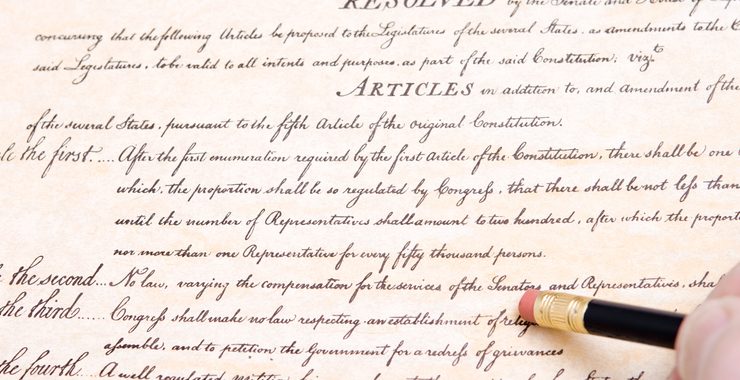
We
may
need
Nicholas
Cage
to
steal
the
paper
copy
of
the
Constitution
before
it
gets
the
Wite-Out
treatment
too.

Section
9
includes
eight
different
clauses,
but
likely
the
most
relevant
to
the
Republican
leadership
is
the
right
of
habeas
corpus.
“The
Privilege
of
the
Writ
of
Habeas
Corpus
shall
not
be
suspended,
unless
when
in
Cases
of
Rebellion
or
Invasion
the
public
Safety
may
require
it,”
reads
the
Constitution.
At
least
the
copy
maintained
by
the
non-profit

National
Constitution
Center

reads
that
way,
because
the
congressional
version
skips
it
entirely.
The
Trump
administration
struggles
mightily
with
habeas
corpus,
the
provision
descended
from
English
legal
tradition
that
gives
people
the
government
locks
up

or
exports
to
El
Salvadoran
torture
camps

the
right
to
force
the
government
to
explain
why.
Homeland
Security
Secretary

Kristi
Noem
famously
floundered
when
asked
to
define
the
right
,
but
next
time
she
won’t
have
to
worry
because
Congress
shot
it
down

like
a
rambunctious
puppy
.

And
it’s
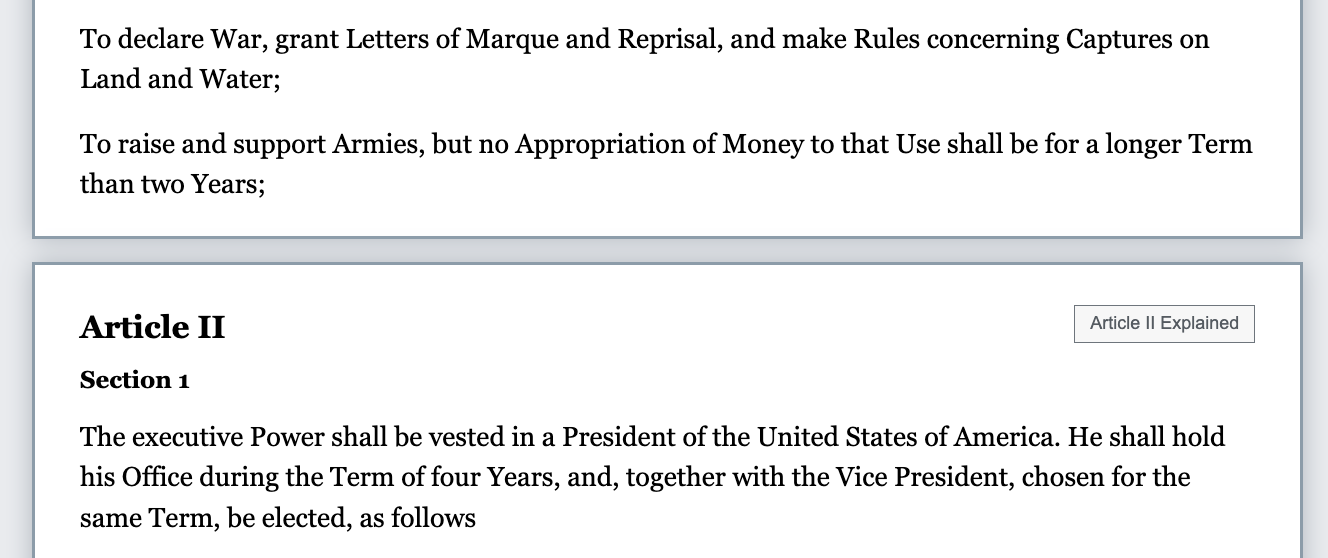
just
gone…
the
copy
jumps
directly
from
the
end
of
Section
8
to
Article
II.
[UPDATE:
I
was
working
quickly
and
didn’t
even
focus
on
the
semicolon
there.
The
deletions
actually
start
before
the
end
of
Section
8.]

The
website
is
an
annotated
copy
so
there
are
separate
URLs
for
landing
pages
digging
into
the
meaning
of
each
section.
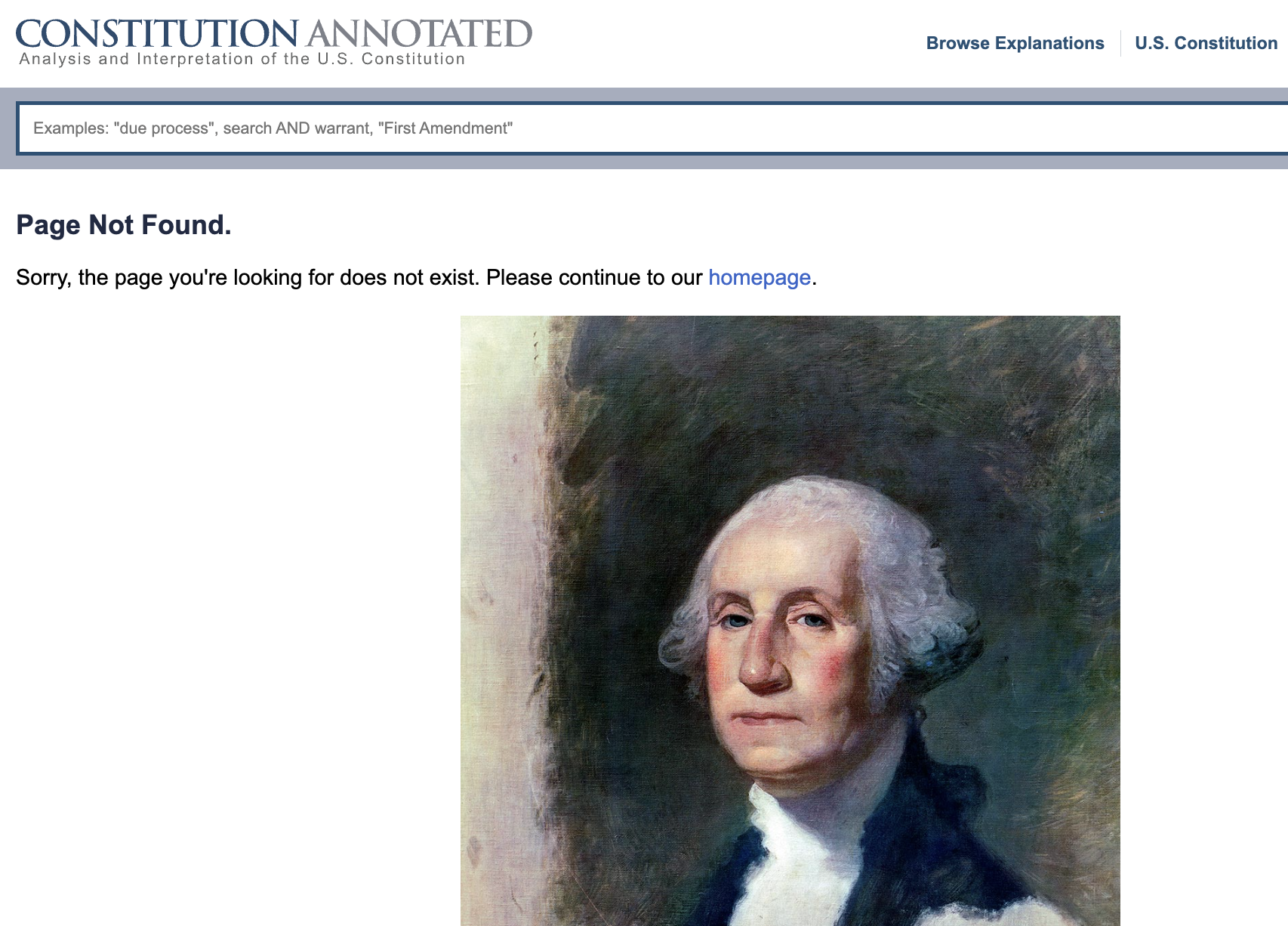
If
you
try
to
manually
override
the
URL
to
see
what
it
says
about
the
missing
Section
9,
you
get
this:

The
good
news
for
Justice
Sam
Alito
is
that
Section
9
is
also
the
part
of
the
Constitution
that
bars
anyone
holding
office
from
accepting
a
title.
So
Sir
Samuel
of
Blackacre
can
now
fully
enjoy
his

medieval
European
knighthood

while
continuing
to
collect

under-the-table
luxury
benefits
!

The
quiet
deletion
of
constitutional
protections
from
the
government’s
official
website
marks
a
bold
step
into
Orwellian
fanfic.
It’s
a
move
Trump
telegraphed
last
year,
when
he
released
his
personal
Trump
Bible,
promising
his
fans
a
King
James
Bible
and
copies
of
America’s
foundational
documents…

minus
the
parts
he
doesn’t
like
.
The
Fourteenth
Amendment?
That
thing
with
Equal
Protection
and
birthright
citizenship
and
banning
insurrectionists
from
office?
NO
THANK
YOU!
When
his
own
“Little
Red
Book”

hawked
to
supporters
for
$60
a
pop

edited
out
the
parts
of
the
Constitution
that
didn’t
fit
his
vibe,
many
rolled
their
eyes.
But
it
was
already
an
assault
on
the
rule
of
law,
with
MAGA
officials

attempting
to
force
his
FrankenBible
into
schools

as
an
educational
text.
American
civics
with
the
Reconstruction
stuff
neatly
removed.

In
retrospect,
the
exclusion
of
the
Twenty-Second
Amendment
might
have
been
a
red
flag
too.

But
erasing
laws
in
a
privately
published
book
is
one
thing.
Congress
removing
inconvenient
laws
is
another.
Of
course,
removing
it
from
the
website
doesn’t
actually
change
the
law.
The
Supreme
Court

presumably

would
still
refer
to
their
previously
published
pocket
Constitutions.
It’s
not
really
about
changing
the
law
though,
it’s
about
laying
groundwork.
Someone
is
going
to
go
on
cable
news
and
declare
“I
don’t
know
what
these
hippies
are
talking
about,
habeas
is
not
in
the
Constitution,
look
here!”
and
they
will
go
completely
unchallenged.
Make
America
Not
Understand
Rights
Again
is
a
goal.

As
I
write
this,
I
keep
refreshing
the
congress.gov
site
hoping
that
it
will
reappear.
Hoping
that
this
is
some
sort
of
glitch
or
accident
caused
by
a
DOGE
intern
spilling
on
the
keyboard.
It’s
not
coming
back,
though.

“Trump
Derangement
Syndrome”
is
such
a
powerful
gaslighting
trope
because
Trump’s
clumsy,
ramshackle
oafishness
is
a
feature
and
not
a
bug.
Authoritarianism
via
amateurism.
A
Nixonian
power
grab
raises
hackles,
but
bumble
along
embracing
the
stupidest
fascism
cosplay
and
one
of
two
things
happens:
(1)
you
get
away
with
it
because
the
Supreme
Court
gave
up
on
the
rule
of
law
or
(2)
you
get
called
out
and
play
it
off
as
a
joke
that
critics
are
“crazy”
for
taking
so
seriously.
If
enough
people
call
out
Congress
for
this,
it’s
going
to
be
“a
harmless
oversight”
and
purely
coincidental
that
their
version
of
the
Constitution
excludes
the
part
that
makes
dictatorships
slightly
harder.

Oh,
and
you
should
watch
out
for
bills
of
attainder
and
ex
post
facto
laws
too.
Because
that’s
also
in
Section
9.


UPDATE
:
The
Library
of
Congress
blames
a
“coding
error.”

As
a
reminder,

the
Librarian
of
Congress
was
fired
by
the
Trump
administration

and

replaced
by
two-bit
stooge
Todd
Blanche
.
To
be
clear,
the
person
currently
running
the
Library
of
Congress
is…
THE
GUY
FROM
DOJ
WHO
KEEPS
LOSING
HABEAS
CASES.
Surely
a
coincidence.

Blanche
has,
of
course,
been
busy
trying
to

smooth
over
a
story
with
Ghislaine
Maxwell

that
could
get
her

better
prison
accommodations

in
exchange
for
saying
“Donald
Trump
who?”
when
asked
about
Jeffrey
Epstein’s
sexual
trafficking
operation.
So
Blanche
can
be
forgiven
for
being
asleep
at
the
switch
at
the
Library!

But
as

404
Media
insightfully
points
out
,
this
isn’t
exactly
a
dynamic
section
of
the
website.
For

years

no
one
has
even
touched
it.
The
thing
about
a
coding
error
is
it
requires
someone
messing
with
the
coding
in
the
first
place.
So
who
was
that?
And
why?


HeadshotJoe
Patrice
 is
a
senior
editor
at
Above
the
Law
and
co-host
of

Thinking
Like
A
Lawyer
.
Feel
free
to email
any
tips,
questions,
or
comments.
Follow
him
on Twitter or

Bluesky

if
you’re
interested
in
law,
politics,
and
a
healthy
dose
of
college
sports
news.
Joe
also
serves
as
a

Managing
Director
at
RPN
Executive
Search
.

Is It A Good Idea To Accept Equity In A Company Instead Of Cash In Exchange For Legal Services? – Above the Law

Every
once
in
a
while,
you
may
meet
a
client
that
wants
to
start
a
business.
Like
most
startups,
they
don’t
have
a
lot
of
cash
for
legal
fees
so
they
offer
an
equity
stake
in
the
business.
You
may
have
heard
stories
of
people
who
became
instant
millionaires
by
accepting
company
stock
instead
of
payment
and
later
selling
the
stock
at
the
IPO
stage.

While
only
a
few
companies
will
achieve
unicorn
status,
it
may
be
a
good
way
to
set
up
an
alternative
fee
structure.
But
in
addition
to
the
possibility
of
not
getting
paid
for
your
work,
these
work-for-equity
deals
could
come
with
drawbacks
and
traps
that
could
cause
trouble
for
the
lawyer
and
the
client.
So
this
may
seem
like
a
gamble.

This
is
not
like
working
on
contingency.
In
personal
injury
cases,
experienced
lawyers
can
tell
how
much
a
case
is
worth
and
the
chances
of
winning.
They
also
know
how
to
get
paid
from
a
third
party
(like
the
insurance
company)
just
in
case
a
client
decides
to
abscond
or
straight
out
refuses
to
pay.
So
working
for
a
percentage
of
the
proceeds
is
not
necessarily
a
gamble.

The
first
thing
to
consider
is
the
person
(or
people)
you
will
be
working
with.
Do
you
know
them?
How
did
they
find
out
about
you?
If
you
don’t
how
these
people,
how
can
you
be
certain
that
they
know
what
they
are
doing
or
that
they
aren’t
trying
to
scam
you
or
someone
else?

The
next
thing
to
consider
is
the
type
of
business
they
are
running.
Are
you
familiar
with
that
industry?
Do
you
like
the
product
or
service
the
business
provides?
Do
you
know
how
people
get
paid?
The
more
you
know
about
an
industry
and
its
practices,
the
better
the
likelihood
you
can
get
paid
for
your
work.

Conversely,
there
are
situations
where
work-for-equity
deals
could
work.
Or
where
you
could
at
least
feel
comfortable
taking
the
risk.
For
example,
if
you
know
and
respect
the
people
involved
or
because
you
can
get
exposure
to
an
industry
you
want
to
work
in
or
because
the
work
can
open
doors
to
more
referrals.

One
of
the
biggest
reasons
why
many
lawyers
don’t
work
this
way
is
because
of
malpractice
insurance
coverage.
I’ve
heard
that
some
insurance
companies
will
not
pay
out
on
claims
where
both
the
lawyer
and
the
client
own
the
same
business.
Even
if
they
do
pay
out,
the
investigation
time
will
be
a
lot
longer.
This
is
because
there
is
the
possibility
of
self-dealing
and
possible
fraudulent
claims.

Second
is
taxes.
When
you
receive
equity
in
exchange
for
your
services,
technically
that
is
taxable
income.
This
means
that
valuing
your
equity
interest
will
be
difficult.
You’d
want
a
low
valuation
to
minimize
taxes,
but
if
a
company
has
a
lot
of
assets,
that
can
be
a
difficult
argument
to
make.
Not
only
that,
you
will
be
taxed
again
when
you
later
sell
your
equity,
presumably
when
it
is
worth
a
lot
more.

Lastly,
you
have
to
consider
the
ethics
of
the
arrangement.

ABA
Model
Rule
1.8

(or
your
state’s
equivalent)
states
that
a
lawyer
shall
not
enter
into
a
business
transaction
with
a
client
or
knowingly
acquire
an
ownership
interest
unless
the
terms
are
fair
and
reasonable
to
the
client,
the
client
is
advised
to
seek
independent
counsel,
and
gives
informed
consent.

Clients
tend
to
have
differing
ideas
on
what
is
considered
fair
and
reasonable,
especially
when
lots
of
money
comes
quickly.
For
example,
suppose
a
lawyer
offered
10
hours
per
month
of
legal
services
in
exchange
for
20%
of
the
voting
shares
of
the
company.
If
a
private
equity
group
offers
$10
million
for
all
of
the
company
stock,
would
the
other
shareholders
feel
comfortable
giving
$2
million
to
someone
who
only
worked
10
hours
per
week
while
the
others
worked
80
hours
per
week?

If
you
feel
uncomfortable
with
an
equity
for
services
arrangement,
an
alternative
is
to
offer
a
discounted
hourly
rate
or
a
set
number
of
consultations
without
charge.

These
are
only
a
few
things
to
consider
when
deciding
to
take
on
an
equity
for
services
arrangement.
The
ideal
situation
would
be
working
with
people
you
think
you
can
trust
who
can
help
you
gain
connections
and
referrals
in
an
industry
you
want
to
get
involved
in.
So
even
if
the
venture
fails,
at
least
the
intangible
benefits
you
gain
could
be
worth
the
time
you
spent.
Otherwise,
you
risk
not
only
working
for
nothing,
but
also
working
for
people
you
might
end
up
hating
down
the
road.


Steven
Chung
is
a
tax
attorney
in
Los
Angeles,
California.
He
helps
people
with
basic
tax
planning
and
resolve
tax
disputes.
He
is
also
sympathetic
to
people
with
large
student
loans.
He
can
be
reached
via
email
at


[email protected]
.
Or
you
can
connect
with
him
on
Twitter
(
@stevenchung)
and
connect
with
him
on 
LinkedIn.

What Do Digital Health Leaders Think of Trump’s New AI Action Plan? – MedCity News

The
White
House
released
America’s
AI
Action
Plan

last
week,
which
outlines
various
federal
policy
recommendations
designed
to
advance
the
nation’s
status
as
a
leader
in
international
AI
diplomacy
and
security.
The
plan
seeks
to
cement
American
AI
dominance
mainly
through
deregulation,
the
expansion
of
AI
infrastructure
and
a
“try-first”
culture.

Here
are
some
measures
included
in
the
plan:

  • Deregulation:
    The
    plan
    aims
    to
    repeal
    state
    and
    local
    rules
    that
    hinder
    AI
    development

    and
    federal
    funding
    may
    also
    be
    withheld
    from
    states
    with
    restrictive
    AI
    regulations.
  • Innovation:
    The
    proposal
    seeks
    to
    establish
    government-run
    regulatory
    sandboxes,
    which
    are
    safe
    environments
    in
    which
    companies
    can
    test
    new
    technologies. 
  • Infrastructure:
    The
    White
    House’s
    plan
    is
    calling
    for
    a
    rapid
    buildout
    of
    the
    country’s
    AI
    infrastructure
    and
    is
    offering
    companies
    tax
    incentives
    to
    do
    so.
    This
    also
    includes
    fast-tracking
    permits
    for
    data
    centers
    and
    expanding
    the
    power
    grid.
  • Data:
    The
    plan
    seeks
    to
    create
    industry-specific
    data
    usage
    guidelines
    to
    accelerate
    AI
    deployment
    in
    critical
    sectors
    like
    healthcare,
    agriculture
    and
    energy.

Leaders
in
the
healthcare
AI
space
are
cautiously
optimistic
about
the
action
plan’s
pro-innovation
stance,
and
they’re
grateful
that
it
advocates
for
better
AI
infrastructure
and
data
exchange
standards.
However,
experts
still
have
some
concerns
about
the
plan,
such
as
its
lack
of
focus
on
AI
safety
and
patient
consent,
as
well
as
the
failure
to
mention
key
healthcare
regulatory
bodies.

Overall,
experts
believe
the
plan
will
end
up
being
a
net
positive
for
the
advancement
of
healthcare
AI

but
they
do
think
it
could
use
some
edits.


Deregulation
of
data
centers

Ahmed
Elsayyad

CEO
of

Ostro
,
which
sells
AI-powered
engagement
technology
to
life
sciences
companies

views
the
plan
as
a
generally
beneficial
move
for
AI
startups.
This
is
mainly
due
to
the
plan’s
emphasis
on
deregulating
infrastructure
like
data
centers,
energy
grids
and
semiconductor
capacity,
he
said.

Training
and
running
AI
models
requires
enormous
amounts
of
computing
power,
which
translates
to
high
energy
consumption,
and
some
states
are

trying
to
address

these
increasing
levels
of
consumption. 

Local
governments
and
communities
have
considered
regulating
data
center
buildouts
due
to
concerns
about
the
strain
on
power
grids
and
the
environmental
impact

but
the
White
House’s
AI
action
plan
aims
to
eliminate
these
regulatory
barriers,
Elsayyad
noted.


No
details
on
AI
safety

However,
Elsayyad
is
concerned
about
the
plan’s
lack
of
attention
to
AI
safety.

He
expected
the
plan
to
have
a
greater
emphasis
on
AI
safety
because
it’s
a
major
priority
within
the
AI
research
community,
with
leading
companies
like
OpenAI
and
Anthropic
dedicating
significant
amounts
of
their
computing
resources
to
safety
efforts. 

“OpenAI
famously
said
that
they’re
going
to
allocate
20%
of
their
computational
resources
for
AI
safety
research,”
Elsayyad
stated.

He
noted
that
AI
safety
is
a
“major
talking
point”
in
the
digital
health
community.
For
instance,
responsible
AI
use
is
a

frequently
discussed
topic

at
industry
events,
and
organizations
focused
on
AI
safety
in
healthcare

such
as
the

Coalition
for
Health
AI

and

Digital
Medicine
Society


have
attracted
thousands
of
members. 

Elsayyad
said
he
was
surprised
that
the
new
federal
action
plan
doesn’t
mention
AI
safety,
and
he
believes
incorporating
language
and
funding
around
it
would
have
made
the
plan
more
balanced.

He
isn’t
alone
in
noticing
that
AI
safety
is
conspicuously
absent
from
the
White
House
plan

Adam
Farren,
CEO
of
EHR
platform

Canvas
Medical
,
was
also
stunned
by
the
lack
of
attention
to
AI
safety.

“I
think
that
there
needs
to
be
a
push
to
require
AI
solution
providers
to
provide
transparent
benchmarks
and
evaluations
of
the
safety
of
what
they
are
providing
on
the
clinical
front
lines,
and
it
feels
like
that
was
missing
from
what
was
released,”
Farren
declared.

He
noted
that
AI
is
fundamentally
probabilistic
and
needs
continuous
evaluation.
He
argued
in
favor
of
mandatory
frameworks
to
assess
AI’s
safety
and
accuracy,
especially
in
higher-stakes
use
cases
like
medication
recommendations
and
diagnostics.


No
mention
of
the
ONC

The
action
plan
also
fails
to
mention
the
Office
of
the
National
Coordinator
for
Health
Information
Technology
(ONC),
despite
naming
“tons”
of
other
agencies
and
regulatory
bodies,
Farren
pointed
out. 

This
surprised
him,
given
the
ONC
is
the
primary
regulatory
body
responsible
for
all
matters
related
to
health
IT
and
providers’
medical
records. 

“[The
ONC]
is
just
not
mentioned
anywhere.
That
seems
like
a
miss
to
me
because
one
of
the
fastest-growing
applications
of
AI
right
now
in
healthcare
is
the
AI
scribe.
Doctors
are
using
it
when
they
see
a
patient
to
transcribe
the
visit

and
it’s
fundamentally
a
software
product
that
should
sit
underneath
the
ONC,
which
has
experience
regulating
these
products,”
Farren
remarked.

Ambient
scribes
are
just
one
of
the
many
AI
tools
being
implemented
into
providers’
software
systems,
he
added.
For
example,
providers
are
adopting
AI
models
to
improve
clinical
decision
making,
flag
medication
errors
and
streamline
coding.


Call
for
technical
standards

Leigh
Burchell,
chair
of
the

EHR
Association

and
vice
president
of
policy
and
public
affairs
at

Altera
Digital
Health
,
views
the
plan
as
largely
positive,
particularly
its
focus
on
innovation
and
its
acknowledgement
of
the
need
for
technical
standards.

Technical
data
standards

such
as
those
developed
by
organizations
like

HL7

and
overseen
by

National
Institute
of
Standards
and
Technology
(NIST)


ensure
that
healthcare’s
software
systems
can
exchange
and
interpret
data
consistently
and
accurately.
These
standards
allow
AI
tools
to
more
easily
integrate
with
the
EHR,
as
well
as
use
clinical
data
in
a
way
that
is
useful
for
providers,
Burchell
said.

“We
do
need
standards.
Technology
in
healthcare
is
complex,
and
it’s
about
exchanging
information
in
ways
that
it
can
be
consumed
easily
on
the
other
end

and
so
that
it
can
be
acted
on.
That
takes
standards,”
she
declared.

Without
standards,
AI
systems
risk
miscommunication
and
poor
performance
across
different
settings,
Burchell
added.


Little
regard
for
patient
consent

Burchell
also
raised
concerns
that
the
AI
action
plan
doesn’t
adequately
address
patient
consent

particularly
whether
patients
have
a
say
in
how
their
data
is
used
or
shared
for
AI
purposes. 

“We’ve
seen
states
pass
laws
about
how
AI
should
be
regulated.
Where
should
there
be
transparency?
Where
should
there
be
information
about
the
training
data
that
was
used?
Should
patients
be
notified
when
AI
is
used
in
their
diagnostic
process
or
in
their
treatment
determination?
This
doesn’t
really
address
that,”
she
explained.

Actually,
the
plan
suggests
that
the
federal
government
could,
in
the
future,
withhold
funds
from
states
that
pass
regulations
that
get
in
the
way
of
AI
innovation,
Burchell
pointed
out.

But
without
clear
federal
rules,
states
must
fill
the
gap
with
their
own
AI
laws

which
creates
a
fragmented,
burdensome
landscape,
she
noted.
To
solve
this
problem,
she
called
for
a
coherent
federal
framework
to
provide
more
consistent
guardrails
on
issues
like
transparency
and
patient
consent.

While
the
White
House’s
AI
action
plan
lays
the
groundwork
for
faster
innovation,
Burchell
and
other
experts
agree
it
must
be
accompanied
by
stronger
safeguards
to
ensure
the
responsible
and
equitable
use
of
AI
in
healthcare.


Credit:
MR.Cole_Photographer,
Getty
Images

Morning Docket: 08.06.25 – Above the Law

*
Trump
administration
officials
meeting
with
VP
to
develop
“unified”
strategy
for
dealing
with
Epstein
evidence.
[CNN]

*
House
committee
subpoenas
the
Epstein
files,
but
throw
in
Clinton
subpoenas
too
just
to
make
sure
the
focus
isn’t
entirely
on
the
inevitable
Trump
redactions.
[Bloomberg
Law
News
]

*
Sheldon
Whitehouse
accuses
D.C.
Circuit
judges
of
stalling
contempt
proceedings
to
corruptly
aid
Emil
Bove’s
nomination
just
because
they
are
in
fact
stalled
contempt
proceedings
to
corruptly
aid
Emil
Bove’s
nomination.
[Reuters]

*
Federal
judge
who
issued
TRO
with
fake
facts
in
it
has
declined
to
offer
any
explanation

*cough*
ChatGPT
*cough*
[ABA
Journal
]

*
Airport
officials
told
a
lawyer
to
“soften”
the
language
in
her
sexual
harassment
practice
ad.
Which
sounds
a
lot
like
the
mentality
behind
sexual
harassment.
[Syracuse.com]

*
Speaking
of
AI,
Harvey
announces
$100M
ARR

which
is
kind
of
an
ephemeral
statistic,
but
startups
love
it
so
here
we
are.
[Artificial
Lawyer
]

Morning Docket: 08.06.25 – Above the Law

*
Trump
administration
officials
meeting
with
VP
to
develop
“unified”
strategy
for
dealing
with
Epstein
evidence.
[CNN]

*
House
committee
subpoenas
the
Epstein
files,
but
throw
in
Clinton
subpoenas
too
just
to
make
sure
the
focus
isn’t
entirely
on
the
inevitable
Trump
redactions.
[Bloomberg
Law
News
]

*
Sheldon
Whitehouse
accuses
D.C.
Circuit
judges
of
stalling
contempt
proceedings
to
corruptly
aid
Emil
Bove’s
nomination
just
because
they
are
in
fact
stalled
contempt
proceedings
to
corruptly
aid
Emil
Bove’s
nomination.
[Reuters]

*
Federal
judge
who
issued
TRO
with
fake
facts
in
it
has
declined
to
offer
any
explanation

*cough*
ChatGPT
*cough*
[ABA
Journal
]

*
Airport
officials
told
a
lawyer
to
“soften”
the
language
in
her
sexual
harassment
practice
ad.
Which
sounds
a
lot
like
the
mentality
behind
sexual
harassment.
[Syracuse.com]

*
Speaking
of
AI,
Harvey
announces
$100M
ARR

which
is
kind
of
an
ephemeral
statistic,
but
startups
love
it
so
here
we
are.
[Artificial
Lawyer
]

The Power of Good Character-Shaping Your Destiny


By
Tatenda
Hwari


The
Significance
of
Good
Character

Good
character
is
the
currency
that
can
open
doors
of
opportunities,
attract
resources
and
lead
to
a
desirable
future.
It’s
the
backbone
of
personal
and
professional
growth,
enabling
individuals
to
build
strong
relationships,
make
informed
decisions
and
achieve
their
goals.
With
good
character,
you
can
uniquely
shape
your
destiny,
and
your
future
will
shine
brighter.


The
Consequences
of
Bad
Character

On
the
other
hand,
bad
character
can
lead
to
failure,
catastrophic
decisions
and
a
life
of
regret.
History
has
shown
us
examples
of
leaders
with
disastrous
character,
such
as
Hitler,
who
made
decisions
that
harmed
millions.
Bad
character
can
lead
to
character
bankruptcy,
causing
individuals
to
struggle
in
life
and
make
poor
choices.


Examples
of
Good
Character

Leaders
like
Abraham
Lincoln,
Nelson
Mandela
and
Mother
Theresa
are
examples
of
individuals
with
excellent
character.
They
changed
the
world
for
the
better,
making
decisions
that
benefited
mankind.
Good
character
helped
them
build
strong
relationships,
achieve
their
goals
and
leave
a
lasting
legacy.


The
Biblical
Perspective

In
the
biblical
context,
we
see
examples
of
men
and
women
with
bad
character,
such
as
Reuben,
who
failed
in
his
life
due
to
his
actions.
Reuben’s
story
serves
as
a
reminder
of
the
importance
of
good
character
and
the
consequences
of
bad
character.


The
Need
for
Good
Character

The
world
needs
people
of
excellent
character.
Good
character
can
make
the
world
a
better
place,
and
it’s
essential
for
individuals
to
work
on
their
character.
With
good
character,
we
can
achieve
our
goals,
build
strong
relationships
and
make
a
positive
impact
in
our
communities.


Conclusion

In
conclusion,
good
character
is
the
key
to
success
and
a
desirable
future.
It’s
essential
to
work
on
our
character,
building
strong
relationships
and
making
informed
decisions.
By
doing
so,
we
can
shape
our
destiny,
achieve
our
goals
and
make
a
positive
impact
in
the
world.
Let’s
strive
to
develop
good
character,
and
let’s
work
towards
creating
a
world
where
good
character
is
the
norm.

Morning Docket: 08.06.25 – Above the Law

*
Trump
administration
officials
meeting
with
VP
to
develop
“unified”
strategy
for
dealing
with
Epstein
evidence.
[CNN]

*
House
committee
subpoenas
the
Epstein
files,
but
throw
in
Clinton
subpoenas
too
just
to
make
sure
the
focus
isn’t
entirely
on
the
inevitable
Trump
redactions.
[Bloomberg
Law
News
]

*
Sheldon
Whitehouse
accuses
D.C.
Circuit
judges
of
stalling
contempt
proceedings
to
corruptly
aid
Emil
Bove’s
nomination
just
because
they
are
in
fact
stalled
contempt
proceedings
to
corruptly
aid
Emil
Bove’s
nomination.
[Reuters]

*
Federal
judge
who
issued
TRO
with
fake
facts
in
it
has
declined
to
offer
any
explanation

*cough*
ChatGPT
*cough*
[ABA
Journal
]

*
Airport
officials
told
a
lawyer
to
“soften”
the
language
in
her
sexual
harassment
practice
ad.
Which
sounds
a
lot
like
the
mentality
behind
sexual
harassment.
[Syracuse.com]

*
Speaking
of
AI,
Harvey
announces
$100M
ARR

which
is
kind
of
an
ephemeral
statistic,
but
startups
love
it
so
here
we
are.
[Artificial
Lawyer
]