ABA Diversity And Inclusion Standard Looks Like It’s On Its Last Legs – Above the Law

The
American
Bar
Association
has
come
under
fire
for
requiring
schools
to
put
some
effort
into
making
sure
that
their
student
bodies
don’t
look
like
the
start
of
a
small
ethnostate.
Schools
had
to
show
some
attempt
at
encouraging
diversity
in
recruitment,
admissions,
and
programming.
This
was
a
hard
pill
to
swallow,
especially
for
the
Trump
administration.
After
some
light
pushback,
the
ABA
has
put
a
moratorium
on
the
standard,
citing
the
difficulty
for
schools
to
follow
the
guidelines
without
running
into
legal
trouble
after

SFFA
v.
Harvard
.
Given
the
challenges,
the
ABA
has
been
reconsidering
its
standards.

Reuters

has
coverage:

The
American
Bar
Association
will
undertake
a
sweeping
review
of
its
standards
for
law
schools
as
states
weigh
dropping
the
organization
as
an
accreditor
and
critics
blame
its
regulations
for
driving
up
student
costs.

While
there’s
nothing
factually
incorrect
about
the
sentence
above,
the
word
“states”
is
carrying
a
lot
of
weight
here.
It
would
be
one
thing
if
half
of
the
country
was
thinking
about
dropping
the
ABA,
but
it’s
just
Florida
and
Texas.
And
you
know
what
they
say
about
Texas:

Texas
and
Florida
may
be
of
a
mind
to
drop
the
ABA
but
the
problem
is,
again,

the
rest
of
the
country
.
The
remaining
48
states
won’t
cede
out
just
because
they
do

and
that’ll
make
it
a
lot
harder
for
freshly
minted
Texan
and
Floridian
JDs
to
get
jobs
from
employers
looking
to
hire
accredited
graduates.
Even
if
other
states
are
thinking
about
dropping
the
ABA,
they’d
have
to
come
up
with
their
own
accreditation
process
to
replace
the
job
the
ABA
has
been
doing
well
enough
for
decades
now.
Texas
and
Florida
are
special
cases
in
that
they
are
states
who
would
go
to
lengths
to
keep
the
administration
happy,
but
everyone
else
probably
doesn’t
give
enough
of
a
damn
to
reinvent
the
wheel.

The
committee’s
proposed
elimination
of
the
diversity
and
inclusion
standard
is
the
part
of
the
story
that
actually
has
teeth
to
bite
with.
At
this
point,
just
rip
the
Band-Aid
off.
It’s
been
on
life
support
since
February
and
unless
there
are
going
to
be
some
serious
changes
in
the
Executive
or
the
Judiciary
over
the
next
three
years,
it
is
going
to
be
a
constant
buzzing
in
the
ear.
The
question
of
why
diversity
matters
to
the
ABA
has
been
open

since
February
of
last
year


maybe
it’s
time
to
stop
pretending
it’s
an
actual
priority
they
hold
dear.


ABA
To
Review
Law
School
Standards,
May
Drop
Diversity
Rule
Amid
Pressure

[Reuters]


Earlier
:

Texas
Plans
To
Cut
Law
School
Accreditation
Ties
With
The
ABA


Florida
Still
Stumbling
Through
Trying
To
Replace
ABA
Accreditation


ABA
Committee
Decides
To
Diversify
Diversity.
It
Should
Come
With
A
Clear
Reason
For
Why
That’s
Important.


Chris
Williams
became
a
social
media
manager
and
assistant
editor
for
Above
the
Law
in
June
2021.
Prior
to
joining
the
staff,
he
moonlighted
as
a
minor
Memelord™
in
the
Facebook
group Law
School
Memes
for
Edgy
T14s
.
 He
endured
Missouri
long
enough
to
graduate
from
Washington
University
in
St.
Louis
School
of
Law.
He
is
a
former
boatbuilder
who
is
learning
to
swim, is
interested
in
critical
race
theory,
philosophy,
and
humor,
and
has
a
love
for
cycling
that
occasionally
annoys
his
peers.
You
can
reach
him
by
email
at [email protected]
and
by
tweet
at @WritesForRent.

Cravath Starts Biglaw’s Bonus Season With Year-End And Special Bonuses! – Above the Law

Bonus
season
has
officially
begun.
Cravath,
the
firm
that’s
the
standard
bearer
for
Biglaw
associate
compensation,
has
kicked
off
the
2025
bonus
sweepstakes.
And
Cravath’s
not
here
for
restraint.

The
firm
announced
year-end
bonuses

and

a
round
of
special
bonuses
that

mirror
the
Milbank
summer
bonuses
.
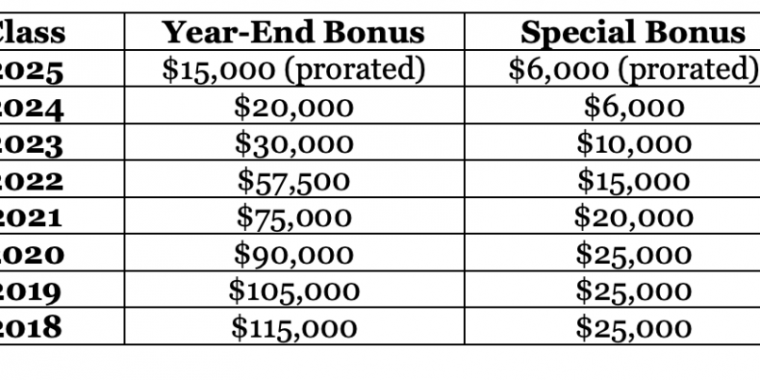
As
reflected
in
the
chart
below,
the
year-end
bonus
amounts
echo
last
year’s
bonus
scale.
Maybe
they’re
not
reinventing
the
bonus
wheel,
but
there’s
a
pretty
big
paycheck
headed
associates’
way.

New
York
and
D.C.
associates
will
get
their
bonuses
on
December
12th
(with
no
hours
requirement,
as
per
usual
for
the
firm),
while
London
associates
will
have
to
wait
an
extra
week
for
the
money
to
hit
their
accounts.

And
because
it’s
Cravath,
every
other
Biglaw
partner
just
felt
the
sudden
urge
to
“circle
back”
with
their
executive
committees.

Now
we
wait
for
the
inevitable
parade
of
matching
announcements.
Davis
Polk
will
follow
soon.
Paul
Weiss
will
toss
in
something
shiny.
Latham
will
eventually
make
its
move,
confident
as
always.
And
every
associate
in
Biglaw
will
spend
the
next
72
hours
refreshing
their
inbox
like
it’s
a
Taylor
Swift
ticket
queue.

But
for
now,
Cravath
has
officially
fired
the
starting
gun.

Bonus
season
is
here.
May
your
hours
be
high
and
your
disappointment
minimal.

So,
is
your
firm
matching
*both*
the
year-end
and
special
bonuses?
Let
Above
the
Law
know!
We
depend
on
your
tips
to
stay
on
top
of
important
bonus
updates,
so
when
your
firm
matches
(or
if
they
fail
to
do
so),
please
text
us
(646-820-8477)
or email
us
 (subject
line:
“[Firm
Name]
Matches”).
Please
include
the
memo,
if
available.
You
can
take
a
photo
of
the
memo
and
send
it
via
text
or
email
if
you
don’t
want
to
forward
the
original
PDF
or
Word
file.

And
if
you’d
like
to
sign
up
for
ATL’s
Bonus
Alerts
(which
is
the
alert
list
we
also
use
for
salary
announcements),
please
scroll
down
and
enter
your
email
address
in
the
box
below
this
post.
If
you
previously
signed
up
for
the
bonus
alerts,
you
don’t
need
to
do
anything.
You’ll
receive
an
email
notification
within
minutes
of
each
bonus
announcement
that
we
publish.
Thanks
for
all
of
your
help!

Read
the
full
memo
below.


Kathryn
Rubino
is
a
Senior
Editor
at
Above
the
Law,
host
of

The
Jabot
podcast
,
and
co-host
of

Thinking
Like
A
Lawyer
.
AtL
tipsters
are
the
best,
so
please
connect
with
her.
Feel
free
to
email

her

with
any
tips,
questions,
or
comments
and
follow
her
on
Twitter

@Kathryn1
 or
Mastodon

@[email protected].

Perkins Coie’s Leader Says Trump’s Executive Order Had Nothing To Do With Its Merger Decision – Above the Law

(Photo
by
Win
McNamee/Getty
Images)


Ed.
note
:
Welcome
to
our
daily
feature,

Quote
of
the
Day
.


At
this
moment,
both
firms
come
to
this
announcement
with
the
position
of
financial
strength,
great
optimism
and
confidence,
looking
to
the
future
and
a
true
combination
of
equals.


Bill
Malley
,
managing
partner
of
Perkins
Coie,
in
comments
given
to

Law.com
,
concerning
the
firm’s
recent
announcement
of
a

merger
with
Ashurst
,
which
is
expected
to
be
voted
upon
by
all
partners
in
2026.
If
approved,
the
combination
will
go
live
as
soon
as
the
middle
of
next
year.
Malley
denied
that
the
tie-up
had
anything
to
do
with
the
firm’s
ongoing
battle
against
the

Trump
administration’s
executive
order

(which
a
federal
judge
has
already

ruled
unconstitutional
,
though
the
decision
is

under
appeal
),
saying
the
two
firms
had
been
chatting
before
the
EO
was
even
issued.


Staci
Zaretsky
 is
the
managing
editor
of
Above
the
Law,
where
she’s
worked
since
2011.
She’d
love
to
hear
from
you,
so
please
feel
free
to

email

her
with
any
tips,
questions,
comments,
or
critiques.
You
can
follow
her
on BlueskyX/Twitter,
and Threads, or
connect
with
her
on LinkedIn.

Court’s Latest Order In Elon Musk Case Includes Pretty Glaring Hallucination – Above the Law

(Photo
by
Apu
Gomes/Getty
Images)

Elon
Musk
gets
himself
involved
in
a
lot
of
entertaining
court
fights.
Sometimes
he

botches
these
fights
so
badly

you
wonder
if
he
really
would
fall
for
a
visit
from
the
wallet
inspector.
Other
times
he

gets
a
helping
hand
from
a
friendly
judge
.
But
it’s
not
clear
that
he’s
ever
gotten
litigation
help
from
an
AI
hallucination
before.

Though
the
latest
twist
in
the
procedural
labyrinth
of
his
tussle
with

PlainSite

developer
Aaron
Greenspan
may
have
finally
crossed
that
threshold.

Is
this
an
AI
hallucination
working
its
way
into
a
court
order?
Maybe
not.
It
could
be
the
result
of
a
human
judge
(or
clerk)
dropping
the
ball.
So,
perhaps,
we
should
hope
it’s
an
AI
hallucination,
for
the
sake
of
the
humans
involved.

The

latest
order

grants
a
motion
to
strike
brought
by
Musk
and
his
co-defendants
under
California’s
anti-SLAPP
statute.
Greenspan
argued
that
the
motion
wasn’t
timely
filed
and
the
judge
deemed
that,
pursuant
to
the
statute,

the
court
has
discretion

to
entertain
the
motion
at
any
time
and
would
do
so
here.
Whether
the
court
was
right
to
exercise
that
discretion
here
is
for
the
parties
to
battle
out.

For
those
of
us
scouring
filings
for
questionable
AI
screw-ups
though,
we
now
zoom
to
a
handwritten
insert
included
with
the
order,
justifying
the
decision
to
allow
the
motion

even
if

it
technically
missed
a
deadline
based
on


Jones
v.
Goodman
,
57
Cal.App.5th
521
,
where
the
court
writes,
that
an
amended
motion
should
relate
back
to
the
initial
motion
“as
long
as
the
initial
motion
was
in
‘substantial
compliance’
with
the
governing
rule.”

Except
that’s
not
what

Jones

actually
says.
The
defendants
in

Jones

had
themselves
argued

and
we
quote

that
“substantial
compliance
with
the
rule
is
all
that
is
required;
and
the
amended
motion
should
be
deemed
to
‘relate
back’
to
the
initial
motion,
just
as
an
amended
pleading
might
relate
back
to
the
filing
of
the
original
pleading.”
This
would
be
an
odd
rule
to
adopt
since
it
would
dispose
of
any
meaningful
deadline
throughout
a
litigation
if
every
issue
could
be
preserved
by
vomiting
up
a
half-assed
brief
and
then
“amending”
it
well
after
the
deadline.

Which
is
why
the

Jones

court
went
on
to
explicitly
reject
this
argument.
In
the
next
paragraph,
the

Jones

court
describes
the
defendants’
arguments
there
as
“not
well
taken,”
clarifying
that
“A
motion
is
not
a
complaint,
or
any
other
type
of
pleading….
Defendants
provide
no
authority
for
the
proposition
that
the
relation-back
doctrine
applies
to
anything
other
than
pleadings.”

So
then
how
did
this
case
end
up
in
a
court
order
for
the
proposition
that
an
amended

motion

“should
be
deemed
to
‘relate
back’
to
the
initial
motion
‘as
long
as
the
initial
motion
was
in
‘substantial
compliance’
with
the
governing
rule”?
And
it
probably
goes
without
saying,
but
this
quote
isn’t
in

Jones
.
At
least
not
in
this
form.

Again,
this
could
be
a
human
flub,
but
this
bears
some
of
the
key
signs
of
a
hallucinating
bot.
Consider
this,
from
Greenspan’s
latest
brief
on
the
docket:

This
is
the
opposite
of
what

Jones

stands
for.
The
paragraph
and
sentence
quoted
by
the
Court
for
the
phrase
“substantial
compliance”
begins
with
the
words
“Defendants
contend…”
indicating
that
the

Jones

court
was
merely
providing
context
before
issuing
its
actual
ruling
on
those
arguments
later
in
the
opinion. 

Which
certainly
tracks
the
actual
text
of

Jones
.
But
mixing
up
the
judge
laying
out
one
side’s
argument
for
an
actual
holding
is
exactly
the
sort
of
error
AI
makes.

At
an
AI
legal
research
briefing
I
attended
a
couple
years
ago,
one
of
the
product
team
leaders
suggested
“hallucinations,”
as
we
commonly
understood
them,
would
be
solved
soon.
The
technology
would
soon
stop
making
up
cases
from
thin
air,
but
AI
still
posed
tremendous
risk
in
misinterpreting
the
text
itself.
For
instance,
grabbing
dicta
and
treating
it
as
precedent

which
might
be

the
Supreme
Court’s
new
default
setting
,
but
historically
isn’t
how
any
of
this
is
supposed
to
work.

It’s
also
why

just
feeding
“all
court
cases”
into
an
AI
system

isn’t
going
to
work.

Here,
a
quote
makes
it
into
a
judge’s
opinion
that
explicitly
began
its
life
as
a
straw
argument,
laying
out
one
of
the
party’s
positions
before
dismissing
it
with
withering
contempt.
“Defendants’
arguments
are
not
well
taken,”
is
the
sort
of
line
in
an
opinion
that
makes
most
lawyers
wish
to
simply
curl
into
a
ball
and
die.
But
this
is
exactly
where
AI
remains
an
easy
mark,
capable
of
casually
bumbling
into
a
straw
argument
and
elevating
it
to
a
citation-worthy
conclusion.
Adding
in
the
quote
that
begins
“as
long
as
the
initial
motion…”

which
is
nowhere
to
be
found
in
the
opinion

to
double
down
on
the
initial
error
introduces
another
known
AI
flaw.

Everyone
knows
about
the
made-up
cases,
but
AI’s
most
insidious
mistakes
will
be
in
subtle
mischaracterizations
of
real
cases.
The
lowest
bar
of
cite
checking
isn’t
going
to
catch
that
since
it’s
a
real
case.
Even
a
superficial
glance
at
the
text
might
not
notice
the
error
without
panning
out
to
consider
the
context
of
the
original

Jones

opinion.

And
then
what
happens
if
this
isn’t
promptly
caught?
The
next
court
sees
this
opinion
and
decides
the
law
supports
a
new
“relate
back”
process
for
mere
motions.
Then
that
opinion
gets
on
the
books
and
the
next
thing
you
know,
we’re
all
echoing
a
hallucination.
Inaccuracies
can
compound
themselves.
Whether
Greenspan
ends
up
prevailing
or
not,
hopefully
Greenspan’s
motion
to
reconsider
gets
the
record
cleaned
up
and
gives
everyone
a
renewed
sense
of
attention
to
detail.
Even
if
this
is
a
human
error,
we’re
going
to
need
the
record
set
straight.

And
if
this
is
an
AI-induced
screw-up…
I
wonder
if
the
court
used
Grok?


HeadshotJoe
Patrice
 is
a
senior
editor
at
Above
the
Law
and
co-host
of

Thinking
Like
A
Lawyer
.
Feel
free
to email
any
tips,
questions,
or
comments.
Follow
him
on Twitter or

Bluesky

if
you’re
interested
in
law,
politics,
and
a
healthy
dose
of
college
sports
news.
Joe
also
serves
as
a

Managing
Director
at
RPN
Executive
Search
.

Parental Leave 101 For Managers – Above the Law


Ed.
note
:
This
article
is
part
of
Parental
Leave
&
The
Legal
Profession,
a
special
series
for
Above
the
Law
that
explores
the
realities
of
parental
leave
and
return-to-work
in
law
firms.
From
planning
leave
to
reintegration,
from
the
role
of
managers
to
the
mental
load
of
Biglaw
parents,
these
articles
bring
research,
clinical
insight,
and
practical
strategies
to
help
lawyers
and
the
firms
that
employ
them
navigate
one
of
the
most
critical
transitions
of
their
careers.

In
previous
articles
in
this
series,
we
covered

the
interplay
of
policy
and
culture

related
to
parental
leave
in
the
legal
profession
and

step-by-step
guidance
for
those
taking
leave
.
The
key
to
a
successful
leave
is
not
in
the
hands
of
an
individual
attorney,
however.
It’s
dependent
on
the
approach
of
superiors
and
colleagues.
With
that
in
mind,
this
month
we
shift
our
lens
to
managers,
providing
insights
and
strategies
to
ensure
that
leave
periods
are
handled
with
ease
and
skill.

Managers
make
or
break
parental
leave
experiences,
supporting
employees
for
long-term
success
or,
conversely,
setting
them
up
for
stress
and
lower
productivity.
We
refer
to
individual
managers
for
ease
of
discussion,
but
it
may
be
that
the
person
works
for
multiple
partners,
in
which
case
coordination
among
managers
may
be
necessary. 

According
to
a
recent
study
of
women
executives
undertaken
by
Phoebe,
98
percent
of
women
want
to
continue
employment
full
time
post-pregnancy
and
only
15
percent
of
participants
noted
any
decreased
interest
in
work.
Yet
a
2023

ABA
study

found
that
61
percent
of
mothers
have
experienced
demeaning
comments
about
being
a
working
parent
(versus
only
26
percent
of
fathers).
Women’s
commitment
is
steady,
but
perceptions
about
them
change
as
a
result
of
parenthood.
Unfortunately,
this
bias
contributes
to
women
leaving
firms
when
they
otherwise
would
not.
Leaders
do,
however,
have
the
power
to
establish
a
productive
environment
and
even
disrupt
long-standing
norms.


What
are
top
strategies
for
managers? 


  1. First,
    check
    your
    mindset.

Thoughts
such
as
Here
we
go
again
;”
We’re
all
carrying
this
weight
,”
I
don’t
have
time
for
this
,”
and
I
always
wondered
if
she/he
was
really
committed,

draw
on
societal
biases
about
gender
and
parenting.
They
reflect
a
scarcity
perspective
that
short-term
absences
and
external
commitments
are
a
net
loss
for
an
organization,
and
they
lead
to
isolation
of
individuals
and
negative
impacts
on
team-wide
morale
and
collaboration. 

Alternatively,
treating
parenthood
as
not
uncommon,
yet
still
momentous,
has
tangible
benefits:

  • The
    employee
    is
    engaged
    and
    committed
    to
    make
    the
    off-boarding
    process
    as
    easy
    as
    possible
    for
    colleagues;
  • Communication
    is
    smoother;
  • Clients
    are
    more
    likely
    to
    be
    supported
    with
    the
    transition
    plan
    and
    therefore
    more
    satisfied
    with
    the
    firm;
  • Professional
    development
    opportunities
    for
    more
    junior
    staff
    members
    can
    be
    identified; 
  • Good
    morale
    among
    team
    members
    has
    a
    ripple
    effect,
    translating
    to
    greater
    longevity.
    Firms
    are
    stronger
    when
    younger
    team
    members
    can
    see
    themselves
    at
    the
    firm
    for
    the
    long
    term,
    including
    their
    potential
    transition
    to
    parenthood
    or
    other
    outside
    endeavors
    down
    the
    road;
  • Finally,
    the
    employee
    themselves
    will
    be
    going
    through
    a
    transformational
    experience,
    and
    as
    one
    of
    us
    has
    explored
    elsewhere,
    the

    leadership
    skills
    of
    parenthood

    are
    a
    boon
    to
    the
    workplace.

  1. Second,
    engage
    in
    a
    planning
    process.

While
HR
folks
are
key
to
the
compliance
side
of
planning
and
policy,
managers
need
to
be
involved
in
how
work
is
delegated,
including
active
conversations

with

the
employee.
How
can
you
initiate
a
robust
process
for
a
successful
transition,
given
the
time
constraints
of
legal
practice?


  • A
    handful
    of
    well
    organized
    meetings
    and
    a
    few
    planning
    documents
    go
    a
    long
    way
    .
    Keep
    in
    mind
    that
    the
    ROI
    on
    a
    well-planned
    leave
    is
    exponential,
    saving
    time
    and
    headaches
    that
    accompany
    impromptu
    or
    unorganized
    absences.

    • Leave
      the
      HR
      talk
      to
      the
      HR
      experts
      and
      focus
      on
      case
      logistics,
      work
      allocation
      during
      the
      employee’s
      absence,
      client
      communication
      plans,
      and
      off-boarding
      and
      re-onboarding. 
    • Take
      time
      to
      check
      in
      with
      your
      employee.
      Remind
      them
      that
      they
      are
      a
      valued
      member
      of
      the
      team
      and
      that
      you
      are
      going
      to
      work
      together
      to
      ensure
      a
      smooth
      transition
      leading
      to
      leave
      and
      upon
      their
      return.

  • Establish
    a
    framework
    for
    planning
    and
    team-wide
    communication
    .

    • Most
      often
      the
      employee
      will
      draw
      up
      a
      list
      of
      cases
      and
      activities
      and
      identify
      a
      delegation
      plan
      (who,
      what,
      and
      when). 
    • You
      can
      ensure
      that
      there
      is
      a
      clear
      timeline
      and
      system
      in
      place
      for
      discussions,
      status
      updates,
      and
      collaborations
      among
      team
      members. 
    • Importantly,
      the
      plan
      should
      envision
      warm
      handoffs
      to
      clients
      when
      relevant.
      Rather
      than
      a
      leave
      period
      seeming
      to
      leave
      clients
      in
      limbo,
      it
      can
      provide
      an
      opportunity
      for
      them
      to
      appreciate
      the
      breadth
      of
      attorneys
      in
      the
      firm.

  • Agree
    on
    a
    communication
    plan
    for
    the
    period
    of
    leave
    .
    Establishing
    boundaries
    about
    leave
    will
    improve
    peace
    of
    mind
    for
    all
    involved
    (who,
    when,
    through
    what
    channels,
    and
    about
    what
    matters?).
    Quite
    often
    new
    parents

    do

    want
    to
    be
    informed
    of
    significant
    developments
    in
    cases;
    they
    may
    not,
    however,
    want
    to
    be
    drawn
    into
    depths
    of
    work.
    Your
    support
    around
    the
    communication
    plan
    is
    vital.

  • Develop
    a
    re-onboarding
    plan.

    A
    smooth
    return
    starts
    with
    planning
    for
    it

    before

    leave.
    Set
    out
    expectations
    for
    internal
    and
    external
    meetings
    after
    the
    employee
    returns
    to
    work,
    the
    pace
    of
    work
    during
    the
    initial
    weeks,
    and
    projects
    and
    other
    activities.
    The
    plan
    may
    change
    as
    cases
    develop,
    but
    it
    is
    always
    valuable
    to
    anticipate
    the
    matters
    the
    employee
    will
    re-engage
    with
    on
    their
    return
    and
    levels
    of
    priority.
    This
    coordination
    is
    useful
    for
    team
    members
    and
    clients
    and
    is
    often
    surprisingly
    informative,
    engaging
    and
    aligning
    the
    employee’s
    professional
    goals
    and
    those
    of
    the
    firm.

  1. Third,
    ensure
    re-onboarding
    is
    smooth
    and
    successful.

An
employee’s
return
from
leave
is
perhaps
the
most
critical
to
long-term
success
and
productivity,
and
the
phase
can
be
handled
well
with
a
little
forethought.
The
starting
point
is
the
re-onboarding
plan
agreed
previously,
but
it
will
inevitably
require
some
modification.  


  • Offer 
    a
    conversation
    with
    your
    employee
    before
    they
    return
    :
    What
    has
    changed
    in
    terms
    of
    their
    plans
    and
    expectations,
    your
    priorities,
    personnel
    dynamics
    at
    the
    firm,
    and
    activities
    in
    cases
    and
    projects?
    Focus
    on
    what
    they
    need,
    and
    how
    you
    can
    help
    support
    them.

  • Be
    empathetic.

    Parents
    are
    motivated
    to
    meet
    goals
    and
    succeed
    at
    work.
    A
    little
    grace
    can
    give
    them
    peace
    of
    mind,
    which
    ultimately
    will
    allow
    them
    to
    fulfill
    their
    commitments
    to
    the
    firm. 

  • Flexibility
    can
    improve
    the
    foundation
    of
    a
    return
    .
    The
    new
    parent
    may
    request
    a
    shortened
    workweek,
    work-from-home
    days,
    or
    flexible
    hours
    on
    a
    temporary
    basis.
    Be
    prepared
    with
    what
    options
    are
    available.
    Is
    firm
    policy
    fixed,
    or
    can
    you
    advocate
    for
    your
    employee,
    in
    light
    of
    the
    long-term
    retention
    and
    advancement
    benefits
    of
    short-term
    schedule
    modifications?
    What
    in-person
    events
    are
    critical?  

  • Adaptability
    and
    consistency
    can
    coexist
    .
    Babies
    and
    kids
    don’t
    always
    adhere
    to
    a
    plan.
    Consider
    the
    extent
    to
    which
    the
    firm
    can
    adapt
    to
    unique
    circumstances
    that
    might
    arise
    impacting
    the
    employee’s
    schedule,
    while
    also
    aiming
    for
    long-term
    consistency
    and
    equity
    among
    team
    members.

Parental
leave
provides
an
opportunity
to
demonstrate
true
leadership
through
challenges,
and
the
way
you
show
up
for
this
employee
will
have
a
massive
impact
on
their
career.
Leading
with
empathy
and
awareness
of
the
potential
for
growth
in
this
phase
will
pay
back
many
times
over.

This
article
has
focused
on
the
role
of
partners
and
managers,
and
in
future
editions
we’ll
explore
organization-wide
efforts
to
strongly
support
working
parents.
But
first,
next
month’s
feature
takes
a
deeper
dive
into
returns
from
leave.
We’ll
look
at
how
new
parents
can
navigate
their
return
in
a
way
that
supports
their
new
parenting
role
and
ongoing
career
growth. 


Marny
Requa,
JD
 is
an
academic,
coach,
and
consultant
with
global
experience
and
gender
equity
expertise. Dr.
Anne
Welsh
 is
a
clinical
psychologist,
executive
coach,
and
consultant
with
a
specialization
in
supporting
working
parents
in
law.
Both
are
certified
RETAIN
Parental
Leave
Coaches,
engaging
a
research-backed
methodology
to
support
and
retain
employees
as
they
grow
their
families.

The Best Law Schools For Family Law (2025) – Above the Law

Family
law
programs
play
a
crucial
role
in
law
school,
giving
students
the
knowledge
and
practical
skills
they
need
to
guide
clients
through
some
of
the
most
high-stakes
issues
they’ll
ever
face

marriage,
divorce,
family
planning,
custody,
personal
safety,
and
financial
stability.
By
educating
future
family
lawyers
in
all
avenues
relevant
to
this
practice
area,
including
its
many
emotional
and
moral
complexities,
law
schools
are
helping
to
ensure
that
the
next
generation
of
attorneys
is
prepared
to
advocate
with
competence
and
compassion.

The National
Jurist’s
preLaw
magazine
 recently
released
its
ranking
of
the
best
law
schools
for
family
law
on
its
Family
Law
Honor
Roll,
highlighting
schools
for
the
strength
of
their
programs.
Here’s
the
methodology
that
was
used:

preLaw
magazine
grades
law
schools
based
on
the
breadth
of
their
curricular
offerings.
The
scores
are
figured
as
follows:
30%
for
a
concentration,
24%
for
a
clinic,
12%
for
a
center,
12%
for
an
externship,
9%
for
a
journal,
8%
for
a
student
group,
5%
for
a
certificate
and
added
value
for
additional
offerings.

Without
further
ado,
according
to
preLaw
magazine,
these
are
the
law
schools
that
earned
A+
grades
for
their
family
law
programs
(listed
in
alphabetical
order):

  • Cardozo
    School
    of
    Law
  • DePaul
    University
  • Loyola
    University-Chicago
  • New
    York
    Law
    School
  • University
    of
    Nebraska
  • University
    of
    San
    Diego
  • University
    of
    South
    Carolina
  • Washburn
    University

Click here to
see
the
rest
of
the
Honor
Roll.

Congratulations
to
all
of
the
law
schools
that
made
the
cut
for
this
important
ranking.


Top
law
schools
for
criminal
law

[preLaw
magazine
/
National
Jurist]


Staci
Zaretsky
 is
the
managing
editor
of
Above
the
Law,
where
she’s
worked
since
2011.
She’d
love
to
hear
from
you,
so
please
feel
free
to

email

her
with
any
tips,
questions,
comments,
or
critiques.
You
can
follow
her
on BlueskyX/Twitter,
and Threads, or
connect
with
her
on LinkedIn.

Former MAGA Judge Josh Kindred Finally Gets the Disbarment He So Richly Deserves – Above the Law

Remember
former
Trump-appointed
District
Court
Judge
Joshua
Kindred?
The
federal
judge
who
managed
to

flame
out
of
his

lifetime

gig

in
record
speed

four
years

as
if
he’d
taken
the
bench
with
a
personal
mission
to
prove
that
vetting
is
for
suckers?

Yeah.
That
guy.

Well,
the
final
chapter
of
his
professional
unraveling
just
dropped,
and
it’s
pretty
much
exactly
what
you’d
expect:
disbarment.


Earlier
this
month
,
the
Alaska
Supreme
Court
made
it
official.
In
a
November
7
order,
they
handed
down
Kindred’s
disbarment
(as

recommended
by

the
Alaska
Bar
Association’s
Disciplinary
Board)
like
a
slow-moving,
ethics-soaked
anvil.

In
yet
another
weird
twist
in
a
case
that
has
had
more
than
its
fair
share,
disciplinary
authorities
say
Kindred
never
responded
to
the
proceedings.
Not
a
filing,
not
an
appearance,
not
even
a
“new
phone
who
dis.”

Even
better,
he
allegedly

was
home

when
process
servers
attempted
service.
They
literally
saw
him
sitting
inside
his
mother’s
house
while
they
knocked.

Which
is…
honestly
art.
A
federal
judge
who
once
wielded
the
power
of
the
United
States
now
hiding
behind
his
Mom
while
the
bar
tries
to
hand
him
paperwork.
Chef’s
kiss.

You’ll
recall
the
Ninth
Circuit’s
Special
Committee
laid
out
details
ripped
from
an
HR
nightmare.
Investigators
concluded
Kindred
cultivated
a
sexualized
relationship
with
one
of
his
clerks
while
simultaneously
creating
a
hostile
work
environment
for
everyone
else
unlucky
enough
to
be
trapped
in
his
chambers.
Things
got
even
messier
when
they
detailed
his
“flirtatious
rapport”
with
Assistant
U.S.
Attorney
Karen
Vandergaw,
who
sent
him

nude
photos
,
photos
she
now
says

she
felt
pressured

to
send,
all
while
she
continued
appearing
before
him
in
active
cases.

Not
to
tell
the
Federalist
Society
how
to
run
its
orientation
sessions,
but
“don’t
accept
explicit
photos
from
someone
litigating
in
your
courtroom”
should
really
be
on
page
one.

Kindred’s
misconduct
and
messy
exit
didn’t
just
obliterate
his
own
career

they’ve
thrown
a

whole
slew
of
cases
into
chaos
.

Defense
lawyers,
pointing
to
conflicts
between
Kindred
and
prosecutors
(including
the
same
AUSA
who
was
sending
him
nudes),
have
filed
motions
for
new
trials.
And
federal
judges
have
already
granted
multiple
do-overs.

It
turns
out
when
your
judge
is
conducting
an
off-the-books
erotic
side-plot
with
someone
litigating
before
him,

it’s

bad

for
the
integrity
of
the
process
.
Who
knew?

Bonus Season Reminder: Where To Read And How To Contact Above The Law – Above the Law

Bonus
season
is
imminent,
with
the
first
announcement
expected
to
be
released
any
day
now,
and
whether
you’re
new
to
the
site
or
a
legacy
reader,
we
thought
we’d
offer
a
little
refresher
on
how
to
get
the
most
out
of Above
the
Law
 and
how
to
get
in
touch
with
us.

There
are
many
ways
to
access
all
of
Above
the
Law’s
offerings:

  • Read
    us
    here
    at www.abovethelaw.com.
  • Subscribe
    to
    our newsletters
    (including
    our
    new
    Breaking
    Government
    newsletter).
  • Check
    out
    our
    Biglaw
    Spine
    Index here.
  • Check
    out
    our
    Law
    Firm
    Transparency
    Directory


    here
    .
  • Take
    a
    look
    at
    our
    Top
    50
    Law
    School
    Rankings here.
  • Listen
    to
    our
    podcasts Thinking
    Like
    a
    Lawyer
     and The
    Jabot
    .
  • Like
    us
    on
    Facebook here.
  • Join
    our
    group
    on
    LinkedIn here.
  • Follow
    us
    on
    Instagram here.
  • Follow
    us
    on
    Bluesky here.
  • Follow
    us
    on
    X/Twitter here.

Don’t
forget,
Above
the
Law
relies
on
tips
from
readers
like
you.
Send
us
your
leads,
gossip,
leaked
documents,
embarrassing
photos,
or
anything
else
juicy.
You
can
email
us
at [email protected],
complete this
form
,
or
send
an
SMS/text
message
to (646)
820-8477
.
Tips
will
go
to
all
of
the
Above
the
Law
editors.

You
can
also
contact
the
ATL
editors
individually
at
their
personal
emails:

  • Click here to
    email
    Staci
    Zaretsky.
  • Click here to
    email
    Joe
    Patrice.
  • Click here to
    email
    Kathryn
    Rubino.
  • Click here to
    email
    Chris
    Williams.

As
always,
we’ll
keep
your
name
strictly
confidential.
We’d
love
to
hear
from
you!

We
look
forward
to
bringing
readers
the
latest
developments
in
news
about
the
world
of
law

including
law
schools,
law
firms,
and
the
legal
profession
more
broadly

and
we
sincerely
hope
you’ll
join
us
as
we
continue
to
publish
serious
legal
journalism
as
no
other
website
can
do,
and
as
Above
the
Law
has
done
for
nearly
two
decades.


Staci
Zaretsky
 is
the
managing
editor
of
Above
the
Law,
where
she’s
worked
since
2011.
She’d
love
to
hear
from
you,
so
please
feel
free
to

email

her
with
any
tips,
questions,
comments,
or
critiques.
You
can
follow
her
on BlueskyX/Twitter,
and Threads, or
connect
with
her
on LinkedIn.

3 Questions For A Law School Admissions Expert (Part II) – Above the Law

(Image
via
Getty)

Last
week,
I
presented

the
first
part

of
my
written
interview
with
Ethan
Madore,
7Sage’s
coordinator
of
their
law
school
admissions
consulting
program.
That
column
presented
his
answer
to
the
first
of
my
three
questions
and
focused
on
how
the
changing
law
school
admissions
landscape
has
made
getting
into
one’s
school
of
choice
more
difficult
than
ever.
What
follows
are
Ethan’s
answers
to
my
remaining
two
questions.
As
usual,
I
have
added
some
brief
commentary
to
his
answers
below,
but
have
otherwise
presented
his
answers
as
he
provided
them.


GK:
What
lessons
have
you
learned
about
how
best
to
position
candidates
in
light
of
the
factors
law
schools
are
choosing
to
focus
on?


EM:

Many
of
the
best
candidates
tell
stories
about
wising-up.
Among
the
flood
of
young
graduates
looking
to
law
school
as
a
way
to
learn
how
to
write
a
blank
check
for
social
change,
candidates
with
a
sober
understanding
of
what’s
possible

and
admirable

in
the
life
of
a
lawyer
really
stand
out.

And
there
are
a
lot
of
people
who
would
make
great
law
students
and
lawyers
who
get
passed
over
because
they
don’t
realize
there’s
a
good
deal
of
strategy
in
how
you
choose
to
present
yourself.
An
application
is
a
test.
If
you’re
from
a
certain
background,
you
probably
already
understand
that.
If
not,
it
can
really
be
a
learning
curve.

When
our
committee
of
admissions
officers
do
their
blind
reviews
on
a
fresh
set
of
applications,
you
really
see
the
difference
the
right
narrative
can
make.
Admissions
officers
are
natural
cynics
and
stereotypers.
They’re
there
to
recognize
patterns
and
secure
certain
outcomes
for
the
institutions
that
employ
them.
But
they’re
also
human.
They

want

to
believe
that
their
role
as
professional
gatekeepers
actually
does
contribute
to
the
kind
of
change
they
want
to
see
in
the
world.
In
the
heart
of
hearts,
they
believe
they’re
there
to
elevate
the
worthy,
punish
the
arrogant,
and
dole
out
hard-earned
second
chances.

When
I
read
an
application
for
the
first
time,
I
always
underline
the
first
moment
I
start
to

like

a
candidate.
Usually,
it’s
a
very
small
moment
of
self-description.
Far
too
often,
it
comes
at
the
very
end
of
an
application.
But
if
you
do
that
early
enough
to
get
a
reader
on
your
side,
then
there’s
a
lot
you
can
do
with
the
right
narrative
delivered
to
a
sympathetic
audience.


GK
:
Pragmatism
is
in
short
supply.
As
is
resilience.
But
both
are
qualities
that
are
essential
to
success
in
legal
practice,
especially
as
we
stand
on
the
precipice
of
an
AI-driven
shift
in
how
legal
services
are
delivered
to
clients.
For
me,
Ethan’s
answer
is
a
reminder
that
screening
for
those
who
have
demonstrated
the
ability
to
think
and
act
pragmatically,
or
who
have
shown
resilience
in
the
face
of
challenges,
is
a
good
approach
for
all
of
us
to
take
when
evaluating
others.
Whether
it
is
to
build
a
1L
law
school
class,
bring
on
a
lateral
partner
or
associate,
or
when
choosing
to
partner
with
another
lawyer
on
a
client
matter

spotting
and
acting
on
evidence
that
your
counterparty
embodies
a
pragmatic
and
resilient
spirit
is
critical
to
a
successful
relationship.
And
if
you
can
find
something
likeable
about
the
person
you
are
choosing
to
deal
with,
all
the
better.


GK:
What
challenges
do
you
and
your
team
at
7Sage
look
forward
to
tackling
in
the
coming
years?


EM:

Universities
have
been
adopting
the
‘revenue
model’
of
education
for
decades.
The
median
tenure
for
a
law
school
dean
is
less
than
three
years

that’s
not
enough
time
to
see
an
entering
class
through
graduation.
What
happens
is
that
a
new
person
comes
in
with
a
promise
to
raise
a
school’s
ranking,
which
they
do
by
maximizing
the
very
limited
factors
measured
by
U.S.
News.
Maybe
they
cut
academic
programs
to
give
scholarships
to
people
with
really
high
LSAT
scores.
Their
LSAT
median
goes
up,
their
ranking
goes
up.
But
the
program
doesn’t
get
better.
And
so
in
two
years,
there’s
a
crash.
The
school
falls
back
down
to
where
it
was
before

often
lower.
But
that
new
dean,
well,
they’ve
already
already
gotten
a
new
job
at
a
higher-ranked
university
on
the
basis
of
their
“accomplishment.”
The
cycle
repeats! 

Of
course
that
isn’t
the
problem
7Sage’s
admissions
program
is
trying
to
solve.
But
it’s
the
landscape
we’re
in.
Our
concern
is
for
the
individual:
how
do

you

climb
this
increasingly
rickety
ladder
up
into
professional
life?
The
more
we
can
help
people
reflect
on

why

they’re
about
to
take
this
journey
and
explain
themselves
to
these
gatekeepers
of
professional
life,
the
more
they
can
make
smart
choices
in
the
face
of
billion-dollar
educational
institutions.

Universities
have
embraced
being
businesses.
You
need
to
be
a
savvy,
suspicious,
disenchanted
customer
if
you
want
what
they’re
selling.
You
need
to
talk
to
them
the
right
way.


GK
:
I
believe
that
many
readers,
like
myself,
are
glad
that
they
don’t
have
to
navigate
the
law
school
admissions
process
in
the
current
climate.
At
the
same
time,
even
though
Ethan’s
considered
opinion
about
the
flawed
outcomes
engendered
by
short-term
thinking
at
law
schools
rings
true,
I
think
what
is
most
important
to
remember
is
his
advice
to
aspiring
applicants.
Namely,
that
it
is
important
to
be
an
informed
consumer,
while
also
confident
in
why
they
want
to
go
to
law
school
in
the
first
place.
As
I
watch
my
son
work
his
way
through
the
current
application
cycle
with
7Sage’s
help,
I
can’t
help
but
be
excited
and
proud
to
watch
him
take
the
brave
next
step
towards
a
life
of
what
I
hope
will
be
full
of
professional
fulfillment
and
contributions
to
society. 

My
thanks
to
Ethan
for
the
insights
and
cooperation,
and
I
wish
him
continued
success
with
his
important
work
at
7Sage’s
law
school
admissions
consulting
program.
Hopefully
this
readership
will
share
Ethan’s
insights
with
aspiring
law
students
and
any
current
applicants
they
have
in
their
lives. Our
profession
is
ever-changing
and
it
is
in
our
collective
best
interest
that
the
next
generation
of
law
school
attendees
is
as
capable
and
well-trained
for
a
career
in
the
law
as
can
be.
Law
school
admissions
offices
are
the
gatekeepers
that
help
make
that
happen

and
thoughtful
consultants
like
Ethan
and
his
colleagues
help
make
the
admissions
process
more
successful
for
applicants
as
well
as
those
making
the
decisions.
I
am
always
open
to
conducting
interviews
of
this
type
with
other
IP
thought
leaders,
so
feel
free
to
reach
out
if
you
have
a
compelling
perspective
to
offer. 

Please
feel
free
to
send
comments
or
questions
to
me
at

[email protected]

or
via
Twitter:

@gkroub
.
Any
topic
suggestions
or
thoughts
are
most
welcome.


Gaston
Kroub
lives
in
Brooklyn
and
is
a
founding
partner
of 
Kroub,
Silbersher
&
Kolmykov
PLLC
,
an
intellectual
property
litigation
boutique,
and 
Markman
Advisors
LLC
,
a
leading
consultancy
on
patent
issues
for
the
investment
community.
Gaston’s
practice
focuses
on
intellectual
property
litigation
and
related
counseling,
with
a
strong
focus
on
patent
matters.
You
can
reach
him
at 
[email protected] or
follow
him
on
Twitter: 
@gkroub.

From ‘Who Luck’ to ‘Who’s Here?’: The TLTF Summit Continues to Excel, Even As It Expands

God
forbid
a
disaster
had
befallen
Austin,
Texas,
last
week,
because
it
could
have
set
back
the
evolution
of
legal
tech
by
at
least
a
decade.
Assembled
there
were
many
of
the
best
and
the
brightest
of
the
legal
tech
world,
who
had
all
come
together
for
the
fourth
edition
of
what
has
become
the
must-attend
event
for
legal
tech
innovators,
entrepreneurs
and
investors

the

TLTF
Summit
.

Produced
by

The
Legaltech
Fund
,
the
first
venture
capital
firm
devoted
exclusively
to
legal
tech,
it
is
a
conference
I
previously
dubbed the
Davos
of
legal
tech

for
the
fact
that
it
brings
together
leaders
from
across
disciplines
to
engage
in
open
and
unfettered
dialogue
about
the
state
and
future
of
legal
innovation.
As
someone
who
has
attended
all
four
summits,
I’ve
had
a
front-row
seat
to
its
evolution.

Unique
to
this
conference
is
its
mix
of
people.
It
is
invitation
only,
and
TLTF
staff
literally
call
and
interview
everyone
who
applies
to
ensure
the
right
fit.
It
is
also
sales
free

no
exhibitors
or
salespeople.
To
encourage
open 
dialogue,
the
summit
operates
under
the

Chatham
House
Rule
,
by
which
participants
are
free
to
use
the
information
they
receive,
but
not
to
reveal
the
identify
or
affiliation
of
any
speaker
or
participant.


Kristen
Sonday,
founder
and
CEO
of
Paladin,
and
Ryan
Alshak,
founder
and
CEO
of
Laurel,
enjoy
some
Texas
barbecue
during
an
after-hours
party. 

This
formula
adds
up
to
a
conference
attended
by
a
who’s
who
of
legal
tech:
investors
from
venture
capital
and
private
equity
firms,
CEOs
and
top
executives
from
legal
tech
companies,
managing
partners
and
innovation
leaders
from
some
of
the
largest

and
some
of
the
most
innovative

law
firms
in
the
world,
founders
of
companies
ranging
from
early-stage
startups
to
established
leaders,
and
lawyers
and
legal
professionals
who
are
at
the
leading
edge
innovation.

In
his
keynote
to
open
this
year’s
summit,
organizer Zach
Posner
,
cofounder
and
managing
director
of
The
LegalTech
Fund,
did
as
he
had
done
in
past
years,
inviting
attendees
to
skip
the
sessions
in
favor
of
spending
time
and
taking
walks
with
acquaintances
new
and
old.
Again
this
year,

as
he
had
before
,
he
encouraged
attendees
to
make
“who
luck”
happen,
conjuring
a
concept conceived
by
business
author
Jim
Collins
.

As
I
walked
the
hallways
and
grounds
of
the
Omni
Barton
Creek
Resort
and
asked
attendees
their
impression
of
the
summit,
superlatives
abounded.
The
best
conference
in
legal
tech.
No
other
conference
creates
such
a
sense
of
community.
I
feel
safe
here,
knowing
I
won’t
be
accosted
by
sales
pitches.
An
unparalleled
mix
of
attendees.
The
best
swag.
The
best
food.
Fantastic
location.

These
were
all
paraphrases
of
comments
I
heard
repeatedly.
And
remember,
these
are
people,
for
the
most
part,
who
attend
more
than
their
fair
share
of
conferences.
So
they
know
of
what
they
speak.

But
as
the
summit
has
quadrupled
in
size
over
its
four
years,
I
also
heard
many
return
attendees
express
concern
that
some
of
that
“who
luck”
was
getting
lost
to
the
question
of
“Who’s
here?”,
exacerbated
by
name
badges
with
tiny
type
and
the
lack
of
an
attendee
roster.
More
on
that
later.


A
Focus
On
AI

If
superlatives
characterized
the
conference,
AI
characterized
its
theme.

In
an
ironic
twist
of
fate,
the

first
TLTF
Summit
,
held
in
Miami
Dec.
7-9,
2022,
convened
just
days
after
the
Nov.
30,
2022,
launch
of
ChatGPT.
Now,
four
years
later,
this
gathering
in
the
Austin
hill
country
seemed
to
confirm
how
far
we
have
come.
Legal
tech,
it
seemed
last
week,
is
no
longer
feeling
its
way
toward
an
AI-driven
future

it
has
arrived
at
one.

As
I
mingling
with
founders,
law
firm
leaders,
corporate
counsel,
investors
and
others,
the
mood
felt
strikingly
unified.
Everyone,
from
the
earliest-stage
startups
to
the
industry’s
largest
players,
seemed
to
be
working
on
some
version
of
the
same
mandate,
that
of
how
to
operationalize
AI
in
legal
work,
not
as
a
novelty,
but
as
infrastructure.

Not
to
mention
how
to
do
it
responsibly,
at
scale,
and
with
the
end
user
squarely
in
focus.

This
was
reflected
in
the
summit’s
eight
programming
tracks,
15
panels,
15
roundtables,
seven
education
sessions,
and
hundreds
of
companies
represented.



The
managing
partners
of
Morgan
Lewis
(left)
and
Seyfarth
(right)
and
the
former
managing
partner
of
Skadden
(center)
offered
a
rare
candid
look
at
how
BigLaw’s
leaders
are
navigating
AI
adoption.

For
example,
the
panel
“Leadership
&
Technology
in
Law,”
featuring
the
managing
partners
of
Morgan
Lewis
and
Seyfarth
and
the
former
managing
partner
of
Skadden,
offered
a
rare
candid
look
at
how
BigLaw’s
leaders
are
navigating
AI
adoption,
pricing
transformations
and
clients’
demands
for
greater
value.

Another
panel,
the
“AI
Effect
on
Law
Firm
Economics,”
considered
the
economic
case,
that
AI
is
simultaneously
undermining
and
reinventing
the
billable
hour,
enabling
fixed-fee
and
subscription
models,
and
offering
firms
the
data
visibility
they’ve
always
lacked.

“AI
Is
My
Co-Counsel”
brought
together
Microsoft,
Google,
Warburg
Pincus,
Streamline
AI
and
Clearbrief
to
dissect
what
is
working
in
corporate
legal
departments

and
where
hallucinations,
data
protection,
and
explainability
still
pose
real
barriers.
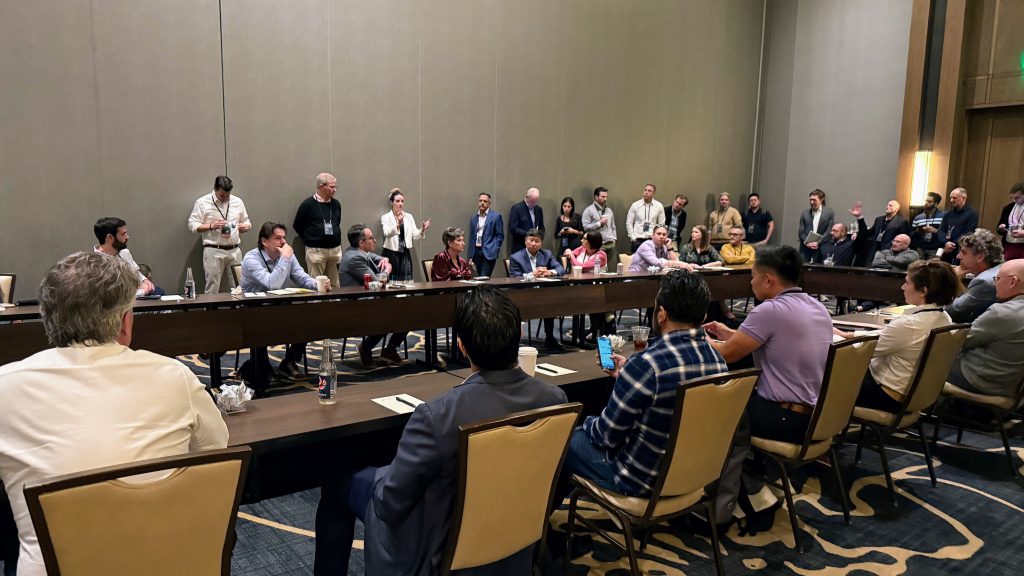


Natalie
Knowlton,
associate
director
of
legal
innovation
at
Stanford
University
(in
white
coat
against
wall),
moderated
a
roundtable
on
the
future
of
nonlawyer
ownership.

Meanwhile,
in
“Unlocking
Collaboration:
Interoperability
in
Legal
AI,”
speakers
from
Meta,
Cityblock
Health,
HSF
Kramer,
Harbor,
and
Legaltech
Hub
made
the
case
for
interoperability,
arguing
that
the
next
leap
in
AI
won’t
come
from
smarter
models,
but
from
better
systems
that
talk
to
each
other.

One
of
the
most
talked-about
panels,
“Who
Controls
the
Future
of
Legal
Services?”,
captured
the
tension
and
opportunity
in
the
shifting
ownership
of
the
“legal
services
stack,”
as
ABS
models,
MSOs,
and
AI-driven
platforms
challenge
traditional
firm
structures.


The
Next
Wave
of
Legal
AI

A
signature
feature
of
the
summit
is
its
Startup
Showcase,
which
this
year
introduced
17
early-stage
companies
spanning
such
areas
as
AI-native
litigation
platforms
(TrialKit),
contract
intelligence
(Syntracts),
structured
data
extraction
(LexSelect),
patent
automation
(Paximal,
Patlytics),
in-house
copilots
(Ruli),
compliance
infrastructure
(SurePath
AI),
and
conversational
AI
(Querious).

Cumulatively,
their
presentations
reflected
several
of
the
key
themes
currently
dominating
the
legal
tech
landscape:

  • Agentic
    AI:
    Not
    just
    answering
    questions,
    but
    performing
    tasks
    (Paximal,
    Newcode.ai,
    Lead
    Autopilot).
  • Data
    structuring:
    Turning
    messy
    PDFs
    into
    usable
    data,
    enabling
    AI
    accuracy
    at
    scale
    (LexSelect,
    Syntracts).
  • Vertical
    AI
    platforms:
    Built
    specifically
    for
    injury
    claims,
    immigration,
    private
    markets
    or
    patents
    (Predict.law,
    CaseBlink,
    Covenant,
    Patlytics).
  • AI-first
    infrastructure:
    Governing
    AI
    usage,
    mitigating
    risk,
    and
    automating
    compliance
    (SurePath
    AI,
    Warrant).

In
addition
to
startups,
the
summit
also
highlighted
scale-stage
and
growth-track
companies.

The
15
scale
stage
presenters,
described
as
companies
“that
are
scaling
rapidly
and
redefining
the
legaltech
landscape,
included:
DraftWise,
FirmPilot,
Flo
Recruit,
Foundation
AI,
HelloPrenup,
Hona,
Jigsaw,
Jusfy,
Lawline,
New
Era
ADR,
Orbital,
SimpleClosure,
SimplyAgree,
StructureFlow
and
Vertican.

Meanwhile,
the
growth
track
featured
nine
companies
that
have
achieved
substantial
growth
“and
long
surpassed
product-market
fit:
BlackCloak,
Bridge
Legal,
Centerbase,
Harvey,
LegalOn,
Scalar,
Smokeball,
Steno,
and
Trust
&
Will.


Lowering
the
‘Who
Luck’
Odds

But
even
for
all
of
its
substance,
much
of
the
TLTF
Summit’s
value
still
comes
from
its
format

from
the
serendipity
of
its
“who
luck.”

Yet
among
those
who
had
attended
this
conference
before,
I
heard
grumbling
over
its
growth.
The
first
year
was
capped
at
a
relatively
intimate
250
registrants
(and
Posner
said
in
his
keynote
that
the
actual
attendance
had
been
around
150).
Last
year
was
supposed
to
have
been
capped
at
500
but
actually
reached
around
650.
This
year,
total
registrants
reached
876.

By
the
standards
of
large
legal
tech
conferences
such
as
Legalweek
and
ILTACON,
the
TLTF
Summit
is
still
small.
But
by
the
standard
of
making
“who
luck”
happen,
this
year’s
larger
attendance
meant
a
lowering
of
the
odds.

In
my

review
of
last
year’s
summit
,
I
wrote,
“Without
question,
the
defining
trait
of
this
summit
is
its
atmosphere
of
engagement,
discovery
and
serendipity.”

That
is
still
a
true
statement.
But,
somehow,
it
felt
less
true
this
year.
There
was
less
of
that
serendipity
and
spontaneity.
This
is
not
just
me
talking.
I
heard
it
over
and
over
again
from
others
who
had
attended
in
prior
years.



Through
sheer
coincidence,
at
one
of
the
standing-room-only
programs,
my
Legaltech
Week
co-panelist
Stephanie
Wilkins,
director
of
content
at
Legaltech
Hub,
and
I
found
ourselves
sitting
on
the
floor
directly
across
from
each
other.
When
Stephanie
sent
me
the
photo
on
the
right,
I
responded
with
one
of
her. 

One
seemingly
preventable
side
effect
of
this
year’s
larger
attendance
was
that
seminar
rooms
were
consistently
standing-room
only.
At
virtually
every
program
I
attended,
many
audience
members
were
forced
to
stand
crowded
along
the
walls
or
to
plop
down
cross-legged
on
the
floor.

Not
only
was
this
uncomfortable
for
the
audience,
but
I
heard
from
speakers
that
it
was
distracting
for
them,
particularly
as
late
arrivers
jockeyed
for
a
space.

I
get
it:
Success
brings
growth
and
growth
brings
growing
pains.
I’ve
been
on
the
conference
circuit
long
enough
to
see
several
conferences
that
started
small
and
grew
exponentially
and
remained
successful

or
became
even
more
successful

through
it
all.

But
there
comes
a
point
where
the
who-luck
runs
low,
and
the
very
thing
that
characterized
the
conference
in
its
early
days
morphs
into
something
much
different.


‘Still
the
Best’

Thankfully,
that
has
not
happened
yet,
and
my
complaints
about
the
numbers
are
nothing
more
than
picking
nits
off
an
otherwise
fantastic
conference.

In
fact,
in
the
case
of
virtually
every
repeat
attendee
who
grumbled
to
me
about
its
growth,
they
would
always
quickly
temper
that
comment
with
the
postscript:
But
it
is
still
the
best
conference
in
legal
tech.

One
of
the
characteristics
that
make
it
so
good
is
its
ability
to
maintain
an
atmosphere
that
I
described
last
year
as
“chill.”

Because
everyone
is
vetted,
because
everything
is
off
the
record,
because
no
one
is
trying
to
sell
you
anything,
participants
seem
unusually
relaxed,
unguarded,
approachable
and
engaging.

What
I
wrote
last
year
on
this
point
remains
true:
“No
one
was
too
big
or
important
to
approach,
or
too
unapproachable
because
they
were
surrounded
by
their
people.
Everyone
was
on
equal
footing,
and
everyone
engaged
as
co-equal
peers.”



Swarming
the
swag.

And
when
who-luck
did
strike
and
you
found
yourself
connecting
with
a
complete
stranger,
the
conversation
was
bound
to
be
fascinating.
To
double-click
on
what
I’ve
already
said:
The
people
who
attend
the
TLTF
Summit
are
truly
those
who
are
at
the
vanguard
of
legal
innovation,
across
a
range
of
roles.

It
is
also
a
conference
that
continues
to
be
defined
by
how
well
it
handles
the
smaller
details.
Two
in
particular
that
have
been
true
for
all
four
years
are:


  • Food.

    It
    is
    ample
    and
    delicious.
    Participants
    are
    served
    breakfast,
    lunch
    and
    dinner,
    with
    a
    variety
    of
    both
    healthy
    and
    indulgent
    snacks
    seemingly
    always
    available.
    Menus
    all
    accommodated
    the
    vegetarians
    and
    pescatarians
    among
    us,
    even
    at
    an
    off-site
    BBQ
    party.
    (This
    pescatarian
    was
    particularly
    grateful.)

  • Swag.

    I
    have
    said
    before
    and
    will
    say
    it
    again:
    No
    legal
    tech
    conference
    does
    swag
    like
    the
    TLTF
    Summit.
    At
    a
    designated
    hour,
    the
    swag
    room
    doors
    opened,
    and
    you
    would
    think
    they
    had
    announced
    free
    equity
    in
    the
    latest
    legal
    AI
    startup.
    Accomplished
    professionals
    swarmed
    the
    room,
    grabbing
    hoodies
    and
    sweats
    and
    hats
    and
    cups
    and
    socks
    and
    all
    sorts
    of
    other
    paraphernalia.
    Savvy
    summit
    veterans
    knew
    to
    bring
    extra-large
    suitcases
    to
    get
    all
    their
    goodies
    back
    home,
    while
    newbies
    wondered
    what
    to
    do
    with
    their
    overflowing
    bags.


Picking
Nits

While
the
summit
stands
out
for
so
many
of
its
macro
and
micro
details,
I
would
be
painting
a
one-sided
picture
if
I
did
not
also
mention
some
of
the
smaller
nits
that
I
heard
attendees
complain
about:


  • The
    lack
    of
    an
    app.

    Ahead
    of
    the
    conference,
    TLTF
    circulated
    a
    summit
    “look
    book,”
    a
    76-page
    PDF
    with
    extensive
    details
    about
    the
    conference.
    While
    helpful
    in
    advance
    as
    a
    planning
    tool,
    it
    was
    so
    extensive
    and
    unwieldy
    that
    it
    was
    virtually
    unusable
    as
    a
    conference
    guide.
    In
    fact,
    the
    cumbersomeness
    of
    the
    PDF
    inspired
    one
    enterprising
    attendee,

    Rob
    Saccone
    ,
    chief
    technology
    officer
    at

    Lega


    literally
    while
    at
    the
    airport

    en
    route

    to
    the
    summit

    to
    create
    an
    AI
    chat
    interface
    that
    he
    made
    available
    to
    attendees
    for
    free.
    During
    the
    conference,
    TLTF
    put
    the
    agenda
    up
    on
    a
    web
    page,
    but
    it,
    also,
    was
    not
    user
    friendly,
    given
    that
    every
    time
    you
    looked
    at
    it,
    you
    had
    to
    scroll
    down
    to
    find
    your
    day
    and
    time.
    As
    it
    turns
    out,
    here
    is
    an
    app
    for
    that.
    Why
    not
    use
    it?

  • Tiny
    type
    on
    name
    tags.

    The
    complaint
    I
    heard
    most
    often
    was
    about
    the
    tiny
    typeface
    used
    to
    show
    names
    on
    badges
    and
    the
    even
    tinier
    typeface
    showing
    affiliations.
    I’m
    guessing
    this
    was
    done
    to
    encourage
    people
    to
    engage
    rather
    than
    just
    read,
    and
    perhaps
    also
    to
    separate
    people
    from
    their
    affiliations.
    But
    I
    know
    many
    people
    were
    bothered
    by
    it.

  • Lack
    of
    attendee
    list.

    With
    name
    tags
    unreadable,
    and
    so
    many
    people
    in
    attendance,
    it
    would
    have
    been
    nice
    to
    have
    some
    sort
    of
    attendee
    list.
    I
    understand
    that
    the
    organizers
    want
    everyone
    to
    feel
    free
    from
    pitches
    and
    solicitations,
    but
    this
    is
    already
    a
    select
    group,
    one
    that
    is
    already
    vetted
    in
    advance.
    Why
    not
    make
    it
    easier
    for
    attendees
    to
    follow
    up
    with
    each
    other?

Also
worth
noting

not
as
a
complaint,
but
as
information
for
anyone
thinking
of
attending
in
the
future

is
that
the
summit’s
primary
focus
is
on
BigLaw
and
corporate
legal.
As
evidence
of
this,
look
no
farther
than
the
law
firms
represented
on
the
speaker
roster:
A&O
Sherman,
Goodwin
Procter,
K&L
Gates,
Latham
&
Watkins,
Ogletree
Deakins,
Orrick
and
Skadden.

I
was
glad
to
see
one
program
on
“AI
and
the
Justice
Gap,”
which
looked
at
how
AI
tools
can
help
expand
access
to
justice.
I
was
not
able
to
attend
it,
so
I
cannot
comment
on
its
substance.
However,
I
was
surprised
to
see
that
panel’s
principal
speaker
as
the
chief
operating
officer
of
one
of
the
world’s
largest
law
firms.

That
said,
for
all
its
focus
on
BigLaw
and
corporate
legal,
there
is
room
to
wonder
whether
“who
luck”
could
extend
to
those
working
on
the
justice
gap.
Perhaps
that
is
next
year’s
growth
opportunity

not
just
in
numbers,
but
in
diversity
of
mission.

I
was
also
glad
to
see
several
panels
that
looked
at
issues
around
regulatory
reform,
non-lawyer
ownership,
and
the
like

some
of
which
also
touched
on
issues
of
access
to
justice.


Creating
Community

In
his
opening
keynote,
Zach
Posner
talked
about
the
power
of
community

the
power
of
bringing
together
people
who
are
working
on
similar
things
to
advance
their
common
goals.

“If
we
get
that
right,
we’re
not
only
helping
individuals
achieve,
but
we’re
helping
the
entire
community
and
the
entire
space
achieve
its
goals,”
he
said.

Later,
as
I
happened
into
one
of
those
who-luck
conversations
with
the
CEO
of
a
major
legal
tech
company,
he
used
that
same
word,
community,
to
describe
how
this
conference
was
like
no
other
he
has
attended.

The
TLTF
Summit
is
a
formula
that
combines
“who
luck”
with
“who’s
who”
to
create
a
community
of
like-minded
leaders
and
thinkers
and
to
spark
three
days
of
dialogue
and
engagement,
all
focused
on
the
future
of
legal
technology
and
legal
practice.

Having
attended
all
four
summits,
having
watched
it
already
quadruple
in
size,
I
am
almost
hesitant
to
publish
this
post.
Like
that
Austin
swimming
hole
the
locals
do
not
want
mapped
on
Google,
I
almost
wish
I
could
keep
this
a
secret
known
only
to
an
intimate
few.

That,
however,
would
be
not
only
selfish,
but
counterproductive.
It
would
also
be
impossible.
As
the
field
of
legal
technology
grows
exponentially,
so
too
will
this
summit.

Maybe
all
that
who-luck
won’t
run
out,
maybe
it
will
simply
evolve
and
expand.
The
challenge
for
organizers
is
not
whether
to
grow

that
ship
has
sailed

but
whether
they
can
maintain
the
magic
that
made
150
people
feel
like
they
had
found
something
special,
even
as
they
welcome
hundreds
more.