The Next Transatlantic Biglaw Heavyweight: Ashurst Ties The Knot With Perkins Coie – Above the Law

When
we
said
that
Biglaw
had

merger
fever

and
that
it
was
contagious,
we
really
weren’t
kidding.
Two
more
large
firms
have
just
announced
a
combination.

As
reported
by
the

American
Lawyer
,
Ashurst

which
has
been
searching
for
a
U.S.
partner
for
quite
some
time

and
Perkins
Coie

which
has
been
at
war
ever
since
the
Trump
administration
lobbed
an
unconstitutional
Executive
Order
its
way

today
announced
a
tie-up.
A
merger
between
Ashurst
and
Perkins
creates
a
transatlantic
firm
with
upwards
of
$2.58
billion
gross
revenue,
with
3,000
lawyers
(including
700
partners,
with
PEP
clocking
in
at
about
$1.82
million)
spread
globally
across
47
offices.

There
were
some
major
clues
that
the
firms
were
headed
down
this
path.
Last
week,
for
example,
a
partner
from
Perkins
filed
a
trademark
application
for
Ashurst
Perkins
Coie.
On
top
of
that,
Am
Law
further
noted
that
the
domain
name
ashurstperkins.com
was
registered
on
November
14.
Did
media
pressure
force
the
firms
to
make
this
merger
announcement
early?
We
may
never
know.

For
some
Biglaw
firms,
even
bigger
is
even
better

let’s
see
how
things
work
out
for
Ashurst
Perkins
Coie,
which
is
slated
to
be
a
serious
global
contender.


Ashurst
and
Perkins
Coie
Merger
Announcement
Imminent

[American
Lawyer]


Staci
Zaretsky
 is
the
managing
editor
of
Above
the
Law,
where
she’s
worked
since
2011.
She’d
love
to
hear
from
you,
so
please
feel
free
to

email

her
with
any
tips,
questions,
comments,
or
critiques.
You
can
follow
her
on BlueskyX/Twitter,
and Threads, or
connect
with
her
on LinkedIn.

When the law bends: What the narcotics boat debate misses – Breaking Defense

Debate
over
the
legality
of
recent
strikes
on

alleged
narcotics-smuggling
vessels

has
been
loud
but
shallow.
Critics
cite
the
UN
Charter
and
international
legal
bans
on
the
use
of
force
and
call
the
strikes
murder.”
Defenders
say
the
devastation
of
synthetic
opioids
and
the
ways
the
illicit
profits
are
used
are
reason
for
a

decisive
response
.
Both
sides
tend
to
ignore
the
fact
that
the
international
system
has
been
here
before.

International
law
doesn’t
evolve
by
treaty
alone.
It
evolves
through
state
practice,
which
is
how
states
interpret,
stretch,
and
sometimes
break
the
rules
when
the
system
can’t
contain
new
threats.
The
law
of
armed
conflict,
built
for
mid-twentieth-century
wars
between
states,
was
never
designed
for
the
world
of
fragmented
governance,
global
crime,
and
hybrid
networks
that
blur
the
line
between
criminality
and
warfare.

When
law
meets
the
vacuum
of
state
failure,
practice
fills
the
gap.
When
weak
states,
transnational
crime,
and
global
commerce
collide,
the
rules
of
international
law
bend,
and
they
usually
bend
first
under
US
pressure.

Critics
label
such
actions
illegal
or
immoral,
but
this
misses
the
complexity
of
how
law
evolves.
Every
major
change
in
the
use-of-force
regime
from
humanitarian
intervention
to
counterterrorism
began
as
something
unlawful.
Over
time,
repetition
and
multilateral
participation
transformed
what
began
as
violations
into
accepted
practice.

The
real
question
for
narcotics
interdiction
is
not
whether
it
violates
the
law
today,
but
whether
states
can
meet
the
same
standards
that
made
past
deviations
sustainable:
clear
necessity,
proportionality,
transparency,
and
restraint.
If

strikes
on
narcotics
vessels

are
ever
to
gain
legitimacy,
they
will
need
not
only
justification
but
proof
of
humanity.

To
understand
how
narcotics
interdiction
fits
into
this
broader
trajectory,
four
examples
are
instructive:
the
1998
US
strikes
against
al-Qaeda,
the
campaign
against
Somali
piracy
from
2005
to
2008,
the
targeting
of
ISIS
oil
convoys
in
Syria
and
Iraq
beginning
in
2014,
and
the
recent
strikes
against
the
Houthis.
Together,
they
show
how
states
repeatedly
bend
the
law
when
encountering
the
gray
space
between
crime
and
war

and
how
current
US
policy
appears
to
rely
on
the
same
evolving
logic,
regardless
of
the
textbook
legality.

The
question
is
not
whether
striking
a
narcotics
boat
is
lawful
under
today’s
strict
reading
of
positive
law

because
it
almost
certainly
isn’t

but
whether
states
will
once
again
evolve
the
law
through
necessity.

Piracy
And
A
Major
First
Bend

When
Somali
pirates
terrorized
the
Gulf
of
Aden
and
western
Indian
Ocean
from
2005
to
2008,
there
was
no
legal
authority
to
destroy
pirate
vessels
or
strike
their
coastal
infrastructure.
Pirates
were
criminals,
not
combatants.
But
after
piracy
threatened
global
commerce,
the
UN
Security
Council
passed

Resolution
1851

authorizing
“all
necessary
measures”
to
repress
it.
The
United
States,
NATO,
the
EU,
China,
India,
and
Russia
all
joined
in

direct
military
operations
,
including
sinking
vessels
and
attacking
shore
bases.

This
was
a
remarkable
stretch
of
the
law.
Rather
than
only
using
force
against
individuals
actively
performing
piracy
in
the
moment,
the
campaign
broadly
targeted
and
dismantled
the
pirate
networks

on
land
and
sea
.
What
began
without
clear
basis
in
the
UN
Convention
on
the
Law
of
the
Sea
(prohibiting
the
lethal
targeting
of
pirates)
evolved
into
an
accepted
practice
through
collective
action.
The
lesson:
when
criminal
networks
exploit
governance
vacuums
and
threaten
global
order,
the
law
adapts.

Yet
this
adaptation
did
not
emerge
in
a
vacuum.
The
idea
that
states
could
use
military
force
against
criminal
networks
was
born
a
decade
earlier
in
the
original
campaign
against
al-Qaeda.

Infinite
Reach
And
The
Power
To
Declare
Conflict

The
problem
of
criminal
networks
wasn’t
new,
and
the
methods
deployed
to
fight
them
were
the
result
of
hard-fought
experience.
Global
terrorism
demonstrated
there
were
few
ways
to
combat
complex
criminal
threats.
The
lesson
began
in
1998
when
President
Bill
Clinton
launched
Operation
Infinite
Reach,
a
series
of
cruise
missile
strikes
against
al-Qaeda
camps
in
Afghanistan
and
a
suspected
chemical
facility
in
Sudan.
The
strikes
followed
the
US
embassy
bombings
in
Kenya
and
Tanzania
that
killed
over
200
people.
But
the
United
States
was
not
in
an
armed
conflict
with
either
Afghanistan
or
Sudan,
and
the
attacks
lacked
both
Security
Council
authorization
and
a
clear
self-defense
justification.
Al-Qaeda
were
simply
criminals,
and
by
any
legal
measure
of
the
time,
the
operation
was
unlawful.

Infinite
Reach
exposed
the
gap
between
the
world’s
legal
categories
and
its
emerging
realities.
Al-Qaeda
was
a
transnational
network
thriving
in
lawless
spaces,
much
like
the
smuggling
networks
of
today.
It
was
neither
a
state
nor
a
traditional
army,
but
its
reach
was
global.
If
the
US
had
followed
international
law
to
the
letter,
there
were
no
lawful
means
to
strike
al-Qaeda
before
9/11,
and
critics
later
faulted
the
Clinton
administration
for

not
doing
enough
.
As
with
current
debates
on
narcotics
smuggling,
judgments
about
unilateral
action
often
turn
less
on
doctrine
than
on
political
orientation.

After
9/11,
the
United
States
filled
the
gap
in
international
law
with
domestic
law.
The
2001
Authorization
for
the
Use
of
Military
Force
(AUMF)

declared
an
armed
conflict

against
those
responsible
for
the
attacks
and
those
who
harbored
them.
That
single
statute
created
a
domestic
legal
foundation
for
unilateral
global
counterterrorism
operations.
The
United
States
used
its
interpretation
of
international
law
to
declare
conflict
with
non-state
actors
and

used
force
anywhere

it
perceived
a
threat.
This
recognition

that
the
entire
network
needed
to
be
targeted
if
the
threat
was
going
to
be
defeated

led
directly
to
the
response
to
Somali
piracy
and
a
series
of
additional
bends
in
international
law.
It
is
a
pattern
other
states
would
follow.

The
Red
Line
And
The
Houthi
Precedent

Other
states
and
US
allies
embraced
the
logic
of
the
AUMF
when
confronting
Somali
piracy
in
2008,
but
the
pattern
of
bending
the
law
did
not
stop
there.
In
the
years
that
followed,
new
and
even
more
controversial
justifications
emerged
outside
the
counterterrorism
context.
When
the
Assad
regime
used
chemical
weapons
in
Syria
in
2017
and
2018,
the
United
States
launched
strikes
alongside
allies
without
Security
Council
authorization.
The
strikes
were
not
acts
of
self-defense;
they
were
punitive
and
deterrent.
Yet
the
international
community
tolerated
them,
and
the
law
bent
accepting
deterrence
and
humanitarian
necessity
as
sufficient
justification.

The
same
pattern
applied
more
recently
in
American
and
allied
strikes
on
the
Houthi
movement
in
Yemen.
These
operations
were
justified
as
protecting
freedom
of
navigation
in
the
Red
Sea,
but
that
is
a
global
commercial
interest,
not
a
national
one.
There
was
no
declared
armed
conflict
with
the
Houthis,
no
direct
attack
on
US
forces
or
commercial
interests
prior
to
American
military
involvement,
and
no
explicit
international
mandate.
Still,
many
Western
and
regional
powers

accepted
the
strikes

as
legitimate,
echoing
the
rationale
once
used
to
fight
piracy.

Each
of
these
episodes,
from
Infinite
Reach
to
Somalia,
to
Syria
and
Yemen,
represents
a
growing
willingness
to
bypass
the
rigid
categories
of
international
law.
They
show
that
when
existing
law
cannot
manage
transnational
threats,
state
practice
builds
its
own
authority.

ISIS
And
The
Targeting
Of
Civilian
Infrastructure

Although
the
campaign
against
ISIS
unfolded
several
years
before
the
strikes
in
Syria
and
Yemen,
it
belongs
in
a
different
category
of
adaptation.
If
those
previous
examples
stretched
the
law
procedurally
by
redefining
when
and
why
states
could
use
force,
the
war
against
ISIS
stretched
it
substantively,
redefining
what
could
be
lawfully
targeted.

In
2014,
ISIS
was
funding
its
operations
through
oil
production
in
captured
Syrian
and
Iraqi
fields.
Civilians
drove
the
trucks
that
moved
the
oil,
and
civilians
refined
the
oil
and
sold
it.
Destroying
this
profit-generating
network
meant
striking
the
civilian
infrastructure
and
civilian
workers,
an
act
that,
on
its
face,
seems
to
violate
the
law
of
armed
conflict’s
protection
of

civilians
and
civilian
objects
.
It’s
a
thorny
problem.
Money
is
not
a
military
object,
and
unrefined
oil
is
several
steps
removed
from
fuel
for
military
vehicles.

The
US
and
its
coalition
partners

nevertheless
targeted
ISIS’s

oil
fields,
refineries,
and
convoys
under
the
rationale
that
the
oil
itself
was
a
“military
objective.”
This
expanded
doctrine
of
war-sustaining
activities

held
that
resources
directly
financing
enemy
operations
could
be
lawfully
targeted.
It
was
a
controversial
idea
and
threatened
to
blur
the
lines
between
civilians
and
combatants.
But
it
helped
to
defeat
ISIS
and
became
state
practice.

What
often
gets
lost
in
the
controversy
is
how
carefully
those

strikes
were
conducted
.
Coalition
forces
took
deliberate
steps
to
mitigate
civilian
harm.
Leaflets
were
dropped
to
warn
drivers.
Pilots
made
low-altitude
passes
to
scare
them
away.
Precision
munitions
were
used
to
destroy
the
trucks
rather
than
the
drivers.
Certainly,
drivers
were
tragically
killed,
but
the
intent
and
method
reflected
restraint,
not
indifference.

From
Piracy
To
Narcotics:
The
Next
Legal
Frontier

The
analogy
to
narcotics
interdiction
should
be
clear.
The
networks
moving
synthetic
opioids
by
sea
or
air
are
not
states,
but
they
threaten
public
safety
on
a
scale
greater
than
each
of
the
previous
examples.
These
networks
operate
in
spaces
where
law
enforcement
is
weak
and
where
legal
categories
break
down.

If
the
narcotics
trade
is
treated
as
a
transnational
network
financing
armed
groups,
its
interdiction
can
fit
within
the
logic
of
past
precedents.
As
with
Somali
pirates
and
the
Houthi
militias,
a
threat
to
global
order
can
invite
a
collective
response
that
blurs
the
lines
between
law
enforcement
and
war.
As
with
al-Qaeda,
a
criminal
enterprise
can
become
an
adversary
in
armed
conflict
when
governments
run
up
against
the
limits
of
combating
terrorist
groups.
The
Syria
and
Houthi
strikes
sidestepped
both
Security
Council
and
self-defense
rationales
to
protect
global
interests.
And
the
ISIS
campaign
expanded
the
definition
of
military
objectives
to
include
treating
civilian
infrastructure
as
legitimate
military
objectives,
provided
efforts
are
made
to
spare
civilians.

This
is
not
to
say
such
evolution
is
unproblematic.
Every
time
the
law
bends,
accountability
bends
with
it.
The
more
that
states
claim
the
power
to
define
their
own
adversaries
and
conflicts,
the
greater
the
risk
that
convenience,
not
necessity,
drives
their
decisions.
The
use
of
force
becomes
a
matter
of
policy
rather
than
principle.

The
opposite
risk
of
clinging
to
an
inflexible
legal
order
in
the
face
of
global
criminal
networks
is
equally
real.
The
world
has
already
accepted
that
terrorism
and
piracy
warranted
exceptional
responses.
Narcotics
trafficking,
which
kills

tens
of
thousands
annually

and
destabilizes
entire
regions,
may
prove
to
be
the
next
domain
where
law
follows
practice
rather
than
the
other
way
around.

The
law
of
armed
conflict
has
never
been
static.
Somali
piracy,
al-Qaeda,
Syria,
the
Houthis,
and
ISIS’s
oil
convoys
all
show
that
the
rules
bend
when
states
confront
threats
that
do
not
fit
existing
categories.
Sometimes
the
bending
comes
with
UN
authorization,
and
sometimes
it
comes
through
unilateral
declaration.
What
unites
these
cases
is
the
same
pattern:
novel
threats
emerge,
states
act
first,
and
law
catches
up
later.

The
narcotics-boat
debate
is
only
the
latest
manifestation
of
that
pattern.
Dismissing
these
strikes
as
“illegal”
ignores
decades
of
precedent.
But
embracing
these
strikes
without
question
would
ignore
the
moral
and
legal
costs
of
every
prior
exception.
The
path
between
them,
acknowledging
that
the
law
evolves
through
practice,
but
insisting
that
practice
be
humane
and
justified,
is
the
only
way
the
rules
survive.

If
the
law
bends
again,
it
should
bend
the
way
it
did
against
ISIS’s
convoys
with
self-imposed
precision,
restraint,
and
a
recognition
that
necessity
and
humanity
are
not
opposites
but
the
conditions
for
legitimacy
itself.

Humanity,
in
this
sense,
is
not
a
sentimental
limit
but
an
operational
standard.
It
means
distinguishing
the
guilty
from
the
incidental,
choosing
methods
that
minimize
suffering
even
when
law
does
not
compel
it,
and
subjecting
new
forms
of
force
to
public
explanation
and
review.

The
legitimacy
of
future
interdictions
will
depend
less
on
the
perfection
of
legal
theory
than
on
the
care
with
which
states
wield
their
power.
The
world
tolerates
bends
in
the
law
only
when
it
can
see
the
discipline
behind
them.


Maj.
Trent
Kubasiak is
a
judge
advocate
with
First
Army
at
Rock
Island
Arsenal.
Previously,
he
was
chief
of
national
security
law
for
Eighth
Army
in
the
Republic
of
Korea.
He
deployed
three
times
to
Afghanistan
and
once
to
Kuwait.
He
has
a
JD
from
Marquette
University
School
of
Law,
Wisconsin;
an
LLM
from
the
Judge
Advocate
General’s
Legal
Center
and
School,
Virginia;
and
an
MBA
from
Capella
University.


The
views
expressed
in
this
article
are
his
own
and
do
not
represent
the
official
position
of
the
Department
of
Defense.


Morning Docket: 11.17.25 – Above the Law

*
Ashurst
and
Perkins
Coie
agree
to
merger.
[Financial
Times
]

*
Law
firms
who
pushed
back
against
Trump
bullying
win
joint
Law
Firm
of
the
Year
award.
[American
Lawyer
]

*
The
chaser
to
the
above
shot:
ABA
considers
repeal
of
diversity
standard.
[Law.com]

*
Justice
Department
will
attempt
to
dig
into
Epstein’s
connections
to
Democrats
as
executive
furiously
tries
to
deflect
scrutiny
from
Trump’s
involvement.
[Reuters]

*
DOJ
finalizing
deal
to
give
$50
million
in
taxpayer
money
to
Michael
Flynn
to
apologize
for
prosecuting
him
for
a
crime
he

pleaded
guilty
to
committing
.
[ABA
Journal
]

*
Lawyer
who
served
in
Ulysses
Grant
cabinet
admitted
to
the
New
York
bar.[Fortune]

*
SMU
Law
professor
Charles
Hosch
has
been
missing
since
Tuesday.
[CBS
News
]

Smile, You’re On ‘Instant Karma Camera’ – See Generally – Above the Law

Racist
Rant
Costs
Biglaw
Recruiting
Director
Their
Job:
Hard
to
sell
diversity
when
you’re
caught
on
video
proving
why
it’s
needed.
From
Dominatrix
To
Defamation:
A
Lawsuit
Odyssey:
Biglaw’s
latest
scandal
reads
like
a
rejected
Netflix
pilot
that
still
somehow
got
renewed.
Legal
Gala
Enjoys
Uncharacteristic
Excitement
As
Lawyer
Heckles
Paul
Weiss:
Firm
chair’s
speech
focused
on
justice
and
an
audience
member
pointedly
asked
why
Trump’s
the
one
the
firm’s
rewarding.
Law
Schools
Place
Clerkship
Stats
Over
Students:
Law
schools
hide
information
about
judges
that
might
convince
their
students
to
protect
themselves.
Lindsey
Halligan’s
Big
Day
Out:
Trump’s
most
loyal
lawyer
finally
gets
her
courtroom
moment,
though
probably
not
the
kind
she
imagined.
Court
Greenlights
LSU’s
Thoughtcrime
Hunt:
University
can
continue
to
consider
retaliating
against
professor
for
criticizing
Trump
and
Gov.
Landry.
Roberta
Kaplan
Explains
Importance
Of
Creativity:
The
celebrated
litigator
discusses
how
imagination
fuels
high-stakes
advocacy.
Justice
Breyer’s
Positivity
Is
Strategic:
The
retired
justice
sounds
out-of-place
as
the
horrors
add
up,
but
part
of
resistance
is
believing
in
a
future.

Zimbabwe Vigil Diary 15th November 2025


16.11.2025


20:24

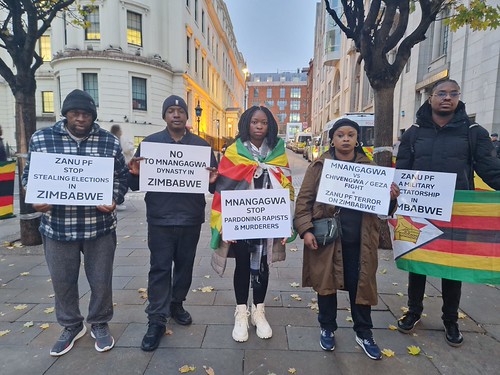
Once
again
Vigil
activists
met
outside
the
Zimbabwe
Embassy
in
London
to
continue
our
protest
against
the
human
rights
abuse
and
lack
of
democracy
in
Zimbabwe
perpetrated
by
ZANU
PF,
the
ruling
regime.


https://www.flickr.com/photos/zimbabwevigil/54927399574/sizes/m/


Thanks
to
those
who
came
today:
Jonathan
Kariwo,
Anna
Katsande,
Philip
Maponga,
Noble
Mwashita,
Geraldine
Takundwa
and
Tatenda
Tsumba.
Once
again
a
special
thanks
to
Jonathan
and
Philip
for
bringing
the
banners,
table
etc
and
for
opening
and
managing
the
Vigil.
Photos:https://www.flickr.com/photos/zimbabwevigil/albums/72177720330365018/.

For
Vigil
pictures
check: http://www.flickr.com/photos/zimbabwevigil/.
Please
note:
Vigil
photos
can
only
be
downloaded
from
our
Flickr
website.


Events
and
Notices: 


  • Next
    Vigil
    meeting
    outside
    the
    Zimbabwe
    Embassy. 
    Saturday
    15th November
    from
    2

    5
    pm.
    We
    meet
    on
    the
    first
    and
    third
    Saturdays
    of
    every
    month.
    On
    other
    Saturdays
    the
    virtual
    Vigil
    will
    run.

  • The
    Restoration
    of
    Human
    Rights
    in
    Zimbabwe
    (ROHR)
     is
    the
    Vigil’s
    partner
    organisation
    based
    in
    Zimbabwe.
    ROHR
    grew
    out
    of
    the
    need
    for
    the
    Vigil
    to
    have
    an
    organisation
    on
    the
    ground
    in
    Zimbabwe
    which
    reflected
    the
    Vigil’s
    mission
    statement
    in
    a
    practical
    way.
    ROHR
    in
    the
    UK
    actively
    fundraises
    through
    membership
    subscriptions,
    events,
    sales
    etc
    to
    support
    the
    activities
    of
    ROHR
    in
    Zimbabwe.

  • The
    Vigil’s
    book
    ‘Zimbabwe
    Emergency’
     is
    based
    on
    our
    weekly
    diaries.
    It
    records
    how
    events
    in
    Zimbabwe
    have
    unfolded
    as
    seen
    by
    the
    diaspora
    in
    the
    UK.
    It
    chronicles
    the
    economic
    disintegration,
    violence,
    growing
    oppression
    and
    political
    manoeuvring

    and
    the
    tragic
    human
    cost
    involved. It
    is
    available
    at
    the
    Vigil.
    All
    proceeds
    go
    to
    the
    Vigil
    and
    our
    sister
    organisation
    the
    Restoration
    of
    Human
    Rights
    in
    Zimbabwe’s
    work
    in
    Zimbabwe.
    The
    book
    is
    also
    available
    from
    Amazon.


  • Facebook
    pages:   

  • Vigil : 
    https ://www.facebook.com/zimbabwevigil
  • ROHR: https://www.facebook.com/Restoration-of-Human-Rights-ROHR-Zimbabwe-International-370825706588551/
  • ZAF: https://www.facebook.com/pages/Zimbabwe-Action-Forum-ZAF/490257051027515

The
Vigil,
outside
the
Zimbabwe
Embassy,
429
Strand,
London
meets
regularly
on
Saturdays
from
14.00
to
17.00
to
protest
against
gross
violations
of
human
rights
in
Zimbabwe.
The
Vigil
which started
in
October
2002
will
continue
until
internationally-monitored,
free
and
fair
elections
are
held
in
Zimbabwe.

Post
published
in:

Featured

Chinese Mining Stirs Up Anger in Zimbabwe

Armies
of
excavators
and
dump
trucks
carving
deep,
terraced
ruts
into
and
around
hills,
mountainsides
and
waterways
are
a
common
sight
in
Zimbabwe.
For
locals,
the
scars
of
large,
industrial
mining
operations
offer
frequent
reminders
of
the
environmental
toll.

Public
anger
among
Zimbabweans
has
risen
steadily
in
recent
years
amid
accusations
of
Chinese
mining
companies
committing
serious
crimes

ranging
from
murder,
rape
and
forced
evictions
to
pollution
and
loss
of
habitats

sometimes
with
few
or
no
legal
consequences.

Journalist
and
human
rights
advocate
Tendai
Mbofana
recently
raised
alarm
when
he
shared
a
video
on
October
21
of
a
Chinese
mining
operation
near
his
home
in
Redcliff.
The
video,
which
was
widely
shared
across
Zimbabwean
media
outlets,
showed
heavy
equipment
digging
next
to
the
Cactus
Port
Dam,
leading
Mbofana
to
warn
of
a
serious
threat
to
the
ecosystem
along
the
Kwekwe
River.

“The
only
word
that
I
can
think
of
right
now
to
describe
these
Chinese
mining
activities
in
Redcliff
is
that
it’s
appalling.
It’s
reprehensible,”
he
told
The
Public
Eye
newspaper.
“We
cannot
surely
call
ourselves
an
independent,
sovereign,
self-governing
state
when
we
allow
foreigners
to
come
into
our
country
and
do
pretty
much
what
they
want.”

Chinese-owned
companies
control
an
estimated
90%
of
Zimbabwe’s
mining
industry,
according
to
the
Harare-based
Centre
for
Natural
Resource
Governance
(CNRG),
an
organization
that
seeks
to
support
communities
affected
by
mining.
It
has
reported
on
mineral
extractions
worth
billions
of
dollars
annually
to
Chinese
mining
companies,
including
$2.79
billion
in
2023.

“Over
the
past
decade,
CNRG
has
led
efforts
to
investigate
and
document
the
environmental,
social,
and
economic
effects
of
mining
in
Zimbabwe,”
the
organization
said
in
an
October
14
statement.
“Our
research

consistently
reveals
that
many
foreign
mining
operations,
including
those
involving
Chinese
capital,
occur
in
[sensitive]
environments,
circumvent
regulation,
lack
transparency
and
bribe
officials
to
weaken
their
oversight
role.”

Mbofana
said
mining
in
Redcliff
is
destroying
landscapes
and
poisoning
a
water
source
that
supplies
commercial
and
subsistence
farmers
downstream.

“Cactus
Port
Dam
is
a
very
important
dam
for
Redcliff,”
he
said.
“The
Kwekwe
is
vital
for
agriculture,
for
flora
and
fauna
in
aquatic
life,
but
that
is
all
under
threat
by
these
Chinese
activities.
We
are
going
to
be
left
behind
with
unusable
land
and
mountains
that
have
been
mutilated.”

Mbofana’s
video
set
off
stern
criticism
from
citizens
and
environmental
and
civil
society
activists
who
say
Chinese
companies
are
plundering
the
country’s
natural
resources
with
little
oversight
or
accountability.

“This
is
not
investment,
it’s
daylight
environmental
terrorism,”
Rodreck
Kudakwashe,
a
prolific
Harare-based
social
commentator,
posted
on
X
on
October
21.
“The
Chinese
systematically
strip
Zimbabwe
of
its
resources
and
mortgage
our
future
under
the
guise
of
economic
development.”

Mbofana
reported
“a
massive
blast
during
the
night
that
shook
homes
across
Redcliff
and
filled
the
air
with
suffocating
dust”
in
an
October
22
article
on
the
Harare-based
NewsHawks
website.
“This
was
not
an
isolated
incident.
Residents
say
these
blasts
have
become
a
regular
nightmare.

“If
the
mining
continues
unchecked,
contamination
and
siltation
will
inevitably
destroy
the
livelihoods
of
countless
farmers
and
threaten
food
security
for
families
dependent
on
small-scale
agriculture.
Once
the
dam
and
river
are
polluted
by
mining
waste,
it
will
take
generations
to
recover,
if
ever.”

Citing
Chinese
lithium
extraction
in
Zimbabwe’s
Bikita
region,
journalist
Marcus
Mushonga
said
China’s
resource-for-infrastructure
model
has
raised
alarms
about
exploitation,
sovereignty
and
sustainability.

“Across
Africa,
Chinese
mining
operations
have
been
linked
to
environmental
destruction,
labor
violations
and
disregard
for
local
communities,”
he
wrote
in
an
October
22
article
for
the
South
Africa-based
Centre
for
African
Journalists
news
agency.

“In
Zimbabwe,
the
partnership
between
the
state
and
Chinese
entities

often
described
as
opaque
and
unaccountable

has
left
many
communities
disenfranchised
and
ecosystems
degraded.”

Source:


Chinese
Mining
Stirs
Up
Anger
in
Zimbabwe


Africa
Defense
Forum

Dangote signs deal with Zimbabwe to build 2,000km-long pipeline from Namibia


The
project
includes
a
fertiliser
plant
and
2,000km-long
pipeline
from
Namibia’s
Walvis
Bay,
through
Botswana,
to
Zimbabwe’s
second-largest
city,
Bulawayo.

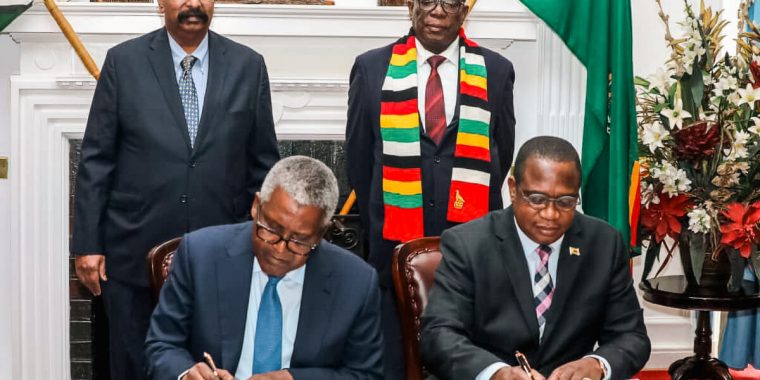
Dangote
met
with
President
Emmerson
Mnangagwa
in
Harare
on
Wednesday
to
sign
a
Memorandum
of
Understanding,
marking
one
of
the
most
significant
private-sector
investments
in
the
country
in
years.

The
deal
underscores
growing
investor
confidence
in
Mnangagwa’s
economic
reform
agenda
and
brings
the
powerful
West
African
conglomerate,
headed
by
Africa’s
richest
man,
deeper
into
the
southern
region.

“The
broader
investment
is
in
the
hundreds
of
millions
of
dollars,
maybe
even
more
than
a
billion,
but
you
know
we
will
tell
you
the
amount
as
we
go
along,
But
really
it
will
be
over
a
billion
because
of
the
pipeline,”
Dangote
said
on
Wednesday.

A
spokesperson
for
the
president
said
the
project
could
change
Zimbabwe’s
production
structure
with
fuel
cheaper
to
import.

The
agreement
paves
the
way
for
major
projects
across
energy,
cement
and
fertiliser
production,
and
infrastructure
development.

Dangote
is
already
planning
a
major
fuel
storage
facility
in
Walvis
Bay,
cutting
Southern
Africa’s
dependence
on
fuel
imports
from
Europe
and
Asia.

Post
published
in:

Agriculture

Farmers to negotiate shares before mining starts, Govt says

Dr
Makwiranzou
told
Senate
on
Thursday
that
the
new
law,
H.B.
1,
2025,
aims
to
end
long-standing
conflicts
between
mining
companies
and
rural
communities.

He
was
responding
to
a
question
from
Senator
Chief
Chikwaka,
who
raised
concerns
about
communities
being
displaced
by
mining
operations
without
proper
compensation
or
suitable
living
conditions.

Chief
Chikwaka
said
that
although
Zimbabwe
welcomes
foreign
mining
investors
under
the
“open
for
business”
policy,
many
villagers
are
being
relocated
to
inhospitable
areas
without
their
livelihoods
being
improved.

“We
are
glad
that
Zimbabwe
is
open
for
business…
However,
we
have
a
challenge.
What
is
government
policy
regarding
the
allocation
of
licences
where
miners
displace
local
communities?
You
find
that
people
are
just
relocated
without
improving
their
lives,”
he
said.

Dr
Makwiranzou
said
that
mining
cannot
begin
without
an
Environmental
Impact
Assessment
(EIA)
outlining
how
affected
households
will
be
compensated
or
resettled.

“Before
giving
permission
to
miners,
we
require
an
Environmental
Impact
Assessment
report,
which
looks
at
the
community
to
be
affected
and
where
they
will
be
relocated.
If
they
are
to
receive
houses,
that
must
be
shown
in
the
report.
Only
after
receiving
that
report
can
we
allow
mining
to
proceed,”
he
said.

He
added
that
under
the
new
law,
farmers
will
have
the
right
to
negotiate
for
shares
in
the
mining
company.

“The
new
law
allows
that
if
someone
has
a
field
or
farm
where
mining
is
required,
that
person
is
given
the
first
option.
They
are
asked
whether
they
agree
to
mining,
and
they
can
negotiate
with
the
investor,
including
discussing
the
allocation
of
shares,”
he
said.

Dr
Makwiranzou
emphasised
that
relocation
must
be
based
on
consent.

“They
must
give
consent
because
the
previous
law
caused
disputes
due
to
conflicts
between
the
Minerals
Act
and
the
Agricultural
Act,”
he
said.

Farmers to negotiate shares before mining starts, Govt says 

Dr
Makwiranzou
told
Senate
on
Thursday
that
the
new
law,
H.B.
1,
2025,
aims
to
end
long-standing
conflicts
between
mining
companies
and
rural
communities.

He
was
responding
to
a
question
from
Senator
Chief
Chikwaka,
who
raised
concerns
about
communities
being
displaced
by
mining
operations
without
proper
compensation
or
suitable
living
conditions.

Chief
Chikwaka
said
that
although
Zimbabwe
welcomes
foreign
mining
investors
under
the
“open
for
business”
policy,
many
villagers
are
being
relocated
to
inhospitable
areas
without
their
livelihoods
being
improved.

“We
are
glad
that
Zimbabwe
is
open
for
business…
However,
we
have
a
challenge.
What
is
government
policy
regarding
the
allocation
of
licences
where
miners
displace
local
communities?
You
find
that
people
are
just
relocated
without
improving
their
lives,”
he
said.

Dr
Makwiranzou
said
that
mining
cannot
begin
without
an
Environmental
Impact
Assessment
(EIA)
outlining
how
affected
households
will
be
compensated
or
resettled.

“Before
giving
permission
to
miners,
we
require
an
Environmental
Impact
Assessment
report,
which
looks
at
the
community
to
be
affected
and
where
they
will
be
relocated.
If
they
are
to
receive
houses,
that
must
be
shown
in
the
report.
Only
after
receiving
that
report
can
we
allow
mining
to
proceed,”
he
said.

He
added
that
under
the
new
law,
farmers
will
have
the
right
to
negotiate
for
shares
in
the
mining
company.

“The
new
law
allows
that
if
someone
has
a
field
or
farm
where
mining
is
required,
that
person
is
given
the
first
option.
They
are
asked
whether
they
agree
to
mining,
and
they
can
negotiate
with
the
investor,
including
discussing
the
allocation
of
shares,”
he
said.

Dr
Makwiranzou
emphasised
that
relocation
must
be
based
on
consent.

“They
must
give
consent
because
the
previous
law
caused
disputes
due
to
conflicts
between
the
Minerals
Act
and
the
Agricultural
Act,”
he
said.

WHO warns TB deaths could rise sharply as global funding stalls

In
its
latest
report,
WHO
provides
a
comprehensive
assessment
of
the
TB
epidemic
and
progress
in
prevention, diagnosis and
treatment
at
global, regional and
country
levels.
The
2025
edition
draws
primarily
on
data submitted annually
by
national ministries
of
health.
In
2025,
184
countries
and
areas,
representing more
than
99%
of
the
world’s
population
and
TB
burden,
reported
their
data.

According
to
the
report,
progress remains far
behind
End
TB
Strategy
targets
as
funding
continues
to
stagnate.

“Despite
many
gains,
global
progress
levels remain far
from
meeting
the
End
TB
Strategy
targets.
A
major
obstacle
is
global
funding
for
TB,
which
has
stagnated
since
2020.
In
2024,
only
US$5.9
billion was
available
for
prevention,
diagnosis,
and
treatment,
just
over
a
quarter
of
the
US$22
billion annual
target
set
for
2027,”
the
summary
noted.

It
further
warned
that
looming
cuts
to
international
donor
funding
from
2025
pose
a
significant
threat.
Modelling
shows
that
sustained
reductions
could
lead
to
up
to 2
million additional deaths and 10
million
more
TB
infections between
2025
and
2035.

Global
TB
research
funding
is
also
lagging,
reaching
only
US$1.2
billion in
2023,
24%
of
the
target.
However,
scientific
activity
continues
to grow: as
of
August
2025,
63
diagnostic
tests
were
in
development
and
29
drugs
were
undergoing
clinical
trials,
compared
to
just
eight
in
2015.
In
addition,
18
vaccine
candidates
are
in
clinical
trials,
including
six
in
Phase
3.
WHO
continues
to
steer
global
vaccine
development
efforts
through
the
TB
Vaccine
Accelerator
Council.

Dr Tereza Kasaeva,
Director
of
the
WHO
Department
for
HIV,
TB,
Hepatitis
and
STIs,
urged
countries
to
reinforce
political
commitment
and
increase
domestic
investment
to
avoid
reversing
gains
made
in
recent
years.

“We
are
at
a
defining
moment
in
the
fight
against
TB,”
she
said.
“Funding
cuts
and
persistent
drivers
of
the
epidemic
threaten
to
undo
hard-won
gains,
but
with
political
commitment,
sustained
investment,
and
global
solidarity,
we
can
turn
the
tide
and
end
this
ancient
killer
once
and
for
all.”